What Are Rogue Planets? Worlds Drifting Alone in the Dark
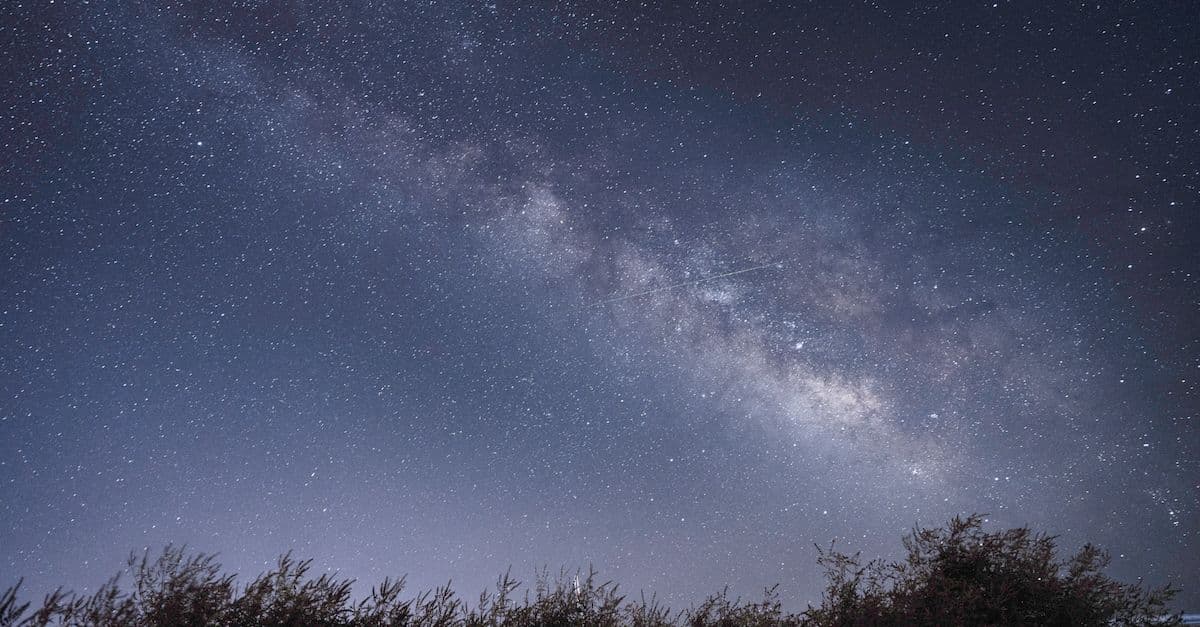
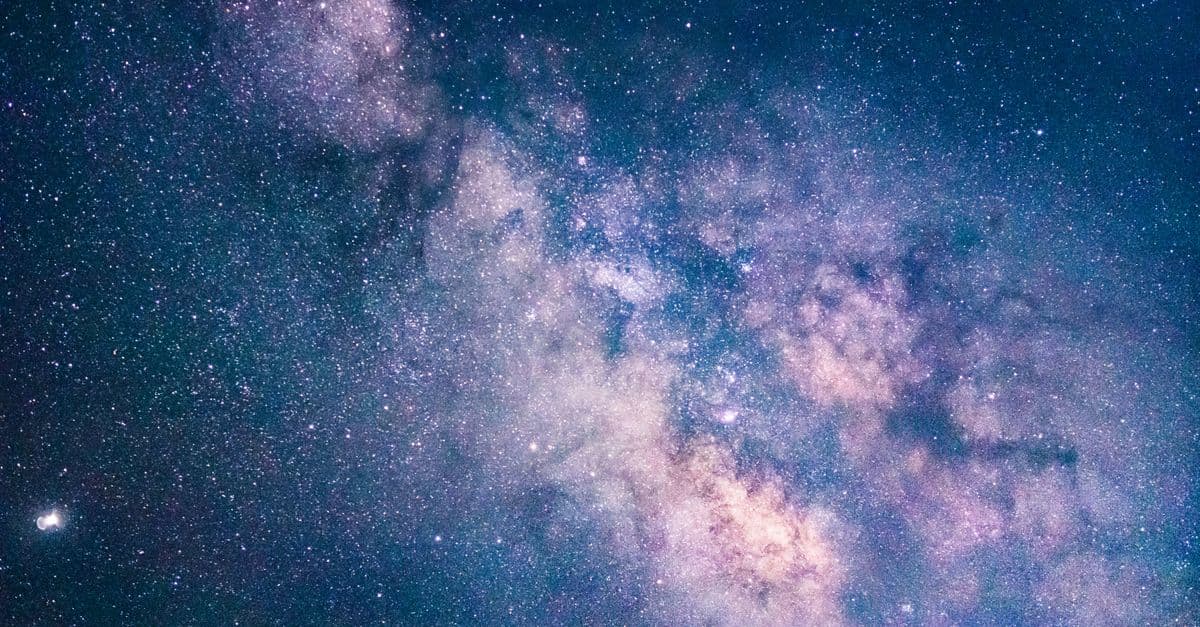
Photo: Gozde Ka / Pexels
A rogue planet is a planet-sized object that orbits no star. It travels through the galaxy on its own, lit only by faint starlight and warmed, if at all, by its own interior. The first reliable statistics came in 2011, when a Japanese-New Zealand microlensing survey found signs of roughly two Jupiter-mass wanderers per star in the Milky Way. This article covers how rogue planets form, how astronomers find objects that give off almost no light, how uncertain the counts are, and why some researchers think a few of them could keep liquid water.
What counts as a rogue planet
A rogue planet, or free-floating planet, is an object with planetary mass that is not gravitationally bound to a star or brown dwarf. "Planetary mass" usually means below roughly 13 Jupiter masses, the rough point where an object can fuse deuterium and becomes a brown dwarf. Astronomers also call these objects "free-floating planetary-mass objects" or "orphan planets," partly because the word "planet" carries an assumption about how the object formed.
That assumption is the sticking point. For most of the history of the field, a planet was something that formed in a disk of gas and dust around a young star. Under that definition, an object that collapsed alone from a gas cloud, the way a star does, would not be a planet at all. It would be a very low-mass cousin of a brown dwarf. The two kinds of object look the same in a telescope, so the name often reflects the author's taste more than any measurement.
Think of it as the difference between a dropped egg and an egg thrown from a window. Both land on the pavement as a mess of shell and yolk, and from the pavement you cannot tell which fall it was. A rogue planet drifting through interstellar space is the pavement. Only the history, which we usually cannot see, separates the two.
| Origin | How it forms | What it should look like | Hard to tell apart because |
|---|---|---|---|
| Ejected planet | Born in a disk around a star, then scattered out by gravity from a giant planet or a passing star | Wide mass range, from sub-Earth to several Jupiter masses; may carry moons | A lone planet carries no label saying where it came from |
| Direct collapse | Forms from a collapsing gas clump, like a star, with no disk or host | Mostly Jupiter-mass or heavier; found in young clusters | At low masses, fragments are hard to distinguish from ejected giants |
Where rogue planets come from
Ejection from planetary systems
Planet formation is rougher than the tidy diagram of eight planets on circular orbits suggests. Young systems contain many growing bodies. As giant planets grow and migrate, their gravity can scatter smaller neighbors onto stretched orbits. If one of those orbits becomes fast enough to exceed the star's escape velocity, the planet leaves. The article on planetary migration explains why giants move in the first place and why that movement is so destabilizing.
Simulations suggest the process is common. In one set of calculations summarized on Wikipedia's rogue planet page, about 17.5% of Sun-like stars eject planets, with a total of 16.8 Earth masses thrown out per star on average and a median free-floating planet mass of 0.8 Earth masses. Around red dwarfs of 0.3 solar masses, about 12% of stars eject planets, a total of 5.1 Earth masses per star, with a median of 0.3 Earth masses. These are model outputs, not measurements, and they depend on assumptions about how many planets form and how they are spaced. They do suggest that ejections produce lots of small, rocky rogue planets alongside a few giants.
Our own solar system may have lost a planet this way. The Nice model, named for the observatory in Nice, France, where it was developed in 2005, describes an early period when Jupiter and Saturn drifted into resonance and shook up the orbits of the outer planets. Simulations of an ice giant encountering Jupiter often threw the ice giant out of the solar system. That led David Nesvorný and others in 2011 to propose that the early solar system had five giant planets, one of which was ejected, as the Wikipedia article on the Nice model records. The model itself has known problems, including mismatches with the observed asteroid and Kuiper belt orbits, so the "lost fifth giant" remains a hypothesis. It is a useful reminder that our own system might have produced a rogue planet.
Direct collapse: stars that stopped too small
A star forms when a dense knot in a molecular cloud collapses under its own gravity. Normally the knot keeps pulling in more gas and ends up with at least 8% of the Sun's mass. But if a knot is small, or gets cut off from its gas supply early, the object can end up far lighter. As a collapsing clump heats up, it eventually becomes opaque to its own radiation, traps heat, and slows its own contraction. Theory puts the lower mass limit for this process at a few Jupiter masses.
Observations support the idea that free-floating objects exist at these masses. In the Upper Scorpius star-forming region, astronomers identified a group of at least 70 free-floating planetary-mass candidates in 2021, and perhaps as many as 170 depending on the assumed age. They have masses of 4 to 13 Jupiter masses and ages of 3 to 10 million years, per the same Wikipedia page. Follow-up spectroscopy with the Subaru and Gran Telescopio Canarias telescopes indicated that contamination from unrelated objects is 6% or less, and confirmed 16 of them as young objects of 3 to 14 Jupiter masses. At 3 to 10 million years, these objects are too young to have been ejected by dynamical evolution in large numbers, which suggests that at least some free-floating planetary-mass objects form on their own.
The JuMBO puzzle
In October 2023, JWST observations of the Orion Nebula Cluster reported about 540 planetary-mass candidates with masses from roughly 13 down to 0.6 Jupiter masses. The surprise was that some formed pairs. These Jupiter-Mass Binary Objects, or JuMBOs, included about 40 wide binaries and two triples, with separations below 340 astronomical units, and they made up at least 9% of the candidates.
JuMBOs are hard to explain with ejection, because a gravitational kick strong enough to eject a planet usually breaks apart any partner it has. That pushed some researchers toward in-situ formation, as Portegies Zwart argued in 2024. Others were less sure the pairs are real. Kevin Luhman's reanalysis of the same NIRCam data found that most JuMBOs did not belong in a substellar sample, because their colors fit reddened background sources or low-signal detections. He considers only one, JuMBO 29, a good binary candidate. The question is open, and a good example of why a striking early claim at the edge of a new instrument's capabilities deserves patience.
How astronomers find a planet that gives off no light
A rogue planet has no star to illuminate it. The two usual planet-hunting methods, watching for a star's wobble or its dimming, both need a star. Astronomers use two other routes.
Gravitational microlensing
The central technique is gravitational microlensing. When a massive object passes in front of a distant star, its gravity bends the star's light and briefly magnifies it. Nothing needs to glow. A planet that drifts across the line of sight to a background star produces a short brightening, then fades from view. The event cannot be repeated, because the alignment will not recur.
The duration encodes the lens's mass, but only loosely. The Einstein crossing time, the time the lens takes to move across one Einstein radius, grows roughly as the square root of the lens mass for a given speed and distance. Stars produce events lasting days to months. A Jupiter-mass planet produces one lasting a day or two. An Earth-mass planet produces one lasting a few hours. The Wikipedia article on gravitational microlensing notes that the timescale depends on mass, distance, and velocity together, so one event cannot pin down the mass alone.
Two long-running surveys do much of the work. OGLE, the Optical Gravitational Lensing Experiment, is a Polish collaboration that uses a 1.3-meter telescope in Chile. MOA, Microlensing Observations in Astrophysics, is a Japan-New Zealand collaboration with a 1.8-meter telescope in New Zealand. Both stare at the dense star fields of the galactic bulge, where the odds of a chance alignment are highest.
Microlensing has a built-in weakness. A short event with no detectable companion star is evidence for a free-floating planet, but a bound planet on a very wide orbit looks nearly identical. A light curve alone says nothing about a host that is far from the lens. Surveys therefore talk about "free-floating or wide-orbit" planets until follow-up imaging rules out a distant star.
Infrared glow in young regions
A young planetary-mass object is still warm from formation, and it glows in the infrared. Telescopes can image it directly if it is nearby and young enough. That is how astronomers found the Upper Scorpius group and the Orion candidates. The method works only on young objects, because a rogue planet fades as it cools over millions of years.
Some individual objects show what these wanderers look like:
| Object | Estimated mass | Notes |
|---|---|---|
| PSO J318.5-22 | 6.2 to 7.6 Jupiter masses | About 72 light-years away; linked to the Beta Pictoris moving group; age about 21 to 27 million years |
| CFBDSIR 2149-0403 | 4 to 7 Jupiter masses | Candidate member of the AB Doradus moving group; age about 110 to 130 million years |
| Cha 1107-7626 | 6 to 10 Jupiter masses | About 620 light-years away; 1 to 5 million years old; JWST found hydrocarbons in its disk in May 2025 |
| OGLE-2016-BLG-1928 | About 0.3 or 2 Earth masses | Found by microlensing in 2020; no host star within 8 AU |
The Cha 1107-7626 result is notable because the object still has a disk. A free-floating planetary-mass object with its own disk of dust and gas could in principle form small rocky companions, as the Wikipedia entry notes. It would be a planetary system in miniature, with no star in the middle.
How many are there?
Counts are the least certain part of the story, and the answers have moved around as the surveys matured.
In 2011, Takahiro Sumi and colleagues reported the first major statistical result. Using the MOA-II telescope in New Zealand and a Warsaw telescope in Chile, they observed about 50 million stars and found 474 microlensing events. Ten of them were short enough to point toward Jupiter-sized planets with no nearby star. The team estimated roughly two Jupiter-mass rogue planets for every star in the Milky Way.
That figure did not hold up cleanly. In 2017, Przemek Mróz and colleagues used a much larger OGLE dataset and set an upper limit of 0.25 Jupiter-mass free-floating or wide-orbit planets per main-sequence star. The two results disagree by nearly an order of magnitude, which shows how sensitive these estimates are to event selection and modeling.
In September 2020, Mróz's group announced OGLE-2016-BLG-1928, the first Earth-mass rogue planet candidate from microlensing. The event lasted 41.5 minutes, the shortest on record, according to the Wikipedia entry for the event. The planet's mass is about 0.3 Earth masses if it lies in the galactic disk and about 2 Earth masses if it lies in the bulge, with the disk case thought more likely. No host star appeared within 8 AU. A single event does not give a population estimate, but it showed that small rogue planets can be detected at all, which was far from certain.
Beyond those numbers, the honest summary is wide: from a fraction of a Jupiter-mass planet per star to a couple per star, and likely many more at lower masses. The Wikipedia page notes the galaxy may hold billions to trillions of rogue planets, with the Roman telescope expected to sharpen the estimate. That range is large enough to cover everything from "rare" to "outnumbering the stars" in ordinary conversation. Any article that gives a single figure, with no range, has hidden most of the uncertainty.
What Roman should change
NASA's Nancy Grace Roman Space Telescope has a microlensing survey aimed at the galactic bulge. The mission's entry on Wikipedia reports a launch on August 30, 2026, on a Falcon Heavy from Kennedy Space Center, with commissioning under way as of October 2026. It states that the microlensing census can detect planets down to a few times the Moon's mass, and that the free-floating planet sample should reach masses likely down to that of Mars. Because Roman observes from space with a wide field and steady cadence, it should both find many more events and catch the planet-around-star cases that currently look like rogues. That would separate bound wide-orbit planets from truly free ones, which is the cleanest way to fix the counts.
Could a rogue planet hold liquid water?
Rogue planets look hopeless for life. With no star, there is no daylight, no photosynthesis, and no obvious heat. A bare rocky planet in interstellar space would settle at a temperature set by its own internal heat leaking out. Earth's interior sends about 0.09 watts through each square meter of its surface. A planet radiating only that much would sit near 35 kelvin, about -238°C, colder than any surface in the inner solar system. Surface water would be rock-hard ice.
That is where the story gets interesting, because surfaces are not everything.
The Stevenson scenario
In 1999, planetary scientist David Stevenson argued that some planet-sized wanderers could keep thick hydrogen atmospheres. At high pressure, hydrogen becomes opaque to far-infrared light through a process called pressure-induced opacity, so a deep hydrogen layer acts as a blanket. An Earth-sized body ejected from a planetary system would receive little ultraviolet light in the dark, so it would not lose its hydrogen and helium as quickly as a planet near a star would. Radioactive decay in the interior, from uranium, thorium, and potassium-40, would supply steady heat, as the Wikipedia summary of his paper explains. Under the right conditions, the surface could stay above water's melting point, and hydrothermal vents could power chemistry.
The word "could" does the work here. Stevenson's paper is a theoretical argument, not an observation. It rests on a planet that keeps a thick hydrogen atmosphere for billions of years, which depends on the planet's mass and on whether the ejection stripped its envelope. Stevenson also noted that such objects would be very hard to detect. Some ejected planets might also keep a large moon, which could add tidal heat in some cases.
Deep water under rock and ice
A second route does not need a hydrogen blanket. A large rocky or icy planet keeps heat in its interior for a long time, and temperature rises with depth. Somewhere below an icy crust, the temperature can reach the melting point of water, giving a buried ocean. This is the same logic that applies to ocean worlds such as Europa and Enceladus, with one difference: those moons also draw heat from tidal flexing, while a lone rogue planet has only its radioactive and primordial heat. The article on Europa and Enceladus explains how the ocean-moon case works and what missions have measured.
On Earth, ecosystems at deep-sea hydrothermal vents run on chemical energy from rock-water reactions, not sunlight. A buried ocean on a rogue planet would face the same situation: no light, but chemical gradients. Whether such an ecosystem could start from nothing is a separate question from whether it could survive once established.
Why most scientists remain cautious
Several obstacles stand between "liquid water" and "life":
- Chemistry without ultraviolet light. On the young Earth, some organic chemistry may have been driven by solar ultraviolet radiation. A rogue planet lacks that source, though lightning, radioactivity, and vent chemistry could substitute.
- No deliveries. Planets near stars get a steady rain of comets and asteroids that deliver water and organics. A rogue planet receives almost nothing from outside and must rely on what it brought with it.
- Atmosphere loss. Light hydrogen leaks to space unless the planet is massive and cold. A small planet may lose its blanket.
- A closing window. Radioactive heat declines as isotopes decay. A warm interior today will not stay warm forever, and the period of liquid water has an end date.
- Detection. The objects are dark. A habitable rogue planet would leave no evidence in any current survey beyond a brief microlensing flash.
The most defensible statement is that a few rogue planets might hold liquid water for a long time, and that no observation has tested the idea. It belongs under astrobiology as a possibility, not a result.
Interstellar visitors and what they tell us
Rogue planets raise an obvious question: do any pass through the solar system? None has been seen. The more modest interstellar visitors, small objects ejected from other systems, are known. 'Oumuamua in 2017 was the first confirmed interstellar object detected inside the solar system, and 2I/Borisov followed in 2019 as the first confirmed interstellar comet. The article on 'Oumuamua goes through the unusual features of its motion.
Neither object is a planet, but they show that material is being scattered out of planetary systems and wandering through the galaxy, which is the same process that makes rogue planets. A passing rogue planet would be an extremely rare event and a dramatic one. The what-if article on a rogue planet entering the solar system works through the physics of what would happen to the orbits of the planets, a scenario that is purely hypothetical.
What rogue planets reveal about planet formation
A population of rogue planets is a record of how violent planet formation is. Every ejected planet is evidence that a system once had a dynamical shake-up, and the total count tells astronomers how often planetary systems are unstable. If many systems eject planets, then the tidy, nearly circular orbits in our solar system may be a survivor's pattern rather than a typical one.
Rogue planets also test theories of how low-mass objects form. The relative numbers of Earth-mass and Jupiter-mass free-floating planets, once the surveys can measure them, will indicate how much comes from ejection and how much from direct collapse. Ejection should produce more small planets than giants, because small planets are more numerous in most disks and are easier to eject. Direct collapse produces almost no objects below a few Jupiter masses. A population of many Earth-mass rogue planets would therefore favor ejection, a result that OGLE-2016-BLG-1928 hints at but cannot prove alone.
Finally, rogue planets widen the definition of where a planet can be. The search for habitable worlds has focused on the habitable zone, the band around a star where an Earth-like planet could keep liquid surface water. The article on the habitable zone explains that idea. Rogue planets suggest the zone is a conservative guide, not a boundary, if internal heat can do the job.
Common misconceptions
"Rogue planets are dead rocks." Many are probably cold and dark on the surface. But internal heat, thick atmospheres, and young age can make them warm, active, or even surrounded by disks, as Cha 1107-7626 shows.
"A rogue planet will hit Earth." The chance of a close encounter is extremely small, because interstellar distances are enormous and stars are sparse. No such object is known, and one approaching the Sun would likely be noticed long before it arrived.
"We know there are billions of them." The estimates range from a fraction of a Jupiter-mass planet per star to a couple per star for giants, and more for smaller sizes. The error bars span orders of magnitude, and the lower and upper limits disagree.
"They all come from ejected planets." Some may have formed on their own, like the Upper Scorpius objects that are too young to have been ejected. The mix is not yet known.
"Life on a rogue planet is likely." Liquid water is not the same as life. The theoretical case rests on a thick hydrogen atmosphere or a deep buried ocean, and no observation yet tests either.
FAQ
Q: What is a rogue planet? A: A rogue planet, or free-floating planet, is a planetary-mass object that orbits no star. Most definitions set the mass limit at about 13 Jupiter masses, above which an object can fuse deuterium and counts as a brown dwarf.
Q: How do astronomers find rogue planets? A: Mainly through gravitational microlensing, in which a planet passes in front of a background star and briefly magnifies it. They also find young, warm objects by their infrared glow in star-forming regions. Microlensing events cannot be repeated, which makes confirmation difficult.
Q: How many rogue planets are in the Milky Way? A: Nobody knows precisely. A 2011 microlensing study estimated roughly two Jupiter-mass planets per star, while a 2017 study with more data set an upper limit of 0.25 Jupiter-mass free-floating or wide-orbit planets per star. Roman's survey is expected to narrow the range.
Q: Where do rogue planets come from? A: Some form in disks around stars and are thrown out by gravitational scattering from giant planets or passing stars. Others may collapse directly from gas clouds, like stars. The Upper Scorpius objects are too young for ejection to explain most of them.
Q: Could a rogue planet support life? A: In theory, a rogue planet with a thick hydrogen atmosphere could keep liquid water on its surface using radioactive heat, as David Stevenson proposed in 1999. A deep buried ocean is another route. No observation has tested either idea, and the heat supply declines over time.
Q: What was the first Earth-mass rogue planet found? A: OGLE-2016-BLG-1928, announced by Przemek Mróz and colleagues in 2020. Its microlensing event lasted 41.5 minutes, the shortest on record, and implies a mass of about 0.3 or 2 Earth masses, depending on its location in the galaxy.
The takeaway
Rogue planets turn the usual picture of planets upside down. Planets are not always tied to stars, the dark between stars is not empty, and the count of planet-sized objects in the galaxy may exceed the count of stars by a wide margin. The evidence is still thin: a few dozen events, a handful of young free-floaters, and counts that disagree with each other. What the field has is a method that works, a space telescope that can increase the sample sharply, and a long list of questions about where these worlds come from and what could live inside them.
Sources
- Rogue planet, summary of Sumi et al. (2011), Nature; Mróz et al. (2017), Nature; the Upper Scorpius group; JuMBO results and critiques; Stevenson (1999); and ejection simulations.
- OGLE-2016-BLG-1928, the 2020 Earth-mass microlensing event.
- Gravitational microlensing, for how event timescale relates to lens mass and the OGLE and MOA surveys.
- Nice model, for the five-giant-planet hypothesis and its caveats.
- Nancy Grace Roman Space Telescope, for the launch date and microlensing capability.
Related Reading
Follow new articles
Add SciHub101 to your feed reader to see new science and technology stories.
About the Author
SciHub101 is an independent science and technology publication founded and edited by Buğra Sözeri, a software engineer and app developer based in Türkiye. AI tools assist with drafting and research. Source documentation in the existing archive is uneven, and articles are being reviewed and corrected. The Editorial Team byline identifies editorial responsibility; it does not certify specialist or independent human review. Where we compare products, anything built by our own team is labelled as such — see the editorial guidelines and About page for how corrections and disclosures work.
Related Articles
What Are Galaxy Clusters? The Largest Gravitationally Bound Structures in the Universe
Galaxy clusters are the largest structures held together by their own gravity: hundreds to thousands of galaxies, a vast reservoir of X-ray-bright gas, and a dark matter halo that outweighs everything else. They also work as natural telescopes, bending and magnifying light from the early universe.
What Is the Interstellar Medium? The Space Between Stars
The interstellar medium (ISM), the gas and dust filling the space between stars, is not empty. It is a multiphase medium ranging from 10 K molecular clouds where stars form to million-kelvin plasma heated by supernovae. Dust hides the centre of our galaxy from visible light, and the ISM is both the raw material for new stars and the place where dying stars deposit their products.