What Is the Interstellar Medium? The Space Between Stars
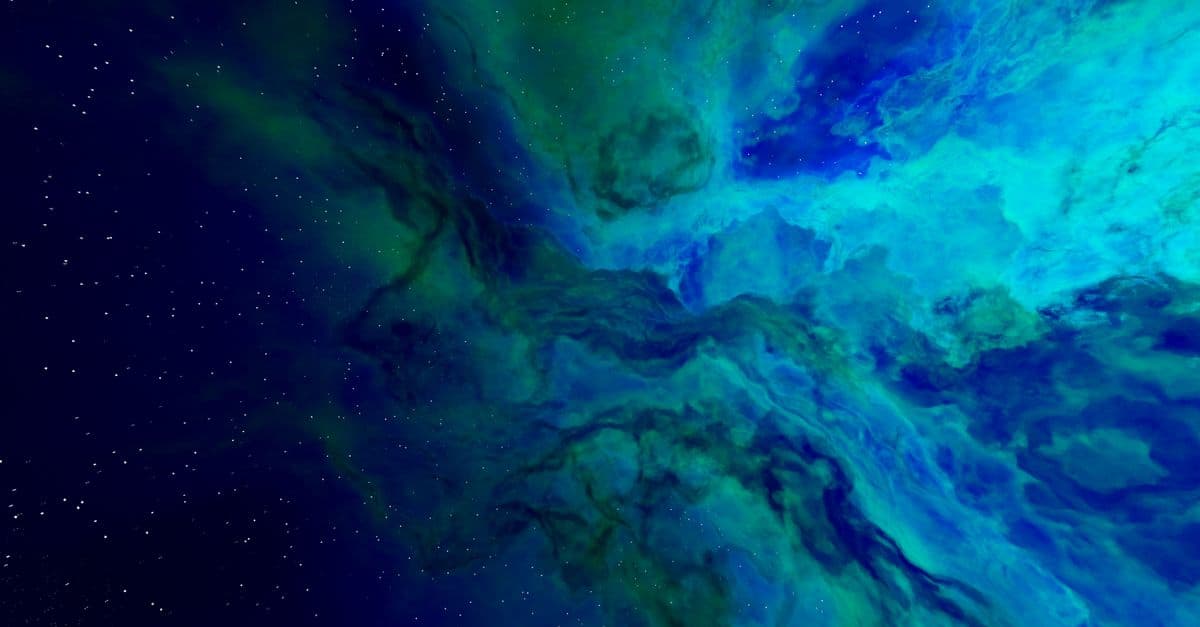
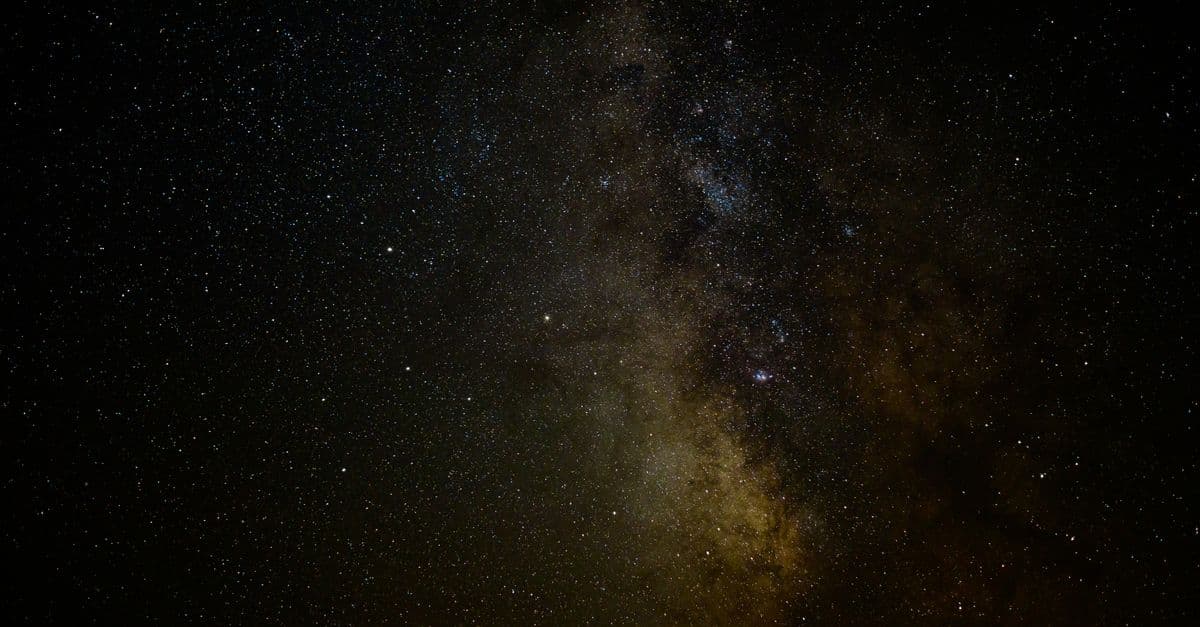
Photo: Marek Pavlík / Pexels
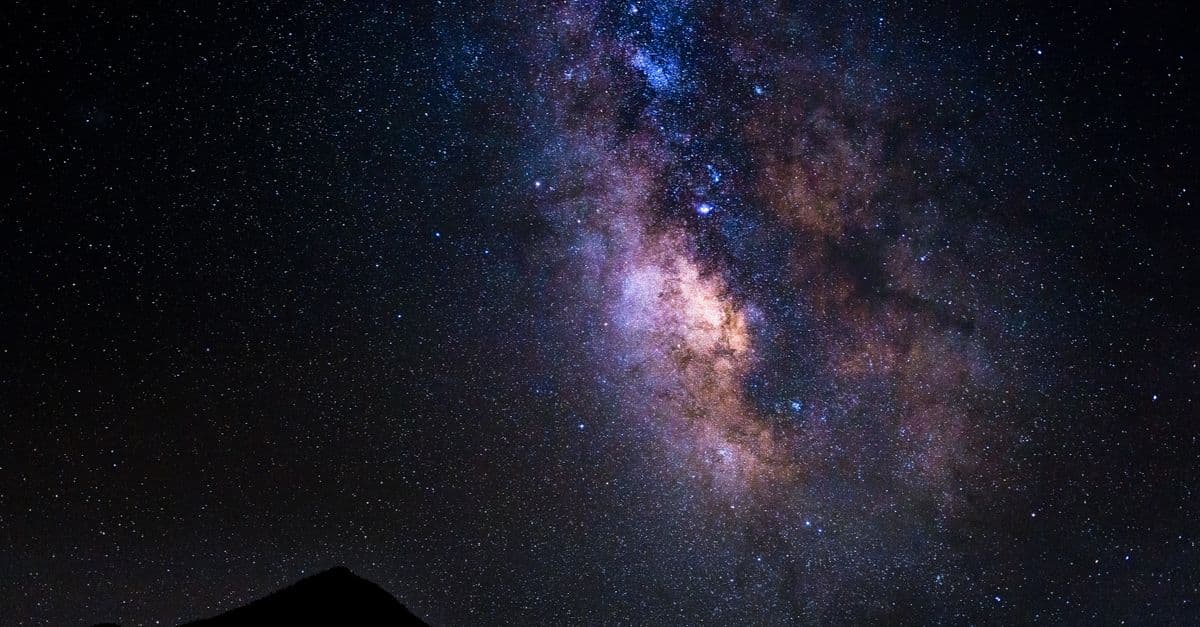
On a dark night, the Milky Way arches overhead as a pale band, brightest toward the constellation Sagittarius. That is the direction of the galactic center, where the galaxy should blaze most fiercely. Instead the band breaks up into dark lanes and patches that look like holes in the stars.
Those patches are not gaps. They are clouds of gas and dust, the interstellar medium (ISM), thick enough to absorb and scatter starlight. Astronomers estimate that the ISM holds about 10 to 15 percent of the mass of the Milky Way's disk, according to Katia Ferrière's 2001 review in Reviews of Modern Physics. It is where stars are born, and where they send their ashes when they die.
How astronomers learned that "empty" space is not empty
For most of the 18th and 19th centuries, astronomers assumed that starlight crossed the galaxy unhindered. William Herschel counted stars in every direction, assumed space was perfectly transparent, and concluded that the Sun sat near the center of a flattened star system. He was wrong about the center, and the reason was the ISM. Dust dims distant stars, so the star counts seemed to thin out in every direction, which made our position look central.
Two observations broke that picture. In 1904, Johannes Hartmann noticed that a calcium absorption line in the spectrum of the binary star delta Orionis did not shift back and forth with the orbital motion of the two stars. The gas producing the line therefore sat somewhere between the star and Earth. In 1930, Robert Trumpler compared the apparent sizes and brightnesses of open star clusters and found that distant clusters looked systematically too large, which could only be explained if their light was being dimmed along the way. Ferrière's review walks through both episodes.
Trumpler also showed that the dimming was stronger for blue light than for red, so distant stars look redder than they really are. That pairing of dimming and reddening remains the standard signature of interstellar dust. About two decades later, astronomers found that starlight is slightly polarized. Davis and Greenstein explained this in 1951 as the work of elongated dust grains aligned by a magnetic field threading the galaxy.
Key fact: By mass, the ISM is about 70.4 percent hydrogen, 28.1 percent helium, and 1.5 percent heavier elements, close to the composition measured in the Sun and in meteorites (Ferrière 2001). Its average density is about 2.7 × 10⁻²⁴ grams per cubic centimeter, roughly one hydrogen atom per cubic centimeter, which is roughly 10¹⁹ times thinner than air at sea level (air holds about 2.5 × 10¹⁹ molecules per cubic centimeter).
What the interstellar medium is made of
The ISM has three parts that influence one another. The first is ordinary matter, in the form of gas (atoms, molecules, ions, and free electrons) and dust. The second is cosmic rays, which are charged particles moving at close to the speed of light. The third is magnetic fields. Ferrière notes that these three components have comparable pressures and are tightly coupled, so none of them can be understood alone.
Think of the ISM as weather rather than a vacuum. A vacuum is uniform and inert, while the ISM has hot fronts, cold pockets, turbulence, and a constant energy supply from stars. The analogy is imperfect, because ISM "weather" plays out over millions of years and across hundreds of light-years, but it captures the idea that the medium is dynamic and structured.
The gas is mostly hydrogen, though not all of the heavier elements are in the gas. When astronomers measure absorption lines from elements such as magnesium, silicon, and iron, they find that most of these atoms are missing from the gas. Ferrière reports that these refractory elements are depleted by factors of about 10 to 100 relative to cosmic abundances, while carbon, nitrogen, and oxygen are depleted by only about 1.2 to 3. The missing atoms are locked up in solid dust grains.
Dust is a tiny component by mass, between 0.5 and 1 percent of the ISM. The gas is very unevenly distributed. Roughly half of the interstellar mass sits in discrete clouds that fill only 1 to 2 percent of the volume, and the rest is spread out between them.
The phases of the interstellar medium
Gas in the ISM exists in several distinct states, called phases. Their densities span about ten orders of magnitude, yet they coexist because heating, cooling, and gravity push the gas toward a few stable states instead of a smooth continuum. The table below follows the phase table in Ferrière (2001), as reproduced in the Wikipedia article on the interstellar medium. Ranges are wide because the ISM is patchy and the measurements are indirect.
| Phase | Temperature (K) | Density (particles per cm³) | Share of disk volume | State of hydrogen |
|---|---|---|---|---|
| Molecular clouds | 10 to 20 | 100 to 1,000,000 | under 1% | Molecular (H₂) |
| Cold neutral medium (CNM) | 50 to 100 | 20 to 50 | 1 to 5% | Neutral atoms |
| Warm neutral medium (WNM) | 6,000 to 10,000 | 0.2 to 0.5 | 10 to 20% | Neutral atoms |
| Warm ionized medium (WIM) | about 8,000 | 0.2 to 0.5 | 20 to 50% | Ionized |
| H II regions | about 8,000 | 100 to 10,000 | under 1% | Ionized |
| Hot ionized medium (HIM) | 1,000,000 to 10,000,000 | 0.0001 to 0.01 | 30 to 70% | Ionized |
Source: Ferrière (2001), Reviews of Modern Physics 73, 1031, via the Wikipedia ISM article. Volume fractions are uncertain, and different models give different answers, as discussed below.
Molecular clouds: where stars form
Molecular clouds are the coldest and densest phase. Hydrogen pairs up into H₂ molecules here, but only where dust grains shield the gas from ultraviolet light that would split the molecules apart. Ferrière reports that H₂ forms mainly on the surfaces of dust grains, not by atoms colliding in empty space, and that the molecules survive in large numbers only in the interiors of dark and translucent clouds.
These clouds are organized in a hierarchy. Giant complexes span tens of parsecs and can reach 10⁶ solar masses. Inside them are dense cores a few tenths of a parsec across, holding about 0.3 to 1,000 solar masses, where densities climb to 10⁴ to 10⁶ particles per cubic centimeter. Most molecular clouds are massive enough to be bound by their own gravity. The best-studied example nearby is covered in our article on the Orion Molecular Cloud, and the general process of collapse is the subject of the piece on stellar nurseries.
Cold and warm neutral gas
Neutral atomic hydrogen comes in two flavors. The cold neutral medium is made of sheets and filaments with 20 to 50 atoms per cubic centimeter at 50 to 100 K. The warm neutral medium is about 100 times more diffuse and about 100 times hotter. Multiply the density ratio by the temperature ratio and you get nearly the same thermal pressure in both, which is why the two coexist.
In 1969, George Field, Donald Goldsmith, and Harm Habing showed theoretically that atomic gas heated by low-energy cosmic rays has two thermally stable states: a cold dense one, cooled by emission from fine-structure lines of heavy elements, and a warm rarefied one, where hydrogen's own Lyman-alpha cooling switches on near 8,000 K. Between those states, the gas is unstable and tends to fall into one or the other, like water on a ridge rolling into one of two valleys. Later work added heating mechanisms such as ejection of electrons from dust grains, but the two-phase picture held.
Ionized gas: warm, diffuse, and sculpted
Warm ionized gas fills a large share of the volume and glows faintly in the red light of hydrogen-alpha. Heinrich Struve and William Elvey first reported such diffuse emission outside obvious nebulae in 1938, and modern surveys such as the Wisconsin H-Alpha Mapper show it in every direction as a web of filaments and loops. Its temperature of around 8,000 K matches what ionization by hot stars should produce.
How the gas stays ionized is still a puzzle. Ferrière points out that O stars, the hottest and most massive, are the only likely source of enough ionizing photons, but those stars are born inside dense clouds that should trap most of the light. One resolution is that cavities carved by groups of massive stars act as chimneys, letting ultraviolet photons escape to large distances. Another is that extra heating sources are needed on top of photoionization.
Hot gas and the problem of volume
The hot phase was first proposed by Lyman Spitzer in 1956 as a "galactic corona" of rarefied gas, an idea that explained how high-altitude clouds could be held up. Evidence arrived in the 1970s from the Copernicus satellite, which saw absorption by highly ionized oxygen (O VI) that only exists at very high temperatures, and from the soft X-ray background, which pointed to a hot plasma.
How much of the galaxy this gas fills is one of the genuinely open numbers in the field. In 1977, Christopher McKee and Jeremiah Ostriker proposed a model in which supernova remnants overlap so much that about 70 percent of the interstellar volume is hot. Later work argued that interstellar magnetic pressure reduces this, and Ferrière's own estimate for the region around the Sun, which accounts for supernovae that are clustered in groups, was a hot gas filling factor of about 20 percent. That is why the table gives a range from 30 to 70 percent for the disk as a whole.
How supernovae sculpt the medium
Supernovae are the main engine behind the hot phase. A massive star explodes, and the blast wave sweeps up the surrounding gas into an expanding shell while leaving a hot, thin interior behind. If the cavity cools slowly enough, it can persist for millions of years. When several massive stars explode close together in time and space, their remnants merge into a superbubble. Ferrière notes that the heating of the ISM by supernovae and, to a lesser extent, by stellar winds is now widely accepted as the origin of the hot phase. You can read more about the explosions themselves in our overview of supernova types.
The Sun lives inside one of these cavities, the Local Bubble. Earlier studies found that the bubble is a low-density region with a hot interior at around one million kelvin, with an electron density of a few thousandths of a particle per cubic centimeter. Ferrière's review cites a hydrogen cavity with a radius of about 60 to 100 parsecs in the Galactic plane and elongated well above and below it. More recent work, summarized on the Wikipedia page for the Local Bubble, puts the size at 1,000 light-years or more across, and attributes it to somewhere between 14 and 20 supernovae over roughly the last 10 to 20 million years. A January 2022 paper in Nature by Catherine Zucker and colleagues went a step further, concluding that the expanding surface of the bubble swept up the gas that formed the young stars near the Sun.
One feature of the Local Bubble shows why "rough pressure balance" among the phases is only a rough idea. Ferrière's numbers for the hot gas in the bubble imply a thermal pressure that exceeds that of the neutral phases by a factor of about 3 to 15. The hot gas is pushing outward, and the shell of cold gas around it is not simply a passive bystander.
The 21 cm line: reading hydrogen through the dust
Neutral hydrogen is almost invisible in visible light. Its useful signal comes from a different place: a change in the spin of the atom's electron relative to its proton. In the lower-energy state the two spins are antiparallel. In the higher-energy state they are parallel. When the electron flips, the atom emits a photon with a wavelength of about 21.1 centimeters, a frequency of about 1,420 megahertz.
The transition is very unlikely. Ferrière gives the rate as 2.85 × 10⁻¹⁵ per second, which means a given excited atom waits about 11 million years on average before emitting. That sounds useless until you count atoms. A line of sight through the galaxy crosses so many hydrogen atoms that the faint emission adds up to a strong radio signal. The Wikipedia entry on the hydrogen line reports that Hendrik van de Hulst predicted the line in 1944, and Harold Ewen and Edward Purcell detected it in 1951.
The method has three advantages, each of which has paid off many times over:
- Radio waves pass through dust. The 21 cm line lets astronomers see through the clouds that block visible light, so they can map the whole Galactic disk.
- The line shifts with motion. Gas moving toward or away from us changes the observed wavelength slightly (the Doppler effect). Because the galaxy rotates in a known way, a gas cloud's velocity can be converted into an approximate distance.
- Line strength tracks the amount of gas. Summing the emission along a line of sight gives the hydrogen column density, the number of atoms in a column of unit cross-section.
Radio maps made this way revealed that atomic hydrogen extends to at least 30 kiloparsecs from the galactic center, far beyond the visible stars, and that the gas layer is flat inside the Sun's orbit but flares and warps toward the edge. They also gave the first firm picture of the Milky Way's spiral arms. Our article on spiral structure covers why those arms form at all.
Cold clouds and warm gas look different in 21 cm absorption. Narrow peaks in absorption spectra come from cold clouds at 50 to 100 K, while the broad features seen in emission include a diffuse warm component that is too hot to produce much absorption. That difference is how astronomers separated the two neutral phases observationally.
Mapping hydrogen you cannot see: molecular gas and the CO problem
The most abundant molecule, H₂, is almost impossible to observe directly in cold clouds. It has no permanent electric dipole moment and a very small moment of inertia, so all of its allowed transitions lie outside the radio band. It was not detected until 1970, when George Carruthers saw it in the far-ultraviolet spectrum of a hot star, observed from above Earth's atmosphere.
The workaround is a different molecule. Carbon monoxide (CO), the next most abundant, has a rotational transition at a wavelength of 2.6 millimeters that radio telescopes can detect even through thick dust. Astronomers map CO and convert the result into an estimate of H₂ mass using a conversion factor. That factor is one of the larger uncertainties in galactic astronomy, and Ferrière explains that differences between published CO-based models trace back in part to the adopted conversion between CO and H₂.
Maps made this way show that most of the Milky Way's molecular gas sits in a ring between about 3.5 and 7 kiloparsecs from the center, with a strong concentration within the innermost 0.4 kiloparsecs. That central region, a dense and turbulent reservoir, is covered in our article on the Central Molecular Zone. Our own instruments for these observations are described in the guide to radio telescopes.
Ionized gas as a ruler: Strömgren spheres and pulsars
When a hot young star emits photons with enough energy to strip an electron from hydrogen (wavelengths shorter than 912 angstroms), it carves a bubble of ionized gas around itself. Ferrière gives the radius at which ionization and recombination balance, the Strömgren radius, as
r = 30 pc × (N₄₈ / (nH × ne))^(1/3)
where N₄₈ is the number of ionizing photons per second in units of 10⁴⁸, and nH and ne are the hydrogen and electron densities per cubic centimeter. For an O5V star, N₄₈ is about 34.
A worked example, using that formula. Put an O5V star in a diffuse cloud with 10 particles per cubic centimeter: the ratio inside the brackets is 34 divided by 100, or 0.34, whose cube root is about 0.70, giving a radius near 21 parsecs. Put the same star in a dense clump with 1,000 particles per cubic centimeter and the ratio is 34 divided by one million, whose cube root is about 0.032, giving a radius near one parsec. Density matters enormously: the same star ionizes a region 20 times larger in thin gas.
A completely different tool for measuring free electrons uses pulsars. Radio pulses from a pulsar travel through the ionized ISM, and lower frequencies arrive slightly later than higher ones because free electrons slow longer wavelengths more. The delay, called the dispersion measure, is proportional to the number of free electrons along the path. Because pulsars are not dimmed by dust the way optical sources are, this method reaches ionized gas that optical emission lines cannot. For the Sun's neighborhood, models built from pulsar data give a mean electron density of about 0.025 per cubic centimeter, which together with emission measurements implies that the true density inside the warm ionized gas is 0.18 to 0.46 per cubic centimeter and that the gas fills about 5 to 14 percent of the volume. Our article on pulsar timing explains why their signals are so regular.
Interstellar dust: small grains, large effects
Dust makes up less than 1 percent of the ISM by mass, and yet it controls what we see, where molecules form, and how the medium cools. Ferrière reports grain sizes ranging from about 0.005 to 1 micrometer. Draine's 2003 review in Annual Review of Astronomy and Astrophysics, available on arXiv, covers a model built from amorphous silicate grains, graphite grains, and polycyclic aromatic hydrocarbon (PAH) molecules.
Extinction and reddening. Dust removes light from a beam by absorbing and scattering it, and it removes blue light more efficiently than red. The wavelength dependence is summarized by the ratio R_V, the total extinction in the visual band divided by the reddening between blue and visual bands. According to the Wikipedia article on astronomical extinction, R_V averages 3.1 in the Milky Way but varies from one line of sight to another, tracking the typical grain size. Ferrière adds that dense clouds have a flatter size distribution than the diffuse ISM, with a larger fraction of big grains, which pushes the value up.
Near the galactic center the dimming is extreme. The same extinction article says that visual extinction there can exceed 30 magnitudes. Each five magnitudes is a factor of 100 in brightness, so 30 magnitudes is a factor of one trillion (10¹²). That is why the central bulge of the Milky Way is invisible to the eye, and why it has to be studied with radio, infrared, and X-ray telescopes. Our guide to infrared telescopes explains why longer wavelengths slip through.
Thermal glow. The energy that dust absorbs does not vanish. It is re-emitted in the infrared. Ferrière reports that large grains in the diffuse ISM sit at about 17.5 K, while dust in molecular clouds can be colder, near 15 K, and small grains and PAH molecules get heated in sudden spikes by single photons to hundreds of kelvins. The Infrared Astronomical Satellite in 1983 and the Cosmic Background Explorer in 1989 to 1990 produced the first all-sky maps of this glow.
Where dust comes from. The origin of interstellar dust is not fully settled. Ferrière describes two lines of evidence. Dust grains condense in the cool outer atmospheres of red giants and supergiants, and in planetary nebulae, then get blown out by radiation pressure. Yet theory suggests that supernova shock waves destroy grains faster than stars can inject them, so some grain growth must happen inside the ISM itself, probably in cold dense clouds, where measured element depletions are highest. Evolved stars on the asymptotic giant branch are among the best-studied dust factories.
Why molecular clouds need dust. Without grains, ultraviolet light would break apart H₂ and CO as fast as they form, and H₂ could not even form efficiently in the first place. A cloud has to be thick enough to shield its interior, and the dust does most of that work. Dust is also the raw material of planets, because rocky worlds grow from grains that stick together in a disk around a young star, a process described in our article on protoplanetary disks.
Interstellar chemistry: more than 200 molecules
Cold, shielded clouds are chemical laboratories. The first interstellar molecules, CH, CH⁺, and CN, were found in the late 1930s through the absorption lines they imprint on starlight. The next big steps were the ultraviolet detection of H₂ in 1970 and of CO in 1971, and the radio detection of CO's 2.6 mm emission in 1970, all described by Ferrière.
The running list of detected species maintained on Wikipedia includes more than 200 molecules. It runs from diatomics through organic molecules such as methanol, acetaldehyde, ethanol, formic acid, and glycolaldehyde (a simple sugar-related molecule), up to benzene and the fullerenes C₆₀ and C₇₀. The amino acid glycine appears on that page only in a section for unconfirmed detections, a good reminder that an announced detection in this field is not the same as an accepted one.
Large carbon-based molecules are also visible through their infrared emission. Ferrière lists a family of mid-infrared emission features at 3.3 to 11.3 micrometers, attributed to polycyclic aromatic hydrocarbons, which are flat molecules built from fused rings of carbon. According to the PAH article on Wikipedia, more than 20 percent of the carbon in the universe may be associated with PAHs, which can account for as much as 10 percent of the total infrared luminosity of galaxies. The identification of individual PAH molecules through their rotational lines is much more recent, with the first specific detections coming in 2021.
Three mechanisms drive the chemistry:
- Ion-molecule reactions in the gas. Cosmic rays ionize H₂, and the resulting ions react quickly with neutral molecules even at 10 K, because they need no energy barrier to overcome.
- Reactions on grain surfaces. Atoms and molecules stick to cold grains, meet, and react. Ices form, and some of the products are released back to the gas when grains are warmed.
- Ultraviolet photochemistry. Starlight breaks molecules apart, creating reactive fragments, and the balance between creation and destruction sets the molecular content of a cloud's edges.
Whether this chemistry mattered for the origin of life on Earth is an open question. What is not in doubt is that planetary systems inherit the chemical inventory of the cloud they form from. The same inventory, processed by spectroscopy, tells astronomers about conditions in clouds they will never visit, as explained in our article on spectroscopy.
The cycle: from cloud to star and back to cloud
Ferrière's review frames the ISM as one half of a loop. The cycle has a rough logical order, though in a real galaxy all of its stages run at the same time in different places:
- Neutral gas cools and gathers into dense molecular clouds, often where spiral arms or colliding flows compress it.
- The densest cores lose magnetic support and collapse into stars.
- Young massive stars ionize the surrounding gas, forming H II regions, and their winds and radiation erode the parent cloud.
- The most massive stars explode as supernovae, heating gas to millions of kelvin, enriching it with heavy elements, and driving turbulence.
- The hot gas expands, cools over millions of years, and eventually rejoins the warm and cold phases.
Only a small fraction of a cloud's gas turns into stars before feedback disperses the rest. Turbulence driven by supernovae, stellar winds, and gravitational instabilities helps hold the clouds up against collapse. The detailed physics is still under study, and this is one of the most active areas of research in galactic astronomy.
The Kennicutt-Schmidt law
One of the clearest empirical regularities is the Schmidt law, relating star formation to gas density. Robert Kennicutt's 1998 study in the Astrophysical Journal, summarized on arXiv, used hydrogen and CO measurements from 61 normal spiral galaxies and 36 infrared-selected starburst galaxies. It found that the star formation rate per unit area scales with gas surface density to a power of 1.4, with an uncertainty of ±0.15, over several orders of magnitude. In plain terms, doubling the gas surface density raises the star formation rate by about 2.6 times (2 to the power 1.4), not by a factor of two.
An alternative form that fits the data about as well links star formation rate to the gas density divided by the local orbital time. A later review by Kennicutt and Neal Evans, published in 2012 in Annual Review of Astronomy and Astrophysics and posted on arXiv, extended these relations from whole galaxies down to individual molecular clouds.
Chemical enrichment
Every generation of stars changes the ISM's makeup. Massive stars return oxygen, magnesium, and silicon in supernovae, and low-mass evolved stars return carbon and nitrogen. Heavy elements beyond iron come from rarer events such as neutron-star mergers, which astronomers inferred from the afterglow of the 2017 merger detected in gravitational waves. The result is a steady rise in the proportion of heavy elements in the gas, which is the reason that younger stars generally contain more of them than older ones. Our piece on nucleosynthesis explains how each element is made.
The ISM in other galaxies
Every galaxy has an ISM, but its makeup depends on the galaxy's type and history. Spiral galaxies such as the Milky Way have rich gas reservoirs and ongoing star formation. Starburst galaxies convert gas into stars at furious rates and drive winds that carry hot gas out of the disk. Elliptical galaxies typically retain little cold gas, and the gas they hold is mostly hot and X-ray emitting. Small dwarf galaxies, with fewer heavy elements, contain less dust, so molecular hydrogen forms less readily there.
The early universe is a frontier. Observers have only recently been able to measure gas and dust in galaxies seen as they were more than ten billion years ago, with instruments such as ALMA and the James Webb Space Telescope. The detailed comparison with the Milky Way is a work in progress, and we avoid quoting numbers for it here.
Where the Sun sits, and what Voyager found
The Solar System currently moves through the Local Bubble, according to the Wikipedia summary of the research, entering it about five million years ago. Inside the bubble, the Sun is surrounded by a somewhat denser patch of gas, the Local Interstellar Cloud. The Sun's wind inflates a bubble of its own inside that cloud, the heliosphere, discussed in our explainer on the heliosphere.
NASA reports that Voyager 1 reached the boundary of interstellar space in 2012 and Voyager 2 in 2018, as described on NASA's Voyager mission page. That crossing turned the ISM from something inferred through telescopes into something sampled by instruments inside it. Both probes remain active missions sampling the plasma beyond the heliosphere, and our article on the Voyager probes follows their journey.
What people often get wrong about the ISM
"Space between stars is a vacuum." Average density is about one hydrogen atom per cubic centimeter, which is a far better vacuum than any laboratory can easily produce for a large volume, but the ISM still has structure, pressure, magnetic fields, and enough material to dim stars across thousands of light-years. For light crossing the galaxy, a few thousand parsecs of thin gas and dust add up.
"The dark patches are empty holes." They are the densest, coldest parts of the medium. The astronomer Edward Barnard's long-exposure photographs in the early 20th century first showed these dark clouds clearly, and it became clear that they were absorbing the light of stars behind them.
"The hot gas is the main component." The hot phase may fill a large share of the volume, but because it is so thin it holds a small share of the mass. Half of the mass is in discrete clouds that take up 1 to 2 percent of the volume.
"Phases are sharply separated." The labels are a useful sorting scheme, but the gas moves between phases constantly, and the boundaries are fuzzy. Some molecular clouds have atomic halos, and some atomic clouds have molecular cores.
"The numbers are settled." The volume fractions in the table above come with wide ranges because they depend on models and on observations that probe only certain phases or certain regions. Treat a single quoted percentage with suspicion.
Frequently asked questions
Q: What is the interstellar medium in simple terms? A: The interstellar medium is everything between the stars of a galaxy: gas, dust, cosmic rays, and magnetic fields. In the Milky Way it contains roughly 10 to 15 percent of the disk's mass, and its average density is about one hydrogen atom per cubic centimeter.
Q: What are the phases of the ISM? A: Astronomers usually distinguish molecular clouds, cold neutral gas, warm neutral gas, warm ionized gas, H II regions, and hot ionized gas. They range from about 10 K to millions of kelvin and differ in density by many orders of magnitude, but they coexist in an approximate pressure balance.
Q: Why can't we see the center of the Milky Way in visible light? A: Interstellar dust absorbs and scatters visible light. Toward the galactic center, extinction can exceed 30 magnitudes, a dimming factor of roughly a trillion. Radio, infrared, and X-ray observations get through far better.
Q: How is the 21 cm line used to study the ISM? A: Neutral hydrogen emits at 21.1 cm when its electron's spin flips. Radio waves of that length pass through dust, so astronomers use the line to map hydrogen across the galaxy, measure its motion from Doppler shifts, and trace the spiral structure.
Q: How much of the interstellar medium is dust? A: Dust is between about 0.5 and 1 percent of the ISM by mass, according to Ferrière's 2001 review. Despite that small share, it carries most of the heavy elements that are missing from the gas, shields molecules from ultraviolet light, and re-radiates starlight in the infrared.
Q: Is the Sun inside a bubble in the ISM? A: Yes. The Sun lies within the Local Bubble, a cavity of low-density hot gas more than 1,000 light-years across according to recent estimates, thought to have been carved by roughly 14 to 20 supernovae. Within it, the Sun sits in a denser patch called the Local Interstellar Cloud.
The takeaway
The space between stars is not a backdrop. It is half of a cycle in which gas collapses into stars, stars heat and enrich the gas, and the gas cools and collapses again. Its phases are held in a loose balance that supernovae keep stirring, and its smallest ingredient, dust, decides where molecules form and what we can see. The next time you look at the dark lanes in the Milky Way, you are looking at the material that future stars and planets will be made from.
Sources
- Ferrière, K. M. (2001). The Interstellar Environment of our Galaxy. Reviews of Modern Physics 73, 1031.
- Draine, B. T. (2003). Interstellar Dust Grains. Annual Review of Astronomy and Astrophysics 41, 241.
- Kennicutt, R. C. (1998). The Global Schmidt Law in Star Forming Galaxies. Astrophysical Journal 498, 541.
- Kennicutt, R. C., and Evans, N. J. (2012). Star Formation in the Milky Way and Nearby Galaxies. Annual Review of Astronomy and Astrophysics.
- NASA. Voyager mission page.
- Wikipedia: Interstellar medium, Local Bubble, Hydrogen line, Extinction (astronomy), List of interstellar and circumstellar molecules, Polycyclic aromatic hydrocarbon.
Related reading
Follow new articles
Add SciHub101 to your feed reader to see new science and technology stories.
About the Author
SciHub101 is an independent science and technology publication founded and edited by Buğra Sözeri, a software engineer and app developer based in Türkiye. AI tools assist with drafting and research. Source documentation in the existing archive is uneven, and articles are being reviewed and corrected. The Editorial Team byline identifies editorial responsibility; it does not certify specialist or independent human review. Where we compare products, anything built by our own team is labelled as such — see the editorial guidelines and About page for how corrections and disclosures work.
Related Articles
What Are Rogue Planets? Worlds Drifting Alone in the Dark
Rogue planets, also called free-floating planets, are planetary-mass objects that orbit no star. Some were ejected from planetary systems and some may have collapsed from gas clouds on their own. Microlensing surveys suggest they are common, and a thick hydrogen atmosphere could in theory keep a few of them warm enough for liquid water.
What Is the Fate of Galaxies? The Milky Way's Collision with Andromeda
The Andromeda Galaxy is approaching the Milky Way at ~110 km/s and will collide in approximately 4.5 billion years. The two galaxies will merge over several billion years of passes, ultimately forming a giant elliptical galaxy — sometimes called 'Milkomeda.' Despite the collision of two galaxies each containing hundreds of billions of stars, individual stellar collisions are extremely rare. Earth will likely survive, though in a dramatically different night sky.
What Is Interstellar Dust and Why Does It Matter?
Interstellar dust grains, typically far thinner than a human hair, dim starlight, build molecular hydrogen, shield star-forming clouds, carry the isotopic signatures of dead stars, and supply the solids from which planets grow.
Stellar Nurseries: How Stars Are Born in the Dark
The Pillars of Creation are not killing stars — they are building them. Inside those towering columns of cold gas, dense knots called Bok globules are collapsing under their own weight, heating up toward nuclear ignition. The James Webb Space Telescope, in 2022, showed us the newborn stars Hubble never could.
The Central Molecular Zone: The Milky Way's Turbulent Heart
Within 500 parsecs of the Milky Way's center lies a region unlike anything else in the galaxy — the Central Molecular Zone. It contains roughly 10% of the entire galaxy's molecular gas compressed into less than 0.1% of its volume. Star formation there should be rampant, but it is strangely quiet. Giant molecular clouds orbit at velocities that defy simple physics. A cloud called the Brick should have already collapsed into thousands of stars, yet it has not. Understanding the CMZ means understanding what keeps the center of our galaxy from exploding with new stars — and what occasionally makes it erupt instead.
The Orion Molecular Cloud: Our Closest Star Factory
At 1,300 light-years away, the Orion Molecular Cloud complex is the nearest site of massive star formation to Earth — a sprawling 240-light-year structure that contains everything from freshly ignited hot young stars to protoplanetary disks still assembling into planets. JWST has turned it into the best-resolved stellar nursery in the observable universe.