What Is the Fate of Galaxies? The Milky Way's Collision with Andromeda
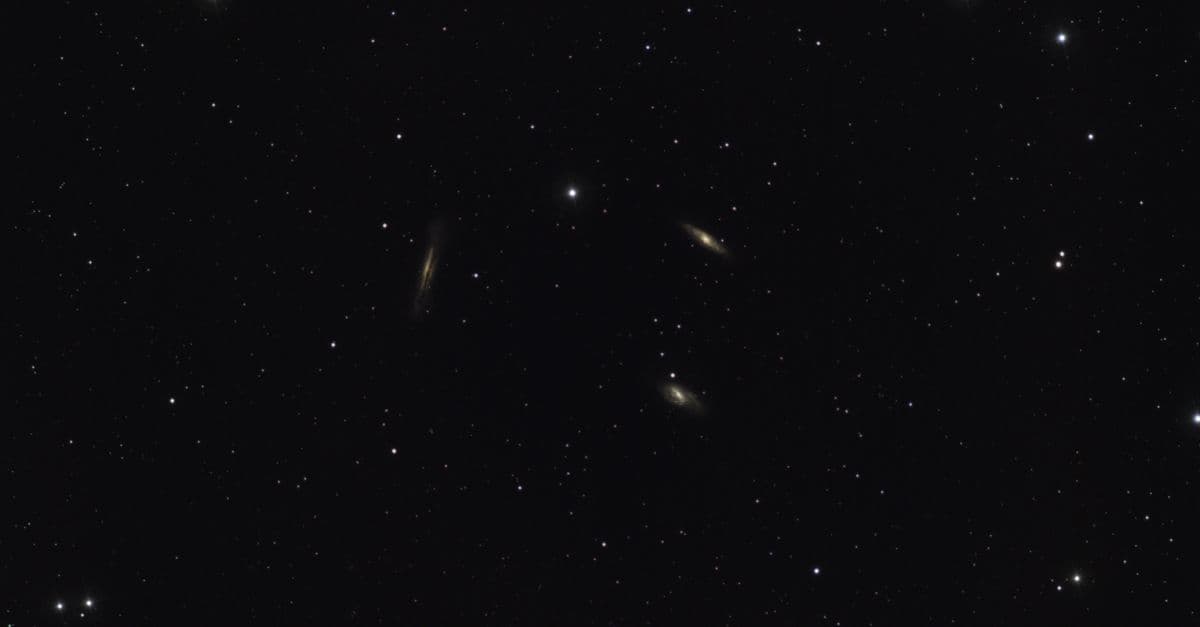
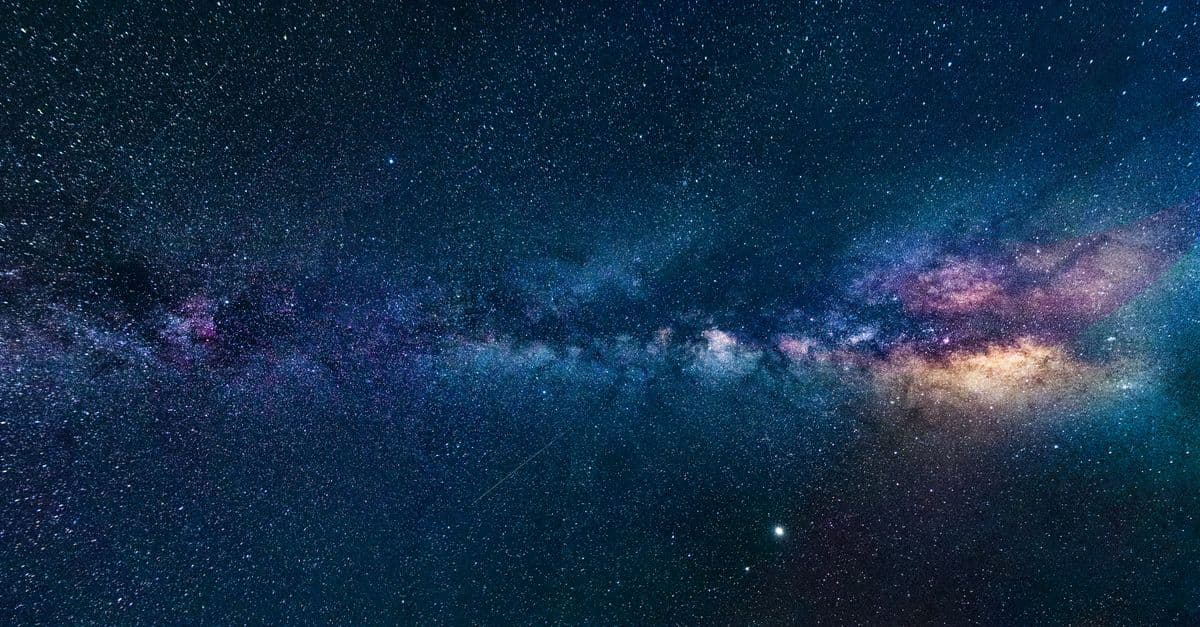
Photo: Jeremy Müller / Pexels
On a clear night in the Northern Hemisphere, the Andromeda Galaxy (M31) is the most distant object visible to the naked eye — a faint smudge of light in the constellation Andromeda, roughly 2.537 million light-years away. It contains approximately 1 trillion stars. Its disk spans about 220,000 light-years — more than twice the diameter of the Milky Way.
And it is heading straight for us.
Andromeda is approaching the Milky Way at approximately 110 kilometres per second. In roughly 4.5 billion years, the two galaxies will collide — beginning a cosmic interaction that will unfold over billions of years and Eventually, merge both galaxies into a single giant elliptical galaxy, sometimes called Milkomeda or Milkdromeda.
This is not speculation — it is calculated from measurements of Andromeda's proper motion (its motion across the sky), its radial velocity (measured by Doppler shift), and detailed simulations of how two galaxies of their masses interact under gravity. The collision is as certain as astronomy can make it.
The approach of Andromeda
Current distance: ~2.537 million light-years (778 kiloparsecs) Current radial velocity: ~110 km/s toward the Milky Way Estimated collision time: ~4.5 billion years from now Time to first close approach: Approximately 3.8 billion years (after several passes, final merger is complete in ~6–8 billion years)
Andromeda's trajectory was uncertain for decades — measuring the transverse (across-the-sky) component of its motion requires detecting sub-milliarcsecond shifts over years of observation. Hubble Space Telescope measurements (van der Marel et al. 2012) pinned down Andromeda's proper motion with sufficient precision to determine the trajectory. The conclusion: the collision is essentially head-on, not a near-miss.
The Milky Way is also currently absorbing smaller satellites — the Large and Small Magellanic Clouds (at ~160,000 light-years) are in the process of being tidally disrupted and gradually accreted. In ~2.4 billion years, the Large Magellanic Cloud is predicted to merge with the Milky Way before the Andromeda collision.
What will happen: the collision in stages
Galaxy collisions don't happen like collisions between solid objects — they are intricate gravitational dances that unfold over billions of years.
First pass (~3.8 billion years from now): The Milky Way and Andromeda make their first close approach. The galaxies will not simply stop at this point — their momentum carries them through each other. Stars in both galaxies are so spaced out that actual stellar collisions during this pass are extraordinarily rare (see below). But the gravitational interaction is dramatic: tidal forces strip stars from both galaxies, creating enormous tidal tails stretching millions of light-years — similar to the "Antennae Galaxies" (NGC 4038/4039) currently colliding 45 million light-years away.
Separation and second approach: After the first pass, the galaxies will separate — pulled apart by their momentum — then fall back together under gravity for a second approach. Multiple passes occur over a timescale of 1–2 billion years.
Final merger (~6–8 billion years from now): The galaxies lose enough energy through dynamical friction (stars and dark matter halos exerting gravitational friction on each other) to settle into a merged system. The result is a giant elliptical galaxy — the merger destroys the spiral structure of both galaxies, mixing stars into a smooth, extended, roughly spheroidal distribution.
The role of dark matter halos: Before the visible galaxies interact, their enormous dark matter halos (each extending ~250 kpc) begin interacting and merging. Dark matter halos merge more smoothly than the stellar and gaseous disks — setting the stage for the stellar merger.
Will stars collide?
Despite two galaxies each containing hundreds of billions of stars colliding, individual stellar collisions are extraordinarily rare. Here's why:
Stars are incredibly small compared to the distances between them. In the Sun's neighbourhood, the nearest star (Proxima Centauri) is 4.2 light-years away. The Sun's diameter is only 1.4 million km. The ratio of stellar size to interstellar spacing is about 10⁻⁷ — the average separation is 10 million times the size of a star.
When galaxies collide, stars pass through the space between other stars — the probability of any two stars hitting is negligible. In the entire Milky Way-Andromeda collision, the expected number of actual stellar collisions may be very small — perhaps a handful in the densest central regions.
What will happen instead: stars will be redistributed. The tidal forces and gravitational mixing will scatter stars throughout a much larger volume, scrambling the orderly spiral arms into the smooth halo of an elliptical galaxy.
Gas, star formation, and the starburst
While stars don't collide, gas clouds do. The interstellar medium of both galaxies — gas and dust that fills the space between stars — will collide and compress. When gas clouds collide:
- Compression triggers gravitational instability
- Dense cloud fragments collapse to form new stars
- A starburst ensues — a period of dramatically elevated star formation
The Milky Way-Andromeda collision will likely trigger enormous episodes of star formation, possibly producing star formation rates 10–100 times higher than today. The cores of both galaxies will be particularly active — the existing supermassive black holes will be fed by infalling gas.
The supermassive black hole merger: Both the Milky Way (Sgr A*, 4.1 million M☉) and Andromeda (M31*, ~100–200 million M☉) have central supermassive black holes. As the galaxies merge, these black holes will sink to the centre of the merged system through dynamical friction (losing energy to the surrounding stellar and dark matter population). They will eventually form a binary black hole system orbiting each other.
The final parsec problem: binary SMBHs stall at a separation of ~1 parsec — where the stellar density needed for continued dynamical friction is depleted and gravitational wave emission is not yet efficient. How this last parsec is crossed is uncertain — possibly through triaxial stellar orbits, gas dynamics, or interactions with a third black hole.
Once the binary merges, the event will be an extraordinarily powerful gravitational wave source — detectable by the LISA (Laser Interferometer Space Antenna) mission if it was operating at that time (it won't be — LISA is planned for the 2030s, not billions of years hence). The merged black hole will be ~200 million solar masses.
What happens to the Solar System?
Most likely scenario: The Solar System remains intact. Individual stars are scattered rather than colliding — the Solar System will be gravitationally perturbed by the changing potential during the merger, but its internal binding energy greatly exceeds the perturbations it would receive.
However, the Sun's galactic address will change dramatically:
- Currently in the Milky Way's outer disk, about 26,000 light-years from the centre
- During the merger, the Sun could be flung to much larger galactic radii (the outer halo of the merged system) or scattered inward toward the galactic centre
- Simulations suggest the Sun has a ~85% chance of remaining bound to the merged system, with a significant probability of ending up much farther from the galactic centre than today
The night sky: From Earth (assuming it survives the Sun's red giant phase 5 billion years from now — see the earlier article), the night sky would be transformed:
- Andromeda, currently a faint smudge, will grow over the next few billion years into a bright band spanning many degrees
- At first contact, both galactic cores will be visible as bright blobs separated by a band of disrupted stars and glowing star-forming regions — a spectacular dual galaxy visible from Earth
- As the merger progresses, the familiar Milky Way band will be replaced by the chaotic, irregular glow of a merging system
- After the final merger, the night sky might display a diffuse, roughly uniform glow from the elliptical's extended halo — no distinct band of the Milky Way
The fate of other galaxy groups
The Milky Way-Andromeda collision is not occurring in isolation:
The Local Group: Both galaxies are part of the Local Group — roughly 80 galaxies within ~3 megaparsecs, dominated by the Milky Way, Andromeda, and Triangulum (M33). Most Local Group members are dwarf galaxies orbiting the two giants. M33 may merge with Andromeda or the merged Milkomeda system.
Gravitational isolation: On larger scales, the universe's accelerating expansion (dark energy) is causing galaxy groups and clusters to recede from each other at ever-increasing rates. Beyond ~4 megaparsecs, objects are already receding from the Local Group faster than light (in cosmological terms). Over the next few hundred billion years, the Local Group will gravitationally contract (overcoming the expansion within our gravitationally bound group) while all other galaxy groups recede irreversibly over the horizon.
Eventual fate: In ~100 billion years, the merged Local Group (Milkomeda plus remaining Local Group members) will have merged into a single galaxy surrounded by an expanding, increasingly empty universe. All other galaxies will have receded beyond the observable horizon — the night sky of that era would contain no external galaxies at all. Our descendants (if any exist) would be unable to discover the expanding universe from observations of their sky alone.
Galaxy mergers throughout the universe
The Milky Way-Andromeda merger is not unusual — it is a typical process in galaxy evolution. Most large galaxies have undergone multiple mergers throughout their history.
Evidence for past mergers:
- Stellar streams — coherent streams of stars moving through the Milky Way's halo — are the remnants of dwarf galaxies absorbed in past mergers. The Sagittarius Stream is the most prominent: a ring of stars encircling the Milky Way from the ongoing disruption of the Sagittarius Dwarf Galaxy.
- Gaia (the ESA satellite mapping stellar positions and velocities in the Milky Way) has identified the Gaia-Sausage-Enceladus merger — a major galaxy merger that occurred ~8–10 billion years ago, contributing ~50% of the Milky Way's inner halo stars and significantly heating the thick disk.
- The LMC and SMC (Magellanic Clouds) are in the early stages of being absorbed.
Merger-driven galaxy evolution: Large elliptical galaxies — the most massive galaxies in the universe — are predominantly built by mergers. Galaxy clusters host many ellipticals that grew through repeated mergers over cosmic time. The relationship between mergers, AGN activity, and star formation quenching is a major topic of galaxy evolution research.
Upcoming observations: The Vera Rubin Observatory (LSST), Euclid, and Roman Space Telescope will survey galaxy mergers across cosmic history, quantifying how the merger rate has evolved with redshift and how mergers correlate with star formation quenching and AGN activity.
Related Reading
Follow new articles
Add SciHub101 to your feed reader to see new science and technology stories.
About the Author
SciHub101 is an independent science and technology publication founded and edited by Buğra Sözeri, a software engineer and app developer based in Türkiye. AI tools assist with drafting and research. Source documentation in the existing archive is uneven, and articles are being reviewed and corrected. The Editorial Team byline identifies editorial responsibility; it does not certify specialist or independent human review. Where we compare products, anything built by our own team is labelled as such — see the editorial guidelines and About page for how corrections and disclosures work.
Related Articles
What Is the Interstellar Medium? The Space Between Stars
The interstellar medium (ISM), the gas and dust filling the space between stars, is not empty. It is a multiphase medium ranging from 10 K molecular clouds where stars form to million-kelvin plasma heated by supernovae. Dust hides the centre of our galaxy from visible light, and the ISM is both the raw material for new stars and the place where dying stars deposit their products.
What Is Astrochemistry? The Molecules of Space and Life's Cosmic Origins
Astrochemistry studies how molecules form and survive in space, from H₂ in dark clouds to amino acids and nucleobases in meteorites and returned asteroid samples.
Andromeda-Milky Way Collision Explained
In ~4.5 billion years, Andromeda will collide with the Milky Way. Here's what will actually happen — and why no stars will hit each other.
Galactic Cannibalism: The Milky Way's History of Mergers
The Milky Way did not grow peacefully. It reached its current size by absorbing smaller galaxies — tearing them apart with tidal forces, stripping their stars into long streams, and incorporating their material into the disk and halo. One major collision 10 billion years ago reshaped the Milky Way's entire inner halo. Another is happening right now. A third, larger one is coming in 4 billion years, and there is nothing that can stop it.
How Galaxies Form and Evolve: From the First Stars to Today
Galaxies are not eternal — they are born, grow through mergers, and eventually die. Here's how the universe built these island universes.
Why Is the Night Sky Dark? Olbers' Paradox Explained
The night sky is dark because the universe has a finite age, not because stars are few. How Olbers' paradox works, who solved it, and what it reveals.