Space
Why Is the Night Sky Dark? Olbers' Paradox Explained
The night sky is dark because the universe has a finite age, not because stars are few. How Olbers' paradox works, who solved it, and what it reveals.
6 articles tagged with #cosmic-microwave-background
The night sky is dark because the universe has a finite age, not because stars are few. How Olbers' paradox works, who solved it, and what it reveals.
The Big Bang wasn't an explosion in space — it was an expansion of space itself. And the evidence for it is overwhelming.
The cosmic microwave background (CMB) is thermal radiation from the universe's first 380,000 years, now cooled to about 2.7255 K. Its tiny ripples seeded every galaxy.
Dark flow is the claimed observation that galaxy clusters across the observable universe are moving in the same direction, toward a region beyond what we can see. If real, it could indicate a gravitational pull from structures outside the observable universe. The claim is controversial and not accepted by most cosmologists.
The universe is 13.8 billion years old. But how do we know? Three independent methods — the cosmic microwave background, the oldest stars, and Hubble's constant — converge on the same answer. Here's the evidence.
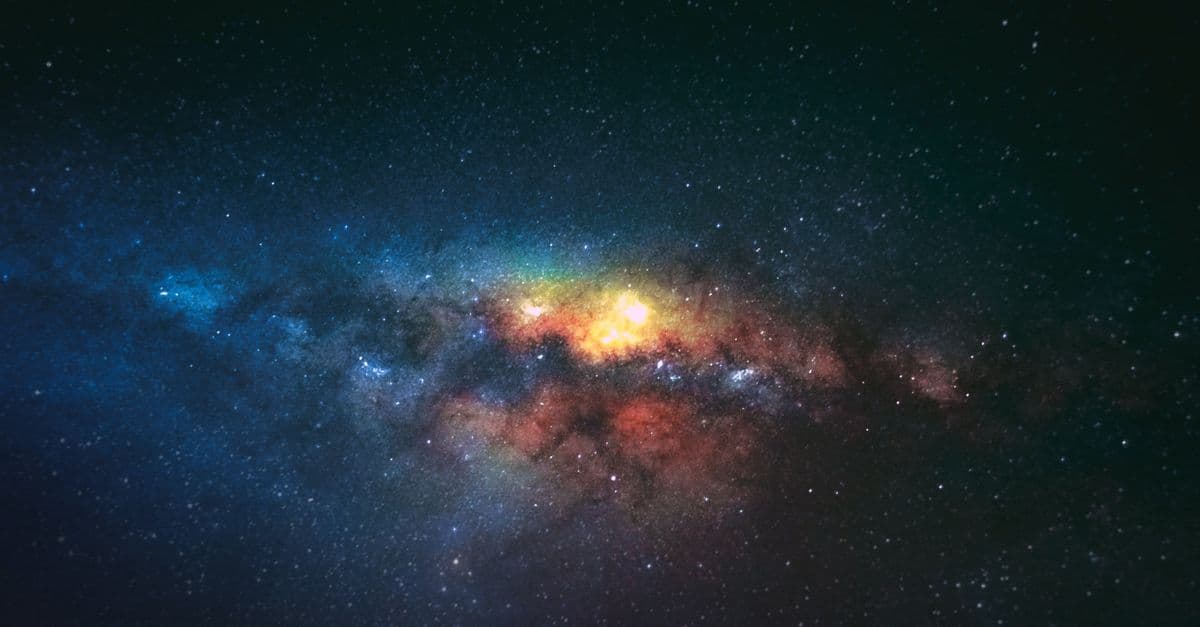
The observable universe is 93 billion light-years across. The full universe is bigger — possibly infinitely so. Here's what we can measure, what we can't, and why.