How Planetary Defence Works: Protecting Earth From Asteroids
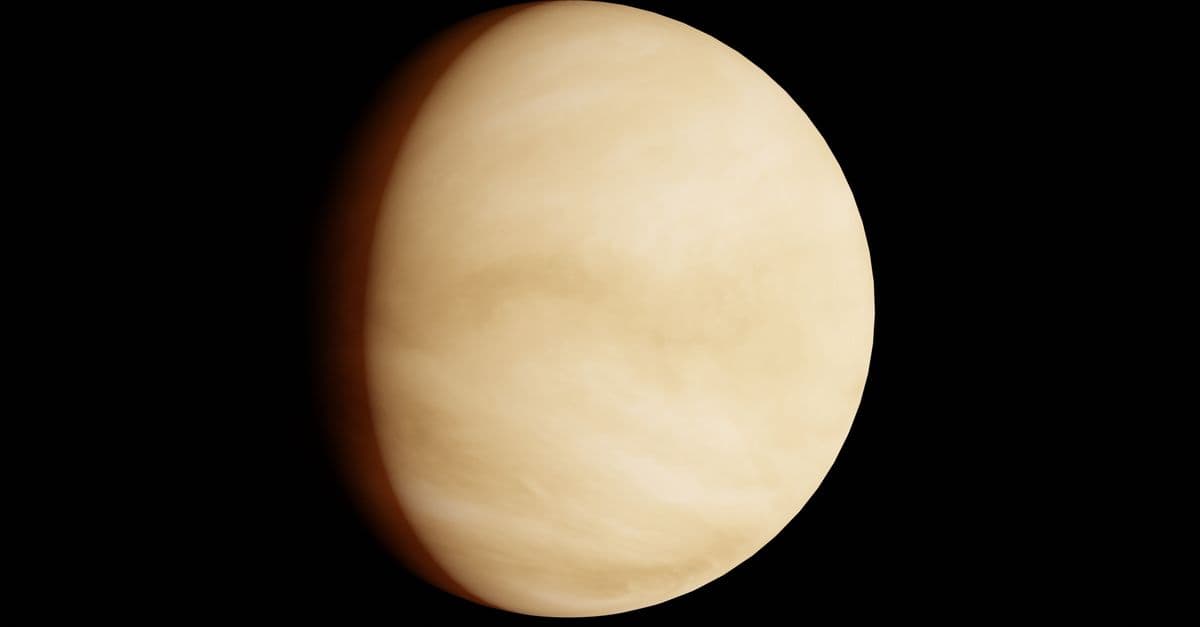
Photo: Zelch Csaba / Pexels
On September 26, 2022, a spacecraft with a mass of about 570 kilograms (1,260 pounds) struck a small asteroid roughly 11 million kilometers (6.8 million miles) from Earth. The asteroid, a moonlet named Dimorphos, was no threat to anyone. That was the point. NASA's DART (Double Asteroid Redirection Test) was the first time humans tried to change the motion of a natural celestial body, and the orbit of Dimorphos shrank by about 33 minutes. Planetary defense, the practice of finding hazardous asteroids and deciding what to do about them, now has one proven tool and a long list of open questions.
Key takeaways
- DART (2022) shortened the orbital period of Dimorphos, a moonlet roughly 150 to 160 meters across, by 33.0 ± 1.0 minutes. A perfectly inelastic collision would have produced only about 7 minutes.
- Detection is the hard part. Surveys met the goal of cataloguing 90 percent of near-Earth asteroids larger than 1 kilometer by about 2011, but the equivalent goal for objects 140 meters and larger is still unmet.
- Lead time beats force. A tiny push applied years ahead grows into a miss distance of thousands of kilometers. The same push applied weeks ahead does almost nothing.
- Different asteroids need different tools. Kinetic impactors have been tested; gravity tractors, nuclear standoff detonations, and other options have not.
- No known asteroid larger than 140 meters has a significant chance of hitting Earth in the next 100 years, according to NASA.
How big are the threats, and how often do they arrive?
Most of the material that hits Earth is harmless. A rock a few meters across produces a bright fireball and breaks up high in the atmosphere. The danger scales steeply with size, because the energy of an impact depends on mass and on the square of speed, and mass grows with the cube of diameter.
The table below combines widely used model estimates of how often impacts of each size happen. Treat the intervals as rough, because published models disagree by factors of several.
| Impactor diameter | Typical interval between impacts (model estimate) | Historical example | What it does |
|---|---|---|---|
| About 4 m | About 1.3 years | Frequent small airbursts | Harmless fireball |
| About 10 m | About 10 years | Rare but regular | Airburst, usually over ocean or empty land |
| About 20 m | About 60 years | Chelyabinsk, 2013 | Airburst strong enough to break windows across a city |
| About 50 m | About 760 years | Tunguska, 1908 (estimated 50 to 80 m) | Flattens a forest the size of a metropolitan region |
| About 100 m | About 5,200 years | None in recorded history | Regional destruction if it reaches the ground |
| About 1 km | About 440,000 to 500,000 years | None in human history | Global climate effects |
| About 10 km | Tens of millions of years or longer | Chicxulub, 66 million years ago | Mass extinction |
Source for interval estimates: the compilation in the Wikipedia article on impact events, which draws on published impact-rate models.
Two real events anchor the middle rows. The Chelyabinsk object that exploded over Russia on February 15, 2013 was estimated by NASA at 17 to 20 meters across and released roughly 400 to 500 kilotons of TNT-equivalent energy. Most of the 1,491 people who sought medical attention were hurt by broken window glass, and more than 7,200 buildings were damaged (Wikipedia summary of the Chelyabinsk meteor). The Tunguska event of 1908 flattened about 2,150 square kilometers of Siberian forest, an estimated 30 million trees, from an airburst 5 to 10 kilometers up.
Why the middle of the table matters most: A 140-meter asteroid is too small to threaten civilization but large enough to devastate a region, and it is the size class where our catalogue is least complete.
The Chicxulub impactor that ended the reign of the non-avian dinosaurs is estimated at about 10 kilometers wide. That size class is the one humanity has been able to cross off the worry list, as the next section explains. For the origins and orbits of these bodies, see our explainer on asteroids, comets, and meteors.
How astronomers find asteroids before they find us
A near-Earth object, or NEO, is a small solar system body whose orbit brings it within 1.3 astronomical units of the Sun. About 37,400 were known as of late 2024, nearly all of them asteroids, with only about 123 comets (Wikipedia, citing NASA data). Finding them is a patient, automated job. Survey telescopes photograph the same patch of sky repeatedly, and software flags any point of light that moves against the fixed stars.
Think of it as a night-shift security guard checking the same hallway every few hours. An object that is in a different spot each time is worth a closer look, and follow-up observations from other telescopes pin down its orbit.
The discovery of 'Oumuamua shows how this works in practice. The University of Hawaii's Pan-STARRS1 telescope, funded by NASA's Near-Earth Object Observations Program, found that interstellar visitor in 2017 during routine survey work (NASA). The ATLAS survey, also NASA-funded, spotted the interstellar comet 3I/ATLAS on July 1, 2025 from Chile (NASA).
What has been found so far
The first big goal was set in the 1990s: catalog 90 percent of near-Earth asteroids larger than 1 kilometer. That goal was met by about 2011. No known object of that size is on course to hit Earth.
The second goal is harder. In 2005, Congress directed NASA to find 90 percent of NEOs 140 meters and larger, with a 2020 deadline. The Planetary Society, citing an estimated total population of about 25,000 such objects, put progress at 43 percent of the goal (Planetary Society). Other estimates put the share found by 2023 near 38 percent. The deadline passed without the goal being met.
Why the Sun hides the objects we most need to see
Ground telescopes cannot look near the Sun in daylight, so any asteroid approaching from the sunward side stays hidden until late. The Chelyabinsk object came from that direction: its radiant was close to the Sun, which is why nobody saw it coming (Wikipedia summary).
NASA's NEO Surveyor is built to close this gap. It is a 50-centimeter infrared telescope, designed to operate from near the Sun-Earth L1 point, where it can look ahead of and behind Earth's orbital path. Launch is planned no earlier than September 2027. Its five-year baseline survey aims to find at least two-thirds of the NEOs larger than 140 meters, and it is meant to contribute toward the congressional 90 percent goal (JPL). Infrared helps because a dark asteroid that reflects little visible light still glows with the heat it absorbed from the Sun. The orbital position that makes this possible is explained in our piece on Lagrange points.
The new ground-based survey
The Vera C. Rubin Observatory in Chile adds a second approach. It has an 8.4-meter primary mirror and a 3,200-megapixel camera, and its 10-year Legacy Survey of Space and Time scans the sky repeatedly (Rubin Observatory). Its first public images came out on June 23, 2025, and they already contained over 2,000 new asteroids according to the observatory's Wikipedia summary. Rubin will not see into the Sun's glare, but it will find far more of the faint objects in the dark sky.
How DART hit a moving target on purpose
DART launched on November 24, 2021 aboard a SpaceX Falcon 9 from Vandenberg Space Force Base in California (NASA). Its target was Didymos, a binary asteroid: a main body about 780 meters across, orbited by a smaller moonlet, Dimorphos.
Scientists picked a binary system for a practical reason. Telescopes on Earth can time how long Dimorphos takes to circle Didymos by watching small dips in the pair's brightness each time one passes in front of the other. A change in that timing is a clean, measurable result. It would have been much harder to detect a nudge to an asteroid that orbits only the Sun.
What happened on impact day
Impact came on September 26, 2022 at 23:14 UTC. In its final hours the spacecraft relied on onboard autonomous navigation to steer into a target that was only a few pixels wide until minutes before contact. A NASA image taken three seconds before the hit shows a surface strewn with boulders, the largest at the impact site about 6.5 meters wide (NASA).
The numbers that mattered came afterward, from months of telescope timing:
| Quantity | Value | Source |
|---|---|---|
| Orbital period before impact | 11.92148 ± 0.00013 hours | Thomas et al. 2023 |
| Orbital period after impact | 11.372 ± 0.017 hours | Thomas et al. 2023 |
| Change in period | 33.0 ± 1.0 minutes shorter | Thomas et al. 2023 |
| Change expected from spacecraft momentum alone | About 7 minutes | Thomas et al. 2023 |
| DART mass | About 570 kg | NASA |
| Dimorphos mass | About 5 billion kg (approximate) | NASA |
Source for the timing figures: Thomas et al. 2023, Nature, open-access copy at PubMed Central.
Estimates of Dimorphos's size vary slightly by source: NASA's mission pages give about 160 meters, a NASA image caption says about 150 meters, and ESA lists 151 meters. The differences reflect shape modeling, since the moonlet is not a perfect sphere.
Why the result was nearly five times bigger than the basic physics
If DART had simply stuck to the asteroid, conservation of momentum predicts a period change of roughly 7 minutes. The observed 33 minutes means the asteroid got far more of a shove than the spacecraft alone could supply.
Picture standing on a skateboard and throwing a heavy bag of sand forward. You roll backward. Now imagine the impact also blasts out a spray of sand, and that spray flies the opposite way from your throw. Each grain pushes back on you. The ejecta from the DART crater did the same to Dimorphos: material blown out of the impact site carried momentum away, and the asteroid recoiled in the opposite direction.
Physicists call this ratio the momentum enhancement factor, usually written as beta. A beta of 1 means no ejecta help, and a larger number means the debris did real work. The Thomas et al. paper concluded that a considerable enhancement was possible and that the measured period change implied the ejecta contributed a major share. Pinning down the exact beta needs the mass of Dimorphos, which is only approximately known. That uncertainty is one reason the follow-up mission matters.
What Hera will add
ESA's Hera spacecraft launched on October 7, 2024 and is scheduled to rendezvous with the Didymos system in November 2026, a month earlier than first planned after the team adopted a more aggressive braking plan (ESA). It carries 12 payloads and two CubeSats, Milani and Juventas, and it is Europe's first probe to meet a binary asteroid system (ESA Hera page).
Hera's job is the forensic work DART could not do. DART died in the collision, so nobody saw the crater up close. Hera will survey the aftermath, measure what Dimorphos is made of and how it was reshaped, and give the first real data on how a rubble-like body responds to a hit. The aim, in ESA's words, is to help humankind learn to reliably change an asteroid's trajectory.
Why this matters for a real threat: the same impactor would produce different results on different asteroids. A loose pile of rubble might shed a lot of ejecta and get a large boost. A solid, dense rock might absorb the blow and move less, or in the worst case break into pieces. One test on one asteroid is a proof of concept, not a guarantee. Studying the samples that missions bring back from other asteroids also helps; see our article on how asteroid samples reveal solar system history.
The deflection toolkit: what works, what is theory
Every deflection method relies on the same idea: change the asteroid's velocity by a tiny amount, years ahead, so that it arrives at Earth's orbit at the wrong time. The methods differ in how they apply the push.
| Method | How it works | Needed lead time | Status |
|---|---|---|---|
| Kinetic impactor | Ram a spacecraft into the asteroid | Years to decades | Tested once (DART, 2022) |
| Gravity tractor | Park a spacecraft beside the asteroid; mutual gravity slowly drags the asteroid | Decades | Concept only |
| Nuclear standoff detonation | Detonate a device at a distance so vaporized surface material pushes the asteroid | Shorter than for other methods | Never tested in space |
| Mass driver | Land on the asteroid and fling material off it | Years to decades | Concept only |
| Surface coating or laser ablation | Change how sunlight or heat acts on the surface | Many years | Concept only |
Source: general planetary-defense literature; DART is the only method with flight data.
Kinetic impactors
DART showed the simplest idea works. A spacecraft is cheap relative to most alternatives and does not need to land. The weaknesses are that the result depends on the target's structure and that a single impactor delivers only a small velocity change. For a large threat, planners would likely send more than one.
Gravity tractors
A gravity tractor never touches the asteroid. It hovers nearby, and the gravitational attraction between the two bodies slowly pulls the asteroid toward the spacecraft, while the spacecraft's thrusters keep it from drifting away. It works regardless of the asteroid's composition and is gentle, but it is slow. The thrust needed to hold station against gravity is tiny, and so is the acceleration it produces. Think of a patient tug on a leash rather than a shove.
Nuclear standoff detonation
For a large asteroid or a short warning, only a nuclear device delivers enough energy. In the standoff version, the detonation happens at a distance, and the radiation vaporizes a thin layer of the surface. The vapor jets away and the asteroid recoils, the way a rocket does. This is very different from the movie version in which a bomb is buried inside the rock. Researchers consider deflection more practical than destruction, because fragments of a shattered asteroid could still reach Earth. International treaties restrict nuclear explosions in space, so any use would be a legal and political decision as well as an engineering one.
Mass drivers, coatings, and lasers
These ideas are further from flight. A mass driver would need a lander operating on a spinning, near-zero-gravity surface. Surface coatings aim to change how sunlight pushes on the rock, using the same slow thermal forces that already nudge asteroids over millennia. Laser ablation vaporizes surface material from a distance. None of these has flown.
The timeline problem: why decades of warning matter
The core physics is simple. A speed change applied along the asteroid's path shifts where the asteroid will be later, and the shift grows with every day that passes before the encounter.
A rough, straight-line estimate shows the scale. Suppose a spacecraft changes an asteroid's velocity along its path by 1 centimeter per second. Over 10 years, which is about 316 million seconds, that adds up to roughly 3,160 kilometers of displacement. Earth's radius is about 6,371 kilometers, so a push of about 2 centimeters per second applied 10 years ahead would move the arrival point by about one Earth radius. Cut the warning to one year and the same shift needs roughly 20 centimeters per second, ten times as much.
This calculation is a simplified lower bound. Real orbital mechanics tends to give a larger effect, because a velocity change alters the asteroid's orbital period, and the timing offset then accumulates over each trip around the Sun. But the central message holds: the earlier the push, the smaller it needs to be.
| Warning time | Realistic options (general planning view) |
|---|---|
| Decades | A single kinetic impactor or gravity tractor could be enough for many objects |
| Several years | Multiple impactors, possibly a nuclear option for large objects |
| About one year | Nuclear standoff becomes the leading option for anything large |
| Months or less | Evacuation of the impact zone may be the only practical response |
These are planning-level generalizations rather than official NASA thresholds. Actual choices would depend on the asteroid's size, composition, and orbit.
For small objects, deflection is often not the answer at all. An object 20 meters across may be found only days before it hits, and the practical response is warning and sheltering people, much as for a severe storm.
Case studies in watching the sky
Apophis: the scare that ended
Apophis, an asteroid discovered in 2004, briefly looked dangerous, reaching Level 4 on the Torino scale (a 0 to 10 rating of impact risk). More observations ruled out an impact. On April 13, 2029, it will pass about 32,000 kilometers (20,000 miles) from Earth's surface, closer than many geosynchronous satellites, and NASA says there is no risk of an impact for at least 100 years (NASA). NASA has redirected its OSIRIS-APEX spacecraft to study Apophis during that flyby.
2024 YR4: a scare in real time
Asteroid 2024 YR4 briefly reached Level 3 on the Torino scale in January 2025, the second-highest rating any asteroid has received, behind Apophis. Its Earth impact probability peaked at about 3.1 percent (roughly 1 in 32) on February 18, 2025 (Wikipedia). Follow-up observations pushed the Earth impact probability toward zero, and James Webb Space Telescope data were used to rule out a lunar impact on December 22, 2032. NASA's page says it poses no significant impact risk in 2032 and beyond, and Webb images indicate it is about the size of a 15-story building (NASA). The episode is the textbook example of how risk estimates behave: early numbers look alarming because the orbit is poorly known, and they usually fall toward zero as observations accumulate. Our article on the James Webb Space Telescope explains the instrument that helped settle it.
Who is in charge when an asteroid is found?
No single agency owns the problem, but there is a working structure. NASA created its Planetary Defense Coordination Office in 2016 to manage the agency's planetary defense work. The office sends notifications to the Executive Office of the President, Congress, and other agencies if a hazardous NEO has a 1 percent or greater chance of impact within 50 years (NASA).
Two international bodies endorsed by the United Nations Committee on the Peaceful Uses of Outer Space support the effort. The International Asteroid Warning Network coordinates detection and characterization among observatories and agencies. The Space Mission Planning Advisory Group coordinates how space agencies would plan a deflection mission. Both coordinate rather than command, so a real response would depend on governments agreeing quickly.
What people get wrong about planetary defense
Misconception: we would just blow it up. Shattering an asteroid near Earth could turn one big problem into thousands of smaller ones, still heading our way. Deflection is preferred over destruction.
Misconception: NASA is hiding a coming impact. The risk lists are public, and any hazardous object with meaningful probability must be reported. The usual pattern is the reverse: scary early numbers that drop as new observations arrive.
Misconception: DART moved the asteroid out of harm's way. DART changed the timing of a moonlet orbiting another asteroid. Neither body was heading for Earth, and the combined system's path around the Sun barely changed. What DART proved was the technique.
Misconception: the biggest danger is a dinosaur-killer. Rocks of that size have been found and tracked, and none is on a collision course. The more realistic hazard is a mid-sized object, in the 50- to 150-meter range, that has not been found yet.
What is still unknown
Several open questions keep planetary defense from being a solved problem:
- How different asteroids respond. DART tested one rubble-like target. Hera will refine that picture, but nobody has hit a dense metallic asteroid.
- How many mid-sized objects remain undiscovered. NEO Surveyor and Rubin should shrink that number, but until they report, estimates stay uncertain.
- How fast the world could respond. DART's flight from launch (November 24, 2021) to impact (September 26, 2022) took about 10 months, but that came after years of design and construction. A real emergency mission would have to compress all of it.
- Who decides. A nuclear option would carry legal and diplomatic weight that engineering alone cannot settle.
Related missions to hazardous space objects also overlap with other fields. For example, work on tracking objects in orbit is covered in our article on AI and space debris tracking.
Frequently asked questions
Q: Is there a known asteroid that will hit Earth? A: No. NASA says no known asteroid larger than 140 meters has a significant chance of hitting Earth in the next 100 years. Smaller objects that are found only shortly before arrival are the main remaining risk.
Q: What did DART actually change? A: DART shortened the orbit of the moonlet Dimorphos around its larger partner Didymos by 33.0 ± 1.0 minutes, from about 11.92 hours to 11.37 hours. Didymos itself was essentially unaffected, and neither asteroid posed any threat to Earth.
Q: Why did DART move the asteroid so much more than expected? A: Pure momentum transfer predicted about 7 minutes. The impact also blasted a plume of debris off the surface, and that ejecta acted like a rocket exhaust, pushing the asteroid in the opposite direction and multiplying the effect.
Q: Could we deflect an asteroid that comes from the direction of the Sun? A: Only if it were found early. Ground telescopes cannot see well toward the Sun, which is why the Chelyabinsk object went unnoticed. A space-based infrared telescope such as NEO Surveyor is designed to help close that blind spot, though it is not yet launched.
Q: What would we do against a small asteroid found days before impact? A: Deflection would be impractical on that timescale. The realistic response is to predict the impact zone and warn and evacuate people, as with Chelyabinsk-class airbursts that cause damage mainly through shock waves and broken glass.
Q: What is the Torino scale? A: It is a 0 to 10 rating of impact risk that combines probability with the energy of the hit. A value of 0 means no hazard, while higher values mean closer attention. Apophis reached 4 in 2004 and 2024 YR4 reached 3 in 2025, and both were later lowered as observations improved.
The takeaway
Planetary defense is unusual among existential risks because the physics gives people a real way to act. DART showed that a spacecraft can change an asteroid's motion, and it did so more efficiently than the simple model predicted. The weak link is detection and time: a small push works only when it is applied years ahead, which means finding the dangerous objects first. The next few years of survey data from NEO Surveyor, Rubin, and Hera's close look at Dimorphos will show how complete the catalogue is and how reliable deflection really is.
Sources
- NASA, Planetary Defense overview
- NASA, DART mission page and Astronomy Picture of the Day, March 9, 2023
- Thomas, C. A. et al. (2023), Orbital period change of Dimorphos due to the DART kinetic impact, Nature 616, 448 to 451
- ESA, Hera mission and early arrival update
- NASA JPL, NEO Surveyor; The Planetary Society, NEO Surveyor
- NASA, Apophis and 2024 YR4
- Vera C. Rubin Observatory, How Rubin works
Related Reading
Follow new articles
Add SciHub101 to your feed reader to see new science and technology stories.
About the Author
SciHub101 is an independent science and technology publication founded and edited by Buğra Sözeri, a software engineer and app developer based in Türkiye. AI tools assist with drafting and research. Source documentation in the existing archive is uneven, and articles are being reviewed and corrected. The Editorial Team byline identifies editorial responsibility; it does not certify specialist or independent human review. Where we compare products, anything built by our own team is labelled as such — see the editorial guidelines and About page for how corrections and disclosures work.
Related Articles
What Is the Kardashev Scale — And Could Humanity Ever Reach Type III?
In 1964, Soviet astronomer Nikolai Kardashev proposed ranking civilizations by the power they command. Type III means a whole galaxy. Humanity sits near 0.73, and the arithmetic of getting from here to Type III is humbling.
What Is the Great Attractor? The Mysterious Force Pulling Our Galaxy
Something enormous is pulling the Milky Way, Andromeda, and thousands of other galaxies in one direction at roughly 600 km/s. For decades it hid behind the Milky Way's dust. What astronomers found when they looked was not what they expected.
Asteroids, Comets, and Meteors — What's the Difference?
Asteroids, comets, meteoroids, meteors, and meteorites — what each one is, where they come from, and how scientists study them.
The Cassini Grand Finale: What 22 Death Dives Taught Us About Saturn
In 2017, NASA deliberately destroyed the Cassini spacecraft by plunging it into Saturn. Before it died, it made 22 passes through a region no spacecraft had ever entered — the 2,000-kilometer gap between Saturn and its innermost rings. The data it collected upended what scientists thought they knew about the rings' age, mass, and origin, and revealed a magnetic field so perfectly symmetrical it has no right to exist.
Complete Space Guide 2026: Astronomy and Cosmology
Astronomy and cosmology explained: the Solar System, stars, black holes, galaxies, the Big Bang, exoplanets and how we observe, with a deep dive for each topic.
The Space Race: How Cold War Rivalry Put Humans on the Moon
The space race was a Cold War battle for supremacy, fought with rockets instead of bombs. It ended with humanity's greatest adventure.