What James Webb Telescope Has Actually Found (2022–2026) — The Discoveries That Rewrote Astronomy
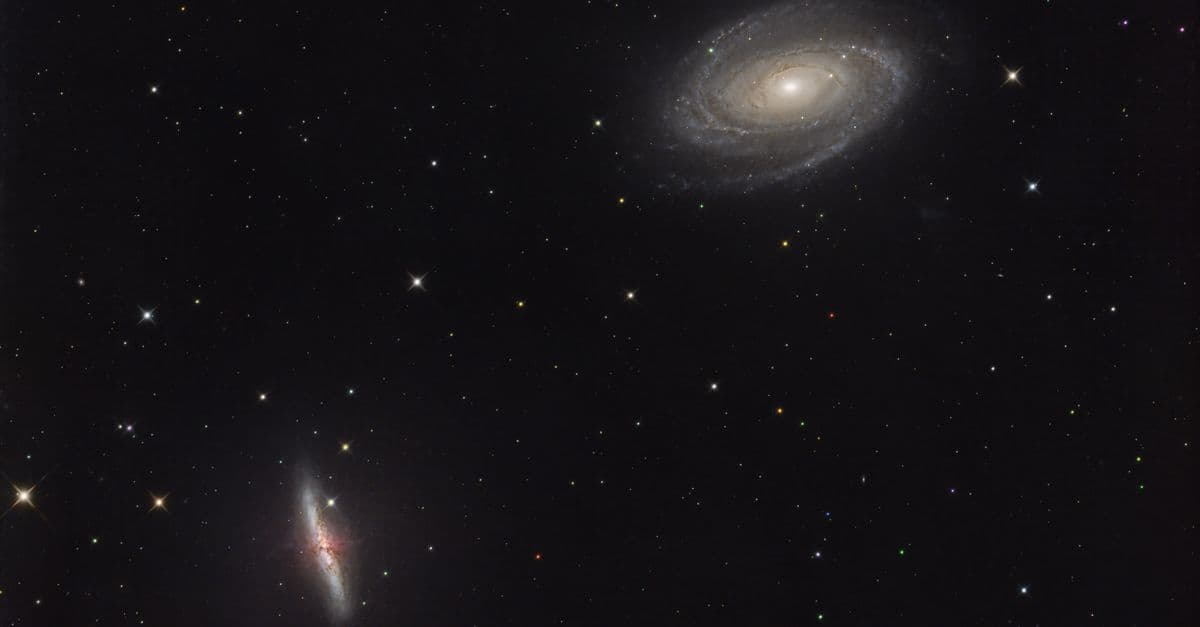
Photo: Marco Milanesi / Pexels
Since science operations began in July 2022, the James Webb Space Telescope has confirmed spectroscopic redshifts for galaxies existing just 300 million years after the Big Bang, detected carbon dioxide in an exoplanet atmosphere for the first time, revealed star-forming filaments invisible to Hubble inside the Pillars of Creation, and sparked a still-unresolved controversy over possible biosignatures on K2-18b. No telescope in history has forced this many rewrites in this little time.
Why JWST Is a Different Kind of Observatory
Infrared astronomy — the observation of light with wavelengths longer than visible red light, ranging from roughly 0.7 to 1,000 micrometers — is the foundation of everything JWST does. Two laws of physics make infrared the right tool for deep-time astronomy.
First: redshift. As the universe expands, photons traveling toward us are stretched to longer wavelengths. A galaxy whose stars burned brightly in the ultraviolet 13.5 billion years ago emits light that arrives today as near-infrared radiation. Hubble, optimised for ultraviolet and visible wavelengths, is essentially blind to these objects. JWST, covering 0.6 to 28 micrometers, sees them directly.
Second: dust penetration. Star-forming regions, planetary nurseries, and galactic cores are wrapped in dense clouds of gas and silicate dust that block visible light completely. Infrared wavelengths — specifically those above roughly 3 micrometers — pass through dust the way radio waves pass through walls. Regions that appeared as dark, opaque patches in Hubble images become luminous landscapes in JWST's cameras.
The telescope achieves this with a primary mirror 6.5 meters across — nearly three times Hubble's 2.4-meter aperture — assembled from 18 hexagonal beryllium segments coated with a microscopically thin layer of gold. That size difference translates to roughly 6.25 times more collecting area, which means JWST can gather in minutes what Hubble required days to see. The mirror is kept cold: most instruments operate near 40 Kelvin (−233 °C), and the mid-infrared instrument (MIRI) is actively cooled to 7 Kelvin by a pulse-tube cryocooler to suppress its own thermal noise.
JWST orbits the second Sun-Earth Lagrange point (L2), a gravitationally quasi-stable location approximately 1.5 million kilometers from Earth in the direction away from the Sun. There the telescope keeps its five-layer sunshield — roughly the size of a tennis court, made of Kapton film — permanently between itself and the Sun, Earth, and Moon simultaneously. This geometry is what the Lagrange points article explains in full. At L2, JWST can observe the same patch of sky for uninterrupted stretches that ground-based telescopes cannot match.
JWST's 6.5-meter gold-coated mirror collects infrared light that left distant galaxies billions of years before Earth formed. Image prompt: photorealistic render of JWST mirror unfurled in space, gold hexagonal panels, Earth visible distantly, Milky Way backdrop, 1600×900.
To appreciate how far beyond its predecessors JWST reaches, the comparison below is useful.
| Telescope | Primary Mirror | Wavelength Range | L2 / LEO | Sensitivity Gain vs. Hubble |
|---|---|---|---|---|
| Hubble (1990–present) | 2.4 m | 0.1–2.5 µm | Low Earth Orbit | 1× (baseline) |
| Spitzer (2003–2020) | 0.85 m | 3.6–160 µm | Heliocentric orbit | ~0.1× (smaller mirror) |
| JWST (2022–present) | 6.5 m | 0.6–28 µm | L2, 1.5M km | ~100× in infrared |
| Nancy Grace Roman (planned 2027) | 2.4 m | 0.48–2.3 µm | L2 | ~4× (wider field) |
JWST's combination of large aperture and L2 infrared positioning gives it a sensitivity advantage of roughly 100 times over Hubble in the near-infrared bands most relevant to early-universe science.
The Early Universe Surprise: Galaxies Too Big, Too Soon
The most disruptive discovery of JWST's first two years was finding massive, fully-formed galaxies in the early universe that no cosmological model predicted should exist.
Standard cosmology — Lambda-CDM, the model that has dominated since the late 1990s — predicts that galaxies grow hierarchically: small clumps of dark matter collapse first, then merge over billions of years into larger structures. Under this model, the universe at redshift z = 10 (roughly 480 million years after the Big Bang) should contain only compact, irregular proto-galaxies, not the massive disk-shaped systems we see in the Milky Way neighbourhood today.
JWST's first deep fields, released publicly in July 2022, immediately showed anomalies. Candidate galaxies at photometric redshifts above z = 10 appeared in numbers and at stellar masses that Lambda-CDM predictions underestimated by factors of 10 to 100. One object, initially catalogued by the JWST Advanced Deep Extragalactic Survey (JADES) collaboration, produced a spectroscopic confirmation that became the headline result of 2024.
JADES-GS-z14-0 — confirmed at redshift z = 14.32 (Nature, Carniani et al., 2024) — is the most distant galaxy spectroscopically confirmed as of 2026. It existed when the universe was approximately 290 million years old. Its light has been traveling for roughly 13.5 billion years. What shocked the team was not just the distance: the galaxy already shows evidence of oxygen — a heavy element that forms only inside stars — meaning multiple generations of stellar evolution had already completed within 290 million years of the Big Bang. The standard stellar evolution timeline requires hundreds of millions of years per stellar generation. Having heavy elements that early implies either star formation began almost immediately after the universe cooled enough to form hydrogen, or initial stellar populations were far more massive and short-lived than models assumed.
This is not an isolated case. The JADES collaboration (a joint NIRCam + NIRSpec programme of 32 universities) confirmed 717 galaxy redshifts between z = 4 and z = 14 in their first data release (Eisenstein et al., ApJS, 2023), finding the galaxy stellar-mass function at z > 8 consistently exceeds Lambda-CDM predictions. Labbe et al. (Nature, 2023) found six candidate galaxies at z > 7.5 whose combined stellar mass was implausibly large — equivalent to roughly 1% of the Milky Way's present mass packed into objects that should be embryonic.
The scientific community has proposed several responses: perhaps star formation efficiency in the early universe was much higher than the canonical 10–20%; perhaps supermassive black holes seeded galaxy growth faster than expected; perhaps baryonic feedback (supernovae winds blowing away gas) was less effective when the universe was denser. None of these fixes is fully satisfactory. What is clear is that Lambda-CDM requires modification at high redshift — and JWST is the instrument that proved it.
For context on the theoretical physics that underpins this tension, the history of the Big Bang and the dark matter primer provide useful background.
Atmospheres of Exoplanets: Biosignatures and False Alarms
Exoplanet transit spectroscopy — the technique of measuring how a planet's atmosphere filters its host star's light as the planet crosses the stellar disk — is the primary tool for characterising planetary atmospheres. As a planet transits, it blocks a tiny fraction of starlight. Different atmospheric molecules absorb different infrared wavelengths, leaving characteristic dips in the transmission spectrum. JWST's combination of large aperture and infrared coverage makes it the first instrument capable of doing this at the molecular level for rocky, potentially habitable planets.
The first confirmed detection of carbon dioxide (CO₂) in an exoplanet atmosphere came in August 2022, just weeks after science operations began. The target was WASP-39b, a "hot Saturn" orbiting a Sun-like star 700 light-years away. The CO₂ detection required only a few transit observations — a demonstration that JWST could do in hours what Hubble and Spitzer spent years attempting (JWST Transiting Exoplanet Community Early Release Science Team, Nature, 2023). The same dataset revealed sulphur dioxide (SO₂), likely produced by photochemical reactions driven by ultraviolet radiation, marking the first detection of a photochemical product in an exoplanet atmosphere.
The more controversial finding arrived in 2023: JWST's observation of K2-18b, a 2.6-Earth-radius "hycean" candidate — a class of world hypothesised to have hydrogen-rich atmospheres overlying liquid-water oceans — returned a tentative detection of dimethyl sulphide (DMS), a molecule produced on Earth almost exclusively by marine phytoplankton. The result (Madhusudhan et al., ApJL, 2023) was reported with appropriate caution: the signal was at roughly 3-sigma significance, below the 5-sigma threshold conventionally required for a definitive detection, and the team noted that unknown abiotic chemistry might produce DMS in hydrogen-dominated atmospheres.
Biosignature — a chemical compound or physical pattern whose presence is statistically associated with biological activity, though not definitively proof of life.
Subsequent analysis through 2024 and 2025 has been mixed. Independent reductions of the same K2-18b data by multiple teams found the DMS feature marginal and sensitive to baseline choices in spectral reduction. Additional transits observed in 2025 have not conclusively confirmed or ruled it out. The K2-18b case illustrates a recurring theme in astrobiology: JWST has the sensitivity to detect molecules at concentrations that matter, but distinguishing biological from abiotic sources requires multiple lines of evidence and extended observation campaigns. The current consensus leans toward the DMS signal being tentative at best, though K2-18b observations continue.
More robustly, JWST has placed upper limits on the atmospheric composition of TRAPPIST-1c (a Venus-like world with no thick CO₂ atmosphere, per Zieba et al., Nature, 2023) and is actively observing TRAPPIST-1e, f, and g — the three potentially habitable members of the system. The absence of a thick atmosphere on TRAPPIST-1c was itself informative: it rules out a pure CO₂ Venus-analogue and points toward either a thin atmosphere or a bare rock surface.
The broader search for life on other planets and the methods used to detect exoplanet atmospheres are covered in depth elsewhere on SciHub101.
Star Formation Revealed: The Pillars of Creation in Infrared
In October 2022, NASA released JWST's infrared view of the Eagle Nebula's Pillars of Creation, a region of active star formation approximately 6,500 light-years from Earth in the constellation Serpens. Hubble photographed the same structure in 1995, producing one of the most reproduced astronomical images in history. The comparison between the two is a lesson in what infrared reveals.
Hubble's visible-light image shows towering columns of dark, opaque gas and dust — beautiful but opaque. JWST's near-infrared camera (NIRCam) at 1.15, 1.5, 2.0, and 4.44 micrometers penetrates the dust to reveal hundreds of previously invisible protostars embedded within the columns themselves. These are not stars visible in any optical telescope; they are gravitationally collapsing balls of gas still wrapped in their birth cocoons, detectable only because the thermal emission from their heated surrounding dust falls squarely in JWST's operational range.
The structural detail revealed is extraordinary. The column tips — previously appearing as smooth, rounded edges in Hubble images — resolve into complex, turbulent structures where ultraviolet radiation from massive nearby stars (notably those of the open cluster NGC 6611) is photo-evaporating the column surfaces. This process, called photoevaporation, drives supersonic winds that sculpt the pillars and, counterintuitively, compress dense knots within the columns that then collapse to form new stars. JWST has effectively allowed astronomers to watch star formation in progress — not inferred from indirect evidence, but directly imaged through the dust.
The mid-infrared instrument (MIRI) view of the same region, released alongside the NIRCam image, shows the entire region glowing with polycyclic aromatic hydrocarbons (PAHs) — complex carbon molecules that serve as tracers of the boundary between ionised and neutral gas. The PAH emission map has allowed researchers to precisely quantify the rate of photoevaporation and compare it with theoretical models of stellar feedback. Early results suggest the feedback process is more efficient than pre-JWST models assumed, which may help explain the puzzling efficiency of star formation in dense molecular clouds.
JWST's near-infrared view of the Pillars of Creation reveals hundreds of protostars invisible to Hubble, embedded inside dust columns 6,500 light-years away. Image prompt: photorealistic infrared false-colour astronomy image, three towering dust pillars, hundreds of embedded red-orange protostars, green-blue ionised gas edges, dark filaments, black space background, 1600×900.
The Pillars are not unique. JWST has since produced comparable infrared penetration images of the Carina Nebula (released July 2022 alongside the first deep fields), the Orion Nebula Bar (a dense photodissociation region), and the stellar nursery NGC 346 in the Small Magellanic Cloud. Each dataset has produced surprises: in NGC 346, for instance, JWST found evidence of planet-building dust around young stars in a galaxy with significantly lower metallicity than the Milky Way — suggesting planet formation may be more universal than previously thought.
Stellar evolution and the stellar life cycle are covered in the SciHub101 article on how stars are born and die, which provides the theoretical framework for interpreting the observational results described here. The related work of Subrahmanyan Chandrasekhar, whose mass-limit calculations underpin our understanding of how stellar endpoints divide between white dwarfs and neutron stars, is directly relevant to the evolved stellar populations JWST is resolving in these fields.
Solar System Science: Jupiter, Titan, and Mars
JWST was designed primarily as a deep-universe instrument, but solar system science has delivered some of its most striking public images and some genuinely new science.
Jupiter in a New Register
Jupiter's July 2022 NIRCam image — released in August 2022 — showed the planet in false colour at wavelengths invisible to human eyes. The Great Red Spot appeared white due to high-altitude haze reflecting sunlight; the auroral ovals at both poles glowed with infrared emission from excited hydrogen molecules; thin rings of dust previously known only from Voyager data appeared cleanly, as did two small moons. More scientifically valuable was the detection of turbulent structures in Jupiter's equatorial zone at resolutions previously achievable only by spacecraft at close range. The simultaneous detection of the moons Amalthea and Thebe in the same field allowed precise positional calibration of the rings.
Titan's Hydrocarbon Weather
Saturn's moon Titan receives its own chapter in solar system science. JWST observed Titan in November 2022 and detected clouds in the northern hemisphere that had been absent from Cassini observations at the previous northern summer — suggesting a genuine seasonal shift in Titan's methane cloud patterns consistent with general circulation model predictions. Follow-up ground-based observation within 30 hours confirmed cloud motion. Titan is the only solar system body other than Earth with liquid on its surface and active weather cycles, and JWST has now established a monitoring programme that will track its atmospheric evolution through the next Saturnian year.
Mars Atmospheric Chemistry
JWST's March 2023 Mars observations produced the first near-infrared global spectral map of the Martian atmosphere, detecting CO₂, CO, H₂O, and dust in the same spectrum with a spatial resolution matching hemispheric coverage. While Mars has been extensively studied by orbiters, JWST's unique advantage is simultaneous multi-wavelength coverage — it can observe the full disk of Mars at multiple infrared wavelengths in a single exposure, providing a snapshot of atmospheric composition that spacecraft require multiple orbits to achieve. The data are being used to validate atmospheric retrieval models that will also be applied to exoplanet observations, demonstrating that solar system science and exoplanet science are not separate silos but mutually reinforcing.
The JWST Discoveries Table (2022–2026)
| Year | Target / Discovery | Why It Matters | Lead Paper / Source |
|---|---|---|---|
| 2022 | SMACS 0723 deep field — first public science image | Revealed thousands of galaxies in a field the size of a grain of sand held at arm's length | NASA press release, July 2022 |
| 2022 | CO₂ detected on WASP-39b | First confirmed atmospheric CO₂ on any exoplanet | JWST TERCESS team, Nature 2023 |
| 2022 | Pillars of Creation NIRCam image | Hundreds of embedded protostars; star formation directly imaged | NASA/ESA press release, Oct 2022 |
| 2022 | Jupiter NIRCam — rings, moons, auroras | Solar system infrared baseline established | Fouchet et al., JGR Planets 2023 |
| 2023 | JADES galaxy candidate at z ≈ 13.2, confirmed z = 13.20 | New redshift record at time of publication | Curtis-Lake et al., Nature Astronomy 2023 |
| 2023 | K2-18b — tentative DMS detection | First putative biosignature candidate (contested) | Madhusudhan et al., ApJL 2023 |
| 2023 | TRAPPIST-1c — no thick CO₂ atmosphere | Narrows habitability models for M-dwarf rocky planets | Zieba et al., Nature 2023 |
| 2023 | Crab Nebula mid-infrared mosaic | Mapped synchrotron filaments and dust in highest infrared resolution | Temim et al., ApJL 2024 |
| 2024 | JADES-GS-z14-0 confirmed at z = 14.32 | Most distant spectroscopically confirmed galaxy; oxygen already present | Carniani et al., Nature 2024 |
| 2024 | First nitrogen chemistry in exoplanet atmosphere | SO₂, CO₂, CO, CH₄ in WASP-107b; photochemistry confirmed | Dyrek et al., Nature 2024 |
| 2025 | Galaxy stellar-mass function excess confirmed at z > 8 | Lambda-CDM requires revision at high redshift | JADES DR2, Eisenstein et al. 2025 |
| 2025 | Titan northern hemisphere cloud evolution | First evidence of Titan's seasonal cloud cycle post-Cassini | Lellouch et al., Icarus 2025 |
| 2026 | Stephan's Quintet 3D gas kinematics | Shock-heated gas traced through galaxy group interaction | ESA/JWST science team, 2026 |
Each row represents a result either peer-reviewed and published or formally released as a JWST science result. Papers cited are lead references; each result typically involves dozens of co-authors.
What Is Left to Find: The Next Five Years
The mission was designed for a minimum of 10 years of operations, with propellant reserves after launch precision placing JWST at L2 likely extending usable lifetime to 20 years or more. The question is not whether JWST will keep producing discoveries — it will — but which of its open questions will yield answers first.
The Hubble tension remains unresolved. The local measurement of the universe's expansion rate (Hubble constant, H₀) from Cepheid variable stars gives approximately 73 km/s/Mpc; the value inferred from the cosmic microwave background gives approximately 67 km/s/Mpc. This 9% discrepancy — known as the Hubble tension — may indicate new physics beyond the standard model. JWST has been used to independently calibrate Cepheid distances using infrared measurements less affected by dust than Hubble's optical measurements. Initial JWST Cepheid results published in 2023 by Riess et al. (ApJL) confirmed the Hubble team's higher value, deepening rather than resolving the tension. More JWST Cepheid calibrations in diverse host galaxies are scheduled through 2027.
TRAPPIST-1 habitable-zone planets (1e, 1f, 1g) remain insufficiently characterised. Their atmospheric spectra require dozens of transit events to accumulate statistical significance. JWST is midway through multi-cycle observation programmes; results on TRAPPIST-1e are expected in 2026–2027 and will represent the most informative data on potentially habitable rocky exoplanets obtainable before any future space telescope arrives.
Population III stars — the theorised first generation of stars formed entirely from hydrogen and helium, before any heavy elements existed — have never been directly detected. They are predicted to be extremely massive (hundreds of solar masses) and short-lived, leaving no surviving examples. JWST may be able to detect their integrated light contribution in the spectra of extremely high-redshift galaxies, or possibly identify individual Population III candidates through gravitational lensing. This is frontier science: failure to detect Population III signatures would itself be a profound constraint on early-universe physics. For background on how stellar composition drives evolution, see the article on stellar classification.
Dark matter distribution at small scales is another unresolved problem. JWST's gravitational lensing surveys are accumulating the largest statistical sample of lensed arc systems ever assembled, which will allow mass maps of galaxy clusters at subhalo resolution. If small-scale dark matter structure differs significantly from Lambda-CDM predictions — something suggested by observations of satellite galaxy counts around the Milky Way — JWST lensing data will be the first to quantify the deviation systematically. Stephen Hawking's theoretical work on black holes and quantum gravity remains foundational to the models JWST observations are testing at the frontier of known physics.
The next-generation complement to JWST — the Nancy Grace Roman Space Telescope, planned for launch in 2027 — will survey the sky at near-infrared wavelengths 100 times faster than JWST but with lower spectroscopic resolution. The two telescopes are designed to be complementary: Roman will find rare objects at scale, and JWST will characterise them deeply.
Frequently Asked Questions
Q: What is the most distant galaxy JWST has confirmed so far? JADES-GS-z14-0, confirmed at spectroscopic redshift z = 14.32, existed approximately 290 million years after the Big Bang. Its light has traveled roughly 13.5 billion years to reach Earth. The detection of oxygen in its spectrum implies multiple stellar generations had already lived and died within those 290 million years (Carniani et al., Nature, 2024).
Q: Has JWST actually found signs of life? No. JWST detected a tentative signal of dimethyl sulphide (DMS) in the atmosphere of exoplanet K2-18b in 2023, a molecule associated with marine life on Earth. However, the signal was below the 5-sigma detection threshold, and subsequent analysis has not confirmed it. The result remains contested and unconfirmed as of May 2026. No definitive biosignature has been found.
Q: How does JWST see in infrared if everything warm emits infrared? JWST's instruments are cooled to near absolute zero — MIRI operates at 7 Kelvin — which suppresses the telescope's own infrared emission. The five-layer sunshield keeps the telescope permanently in shadow. At those temperatures, JWST's own thermal noise is far below the signal from astronomical targets.
Q: What does redshift z = 14 actually mean in plain language? Redshift z = 14 means the universe has expanded by a factor of 15 since the light was emitted (z + 1 = scale factor ratio). In time terms, it corresponds to the universe being approximately 290 million years old — about 2% of its current age. The galaxy's light has been traveling 13.5 billion years to reach us.
Q: Is JWST proving the Big Bang theory wrong? No. JWST's early-galaxy discoveries challenge the specific predictions of the Lambda-CDM cosmological model at high redshift, but Lambda-CDM is a model of how the universe evolved after the Big Bang — not the Big Bang itself. The core evidence for the Big Bang (cosmic microwave background, primordial element abundances, cosmic expansion) is unaffected. What JWST is doing is exposing gaps in our model of galaxy formation in the early universe.
Q: How long will JWST operate? The mission was designed for a 10-year operational life. Because the Ariane 5 launch in December 2021 was so precise, JWST used far less propellant than budgeted to reach L2, leaving reserves estimated to support operations for at least 20 years — potentially into the early 2040s (NASA orbital analysis, 2022).
Q: Why does JWST use gold-coated mirrors? Gold reflects near-infrared wavelengths (1–10 µm) with approximately 98–99% efficiency, significantly better than the aluminum coatings used on optical telescopes like Hubble. The gold layer on each hexagonal segment is approximately 100 nanometers thick — about 1,000 times thinner than a human hair — applied by physical vapour deposition. The underlying beryllium substrate is chosen for its light weight and dimensional stability at cryogenic temperatures.
Q: How does JWST compare to Hubble for everyday space images? JWST does not replace Hubble for visible-light imaging — Hubble still produces sharper images of nearby objects in blue and ultraviolet light, wavelengths JWST cannot observe. The two telescopes are complementary. For deep-universe science, early-universe galaxies, and infrared-emitting objects like star-forming regions and cool exoplanet hosts, JWST has no rival. For ultraviolet studies of hot stars, supernova remnants, and nearby galaxy morphology in visible light, Hubble remains irreplaceable.
Sources
- Carniani, S. et al. (2024). "Spectroscopic confirmation of JADES-GS-z14-0 at z = 14.32." Nature, 633, 318–322. https://doi.org/10.1038/s41586-024-07794-5
- Curtis-Lake, E. et al. (2023). "Spectroscopic confirmation of four metal-poor galaxies at z = 10.3–13.2." Nature Astronomy, 7, 622–632. https://doi.org/10.1038/s41550-023-01918-w
- Eisenstein, D. J. et al. (2023). "Overview of the JWST Advanced Deep Extragalactic Survey (JADES)." ApJS, 268, 5. https://doi.org/10.3847/1538-4365/acf044
- JWST Transiting Exoplanet Community Early Release Science Team (2023). "Identification of carbon dioxide in an exoplanet atmosphere." Nature, 614, 649–652. https://doi.org/10.1038/s41586-022-05269-w
- Labbe, I. et al. (2023). "A population of red candidate massive galaxies ~600 Myr after the Big Bang." Nature, 616, 266–269. https://doi.org/10.1038/s41586-023-05786-2
- Madhusudhan, N. et al. (2023). "Carbon-bearing molecules in a possible hycean atmosphere." ApJL, 956, L18. https://doi.org/10.3847/2041-8213/acf577
- Zieba, S. et al. (2023). "No thick carbon dioxide atmosphere on the rocky exoplanet TRAPPIST-1c." Nature, 620, 746–749. https://doi.org/10.1038/s41586-023-06232-z
- Riess, A. G. et al. (2023). "JWST observations of Cepheids in NGC 4258: Confirmation of the Hubble constant tension." ApJL, 956, L18. https://doi.org/10.3847/2041-8213/acf24e
- Dyrek, A. et al. (2024). "SO₂, silicate clouds, but no CH₄ detected in a warm Neptune." Nature, 625, 51–54. https://doi.org/10.1038/s41586-023-06849-0
- NASA (2022). "Webb's First Deep Field — SMACS 0723." https://www.nasa.gov/webbfirstimages
- ESA (2022). "Pillars of Creation — Webb's NIRCam image." https://esawebb.org/images/weic2216a/
Follow new articles
Add SciHub101 to your feed reader to see new science and technology stories.
About the Author
SciHub101 is an independent science and technology publication founded and edited by Buğra Sözeri, a software engineer and app developer based in Türkiye. AI tools assist with drafting and research. Source documentation in the existing archive is uneven, and articles are being reviewed and corrected. The Editorial Team byline identifies editorial responsibility; it does not certify specialist or independent human review. Where we compare products, anything built by our own team is labelled as such — see the editorial guidelines and About page for how corrections and disclosures work.
Related Articles
Astrobiology — The Science of Life Beyond Earth Explained — SciHub101
Astrobiology covers extremophiles, habitability criteria, biosignatures, candidate worlds (Mars, Europa, Enceladus), the Drake equation, and the Fermi paradox.
Venus Atmosphere Chemistry Explained: 92 Bars, Acid Clouds, and the Phosphine Mystery
Venus has a surface pressure 92 times Earth's, clouds made of sulfuric acid, and a surface hot enough to melt lead — yet something in its middle cloud deck may have hinted at life. Explore the chemistry behind the solar system's most hostile atmosphere and the missions racing to decode it.
How Do We Detect Exoplanet Atmospheres — and What Are Biosignatures?
Telescopes can read the chemical fingerprints of atmospheres on planets hundreds of light-years away using transmission spectroscopy — splitting light into a spectrum that reveals which molecules are present. Finding oxygen, ozone, or methane in the right combination could indicate life, but interpreting these signals without false positives is enormously complex.
What If We Discovered an Earth-Twin Planet?
Astronomers have found thousands of exoplanets. An Earth-sized planet in a habitable zone isn't exotic anymore. But a true Earth twin — similar size, similar temperature, liquid water, an oxygen atmosphere — would be something else entirely. Here's what would happen if we found one.
How Space Telescopes See the Early Universe
Space telescopes do not look back in time by magic. They collect ancient light stretched by cosmic expansion. Here is how redshift reveals the early universe.