Lagrange Points Explained — Why NASA Parks Telescopes in Empty Space
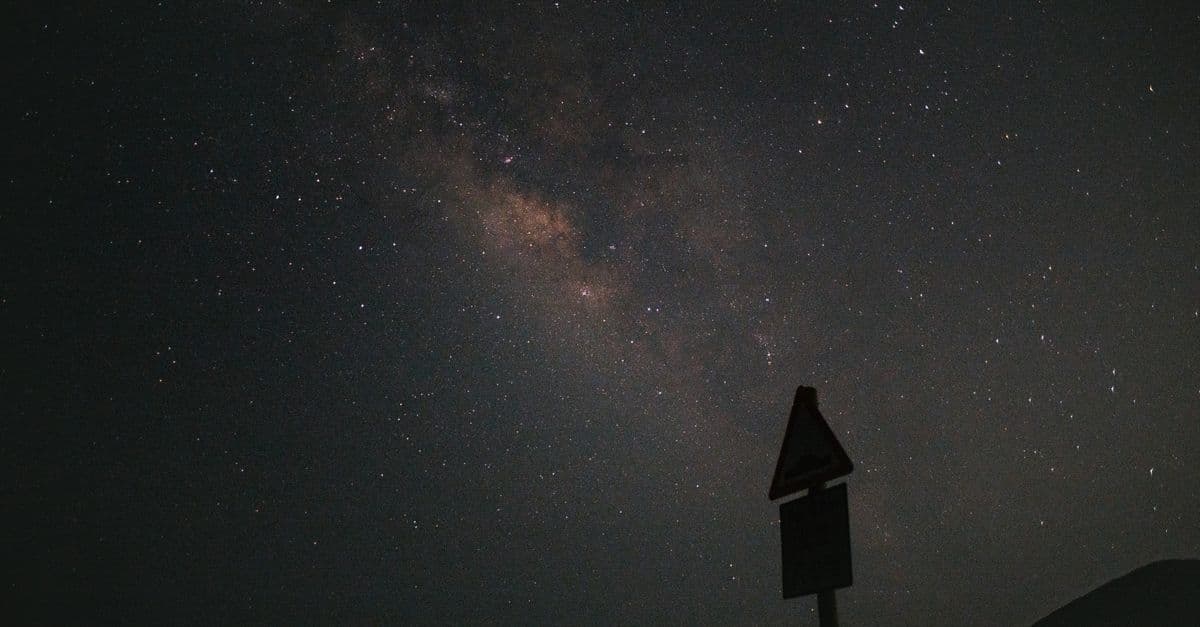
Photo: Koma Tang / Pexels
Space looks mostly empty. But scattered through the void between the Earth and the Sun — and beyond — are five invisible sweet spots where gravity and orbital mechanics conspire to hold an object almost perfectly still relative to two much larger bodies. These are Lagrange points, and they are some of the most valuable real estate in the solar system.
Key takeaways
- Lagrange points are five locations in a two-body gravitational system (like the Sun–Earth system) where a third, smaller body can remain stationary relative to the other two.
- L1, L2, and L3 lie along the line connecting the two large bodies and are unstable — a nudged spacecraft will drift away without periodic correction burns.
- L4 and L5 sit 60° ahead of and behind the smaller body in its orbit and are stable — objects naturally return after small disturbances.
- JWST and Gaia operate at the Sun–Earth L2 point, roughly 1.5 million kilometres from Earth.
- DSCOVR sits at Sun–Earth L1, giving it a permanent view of the sunlit face of Earth.
- Trojan asteroids naturally occupy the Sun–Jupiter L4 and L5 points — over 12,000 of them have been catalogued so far.
The math behind the magic
In 1772, the Italian–French mathematician Joseph-Louis Lagrange was working on the three-body problem — one of the oldest unsolved headaches in classical mechanics. In full generality, predicting the trajectories of three mutually gravitating bodies has no clean closed-form solution. But Lagrange found something remarkable: five specific configurations where the three-body system can move in a perfectly periodic, locked way.
The key ingredients are gravity and the centrifugal force that appears in a rotating reference frame.
Imagine locking yourself into the rotating frame that co-rotates with the Earth as it orbits the Sun. In that frame, both the Sun and Earth look stationary. Two real forces act on any object you place in this frame: the gravitational pull of the Sun and the gravitational pull of the Earth. But a fictitious third force also appears — the centrifugal force, directed outward from the system's centre of mass (the barycentre, which sits just inside the surface of the Sun for the Sun–Earth system).
At the Lagrange points, these forces sum to exactly zero. An object placed there has no net force acting on it in the rotating frame, so it stays put — orbiting the Sun at exactly the same angular rate as Earth, keeping its position fixed relative to both.
The gravitational potential energy surface in this rotating frame has a shape sometimes called the Roche lobe or effective potential. The five Lagrange points correspond to saddle points or local extrema of this surface. Crucially, L4 and L5 sit at local maxima of effective potential in two dimensions — which counterintuitively makes them stable, because the Coriolis force in the rotating frame acts like a restoring nudge, keeping objects corralled in a slow orbit around the point itself.
L1 — The sunward sentinel
L1 sits between the Sun and Earth, about 1.5 million kilometres from Earth toward the Sun (roughly 1% of the Sun–Earth distance). Here, the Sun's gravity is slightly reduced by Earth's opposing pull, so an object at L1 orbits the Sun more slowly than you'd expect at that radius — slowly enough to keep pace with Earth.
L1 is ideal for solar and space-weather monitoring. NASA's DSCOVR spacecraft (Deep Space Climate Observatory) has been stationed here since 2015, returning the first full-disc images of a sunlit Earth and providing roughly 15–60 minutes of warning before solar wind disturbances reach Earth.
L1 is unstable: leave a spacecraft there without thruster corrections and it will slide away over months. Mission operators perform regular station-keeping manoeuvres — small burns that nudge the spacecraft back into position.
L2 — The telescope's favourite address
L2 lies on the opposite side of Earth from the Sun, also about 1.5 million kilometres out. From L2, both the Sun and Earth are in roughly the same direction of sky, meaning a single sunshield can block both. Thermal stability is extraordinary. The orbital period is the same as Earth's. And L2 offers a clear, cold, unobstructed view of deep space in every direction except sunward.
This makes L2 the premier address for space observatories.
- The James Webb Space Telescope (JWST), launched in December 2021 and operational from mid-2022, orbits L2 in a halo orbit roughly 800,000 km across. Its five-layer sunshield keeps its mirrors at around −233 °C — cold enough to detect the infrared light of the first galaxies.
- The ESA/NASA Gaia mission has been at L2 since 2014, mapping the positions and velocities of over a billion stars with sub-microarcsecond precision.
- The Herschel Space Observatory and Planck satellite also operated at L2.
Like L1, L2 is unstable. JWST carries enough propellant for roughly 20 years of station-keeping, setting its operational lifetime ceiling.
L3 — The hidden point nobody uses
L3 sits on the far side of the Sun from Earth, perpetually hidden behind it. In the rotating frame it completes the collinear trio with L1 and L2. It is unstable and almost inaccessible for communication — the Sun itself blocks direct radio contact. L3 has fuelled decades of science fiction involving a "counter-Earth" lurking on the other side of the Sun, but in reality no natural body and no spacecraft occupies it. It is the least useful of the five points.
L4 and L5 — The stable camps
L4 (60° ahead of Earth in its orbit) and L5 (60° behind) form equilateral triangles with the Sun and Earth. The geometry is not arbitrary: an equilateral triangle is precisely the configuration that makes the gravitational pulls from the two large bodies balance the centrifugal force, while also placing the object at a true potential energy maximum where the Coriolis force provides stability.
In the Sun–Jupiter system, these points host the famous Trojan asteroids. The Jupiter Trojans are split into two swarms — the "Greek camp" at L4 and the "Trojan camp" at L5 — and together number more than 12,000 confirmed members. Some individual Trojans are hundreds of kilometres across.
Earth has its own Trojan: 2010 TK7, a roughly 300-metre asteroid confirmed at the Sun–Earth L4 point in 2011. Mars, Neptune, and even some moons of Saturn have Trojans at their L4/L5 equivalents.
NASA's Lucy mission, launched in October 2021, is on a 12-year journey to visit eight Trojan asteroids in the Jupiter system, studying these primordial leftovers from the solar system's formation.
Why unstable points are still worth using
It might seem odd to spend hundreds of millions of dollars parking a telescope at an unstable point. But "unstable" in this context means slow drift over timescales of weeks to months — not an immediate tumble. The station-keeping fuel cost is modest. For JWST, each correction burn uses only a tiny fraction of the total propellant budget. The payoff — thermal stability, unobstructed sky access, fixed geometry — far outweighs the cost of occasional nudges.
The halo orbits around L1 and L2 are themselves dynamically special: a spacecraft does not sit precisely at the mathematical point but instead traces a slow loop around it. These halo orbits are maintained by the same station-keeping burns and can be chosen to minimise fuel consumption by exploiting the natural flow of the effective potential surface.
The bottom line
Lagrange points are where gravity does the hard work for you — or most of it. They are not emptiness but structure: five mathematically inevitable locations where competing gravitational and centrifugal effects balance. Three are unstable but easily managed; two are naturally stable and populated by ancient rocks that have been squatting there since the solar system formed.
For spacecraft engineers, L1 and L2 are prime orbital real estate — close enough to Earth for communication, stable enough for science, cold enough for infrared telescopes, and geometrically convenient for watching the Sun or the deep universe. For planetary scientists, L4 and L5 are time capsules: the Trojans sitting there today carry chemical and structural records of conditions four billion years ago.
The next time you read about JWST returning an image of a galaxy 13 billion light-years away, remember: that telescope is not drifting aimlessly. It is parked at a precise gravitational sweet spot, 1.5 million kilometres from home, doing slow lazy loops around an invisible point in space — exactly where the physics said it should be.
Stability and the Hill region
Understanding Lagrange point stability requires grasping the concept of the Hill region — the set of orbital regions where a small body can orbit without being gravitationally ejected from the system. In a rotating reference frame co-rotating with the two large bodies, the effective potential (the combination of gravitational and centrifugal potentials) defines these permitted zones.
The three collinear points (L1, L2, L3) sit at saddle points of the effective potential surface. A saddle point is stable in one direction but unstable in the perpendicular direction — like balancing a ball on top of a ridge. This instability along the line connecting the two large bodies means that any small perturbation will cause a spacecraft to drift away if no station-keeping burns occur.
However, the nonlinear dynamics of the three-body problem introduce a stabilizing effect called the Coriolis force. In the rotating frame, objects don't fly straight away from a saddle point but instead follow curved trajectories. This curvature can trap objects in quasi-periodic orbits called Lissajous orbits or halo orbits — graceful loops around the unstable point itself. These bound orbits persist despite the saddle-point instability, which is why JWST and Gaia can maintain position with occasional correction burns rather than constant thrust.
The L4 and L5 points occupy local maxima of effective potential in the two-dimensional plane perpendicular to the line joining the two large bodies. This makes them fundamentally different: they are nonlinearly stable, meaning that the Coriolis force actively restores small perturbations, herding objects back toward equilibrium. Objects placed near L4 or L5 perform slow epicyclic oscillations with periods of thousands of years — they drift but never leave. This is why Trojan asteroids remain trapped for billions of years without correction burns.
Halo orbits and station-keeping strategies
Spacecraft do not sit precisely at L1 or L2 but instead occupy halo orbits — three-dimensional periodic loops around the Lagrange point. A halo orbit is chosen to balance competing constraints: minimising fuel consumption, providing thermal stability, and maintaining communication line-of-sight with Earth.
The JWST halo orbit at L2 has a characteristic size of about 800,000 kilometres, making it roughly 2.5 times larger than Earth's diameter. The spacecraft traces a lazy figure-eight loop around the L2 point over approximately 26 days. This orbital motion is not a decay spiral but a genuine periodic orbit that would continue indefinitely in the idealized three-body problem.
In reality, perturbations from the gravitational influence of other planets (especially Venus), the imperfect sphericity of the Sun and Earth, and relativistic effects gradually degrade the halo orbit. To maintain position, operators perform station-keeping manoeuvres — small thruster burns executed every few weeks. Each burn corrects accumulated drift and re-injects the spacecraft into the nominal halo orbit. For JWST, which launched with about 250 kg of propellant, these corrections consume roughly 10–15 kg per year. This leaves a margin for 20+ years of operation, though other factors (mirror degradation, cryogenic liquid loss, instrument failures) may determine the actual mission lifetime.
The choice of halo-orbit size is a trade-off: larger orbits use less fuel for station-keeping (they sit in a more forgiving dynamical region) but require more aggressive trajectory control at insertion, while smaller orbits are more fuel-efficient to reach but demand tighter station-keeping. Mission designers use chaos control techniques — targeting specific transient chaos regions in the effective potential — to minimise fuel consumption. This is one reason why mission planners use computers to solve the three-body problem numerically rather than relying on closed-form solutions.
Natural inhabitants: Trojan asteroids and their origins
The Trojan asteroids occupying the Sun–Jupiter L4 and L5 points represent some of the most intriguing remnants of solar system formation. Over 12,000 confirmed Jupiter Trojans have been catalogued, with estimates suggesting the actual population exceeds 1 million objects larger than 1 kilometre.
These asteroids fall into two camps, separated by the orbit of Jupiter itself. The "Greek camp" at L4 (60° ahead of Jupiter) and the "Trojan camp" at L5 (60° behind) were named after the Trojan War in classical mythology — Greek heroes at L4 and Trojan heroes at L5, waging an eternal battle that never quite concludes because the two swarms never collide (Jupiter's gravity keeps them forever separated).
The origins of Jupiter's Trojans remain debated, but the Grand Tack hypothesis — which proposes that Jupiter and Saturn migrated inward then outward during the early solar system — provides the leading explanation. Planetesimal-sized objects in the protoplanetary disk near the Sun–Jupiter L4 and L5 regions would have been trapped there as Jupiter's orbit evolved. Once trapped in a Lagrange point region, objects perform slow epicyclic dance-like oscillations; many remain there today, having completed billions of years of orbital cycles.
Individual Jupiter Trojans have been studied in detail by the Lucy mission, which launched in October 2021 and will arrive at its first Trojan target around 2027. Lucy will conduct close-range observations of eight different Trojan asteroids, measuring their shapes, surfaces, compositions, and internal structures. These measurements will test theories about solar system formation and constrain models of how planetary migration redistributed primordial asteroids.
In addition to Jupiter Trojans, astronomers have discovered dozens of Mars Trojans and have detected candidates at Neptune's L4/L5 regions. The Sun–Earth system is thought to have at least one Earth Trojan (2010 TK7), confirming that this phenomenon is not unique to the giant planets. In 2023, additional Earth Trojans were suspected to exist, though confirming their existence requires precise astrometry.
Lagrange points beyond the Sun–Earth system
While the Sun–Earth Lagrange points capture the most public attention due to major mission placements, the concept applies to any two-body system. The Earth–Moon system, for instance, has its own five Lagrange points, scaled down by the Moon's smaller mass. The Sun–Jupiter system, the Earth–Sun system, and even binary star systems all feature Lagrange point geometries governed by the same mathematical principles.
The Earth–Moon L2 point lies about 64,000 kilometres from Earth (roughly 16% of the Earth–Moon distance), on the far side of the Moon. In principle, an outpost here could serve as a staging point for lunar missions, offering a stable vantage point for monitoring both Earth and the Moon. Several space agencies have proposed lunar orbit refuelling stations or relay satellites at Earth–Moon L1 or L2, though none have been deployed as of 2026.
Binary star systems far from our solar system also possess Lagrange points. In some extreme cases, material from one star can overflow its Roche lobe (the volume of space in which a body can retain material through its own gravity against the gravitational and tidal forces of the companion) and flow onto the other star's surface through the L1 point. These mass-transfer systems are key laboratories for studying accretion physics, and observing the gas streams flowing through L1 in X-ray light reveals the structure and dynamics of accretion disks. The Lagrange points thus connect to some of the most violent and exotic phenomena in the universe.
Future missions and emerging roles for Lagrange points
Beyond the established JWST and Gaia missions at L2, and DSCOVR at L1, future space science missions will likely exploit Lagrange point geometries for cost-effective, scientifically rich observations. Proposed missions include:
Habitable Worlds Observatory (HWO) — a next-generation infrared telescope slated for L2 in the early 2030s, designed to detect biosignatures in the atmospheres of exoplanets within ~40 light-years. Operating at L2 would provide the thermal and optical stability needed for unprecedented spectroscopic sensitivity.
Lunar Gateway — NASA's planned outpost in lunar orbit, which may incorporate modules stationed at Earth–Moon L1 or L2 to serve as staging points for deep space missions and lunar sorties.
Solar probe missions — advanced solar physics missions may occupy L1 to study coronal mass ejections and solar wind dynamics with unprecedented temporal resolution.
Early-universe probes — infrared and submillimetre observatories placed at L2 will probe the epoch of reionisation (when the first stars lit up the universe, roughly 100–200 million years after the Big Bang) by detecting the heat signatures of the most distant galaxies.
Additionally, private space companies and research institutions are investigating the feasibility of space resource utilisation depots at Lagrange points. A depot stationed at Earth–Moon L2 could cache propellant and supplies, enabling deep space missions to "fuel up" en route to the Moon, Mars, or beyond. The stability and relative accessibility of Lagrange points make them natural hubs for such infrastructure.
The challenge of precise trajectory design
Computing trajectories to Lagrange points and maintaining halo orbits is a demanding computational and engineering challenge. The three-body problem has no closed-form solution in general, so mission planners rely on numerical integration of the equations of motion, accounting for perturbations from all planets, solar radiation pressure, and relativistic effects.
A key innovation over the past two decades has been the exploitation of invariant manifolds — families of trajectories that naturally flow toward or away from Lagrange points with minimal fuel expenditure. By targeting the "slow manifold" that approaches L2 from the Earth–Moon region, spacecraft can coast along gravitational and inertial roads with remarkably little propulsive effort. These manifolds exist because the three-body system possesses hidden symmetries and conserved quantities (in the rotating frame).
This approach has enabled missions like JWST to perform a Trans-Lunar Injection (TLI) followed by a series of gentle gravitational bends that land the spacecraft near L2 with minimal active propulsion. The same technique was used for the DSCOVR mission decades earlier. Today, trajectory designers use sophisticated software such as General Mission Analysis Tool (GMAT) and Copernicus to visualise and optimise these manifold-following trajectories, reducing mission fuel budgets by 20–30% compared to brute-force Hohmann-transfer approaches.
Frequently Asked Questions
Q: Why don't Lagrange point objects just fall into the Sun or Earth?
A: At Lagrange points, the gravitational pulls from the Sun and Earth, combined with the centrifugal force from orbital motion in a rotating reference frame, sum to exactly zero. An object placed at a Lagrange point experiences no net force and thus maintains its position relative to both bodies. However, L1, L2, and L3 are unstable — tiny perturbations cause drift — so spacecraft must perform station-keeping burns periodically to maintain position. L4 and L5 are stable due to Coriolis-force restoring effects.
Q: How long can JWST remain at L2?
A: JWST carries approximately 250 kg of propellant at launch, consuming about 10–15 kg per year for station-keeping manoeuvres. At this rate, the propellant reserves would sustain operations for 20+ years. However, other factors — such as mirror degradation, loss of cryogenic coolants, instrument failures, and micrometeorite damage — may limit the mission's lifespan to 15–20 years. NASA designed the mission with generous margins to allow operational extension if hardware permits.
Q: What is the difference between L4/L5 and L1/L2 stability?
A: L1, L2, and L3 occupy saddle points of the effective potential and are linearly unstable in the radial direction. L4 and L5 occupy potential energy maxima and are nonlinearly stable — perturbations trigger Coriolis-force restoring effects that trap objects in slow epicyclic orbits lasting thousands of years. This is why Jupiter Trojans remain trapped without active propulsion, while JWST requires station-keeping burns.
Q: Are there Lagrange points in the Earth–Moon system?
A: Yes. The Earth–Moon L1 lies about 64,000 km from Earth toward the Moon, while L2 sits roughly the same distance from Earth on the far side of the Moon. L4 and L5 exist 60° ahead of and behind the Moon in its orbit. These points are smaller and more accessible than their Sun–Earth counterparts, making them candidates for future lunar orbit refuelling stations and communication relays.
Q: How do spacecraft travel to Lagrange points efficiently?
A: Rather than using traditional Hohmann transfers, modern missions exploit invariant manifolds — natural gravitational pathways that flow toward Lagrange points with minimal fuel. Mission planners compute these manifolds numerically and target spacecraft trajectories to "surf" along them, reducing propulsive requirements by 20–30%. JWST used this technique, following a gentle gravitational road that required far less fuel than a direct trajectory would.
Q: Could humans live at a Lagrange point?
A: Theoretically, yes. A habitat stationed at L2 or Earth–Moon L1 would experience microgravity and require station-keeping propulsion to remain in place. However, the distance from Earth (1.5 million km for Sun–Earth L2) and the hostile space environment make human habitation impractical with current technology. Any such outpost would function as a research station, requiring regular resupply missions and emergency evacuation protocols. Future advanced life support systems might make this more feasible.
Related Reading
Follow new articles
Add SciHub101 to your feed reader to see new science and technology stories.
About the Author
SciHub101 is an independent science and technology publication founded and edited by Buğra Sözeri, a software engineer and app developer based in Türkiye. AI tools assist with drafting and research. Source documentation in the existing archive is uneven, and articles are being reviewed and corrected. The Editorial Team byline identifies editorial responsibility; it does not certify specialist or independent human review. Where we compare products, anything built by our own team is labelled as such — see the editorial guidelines and About page for how corrections and disclosures work.
Related Articles

How Space Suits Work: A Personal Spacecraft You Wear
A space suit is a one-person spacecraft. Here is how NASA's suit holds pressure, supplies oxygen, sheds heat, and fends off debris, and what replaces it.
Solar Storms and Space Weather Explained — The Threat From the Sun
Solar flares, coronal mass ejections, and geomagnetic storms are not science fiction. They have knocked out power grids before, and the next big one could be far worse.
Most Important Space Missions of the 2020s
From JWST and Artemis to asteroid samples and planetary defense, these missions are changing what humanity knows and can do in space.
Nearest Exoplanets That Could Host Life
A guide to the nearest potentially habitable exoplanets, from Proxima b to TRAPPIST-1e, what JWST has found, and why 'habitable' rarely means confirmed.
JWST's WASP-39b: First Clear CO₂ in an Exoplanet Atmosphere
In 2022, the James Webb Space Telescope returned the first clear, detailed evidence of carbon dioxide in a planet outside the solar system. The same planet later gave up sulfur dioxide made by starlight chemistry, water, carbon monoxide, sodium, and potassium, and showed that its morning and evening edges differ.