How Photosynthesis Works — The Process That Feeds the Planet
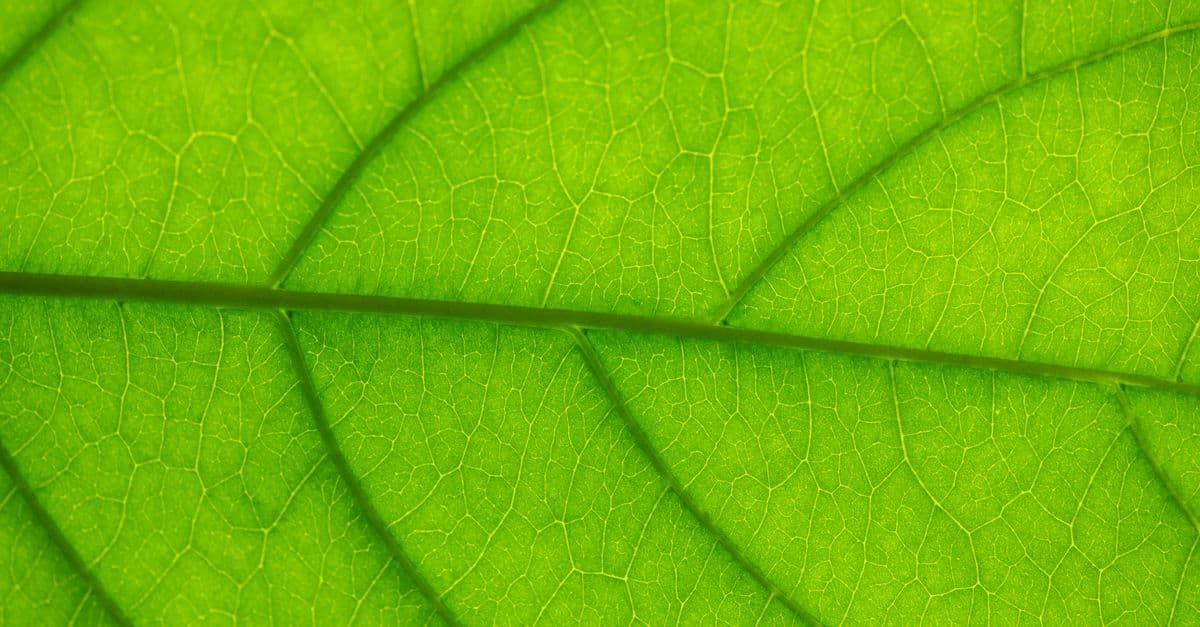
Photo: Petr Ganaj / Pexels
Every breath you take contains oxygen produced by photosynthesis. Every meal you eat is, Eventually, photosynthesis — directly (vegetables) or indirectly (animals that ate plants). For nearly 3 billion years, the cumulative photosynthesis of microbes, plants, and algae has shaped Earth's atmosphere, supported every food chain, and made complex life possible.
Here's exactly how it works.
Key takeaways
- Photosynthesis converts sunlight, water, and CO₂ into sugar (glucose) and oxygen.
- It happens in two main stages: light reactions (capturing energy) and the Calvin cycle (making sugar).
- It's powered by chlorophyll, the green pigment that absorbs blue and red light.
- Plants, algae, and some bacteria photosynthesise; together they produce ~330 billion tonnes of biomass per year.
- The oxygen we breathe is a "waste product" of photosynthesis — and it transformed Earth's atmosphere ~2.4 billion years ago.
The big picture
The basic equation:
6 CO₂ + 6 H₂O + light energy → C₆H₁₂O₆ (glucose) + 6 O₂
Take six CO₂ molecules, six water molecules, and sunlight. Produce one sugar molecule and release six oxygen molecules.
That's the summary. The actual process has dozens of steps, two distinct phases, and remarkable molecular machinery.
Where it happens — chloroplasts
In plant cells, photosynthesis takes place inside organelles called chloroplasts. Each chloroplast contains:
- Thylakoids — flattened membranous sacs stacked like coins where light reactions happen.
- Stroma — the fluid surrounding thylakoids where the Calvin cycle happens.
- Chlorophyll — green pigment embedded in thylakoid membranes.
A single leaf cell can contain dozens of chloroplasts.
Stage 1: The light reactions
This is where sunlight is captured and converted into chemical energy. It happens in the thylakoid membrane.
Step 1: Absorbing light
Chlorophyll molecules absorb photons of blue and red light (reflecting green, which is why leaves look green). The absorbed energy excites electrons in the chlorophyll.
Step 2: Splitting water
The excited electrons leave chlorophyll. To replace them, water molecules are split apart. This produces:
- New electrons (replacing those that left chlorophyll)
- Oxygen gas (released as a byproduct — the air we breathe)
- Hydrogen ions (used in the next steps)
Step 3: The electron transport chain
The energetic electrons travel through a series of proteins in the thylakoid membrane. Each step releases energy used to pump hydrogen ions, building up a concentration gradient.
Step 4: Making ATP and NADPH
The hydrogen ion gradient powers an enzyme called ATP synthase, which creates ATP — the cell's energy currency. Meanwhile, the electrons reduce NADP⁺ to NADPH, another energy carrier.
Result: light energy has been converted into chemical energy stored in ATP and NADPH.
Stage 2: The Calvin cycle
Now the chemical energy is used to build sugar. This happens in the stroma and uses CO₂ from the air.
Step 1: Carbon fixation
CO₂ enters the leaf through tiny pores called stomata. An enzyme called RuBisCO (the most abundant protein on Earth) attaches the CO₂ to a 5-carbon sugar called RuBP, producing two 3-carbon molecules.
Step 2: Reduction
ATP and NADPH from the light reactions provide energy and electrons to convert the 3-carbon molecules into a sugar called G3P (glyceraldehyde 3-phosphate).
Step 3: Regeneration
Most G3P is recycled to regenerate RuBP, keeping the cycle going. A small portion exits the cycle to be combined into glucose, sucrose, starch, and other carbohydrates.
After many cycles, you get glucose — the basic food molecule that plants use to grow, store energy, and feed every animal that eats them.
Why are leaves green?
Chlorophyll absorbs blue (~450 nm) and red (~650 nm) light efficiently but reflects green (~550 nm). Reflected green light is what we see.
Why this combination? Evolution. Chlorophyll evolved in early oceans where the available light was different from terrestrial sunlight. There may also be efficiency reasons — green leaves don't overheat as easily as black ones would.
Why this matters for life
Oxygen
Before photosynthesis, Earth's atmosphere had almost no oxygen. About 2.4 billion years ago, photosynthetic bacteria (cyanobacteria) had filled the atmosphere with oxygen — the Great Oxidation Event. This made complex aerobic life possible.
Food chains
Almost every ecosystem depends on photosynthesis as the energy entry point. Plants make sugar; herbivores eat plants; carnivores eat herbivores. Even deep-sea ecosystems mostly depend on dead matter that originated above with photosynthesis (a few exceptions exist around hydrothermal vents).
Carbon cycle
Photosynthesis pulls CO₂ from the atmosphere; respiration (in plants and animals) and decomposition put it back. This balance has shaped climate for billions of years. Human burning of fossil fuels — releasing carbon that was photosynthesised over hundreds of millions of years — is overwhelming the natural cycle.
Variations on photosynthesis
C3 plants
Most plants. Use the Calvin cycle directly. Wheat, rice, soybeans, and trees are C3. Less efficient in hot, dry conditions because RuBisCO sometimes binds oxygen instead of CO₂ (a process called photorespiration).
C4 plants
Use a preliminary step to concentrate CO₂ near RuBisCO, reducing photorespiration. More efficient in hot conditions. Maize (corn), sugarcane, sorghum.
CAM plants
Open stomata only at night to capture CO₂ (avoiding water loss in the day), storing it as malate. Day-time photosynthesis uses the stored carbon. Common in cacti and pineapple.
Bacteria
Some photosynthetic bacteria don't produce oxygen. They use sulfur compounds or other electron donors instead of water. They were dominant before cyanobacteria changed the planet.
How efficient is photosynthesis?
Surprisingly inefficient — typically 1-3% of incoming sunlight gets converted to plant biomass. Reasons:
- Plants only use light in specific wavelengths.
- Some absorbed light is wasted as heat.
- Some photosynthesised products are used immediately for respiration.
- Stomatal closure during heat or dryness slows CO₂ uptake.
Solar panels can hit 20%+ efficiency. There's huge interest in engineering more efficient photosynthesis to boost crop yields.
The quantum mechanics hidden in photosynthesis
Recent research has revealed that photosynthesis may exploit quantum mechanical effects. When light hits chlorophyll, the energy doesn't simply bounce around randomly until it reaches the reaction center. Instead, the excitation energy seems to take all possible pathways simultaneously — a quantum superposition — allowing it to find the most efficient route. This coherence effect could explain how photosynthesis achieves 100% efficiency in energy transfer across certain distances.
This was demonstrated in 2007 by Fleming's group at UC Berkeley using two-dimensional spectroscopy, showing oscillations in photosynthetic complexes consistent with quantum coherence. If true, it means evolution has engineered systems that exploit quantum mechanics — nature solved quantum tunneling problems millions of years before humans did.
The implications: if we could artificially replicate this quantum coherence in solar cells, we could theoretically achieve solar efficiencies far higher than the current 20% achievable with silicon. This is one reason synthetic biology labs are now reverse-engineering photosynthetic systems.
Source: Fleming, G. R., et al. (2007) "Evidence for Wavelike Energy Transfer Through Quantum Coherence in Photosynthetic Systems." Nature, 446(7137), 782–786. — Discovery of quantum coherence in light harvesting complexes.
Future of photosynthesis: Artificial and synthetic approaches
Several research groups are engineering artificial photosynthesis — using materials like copper oxide or titanium oxide to split water and CO₂ without biological organisms. The goal: directly convert sunlight to fuel (hydrogen or hydrocarbons) on a large scale. This could provide carbon-neutral energy and reduce atmospheric CO₂.
Others are engineering "super plants" — modifying natural photosynthetic crops to be more efficient. A major focus is improving RuBisCO, the slowest enzyme in the Calvin cycle. Making RuBisCO faster could increase crop yields by 20–30% without requiring additional land.
In 2022, researchers at the University of Illinois released a study showing that engineering crops to use C4 photosynthesis (more efficient than the C3 mechanism most crops use) could increase yields by 40%. This would require decades to deploy but could substantially improve food security.
How Light Wavelength Affects Photosynthesis
Photosynthesis doesn't respond equally to all wavelengths of light. The action spectrum — the amount of photosynthesis at each wavelength — doesn't match the absorption spectrum of chlorophyll alone. This puzzled researchers until the 1930s, when scientists discovered that plants contain multiple pigments beyond chlorophyll.
Photosynthetic Pigments
Chlorophyll a (primary reaction center pigment) absorbs blue (~430 nm) and red (~662 nm) light efficiently.
Chlorophyll b (accessory pigment) absorbs different wavelengths (~485 nm and ~640 nm) and passes energy to chlorophyll a.
Carotenoids (orange/yellow pigments) absorb blue and green light (400-500 nm) and dissipate excess energy as heat, protecting the plant from photoinhibition (damage from too much light).
Xanthophyll (yellow pigment) also protects against photoinhibition and shifts throughout the year — it's responsible for the bright yellows and reds in autumn leaves as chlorophyll breaks down.
This multi-pigment system means plants capture a broader range of the light spectrum than chlorophyll alone would suggest. In deep shade where red light penetrates but blue doesn't, plants with extra chlorophyll b perform better. In full sunlight, carotenoids become more important for protection.
Photosynthetic Yield at Different Intensities
Photosynthesis doesn't increase linearly with light intensity. At low light levels, every additional photon drives more photosynthesis — the plant is light-limited. At high intensities, photosynthesis plateaus at the light saturation point because the Calvin cycle becomes the bottleneck, not light capture. Tropical plants typically saturate at higher light intensities (1000-2000 μmol/m²/s) than shade plants (50-200 μmol/m²/s).
Source: Taiz, L., et al. (2015) "Plant Physiology and Development" (6th ed.). Sinauer Associates. — Comprehensive coverage of photosynthetic adaptation to light environments.
Photorespiration: The Inefficiency Tax on Photosynthesis
Here's an uncomfortable truth: RuBisCO, the enzyme that fixes CO₂, sometimes grabs oxygen instead. When this happens, it initiates photorespiration — a metabolic pathway that undoes photosynthesis, releasing CO₂, consuming energy, and producing no glucose.
Why Photorespiration Happens
RuBisCO evolved 3.5 billion years ago when Earth's atmosphere had almost no oxygen. The enzyme evolved to bind CO₂ preferentially, but not perfectly. Today, at atmospheric CO₂ levels (~420 ppm) and modern oxygen levels (~21%), RuBisCO mistakes oxygen for CO₂ about 3-5 times per 100 catalytic cycles.
This mistake is more likely when:
- Temperature is high (enzyme specificity drops)
- Stomata are closed (limiting CO₂ but not oxygen in the leaf)
- Light is intense (driving RuBP regeneration)
The Cost
A single photorespiratory cycle wastes ~25% of the carbon fixed. For a C3 plant, this means actual net photosynthesis is only ~75% of gross photosynthesis. On a hot, dry day with stomata closed, photorespiration can consume 40-50% of the fixed carbon.
Why Evolution Hasn't Fixed This
You might wonder: why hasn't evolution eliminated photorespiration? Because RuBisCO's imperfection is the best compromise. Making it more specific to CO₂ would slow its overall catalytic rate. The enzyme currently catalyzes 3-4 reactions per second — remarkable for an enzyme. Making it more discriminating would cut this down, reducing total CO₂ fixation even more than photorespiration does. Evolution optimized for speed, accepting occasional errors as the cost.
This is one reason bioengineers are trying to enhance photosynthesis: if we could reduce photorespiration by just 10%, crop yields could increase by 20-30% globally.
Source: Bauwe, H. (2011) "Photorespiration and Beyond." Advances in Photosynthesis and Respiration, 31, 151–173. — Detailed review of photorespiration mechanisms and evolution.
Environmental Factors That Regulate Photosynthetic Rate
Photosynthesis isn't constant. It responds dynamically to environmental conditions.
Carbon Dioxide Concentration
At current atmospheric CO₂ (~420 ppm), photosynthesis is CO₂-limited for most plants. Increasing CO₂ to 800 ppm in a greenhouse increases photosynthetic rate by 20-40%, up to a saturation point. This is why commercial growers often elevate CO₂ in greenhouses; the extra CO₂ boosts crop yields significantly.
However, elevated atmospheric CO₂ is an ecological double-edged sword. While plants photosynthesize faster, the quality of foliage decreases — C3 plants produce leaves with lower nitrogen and protein content when grown at high CO₂. Herbivores feeding on these leaves must eat more to get the same nutrition, potentially benefiting some pests while disadvantaging others.
Temperature
The enzyme RuBisCO works optimally at moderate temperatures (20-30°C). Below or above this range, its catalytic rate drops. Additionally, higher temperatures increase photorespiration (as noted above), reducing net photosynthesis.
In tropical rainforests, photosynthesis peaks at dawn when it's cooler and humidity is high (allowing stomata to stay open). By midday, stomata close to conserve water, photosynthesis plummets, and the plant idlles in the heat.
Water Availability
Drought stress causes stomata to close — a plant's defense against losing water through transpiration. Closed stomata means less CO₂ enters the leaf, and photosynthesis crashes. Even mild drought (leaf water potential dropping by 1-2 MPa) can halve photosynthetic rate. Severe drought can shut photosynthesis down completely for days.
This explains why deserts are not hospitable to high-photosynthesis plants. Even though sunlight is abundant, water scarcity is the limiting factor. Desert plants often have thick, waxy leaves, reduced stomatal density, and CAM photosynthesis specifically to minimize water loss.
Nitrogen Availability
RuBisCO is 50% of leaf protein. In nitrogen-poor soils, plants produce fewer leaves and less RuBisCO, reducing photosynthetic capacity. This is why nitrogen fertilizer is crucial for agriculture — it directly enables photosynthesis and growth.
Nutrient Deficiencies
Iron deficiency impairs electron transport chain components. Magnesium (the center of the chlorophyll molecule) directly limits photosynthesis. Phosphorus deficiency reduces ATP production in the light reactions. Even trace elements like manganese (essential for water-splitting) and zinc (needed for RuBisCO) can become limiting.
| Factor | Effect on Photosynthesis |
|---|---|
| Light intensity | Increases photosynthesis up to saturation point (100-2000 μmol/m²/s depending on species) |
| CO₂ concentration | Increases photosynthesis up to 800 ppm saturation in most plants |
| Temperature | Peaks at 20-30°C; drops sharply above 35°C for C3 plants |
| Water availability | Linear correlation; drought causes stomatal closure |
| Nitrogen | Directly limits RuBisCO concentration and abundance |
| Phosphorus | Limits ATP production; stunts photosynthesis if deficient |
This table shows why crop yields are so responsive to fertilizer, irrigation, and climate conditions — photosynthesis is a bottleneck limited by multiple environmental factors simultaneously.
Photosynthesis in Different Ecosystems
Photosynthetic rate and strategy vary dramatically across ecosystems.
Rainforests
Rainforest plants operate near the compensation point — the light level where photosynthesis equals respiration. The forest floor is dim (only 1-2% of incident sunlight). Understory plants have enormous leaves with low photosynthetic rate per unit area but high total leaf area to capture enough light. Canopy trees photosynthesize at high rates but are water-stressed in the dry season.
Grasslands and Deserts
Grasses often use C4 photosynthesis, which is more efficient in hot, dry conditions. They're light-saturated at lower intensities than C3 plants, making them better suited to variable sunlight conditions (since nearby grass blades cast shadows). Desert plants are sparse; each plant maximizes water-use efficiency over absolute photosynthetic rate.
Aquatic Ecosystems
Phytoplankton and algae photosynthesize in the photic zone — the depth where light penetrates (~200 m in clear ocean water). They've evolved pigments optimized for blue and green light (which penetrate farthest) rather than red light. Seaweed in shallow water produces red and brown algae with complementary pigments to utilize a broader spectrum.
Aquatic photosynthesis faces a CO₂ limitation: dissolved CO₂ is ~1000x less concentrated than atmospheric CO₂. Many aquatic plants have adapted by using HCO₃⁻ (bicarbonate) as a carbon source, requiring specialized carbonic anhydrase enzymes. Some even have a second layer of CO₂-concentrating mechanisms.
Photosynthesis and Food Security
Global photosynthesis produces ~1,200 Gt of dry biomass annually. Humans and livestock directly consume ~1-2% of that, but we alter photosynthetic rates across 40%+ of Earth's land surface through agriculture, grazing, and deforestation.
Crop Photosynthetic Efficiency
Most major crops (wheat, rice, corn, soy) are C3 plants with 1-3% photosynthetic efficiency. C4 crops (corn, sugarcane, sorghum) achieve 4-5% efficiency. Even theoretical maximums (with perfect RuBisCO, no photorespiration) are only ~11%.
If we could engineer crops to be 5% efficient (a 66% improvement), global food production could increase 50% without additional land, water, or fertilizer. This is a major goal of synthetic biology and crop genetic engineering programs.
Climate Change and Photosynthesis
Rising CO₂ levels increase the CO₂/O₂ ratio, reducing photorespiration — a potential benefit. However, rising temperatures and increased drought stress more than offset this gain. Crop yields have plateaued or declined in many regions despite rising atmospheric CO₂ because heat stress and water scarcity are now the binding constraints.
Source: Long, S. P., et al. (2006) "Rising Atmospheric CO₂: Plants FACE the Future." Annual Review of Plant Biology, 57, 179–202. — Analysis of elevated CO₂ and heat effects on crop photosynthesis.
The History of Photosynthesis Research
Photosynthesis was poorly understood until the 20th century. Early breakthroughs:
1600s: Jan Baptista van Helmont grows a willow tree in a sealed pot of soil. After 5 years, the tree gains 74 pounds while the soil loses <2 ounces. He concludes trees grow from water, not soil.
1770s: Jan Ingenhousz discovers that light is necessary for photosynthesis. He shows plants produce oxygen only in the light, consume it in the dark, and need sunlight to improve water quality.
1905: Frederick Blackman identifies the two stages: light-dependent and light-independent reactions (though the term "Calvin cycle" won't exist for decades).
1930s-1950s: Melvin Calvin traces the path of carbon using radioactive ¹⁴CO₂ in Chlorella algae. He maps the entire cycle, earning the 1961 Nobel Prize. The pathway is named in his honor.
1965: The electron microscope reveals thylakoid structure, enabling researchers to link biochemical reactions to membrane organization.
2000s-2020s: Quantum coherence discovered in light-harvesting complexes; photosynthetic efficiency understood at the molecular level; synthetic approaches to artificial photosynthesis accelerate.
Sources and further reading
Source: Hill, R., & Rich, P. R. (1983) "The Chemiosmotic Hypothesis of Photosynthesis." Photosynthesis Research, 4(1), 39–66. — Foundational paper on energy transduction in the light reactions.
Source: Calvin, M. (1962) "The Path of Carbon in Photosynthesis." Science, 135(3507), 879–889. — Original work on the Calvin cycle mechanisms.
Source: Schopf, J. W., et al. (2002) "Laser-Raman Imagery of the Earliest Fossils on Earth." Nature, 416(6876), 73–76. — Evidence of photosynthetic microbial life 3.5+ billion years ago.
Source: Blankenship, R. E. (2014) "Molecular Mechanisms of Photosynthesis" (2nd ed.). Wiley-Blackwell. — Comprehensive reference on photosynthetic biochemistry and evolution.
Frequently Asked Questions
Q: Is photosynthesis the same in all plants?
A: No, there are variations. Most plants use C3 photosynthesis (standard Calvin cycle). Some plants in dry climates use C4 or CAM photosynthesis, which minimizes water loss through stomata, making them more drought-resistant.
Q: Do plants respire as well as photosynthesize?
A: Yes — plants respire constantly (use oxygen, produce CO₂). During the day, photosynthesis dominates, making them net oxygen producers. At night, they're net oxygen consumers, but daily totals are positive.
Q: Could we engineer photosynthesis into humans?
A: Theoretically interesting but practically impossible. Photosynthesis requires chloroplasts and far more surface area than human skin provides. We'd need to be largely flat and green.
Q: Can plants grow under artificial light instead of sunlight?
A: Yes — LED grow lights tuned to chlorophyll's absorption peaks work well and can be more efficient than sunlight. Modern indoor farms increasingly use them.
Q: Why don't plants photosynthesise more efficiently if all life depends on it?
A: Evolution optimizes for survival and reproduction, not maximum efficiency. Trade-offs between water loss, leaf size, and temperature bound how efficient photosynthesis can get.
Q: Where is the most photosynthesis happening on Earth?
A: The oceans. Phytoplankton (microscopic algae) account for roughly 50% of global photosynthesis. They're invisible individually but produce enormous amounts of oxygen and biomass.
The takeaway
Photosynthesis is the foundation of nearly every ecosystem on Earth. Plants, algae, and cyanobacteria capture sunlight, split water, fix CO₂, and produce the sugar that feeds the planet — releasing the oxygen that lets us breathe. The chemistry is intricate; the consequences are total. Understanding photosynthesis means understanding why Earth has the atmosphere it does, why life looks the way it does, and why protecting plants and oceans matters for far more than just biodiversity. Every meal, every breath, traces back to chloroplasts capturing photons and quietly running the chemistry that makes complex life possible.
Read next:
Follow new articles
Add SciHub101 to your feed reader to see new science and technology stories.
About the Author
SciHub101 is an independent science and technology publication founded and edited by Buğra Sözeri, a software engineer and app developer based in Türkiye. AI tools assist with drafting and research. Source documentation in the existing archive is uneven, and articles are being reviewed and corrected. The Editorial Team byline identifies editorial responsibility; it does not certify specialist or independent human review. Where we compare products, anything built by our own team is labelled as such — see the editorial guidelines and About page for how corrections and disclosures work.
Related Articles

How Much Caffeine Is Too Much? The Science of Coffee and Energy Drinks
Caffeine is the world's most consumed psychoactive drug. It boosts alertness, has real health benefits, and is dangerous in excess. Here's the science of caffeine and how much you can safely drink.

Why Do We Yawn — and Why Is It Contagious?
Yawning is one of the most universal human behaviours, and one of the most poorly understood. Multiple theories compete; none is fully accepted. Here's what science actually knows.
Why Do Leaves Change Color? The Science of Autumn
Chlorophyll breaks down in autumn leaves, unmasking yellow and orange carotenoid pigments that were present all along. Meanwhile, trees synthesize new red and purple anthocyanins, while shorter days and cooler nights trigger senescence—a programmed shutdown that eventually leads the tree to seal off and drop each leaf at a specialized abscission layer. This cascade of biochemical events helps trees conserve resources for winter.

What If Humans Could Photosynthesize? — Science Explained
What would actually happen if humans could photosynthesize like plants? The math is brutal: you'd need skin the area of a small room, you'd still need food, and you'd have to spend most of your life lying flat in direct sunlight.
The Chemistry of Photosynthesis — From Photons to Sugar
How photosynthesis works at the molecular level — the light reactions, Z-scheme, electron transport chain, Calvin cycle, and why quantum coherence may be involved.
What If Humans Could Photosynthesize Like Plants?
A photosynthesising human sounds like a way to escape grocery bills — but the math says even a perfectly solar-powered human couldn't survive on sunlight alone. Here's why.