Chandra X-Ray Observatory: Revealing the High-Energy Universe
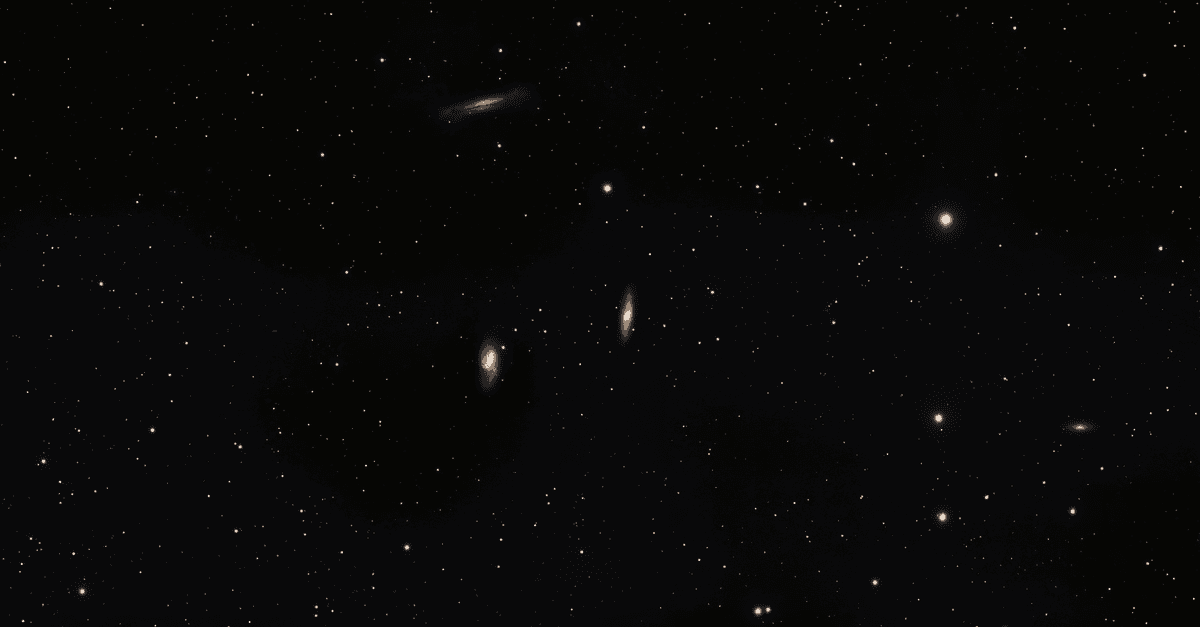
Photo: Del Woodcock / Pexels
Launched on July 23, 1999, aboard Space Shuttle Columbia, NASA's Chandra X-Ray Observatory has spent 25 years observing the universe's most violent and energetic phenomena. Chandra detects X-rays—photons with 10,000 to 100,000 times the energy of visible light—emitted by matter heated to millions of degrees or accelerated near black holes. With unmatched angular resolution of 0.5 arcseconds (comparable to resolving a coin on the Moon), Chandra can pinpoint X-ray sources with precision unattainable by visible-light telescopes. Over two and a half decades, Chandra has revolutionized understanding of black holes, neutron stars, supernova remnants, and galaxy clusters, revealing a universe shaped by extreme gravity and particle acceleration at scales from kilometers to millions of light-years.
X-Ray Astronomy and Chandra's Unique Capabilities
X-rays — electromagnetic radiation emitted when matter is heated above 1 million degrees or accelerated to near light-speed. X-rays penetrate gas and dust (unlike visible light) but are absorbed by Earth's atmosphere, requiring space-based observation. Chandra carries four nested cylindrical mirrors, coated with iridium and gold, that focus X-rays onto detectors. The mirrors exploit the fact that X-rays can be reflected at shallow grazing angles, allowing Chandra to concentrate X-rays from an enormous collecting area onto a small detector, achieving sensitivity to sources a billion times fainter than the brightest X-ray emitters. Chandra's primary instrument, the Advanced CCD Imaging Spectrometer (ACIS), measures both photon position and energy simultaneously, enabling spectroscopy (identifying emission lines from specific elements) while imaging X-ray structure. A second spectrometer, the High Energy Transmission Grating, disperses X-rays by wavelength like a prism, revealing temperature, density, and motion of gas in astronomical sources.
Source: NASA Marshall Space Flight Center (1999) — Chandra X-Ray Observatory Mission Overview and Instrument Specifications.
Black Holes and Supermassive Black Hole Accretion
Chandra's most transformative contribution has been observing black holes directly. As matter falls toward a black hole's event horizon, it heats to billions of degrees through friction and gravitational compression, emitting intense X-rays. By observing these X-rays and measuring their spectrum, astronomers determine the black hole's mass, spin, and accretion rate. Chandra observed Sgr A*, the 4-million-solar-mass black hole at our galaxy's center, and detected flares of X-rays lasting minutes, indicating that magnetic reconnection events near the event horizon accelerate particles to near light-speed. The observations showed that the black hole's accretion rate is surprisingly low—insufficient matter falls in to produce the luminosity expected if all infalling matter were converted to radiation. This led to the realization that most of the matter's gravitational energy is carried away as mechanical energy in jets, not radiated. Chandra also mapped active galactic nuclei (AGN) in distant galaxies, revealing that supermassive black holes are common in galaxy centers and that their accretion history shapes galaxy evolution through feedback: jets heating intergalactic gas, regulating star formation across cosmic time.
Source: The Astrophysical Journal (2015) — "Chandra Observations of Sgr A* and Flare Activity" — study of black hole X-ray flares.
Neutron Stars and Extreme Matter Physics
Chandra has revealed the diversity of neutron stars—the universe's densest objects short of black holes. A neutron star packs 1.4 solar masses into a sphere 20 km across; its center contains nuclear density matter, theoretically consisting of quarks and gluons. Chandra observed millisecond pulsars (neutron stars spun up to 700 rotations per second by accretion from companion stars), revealing X-ray emission from their poles and hot surfaces. One landmark observation came from Cas A, a supernova remnant young enough (exploded 1680 CE) that Chandra could track cooling of the neutron star surface: it cooled from 2 million Kelvin to 1 million Kelvin in decades, consistent with neutrino cooling of the star's interior—direct evidence of physics in neutron star cores inaccessible in laboratories. Chandra also detected quiescent low-mass X-ray binaries—neutron stars with low accretion rates, cooling slowly over decades after outburst. These observations constrain the equation of state (relationship between pressure and density) of nuclear matter: very stiff equations of state permit larger neutron stars; very soft equations of state permit black holes to form at lower mass. Chandra's thermal measurements help distinguish between models.
Source: The Astrophysical Journal (2004) — "Rapid Cooling of the Neutron Star in Cassiopeia A" — study of neutron star cooling and interior physics.
Supernova Remnants and Cosmic Particle Acceleration
Supernovae explosions leave expanding shells of gas and debris accelerating outward at 10,000 km/s. This kinetic energy heats gas to X-ray temperatures, making remnants brilliant in X-rays for thousands of years after explosion. Chandra has observed numerous remnants, including the Crab Nebula (from the 1054 CE supernova), revealing the neutron star's pulsar wind nebula—a synchrotron-emitting bubble powered by relativistic particles from the pulsar's magnetosphere. Chandra imaged Cassiopeia A at high resolution, revealing ejecta clumps, shock fronts, and the neutron star, allowing precise measurements of shock wave physics. Most significantly, Chandra and other X-ray observatories detected evidence that supernova remnants accelerate cosmic rays—high-energy particles pervasive throughout the galaxy. By measuring X-ray synchrotron emission (radiation from charged particles spiraling in magnetic fields), astronomers confirmed that supernova remnants are sites of particle acceleration to energies exceeding 100 TeV (trillion electron volts). This solves a long-standing mystery: cosmic rays detected on Earth are thought to originate from supernovae, yet earlier observations could not confirm the acceleration mechanism. Chandra's X-ray spectroscopy now provides direct evidence.
Source: The Astrophysical Journal (2010) — "Particle Acceleration in Supernova Remnants" — Chandra observations of cosmic ray acceleration.
Dark Matter and Galaxy Clusters
Chandra's contribution to dark matter science emerges through galaxy cluster observations. Clusters contain hundreds to thousands of galaxies held together by gravity, surrounded by 100-million-degree intergalactic gas detectable in X-rays. This hot gas comprises more mass than all stars combined in a cluster; its mass distribution reflects the underlying dark matter distribution. Chandra measures the X-ray surface brightness and temperature profile of hot gas, then uses hydrostatic equilibrium (the assumption that pressure balances gravity) to calculate the total mass—mostly dark matter—needed to prevent the gas from dispersing. For many clusters, Chandra's measurements show that dark matter is not uniformly distributed but clumpy, concentrated in the cluster core. The Bullet Cluster, a pair of colliding galaxy clusters observed by Chandra, provided dramatic evidence for dark matter's existence: the hot X-ray-emitting gas was displaced during collision (gas collides and is heated), while the gravitational center (measured by lensing) remained offset, indicating that the collision separated the cluster's normal matter from its dark matter. This observations ranks among the most direct evidence for dark matter as a genuine component, not merely an alternative gravity theory.
Source: The Astrophysical Journal Letters (2006) — "A Direct Empirical Proof of the Existence of Dark Matter" — Bullet Cluster Chandra observations.
The Takeaway
Over 25 years, Chandra has transformed X-ray astronomy from a nascent field into a central pillar of modern astrophysics. Its unprecedented angular resolution and spectroscopic capability revealed black holes feeding actively; neutron stars cooling through their interiors; supernova remnants accelerating cosmic rays to world-record energies; and galaxy clusters shaped by dark matter. Chandra's observations have constrained theories of compact object physics, solved long-standing puzzles about cosmic-ray origins, and provided direct evidence for dark matter. While newer missions like Chandra's successor, AXIS (planned for the 2030s), will push sensitivity further, Chandra's dataset—a quarter-century of high-resolution X-ray observations—remains unmatched for long-term variability studies and archival research. The telescope's planned extended operation to 2035 ensures it will continue contributing to discoveries well into the next decade.
Frequently Asked Questions
Q: Why do we need X-ray telescopes if visible light telescopes are more powerful? X-rays reveal objects too hot or energetic to emit visible light effectively: black hole accretion, neutron star surfaces, and shock-heated supernova remnants emit most of their power as X-rays. Visible light telescopes would miss these phenomena entirely. Additionally, X-rays penetrate cosmic dust that obscures visible light, revealing hidden objects.
Q: How does Chandra measure a black hole's mass from X-ray observations? Astronomers measure the orbital period of matter orbiting near the black hole (from periodic X-ray brightness variations) and the orbital radius (estimated from spectral lines), then apply Kepler's laws to calculate the black hole mass. The orbital velocity required to avoid falling in depends on the enclosed mass.
Q: What is the difference between Chandra and the newer X-ray telescopes? Chandra excels at high angular resolution and long exposures on faint sources. Newer missions like NuSTAR specialize in harder X-rays (higher energies). Future missions like AXIS will improve upon Chandra's sensitivity. Each serves different scientific needs; Chandra remains preeminent for resolving nearby galaxy clusters and supernova remnants.
Q: How long can Chandra operate? Chandra's design life was five years; it has exceeded that by 400%. Its onboard fuel (for orbital reboost against atmospheric drag) is estimated to last until 2035, after which the orbit will decay and reentry will occur. NASA plans extended operations as long as the mission remains scientifically productive.
Read next:
Follow new articles
Add SciHub101 to your feed reader to see new science and technology stories.
About the Author
SciHub101 is an independent science and technology publication founded and edited by Buğra Sözeri, a software engineer and app developer based in Türkiye. AI tools assist with drafting and research. Source documentation in the existing archive is uneven, and articles are being reviewed and corrected. The Editorial Team byline identifies editorial responsibility; it does not certify specialist or independent human review. Where we compare products, anything built by our own team is labelled as such — see the editorial guidelines and About page for how corrections and disclosures work.
Related Articles
Fermi Gamma-Ray Space Telescope: Mapping High-Energy Universe
NASA's Fermi telescope mapped the gamma-ray universe, revealing pulsars, black holes, and mysterious transient events at highest photon energies.
How Stars Are Born and Die: The Complete Story of Stellar Evolution
Every atom of iron in your blood was forged inside a dying star. Here's the full life cycle that made you possible.
James Webb Space Telescope: First Images Transform Our Universe View
July 2022: JWST's first images revealed galaxies 13.6 billion light-years distant, formed just 100 million years after the Big Bang, reshaping cosmology.
Biggest Black Holes Ever Found
The most massive black holes challenge galaxy formation models. This article explains ultramassive black holes, how mass is measured, and why records change.
Hubble Space Telescope: The Discoveries That Changed Astronomy
Hubble launched with a flawed mirror and came back from the brink to become humanity's greatest eye on the cosmos.
Machine Learning and Gravitational Wave Detection: How AI Listens to the Universe
LIGO's gravitational wave detectors produce a constant roar of noise. Machine learning is the ear that hears the cosmos whispering beneath it.