Hubble Space Telescope: The Discoveries That Changed Astronomy
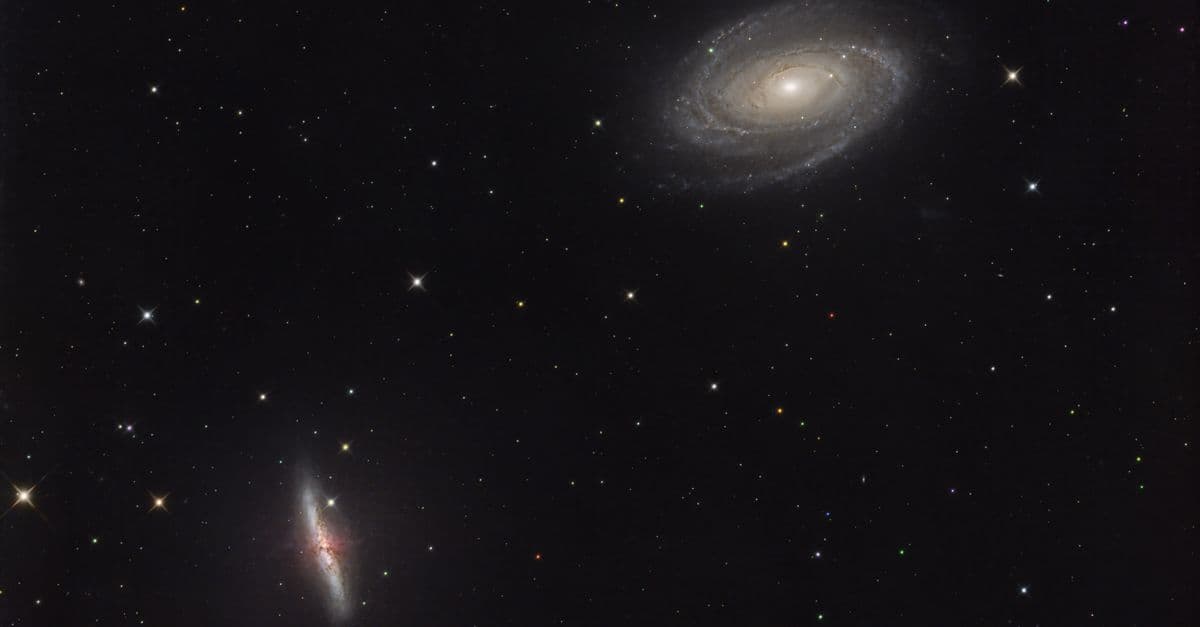
Photo: Marco Milanesi / Pexels
In April 1990, the Space Shuttle Discovery carried a $1.5 billion telescope into orbit — and within weeks, astronomers realized something was catastrophically wrong. The images coming back from the Hubble Space Telescope were blurry. The most expensive scientific instrument ever launched was producing worse images than many ground-based telescopes. There was a flaw in the primary mirror, ground to the wrong shape by a mere 2.2 micrometers — a fraction of the width of a human hair. NASA was devastated. Congress held hearings. Late-night hosts made jokes.
Three years later, Space Shuttle astronauts flew up, performed a series of daring spacewalks, and installed corrective optics that essentially served as contact lenses for Hubble. The telescope came back to life — not just corrected, but capable of images sharper than anyone had dared hope. What followed was 35 years of discovery that transformed humanity's understanding of the universe.
Key takeaways
- Hubble orbits at 340 miles altitude and has made over 1.5 million observations since 1990
- Its data has contributed to over 19,000 peer-reviewed scientific papers
- Hubble helped determine the universe's age at approximately 13.8 billion years
- The 1995 Hubble Deep Field image revealed thousands of galaxies in a patch of sky the size of a grain of sand
- Observations of distant supernovae helped confirm that the universe's expansion is accelerating — now attributed to dark energy
- Hubble has observed everything from planets in our solar system to the most distant galaxies ever seen
The mirror disaster and the rescue that saved astronomy
The Hubble primary mirror was ground to extraordinary precision — smooth to within 10 nanometers. The problem was that the instrument used to measure the mirror's curvature had a small lens incorrectly positioned by 1.3 mm. The result was a mirror that was perfect in its own terms but the wrong shape by a tiny but decisive amount. The effect is called spherical aberration: light from the edges of the mirror didn't focus to the same point as light from the center, producing blurry, halo-ringed images.
NASA engineers designed an instrument called COSTAR — Corrective Optics Space Telescope Axial Replacement — essentially a set of small mirrors positioned to intercept the light from the primary mirror and correct the aberration before it reached Hubble's cameras. In December 1993, five astronauts aboard Space Shuttle Endeavour performed 11 days of spacewalks in what remains the most ambitious servicing mission in spaceflight history, installing COSTAR and replacing the Wide Field and Planetary Camera.
When the first corrected images came back, there were no words. In place of blurry blobs, they showed sharp pinpoints of stars, delicate structures in nebulae, and detail in distant galaxies that had never been seen before. The reaction from scientists was described as euphoric. Hubble had been saved — and with it, a generation of astronomical discovery.
The Deep Field: A grain of sand full of galaxies
In December 1995, Hubble's director Robert Williams decided to do something unprecedented and, frankly, risky. He pointed the telescope at a tiny, apparently blank patch of sky in the constellation Ursa Major and left it pointing there for ten consecutive days — 342 separate exposures stacked together into a single image.
The region of sky chosen was just 5.3 arcminutes across — about the size of a grain of sand held at arm's length. Astronomers expected to see a handful of distant galaxies. What they got instead was one of the most important images in the history of science.
The Hubble Deep Field contained approximately 3,000 galaxies — some nearby and sharp, others so distant and ancient they appeared as faint red smudges. The youngest were more than 10 billion years old. Their varied shapes — spirals, ellipticals, disturbed collision remnants — told the story of cosmic evolution across billions of years. If that tiny patch of sky contained 3,000 galaxies, astronomers realized, the observable universe must contain hundreds of billions of galaxies. The scale of the cosmos snapped into focus in a way it never had before.
Williams repeated the experiment with the Southern hemisphere in 1998, and the results were consistent. Hubble later produced even deeper fields — the Ultra Deep Field in 2004, showing galaxies formed just 500 million years after the Big Bang, and the eXtreme Deep Field in 2012, pushing to galaxies just 450 million years old.
Dark energy: The discovery that changed cosmology
In 1998, two independent teams of astronomers — one led by Saul Perlmutter, the other by Brian Schmidt and Adam Riess — were using Hubble to study Type Ia supernovae in distant galaxies. Type Ia supernovae are "standard candles": they all explode with roughly the same intrinsic brightness, so by comparing their apparent brightness to their actual brightness, astronomers can calculate how far away they are.
The measurements came back wrong — or rather, they came back with an answer no one expected. The distant supernovae were dimmer than they should have been. They were farther away than they should have been. The universe wasn't just expanding — it was expanding at an accelerating rate. Something was pushing galaxies apart faster and faster over time.
That something was dubbed dark energy — a mysterious repulsive force that appears to permeate all of space. Its nature remains unknown. We know it exists only because of what it does. It makes up approximately 68% of the total energy content of the universe. Without dark energy, the universe's expansion would be slowing due to gravity; with it, the expansion accelerates, and in the distant future, galaxies beyond our local group will recede faster than light and become permanently invisible.
Perlmutter, Schmidt, and Riess shared the 2011 Nobel Prize in Physics for this discovery. Hubble's role was central.
Other landmark discoveries: A greatest hits list
Hubble's contribution to astronomy spans nearly every field. It observed the Shoemaker-Levy 9 comet crashing into Jupiter in 1994, providing the first direct images of a collision between solar system objects. It revealed the surface of Pluto in enough detail to show polar caps and dark equatorial regions — images used to plan the New Horizons flyby. It discovered moons around Pluto that were unknown before its observations.
Hubble helped establish the rate at which the universe is expanding — the Hubble constant — though a persistent tension between different measurement methods (the "Hubble tension") remains one of the most intriguing open problems in cosmology. It imaged the atmospheres of exoplanet atmospheres, detecting sodium in the atmosphere of planet HD 209458b in 2001. It showed that nearly every large galaxy harbors a supermassive black hole at its center, and that the mass of the black hole correlates with the properties of the galaxy — suggesting black holes and galaxies grow together.
Perhaps most viscerally, Hubble gave us images. The Pillars of Creation — towering columns of gas and dust in the Eagle Nebula where new stars are being born — became one of the most widely reproduced astronomical images in history. The Butterfly Nebula, Stephan's Quintet, the Sombrero Galaxy: Hubble turned the universe into something visible, vivid, and breathtaking.
FAQ
Why does Hubble see better than ground telescopes? Earth's atmosphere blurs and absorbs light. Even the best ground-based telescopes must compensate for atmospheric turbulence, either through adaptive optics (deformable mirrors that correct in real time) or by choosing sites with exceptionally stable air. Hubble sits above the atmosphere entirely and sees in ultraviolet and infrared wavelengths that the atmosphere absorbs completely. Modern ground telescopes with adaptive optics can now surpass Hubble in certain wavelengths and resolutions, but Hubble's UV capability remains unique.
How long will Hubble keep working? Hubble was last serviced in 2009, and NASA has no plans for another servicing mission. The telescope is showing its age — gyroscopes have failed, and it has been operating in a degraded mode. NASA estimates Hubble could continue operating until 2030 or beyond, though with reduced capabilities. It will eventually reenter Earth's atmosphere — NASA is studying options for a controlled deorbit.
Has Hubble been replaced by the James Webb Space Telescope? Not replaced — complemented. Webb sees in infrared light and can peer even farther back in time. Hubble sees in visible and ultraviolet light, which Webb cannot. The two telescopes work together: Webb can see through dust clouds that block Hubble's view, while Hubble provides the visible-light context that makes Webb's infrared images interpretable.
How many people work on Hubble? The Space Telescope Science Institute in Baltimore manages Hubble science operations, with a staff of about 700 scientists, engineers, and support staff. Thousands of astronomers worldwide have used Hubble time — telescope time is allocated through a competitive proposal process, and receiving Hubble observing time is a significant scientific achievement.
What was the most important single Hubble observation? Astronomers would debate this endlessly, but many would argue it's the dark energy discovery from supernova observations. Its implications were so profound that it fundamentally changed our model of the universe — revealing that 68% of the cosmos is made of something we don't understand, and that the universe will expand forever, eventually leaving us alone in an increasingly dark and cold void.
Read next:
Follow new articles
Add SciHub101 to your feed reader to see new science and technology stories.
About the Author
SciHub101 is an independent science and technology publication founded and edited by Buğra Sözeri, a software engineer and app developer based in Türkiye. AI tools assist with drafting and research. Source documentation in the existing archive is uneven, and articles are being reviewed and corrected. The Editorial Team byline identifies editorial responsibility; it does not certify specialist or independent human review. Where we compare products, anything built by our own team is labelled as such — see the editorial guidelines and About page for how corrections and disclosures work.
Related Articles
Multiverse Theory Explained: What It Is and Whether It's Real
There may be infinitely many universes where you made different choices. Here's what physics actually says about the multiverse.
AI and Autonomous Spacecraft Navigation: How Mars Rovers Think for Themselves
Mars rovers like Perseverance use onboard AI to navigate treacherous terrain, select science targets, and survive a 20-minute communication delay from Earth.
Hubble Deep Field: Revealing the Universe's True Scale
December 1995: Hubble stared at one blank patch of sky for about 10 days and found roughly 3,000 galaxies, changing how astronomers count the universe.
Complete Space Guide 2026: Astronomy and Cosmology
Astronomy and cosmology explained: the Solar System, stars, black holes, galaxies, the Big Bang, exoplanets and how we observe, with a deep dive for each topic.
Neural Networks and Space Telescope Image Analysis: Seeing the Cosmos More Clearly
Neural networks now sort galaxies, rank gravitational lens candidates, and flag changing objects in Hubble, Webb, and survey data. Here is what they do well, and where astronomers still check their work.
How AI and Machine Learning Are Revolutionizing Exoplanet Detection
Machine learning is transforming the search for alien worlds, helping scientists find thousands of exoplanets hidden in Kepler's vast data.