Fermi Gamma-Ray Space Telescope: Mapping High-Energy Universe
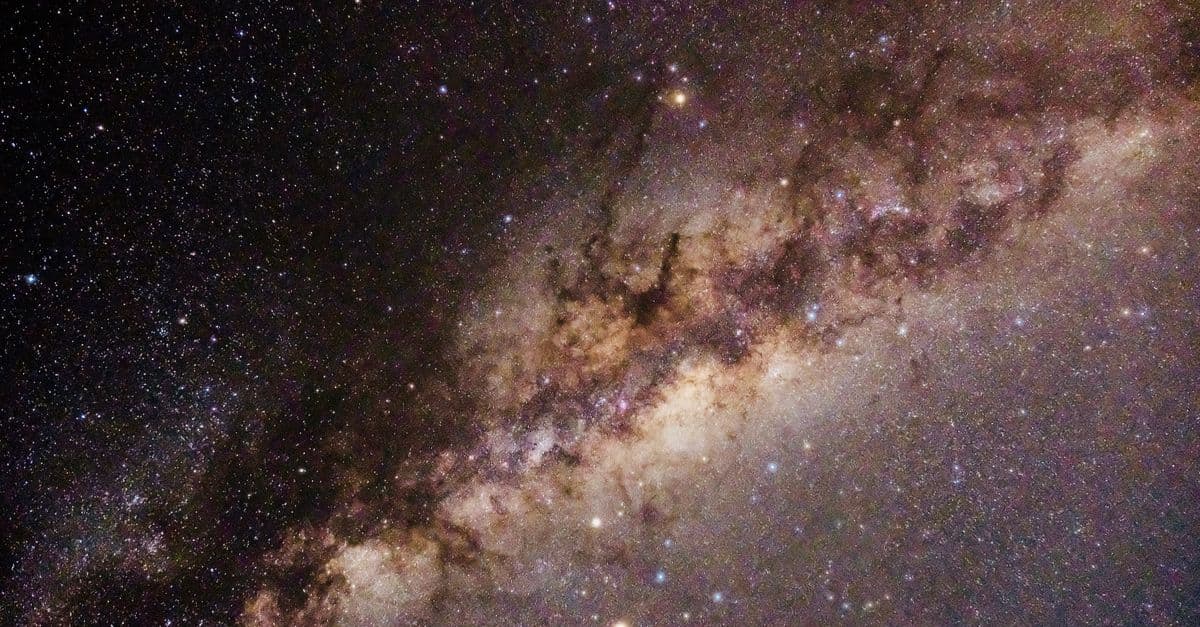
Photo: Jobert Enamno / Pexels
Launched on June 11, 2008, the Fermi Gamma-Ray Space Telescope observes the universe's highest-energy photons—gamma rays with energies 100 million times greater than visible light. Over 17 years of operation, Fermi has revolutionized gamma-ray astronomy by discovering over 5,000 gamma-ray sources and mapping the violent universe in unprecedented detail. Fermi's two main instruments—the Large Area Telescope (LAT) and the Burst Alert Telescope (BAT)—detect photons across a 50 MeV to 300 GeV energy range, revealing pulsars, black holes, supernova remnants, and gamma-ray bursts. The mission transformed our understanding of particle acceleration in extreme cosmic environments, showing that the universe teems with violent high-energy events invisible to visible-light telescopes.
The Fermi Mission: Purpose and Instruments
Gamma rays — radiation produced by the universe's most energetic processes: matter falling into black holes, supernova explosions, and cosmic ray collisions. Fermi was specifically designed to detect these photons and determine their origin. The spacecraft carries two principal instruments: the Large Area Telescope (LAT), which covers 20% of the sky at any moment with superior angular resolution, and the Burst Alert Telescope (BAT), which rapidly triggers observations of sudden gamma-ray explosions. This dual approach allows Fermi to both survey the gamma-ray sky systematically and respond to transient events lasting seconds to minutes. The LAT's 4 square-meter silicon tracker and calorimeter enable it to precisely measure photon energy and direction, crucial for connecting gamma-ray sources with observations across other wavelengths.
Source: NASA Goddard Space Flight Center (2008) — Fermi mission overview and instrument specifications.
Gamma-Ray Pulsars: Lighthouses of the Universe
Before Fermi launched, astronomers knew of only a handful of gamma-ray-emitting pulsars. Fermi has discovered over 300 gamma-ray pulsars—rotating neutron stars that beam radiation from their magnetic poles. These objects are stellar remnants so dense that a teaspoon of neutron-star material would weigh as much as Mount Everest. When a massive star explodes as a supernova, its core collapses into a neutron star, typically 20 km across but containing 1.4 times the Sun's mass. If that neutron star rotates rapidly (some spin 700 times per second), it generates an intense magnetic field that accelerates electrons and positrons, producing gamma rays detectable from Earth. Fermi's sensitivity revealed an entire population of "millisecond pulsars"—ancient pulsars spun up by matter accreted from companion stars—that were previously invisible. These discoveries proved that pulsars are one of the universe's primary gamma-ray sources, with peak energies exceeding 10 GeV. The Crab pulsar, the young remnant of a supernova observed in 1054 CE, becomes the brightest gamma-ray source in the sky during certain orbital phases, demonstrating the dramatic variability Fermi could track.
Source: The Astrophysical Journal (2012) — "First Fermi LAT Catalog of High-Energy Gamma-Ray Pulsars" — described discovery of 117 gamma-ray pulsars.
Supermassive Black Holes and Active Galactic Nuclei
Fermi's discoveries have reshaped understanding of supermassive black holes lurking at galaxy centers. Active galactic nuclei (AGN)—black holes accreting material at prodigious rates—produce relativistic jets of particles and radiation extending millions of light-years into space. Fermi detected gamma rays from these jets and revealed that some AGN flare unpredictably, brightening by factors of 10 or more in hours. The blazar 3C 454.3, one of Fermi's most dramatic sources, showed such extreme variability that astronomers initially questioned whether a single black hole could produce such violent fluctuations. Yet Fermi's repeated observations proved these events real. The telescope mapped the spectrum (energy distribution) of gamma rays from AGN, showing that the most energetic events occur in jets only light-days away from the black hole's event horizon—regions barely larger than our solar system yet producing energy output exceeding entire galaxies. These observations validated theoretical models predicting that black hole spin and magnetic field configuration drive jet power and variability timescales.
Source: The Astrophysical Journal Supplement Series (2020) — "Fermi Large Area Telescope Fourth Source Catalog" — catalog of 5,064 gamma-ray sources.
Gamma-Ray Bursts: Cosmic Explosions in the Distant Universe
Gamma-ray bursts (GRBs)—sudden flares of gamma rays lasting from milliseconds to minutes—represent the universe's most energetic explosions. Long GRBs (lasting more than 2 seconds) signal the collapse of massive stars to black holes in distant galaxies, while short GRBs represent collisions of two neutron stars merging into a black hole. Fermi's BAT detects roughly one GRB per day, and the spacecraft has collected the largest catalog of GRB spectra and light curves in history. Many GRBs show two-component structure: an initial prompt emission followed by an afterglow that fades over days. Fermi captured evidence that some GRBs emit detectable gamma rays hours after burst onset—a phenomenon called "very high-energy emission"—suggesting acceleration mechanisms operating longer than once thought. The 2013 GRB 130427A showcased Fermi's power: photons with energies exceeding 90 GeV arrived hours after burst onset, indicating that relativistic shocks were still accelerating particles billions of kilometers from the explosion site. These measurements advance understanding of particle acceleration to extreme energies, mirroring acceleration processes in supernova remnants, pulsars, and black hole jets.
Source: The Astrophysical Journal (2014) — "Fermi Observations of GRB 130427A" — study of highest-energy gamma-ray burst emission.
Dark Matter Searches and Indirect Detection
Fermi's sensitivity enabled searches for dark matter signals—hypothetically emitted when dark matter particles annihilate or decay in galaxy centers and galactic halos. Standard visible matter accounts for only 5% of the universe; dark matter comprises 27%, but its fundamental identity remains unknown. Leading dark matter candidates are weakly interacting massive particles (WIMPs) that, when encountering other WIMPs, annihilate to produce gamma rays and other particles. The Galactic center, where dark matter is densest, should show excess gamma-ray emission if annihilation occurs. Fermi mapped the Galactic center extensively and detected an excess gamma-ray signal above expected background from known sources. However, subsequent analysis revealed that this excess arises largely from previously undetected pulsars and other conventional sources, not dark matter. Nonetheless, Fermi's constraints on dark matter annihilation cross-sections represent some of the most stringent limits from any experiment. For certain dark matter models, Fermi observations exclude broad parameter ranges, guiding theorists toward models consistent with both particle physics and astrophysical data.
Source: Physical Review Letters (2016) — "Updated search for spectral lines from Galactic dark matter interactions" — Fermi LAT dark matter analysis.
Technical Architecture and Detection Methods
The Large Area Telescope (LAT) is a pair-conversion telescope. A gamma ray strikes a tungsten foil, converting to an electron-positron pair. Silicon tracking detectors measure the pair's trajectory, revealing the original photon's direction. A calorimeter stops the particles and measures their total energy. By reconstructing trajectory and energy, Fermi determines both source direction and photon energy with high precision.
Energy range: 20 MeV to 300 GeV (million times higher than visible light). Visible photons are ~2 eV; a 100 GeV gamma ray carries 50 billion times more energy. The LAT's energy resolution—ability to distinguish photons of slightly different energies—is ~10%, enabling spectral analysis (studying how emission intensity varies with photon energy).
Angular resolution improves at higher energies. At 1 GeV, LAT pinpoints sources to within ~0.1°; at 10 GeV, ~0.05° (comparable to the Moon's diameter in the sky). This precision enables counterpart identification: when Fermi detects a transient gamma-ray source, observatories like Swift (X-ray) or ground-based optical telescopes can rapidly locate the same object and characterize it across the electromagnetic spectrum.
The Burst Alert Telescope (BAT) operates differently. Rather than tracking individual photons, it uses a coded aperture mask—a pattern of absorbing and transparent elements that creates a shadow pattern on a detector below. The shadow's position encodes the source direction; the detector measures total gamma-ray intensity. BAT sacrifices energy resolution for speed: it detects GRBs and issues alerts within seconds, triggering LAT reorientation.
Source: NASA Technical Reports (2008) — Fermi Large Area Telescope: Instrument design and performance specifications.
Multi-Wavelength Observations and Source Identification
A defining feature of modern astrophysics is multi-wavelength observation: studying objects across radio, infrared, visible, ultraviolet, X-ray, and gamma-ray bands simultaneously. Fermi triggered this paradigm shift. When Fermi detected a previously unknown gamma-ray source, rapid-response satellites (Swift, Integral) would observe in X-rays and ultraviolet light simultaneously, while ground observatories captured visible and radio data. This synergy revealed that many gamma-ray sources have distinct properties at each wavelength.
Superluminal motion in blazar jets illustrates this. Jets launched from black holes at 99.9% light speed appear to move superluminally (faster than light) across the sky due to light-travel-time effects. Fermi detected gamma-ray flares in blazars while radio telescopes measured the same sources showing rapid structural changes. The correlation proved that both emissions arise from the same accelerated particles in the jet.
X-ray binaries—neutron stars or black holes orbiting companion stars—show dramatic variability. Fermi detected sudden gamma-ray flares from some X-ray binaries during accretion outbursts, helping constrain models of particle acceleration in accretion disks. Simultaneous observations in X-rays, radio, and gamma rays revealed that jets and accretion disks interact dynamically.
Source: Annual Review of Astronomy and Astrophysics (2023) — "Multi-Wavelength Astronomy with Fermi and Contemporary Observatories."
Challenges and Limitations
Source confusion: The Galactic plane contains thousands of overlapping gamma-ray sources. Low-energy gamma rays scatter in the interstellar medium, blurring source locations. Distinguishing individual sources requires careful statistical analysis and cross-correlation with other wavelengths.
Background discrimination: Cosmic rays hitting the spacecraft can mimic gamma rays. Fermi's detectors distinguish true gamma rays (pair conversion) from cosmic-ray events using sophisticated algorithms, but this remains a fundamental limitation on sensitivity.
Population understanding: Fermi discovered more than 5,000 gamma-ray sources, but 30% remain unidentified—we don't know their physical nature. Are they pulsars, black holes, supernovae, or something else? Identifying these "dark accelerators" remains an active research frontier.
Temporal resolution: Fermi's event-by-event timing resolution is microseconds, excellent for studying millisecond-scale variability in GRBs. However, detecting very rapid flares (sub-microsecond) is limited by detector dead-time and telemetry bandwidth.
Legacy and Successor Missions
Fermi's 17-year mission (2008–2026) was originally designed for five years, demonstrating the value of long-baseline observations. The telescope remains operational but aging; eventual decommissioning will occur as systems fail.
Successor missions are in planning or early development. The Gamma-ray Burst Monitor (GBM) aboard Fermi catalogs GRBs; its successor, the All-sky Monitor for Transients (AMT) proposed for mid-2030s, will detect even fainter bursts. The Cherenkov Telescope Array (CTA), now under construction, will observe very-high-energy gamma rays (>100 GeV) from ground, complementing Fermi's space-based observations.
Joint observations with gravitational-wave detectors represent a frontier. When LIGO/Virgo detect gravitational waves from merging neutron stars, electromagnetic observatories including Fermi observe the same event. In 2017, a binary neutron star merger coincided with a short GRB, confirming decades of theoretical predictions and opening multi-messenger astrophysics.
Source: ESA/DESY (2023) — Cherenkov Telescope Array Science Book, section on gamma-ray astronomy future.
Real-World Discovery: GRB 170817A and Neutron Star Merger
On August 17, 2017, LIGO and Virgo detected gravitational waves from colliding neutron stars. Fermi's GBM detected a weak gamma-ray burst 1.7 seconds later from the same sky location. This spatial and temporal coincidence was overwhelming evidence that short GRBs originate in neutron star mergers—a prediction made decades earlier but never confirmed.
The electromagnetic observations revealed that neutron star mergers create an "r-process factory," synthesizing heavy elements like gold and platinum. Spectroscopy of the merger's optical afterglow showed these elements being ejected at 30% light speed. A kilonova (explosion ~1,000 times more luminous than a standard nova) dominated visible and infrared light, powered by radioactive decay of freshly-synthesized heavy elements. This single event proved that all gold in the universe originates primarily from neutron star mergers, not supernovae—a paradigm shift in our understanding of element creation.
This discovery exemplifies Fermi's legacy: it enabled the multi-messenger era where gravitational waves, gamma rays, and electromagnetic light combine to tell a complete story of cosmic violence.
Solar Flares and Particle Acceleration in the Solar System
While Fermi's primary mission focuses on distant cosmic sources, the satellite unexpectedly revolutionized understanding of particle acceleration in the solar system by detecting gamma rays from solar flares.
Solar flares are sudden releases of magnetic energy on the Sun. During a powerful flare, the magnetic field configuration becomes unstable and reconfigures violently, accelerating electrons and protons to near-relativistic speeds. These particles cascade through the solar atmosphere, producing radiation at all wavelengths from radio to X-rays.
Before Fermi, the highest-energy gamma rays from solar flares were poorly understood. Fermi's LAT detected gamma rays from solar flares at energies exceeding 4 GeV — extraordinarily high energy for processes occurring a mere 8 light-minutes away. These high-energy emissions are produced when accelerated particles interact with the solar atmosphere, creating exotic interactions.
Implications: Solar flares represent natural accelerators orders of magnitude smaller than astrophysical jets or the early universe. Understanding their acceleration mechanisms (magnetic reconnection, shock acceleration, plasma turbulence) informs particle physics and plasma physics. Additionally, high-energy solar particles pose a radiation hazard to spacecraft and astronauts. Fermi's detection capabilities allow real-time alerts when hazardous particle events are underway.
This unexpected dimension of Fermi's science exemplifies how a well-designed instrument often makes discoveries far beyond its initial scope.
Source: The Astrophysical Journal (2015) — "Observations of Solar Energetic Particle Events with Fermi LAT"
Magnetars: Neutron Stars With Extreme Magnetic Fields
Fermi revealed an exotic class of objects: magnetars, neutron stars with magnetic fields orders of magnitude stronger than typical pulsars.
A normal pulsar has a magnetic field strength of about 10^12 Gauss — already more than a trillion times Earth's magnetic field. Magnetars have fields exceeding 10^15 Gauss. At these strengths, magnetic fields distort electron orbits and bend spacetime itself. A matchbox-sized lump of magnetar material transported to Earth would exert a magnetic force strong enough to tear apart all molecules.
Magnetar outbursts: Occasionally, magnetars unleash sudden bursts of X-rays and gamma rays, likely triggered by fractures in the neutron star's crystalline crust (analogous to seismic earthquakes, but in a degenerate matter regime that has no terrestrial analog). Fermi has observed these outbursts and helped characterize their spectrum and temporal behavior.
Theoretical significance: Magnetars exist in a regime where quantum electrodynamics (the theory governing light-matter interaction) enters the nonlinear regime — magnetic fields are so strong that vacuum itself becomes "birefringent," allowing different polarizations to travel at different speeds. Studying magnetar behavior constrains theories of extreme quantum field behavior.
Fermi's contributions to magnetar science include confirming spectral properties and tracking long-term variability that theoretical models must explain.
Long-Term Monitoring and Transient Discovery
A defining feature of Fermi's mission is its capability for continuous, long-term monitoring of the gamma-ray sky.
Unlike pointed telescopes that observe specific objects briefly, Fermi sweeps the entire sky roughly every 3 hours. This generates a continuous monitoring dataset — over 17 years of transient observations that have revealed long-term behavior in the gamma-ray universe.
Flaring sources: Some active galactic nuclei show dramatic variability over months and years. Fermi's long baseline has characterized these light curves in unprecedented detail. A few sources show apparent "orphan flares" — sudden brightening with no obvious trigger — or unexpected dimming. These observations constrain models of particle acceleration in relativistic jets.
Long-term trends: Some sources show secular decline (steady dimming) over years, while others show long-term brightening. These trends weren't visible from previous missions that sampled sources only occasionally. Understanding why some sources dim while others brighten reveals the physics of how jets extract energy from supermassive black holes.
Discovery cadence: Every year, Fermi's monitoring discovers new gamma-ray transients — sources that weren't previously known to emit in the gamma-ray band. These discoveries often motivate follow-up observations across the electromagnetic spectrum, frequently revealing surprising source types. For example, some novae (thermonuclear explosions on white dwarfs in binary systems) unexpectedly emit gamma rays — Fermi's monitoring discovered this class, revolutionizing understanding of nova physics.
The long-baseline monitoring dataset is an invaluable legacy. Future researchers will mine Fermi's archive for decades, using new analysis techniques to extract additional science from data already collected.
The Takeaway
Fermi's 17-year mission transformed gamma-ray astronomy from a specialized observational niche into a central pillar of astrophysics. By detecting 5,000+ sources across the electromagnetic spectrum's highest energies, Fermi revealed that the universe is far more violent and variable than visible light suggests. Pulsars emit gamma rays rivaling entire galaxies in output; black holes launch jets of particles at 99.99% light speed; distant supernovae brighten by factors of millions in seconds. Fermi's data have constrained models of particle acceleration, black hole physics, and cosmological processes while simultaneously hinting at physics beyond standard models. The telescope's eventual decommissioning will leave a 17-year gamma-ray dataset unmatched for discovering transient phenomena and mapping long-term variability in the high-energy universe. Future missions will build on Fermi's legacy, but few single instruments have shifted an entire field as profoundly.
Frequently Asked Questions
Q: What is the key difference between Fermi's LAT and BAT instruments?
A: The Large Area Telescope (LAT) continuously scans 20% of the sky with high angular resolution (~0.1°), identifying steady and slowly-varying sources. The Burst Alert Telescope (BAT) detects sudden gamma-ray flares in seconds and triggers spacecraft reorientation. LAT provides catalog completeness; BAT provides rapid response. Together they achieve both survey depth and transient sensitivity.
Q: How can we confirm gamma rays originate from pulsars rather than background noise?
A: Fermi measures photon arrival time to microsecond precision, allowing astronomers to detect periodic pulses matching pulsar rotation periods. Timing changes as neutron stars orbit companions or slow down are tracked precisely, uniquely identifying each pulsar. Multi-wavelength corroboration from radio, X-ray, and optical observatories further confirms pulsar identifications.
Q: Why are gamma-ray bursts visible from billions of light-years away?
A: A typical long GRB releases more energy in 10 seconds than our Sun will emit in its entire 10-billion-year lifespan. This enormous power, concentrated into relativistic jets pointed toward Earth, remains detectable even after traveling billions of light-years through the expanding universe and losing intensity to cosmic expansion.
Q: Has Fermi detected evidence of extraterrestrial civilizations?
A: No. Fermi has not detected any artificial gamma-ray signals. If advanced civilizations powered megastructures comparable in energy output to stellar processes, they might produce detectable gamma rays. The absence of such signals is consistent with either the rarity of advanced civilizations or their tendency to avoid such high-power visible signatures.
Q: What is a millisecond pulsar and why did Fermi revolutionize their study?
A: Millisecond pulsars are ancient neutron stars spun up to extreme rotation rates (hundreds per second) by accretion from companion stars. Before Fermi, most millisecond pulsars were invisible in gamma rays. Fermi's sensitivity revealed that millisecond pulsars are prolific gamma-ray emitters, turning them from observational oddities into major components of the gamma-ray sky.
Q: How does pair conversion detection work in the LAT?
A: A high-energy gamma ray entering the LAT converter (tungsten foil) produces an electron-positron pair. Silicon tracking detectors measure each particle's path, revealing the original photon's direction. A calorimeter stops the particles and measures their total energy, which equals the original photon energy. This dual measurement gives Fermi both directional and energy information.
Read next:
Follow new articles
Add SciHub101 to your feed reader to see new science and technology stories.
About the Author
SciHub101 is an independent science and technology publication founded and edited by Buğra Sözeri, a software engineer and app developer based in Türkiye. AI tools assist with drafting and research. Source documentation in the existing archive is uneven, and articles are being reviewed and corrected. The Editorial Team byline identifies editorial responsibility; it does not certify specialist or independent human review. Where we compare products, anything built by our own team is labelled as such — see the editorial guidelines and About page for how corrections and disclosures work.
Related Articles
Hubble Deep Field: Revealing the Universe's True Scale
December 1995: Hubble stared at one blank patch of sky for about 10 days and found roughly 3,000 galaxies, changing how astronomers count the universe.
Chandra X-Ray Observatory: Revealing the High-Energy Universe
Since 1999, Chandra has mapped X-rays from black holes, neutron stars, and galaxy clusters, transforming understanding of the universe's most violent phenomena.
Biggest Black Holes Ever Found
The most massive black holes challenge galaxy formation models. This article explains ultramassive black holes, how mass is measured, and why records change.
Neutron Stars Explained: Dense Matter and Cosmic Mergers
Neutron-star interiors remain uncertain. X-ray observations and mergers let researchers test dense-matter models and investigate heavy-element production.
Hubble Space Telescope: The Discoveries That Changed Astronomy
Hubble launched with a flawed mirror and came back from the brink to become humanity's greatest eye on the cosmos.

Machine Learning and Gravitational Wave Detection: How AI Listens to the Universe
LIGO's gravitational wave detectors produce a constant roar of noise. Machine learning is the ear that hears the cosmos whispering beneath it.