What Is a Gamma-Ray Burst? The Brightest Explosions in the Universe
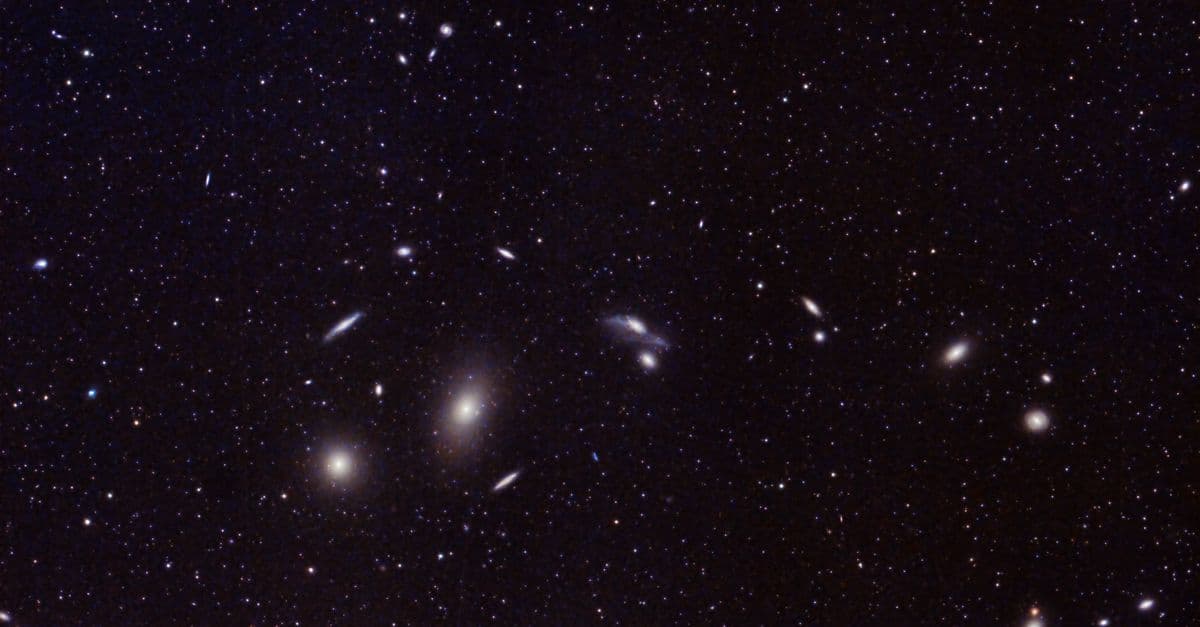
Photo: Luis Felipe Alburquerque Briganti / Pexels
A gamma-ray burst is a flash of gamma rays, the most energetic form of light, that lasts anywhere from a few milliseconds to several minutes and outshines entire galaxies while it lasts. Orbiting telescopes catch hundreds a year somewhere in the sky. Most come from stars dying in distant galaxies, and a smaller group comes from neutron stars colliding. This article explains what powers these explosions, how astronomers sort them, and what the record-setting burst of October 2022 taught researchers.
How satellites found something nobody was looking for
The discovery began with a weapons treaty. The U.S. Vela satellites were built to detect nuclear tests in space, and on July 2, 1967, Vela 4 recorded a flash of gamma rays that did not look like a bomb. Ray Klebesadel and Roy Olson of Los Alamos, working with Ian Strong, found it in 1969 while reviewing the data. By 1973 they had enough to publish: 16 bursts seen between July 1969 and July 1972, with directions precise enough to rule out the Sun and Earth (NASA, history of the discovery).
For the next two decades the bursts were a puzzle with too few clues. NASA's Compton Gamma Ray Observatory carried an instrument called BATSE that catalogued 2,704 bursts over nine years. They were spread evenly across the sky, with no concentration toward the Milky Way's disk (NASA HEASARC, BATSE). That evenness suggested the sources were either very close or very far, and the argument over which lasted years.
The afterglow that settled the argument
The answer came from a different kind of satellite. In 1997 the Italian-Dutch BeppoSAX satellite located a burst, GRB 970228, precisely enough for telescopes to find a fading X-ray afterglow and then an optical one. A faint host galaxy sat at the spot, and follow-up measurements showed the bursts came from galaxies at cosmological distances (NASA HEASARC, GRB overview). Today the consensus, as Filippo Frontera's 2024 history of the field puts it, is that bursts are huge explosions, mainly ultra-relativistic jets, in distant galaxies (Frontera 2024, arXiv).
The lesson from this history is about method. A single flash of gamma rays lasts seconds, and gamma-ray telescopes cannot locate its source to better than a fairly coarse patch of sky. The afterglow lasts days, and optical and radio telescopes can measure positions and distances of fading sources very precisely. Finding the afterglow is like following a fire alarm's sound to find the smoke; the alarm tells you something happened, and the smoke tells you where.
What a burst actually releases
Gamma rays are photons with energies above roughly 100 keV, far above visible light, ultraviolet, or X-rays. The initial gamma-ray flash is called the prompt emission, and it fades into a longer afterglow at X-ray, optical, and radio wavelengths over hours to weeks.
The headline energies need careful handling, because the number depends on an assumption. If you pretend a burst shines equally in all directions, you get the isotropic-equivalent energy, written E_iso. That number can be enormous, but real bursts are not spherical. They fire narrow jets, so the true energy is much smaller.
Why beaming changes the math
In 2001, Dale Frail and colleagues used breaks in afterglow light curves to measure how wide the jets were. After correcting for that geometry, the gamma-ray energy clustered tightly near 5 × 10^50 erg, or 5 × 10^43 joules, which is comparable to the energy of an ordinary supernova. They also concluded that, because only a small fraction of bursts point at any given observer, the true burst rate is at least 500 times the observed rate (Frail et al. 2001, arXiv).
For scale, the Sun radiates about 4 × 10^26 watts, so over a 10-billion-year lifetime it emits roughly 10^51 erg (10^44 joules). A typical jet's gamma-ray output, therefore, is a sizable fraction of what the Sun delivers across its entire life, released in seconds.
A narrow jet can make a burst look far more powerful than it is. Aimed straight at us, a flash can outshine a galaxy even though its true energy is comparable to a supernova's.
That sentence is the key to reading burst headlines. A figure of 10^54 erg usually refers to E_iso, the "as if it were a sphere" number. It is useful for comparing how bright bursts look from Earth. It is not the energy the star actually released.
The two-second dividing line
Astronomers sort bursts by T90, the time over which a burst delivers the middle 90 percent of its detected gamma-ray fluence (the total energy per unit area that reaches the detector). Bursts longer than about two seconds are called long, and shorter ones are called short. The two groups also differ in spectrum: short bursts tend to be spectrally harder, meaning their photons have higher typical energies.
| Property | Long GRBs | Short GRBs |
|---|---|---|
| T90 | Longer than about 2 seconds | Shorter than about 2 seconds |
| Typical spectrum | Softer | Harder |
| Usual progenitor | Collapse of a rare massive star | Merger of two neutron stars, or a neutron star and a black hole |
| Typical host galaxies | Young, star-forming galaxies | Both old and young galaxies |
| Accompanying event | Broad-lined supernova | Kilonova |
| Landmark case | GRB 980425 and SN 1998bw | GRB 170817A and GW170817 |
The table describes the typical case, and the next two sections explain the physics behind each column. A later section covers the recent bursts that break the pattern.
Long bursts: when a massive star collapses
A long burst begins when a rapidly rotating massive star runs out of fuel. Its core collapses, forms a black hole, and the surrounding gas, too spun-up to fall straight in, flattens into an accretion disk (a spinning pancake of hot gas orbiting the new black hole). The model is called the collapsar, developed by Stan Woosley and Andrew MacFadyen in the 1990s.
The disk and the black hole's spin power a pair of jets that travel at more than 99.9 percent of the speed of light. Those jets must drill through the star's outer layers before they escape, which takes time and explains why long bursts last seconds rather than milliseconds. NASA describes the same sequence in plain terms: the core collapses, a black hole forms, and its jets bore through the star at near light speed (NASA, 1-in-10,000-year burst). For how black holes form in general, see How Do Black Holes Form?.
The best evidence that stars are involved is the supernova connection. In 1998 SN 1998bw appeared in the same patch of sky as GRB 980425, and many more pairings have followed. A review by Woosley and Jeffrey Bloom concluded that most long, soft-spectrum bursts come from massive stellar explosions. It also found that most of the explosion's energy sits in slower, non-relativistic ejecta that power the supernova, not in the jets, and that not all supernovae of the stripped-star types make bursts. The authors suggested the degree of differential rotation in the collapsing core may decide which ones do (Woosley and Bloom, arXiv). A broader tour of stellar deaths is in Supernova Explained: Types.
Short bursts: two neutron stars spiral together
A neutron star is the collapsed core of a massive star, packing more mass than the Sun into a ball roughly 20 kilometers across (a fuller account is in Neutron Stars: The Most Extreme Objects in the Universe). When two orbit each other, they shed energy as gravitational waves, spiral inward over millions or billions of years, and finally collide.
At the merger, the debris forms a disk around a newly formed black hole or a briefly surviving super-heavy neutron star, and that disk launches a jet. The jet makes the short burst. A second process happens in the ejected material: neutron-rich matter undergoes r-process nucleosynthesis, building heavy elements such as gold and platinum, and the radioactive decay of those elements powers a glow called a kilonova. The wider story of how stars forge elements is in What Is Nucleosynthesis?.
August 17, 2017: the case that closed the argument
Advanced LIGO and Virgo detected gravitational waves from a binary neutron star merger, GW170817, on August 17, 2017. About 1.74 seconds later, with an uncertainty of 0.05 seconds, the Fermi Gamma-ray Burst Monitor and the anti-coincidence shield of ESA's INTEGRAL spectrometer independently recorded a short burst, GRB 170817A. The collaboration wrote: "We therefore confirm binary neutron star mergers as a progenitor of short GRBs." The same delay bounded the difference between the speed of gravity and the speed of light to between about −3 × 10^−15 and +7 × 10^−16 of the speed of light (Abbott et al. 2017, arXiv).
That bound answers a question that sounds abstract but is physically sharp. Light and gravitational waves left a collision in a relatively nearby galaxy (the abstract calls GRB 170817A the closest short burst with a known distance) and arrived almost together. If their speeds differed by more than a few parts in a quadrillion, the gap would have been far larger. Gravitational waves are covered in Gravitational Waves Explained and the first detection in The First Gravitational Wave Detection.
When the clock lies: long bursts from mergers
The two-second rule is a statistical habit, not a law of physics, and two recent events broke it. GRB 211211A, detected in December 2021, lasted just over 50 seconds, which makes it a long burst by definition. Astronomers then found a faint, quickly fading infrared object whose color shifted from blue to red, the signature of a kilonova. The burst was about 1.1 billion light-years away, and the work published in Nature on December 7, 2022 suggested that at least some long bursts come from neutron star mergers (Northwestern University).
A second case, GRB 230307A, was exceptionally bright and also classed as long. Using the James Webb Space Telescope, Andrew Levan and colleagues observed it 29 and 61 days after the burst. They found a kilonova similar to the one in GW170817, an emission line at 2.15 microns that they interpreted as tellurium, and very red light consistent with lanthanide production (Levan et al., arXiv). The authors argued that bursts like this can make r-process elements across a broad range of masses.
These cases matter for method. Duration alone cannot tell you what exploded, so astronomers now look for the supernova or kilonova that follows, the host galaxy, and the burst's position inside it. A better rule of thumb is that duration suggests the progenitor, while the afterglow and the aftermath decide it.
Four bursts worth knowing
| Burst | Date | What made it notable | Key figure |
|---|---|---|---|
| GRB 080319B | March 19, 2008 | Visible to the unaided eye from dark skies | Peak near visual magnitude 5.3 at redshift z = 0.937 |
| GRB 090423 | April 23, 2009 | A burst from the early universe | Redshift z ≈ 8.2, about 630 million years after the Big Bang |
| GW170817 / GRB 170817A | August 17, 2017 | First burst tied to a gravitational-wave source | Gamma rays arrived 1.74 seconds after the waves |
| GRB 221009A | October 9, 2022 | Brightest burst ever recorded | About 70 times brighter than any earlier burst |
GRB 080319B: the naked-eye burst
The optical afterglow of GRB 080319B was the first confirmed to be bright enough for the unaided eye, peaking near visual magnitude 5.3 at a redshift of 0.937. The analysis led by Joshua Bloom called it the most luminous event ever recorded at optical and infrared wavelengths, and noted that in the infrared K band it could have been detected with meter-class telescopes out to a redshift of about 17 (Bloom et al., arXiv). A Los Alamos team that watched it with the RAPTOR telescopes described a transient visible to the naked eye for a few seconds at a luminosity distance of about 6 gigaparsecs (Wozniak et al., arXiv). Its isotropic-equivalent gamma-ray energy is usually quoted near 1.3 × 10^54 erg (1.3 × 10^47 joules). The light left it roughly 7.5 billion years ago, so a few seconds of naked-eye visibility came from an explosion that happened before Earth existed.
GRB 090423: a star that exploded in the infant universe
In 2009 a team led by Nial Tanvir measured GRB 090423 at a redshift of about 8.2. At the time, the most distant object with a measured redshift was a galaxy at z = 6.96. The result implied that massive stars were already exploding as bursts roughly 630 million years after the Big Bang (Tanvir et al., Nature 2009). Bursts are valuable probes of this era because a single afterglow can outshine a whole galaxy for a short time, and light passing through the gas around the burster carries information about it. For how the first stars lit up the universe, see What Is Reionization?.
GRB 221009A: the BOAT
The burst of October 9, 2022 has the nickname BOAT, short for Brightest Of All Time. Its light traveled about 1.9 billion years, which makes it one of the closest long bursts known. Combined measurements show it was roughly 70 times brighter than any previous burst, and from an analysis of about 7,000 bursts NASA estimates that a burst this bright occurs about once every 10,000 years (NASA).
A statistical analysis led by Eric Burns found it the brightest ever recorded by both peak flux and fluence, with the highest isotropic-equivalent energy yet identified. The authors also concluded that it is likely not the brightest event across all cosmic history, though it may be the brightest since human civilization began (Burns et al., arXiv).
The details have kept researchers busy. The Large High Altitude Air Shower Observatory in China detected more than 64,000 photons above 0.2 teraelectronvolts in the first 3,000 seconds, and its modeling gave the jet a half-opening angle of about 0.8 degrees, which is very narrow (LHAASO, arXiv). X-ray rings appeared around the burst because dust clouds scattered its light; NASA counted 21 clouds, between 700 and 61,000 light-years away. Polarization data suggest the jet pointed almost directly at Earth.
Two things did not match expectations. No supernova has been confirmed, and Levan said, "We cannot say conclusively that there is a supernova." The radio afterglow was also unexpectedly dim, and Kate Alexander said existing models "cannot completely explain this jet." In other words, the brightest burst on record is also one of the hardest to explain.
Inside the jet: what produces the gamma rays
Researchers agree that the bursts come from relativistic jets, but not on exactly how those jets turn motion into gamma rays. This is the least settled part of the field.
The compactness problem
Gamma-ray flickers on a timescale of a millisecond limit the emitting region to a size of about 300 kilometers, the distance light travels in that time. Pack that much radiation into that small a space and the photons should collide and make electron-positron pairs, which would absorb the gamma rays before they escaped. Yet the gamma rays do escape.
The way out is motion. If the emitting material moves toward us with a Lorentz factor (a measure of how close to light speed it travels) of 100 or more, the emitting region can be much larger than the light-travel argument suggests, and photons are blueshifted in the material's frame, so fewer of them are energetic enough to pair-produce. Jets with Lorentz factors in the hundreds solve the paradox and are one reason astronomers believe the jets are ultra-relativistic.
Three competing pictures of the prompt flash
| Model | Idea | Strength | Difficulty |
|---|---|---|---|
| Internal shocks | Fast shells of jet material catch up with slower ones and shock | Explains the rapid variability naturally | Often too inefficient at converting energy to gamma rays |
| Photospheric emission | Light escapes from the surface where the jet becomes transparent | Can produce quasi-thermal spectra seen in some bursts | Hard to reproduce the broad spectra of most bursts |
| Magnetic reconnection | A magnetically dominated jet dissipates field energy as field lines reconnect | May match spectra better | Needs a very strongly magnetized jet |
The spectra themselves are described empirically by the Band function, a smoothly broken power law that peaks at a few hundred keV to a few MeV in many bursts. Whatever the physics is, it has to reproduce that shape. The same question applies at the highest energies: the Fermi Large Area Telescope saw a gamma ray from GRB 130427A's afterglow that challenged the standard synchrotron picture, in a burst whose gamma-ray emission lasted most of a day (NASA Fermi).
The afterglow: when the jet hits the neighborhood
When the jet plows into the gas around the star, it drives a shock wave into that material. The shocked gas radiates across the spectrum, first in X-rays, then in visible light, and finally in radio waves as the blast slows. This is the standard fireball picture. The afterglow fades roughly as a power law in time.
Two features of the afterglow carry physical information. A reverse shock, running back into the jet, can produce a short, bright optical flash in the first minutes. And as the jet decelerates, it eventually becomes slow enough that its edges become visible, which makes the light curve steepen. That steepening is called a jet break, and it gives the opening angle, which is how Frail and colleagues turned apparent energies into true ones. For GRB 221009A the narrow opening angle from the LHAASO modeling is part of why the burst looked so bright from Earth.
How astronomers catch bursts
Gamma-ray telescopes see only a coarse position, so catching a burst takes a relay. A wide-field monitor triggers, then sends coordinates quickly to other telescopes.
- Fermi. The Gamma-ray Burst Monitor (GBM) has 14 detectors, sees the whole unocculted sky, and detects about 240 bursts per year. The Large Area Telescope catches the most energetic ones, about 10 per year (NASA Fermi). The related instrument is described in Fermi Gamma-Ray Space Telescope.
- Swift. Launched on November 20, 2004, the Neil Gehrels Swift Observatory carries three instruments and can reorient itself rapidly to look at a new burst in X-rays and ultraviolet.
- Einstein Probe. Launched on January 9, 2024, by the Chinese Academy of Sciences with ESA, the Max Planck Institute for Extraterrestrial Physics, and CNES as partners, it carries a wide-field X-ray telescope with lobster-eye optics and a field of view of about 3,600 square degrees (CAS, NSSC).
- SVOM. A Sino-French mission designed for bursts, launched in 2024, built to send rapid alerts for follow-up.
Ground-based detectors add the other end of the spectrum. LHAASO's observations of GRB 221009A showed that bursts produce light at teraelectronvolt energies, far above anything a satellite's gamma-ray detector records directly.
What bursts reveal about the universe
Because bursts are so bright, they work as flashlights. A burst at high redshift lets astronomers study gas in galaxies that are otherwise too faint to see, and GRB 090423 shows the idea in practice. Bursts that vary on millisecond timescales also provide tests of fundamental physics. NASA's Fermi page notes that in GRB 090510, photons of very different energies arrived at nearly the same time after traveling about 7.3 billion light-years, which tested Lorentz invariance, the principle that the laws of physics look the same to all non-accelerating observers.
Researchers have also looked for a way to use bursts as distance markers, the way astronomers use certain supernovae. An empirical link called the Amati relation connects a burst's peak photon energy to its isotropic-equivalent energy. If it could be calibrated reliably, bursts might serve as "standard candles" at redshifts where supernovae are too faint. In practice the scatter is large and the calibration is disputed, so the idea remains a research tool rather than a measuring stick. For a different cosmic yardstick, see What Is Gravitational Lensing?.
Could a burst in our galaxy harm Earth?
A burst in the Milky Way, pointed at Earth and close enough, could damage the ozone layer. A 2004 paper by Adrian Melott and colleagues argued that a burst could have contributed to the Ordovician mass extinction about 440 million years ago, by depleting ozone and letting ultraviolet radiation reach the surface. They suggested the pattern of which species died and which survived might reflect high ultraviolet exposure. Their rate estimate was that a burst close enough to be dangerous to the biosphere happens on average two or more times per billion years (Melott et al., arXiv).
That hypothesis is debated, and other causes of the extinction, such as global cooling and glaciation, are well supported. The Melott paper is best read as a plausible mechanism and not a verdict. A fuller treatment, including what would happen to the atmosphere, is in What If a Gamma-Ray Burst Hit Earth?.
Two reassuring facts apply. First, the jet must point at Earth, and the jets are narrow. Second, the star must be close. GRB 221009A, the brightest burst in recorded history, was roughly 1.9 billion light-years away.
The future of burst science
New instruments will broaden the sample. Einstein Probe and SVOM should find fainter and more distant bursts, and rapid follow-up with the James Webb Space Telescope, which identified tellurium in a kilonova, lets astronomers test whether bursts are a major source of heavy elements. Gravitational-wave detectors add the other half: each neutron star merger with a gamma-ray counterpart gives a distance from the waves and a position from the light, and many such pairs would improve estimates of how fast the universe expands. Detector upgrades are expected to raise the merger count, but the pace depends on funding and construction schedules, so any specific rate should be treated as a projection.
Open questions remain. Researchers still debate how a jet converts energy into the prompt flash, whether every long burst has a supernova, how common the merger-driven long bursts are, and why the brightest burst on record behaved differently from the models.
What people get wrong about gamma-ray bursts
"A gamma-ray burst releases more energy than the Sun ever will." The comparison works only for isotropic-equivalent numbers or for the Sun's output over its whole life. Beam-corrected gamma-ray energy clusters near that of a supernova, which is large but not unbounded.
"All long bursts come from collapsing stars." Most do, but GRB 211211A and GRB 230307A show that some long bursts come from mergers. Duration is a clue, not a verdict.
"Bursts are random flashes in our galaxy." The BATSE map shows an even distribution across the sky, and afterglow redshifts show the sources lie in distant galaxies.
"Gamma-ray bursts are a major threat." They are a theoretical hazard on very long timescales. A dangerous one occurs, by one estimate, about twice per billion years, and it must also be aimed at us.
"Neutron star mergers only make short bursts." The two-second line is a statistical habit. The kilonova that follows is the better indicator.
Frequently asked questions
Q: What is a gamma-ray burst in simple terms? A: A gamma-ray burst is a brief, intense flash of gamma rays from a distant explosion. A narrow jet moving near the speed of light produces the flash. The jet comes from either a massive star collapsing into a black hole or two neutron stars merging. An afterglow in X-ray, optical, and radio light follows for days or weeks.
Q: How often do gamma-ray bursts happen? A: Satellites detect hundreds per year. NASA's BATSE instrument catalogued 2,704 bursts in nine years, and Fermi's Gamma-ray Burst Monitor detects about 240 per year. Because jets are narrow and point in random directions, the true number of bursts is at least 500 times the number we see.
Q: What caused the brightest gamma-ray burst ever, GRB 221009A? A: The burst, detected on October 9, 2022, is believed to be a long burst from a massive star's collapse, but the details are unsettled. No supernova has been confirmed, and the radio afterglow was dimmer than models predicted. NASA estimates a burst this bright occurs about once every 10,000 years.
Q: How do we know neutron star mergers cause short bursts? A: On August 17, 2017, LIGO and Virgo detected gravitational waves from a neutron star merger, and a short burst, GRB 170817A, arrived about 1.74 seconds later. A kilonova followed at the same location. The detection teams stated that this confirms binary neutron star mergers as a progenitor of short bursts.
Q: Can a gamma-ray burst destroy life on Earth? A: A very close burst pointed at Earth could deplete the ozone layer and increase ultraviolet exposure. A 2004 study proposed this as a possible contributor to the Ordovician extinction about 440 million years ago, but that remains a hypothesis. Estimates suggest dangerously close bursts occur roughly twice per billion years.
Q: What is the difference between a gamma-ray burst and a supernova? A: A supernova is the explosion of a star, visible mainly as visible light that brightens over days. A gamma-ray burst is a jet of gamma rays that can accompany certain supernovae or neutron star mergers. Most supernovae do not make bursts, and the jet carries only a small part of the explosion's energy.
Q: Why are long bursts sometimes linked to mergers? A: Two events, GRB 211211A and GRB 230307A, lasted more than two seconds yet were followed by kilonovae, which are produced by neutron star mergers. They show that burst duration alone does not identify the progenitor. Astronomers now rely on the aftermath and host galaxy as well.
The takeaway
Gamma-ray bursts look like the universe's brightest events because we see the jet's light, and that light is aimed. The true energy is comparable to a supernova's, but concentrating it into a beam a few degrees wide, or less than one degree in the case of GRB 221009A, lets a single flash outshine a galaxy. That one fact explains most of the headline numbers.
The field's recent surprises come from the places where the tidy picture frays. Long bursts that come from mergers, a record-setting burst with no confirmed supernova, and a prompt flash whose mechanism is still disputed all show that the two-class story is a starting point. Each new burst that does not fit is useful, because the exceptions are what point to the physics that the simple model leaves out.
Read next:
- What If a Gamma-Ray Burst Hit Earth?
- What Is a Magnetar? The Most Extreme Object in the Universe
- What Are Pulsars? Rotating Neutron Stars and Cosmic Clocks
Sources:
- NASA, a brief history of the discovery of cosmic gamma-ray bursts
- NASA HEASARC, BATSE
- NASA HEASARC, gamma-ray burst overview
- Frontera 2024, history of GRB research (arXiv)
- Frail et al. 2001, beaming and a standard energy reservoir (arXiv)
- Woosley and Bloom, the supernova-GRB connection (arXiv)
- Abbott et al. 2017, GW170817 and GRB 170817A (arXiv)
- Northwestern University, GRB 211211A kilonova
- Levan et al., GRB 230307A with JWST (arXiv)
- Bloom et al., GRB 080319B (arXiv)
- Wozniak et al., GRB 080319B with RAPTOR (arXiv)
- Tanvir et al., GRB 090423 (Nature 2009)
- NASA, GRB 221009A
- Burns et al., GRB 221009A (arXiv)
- LHAASO, GRB 221009A (arXiv)
- NASA Fermi, gamma-ray bursts
- CAS NSSC, Einstein Probe launch
- Melott et al. 2004, Ordovician extinction (arXiv)
Follow new articles
Add SciHub101 to your feed reader to see new science and technology stories.
About the Author
SciHub101 is an independent science and technology publication founded and edited by Buğra Sözeri, a software engineer and app developer based in Türkiye. AI tools assist with drafting and research. Source documentation in the existing archive is uneven, and articles are being reviewed and corrected. The Editorial Team byline identifies editorial responsibility; it does not certify specialist or independent human review. Where we compare products, anything built by our own team is labelled as such — see the editorial guidelines and About page for how corrections and disclosures work.
Related Articles
What Is Gravitational Lensing? How Gravity Bends Light
Gravitational lensing, the deflection of light by mass, was predicted by general relativity and first measured during the 1919 solar eclipse. Strong lensing produces Einstein rings and multiple images, weak lensing maps dark matter statistically, and microlensing reveals planets through brief brightenings of background stars.
What Are Active Galactic Nuclei? Quasars, Blazars, Seyferts
Active galactic nuclei are galaxy cores lit up by supermassive black holes pulling in gas. Quasars, Seyfert galaxies, radio galaxies, and blazars are largely one machine seen from different angles and at different power.
What Are Wolf-Rayet Stars? The Universe's Most Extreme Suns
Wolf-Rayet stars are massive, extremely hot stars that have blown away their outer layers in winds of thousands of kilometers per second. They show us the inside of a star, they seed space with dust and heavy elements, and many will end as supernovae or black holes.
Neutron Stars: The Most Extreme Objects in the Universe
Neutron stars pack more mass than the Sun into a sphere about the size of a city. This guide covers how they form, what lies inside them, how heavy they can get, and why pulsars, magnetars and neutron star mergers matter to physics.
What If a Gamma-Ray Burst Hit Earth?
A gamma-ray burst aimed at Earth from within a few thousand light-years would deplete the ozone layer in seconds, expose the surface to lethal UV, and possibly trigger a mass extinction. The good news: no such cosmic gun is currently aimed at us.
Kepler's Three Laws: Why Planets Speed Up Near the Sun
Kepler's three laws explained with NASA data: why orbits are ellipses, why planets speed up near the Sun, and how P² = a³ weighs planets and finds exoplanets.