Experiments
Hess's Balloon Flights: How Cosmic Rays Were Found (1912)
In 1912 Victor Hess carried electroscopes to 5,350 m in a balloon and found radiation rising with height. Here is how the flights worked and what they proved.
6 articles tagged with #cosmic-rays
In 1912 Victor Hess carried electroscopes to 5,350 m in a balloon and found radiation rising with height. Here is how the flights worked and what they proved.
C.T.R. Wilson built the first cloud chamber in 1911 by expanding supersaturated vapor to reveal particle tracks. It discovered the positron, confirmed cosmic rays, and launched modern particle physics.
What cosmic rays are, how Victor Hess discovered them in 1912, their sources from the Sun to AGN, detection methods, biological effects, and the ultra-high-energy mystery.
ISS research reveals how cosmic radiation damages DNA and organisms in space, with findings applicable to cancer prevention, radiation therapy, and long-duration spaceflight safety.
The heliosphere is a vast bubble of solar wind plasma around the Sun, reaching roughly 120 AU toward the direction we are moving. It deflects a large share of low-energy galactic cosmic rays. Voyager 1 crossed its outer boundary, the heliopause, in 2012 and Voyager 2 followed in 2018.
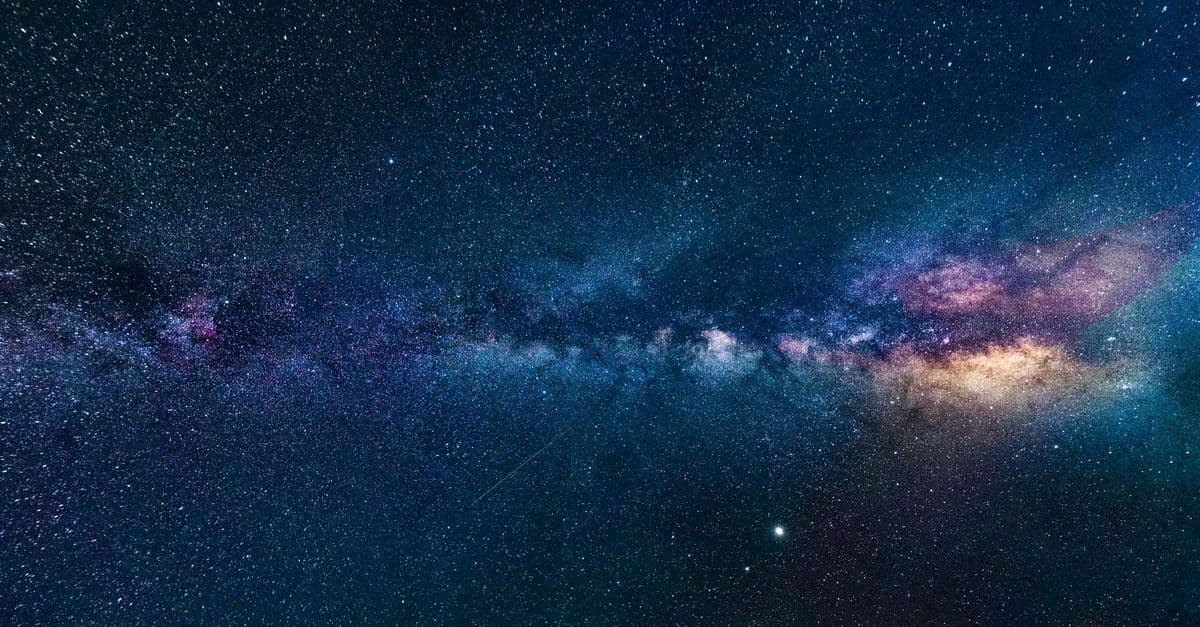
Cosmic rays are atomic nuclei and subatomic particles accelerated to extraordinary energies by the most violent events in the universe. Some arrive with energies exceeding anything a particle accelerator can produce, yet their sources remain one of astrophysics' great unsolved mysteries.