The Wilson Cloud Chamber: Making Invisible Particles Visible
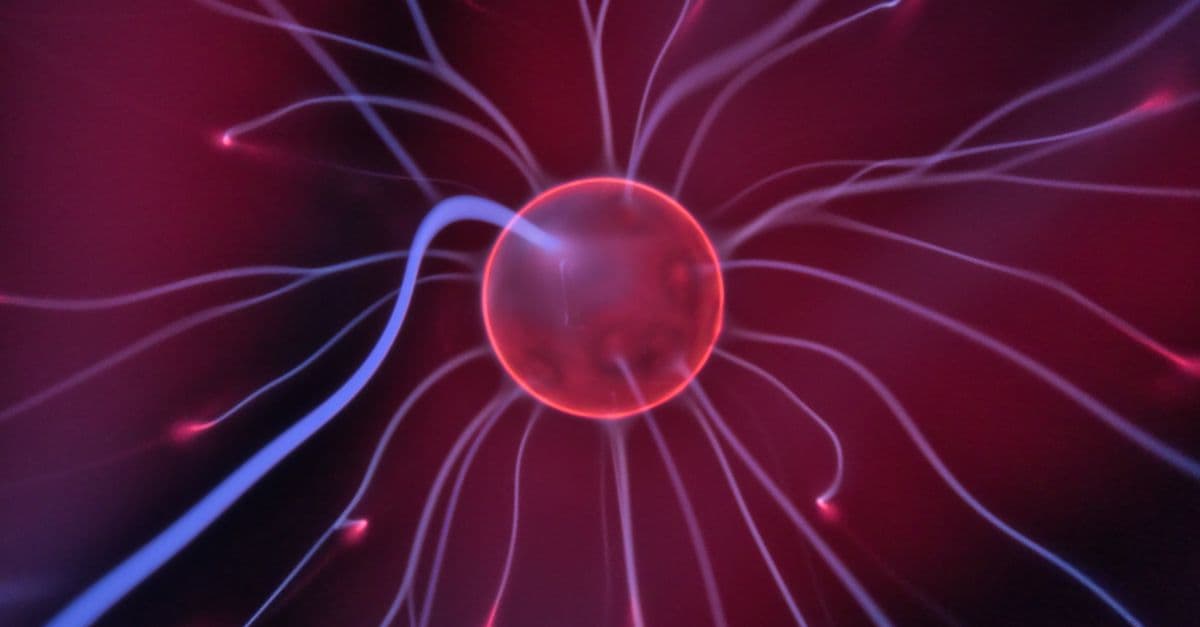
Photo: Steve A Johnson / Pexels
Charged particles passing through matter are invisible. They carry no color, emit no sound, produce no smell. They announce their presence only by ionizing the atoms they pass through — stripping electrons from air molecules in a trail a few nanometers wide that dissipates in microseconds. Making that trail visible so it could be photographed, measured, and analyzed was one of the central technical challenges of early particle physics. Charles Thomson Rees Wilson solved it by recreating weather inside a glass bottle. His cloud chamber turned the invisible into the photographable, and the photographs changed our understanding of what matter is made of.
The Inspiration — Ben Nevis and the Brocken Spectre
C.T.R. Wilson arrived at the summit of Ben Nevis in September 1894 as part of a meteorological training placement at the observatory maintained there. Ben Nevis is the highest mountain in Britain at 1,345 meters (4,413 feet), and the observatory at its summit was regularly engulfed by cloud. Wilson was struck by the optical effects produced when sunlight illuminated water droplets in swirling cloud around the summit: the glory (a circular rainbow around the shadow of your head on cloud below), the Brocken spectre (a magnified shadow surrounded by a halo), and the delicate structure of condensing mist.
He returned to Cambridge resolved to reproduce these atmospheric effects in a laboratory. What began as meteorological curiosity — understanding how water droplets form in clouds — turned into a precision instrument that would become indispensable to particle physics.
Source: Wilson, C. T. R. (1927), "On the cloud method of making visible ions and the tracks of ionizing particles," Nobel Lecture, December 12, 1927, NobelPrize.org — Wilson's own account of his motivations, beginning with Ben Nevis and tracing the development to the 1911 cloud chamber.
Supersaturation — a state in which a vapor contains more dissolved substance (in this case water) than it would at equilibrium. Supersaturated air "wants" to condense but cannot do so without nucleation sites — surfaces or particles on which droplets can begin to form.
The Physics of Condensation — Why Ion Tracks Appear
Water vapor condenses onto any surface that provides a site for nucleation. In ordinary clouds, these nucleation sites are dust particles, sea salt crystals, and pollen grains — the "condensation nuclei" that atmospheric scientists had studied since the 1870s.
Wilson's key observation, made in his early laboratory experiments from 1895 to 1900, was that in completely dust-free air, water vapor could be supersaturated to a very high degree without condensing spontaneously. But when he used X-rays (discovered by Röntgen in 1895) or radioactive materials to ionize the air in his chamber, condensation occurred at much lower degrees of supersaturation — the ions left by the radiation were acting as nucleation sites.
Source: Wilson, C. T. R. (1899), "On the condensation nuclei produced in gases by the action of Röntgen rays, uranium radiation, ultra-violet light, and other agents," Philosophical Transactions of the Royal Society A, 192, 403–453 — systematic study of ion-induced condensation, establishing that ions are effective condensation nuclei.
The physics is straightforward but subtle. A charged ion in air polarizes nearby water molecules, attracting them by electrostatic interaction. This effectively lowers the energy barrier for condensation: a small cluster of water molecules on an ion is stable at lower vapor pressure than a cluster on a neutral surface. If the vapor is supersaturated enough, ions trigger condensation while the neutral background air does not condense spontaneously.
A fast charged particle — an electron, a proton, an alpha particle — passing through air ionizes thousands of air molecules per centimeter of path. Each ionization event leaves a positive ion and a free electron. These ion pairs are the condensation nuclei. In a supersaturated chamber, a droplet forms on each ion pair within milliseconds, and the whole line of droplets makes the particle's path visible as a white streak in the chamber — like a contrail in the sky, but on a scale of centimeters, tracing the path of a single particle.
Ion pair — a positively charged ion and a free electron produced when a charged particle strips an electron from a neutral air molecule. The energy required to produce one ion pair in air is approximately 35 eV.
The 1911 Cloud Chamber — Technical Details
Wilson spent roughly 15 years between his 1894 Ben Nevis inspiration and his 1911 cloud chamber building toward a device that could reliably photograph individual particle tracks. The key technical challenge was achieving a rapid, controlled, reproducible expansion.
The expansion must be fast enough that the supersaturated state is achieved before the ions from a particle's track have time to disperse or recombine. It must be large enough that the supersaturation ratio is sufficient to cause condensation on ions but not on neutral molecules. And it must be reproducible so that the expansion can be triggered by the arrival of a particle.
Wilson's 1911 apparatus consisted of:
A cylindrical glass chamber with a piston at the bottom and a transparent glass window at the top. The interior was filled with dust-free air saturated with water vapor. The total volume was a few hundred cubic centimeters.
The expansion piston: A rubber diaphragm or piston beneath the chamber that could be rapidly lowered by releasing pressure. This sudden expansion caused adiabatic cooling — the air cooled as it expanded — dropping the temperature enough that the water vapor became supersaturated.
The expansion ratio: Wilson found that a volume expansion of approximately 1.25 to 1.38 (25–38% increase in volume) produced conditions where ion-induced condensation occurred but spontaneous condensation on neutral molecules did not. This "working range" was narrow and required careful calibration.
The illumination and photography: Wilson illuminated the chamber with a bright flash of light from the side immediately after expansion, so the droplet tracks scattered light and could be photographed through the top window. Stereo photography (two cameras at different angles) allowed reconstruction of the three-dimensional path.
Source: Wilson, C. T. R. (1911), "On a method of making visible the paths of ionising particles through a gas," Proceedings of the Royal Society A, 85(578), 285–288 — the original 1911 paper describing the cloud chamber method for photographing particle tracks.
| Component | Specification |
|---|---|
| Chamber geometry | Cylindrical glass, ~10 cm diameter, ~3 cm depth |
| Working gas | Dust-free air + water vapor (later alcohol vapor) |
| Expansion type | Adiabatic (rapid piston movement) |
| Expansion ratio | 1.25–1.38 (optimal range) |
| Time to supersaturation | ~1–2 milliseconds |
| Track visibility duration | ~10–100 milliseconds |
| Photography | Side illumination, stereo cameras |
| First tracks photographed | 1911 (alpha and beta particle tracks) |
Wilson published the first photographs of individual particle tracks in 1912. The tracks were immediately recognizable: alpha particles (helium nuclei from radioactive decay) left thick, straight, dense tracks because they are heavy and slow, causing heavy ionization per unit length. Beta particles (electrons) left thin, wispy, curved tracks — light particles moving fast, ionizing sparsely, and easily deflected by collisions with air molecules.
Source: Wilson, C. T. R. (1912), "On an expansion apparatus for making visible the tracks of ionising particles in gases and some results obtained by its use," Philosophical Transactions of the Royal Society A, 211, 87–123 — the comprehensive paper with the first published photographs of particle tracks, showing alpha and beta particle paths.
The Discovery That Justified Everything — the Positron (1932)
The cloud chamber's most important discovery was made not by Wilson but by Carl Anderson at the California Institute of Technology in 1932. Anderson was photographing cosmic ray interactions in a cloud chamber surrounded by a strong magnetic field. The magnetic field curves the path of charged particles: positive particles curve one way, negative particles the other, and the radius of curvature reveals the particle's momentum.
On August 2, 1932, Anderson photographed a track that curved in the wrong direction for an electron but had the same mass (same radius of curvature for a given momentum) as an electron. The particle was positively charged and had the same mass as an electron. It was the positron — the antiparticle of the electron — whose existence had been predicted by Paul Dirac in 1928 as a consequence of reconciling quantum mechanics with special relativity.
Source: Anderson, C. D. (1933), "The positive electron," Physical Review, 43(6), 491–494 — the paper announcing the discovery of the positron, with cloud chamber photographs showing the characteristic track curvature of a positive particle with electron mass.
The positron was the first antiparticle ever detected. Its discovery confirmed Dirac's equation and opened the concept of antimatter as a physical reality rather than a mathematical artifact. Anderson received the Nobel Prize in Physics in 1936 "for his discovery of the positron."
Without the cloud chamber, this discovery would have been impossible. The positron's track had to be seen — its curvature measured, its ionization density compared with electron tracks, its momentum determined from the radius. No other instrument available in 1932 could have provided this information for a particle produced in a single cosmic ray interaction.
Cosmic Ray Physics and the Particle Zoo
Through the 1930s and 1940s, the cloud chamber was the primary instrument for cosmic ray research. Cosmic rays — high-energy particles (mostly protons and heavier nuclei) arriving from space — constantly bombard Earth's upper atmosphere, producing showers of secondary particles that cascade down to ground level. The cloud chamber was the only tool that could make individual particles in these showers visible.
Several major discoveries came from cloud chamber photographs of cosmic rays:
The muon (1936–1937): Carl Anderson and Seth Neddermeyer found tracks in cloud chamber photographs that were too penetrating to be electrons but not as ionizing as protons. The mass turned out to be about 207 times the electron mass — a completely unexpected particle, now called the muon. At the time, it was initially confused with the pion that Yukawa had predicted as the carrier of the nuclear force.
The pion (1947): Cecil Powell's group at Bristol used nuclear emulsion plates rather than cloud chambers, but the discovery built directly on cloud chamber cosmic ray physics. The pion was identified as the genuine Yukawa particle, distinct from the muon. Cloud chambers confirmed its properties and decay modes.
Particle shower structure: By photographing many cosmic ray events, physicists mapped out the characteristic patterns of electromagnetic and hadronic showers — the cascades of secondary particles produced when high-energy primaries hit the atmosphere. This data built the foundations of particle shower physics that is still used in designing detectors at CERN and other accelerators.
Source: Neddermeyer, S. H. & Anderson, C. D. (1937), "Note on the nature of cosmic-ray particles," Physical Review, 51(10), 884–886 — the paper reporting the anomalous penetrating power that indicated a new particle with mass between electron and proton (later named the muon).
The Nobel Prize and Its Context
Wilson received one-half of the 1927 Nobel Prize in Physics "for his method of making the paths of electrically charged particles visible by condensation of vapour." The other half went to Arthur Compton for the Compton effect — the scattering of X-rays off electrons, which provided independent evidence that photons carry momentum.
The 1927 award came sixteen years after Wilson's 1911 paper. The delay reflected both the Prize Committee's caution about new experimental techniques and the time needed for the cloud chamber's importance to become manifest through the discoveries it enabled. By 1927, the chamber had been used extensively for radioactivity measurements and X-ray ionization studies. The positron — the discovery that most dramatically justified the Nobel — came five years after the award.
Source: Nobel Committee for Physics (1927), Nobel Prize Presentation Speech, NobelPrize.org — official recognition of Wilson's cloud chamber method.
Wilson himself was modest about the device's significance. He continued atmospheric physics research throughout his later career, returning to the study of thunderstorm electricity and lightning that had paralleled his cloud chamber work from the beginning.
How the Cloud Chamber Works — Step by Step
For a charged particle traversing the chamber during the supersaturated phase, the sequence of events takes less than a millisecond:
The charged particle enters the chamber (from an external source, or from radioactive decay of material inside, or from a cosmic ray) and moves through the supersaturated vapor at high speed.
Along its path, the particle interacts electromagnetically with air molecules, transferring enough energy to some of them to ionize them — knocking electrons free.
Each ionization event leaves an ion pair: a positive ion and a free electron. These are produced in enormous numbers along the path — an alpha particle produces roughly 30,000 ion pairs per centimeter in air at standard pressure.
Water molecules in the supersaturated vapor are electrostatically attracted to the ions, reducing the energy barrier for condensation.
Within milliseconds, a droplet nucleates on each ion pair and grows to visible size — roughly 1–10 micrometers in diameter.
The collection of droplets traces the original particle path in three dimensions.
A flash of side-illumination light makes the droplets scatter light, and a camera photographing through the top window records the track.
The chamber is then allowed to warm back to ambient temperature, the supersaturation disappears, the droplets evaporate, and the chamber is ready for the next expansion.
The Magnetic Field Upgrade — Measuring Momentum
Wilson's original chambers had no magnetic field. Adding a strong magnetic field perpendicular to the plane of the chamber dramatically increased the information content of each photograph.
In a magnetic field B, a particle with charge q and momentum p travels in a circle of radius r = p/(qB). By measuring the radius of curvature of a track in a known magnetic field, physicists could calculate the particle's momentum. Combined with a measurement of the track's ionization density (proportional to the particle's charge and inversely related to its speed), this allowed determination of both momentum and velocity — enough to calculate the particle's mass and identify what type of particle it was.
This is how Anderson identified the positron: he placed a lead plate across the middle of his cloud chamber. A particle passing through the lead lost energy and momentum, so its radius of curvature changed. From which side the radius decreased, he could determine the particle's direction of travel, and combined with the curvature direction (left or right), he could determine the sign of the charge. The lead plate was the key to proving the particle was not an electron traveling upward.
Source: Anderson, C. D. (1933), Physical Review 43(6), 491–494 — the lead-plate geometry is explicitly described as the method for determining direction of travel and hence sign of charge.
The Transition to Bubble Chambers — and the Cloud Chamber's Legacy
By the early 1950s, the cloud chamber was being superseded by the bubble chamber, invented by Donald Glaser in 1952 (Nobel Prize 1960). The bubble chamber works on the inverse principle: instead of a supersaturated vapor condensing droplets on ion tracks, a superheated liquid forms bubbles on ion tracks. The liquid is denser than a gas, so particles must be more energetic to penetrate the chamber — which matched the higher energies becoming available at the new generation of particle accelerators.
The bubble chamber era produced the discovery of dozens of new particles through the 1950s and 1960s, all using the same fundamental principle that Wilson had demonstrated: charged particle tracks are made visible by a change of thermodynamic state in a medium sensitive to ionization.
Modern particle detectors — silicon strip detectors, drift chambers, time projection chambers — are electronic rather than visual, recording charged particle hits with silicon or wire arrays and reconstructing tracks in software. But the conceptual framework is unchanged: detect the ionization left by a charged particle along its path, and reconstruct the path from those detections.
The cloud chamber itself remains in use as a teaching instrument. Simple diffusion cloud chambers — in which a temperature gradient continuously maintains a supersaturated layer of alcohol vapor near the bottom of the chamber — can be built from a fish tank, dry ice, and isopropanol. Cosmic ray tracks (mostly muons at sea level) appear as straight white streaks every few seconds. The first time a student sees a particle track appear spontaneously in a jar of cooled alcohol vapor, the reality of subatomic particles becomes visceral in a way that no graph or calculation can match.
Timeline
| Year | Event |
|---|---|
| September 1894 | Wilson visits Ben Nevis observatory; sees atmospheric optical phenomena; resolves to reproduce them in a laboratory |
| 1895 | Röntgen discovers X-rays; Wilson immediately uses them to ionize his experimental chambers |
| 1895–1900 | Wilson systematically studies ion-induced condensation; establishes the working range of expansion ratios |
| 1900 | Wilson publishes that ions serve as condensation nuclei; notes potential for making radiation paths visible |
| 1911 | Wilson builds the first cloud chamber capable of photographing individual particle tracks |
| 1912 | First photographs of alpha and beta particle tracks published |
| 1923–1927 | Cloud chambers used extensively for X-ray and radioactivity research |
| December 12, 1927 | Wilson awarded Nobel Prize in Physics |
| August 2, 1932 | Carl Anderson photographs positron track in cloud chamber at Caltech |
| 1933 | Anderson publishes positron discovery; Nobel Prize follows in 1936 |
| 1936–1937 | Anderson and Neddermeyer discover the muon in cloud chamber cosmic ray photographs |
| 1952 | Donald Glaser invents the bubble chamber; begins the transition away from cloud chambers |
| 1960 | Glaser receives Nobel Prize for the bubble chamber |
The Role of Cosmic Rays — and Why Altitude Matters
The cosmic ray experiments that produced the richest cloud chamber science were not conducted at sea level. At sea level, the primary cosmic rays (mostly protons) have already been absorbed by the atmosphere; what remains is a secondary flux of particles — mainly muons — that are the end products of a long cascade starting 20–30 km above Earth's surface.
To study the early stages of cosmic ray showers — where the highest-energy particles and the most exotic interactions occur — physicists needed to work at altitude. The pioneering work was done at mountain observatories.
The Pic du Midi Observatory in the French Pyrenees at 2,877 m (9,439 feet) altitude, and the Jungfraujoch station in Switzerland at 3,454 m (11,332 feet), were major centers for cloud chamber cosmic ray research in the 1930s and 1940s. At these altitudes, the secondary particle flux is several times higher than at sea level, and a greater fraction of the particles are high-energy products of recent primary interactions rather than the attenuated end-products visible at sea level.
The muon, discovered by Anderson and Neddermeyer in 1936–1937, was itself evidence for a cosmic ray mystery: muons have a mean lifetime of only 2.2 microseconds and travel at near-light speed, yet they reach sea level from interactions high in the atmosphere. Classically, they should decay before reaching the ground. They survive because of time dilation — relativistic particles experience time more slowly, so 2.2 microseconds of proper time corresponds to much longer of elapsed time in Earth's frame. This was one of the first experimental confirmations of special relativity's time dilation prediction in the macroscopic world.
Source: Rossi, B. & Hall, D. B. (1941), "Variation of the rate of decay of mesotrons with momentum," Physical Review, 59(3), 223–228 — the cloud chamber experiment establishing that muon (mesotron) lifetimes are extended by relativistic time dilation, confirming special relativity.
Time dilation — the prediction of special relativity that a moving clock runs more slowly than an identical clock at rest, by a factor of γ = 1/√(1 − v²/c²). For muons traveling at 0.998c, γ ≈ 16, extending their effective lifetime 16-fold.
The cloud chamber's role in this measurement was central: only by seeing individual particle tracks in a magnetic field could physicists determine the muon's momentum (from the radius of curvature) and separately measure its lifetime (from the length of track before decay and the topology of the decay products). The visual nature of the cloud chamber record made it possible to analyze each event individually rather than relying on aggregate statistics.
Diffusion Cloud Chambers and the Classroom Legacy
The expansion cloud chambers used by Wilson and his successors required careful engineering: a piston or diaphragm to create the rapid expansion, a trigger system to synchronize the expansion with particle arrival, and a flash photography system to capture the resulting tracks. This complexity limited their use to well-equipped research laboratories.
In the 1930s, Alexander Langsdorf at Berkeley developed the diffusion cloud chamber, which operates continuously without any expansion mechanism. Instead of rapid expansion cooling, a temperature gradient between a warm upper surface and a cold lower surface (maintained by dry ice or liquid nitrogen) creates a permanent zone of supersaturated vapor near the bottom of the chamber. Any charged particle passing through this zone at any time leaves a visible track.
The diffusion cloud chamber is the version that appears in physics classrooms and science museums today. Construction requires only a sealed transparent container, isopropanol or methanol as the working fluid, dry ice to cool the bottom, and a strong light source illuminating from the side. Cosmic ray muons — arriving at sea level at a rate of roughly one per square centimeter per minute — leave nearly straight tracks a few centimeters long that appear spontaneously every few seconds.
At sea level, the tracks visible in a simple diffusion chamber are almost entirely muons. These are muons produced in pion decays high in the atmosphere, having survived relativistic time dilation long enough to reach the ground. Each track in the classroom chamber is a record of a particle that was created 15–20 km above, traveled at 0.998c for roughly 50 microseconds of laboratory time, and left its signature as a straight white streak in a jar of cold, supersaturated alcohol vapor. The universe is constantly raining such particles on every point of Earth's surface. Most of us have simply never seen them.
Source: University of Wisconsin Department of Physics, "Wilson Cloud Chamber," public outreach materials — description of diffusion cloud chamber construction and the typical rate of cosmic ray muon tracks observable at sea level.
What People Get Wrong About the Cloud Chamber
"Wilson discovered the cloud chamber accidentally." Wilson was actively and systematically trying to make ion tracks visible for years before 1911. The development was deliberate and long-running, not accidental. His 1895–1900 papers show a progressive series of measurements toward this goal.
"The cloud chamber detects neutral particles." It does not, directly. Only charged particles ionize the air along their path and leave tracks. Neutral particles (neutrons, photons, neutrinos) leave no tracks. Neutrons are detected only when they produce a secondary charged particle — for instance, by knocking a proton out of a hydrogen-containing material in the chamber. The proton's track is then visible.
"The positron was predicted after the cloud chamber." Dirac predicted the positron in 1928; the cloud chamber was built in 1911. The prediction came between the chamber's invention and the positron's discovery. The chamber was the tool that verified a sixteen-year-old prediction.
"Cloud chambers are obsolete and no longer used." Simple diffusion cloud chambers are widely used in physics education and public science demonstrations. They require no electronics, no computing, and no elaborate infrastructure — just dry ice, alcohol, and a strong light source. They remain one of the most immediately compelling demonstrations of the reality of subatomic particles.
FAQs
Q: Why does expanding the gas inside the cloud chamber cause condensation?
A: When a gas expands rapidly without exchanging heat with its surroundings (adiabatic expansion), it cools. The temperature drop reduces the vapor pressure of water in the air without reducing the amount of water vapor present, making the vapor supersaturated — it contains more water than it could hold at the new lower temperature. This supersaturated state is metastable: it will persist until nucleation sites appear. Ion pairs from particle tracks provide those nucleation sites.
Q: How does a magnetic field help identify particles in a cloud chamber?
A: A charged particle moving through a magnetic field follows a curved path. The radius of curvature r = mv/(qB), where m is mass, v is speed, q is charge, and B is the magnetic field strength. By measuring r and knowing B, physicists determine p = mv (momentum). Combined with ionization density measurements (which give information about speed), both mass and charge can be inferred — enough to identify the particle type.
Q: What is the difference between a cloud chamber and a bubble chamber?
A: A cloud chamber uses a supersaturated gas: ionizing particles cause droplets to form along their paths. A bubble chamber uses a superheated liquid: ionizing particles cause bubbles to form along their paths. The liquid in a bubble chamber is far denser than the gas in a cloud chamber, so bubble chambers could detect the higher-energy particles produced at 1950s accelerators. Bubble chambers operated continuously (no expansion cycle needed), making them better suited for the high event rates at accelerators.
Q: Why were cosmic rays important for cloud chamber research?
A: Before high-energy particle accelerators were built in the late 1940s, cosmic rays were the only source of very high energy particles available to experimenters. The particles in cosmic ray showers have energies ranging from millions to trillions of electron volts — far above what any laboratory source could produce. Cloud chambers exposed to cosmic rays (especially at high altitude or mountain observatories, where cosmic ray flux is higher) were the primary way to study particle physics at these energies.
Q: How quickly does a cloud chamber track appear and disappear?
A: The ion pairs are produced along the particle's path instantaneously, as the particle passes through in nanoseconds. Droplets nucleate on these ions within 1–10 milliseconds of the expansion. The tracks remain visible and photographic for roughly 10–100 milliseconds before the droplets settle or evaporate. The entire useful window is well under a second. The chamber must then be recompressed and allowed to return to its initial state before the next expansion — a cycle that takes seconds to minutes in Wilson's original apparatus.
Q: What is a diffusion cloud chamber, and how does it differ from Wilson's expansion chamber?
A: Wilson's chamber required a rapid expansion cycle to create the supersaturated state. A diffusion cloud chamber, developed in the 1930s, maintains a permanent temperature gradient between a warm top surface and a cold bottom (cooled by dry ice or liquid nitrogen). Alcohol vapor from the warm surface diffuses downward and becomes supersaturated in a thin layer near the cold bottom. No expansion is needed — the chamber is continuously sensitive. This design is mechanically simpler and is used in modern educational demonstrations.
The Takeaway
Wilson wanted to understand why mist forms around mountaintops. He ended up building the instrument that revealed the positron, confirmed the muon, mapped cosmic ray showers, and gave particle physicists their first visual evidence that the subatomic world is real and structured. The cloud chamber works because charged particles cannot pass through matter without disturbing it — and Wilson found a way to make that disturbance large enough to see. Every photograph from a cloud chamber is a portrait of a particle caught in the act of existing, drawn in droplets of water on a background of supersaturated air. The particles were always there. Wilson just found the conditions under which they left their signatures.
Read next:
Weekly digest
Stay ahead of the curve
Get the best science, AI, and tech stories delivered to your inbox every week. No spam — unsubscribe any time.
About the Author
SciHub101 is an independent science and technology publication founded and edited by Buğra Sözeri, a software engineer and app developer based in Türkiye. Articles are drafted against peer-reviewed literature and primary sources, fact-checked, and edited by a human before publication. Where we compare products, anything built by our own team is labelled as such — see the editorial guidelines and About page for how corrections and disclosures work.
Related Articles
Young's Double-Slit Experiment: Light as a Wave
In 1801, Thomas Young passed light through two slits and saw stripes on a screen that only waves can produce. The same experiment later revealed the quantum nature of matter.

The Wason Selection Task: Why Smart People Fail Simple Logic
Peter Wason's 1966 four-card task revealed that fewer than 10% of people solve a basic logical puzzle correctly. It exposed confirmation bias and reshaped cognitive psychology.
Cosmic Rays and Particle Physics — Sources, Detection, and the Oh-My-God Particle — SciHub101
What cosmic rays are, how Victor Hess discovered them in 1912, their sources from the Sun to AGN, detection methods, biological effects, and the ultra-high-energy mystery.
What Is Antimatter? The Mysterious Mirror of the Universe
For every particle of matter, physics predicts a mirror twin made of antimatter. We make it, store it, and use it in medicine — but we still don't know why the universe has so little of it.
The Anderson Positron Discovery: The First Antiparticle Seen in Nature
In 1932, Carl Anderson photographed a positron in a cloud chamber — the first antiparticle ever detected, confirming Dirac's 1928 relativistic quantum theory and opening the field of antimatter physics.
The CERN Higgs Boson Discovery: How Physicists Found the God Particle
On July 4, 2012, CERN announced the discovery of the Higgs boson at 125 GeV. Here is how the LHC, ATLAS, and CMS found the particle that gives other particles mass.