Origin of Life: How Life Began on Earth
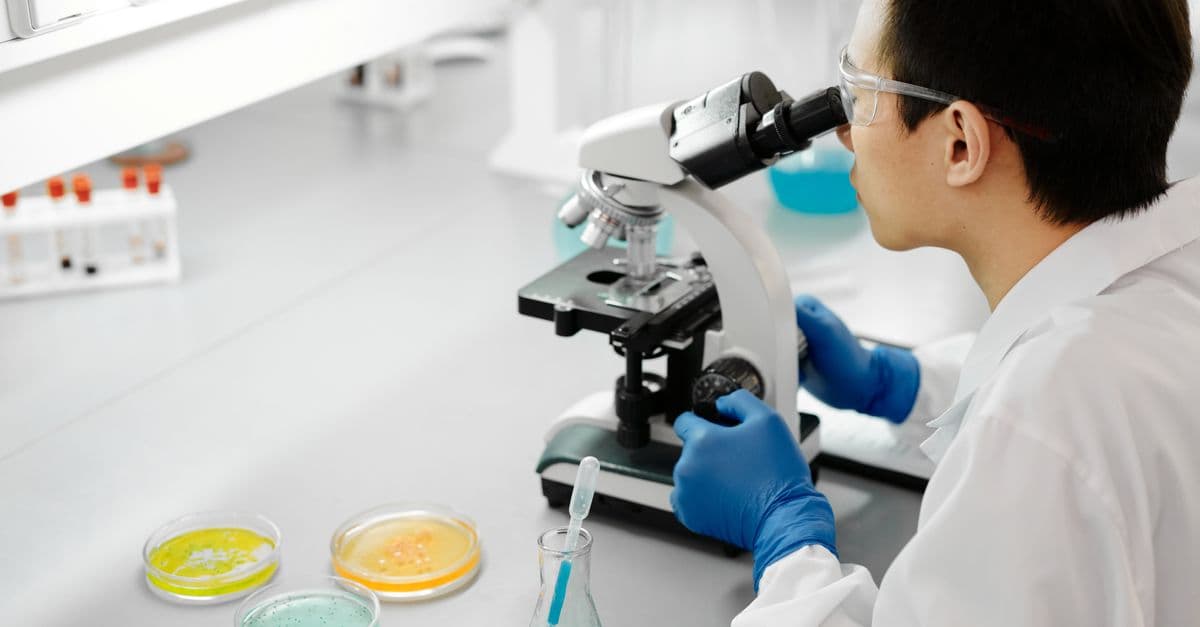
Photo: Edward Jenner / Pexels
Somewhere on a young Earth, roughly 4 billion years ago, a set of ordinary chemicals started doing something no chemical set had done before: copying themselves with errors, and passing those errors on. Nobody has watched that transition happen, and nobody has reproduced it in a laboratory. What scientists have is a growing stack of partial answers: experiments that make life's building blocks, rocks that record early life, and genomes that point back toward a common ancestor. This article walks through what each line of evidence shows, and where the real disagreements still are.
What counts as "life" in origin-of-life research
Before asking how life began, researchers have to say what they are looking for. NASA's working definition is "a self-sustaining chemical system capable of Darwinian evolution." That phrase does a lot of work. "Self-sustaining" means the system keeps itself going using energy from its surroundings. "Darwinian evolution" means it makes imperfect copies, and some copies do better than others.
From that definition, most researchers break the problem into three requirements:
- A boundary. A membrane or similar compartment keeps useful chemistry concentrated and separated from the outside world.
- Metabolism. The system captures energy and uses it to drive reactions that would not happen on their own.
- Heredity. Information is copied and passed on, so that improvements can accumulate.
The difficulty is that each requirement seems to need the other two. A membrane without metabolism leaks and falls apart. Metabolism without heredity cannot improve. Heredity without a boundary lets copies drift away, and without metabolism there is no energy to make them. It is like a company that needs a building before it can hire, hires before it can earn, and earns before it can afford a building. The main hypotheses below differ mainly in which of the three they put first.
The origin of life is also not a single event. The widely used framing treats it as a gradual increase in complexity: a habitable planet, organic molecules, self-assembly, autocatalysis (reactions that produce their own catalysts), membranes, and finally replication. A functional protocell (a cell-like compartment able to undergo Darwinian evolution) has not yet been built in a laboratory.
When did life first appear?
Earth formed about 4.54 billion years ago. The first eon, the Hadean, ran from about 4.567 to 4.031 billion years ago and was violent: a giant impact that formed the Moon, a magma ocean that solidified within about 5 million years, and a thick, carbon dioxide-rich atmosphere. The oldest dated mineral on Earth is a zircon crystal from the Jack Hills of Western Australia, about 4.404 billion years old. Studies of such zircons suggest liquid water may have existed between 4.0 and 4.4 billion years ago, which means the planet was not necessarily sterile for hundreds of millions of years.
Evidence for early life falls into tiers of confidence. The table below ranks the main claims by how widely they are accepted.
| Claim | Age | Location | Status |
|---|---|---|---|
| Stromatolites (layered structures built by microbial communities) | about 3.48 billion years | Dresser Formation, Western Australia | Most scientists accept a biological origin, though non-biological explanations have not been fully excluded |
| Stromatolites and microfossils | about 3.43 billion years | Strelley Pool Formation, Western Australia | Chemical preservation supports a biological origin |
| Cone-shaped structures interpreted as stromatolites | about 3.7 billion years | Isua, Greenland | Disputed; a 2018 reassessment argued they are deformation features |
| Isotopically light carbon in a zircon | about 4.1 billion years | Jack Hills, Western Australia | Disputed; non-biological processes can produce similar signatures |
| Claimed microfossils | up to about 4.28 billion years | Nuvvuagittuq Belt, Quebec | Disputed; mineral growth can produce similar shapes |
Source: Wikipedia's overview of the earliest known life forms, summarizing the primary literature. Ages are as reported there.
The Greenland case shows how fragile such claims can be. In 2016, Allen Nutman and colleagues reported 3.7-billion-year-old stromatolites at Isua in Nature. In 2018, Abigail Allwood, Minik Rosing, and colleagues published a reassessment in Nature arguing the structures contain no internal layering, are ridge-shaped rather than conical, and are better explained by metamorphic deformation of the rock. Nutman stood by his analysis, and outside researchers split on who was right. The practical reading is that undisputed evidence goes back about 3.5 billion years, with older claims plausible but unproven.
The 4.1-billion-year-old zircon is similar in status. Elizabeth Bell and colleagues reported light carbon, a signature associated with biological carbon fixation, in graphite inside a single Jack Hills zircon. One summary of the field calls this the "oldest disputed geochemical evidence of life," since abiotic processes can produce similar isotope ratios. It is an intriguing hint, not a date for life.
Darwin's pond, the primordial soup, and a 1953 experiment
The modern question has a long history. In an 1871 letter, Charles Darwin speculated about a "warm little pond" containing ammonia, phosphoric salts, light, heat, and electricity. In 1924, Alexander Oparin proposed that organic compounds accumulated on the early Earth, and J.B.S. Haldane reached a similar conclusion independently in 1929 and described the oceans as a "hot dilute soup." Haldane gave Oparin priority.
Experiments came next. In 1952, Stanley Miller, then a graduate student at the University of Chicago, built a sealed glass apparatus under the supervision of Harold Urey. He circulated methane, ammonia, and hydrogen in a 2:2:1 ratio with water vapor and ran electric sparks through the mixture to simulate lightning. After a day the water turned pink, and after a week of continuous operation it was deep red and turbid. Paper chromatography identified glycine and both alanines with confidence, plus aspartic acid and another amino acid with less certainty. Miller's results appeared in Science in 1953.
The experiment showed that amino acids, the building blocks of proteins, can form from simple gases and energy. That was a conceptual shift: organic chemistry did not require living things. After Miller's death in 2007, reanalysis of vials from his experiments, including a 2008 study of samples from a volcanic spark-discharge apparatus, found many more amino acids than he had reported. In 1961, Joan Oró showed that adenine, one of the four bases in RNA and DNA, can form from heated solutions of ammonium cyanide. A full account of the apparatus is in The Miller-Urey Experiment.
The atmosphere problem
Miller and Urey assumed a strongly reducing early atmosphere rich in methane and ammonia. Current models suggest the early atmosphere was more weakly reducing, dominated by carbon dioxide and nitrogen, which yields far less organic material. Large asteroid impacts may have produced temporary reducing conditions, and amino acids still form in less-reducing setups under specific geochemical conditions. The result stands, but its relevance to a real early Earth depends on conditions that remain uncertain. Other open problems with the "soup" picture include the limited supply of reduced compounds and the origin of homochirality, the fact that life uses almost entirely one mirror-image form of its molecules.
The RNA world: when one molecule does two jobs
The genetics-first answer to the three-requirements puzzle is the RNA world hypothesis. DNA stores information but cannot do chemistry on its own, and proteins do chemistry but cannot store information. RNA can do both. Alexander Rich proposed the concept in 1962, Carl Woese discussed it in 1967, Francis Crick and Leslie Orgel mentioned it in 1968, and Walter Gilbert coined the term "RNA world" in 1986.
The key experimental support arrived in the early 1980s. Thomas Cech showed that an intron in Tetrahymena ribosomal RNA could splice itself out without protein, and Sidney Altman showed that the RNA component of the enzyme RNase P could cleave precursor transfer RNA on its own. The catalytic RNAs were named ribozymes, and Cech and Altman shared the 1989 Nobel Prize in Chemistry for the discovery of catalytic properties of RNA. A further clue sits inside every living cell. The ribosome, the machine that makes proteins, forms peptide bonds with its RNA. Experiments found no amino-acid residues within 18 angstroms of the active site, and a ribosome stripped of most protein retained its peptidyl transferase activity. The protein factory, in other words, appears to be an RNA enzyme at its core.
What the RNA world still cannot explain
The hypothesis has real gaps. RNA is chemically fragile, because the 2'-hydroxyl group on its ribose sugar promotes cleavage of the backbone. Making the nucleotides is hard: John Sutherland's group reported progress on pyrimidine nucleotides in 2009, but the stability of cytosine and ribose, and the need for molecules of uniform handedness, remain concerns. And no one has made an RNA that copies itself efficiently and accurately. Early polymerase ribozymes could copy only short templates, far too short to copy themselves. In 2016, Horning and Joyce reported a polymerase ribozyme that could amplify RNA, and a 2026 study in Science from the MRC Laboratory of Molecular Biology described a polymerase ribozyme only 45 nucleotides long, known as QT45. It can synthesize its complementary strand (at about 94 percent per-nucleotide fidelity) and, in a separate experiment, a copy of itself, but with yields around 0.2 percent over 72 days. Even so, a self-replicating RNA system that runs on raw nucleotides, with high accuracy and no help from the experimenter, has still not been demonstrated.
Protocells: giving RNA a container
Jack Szostak's laboratory at Harvard has worked on the boundary side of the puzzle. Simple fatty-acid membranes, a plausible stand-in for early cell walls, form vesicles spontaneously, and adding clay minerals such as montmorillonite has been reported to speed vesicle formation about 100-fold. Oleic acid vesicles are widely used as models. Fatty-acid membranes are more leaky than modern phospholipid ones, which could have helped small molecules in and out before cells evolved transport machinery. The same body of work has produced analogues of Darwinian competition between protocells. Even so, a protocell that grows, divides, copies its own genetic material, and evolves has not been made.
Sutherland's cyanosulfidic chemistry: one pot, three families of molecules
If the RNA world is right, nucleotides had to come from somewhere. In 2015, Sutherland's group at the MRC Laboratory of Molecular Biology reported in Nature Chemistry a reaction network in which hydrogen cyanide (HCN) is the sole carbon and nitrogen source, hydrogen sulfide (H2S) is the reducing agent, and ultraviolet light drives key steps. The network makes precursors of ribonucleotides, amino acids, and lipids by related chemistry. The authors argued that the cellular subsystems could have arisen together through common chemistry.
The paper is also frank about its limits, and those limits matter more than the headline:
- The key chemistry depends on periodic delivery of hydrogen cyanide and hydrogen sulfide, so the network did not run in one continuous pot.
- Some steps are inefficient or compete with side reactions, and the network does not generate many other compounds that might exist in a messy early environment.
- Copper(II), used to accelerate some steps, would normally have been limited by the Hadean redox state, so it could have existed only transiently in sunlit locations.
- The geochemical scenario is hypothetical, and the authors describe it only in broad outline.
The pattern is typical of the field. A laboratory result shows that a path exists, and the next question is whether Earth had the conditions to take it. Source: Patel et al., Nature Chemistry 2015.
Hydrothermal vents: life as a battery
A second family of hypotheses starts from energy. Every living cell on Earth makes its main energy currency, ATP, by letting protons flow through an enzyme across a membrane, a mechanism called chemiosmosis. Think of a hydroelectric dam. Water piles up behind the wall, and the controlled flow through turbines does useful work. A cell is a dam for protons.
The iron-sulfur world hypothesis, developed by Günter Wächtershäuser in a series of papers from 1988 to 1992, proposed that life began on iron sulfide mineral surfaces in a hot volcanic flow of roughly 100 degrees Celsius, where metal catalysts built small organic molecules from gases such as carbon monoxide and hydrogen sulfide. The idea is metabolism-first: chemistry that sustains itself on a mineral surface, with genetic information arriving later. Critics point out that a key pyrite-forming result has been disputed, that the proposed chemistry does not closely resemble known biochemistry, and that it does not explain the origin of chemiosmosis.
Lost City and the alkaline-vent idea
A related proposal from William Martin and Michael Russell places the first cells in microscopic cavities inside alkaline hydrothermal vents, with walls made of metal sulfide minerals. The real-world model is the Lost City Hydrothermal Field, first seen on December 4, 2000, on the Atlantis Massif in the North Atlantic. It sits roughly 750 to 900 meters below the surface, and its vent fluids are relatively cool, about 40 to 90 degrees Celsius, with a pH above 9. The largest chimney, Poseidon, stands about 60 meters tall. The oldest deposits are estimated at more than 120,000 years old, and isotope data document at least 30,000 years of activity.
The chemistry driving Lost City is serpentinization, in which water reacts with the mineral olivine to form serpentine, magnetite, hydrogen, and methane. Those reactions give off heat and make hydrogen. Nick Lane and Martin argued in a 2012 paper in Cell that a natural proton gradient across thin mineral walls, with alkaline vent fluid on one side and more acidic ocean water on the other, could have driven early metabolism before cells built membranes of their own. That is the dam image again, with the dam made of rock.
The hypothesis has critics. A later study from Japanese researchers argued that acetyl thioesters, a proposed building block, would be unlikely to accumulate in significant amounts at Lost City. The deeper tension is with the RNA world: nucleotide chemistry seems to want ultraviolet light and wet-dry cycles, which a deep ocean vent cannot provide. Many researchers now treat the scenarios as complementary rather than exclusive. Source: Wikipedia, "Lost City Hydrothermal Field".
Hypotheses compared
| Hypothesis | Setting | What comes first | Key evidence | Main challenge |
|---|---|---|---|---|
| Warm little pond / primordial soup | Surface pools | Organic molecules | Miller-Urey amino acids; adenine from cyanide (Oró) | The early atmosphere was probably less reducing; limited supply of reduced compounds; the origin of homochirality |
| RNA world | Any watery setting | Self-replicating RNA | Ribozymes; RNA at the core of the ribosome | Fragile RNA; no complete self-copying RNA yet |
| Cyanosulfidic chemistry (Sutherland) | UV-lit surface near HCN sources | Common precursors of RNA, protein, lipids | 2015 synthesis of precursors for all three classes | Needs periodic delivery of reagents; hypothetical geochemistry |
| Alkaline vents (Martin, Russell, Lane) | Seafloor vents such as Lost City | Proton-gradient metabolism | Hydrogen-rich serpentinization; universal chemiosmosis | RNA chemistry in a deep-sea setting; accumulation of key intermediates |
| Iron-sulfur world (Wächtershäuser) | Hot volcanic flows | Surface-bound metabolism | Mineral-catalyzed carbon fixation in the lab | Disputed key reaction; weak match to known biochemistry |
| Panspermia | Space to Earth | Delivery of organics or organisms | Organic molecules in meteorites and asteroid samples | Moves the origin question elsewhere without answering it |
LUCA: the common ancestor, not the first cell
All known organisms descend from a single ancestral population, called the Last Universal Common Ancestor (LUCA). LUCA was not the first living thing. It is the most recent population from which every living lineage descends, and older lineages may have existed and died out. Carl Woese argued in 1998 that no single organism could be LUCA, and that genetic heritage was shared by horizontal gene transfer among an ancient community. A hypothetical non-cellular ancestor that predates LUCA is sometimes called FUCA.
How much do we know about LUCA? Two studies shaped recent thinking. In 2016, Madeline Weiss and colleagues analyzed 6.1 million protein-coding genes grouped into 286,514 protein clusters from prokaryotic genomes and identified 355 clusters likely to have been present in LUCA. Their picture was an anaerobic organism that fixed carbon dioxide, depended on hydrogen, used the Wood-Ljungdahl pathway, fixed nitrogen, and lived in an environment rich in hydrogen, carbon dioxide, and iron, such as an anaerobic hydrothermal vent. The claim that LUCA was thermophilic (heat-loving) has been challenged.
In 2024, Edmund Moody and colleagues in Nature Ecology & Evolution analyzed nearly 10,000 gene families across 350 bacterial and 350 archaeal species. They estimated that LUCA lived about 4.2 billion years ago (a range of 4.33 to 4.09), with a genome of at least 2.5 million base pairs encoding around 2,600 proteins, comparable to modern prokaryotes. They described it as an anaerobic acetogen with a rudimentary immune system, including 19 CRISPR-related genes, and as part of an ecosystem rather than alone.
The results are contested. Patrick Forterre finds a date before 4 billion years ago hard to accept, noting that Earth needed time to cool and questioning whether evolutionary rates can be inferred for that era. Luis Delaye thinks LUCA may have been simpler, citing differences in membranes and DNA replication machinery between bacteria and archaea. If the 4.2 billion year figure holds, a cell with a sophisticated genome existed about 340 million years after Earth formed, which puts pressure on the timeline for the simpler chemistry that must have come before it. Source: Quanta Magazine on Moody et al. 2024. For how LUCA's descendants swapped genes across species lines, see horizontal gene transfer.
Could life have come from space?
Panspermia is the idea that life or its precursors arrived on Earth from elsewhere. It is a legitimate hypothesis, but it relocates the origin question rather than answering it. The part with solid evidence is the delivery of organic molecules, and recent sample-return missions have strengthened it.
- Murchison meteorite. It fell near Murchison, Victoria, Australia, on September 28, 1969. A 2010 study identified 70 amino acids among 14,000 molecular compounds. Purines and pyrimidines are present, and the isotope ratios of uracil and xanthine point to a non-terrestrial origin. Early reports of excess left-handed amino acids were disputed as possible contamination, which is why sealed sample returns matter.
- Ryugu. The Hayabusa2 mission returned samples on December 5, 2020. In March 2023, scientists reported uracil, one of the four RNA bases, and vitamin B3 in them, and about 20 amino acids were reported. Because the capsule was sealed and the samples were handled under controlled conditions, contamination is considered unlikely.
- Bennu. Samples from NASA's OSIRIS-REx mission, reported in Nature Astronomy on January 29, 2025, contain 14 of the 20 amino acids used in Earth's proteins and all five nucleobases, along with ammonia in exceptionally high abundance and traces of 11 salt minerals that form as brines evaporate. The finds are described as building blocks, not evidence of life.
Delivery of organic molecules shows that the ingredients were available across the early solar system. It does not show that life arrived, and whether microbes could survive ejection from a planet, transit, and re-entry remains an open experimental question. Sources: Murchison meteorite, 162173 Ryugu, and Sci.News on the Bennu samples. For the wider search for biology elsewhere, see Astrobiology, Enceladus's hydrothermal vents, and what astrochemistry says about molecules in space.
The information catastrophe
One of the deepest unresolved problems is the error threshold, described by Manfred Eigen in 1971. Every time a molecule is copied, each position has some chance of a mistake. Longer molecules accumulate more mistakes, and past a certain length the errors destroy information faster than selection can preserve it. Picture photocopying a photocopy of a photocopy. After enough rounds, the text is gone.
Without error-correcting enzymes, the limit for a replicator is roughly 100 base pairs. But the enzymes that fix errors must themselves be encoded by a genome far longer than 100 base pairs. This loop is known as Eigen's paradox. Modern cells escape it with repair enzymes that allow genomes of millions of base pairs, but those enzymes needed the long genome to exist.
Several escape routes have been proposed:
- Compartments. The stochastic corrector model (Szathmáry and Maynard Smith, 1995) argues that molecules grouped in cell-like compartments can be kept in balance by selection acting on whole compartments.
- Better replicators. A relaxed error threshold (Kun and colleagues, 2005) notes that real ribozymes may have error rates near 0.001 per base per replication, which could permit sequences of 7,000 to 8,000 base pairs, enough to encode a rudimentary repair enzyme. None of these is settled. The honest summary is that the threshold is a real constraint, that several mechanisms could relax it, and that no experiment has yet shown a path from short, error-prone replicators to the long, accurate genomes of the first cells.
Why scientists still disagree
Origin-of-life research is a field where evidence is thin and models are many, so disagreement is normal rather than a sign of weakness. A few recurring fault lines explain most of the arguments.
Genetics first or metabolism first. RNA-world researchers want replication before anything else, because evolution needs heredity. Metabolism-first researchers point out that cells need energy and a steady supply of building blocks before any replicator can matter. The cyanosulfidic work and the vent hypotheses are, in part, attempts to bridge the two.
Where it happened. Proponents of surface ponds point to ultraviolet light, which drives key steps in Sutherland's chemistry, and to lightning, as in Miller's experiment. Proponents of vents point to chemical energy and mineral catalysts, as at Lost City. A common compromise is that life's ingredients may have come from more than one setting, though no one has shown how products from separate environments would have been brought together.
How to read ancient rocks. The Isua dispute shows how hard biosignatures are to interpret when metamorphism, heat, and pressure have altered the rock for billions of years. The same caution applies to every claim for life older than about 3.5 billion years, and to claims about life on other worlds. That is one reason the Viking landers' life-detection results in the 1970s are still debated, a story told in The Mars Viking Life Detection Experiments.
How little time is needed. The Moody result implies a sophisticated cellular ancestor within about 340 million years of Earth forming. If that is right, life arose quickly once conditions allowed, which would be encouraging for the search for life elsewhere. If the date is wrong, the question stays open.
From chemistry to cells, and what came after
Once life began, the rest of biology had a platform to work on. The molecular machinery in LUCA, including the genetic code, ribosomes, and ATP-making enzymes, is the starting point for everything in evolution by natural selection and in the DNA replication machinery that modern cells use. How cells make the energy currency is covered in How ATP Works, and how one lineage later took in another to become the energy-producing organelles of complex cells is in How Mitochondria Became Cell Powerhouses. Dating the rocks and minerals that carry the early record depends on radiometric dating.
What we know, what we do not
Supported by evidence:
- Earth formed about 4.54 billion years ago, and liquid water may have existed by 4.0 to 4.4 billion years ago.
- Undisputed evidence of life reaches back about 3.5 billion years, with older claims disputed.
- Amino acids, nucleobases, and other organic compounds form under plausible prebiotic conditions and occur in meteorites and asteroid samples.
- RNA can both carry information and catalyze reactions, and the ribosome's catalytic core is RNA.
- All known life descends from a common ancestor with a genetic code and protein synthesis already in place.
Unresolved:
- Where life began, and under what conditions.
- How the first self-copying molecules or metabolic cycles assembled, and how they beat the error threshold.
- How the genetic code, which maps RNA sequences to amino acids, arose.
- When LUCA lived and how complex it was.
- Whether life arose once or many times on early Earth.
Frequently Asked Questions
Q: When did life first appear on Earth? A: The best-supported evidence is stromatolites about 3.48 billion years old in the Dresser Formation of Western Australia, with similar structures at about 3.43 billion years. Older claims, such as 3.7-billion-year-old structures in Greenland and a 4.1-billion-year-old zircon with light carbon, are disputed. A 2024 genetic analysis estimates LUCA lived about 4.2 billion years ago, but that figure is also contested.
Q: What did the Miller-Urey experiment prove? A: It showed that amino acids can form from simple gases (methane, ammonia, hydrogen, and water vapor) when energy is added, with sparks standing in for lightning. It did not show how life began, and the gas mixture is now thought to be more reducing than early Earth's atmosphere. Reanalysis of Miller's samples found many more amino acids than he originally reported.
Q: What is the RNA world hypothesis? A: It proposes that early life used RNA both to store information and to catalyze reactions, before DNA and proteins took over those jobs. The discovery of ribozymes in the early 1980s and the finding that the ribosome's active site is made of RNA support it. No complete, accurate self-replicating RNA system has been made from raw nucleotides.
Q: Why do some scientists favor hydrothermal vents? A: Alkaline vents such as Lost City produce hydrogen through serpentinization and could have maintained natural proton gradients across thin mineral walls, similar to the gradients cells use to make ATP. Lost City's fluids are 40 to 90 degrees Celsius with a pH above 9. Critics note that nucleotide chemistry may need ultraviolet light and wet-dry cycles that deep vents lack.
Q: What is LUCA? A: LUCA is the Last Universal Common Ancestor, the population from which all living organisms descend. A 2016 study identified 355 protein clusters likely present in it, and a 2024 study estimated about 2,600 proteins and an age near 4.2 billion years. It was not the first life, only the last ancestor shared by all life today.
Q: Is panspermia credible? A: Delivery of organic molecules from space is documented: the Murchison meteorite, Ryugu, and Bennu samples contain amino acids, and Ryugu and Bennu samples contain uracil or all five nucleobases. Delivery of living organisms is not demonstrated. Even if life did arrive from elsewhere, the question of how it began would remain.
Q: What is the information catastrophe? A: Eigen's error threshold says that without error-correcting enzymes, a replicator can only be about 100 base pairs long before copying errors overwhelm selection. Yet the enzymes that fix errors need a much longer genome to encode them. Proposed ways out include compartments, higher-fidelity ribozymes, and surface chemistry, but none is established.
The takeaway
The most striking thing about the origin of life is how much of the chemistry works and how little of the sequence is understood. Amino acids, nucleobases, lipid precursors, and RNA-like catalysts all form under conditions that Earth plausibly offered, and asteroid samples show the same ingredients across the early solar system. What no laboratory has done is connect them into a system that makes copies of itself, feeds itself, and evolves.
That gap is the research frontier, and it shapes what counts as evidence. A confident date for the first life depends on reading rocks that are three billion years more worn than the ones geologists usually trust. A confident story for how it started depends on whether researchers can chain together steps that so far each need their own tailored conditions. The field's best claim is not an answer but a narrowing: the scenarios that survive have to supply energy, a boundary, and accurate copying together, and the next decade of experiments will test which of them can.
Sources and Further Reading
- Nutman, A. P. et al. (2016). Rapid emergence of life shown by discovery of 3,700-million-year-old microbial structures. Nature, 537, 535-538.
- Allwood, A. C., Rosing, M. T., Flannery, D. T., Hurowitz, J. A., and Heirwegh, C. M. (2018). Reassessing evidence of life in 3,700-million-year-old rocks of Greenland. Nature, 563, 241-244.
- Bell, E. A. et al. (2015). Potentially biogenic carbon preserved in a 4.1 billion-year-old zircon. PNAS, 112(47), 14518-14521.
- Miller, S. L. (1953). A production of amino acids under possible primitive earth conditions. Science, 117(3046), 528-529.
- Patel, B. H., Percivalle, C., Ritson, D. J., Duffy, C. D., and Sutherland, J. D. (2015). Common origins of RNA, protein and lipid precursors in a cyanosulfidic protometabolism. Nature Chemistry, 7, 301-307. Open-access copy.
- Weiss, M. C. et al. (2016). The physiology and habitat of the last universal common ancestor. Nature Microbiology, 1, 16116.
- Moody, E. R. R. et al. (2024). The nature of the last universal common ancestor and its impact on the early Earth system. Nature Ecology & Evolution, 8, 1654-1666.
- Lane, N., and Martin, W. F. (2012). The origin of membrane bioenergetics. Cell, 151(7), 1406-1416.
- Overview pages: Wikipedia, Abiogenesis; Earliest known life forms; Hadean; Miller-Urey experiment; Primordial soup; RNA world; Ribozyme; Iron-sulfur world theory; Error threshold (evolution); Protocell; Last universal common ancestor.
Read next:
Follow new articles
Add SciHub101 to your feed reader to see new science and technology stories.
About the Author
SciHub101 is an independent science and technology publication founded and edited by Buğra Sözeri, a software engineer and app developer based in Türkiye. AI tools assist with drafting and research. Source documentation in the existing archive is uneven, and articles are being reviewed and corrected. The Editorial Team byline identifies editorial responsibility; it does not certify specialist or independent human review. Where we compare products, anything built by our own team is labelled as such — see the editorial guidelines and About page for how corrections and disclosures work.
Related Articles
Psychedelics and the Brain: The Neuroscience of Psilocybin
How psilocybin acts on the brain: 5-HT2A receptors, the default mode network, plasticity, and what clinical trials in depression, PTSD, and addiction show.

The Periodic Table Explained: How Chemistry Is Organized
How the periodic table organizes the elements: Mendeleev's predictions, atomic number, electron shells, trends, gold's color, and superheavy oganesson.
The Miller-Urey Experiment: Did a Flask Crack the Origin of Life?
The Miller-Urey experiment made amino acids from scratch in 1953. Learn the apparatus, the 2008 reanalysis that found 22 amino acids, and today's atmosphere debate.
How Do Fireflies Glow? The Science of Bioluminescence
Fireflies produce light through a chemical reaction called bioluminescence, where the protein luciferin is oxidized by the enzyme luciferase using oxygen and ATP to emit photons with nearly zero heat loss. The insect controls flash timing by regulating oxygen flow to its light organ, and each species produces a distinct flash pattern used for mating recognition. This same light-producing chemistry has become essential to modern biology, allowing researchers to track gene expression, detect ATP in tissue samples, and study cellular processes in real time.
Sugar Science: How Glucose and Fructose Affect Your Body Differently
Not all sugars are equal. Glucose and fructose follow completely different metabolic pathways — and understanding the difference explains why the source of sugar in your diet matters as much as the amount.

How Digestion Works: From Mouth to Gut
Every bite you take embarks on a 30-foot journey through an assembly line of acids, enzymes, and bacteria that extracts energy and nutrients while discarding the rest — here's how it actually works.