Pasteur's Swan-Neck Flask: Ending Spontaneous Generation
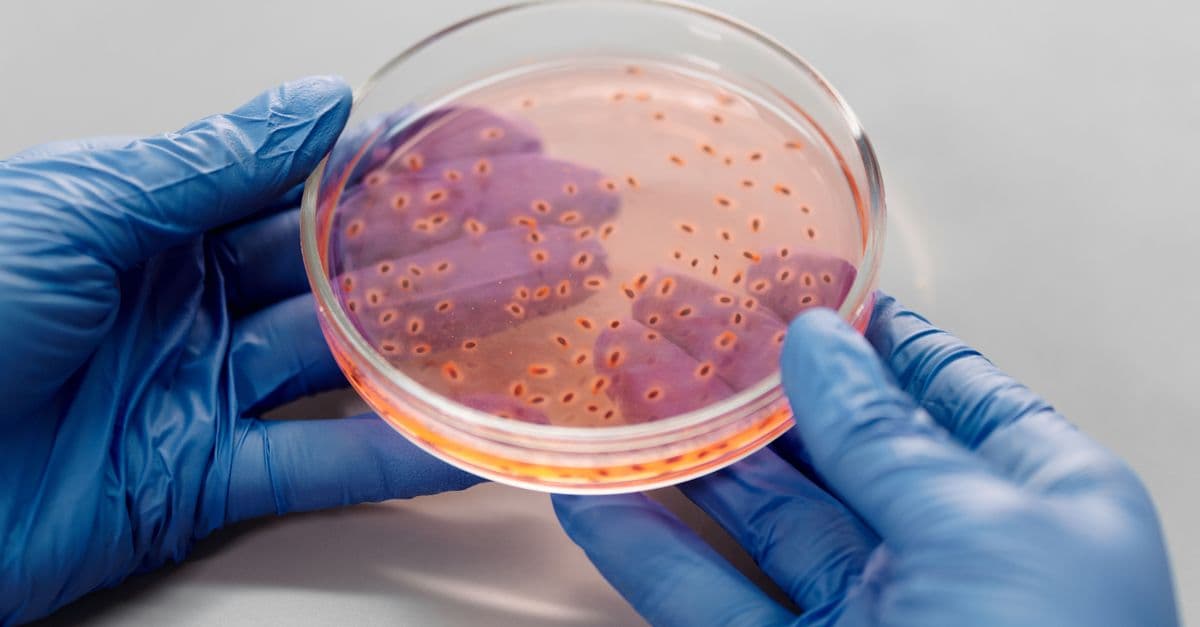
Photo: Edward Jenner / Pexels
In 1859, Louis Pasteur entered a competition sponsored by the French Academy of Sciences to settle, once and for all, the question of spontaneous generation — whether microorganisms could arise from non-living matter in a sterile nutrient broth. His entry was a flask with an S-shaped neck, elongated and curved so that air could enter freely but airborne particles would be trapped in the curve and never reach the liquid. The broth inside remained clear and sterile indefinitely. When the neck was broken off, exposing the broth directly to unfiltered air, microbial growth appeared within days. The source of microbial life was the air, not the broth. Spontaneous generation was not occurring. Life came from life.
The Problem Pasteur Was Solving
By 1859, the question of spontaneous generation had already been studied for nearly two centuries. Francesco Redi had shown in 1668 that maggots in meat came from fly eggs, not from the meat itself. But Redi's work addressed visible insects. The discovery of microorganisms by van Leeuwenhoek in 1676 reopened the question at a smaller scale: could the simplest, most primitive forms of life arise spontaneously from organic broth?
The debate became increasingly technical through the 18th and early 19th centuries. Lazzaro Spallanzani (1729–1799) showed that broth heated sufficiently in a sealed flask would remain clear indefinitely, suggesting that the microorganisms came from outside (from the air or the liquid) rather than arising spontaneously inside. But proponents of spontaneous generation had a ready answer: Spallanzani's extended boiling destroyed a "vital principle" in the air that was necessary for life to form. By sealing the flask completely, he had excluded not just microorganisms but also the oxygen or vital force needed for generation to occur.
This objection was not obviously wrong. At the time, the distinction between the chemical properties of air (its composition, including oxygen) and its biological contamination (its load of airborne microorganisms) was not clear. An experiment that excluded air entirely could legitimately be criticized for excluding factors other than microbes. What was needed was an experiment that allowed full access to air while excluding only the particulate content — the microorganisms suspended in it.
This is what the swan-neck flask provided.
Source: Britannica — "Louis Pasteur: Spontaneous Generation" (britannica.com/biography/Louis-Pasteur/Spontaneous-generation)
Who Was Pasteur in 1859
Louis Pasteur (1822–1895) — French chemist and microbiologist who disproved spontaneous generation (1859–1861), developed the germ theory of fermentation (showing that specific microorganisms produce specific fermentation products), invented pasteurization, and developed vaccines for chicken cholera, anthrax, and rabies.
In 1859, Pasteur was 37 years old and had already built a significant reputation through his work on fermentation. In the early 1850s, he had demonstrated that fermentation — the conversion of sugars to alcohol or acid — was caused by specific microorganisms, not by a purely chemical process. Different microbes produced different products: yeast produced alcohol; lactic acid bacteria produced lactic acid; other bacteria produced butyric acid. The specificity of fermentation products was evidence that specific, heritable microorganisms were responsible — and that these organisms came from somewhere rather than arising anew in each fermentation batch.
This work made the question of spontaneous generation directly relevant to Pasteur's research program. If microorganisms were responsible for fermentation and spoilage, did they come from parent microorganisms or from spontaneous generation? The practical and the theoretical question were the same.
The Prix Alhumbert, worth 2,500 francs, was offered by the French Academy of Sciences to whoever could cast new light on the spontaneous generation question by experiment. Pasteur entered the competition and won it in 1862 with work he had conducted between 1859 and 1861.
Source: American Scientist — "Winter 1859" (americanscientist.org/article/winter-1859)
The Design of the Swan-Neck Flask
The essential problem Pasteur faced was this: how do you allow air to contact a nutrient broth while preventing the microorganisms suspended in that air from reaching the broth?
His solution was geometrical. He heated the neck of a glass flask over a flame until the glass became soft and malleable, then bent and elongated the neck into a curve — long, narrow, and bent in an S-shape, like a swan's neck. The resulting flask had a large round body containing the nutrient broth and a thin, curved, open neck extending from the body.
Swan-neck flask — a glass flask with a long, S-shaped neck, open at the end, designed to allow air circulation while trapping particulate matter (including airborne microorganisms) in the liquid that pools in the curves of the neck.
The physics of the design was straightforward. Air could flow in and out of the flask through the open tip of the curved neck. But any particles suspended in that air — including bacteria and fungal spores — would need to travel through the narrow curved tube against gravity and diffusion. Particles settle; they do not float around corners. They would be deposited in the liquid moisture that condensed and pooled in the low points of the S-curve, and never reach the broth in the flask's body.
Pasteur boiled the nutrient broth in the flask to sterilize it, killing any organisms already present. The steam produced during boiling drove air out of the flask; as the flask cooled, air re-entered through the curved neck, passing through the curves and depositing any particles in the neck's moisture traps. The broth in the body was exposed to the air but shielded from airborne particles.
If spontaneous generation occurred, the broth should become turbid as microorganisms generated themselves within it. If spontaneous generation did not occur, and microorganisms in the air were the source of growth in broth, then the broth should remain clear — because no microorganisms from the air could navigate the swan neck.
Source: Worcester Medical Museums — "Pasteur's Swan Neck Flask" (medicalmuseum.org.uk/medical-science-pasteurs-swan-neck-flask)
What Happened: The Flask Results
The broth in the swan-neck flasks remained clear and sterile. Days passed, then weeks, then months. No growth appeared. The broth was in contact with air — it was not sealed — but microorganisms could not penetrate the curved neck.
Pasteur then performed the critical control that made the experiment decisive: he tilted the flask so that the broth flowed into the neck, contacted the accumulated particles in the S-curve, and then flowed back into the body. Within days, the broth became turbid with microbial growth.
He also performed another version: he simply broke the neck of the flask off, exposing the broth directly to unfiltered air. Growth appeared within days.
The result admitted only one interpretation. The broth did not generate microorganisms spontaneously. Microorganisms arrived from outside — from the air — and required physical transport to the broth to grow. As long as the curved neck prevented that transport, the broth remained sterile. The moment physical contact with airborne particles was established (by tilting or breaking the neck), growth began.
Pasteur made additional observations that strengthened the case. He carried swan-neck flasks to different locations — Paris, the Mer de Glace glacier in the Alps, a cellar, a courtyard — and broke their necks to expose the broth at each location. Flasks opened in the clean air of the high Alps showed little or no growth; flasks opened in dusty urban air or a cellar showed rapid growth. The amount of airborne particulate matter — which varied predictably by location — corresponded to how quickly growth appeared after opening. This geographic comparison showed that the source of microbial growth was the particles in the air, and that cleaner air meant fewer particles and less growth.
Source: Pasteur Brewing — "Pasteur Swan Neck Flask Experiment" (pasteurbrewing.com/pasteur-swan-neck-flask-experiment/)
Why This Experiment Was Decisive When Earlier Ones Were Not
Several earlier experiments had produced results consistent with the view that microorganisms came from the air rather than spontaneous generation. Spallanzani (1768) and Theodore Schwann (1836) had both produced sterile conditions in broth by various heating and sealing methods. Why did Pasteur's experiment settle the debate when earlier ones had not?
The critical difference was that Pasteur's design explicitly preserved the factor his critics had used to explain away earlier results — air contact — while removing only the factor he claimed was responsible — airborne particles. Spallanzani's sealed flasks could be criticized for excluding air entirely. Schwann's experiments, which circulated air through heated tubes before letting it contact the broth, could be criticized for altering the chemical composition of the air through heating.
The swan-neck flask addressed both objections simultaneously. Air flowed freely into and out of the flask through the open neck. The air inside the flask was the same air as outside — same temperature, same chemical composition, same oxygen content. The only thing prevented from reaching the broth was particulate matter settling in the neck. Pasteur's critics could not argue that he had excluded a vital principle from the air, because he had not excluded the air.
The tilting experiment then demonstrated, with the same flask and the same broth, that contact with particles from the neck produced immediate growth. This was an internal control: the same physical system, with one variable changed (particle contact with the broth), produced the opposite result. The difference between sterile and growing broth was entirely attributable to the presence or absence of particles from the air.
This is the structure of a well-designed experiment: an intervention that isolates the single relevant variable, with a control condition that demonstrates the effect of changing that variable while holding everything else constant.
Source: Biology LibreTexts — "1.1C: Pasteur and Spontaneous Generation" (bio.libretexts.org/Bookshelves/Microbiology/Microbiology_(Boundless)/01:_Introduction_to_Microbiology/1.01:_Introduction_to_Microbiology/1.1C:_Pasteur_and_Spontaneous_Generation)
The Surviving Flasks: A Living Demonstration
Several of the original swan-neck flasks Pasteur prepared in 1859–1861 still exist. They are housed at the Pasteur Institute in Paris. For many decades after Pasteur made them, they retained their original broth and remained clear — physically demonstrating that the sealed swan-neck design continued to prevent microbial growth long after the original experiments.
Some of the flasks were eventually broken or the broth contaminated over the decades of handling. But the fact that the original flasks retained sterile broth for 100+ years in some cases is itself evidence: if spontaneous generation were occurring, the broth would have become turbid long ago. Its continued clarity was an ongoing negative result that supported Pasteur's original conclusion.
The flasks are an unusually direct form of scientific legacy: physical objects from 1859 that continue to demonstrate the same thing they demonstrated when they were made.
Source: Institut Pasteur — "The Middle Years 1862–1877" (pasteur.fr/en/institut-pasteur/history/middle-years-1862-1877)
A Timeline of the Spontaneous Generation Debate and Its Resolution
| Year | Figure | Experiment / Claim |
|---|---|---|
| c. 340 BCE | Aristotle | Codifies spontaneous generation doctrine; life arises from matter under the influence of vital heat |
| 1668 | Francesco Redi | Shows maggots come from fly eggs; spontaneous generation refuted for visible insects |
| 1676 | van Leeuwenhoek | Discovers microorganisms; spontaneous generation question reopens at microbial scale |
| 1748 | John Needham | Claims microorganisms appear in boiled, sealed broth; supports microbial spontaneous generation |
| 1768 | Lazzaro Spallanzani | Shows thoroughly boiled and well-sealed broth stays clear; Needham argues vital principle was destroyed |
| 1836 | Theodor Schwann | Passes air through heated tube before contacting broth; no growth; critics say heating alters air |
| 1859 | Louis Pasteur | Begins swan-neck flask experiments |
| 1861 | Louis Pasteur | Publishes definitive results; wins Prix Alhumbert |
| 1876–77 | John Tyndall | Demonstrates air contains heat-resistant particles (endospores); confirms particulate theory of microbial origin |
| 1880s | Robert Koch | Develops germ theory of specific infectious diseases; builds on Pasteur's work |
Source: Pearson Microbiology — "Pasteur's Experiments on Spontaneous Generation Explained" (pearson.com/channels/microbiology/learn/jason/ch-2-disproving-spontaneous-generation/pasteurs-experiments-on-spontaneous-generation)
What the Experiment Established Beyond Spontaneous Generation
Pasteur's swan-neck flask experiment is usually presented as the final demolition of spontaneous generation, and that is accurate. But it also established or reinforced several other important claims.
Microorganisms are ubiquitous in air. The geographic experiments — comparing growth in glacier air versus city air — showed that microorganisms were present everywhere in the atmosphere, at densities that varied with the cleanliness of the environment. This was not previously known with any precision.
Sterility is achievable. If microorganisms come from outside, then preventing their entry can keep a medium sterile. This insight was the foundation of modern sterilization in medicine and food science. The same principle underlies the autoclave in medical settings, the pasteurization of milk and other foods (which Pasteur developed through related work in the 1860s), and the aseptic technique required in surgery, microbiological research, and food production.
Pasteurization. Pasteur applied the logic of his flask experiment to practical food preservation. If microorganisms cause spoilage, and if they come from the air or from the food itself, then heating food to kill existing microorganisms (without full boiling, to preserve flavor) and then preventing recontamination would extend shelf life. He developed the heat treatment now called pasteurization for wine in 1864 and it was later applied to beer and, most importantly, milk.
The germ theory of disease. Pasteur extended the logic further: if microorganisms cause fermentation and spoilage, might specific microorganisms cause specific diseases? This led directly to the germ theory, which he and Robert Koch developed through the 1860s–1880s. The swan-neck flask did not prove the germ theory of disease, but it established the prerequisite: that microorganisms originate from outside the body, in the environment, and are not generated spontaneously within tissues.
Source: CK-12 Foundation — Pasteur and Spallanzani comparison (ck12.org/flexi/life-science/scientific-theories/in-1859-louis-pasteur-designed-an-experiment-to-address-the-spontaneous-generation...)
What People Get Wrong About This Experiment
A common oversimplification is to say that Pasteur "proved" biogenesis — the principle that all life comes from pre-existing life. More precisely, he demonstrated that microorganisms in nutrient broth came from microorganisms in the air, not from spontaneous generation in the broth. This was a crucial empirical result, but the broader philosophical principle required additional work (and still has nuances when applied to the origin of life on early Earth — which is a different question).
Another error is treating Pasteur's work as independent of Redi and Spallanzani. Pasteur was deeply aware of the historical debate and explicitly designed his experiment to address the specific objections that had been raised against earlier work. His swan-neck design was not a novel idea dropped from the sky — it was a solution engineered to overcome a specific weakness in the previous experimental record.
A third misunderstanding concerns what "spontaneous generation" meant to its proponents. It did not mean that a full rabbit appeared in a pot overnight. It meant that the simplest forms of life — the "animalcules" of Leeuwenhoek, microorganisms — could arise from organic matter under appropriate conditions. This was a more modest and defensible claim than the classical Aristotelian doctrine, and it required Pasteur's careful design to refute rather than dismissal as obvious nonsense.
For how Redi established the experimental approach that Pasteur extended, see the Redi spontaneous generation experiment. For the germ theory's consequences for medicine, see how vaccines work and how antibiotics work.
FAQs
Q: Why did Pasteur use a curved neck instead of a straight one?
A: A straight vertical neck would trap particles only if they fell straight down, which requires very still air and a nearly vertical tube. An S-shaped (swan) neck creates a trap: particles carried by air entering the flask would be deposited by gravity into the liquid collecting in the low points of the S-curve. The curved geometry reliably prevents particles from traveling through the neck by any plausible mechanism — diffusion, air currents, settling — while still allowing gas exchange.
Q: How did Pasteur know the broth inside was actually sterile and not just growing slowly?
A: Pasteur monitored the flasks visually over extended periods. Microbial growth in broth produces turbidity — the liquid becomes cloudy — within days to weeks under normal conditions. Flasks that remained clear for months in conditions where identical broth in open containers became turbid within days were demonstrably not growing. He also confirmed sterility by microscopic examination of samples from the flask contents.
Q: Did anyone continue to defend spontaneous generation after Pasteur's results?
A: Yes. The most notable holdout was Henry Charlton Bastian, a British physiologist who argued through the 1870s and 1880s that microorganisms could arise spontaneously under specific conditions. He disputed Pasteur's techniques and claimed that some organisms could survive the temperatures used to sterilize broth. Bastian was eventually shown to have encountered heat-resistant bacterial endospores — a genuine phenomenon that John Tyndall documented — rather than spontaneous generation. The existence of endospores, which survive boiling at 100°C, explained some of the confusing results in the spontaneous generation literature, but it did not require invoking spontaneous generation.
Q: What is the connection between the swan-neck experiment and pasteurization?
A: Both are applications of the same principle: microorganisms in food or beverage come from external sources (air, raw ingredients, contaminated vessels) rather than arising spontaneously. Pasteurization heats the product enough to kill most vegetative microorganisms present, reducing the starting microbial load to a safe level, and the product is then sealed to prevent recontamination. The logic of reducing and preventing microbial access, rather than relying on any intrinsic preservation property of the food, follows directly from the swan-neck experiment's demonstration that microorganisms require physical entry into the substrate.
Q: Is the origin of life on Earth a form of spontaneous generation?
A: No, though the question requires care. Pasteur's experiment — and the principle of biogenesis — applies to present-day conditions: under current conditions on Earth, microorganisms do not arise from broth spontaneously because the preconditions for the original emergence of life no longer exist. The origin of life (abiogenesis) refers to the unique historical event, roughly 3.5–4 billion years ago, in which self-replicating chemistry arose from non-living chemistry under conditions very different from those of today. Abiogenesis and spontaneous generation are different claims. Pasteur refuted spontaneous generation under modern conditions; that says nothing about whether abiogenesis occurred once, long ago, under radically different conditions.
Q: How did Pasteur win the Prix Alhumbert if the experiment was conducted 1859–1861 and the prize was announced in 1860?
A: The French Academy of Sciences offered the prix (prize) beginning in 1859, with the competition closing in 1862. Pasteur submitted his results in 1861, after he had completed the full series of experiments including the geographic comparisons. The Academy awarded him the prize in 1862. The timeline — beginning experiments in 1859, publishing and winning in 1861–1862 — reflects a two-to-three-year period of active work, not a single experiment.
The Takeaway
Pasteur's swan-neck flask was a beautiful piece of experimental engineering: a glass object whose geometry did one precise thing — filtered air without changing it — and whose broth remained clear for years as a result. The clarity of that broth was not just a result but an argument. If life were arising spontaneously in the nutrient broth, it would have appeared. It did not appear until the flask was tilted to bring the broth into contact with the particles trapped in the neck. That the same broth, in the same flask, went from clear to cloudy when physical contact with airborne particles was established and not before, was the cleanest possible demonstration that the source of microbial life was the particles, not the broth. Pasteur turned a question that had persisted for 2,200 years into a geometry problem. The answer was in the shape of the neck.
Read next:
Weekly digest
Stay ahead of the curve
Get the best science, AI, and tech stories delivered to your inbox every week. No spam — unsubscribe any time.
About the Author
SciHub101 is an independent science and technology publication founded and edited by Buğra Sözeri, a software engineer and app developer based in Türkiye. Articles are drafted against peer-reviewed literature and primary sources, fact-checked, and edited by a human before publication. Where we compare products, anything built by our own team is labelled as such — see the editorial guidelines and About page for how corrections and disclosures work.
Related Articles

Pavlov's Classical Conditioning: The Methodology and Science Behind Conditioned Reflexes
Ivan Pavlov's conditioned reflex research was built on surgical precision, quantitative measurement, and decades of systematic trials. Here is how the methodology actually worked and why it still shapes behavioral science.

The OPERA Faster-Than-Light Neutrino Anomaly: A Loose Cable and a Physics Scare
In 2011, the OPERA experiment reported neutrinos arriving 60 nanoseconds faster than light. Six months later the culprit was a fiber-optic cable not properly plugged in. Here is what really happened.
Redi's Experiment: The First Controlled Test in Biology
In 1668, Francesco Redi covered jars of meat with gauze and proved maggots come from fly eggs, not from meat itself. Here is how he designed the first controlled experiment in biology.

Pasteur's Germ Theory: The Experiment That Proved Invisible Killers
In 1864, Louis Pasteur's elegant swan-neck flask experiment definitively proved that disease is caused by microscopic organisms, not spontaneous generation. This discovery revolutionized medicine and saved millions of lives.
Complete Science Experiments Guide 2026 — Every Landmark Experiment by Field
Every landmark science experiment in one hub: Pasteur's swan-neck flask, Galvani's frog legs, Eratosthenes, Michelson–Morley, Hafele–Keating and more than 140 others, grouped by field and era.