The Foucault Pendulum: Direct Proof Earth Rotates
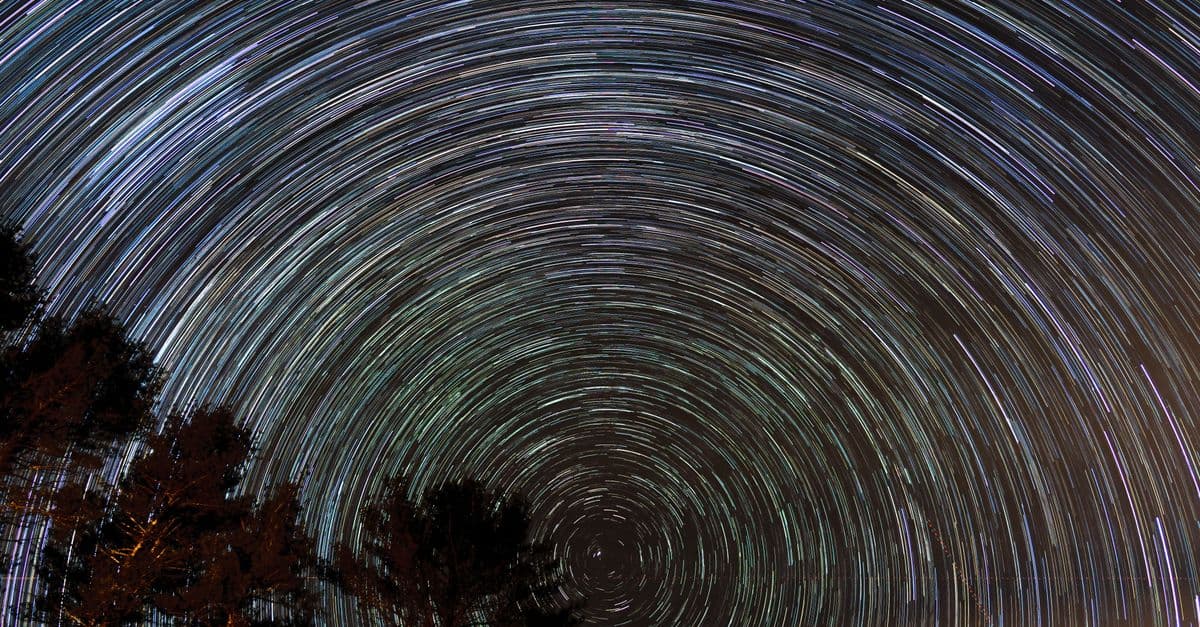
Photo: Skyler Ewing / Pexels
In March 1851, a 28-kilogram brass-coated lead sphere hung from a 67-meter wire attached to the dome of the Paris Pantheon and began to swing. The audience watched the pendulum's plane of motion slowly rotate clockwise — about 11 degrees every hour. No mechanism drove the rotation. Nothing pushed the bob sideways. The rotation was caused by the floor rotating beneath a pendulum that was, in a meaningful physical sense, swinging in a plane fixed in space. It was the first direct, visual demonstration that Earth rotates, and anyone standing in the room could see it happening in real time.
Why Proving Earth's Rotation Was Still an Open Experimental Question
By 1851, no serious scientist doubted that Earth rotated. Copernicus had proposed it in 1543, Newton had explained why, and the accumulated weight of astronomical observation made it inescapable. But astronomical proof is indirect — you infer Earth's rotation from the motions of stars, planets, and the Sun. You never see Earth turn; you see everything else appear to turn relative to Earth.
Direct mechanical evidence was another matter. Galileo, defending heliocentrism in 1632, had pointed out that a ball dropped from a tower should fall slightly east of the tower's base — because the top of the tower moves faster than the base in a rotating frame, and the ball retains this extra eastward velocity as it falls. This is a real effect, but it is tiny (a few centimeters for a tower 100 meters tall) and was not convincingly measured until 1831.
What Foucault offered was qualitatively different: a demonstration you could watch. Not a precise measurement requiring careful instrumentation — a visible, ongoing rotation that anyone in the room could follow with their eyes. The plane of the pendulum's swing visibly changed orientation over the course of an hour, and the cause had to be Earth's rotation. There was no other candidate.
Source: Smithsonian Magazine — "How Does Foucault's Pendulum Prove the Earth Rotates?" (smithsonianmag.com/smithsonian-institution/how-does-foucaults-pendulum-prove-earth-rotates-180968024/)
Léon Foucault: Physicist by Obsession, Not By Degree
Léon Foucault (1819–1868) — French physicist who demonstrated Earth's rotation with his pendulum in 1851, measured the speed of light in the laboratory in 1850 using a rotating mirror, and invented the gyroscope as a second demonstration of Earth's rotation in 1852.
Foucault came to physics through medicine — he enrolled in medical school but left when he realized he could not tolerate the sight of blood. He never held an academic position and did most of his early work privately, selling physics demonstrations and instruments. Despite this unconventional career path, he became one of the most practically capable experimental physicists of the 19th century.
In 1850, Foucault measured the speed of light directly in the laboratory using a rotating mirror — the first time the speed of light had been measured by a purely terrestrial method. He observed that light traveled more slowly in water than in air, which settled a long-standing dispute between competing theories of light in favor of the wave theory. The pendulum demonstration came one year later.
The first pendulum test was private, in the cellar of Foucault's house on the rue d'Assas in Paris, with a 2-meter wire and an 800-gram bob. He saw the effect immediately. He then scaled up to an 11-meter wire in the Meridian Room of the Paris Observatory for a demonstration to colleagues in January 1851, and finally to the full 67-meter installation in the Pantheon in March 1851.
Source: EBSCO Research Starters — "Foucault Pendulum: History" (ebsco.com/research-starters/history/foucault-pendulum)
The Physics: Why a Pendulum Swings in a Fixed Plane
The key physical principle is Newton's first law of motion applied to a freely swinging pendulum in the absence of horizontal forces.
A simple pendulum — a mass on a wire, swinging — has no horizontal force on it except the horizontal component of the wire's tension, which always points back toward the equilibrium position directly below the attachment point. There is no mechanism to push the pendulum sideways — no horizontal force that would rotate the plane of the swing.
Newton's first law says an object in motion continues in that motion unless acted upon by a force. Applied to the plane of the pendulum's swing: if nothing pushes the pendulum sideways, the plane of the swing remains fixed in an inertial reference frame.
An inertial reference frame is one that is not rotating or accelerating. The surface of Earth is not an inertial frame — it rotates once every 24 hours. The pendulum's plane of oscillation is fixed in the inertial frame (approximately fixed relative to distant stars). Earth's surface rotates beneath it.
The effect is like a compass needle pointing toward fixed magnetic north while you rotate on a turntable. The needle is not rotating — you are rotating around it. From the viewpoint of someone on the turntable, the needle appears to rotate in the direction opposite to the turntable's motion.
Source: Interesting Engineering — "The Device That Lets You See the Earth Turn: The Foucault Pendulum" (interestingengineering.com/science/the-device-that-lets-you-see-the-earth-turn-the-foucault-pendulum)
The Mathematics: How Latitude Determines the Rotation Rate
The rotation rate of the pendulum's plane depends on the observer's latitude. The formula is:
Ω_precession = Ω_Earth × sin(φ)
where Ω_Earth is Earth's rotation rate (one full rotation per sidereal day, approximately 360°/23.93 hours = 15.04°/hour) and φ is the geographic latitude.
At the North Pole (φ = 90°, sin(90°) = 1): the pendulum's plane completes one full rotation every 23.93 hours — exactly one sidereal day. An observer at the pole would see the pendulum apparently rotate a full circle while Earth made one full rotation beneath it.
At the equator (φ = 0°, sin(0°) = 0): the pendulum's plane does not rotate at all relative to Earth's surface. The component of Earth's rotation that matters for this effect is the vertical component — the part pointing straight up — and at the equator, Earth's rotation axis is horizontal, contributing no vertical rotation.
At intermediate latitudes, the rotation rate is intermediate. Paris sits at latitude 48.87° N, giving sin(48.87°) ≈ 0.754. The pendulum's plane rotates at 15.04°/hour × 0.754 ≈ 11.3°/hour relative to the floor. A full 360° rotation takes 360°/11.3°/hour ≈ 31.8 hours.
This latitude dependence is not an additional theoretical prediction tacked onto the basic observation — it is part of the same physics. Verifying it by building Foucault pendulums at different latitudes and confirming that the rotation rates match the formula sin(φ) was the experimental test of the underlying theory.
| Latitude | Location Example | Rotation Rate (°/hour) | Full Rotation Time (hours) |
|---|---|---|---|
| 90° N/S | North/South Pole | 15.04 | 23.93 |
| 60° | Helsinki, Finland | 13.02 | 27.67 |
| 48.87° | Paris, France | 11.33 | 31.77 |
| 30° | Cairo, Egypt | 7.52 | 47.88 |
| 0° | Equator | 0 | Never |
Source: Foucault Pendulum at the Pantheon — Physics and Setup (pantheonparis.org/en/paris-pantheon/science/paris-pantheon-foucault-pendulum-physics-and-demonstration)
The Pantheon Demonstration: Engineering a 67-Meter Pendulum
Building a pendulum that actually shows the effect cleanly required solving several engineering problems that had nothing to do with the basic physics.
Length and oscillation period. A longer pendulum swings more slowly, which reduces the angular velocity of the bob relative to the floor, which reduces air resistance effects and makes the rotation easier to observe clearly. The 67-meter wire at the Pantheon gave a period of oscillation of approximately T = 2π√(L/g) = 2π√(67/9.8) ≈ 16.4 seconds per half-swing. This is slow enough that the individual swings are observable and the rotation rate (about 11.3°/hour) is detectable after just a few minutes.
The suspension point. The wire had to be attached at a single point with a pivot that would allow the pendulum to swing freely in any direction without imposing a preferred orientation. Foucault used a carefully designed ball-and-socket joint at the top. Any stiffness in the suspension that provided a restoring torque toward a preferred plane would mask or distort the rotation of the plane.
Launch without bias. The pendulum had to be started swinging along a definite line without introducing any sideways push. Foucault tied the bob to a fixed point with a thin cord, let the system come to rest in perfect stillness, then burned through the cord with a candle. The burnthrough release introduced no sideways push, unlike cutting a cord (which would have introduced a jerk).
The sand trace. A pin fixed to the bottom of the bob traced lines in a thin layer of sand poured on a circular platform beneath the pendulum. Over the course of hours, the lines rotated, visible to onlookers who returned and compared the current trace to earlier photographs or chalk marks.
Source: Smithsonian Institution — "Foucault Pendulum" (si.edu/spotlight/foucault-pendulum)
Source: Harvard Natural Sciences Lecture Demonstrations — "Foucault Pendulum" (sciencedemonstrations.fas.harvard.edu/presentations/foucault-pendulum)
What the Audience Saw and What It Proved
The public demonstration at the Pantheon on March 26, 1851 included Napoleon III among the audience. The invited dignitaries watched the sand trace rotate clockwise as the pendulum swung. Each swing in one direction left a mark in the sand; each return left a parallel mark slightly displaced from the previous one.
The key observation was not dramatic in any single instant — there was no flash or bang. It was cumulative. After 30 minutes, the direction of the marks had rotated by about 5.7 degrees clockwise. After an hour, by about 11.3 degrees. The rotation was steady, predictable, inexorable.
What this proved physically is subtle but important. The only natural direction defined at the Pantheon's location is vertical — downward, defined by gravity. Horizontal directions are arbitrary; there is nothing special about north versus east on the surface of the Earth except Earth's own rotation. The pendulum swings in a plane that has no reason to rotate relative to the vertical direction or to the distant stars — and yet its plane rotated relative to the marble floor of the Pantheon. The floor rotated. Earth rotated. The pendulum's plane stayed put.
This argument is airtight provided one accepts that the pendulum has no horizontal forces acting on it that would drive a rotation. Foucault's engineering — the ball-and-socket joint, the burn-through release, the long wire — was specifically designed to eliminate possible mechanical causes of apparent rotation. Having eliminated them, the only remaining explanation was Earth's rotation.
Source: Britannica — "Foucault pendulum" (britannica.com/science/Foucault-pendulum)
The Coriolis Effect: The Underlying Physics
The rotation of a Foucault pendulum is a manifestation of the Coriolis effect — a fictitious force that appears in rotating reference frames.
Coriolis effect — an apparent force that acts on objects moving within a rotating reference frame, deflecting them to the right in the Northern Hemisphere and to the left in the Southern Hemisphere. It is not a real force but an artifact of analyzing motion in a rotating coordinate system.
When you describe motion on Earth's surface, you are working in a rotating reference frame — the surface rotates at one revolution per 23.93 hours. From this frame's perspective, moving objects appear to be deflected sideways: northward-moving air in the Northern Hemisphere deflects to the right (east), producing the counterclockwise rotation of low-pressure systems. Southward-moving air deflects to the right (west).
For the Foucault pendulum, the bob moves in what the inertial frame regards as a straight horizontal oscillation. From the surface frame, the bob appears to drift — each successive swing carries it slightly to the right of the previous one (in the Northern Hemisphere). This rightward drift, accumulated over many swings, produces the clockwise rotation of the trace.
The Coriolis force on the pendulum bob has magnitude 2m(v × Ω_Earth), where m is the bob mass, v is its velocity relative to Earth's surface, and Ω_Earth is Earth's angular velocity vector. At Paris, the vertical component of Ω_Earth — the component relevant to the pendulum's horizontal motion — is Ω_Earth × sin(48.87°), which gives exactly the observed precession rate.
The connection between the Foucault pendulum and large-scale atmospheric circulation is direct: both involve the Coriolis effect in the same rotating reference frame. Hurricanes and typhoons rotate because Coriolis deflects air flowing into a low-pressure center; Foucault pendulums rotate because Coriolis deflects the swinging bob. The scale differs by a factor of roughly 10⁶, but the underlying physics is identical.
Source: Atlas Obscura — "Foucault's Pendulum in Paris" (atlasobscura.com/places/pantheon-paris)
A Timeline of the Foucault Pendulum
| Year | Event |
|---|---|
| 1543 | Copernicus proposes heliocentric model with rotating Earth |
| 1632 | Galileo discusses deflection of falling bodies as indirect evidence of rotation |
| 1831 | Benzenberg and Reich measure eastward deflection of falling bodies (confirming Galileo's prediction) |
| Jan 1851 | Foucault demonstrates 11-meter pendulum at Paris Observatory for colleagues |
| Mar 26, 1851 | Public demonstration at the Pantheon with the full 67-meter apparatus |
| 1851 | Foucault invents the gyroscope as a second, independent demonstration of Earth's rotation |
| 1852 | Pendulums installed in major cities across Europe and North America |
| 1969 | Moon landing provides photography of Earth from space — visual confirmation of spherical rotating Earth |
| 1995 | United Nations receives a 3-meter Foucault pendulum, now at UN headquarters in New York |
| 2020 | Modern Foucault pendulums operate in over 60 science museums worldwide |
The Gyroscope: Foucault's Second Proof
One year after the pendulum demonstration, in 1852, Foucault invented the gyroscope as an independent demonstration of Earth's rotation.
Gyroscope — a spinning mass mounted in a set of gimbals that allow the spin axis to point in any direction. When spinning, the gyroscope's axis remains fixed in inertial space by the conservation of angular momentum.
A rapidly spinning gyroscope maintains its axis pointing toward a fixed direction relative to distant stars — exactly like the Foucault pendulum's plane of oscillation. If you mount a gyroscope at the Equator pointing straight up, and watch over hours, its axis will appear to tilt as Earth rotates beneath it.
Foucault built a gyroscope and showed that it behaved exactly as his analysis predicted. He coined the word "gyroscope" from the Greek roots meaning "to watch rotation" — the device was, in his framing, a rotation-watcher.
The gyroscope became enormously practically important. Ship navigation, aircraft navigation, guided missiles, and spacecraft attitude control all rely on gyroscopes to maintain a fixed reference direction independent of the vehicle's motion. The Hubble Space Telescope uses gyroscopes to maintain its pointing. GPS satellites carry gyroscopes. In all of these applications, the physics is identical to what Foucault demonstrated with a spinning top on a table in 1852.
Source: UN Gifts — "Foucault Pendulum" (un.org/ungifts/foucault-pendulum)
What People Get Wrong About the Foucault Pendulum
The most common confusion is about what is rotating and what is standing still. People often describe the experiment as "the pendulum rotates while Earth stands still." This is the description from an inertial reference frame — fine physically but potentially misleading. In an Earth-centered frame, the pendulum's plane rotates clockwise (in the Northern Hemisphere) because Coriolis forces act on the moving bob. Both descriptions give the same predictions; they are just different coordinate systems. The physics is the same either way.
A second error involves the direction of rotation. In the Northern Hemisphere, the pendulum's plane rotates clockwise when viewed from above. In the Southern Hemisphere, it rotates counterclockwise. At the equator, it does not rotate relative to Earth's surface at all. Some early popularizations confused viewers in Sydney or Buenos Aires by saying the pendulum "proves Earth rotates" without noting the direction reversal.
A third confusion: the Foucault pendulum does not demonstrate that Earth revolves around the Sun. It demonstrates that Earth rotates on its own axis. The revolution of Earth around the Sun produces effects on different timescales and through different mechanisms.
Finally, some accounts overstate the precision of the demonstration. A real Foucault pendulum is subject to systematic errors: small ellipticity in the swing (causing the bob to trace a slight oval rather than a line), air currents, imperfections in the bearing, and variations in the local gravitational field. These introduce small deviations from the theoretical precession rate. In Foucault's original demonstration, these errors were present at the few-percent level. The demonstration is visually compelling and physically correct, but it is not a precision measurement of Earth's rotation rate — for that, modern laser gyroscopes are used.
For related science on Earth's dynamics, see our article on the formation of the solar system. For how gyroscopes became central to space navigation, see how spacecraft navigate deep space.
FAQs
Q: Why does the pendulum's rotation rate depend on latitude?
A: The Foucault pendulum's plane precesses at a rate proportional to the sine of the observer's latitude. At the poles (latitude 90°), the entire vertical axis of Earth's rotation is aligned with the local vertical, so the full rotation of Earth contributes to the pendulum's apparent precession — one full rotation per sidereal day. At the equator (latitude 0°), Earth's rotation axis is horizontal, contributing no vertical rotation at the observer's location, and the pendulum does not precess relative to the floor. At intermediate latitudes, only the vertical component of Earth's rotation vector — equal to Ω_Earth × sin(latitude) — drives the precession.
Q: Why does the pendulum swing in a fixed plane?
A: A pendulum bob experiences only two forces: gravity (straight down) and the tension in the wire (along the wire toward the pivot). Neither force has a horizontal component that would push the bob sideways relative to its current direction of swing. So, in an inertial frame (one not rotating with Earth), the plane of the swing does not change. Earth's surface rotates beneath this fixed plane, making the plane appear to rotate relative to the floor.
Q: Would a Foucault pendulum work at the equator?
A: No, not to demonstrate Earth's rotation. At the equator, the sine of latitude is zero, so the theoretical precession rate is zero. The pendulum still swings, but its plane does not rotate relative to the floor over time. To observe the Coriolis effect at the equator, you need to use other phenomena — like the deflection of a horizontally fired projectile — where the non-vertical component of Earth's rotation matters.
Q: How did Foucault release the pendulum without pushing it sideways?
A: He tied the bob to a fixed wall or column with a thin cord, allowing the system to come to complete rest. Then he burned through the cord with a candle. The burnthrough releases the bob smoothly without introducing any lateral impulse. Cutting the cord with scissors or a blade would produce a small sideways jerk, which over many swings could produce a spurious apparent rotation.
Q: Are the Foucault pendulums in science museums accurate?
A: Modern museum pendulums use electromagnetic drivers to maintain the amplitude (real pendulums slow down due to air resistance and eventually stop) and precision bearings at the pivot point. These additions are necessary for a continuously operating display but also introduce potential sources of systematic error. A well-maintained museum pendulum is accurate enough to demonstrate the rotation direction and approximate rate clearly, but precision measurements of Earth's rotation rate are done by laser gyroscopes and ring interferometers, not pendulums.
Q: What happened to the original Pantheon pendulum?
A: The 1851 pendulum was taken down after the demonstration. A replica was later installed in the Pantheon and was in operation for many years. As of recent reports, the Pantheon periodically displays a working Foucault pendulum as a historical and scientific exhibit. The original 2-meter cellar pendulum and the instruments Foucault used were preserved in various Paris collections.
The Takeaway
The Foucault pendulum is one of the most elegant pieces of experimental physics ever built: a single object, hanging from a wire, demonstrating through nothing more than the geometry of its swing that the ground beneath your feet is rotating. The mathematics is straightforward, the physics is fundamental, and the demonstration requires no specialized knowledge to understand — only patience and a clock. What Foucault gave the 1851 audience was not new knowledge (astronomers already knew Earth rotated) but direct, unambiguous, mechanical evidence that could be watched rather than inferred. The same principle — that a freely swinging plane maintains its orientation while a reference frame rotates beneath it — now governs the gyroscopes in spacecraft, the navigation systems of aircraft, and the pointing control of every major space telescope. Foucault saw Earth turn with a wire and a lead ball. We use the same idea to navigate between planets.
Read next:
Weekly digest
Stay ahead of the curve
Get the best science, AI, and tech stories delivered to your inbox every week. No spam — unsubscribe any time.
About the Author
SciHub101 is an independent science and technology publication founded and edited by Buğra Sözeri, a software engineer and app developer based in Türkiye. Articles are drafted against peer-reviewed literature and primary sources, fact-checked, and edited by a human before publication. Where we compare products, anything built by our own team is labelled as such — see the editorial guidelines and About page for how corrections and disclosures work.
Related Articles

The Fox Domestication Experiment: Breeding Tameness in Real Time
Starting in 1959, Soviet geneticist Dmitry Belyaev selectively bred silver foxes for tameness alone. Within a few generations, the foxes developed floppy ears, piebald coats, and dog-like behavior.
The Fleming Penicillin Discovery: How an Accident Changed Medicine
In 1928, Alexander Fleming noticed a mold dissolving bacteria on a contaminated plate. Here is the full story of the discovery, the 12-year gap before clinical use, and how it transformed medicine.


Foucault Pendulum: Proving Earth's Rotation
How a swinging pendulum visibly demonstrated the Earth's rotation without leaving the ground
What If the Earth Stopped Spinning?
Earth spins at 1,674 km/h at the equator. If it suddenly stopped, supersonic winds would devastate the surface. If it slowed gradually, the consequences are still severe — a 6-month day, ocean redistribution, and a collapsing magnetic field.

Why You Can't Feel the Earth Spinning at 1,600 km/h
At the equator, you're moving at 1,674 km/h because the Earth is rotating. You can't feel it. Here's the Newtonian mechanics and relativistic physics that explain why — and the real clues that reveal Earth's rotation.