How Do Spacecraft Navigate in Deep Space? The Science of Interplanetary Navigation
Photo: Adrien Olichon / Pexels
Voyager 1 is over 23 billion kilometres from Earth — farther than any human-made object in history. It was launched in 1977, it has no GPS, and there are no stars nearby for triangulation in the traditional sense. Yet NASA's navigation team knows where it is to within approximately 100 kilometres, and can command it to fire its thrusters — executing manoeuvres planned years in advance — to adjust its heading by fractions of a degree.
Deep space navigation is one of the most demanding applications of applied mathematics and physics in human engineering. It combines relativistic corrections to timing measurements, orbital mechanics, the precise modelling of non-gravitational forces (solar pressure, thermal radiation from the spacecraft itself), and signals that take hours to travel between Earth and the spacecraft.
Understanding how it works reveals how mathematics makes the invisible visible — and how we extend human reach to the edge of the solar system.
The fundamental challenge: no external reference
On Earth, navigation is comparatively simple. You know where you are relative to landmarks, GPS satellites, or star positions. A ship at sea can use stars, radio beacons, or GPS. An aircraft has inertial navigation plus GPS.
In deep space, none of these systems work:
- GPS operates only near Earth (satellites designed to cover Earth's surface)
- Landmarks don't exist in interplanetary space
- Star sighting (celestial navigation) gives orientation but not position — you can tell which way you're pointing, not where you are
- Inertial navigation (tracking accelerations) drifts over time — errors accumulate
Deep space navigation must be done differently. The solution uses radio signals transmitted between Earth and spacecraft, combined with precisely computed orbital trajectories.
The Deep Space Network: humanity's interplanetary communication infrastructure
NASA's Deep Space Network (DSN) is the foundation of deep space navigation — a global network of three large antenna complexes, positioned 120° apart in longitude to maintain continuous contact with any spacecraft regardless of Earth's rotation:
- Goldstone (California, USA) — Mojave Desert
- Madrid (Spain) — 60 km west of Madrid
- Canberra (Australia) — near the capital
Each complex has multiple dishes: a 70-metre dish (the largest type) plus several 34-metre dishes. The 70-metre dishes are the most powerful, used for the most distant spacecraft.
The DSN operates continuously — it maintains contact with dozens of active spacecraft simultaneously, from Earth-orbiting missions to Mars orbiters to the Voyagers at the edge of the solar system.
How the signal works
A spacecraft and the DSN communicate via radio waves in several frequency bands:
- S-band (2–4 GHz): Lower frequencies, used for less demanding missions
- X-band (8–12 GHz): Standard deep space communication — better sensitivity than S-band
- Ka-band (26–40 GHz): Highest frequency, allows faster data rates but more susceptible to rain fade
The DSN transmits an uplink signal to the spacecraft; the spacecraft receives it, processes it, and transmits a downlink. The signals travel at the speed of light — 300,000 km/s — but interplanetary distances mean travel times from minutes to hours:
- Earth to Moon: ~1.3 seconds
- Earth to Mars (average): ~12 minutes
- Earth to Voyager 1: ~22+ hours
This propagation delay means spacecraft must operate autonomously — a problem encountered, a command sent, a correction received — all with 44+ hour round-trip times.
The three pillars of deep space navigation
Navigation teams (at JPL for NASA missions) use three primary measurements to determine a spacecraft's position and velocity:
1. Ranging: measuring distance via signal travel time
The DSN transmits a precisely coded signal to the spacecraft, which transponds it (retransmits after processing). By measuring the round-trip travel time — using atomic clocks accurate to nanoseconds — the distance to the spacecraft can be calculated:
Distance = (speed of light × round-trip time) / 2
At the speed of light, one nanosecond corresponds to 30 centimetres of range. DSN atomic clocks (hydrogen masers, accurate to ~10⁻¹⁵ seconds) provide timing precision allowing range measurements accurate to a few metres at distances of billions of kilometres.
Relativistic corrections are essential: At spacecraft velocities (typically 10–30 km/s), special relativistic effects alter timing. At the large gravitational potentials involved (deep in the Sun's gravity well), general relativistic effects shift clock rates. Navigation software must account for all these effects — ignoring them would cause navigational errors of tens of kilometres.
2. Doppler velocity measurement
The Doppler effect — the frequency shift of a wave from a moving source — provides the spacecraft's velocity along the line of sight to Earth (radial velocity).
If a spacecraft is moving toward Earth, the received signal frequency is higher than transmitted (blueshift). Moving away: lower frequency (redshift). The frequency shift Δf/f = v/c, where v is radial velocity.
DSN measures frequency to parts per billion — allowing radial velocity measurement accurate to fractions of a millimetre per second.
Doppler measurement is sensitive to any change in the spacecraft's motion — including non-gravitational forces. The Pioneer anomaly — a small unexplained deceleration detected in Pioneer 10 and 11 spacecraft — was eventually resolved as anisotropic thermal radiation pressure from the spacecraft's radioactive heat sources (RTGs), after decades of investigation. The precision of Doppler navigation is such that this ~10⁻⁹ m/s² effect was detectable over years.
3. Very Long Baseline Interferometry (VLBI) angular position
Ranging measures distance; Doppler measures speed along the line of sight. But neither directly measures the spacecraft's position perpendicular to the line of sight (angular position).
VLBI (Very Long Baseline Interferometry) — the same technique used in radio astronomy — measures the tiny time difference in a spacecraft's radio signal arriving at two widely separated DSN stations on Earth. A signal from a spacecraft in one part of the sky arrives at one antenna slightly before the other. This arrival time difference (on the order of nanoseconds) reveals the spacecraft's angular position to milliarcsecond accuracy — equivalent to the width of a human hair seen from 100 km away.
When VLBI spacecraft measurements are combined with VLBI observations of quasars (extremely distant, stable radio sources with well-known positions), navigation teams can tie the spacecraft's position to an inertial reference frame defined by the quasar positions — essentially measuring position relative to the cosmic background.
Orbital mechanics: the mathematical backbone
The three measurements above tell navigators where the spacecraft is and how fast it's moving right now. But navigation requires knowing where it will be — to target an arrival destination days, months, or years in the future.
This requires solving Newton's equations of motion — including not just the Sun's gravity, but the gravitational influences of all significant solar system bodies:
The n-body problem: A spacecraft between Earth and Jupiter is gravitationally influenced by the Sun (dominant), Jupiter (significant when nearby), Earth (diminishing), Mars, Saturn, and all other planets. The equations of motion are simultaneous differential equations with no general closed-form solution — they must be integrated numerically.
JPL maintains the Solar System Ephemeris (JPL Development Ephemeris, currently DE440) — a continuously updated, numerically integrated model of solar system bodies' positions going back millennia and forward centuries. This ephemeris incorporates all known gravitational effects including asteroid perturbations, Earth's non-spherical gravitational field (oblateness), and post-Newtonian corrections.
Non-gravitational forces must also be modelled:
- Solar radiation pressure: Photons from the Sun push on spacecraft surfaces
- Thermal reradiation: Hot spacecraft surfaces emit infrared photons asymmetrically, creating a tiny reaction force
- Outgassing: Residual gases from materials slowly evaporating in vacuum create small forces
- Atmospheric drag: Near Earth or other planets with atmospheres
For spacecraft many years into a mission (like Voyager), even the accumulated pressure of solar photons creates a detectable force over decades.
Orbit determination: combining measurements into a best estimate
Navigation teams receive tracking measurements continuously from the DSN. Each measurement — range, Doppler, VLBI — provides a constraint on the spacecraft's position and velocity. But measurements have errors; they don't perfectly pinpoint the spacecraft.
The process of orbit determination combines all available measurements using least-squares fitting (or more sophisticated Kalman filtering): find the spacecraft state (position and velocity at some reference time) that best reproduces all the measurements, given the equations of motion.
The result is not a single point but a probability distribution — a trajectory estimate with uncertainties. Navigation teams quantify these uncertainties and propagate them forward in time: "If the spacecraft is here now (within these uncertainties), where will it be at flyby time (within what future uncertainties)?"
This uncertainty quantification drives trajectory correction manoeuvres (TCMs) — small rocket burns to bring the spacecraft closer to the desired trajectory. As the spacecraft approaches its destination and more measurements accumulate, orbit determination uncertainty shrinks, and navigators determine whether correction burns are needed.
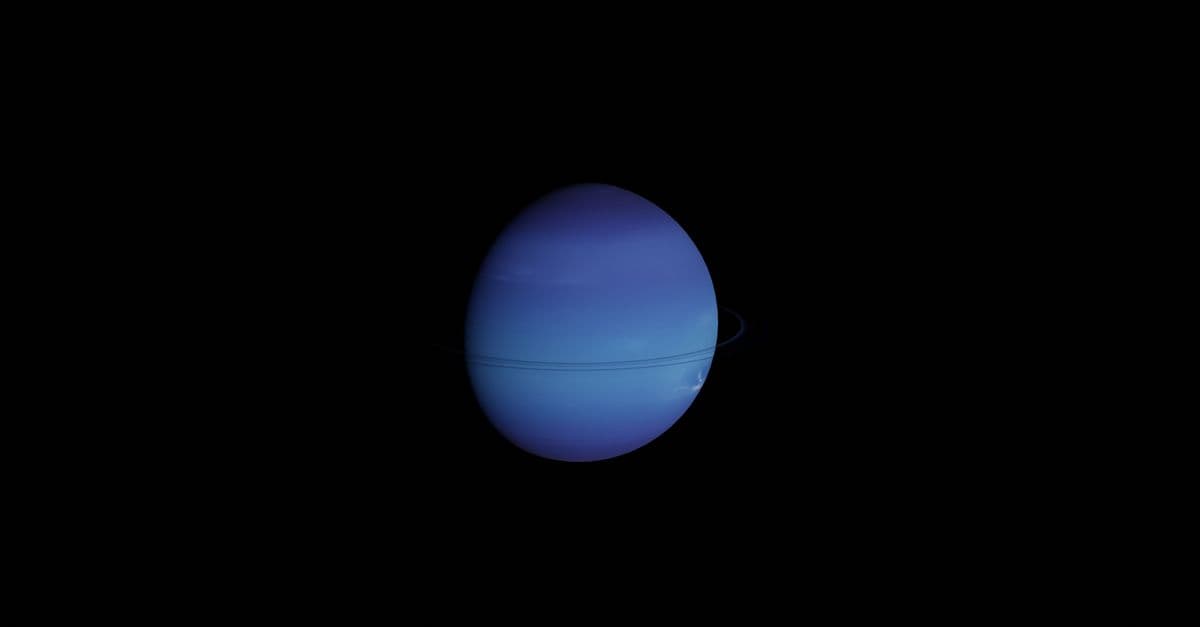
For Voyager 2's encounter with Neptune (1989), the navigation precision required was extraordinary: the spacecraft had to thread a "keyhole" in space at a precise altitude above Neptune to allow the gravity assist needed to reach Triton's south pole for maximum science return. The final trajectory was accurate to within 5 km after a 12-year, 7-billion-km journey.
Gravity assists: bending trajectories with planetary gravity
One of the most elegant techniques in deep space navigation is the gravity assist (slingshot manoeuvre) — using a planet's gravity to change a spacecraft's speed and direction without using fuel.
How gravity assists work
A spacecraft approaching a planet falls toward it under gravity, accelerating. After the closest approach (periapsis), the spacecraft recedes, decelerating as it climbs away from the planet. If the planet weren't moving, the spacecraft would leave at the same speed it arrived — net zero energy change.
But planets move. If the spacecraft approaches from "behind" a moving planet (in the direction of the planet's orbital motion), the spacecraft borrows some of the planet's momentum. From an inertial frame, the spacecraft gains kinetic energy — it exits faster than it entered.
The energy gain is at the expense of the planet's momentum. But planets are so massive that the effect on their orbit is unmeasurably small.
Maximum velocity gain: A spacecraft can gain up to twice the planet's orbital velocity in a perfectly optimised flyby. Jupiter orbits at 13.1 km/s; a well-designed Jupiter flyby can add ~26 km/s to a spacecraft's velocity.
Direction changes: Gravity assists can also change the spacecraft's direction — bending its trajectory to send it toward a different part of the solar system.
The Voyager Grand Tour
The planetary alignment of the late 1970s was a unique opportunity: Jupiter, Saturn, Uranus, and Neptune would be roughly aligned in a configuration that allowed a spacecraft to receive gravity assists from each in succession — a "Grand Tour" possible only every ~175 years.
Voyager 2's route:
- Earth departure (1977): Direct launch trajectory
- Jupiter flyby (1979): Gravity assist adding 10+ km/s, bending toward Saturn
- Saturn flyby (1981): Gravity assist bending toward Uranus
- Uranus flyby (1986): Gravity assist bending toward Neptune
- Neptune flyby (1989): Final gravity assist, heading out of solar system
Without gravity assists, reaching Neptune would require either enormously more propellant (impractical with 1970s technology) or a flight time of 30+ years on a direct trajectory. Voyager 2 reached Neptune in 12 years — using planetary gravity as a free fuel source.
The Cassini mission to Saturn used four gravity assists: one Venus flyby, another Venus flyby, an Earth flyby, and a Jupiter flyby — gaining enough velocity to reach Saturn in 6.7 years on a trajectory that otherwise would have required unachievably large propellant loads.
The Oberth manoeuvre: amplifying rocket burns
A related technique, the Oberth manoeuvre, recognises that rocket burns are most efficient at the point of maximum speed — typically closest to the planet being orbited or flown by. A rocket burn at periapsis (closest approach) produces much more kinetic energy than the same burn at apoapsis (farthest point).
This is why missions to the outer solar system often do "deep space manoeuvres" near Jupiter's orbit — firing engines while moving at maximum speed in the Jovian gravity well amplifies the velocity gain compared to firing in the cold middle of interplanetary space.
Autonomous navigation: getting beyond radio delays
For missions where Earth round-trip communication time is prohibitively long, spacecraft must navigate autonomously.
OpNav (Optical Navigation): Cameras on the spacecraft image target bodies (moons, planets, asteroids) against background stars. By comparing the angular position of the target to the known star field, the spacecraft can determine its position relative to the target without Earth involvement. The Deep Impact mission (2005) and the OSIRIS-REx sample return capsule reentry (2023) used optical navigation for terminal precision.
Autonomous hazard avoidance: Lunar and Mars landers must avoid craters and boulders during descent — no time for Earth commands. NASA's Terrain Relative Navigation (TRN) used aboard Mars 2020 Perseverance matched real-time camera images to pre-loaded terrain maps to select safe landing zones autonomously during the 7-minute descent.
DART impact: The DART (Double Asteroid Redirection Test) spacecraft hit the asteroid Dimorphos in 2022 using SMART Nav — a fully autonomous terminal guidance system that locked onto Dimorphos's centre of mass in the final minutes of approach without Earth involvement.
The navigation of the future
Pulsar timing navigation (XNAV): X-ray pulsars — millisecond pulsars emitting X-rays — can serve as cosmic GPS. By timing the arrival of pulsar pulses, a spacecraft can determine its position in the solar system to within a few kilometres — without Earth contact. This "X-ray pulsar navigation" was demonstrated on the International Space Station by NASA's NICER instrument (2018) and is being developed for autonomous deep space navigation.
Laser ranging: Optical laser communication (laser comms) is replacing radio for some missions — offering higher bandwidth and potentially more precise ranging. NASA's LLCD (Lunar Laser Communication Demonstration) and LCRD (Laser Communications Relay Demonstration) have shown optical links are feasible. Laser ranging could provide even more precise range measurements than radio.
Interstellar navigation: A theoretical interstellar spacecraft would need fundamentally different navigation approaches — radio signals to Earth would take years; optical navigation against background stars would be the primary method. Precise stellar catalog knowledge combined with parallax measurements (the apparent shift of nearby stars against more distant background stars as the spacecraft moves through space) could provide position fixes.
The mathematics that allows us to thread a needle across 7 billion kilometres — finding Pluto with New Horizons, landing on a comet with Rosetta, or correcting Hubble's mirror — is one of humanity's greatest practical achievements. Navigation in deep space is precise enough to be poetry and complex enough to require decades of refinement. It's the art of applied celestial mechanics: using gravity, time, and light to find our way through the dark.
Related Reading
Weekly digest
Stay ahead of the curve
Get the best science, AI, and tech stories delivered to your inbox every week. No spam — unsubscribe any time.
About the Author
SciHub101 is an independent science and technology publication founded and edited by Buğra Sözeri, a software engineer and app developer based in Türkiye. Articles are drafted against peer-reviewed literature and primary sources, fact-checked, and edited by a human before publication. Where we compare products, anything built by our own team is labelled as such — see the editorial guidelines and About page for how corrections and disclosures work.
Related Articles
What Is Dark Flow? The Mysterious Motion of Galaxy Clusters
Dark flow is the claimed observation that galaxy clusters across the observable universe are moving in the same direction — toward a region beyond what we can see. If real, it could indicate a gravitational pull from structures outside the observable universe. The claim is controversial and not accepted by most cosmologists.
Stellar Evolution: The Complete Life Cycle of Stars
Stars spend most of their lives fusing hydrogen on the main sequence. A Sun-like star lives 10 billion years before expanding into a red giant and collapsing into a white dwarf. Stars 25× the Sun's mass explode as supernovae after only 7 million years — and leave behind neutron stars or black holes.
The Voyager Grand Tour Explained
Voyager used rare planetary alignment, gravity assists, and durable engineering to transform knowledge of the outer Solar System.
Voyager and Pioneer — Humanity's Interstellar Probes
Voyager 1 & 2 and Pioneer 10 & 11 — the spacecraft now leaving the solar system, what they found, and what they carry. Discover how it works, why it...
The Voyager Probes: Humanity's Messengers in Interstellar Space
Launched in 1977, Voyager 1 and 2 are now in interstellar space — and still phoning home after nearly five decades.
Voyager 1 and 2 — The Most Distant Human-Made Objects in Space
Launched in 1977, the two Voyagers are still flying. They've left the solar system, are over 20 billion km from Earth, and carry a golden record meant for any aliens who might find them.