Planets of the Solar System — Complete Guide
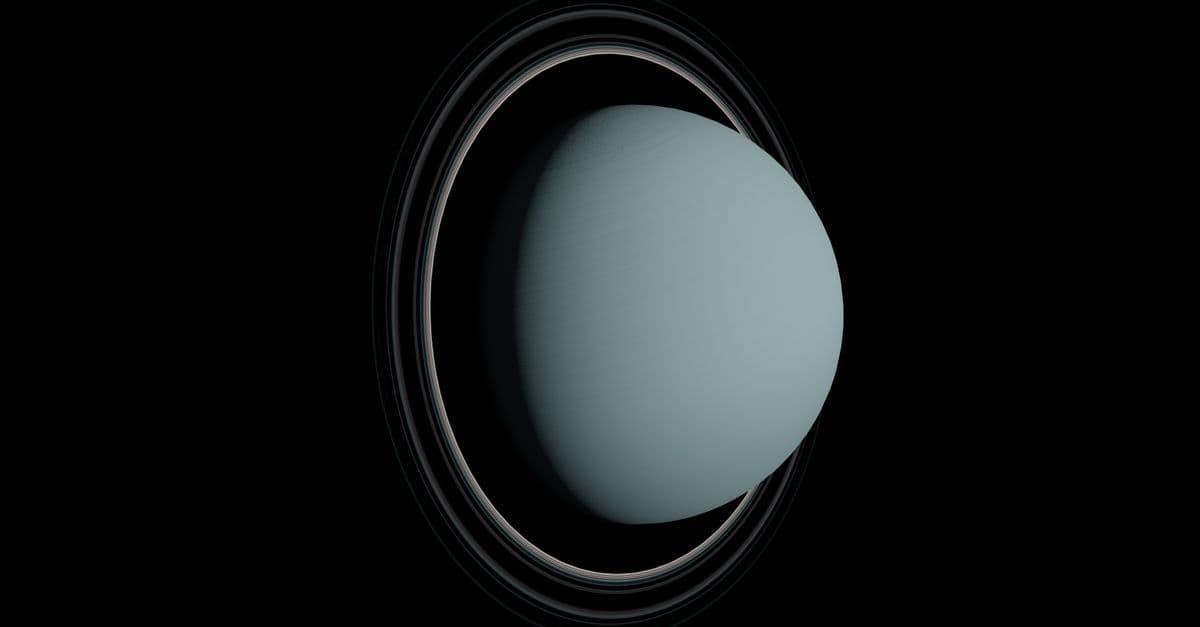
Photo: Zelch Csaba / Pexels
Our solar system contains 8 planets, 5 officially recognized dwarf planets, hundreds of moons, millions of asteroids, and trillions of comets — all bound by the Sun's gravity. Here's a tour from the scorched rocks closest to the Sun to the icy worlds beyond Neptune.
What Counts as a Planet?
In 2006, the International Astronomical Union (IAU) defined a "planet" as a body that:
- Orbits the Sun
- Has enough mass for its own gravity to pull it into a roughly round shape (hydrostatic equilibrium)
- Has cleared the neighborhood around its orbit of other bodies
Pluto fails the third criterion (it shares its zone with thousands of Kuiper Belt objects), so it was reclassified as a dwarf planet along with Ceres, Eris, Haumea, and Makemake. There are likely dozens more dwarf planets awaiting confirmation in the outer solar system.
The Inner Rocky Planets
Mercury, Venus, Earth, and Mars are terrestrial planets — small, dense worlds with rocky surfaces and metallic cores. They formed close to the Sun where light, volatile materials couldn't condense.
| Planet | Mass (Earth=1) | Distance (AU) | Day length | Year length | Moons | Atmosphere |
|---|---|---|---|---|---|---|
| Mercury | 0.055 | 0.39 | 58.6 days | 88 days | 0 | Trace (Na, K, He) |
| Venus | 0.815 | 0.72 | 243 days (retrograde) | 225 days | 0 | 96% CO₂, dense |
| Earth | 1.000 | 1.00 | 23h 56m | 365.25 days | 1 | 78% N₂, 21% O₂ |
| Mars | 0.107 | 1.52 | 24h 37m | 687 days | 2 | 95% CO₂, thin |
Mercury — Planet of Extremes
The smallest planet (smaller than Jupiter's moon Ganymede) and closest to the Sun, Mercury has almost no atmosphere to retain heat. Daytime temperatures hit 430°C; nighttime plunges to −180°C — a 600°C swing. Despite being closest to the Sun, Mercury isn't the hottest planet (that's Venus). NASA's MESSENGER orbiter (2011–2015) mapped the entire surface; BepiColombo arrives in 2026.
Venus — Hellish Twin
Venus is roughly Earth-sized but utterly different. Its dense CO₂ atmosphere creates a runaway greenhouse effect, baking the surface to 462°C — hot enough to melt lead. Atmospheric pressure is 92× Earth's (equivalent to 900 m underwater). Sulfuric acid clouds rain, but the heat vaporizes droplets before they reach the ground. Venus also spins backwards, with a day longer than its year. See our Venus article for more.
Earth — The Only Known Habitable World
Liquid water, plate tectonics, a magnetic field, and a stabilizing Moon make Earth uniquely hospitable. Average surface temperature is 15°C; 71% of the surface is ocean. Learn how the Earth's axial tilt creates seasons.
Mars — The Next Destination
Cold, dry, and dusty, Mars once had liquid water — perhaps even an ocean covering its northern hemisphere. Today its atmosphere is too thin (0.6% of Earth's pressure) for liquid water to remain stable. Curiosity, Perseverance, and Zhurong rovers continue to hunt for signs of past life. NASA and SpaceX target crewed missions in the 2030s.
The Asteroid Belt
Between Mars and Jupiter lies the asteroid belt — roughly 1.1 to 1.9 million bodies larger than 1 km. The largest, Ceres (945 km diameter), is classified as a dwarf planet. Despite Hollywood imagery, the belt is mostly empty space — spacecraft pass through without dodging.
The Outer Gas Giants
Jupiter and Saturn are gas giants — massive worlds dominated by hydrogen and helium, similar in composition to the Sun. They likely have small rocky cores buried under thousands of kilometers of metallic hydrogen.
Jupiter — King of the Planets
Jupiter has 2.5× the mass of all other planets combined. The famous Great Red Spot is a storm wider than Earth that's raged for at least 350 years (though it's shrinking — possibly disappearing this century). Jupiter has 95 confirmed moons, including the four Galilean moons:
- Io — most volcanically active body in the solar system
- Europa — subsurface ocean beneath ice; target of NASA's Europa Clipper (launched Oct 2024, arrives 2030)
- Ganymede — largest moon in the solar system, bigger than Mercury
- Callisto — heavily cratered, possibly hosts an ocean too
Saturn — Lord of the Rings
Saturn's rings stretch 282,000 km wide but are only 10–100 meters thick — astonishingly flat. They're made of water ice chunks ranging from dust grains to house-sized boulders. Read more in our Saturn's rings article. Saturn has 146 known moons, including:
- Titan — only moon with a thick atmosphere; liquid methane lakes on the surface; target of NASA's Dragonfly rotorcraft (launching 2028, arriving 2034)
- Enceladus — geysers of water vapor erupt from its south pole, feeding Saturn's E-ring; likely hosts a subsurface ocean with hydrothermal vents
The Ice Giants
Uranus and Neptune are ice giants — smaller than the gas giants and composed largely of "ices" (water, methane, ammonia in fluid form, not solid ice).
Uranus — The Sideways Planet
Uranus orbits on its side — its rotational axis tilts 98° to its orbital plane, probably the result of a giant impact in the early solar system. This causes extreme 42-year-long seasons: each pole spends decades in continuous sunlight, then decades in darkness. Uranus's pale blue-green color comes from methane absorbing red light.
Neptune — Wind World
The farthest planet (4.5 billion km from the Sun), Neptune has the fastest winds in the solar system, reaching 2,100 km/h — supersonic. Its deep blue color is also from methane. Neptune was discovered in 1846 not by observation but by mathematical prediction from anomalies in Uranus's orbit. Its largest moon, Triton, orbits backwards and likely was a captured Kuiper Belt object.
The Dwarf Planets
| Dwarf Planet | Location | Diameter | Notes |
|---|---|---|---|
| Ceres | Asteroid belt | 940 km | Visited by Dawn (2015); water ice deposits |
| Pluto | Kuiper Belt | 2,377 km | Heart-shaped nitrogen ice plain; New Horizons 2015 |
| Haumea | Kuiper Belt | 1,632 × 1,178 km | Elongated; rotates every 4 hours |
| Makemake | Kuiper Belt | 1,430 km | Methane ice surface |
| Eris | Scattered disc | 2,326 km | Slightly smaller than Pluto but more massive |
The discovery of Eris in 2005 — initially thought to be larger than Pluto — directly triggered the IAU's 2006 redefinition.
Formation and Migration: How Planets Ended Up Where They Are
The solar system began roughly 4.6 billion years ago when a giant molecular cloud of gas and dust collapsed, forming the Sun at the centre and a protoplanetary disk surrounding it. Planetary migration — the movement of forming planets to different orbital distances — was crucial to the solar system's architecture.
The Grand Tack hypothesis proposes that Jupiter migrated inward to 1.5 AU (closer than it is today) before Saturn's gravity reversed its course, hurling it outward. This gravitational waltz scattered asteroids, destroyed an inner planetary system, and shaped the solar system we observe. Other models, such as the core accretion model (planets form from collision of planetesimals and grow by accretion) and disk instability (where planets form directly from gravitational collapse within the disk), explain the range of planetary masses and compositions we see.
Orbital resonance — when two planets' orbital periods align in simple ratios (e.g. 2:1, 3:2) — sculpted the asteroid belt and Kuiper Belt. The 2:1 resonance with Jupiter is a "gravitational highway" that ejects asteroids from the belt, maintaining its observed sparseness. Without this sculpting, the early solar system would look radically different.
Source: NASA Goddard Institute (2015) — Grand Tack hypothesis explains Jupiter's inward-then-outward migration.
Atmospheric Diversity and Dynamics
Planetary atmospheres tell stories of planetary histories and reveal mechanisms operating across the solar system. Mercury has nearly no atmosphere because its weak gravity and proximity to solar heating cannot retain lighter molecules. Venus experienced a runaway greenhouse effect (possibly triggered by outgassing from early volcanism), losing most water to space through photodissociation and hydrodynamic escape.
Earth's atmosphere stabilised into a habitable configuration around 3 billion years ago, with photosynthetic organisms producing oxygen. Mars lost most of its atmosphere over time because it lacks a strong magnetic field to shield against solar wind erosion; the thin CO₂ atmosphere remaining may have been maintained by episodic volcanic outgassing.
The gas giants exhibit wind shear — their upper atmospheres rotate at different speeds, creating jet streams and persistent storm systems. Jupiter's Great Red Spot has existed for at least 350 years; newer storms like Oval BA can form and dissipate over decades. Saturn's atmosphere, although similar in composition to Jupiter's, is more uniform in wind patterns, possibly because of subtle differences in heat distribution from the interior.
Neptune's atmosphere is particularly dynamic: despite receiving minimal solar energy at 4.5 billion km from the Sun, it exhibits the fastest winds in the solar system (2,100 km/h), suggesting heat is being released from the interior. The mechanism — gravitational contraction and internal energy release — remains an active research area.
Source: JPL Space Science (2023) — Neptune's interior dynamics and wind generation mechanisms.
Moons as Worlds in Their Own Right
Moons are not mere satellites but often worlds as complex as planets. Io, one of Jupiter's four Galilean moons, is the most volcanically active body in the solar system due to tidal heating — the constant squeezing and flexing from Jupiter's gravity as Io orbits. This internal friction melts rock, powering hundreds of active volcanoes.
Europa harbours a subsurface ocean estimated at 100 km deep — more water than Earth's oceans — separated from space by a 10–20 km ice shell. Tidal flexing continuously cracks the ice, allowing for potential chemical exchange between the ocean and any hydrothermal vent systems on the rocky seafloor. NASA's Europa Clipper (launched October 2024) will conduct detailed reconnaissance of Europa's habitability.
Titan, Saturn's largest moon, is unique for having a thick nitrogen atmosphere (1.5× Earth's pressure) and active methane cycle analogous to Earth's water cycle. Liquid methane lakes exist near the poles; methane rain evaporates from these lakes and condenses into methane clouds. NASA's Dragonfly rotorcraft mission (launching 2028, arriving 2034) will explore Titan's surface and search for organic chemistry precursors to life.
Enceladus is another ocean world, smaller than Earth's moon but geologically active. Massive geysers of water spray from its south polar region, fed by a subsurface ocean overlying a rocky core. The plumes carry organic compounds, making Enceladus a prime target for searching for microbial life without requiring a lander.
Source: NASA Jet Propulsion Laboratory (2024) — Europa Clipper mission science objectives.
The Kuiper Belt and Beyond: Residual Planetesimals
Beyond Neptune lies the Kuiper Belt — a vast region containing thousands of icy bodies orbiting the Sun between 30 and 50 AU (1 AU = Earth–Sun distance). Dwarf planets like Pluto, Haumea, Makemake, and Eris are the largest remnants of the solar system's formation epoch.
Pluto, reclassified as a dwarf planet in 2006, was explored by NASA's New Horizons spacecraft in July 2015. The mission revealed a geologically diverse world: nitrogen ice plains, water ice mountains, and possible cryovolcanoes spewing water-ammonia mixtures. Pluto's large moon Charon is so massive relative to Pluto (about 12% of Pluto's mass) that the two orbit a common centre of mass — they are a binary system in many senses.
Haumea, discovered in 2004, is one of the fastest-spinning bodies in the solar system, completing a rotation every 4 hours. This rapid spin deforms Haumea into an elongated ellipsoid (dimensions ~1,632 × 1,178 × 1,000 km). Haumea also has multiple moons and a system of rings — the only Kuiper Belt dwarf planet with confirmed rings.
The Scattered Disk — a region beyond the Kuiper Belt (30–100+ AU) — contains objects with extremely elliptical orbits. Eris, discovered in 2005, is slightly smaller than Pluto by diameter but actually more massive, which initially created confusion about the planet definition and ultimately triggered the 2006 IAU resolution.
Estimates suggest the Kuiper Belt contains over 100,000 objects larger than 100 km, yet we have explored only the handful of largest bodies. Future surveys using large facilities like the Vera Rubin Observatory will map the Kuiper Belt in unprecedented detail, possibly revealing the elusive "Planet Nine."
Source: New Horizons Mission (2015) — Pluto and Charon flyby findings. Science, 351(6279).
Habitability and the Search for Life
Habitability — the capacity to sustain life — depends on multiple factors beyond just liquid water. Planets need:
- Stable orbits within the habitable zone (where water can remain liquid)
- Magnetic fields or thick atmospheres to shield against stellar radiation
- Chemical diversity to support metabolism
- Sufficient time for life to emerge and evolve
Earth meets all these criteria. Mars once had liquid water and a thicker atmosphere but lost both. Venus experienced a runaway greenhouse that evaporated its oceans. Several moons (Europa, Enceladus, Titan) may harbour subsurface conditions compatible with life, though finding it will require direct sampling of their subsurface oceans or Titan's methane lakes.
The Drake equation — an attempt to estimate the number of communicative civilisations in the galaxy — reminds us how uncertain habitability and the origin of life remain. Even in our own solar system, determining which bodies beyond Earth can or could harbour life requires detailed knowledge of their subsurface chemistry, energy sources, and thermal stability.
Current and Upcoming Missions (2026)
- Europa Clipper — en route to Jupiter, will study Europa's ocean (arrival 2030)
- JUICE (ESA) — en route to Jupiter, focused on Ganymede (arrival 2031)
- BepiColombo — arriving Mercury 2026
- Dragonfly — launches 2028 to Titan, arrives 2034
- Mars Sample Return — joint NASA/ESA campaign to return Perseverance's samples
- James Webb Space Telescope — studying exoplanet atmospheres for biosignatures
Exoplanet discoveries and comparison to our solar system
Since the first exoplanet discovery in 1995 (51 Pegasi b), astronomers have discovered over 6,000 planets orbiting other stars. This has fundamentally changed our understanding of planetary systems and revealed how unusual — or typical — our solar system actually is.
Hot Jupiters — massive gas giants orbiting very close to their parent stars — were shocking when first discovered. Jupiter in our solar system orbits 5 AU from the Sun with a 12-year orbital period. 51 Pegasi b, by contrast, orbits its star every 4 days at a distance of roughly 0.05 AU, where temperatures likely exceed 1,200 K. How did these form? Models suggest they form farther out and then migrate inward — a process that may have shaped our own solar system.
The diversity is staggering. There are super-Earths — rocky worlds more massive than Earth but smaller than Neptune, completely absent from our solar system. There are circumbinary planets orbiting binary star systems. There are free-floating planets not orbiting any star at all, ejected from their birth systems into interstellar space. The Kepler and TESS missions have revealed that planets are ubiquitous — most stars host at least one.
Comparison to our solar system reveals several points of note. Our solar system's architecture — small rocky planets close to the Sun, gas giants farther out — is relatively common but not universal. Our habitable zone contains exactly one known biosphere (Earth). Most exoplanet systems show orbital configurations quite different from ours. If we lived in a more "typical" system, conditions for Earth-like habitability might be far rarer than our solar system suggests.
The most compelling discoveries are potentially habitable exoplanets in the habitable zones of their stars — worlds where liquid water might exist on the surface. Proxima Centauri b (orbiting the nearest star, 4.24 light-years away) and TRAPPIST-1e (an Earth-sized world in a system of seven planets) are among the candidates. The James Webb Space Telescope is now analyzing exoplanet atmospheres, searching for biosignatures (chemical signatures of life like oxygen or methane in unexpected abundances).
Source: NASA Exoplanet Archive (2026) — Catalog of confirmed exoplanets and habitability assessments.
Stellar influences on planetary formation and orbital evolution
The properties of a planet — its size, composition, atmospheric retention — are profoundly shaped by its star. Stellar mass and luminosity determine the location of the habitable zone, the rate of stellar evolution, and the strength of stellar wind.
A star like our Sun, fusing hydrogen at its core, will remain in the "main sequence" (stable burning) for roughly 10 billion years. More massive stars burn fuel faster; a star 2× the Sun's mass lives only 1 billion years. Less massive stars (red dwarfs) can persist for hundreds of billions of years. This has profound implications: a planet around a red dwarf might have time for complex life to evolve, but its star's intense radiation (red dwarfs are often magnetically active) and tidal effects on close-orbiting planets create hostile conditions for habitability.
Stellar wind — the stream of charged particles ejected from a star's atmosphere — slowly erodes planetary atmospheres. Mercury and Venus have thin or no atmospheres partly because solar wind has stripped them away over billions of years. Planets around more active stars lose atmospheres faster. This is particularly relevant for exoplanets around young stars or highly active red dwarfs, where atmospheric erosion may prevent habitability even in the nominal habitable zone.
Tidal effects arise when a planet's orbit brings it close to its star. The star's gravity stretches the planet, generating internal heat through friction. This tidal heating powers the volcanism on Io and Europa in our solar system. In exoplanet systems, intense tidal heating can make an otherwise habitable planet geologically turbulent and hostile.
These stellar-planetary interactions mean that raw proximity to the habitable zone isn't sufficient for habitability — the star's properties matter enormously.
Source: Seager, S., "Exoplanet Habitability" (2013, updated 2025) — Cambridge University Press.
Related Reading
Weekly digest
Stay ahead of the curve
Get the best science, AI, and tech stories delivered to your inbox every week. No spam — unsubscribe any time.
About the Author
SciHub101 is an independent science and technology publication founded and edited by Buğra Sözeri, a software engineer and app developer based in Türkiye. Articles are drafted against peer-reviewed literature and primary sources, fact-checked, and edited by a human before publication. Where we compare products, anything built by our own team is labelled as such — see the editorial guidelines and About page for how corrections and disclosures work.
Related Articles
Aurora Explained — How the Northern Lights Form
How auroras form: solar wind, Earth's magnetic field, atmospheric collisions, why they're green or red, and where and when to see them.
Types of Stars — Stellar Classification Explained
From hot blue O-type giants to cool red dwarfs: the OBAFGKM system, the H-R diagram, and the life cycles of stars. Learn the science, key examples, and...
What Is the Oort Cloud? The Solar System's Outer Shell We've Never Seen
The Oort Cloud is a vast spherical shell of icy bodies surrounding the solar system at distances up to 100,000 AU from the Sun — nearly two light-years away. No spacecraft has ever reached it. It is the source of long-period comets like Hale-Bopp, and may contain trillions of icy objects totalling several Earth masses.
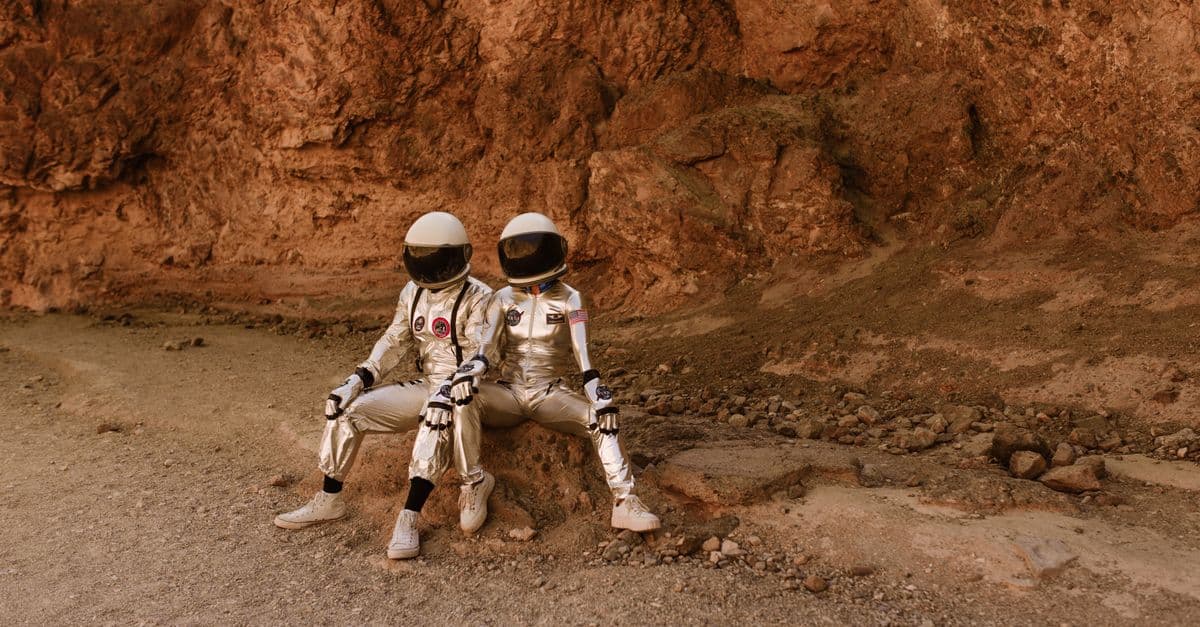
Why Is Mars Red? The Science of the Red Planet
Mars appears deep red from Earth because iron-rich minerals in its soil and dust have oxidized into rust-like compounds over billions of years. The planet's surface was once wet, and water catalyzed iron oxidation into hematite, goethite, and ferrihydrite—minerals that paint the landscape rusty-orange and stain the atmosphere with butterscotch dust. Recent 2025 research reveals ferrihydrite as a key culprit, indicating ancient Mars oxidized when liquid water was still present. Fine dust storms lift this iron-oxide powder high enough to give the entire planet its iconic crimson hue, while close-up rover images show a more complex palette of browns and tans.
Why Pluto Is Not a Planet — IAU Reclassification Explained
Why Pluto was demoted in 2006: the IAU's three-part planet definition, the discovery of Eris, New Horizons data, and the ongoing scientific debate.
Oort Cloud and Kuiper Belt Explained
Oort Cloud vs Kuiper Belt: two icy reservoirs at the edge of the solar system. Sources of comets, Planet Nine, interstellar visitors, and Voyager.