Why Exponential Growth Is So Hard to Understand — And So Important

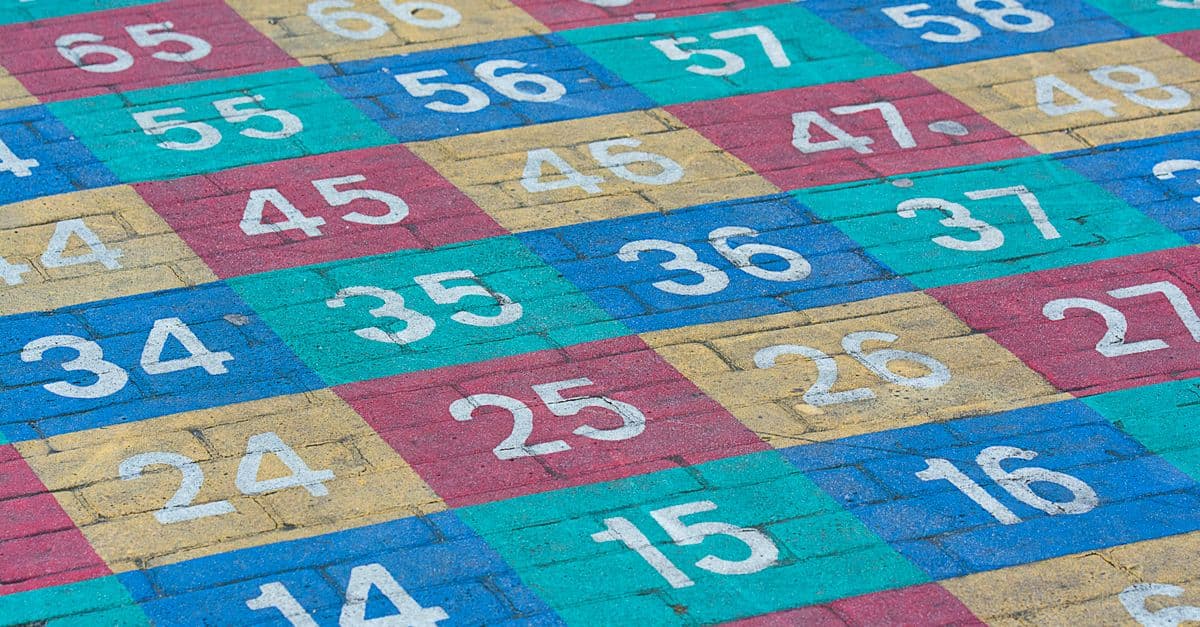
Photo: cottonbro studio / Pexels
Fold a piece of paper in half 42 times and it reaches the Moon. Take a single grain of rice, double it on each square of a chessboard, and by square 64 you have more rice than has ever been grown in human history. Invest $1,000 at 7% annual interest for 40 years and get back $15,000. These facts feel wrong when you first hear them. They're not — but our intuition consistently fails to grasp them. This failure has consequences: it shapes how people respond to pandemics, understand wealth inequality, evaluate technology trends, and perceive climate risk.
Key takeaways
- Exponential growth means a quantity increases by a fixed percentage each period, not a fixed amount.
- The human brain evolved for linear thinking; exponential reasoning requires deliberate effort.
- The doubling time rule: divide 70 by the growth rate to estimate how quickly something doubles.
- In the early stages, exponential growth looks linear. This is the most dangerous phase — action seems unnecessary.
- Compound interest, viral spread, technological progress, and climate feedback loops all follow exponential dynamics.
Linear vs exponential: the fundamental difference
Linear growth adds a constant amount each period. If you save $100 per month, your savings grow linearly — $100, $200, $300, $400. Predictable, easy to visualise.
Exponential growth multiplies by a constant factor each period. If your savings grow by 10% per month, you have: $100, $110, $121, $133.10, $146.41... The amounts added each period keep increasing. After 30 months: $1,745. After 60 months: $30,448.
The same pattern, in reverse, describes viral spread. One infected person infects two, who infect four, who infect eight: 1, 2, 4, 8, 16, 32, 64, 128, 256, 512, 1,024...
After 20 doublings: over one million cases. From one.
The paper folding problem
Here's the most intuition-breaking example: take a piece of paper 0.1mm thick. Fold it in half once: 0.2mm. Fold again: 0.4mm. Keep folding.
Most people guess that after 50 folds, you'd have something the size of a building. Maybe a skyscraper.
After 42 folds, the stack would reach the Moon (384,000 km). After 50 folds: to the Sun. After 100 folds: to the edge of the observable universe, many times over.
This feels impossible because the human mind cannot visualise what 2^100 means. The number is larger than the estimated number of atoms in the observable universe.
The chessboard problem
The legend goes that the inventor of chess showed it to a king, who was so pleased he asked the inventor to name any reward. The inventor asked for: one grain of rice on the first square of the chessboard, two on the second, four on the third — doubling each square.
The king laughed at such a modest request. By square 64, the total would be 2^64 − 1 grains of rice: roughly 18 quintillion grains, or about 1,000 times more rice than humanity has ever grown.
Why our brains fail
The failure is not stupidity — it's a feature of the cognitive system we evolved. For most of human evolutionary history, quantities that mattered were roughly linear: how much food is in the forest, how many enemies are approaching, how far is the water source. Exponential processes simply didn't appear at rates relevant to daily life.
The psychological research on this is robust:
- Number line studies show that children and untrained adults distribute numbers on a line logarithmically (1, 2, 4, 8, 16 feel equally spaced), not linearly. With education, this shifts — but the logarithmic intuition remains.
- People consistently underestimate future exponential quantities in prediction tasks, even when they intellectually know growth is exponential.
- The scope insensitivity bias: our emotional and intuitive response to large numbers scales sublinearly. We feel more concern about 100 deaths than one, but not proportionally more concern about 100,000 than 100.
The COVID pandemic: a case study in exponential failure
In January 2020, COVID-19 had caused perhaps a few thousand cases. Many commentators dismissed it: "It's just a flu." The reasoning was implicitly linear — a few thousand cases today, a few thousand more next month.
The actual trajectory was exponential. Epidemiologists described it as an R0 (basic reproduction number) of about 2–3: each infected person infects 2–3 others. In a fully susceptible population, cases roughly double every 3–5 days.
The consequence: action that seems premature in exponential systems is the only effective action. By the time exponential growth is obviously alarming to linear intuition — when you can see the curve bending upward on the graph — the problem is already far ahead of where it appears.
This is the core public health insight: you have to respond to what a respiratory infection with R0 > 1 will become, not to what it currently is. But exponential blindness made this psychologically and politically very difficult to communicate.
Compound interest: the double edge
Albert Einstein (probably apocryphally) called compound interest the eighth wonder of the world: "He who understands it, earns it; he who doesn't, pays it."
The magic of compound interest:
- $10,000 invested at 7% annual return for 40 years = $149,745.
- The same $10,000 at 10% = $453,000.
The devastation of compound debt:
- A $10,000 credit card balance at 24% annual interest (roughly U.S. average) grows to $75,144 in 10 years if you make only minimum payments.
- Payday loans at 400% annual percentage rates can trap borrowers in a cycle of exponentially growing debt.
Compound interest is arithmetic magic that feels like fraud in both directions — either impossibly generous (investment returns) or impossibly predatory (debt costs).
Moore's Law and technology
In 1965, Intel co-founder Gordon Moore observed that the number of transistors on a microchip was doubling approximately every two years. This observation — Moore's Law — described an exponential trend that continued for roughly 60 years.
The implication: every two years, computers got twice as powerful for the same cost. Applied across six decades:
- The computing power in a $300 smartphone today would have cost roughly $10 trillion in 1970.
- The Apollo Guidance Computer (1969) had 4 KB of memory and ran at 0.043 MHz. A modern smartwatch is a million times more powerful.
Exponential improvement in computing underpins almost every technology of the past 40 years: the internet, smartphones, streaming, AI, genomics, satellite mapping, GPS.
AI researchers debate whether large language model capabilities are on a similar exponential trajectory. If so, the implications are staggering. If not — if we're near the top of an S-curve — the future will look very different.
Climate change and exponential feedback loops
Global warming involves exponential dynamics that make linear intuition particularly dangerous:
- Arctic sea ice loss reduces albedo (reflectivity), warming the Arctic faster, melting more ice.
- Permafrost thaw releases methane and CO₂, accelerating warming, which thaws more permafrost.
- Forest dieback reduces carbon absorption, allowing more warming, which kills more forest.
These are positive feedback loops — self-amplifying processes with exponential dynamics. The concern among climate scientists is that warming beyond certain thresholds triggers feedbacks that are self-sustaining, independent of further human emissions. These are "tipping points."
Linear intuition says: we've had 1.2°C of warming and things are mostly manageable; a bit more won't be catastrophically different. Exponential/feedback thinking says: the next degree might trigger feedbacks that make the next degree after that inevitable, regardless of what humans do.
The rule of 70: your mental shortcut
To estimate doubling times for exponential processes, use the rule of 70:
Doubling time ≈ 70 ÷ growth rate (%)
Examples:
- Population growing at 2% per year: doubles in 35 years.
- Economy growing at 3% per year: doubles in 23 years.
- Pandemic with cases doubling every 3 days: growth rate ≈ 23% per day.
- Investment at 7% annual return: doubles every 10 years.
This rule is approximate (the exact formula uses the natural logarithm, giving 69.3) but good enough for intuition-building.
Frequently asked questions
Is all exponential growth eventually unsustainable?
Yes. In the real world, exponential growth always eventually hits constraints — resource limits, saturation, competition. Exponential curves in nature typically flatten into S-curves (logistic growth): rapid exponential growth, then a slowing as limits are approached, then stabilisation. COVID case curves followed S-curves as immunity built up.
How do epidemiologists actually model viral spread?
The SIR model divides the population into Susceptible, Infectious, and Recovered. The rate of new infections is proportional to the product of susceptible and infected individuals — producing exponential growth early, then an S-curve as susceptibles are depleted.
What is the difference between exponential and logarithmic?
They're inverses. Exponential growth: small input → huge output. Logarithmic scaling: huge input → small output. When you see a graph on a "log scale," equally spaced grid lines represent orders of magnitude (1, 10, 100, 1000) rather than equal amounts. This makes exponential trends look linear — easier to see and reason about.
Can exponential thinking be learned?
Yes, with practice. The key tools: the rule of 70, plotting data on log scales, and explicitly asking "what does this become after 10 doublings?" rather than projecting linearly.
Why is exponential growth common in biology?
Biological reproduction is multiplicative — each organism creates offspring, each of which creates offspring. This is the mathematical definition of exponential growth. Any process involving replication — viruses, bacteria, cancer cells, population growth — starts exponential.
The bottom line
Exponential growth is everywhere: in your bank account, in viral outbreaks, in technology progress, in climate feedback loops. And human intuition, shaped by evolution for a world where quantities changed linearly, reliably fails to grasp it. This isn't a minor quirk — it shapes policy responses to pandemics, financial decisions across lifetimes, and the perceived urgency of climate change. The gap between what exponential processes do and what we expect them to do is one of the most consequential cognitive biases in the modern world.
Related Reading
- Why Champagne Is So Expensive — The Science and Economics of the World's Most Famous Sparkling Wine
- What Is the Largest Known Prime Number — And Why Do Mathematicians Keep Searching?
- What Is the Biggest Number — And Why Infinity Breaks Mathematics
- Why Silk Is So Expensive — The Ancient Biology Behind the World's Most Coveted Fabric
- What Is the Higgs Boson — and Why It Matters
Follow new articles
Add SciHub101 to your feed reader to see new science and technology stories.
About the Author
SciHub101 is an independent science and technology publication founded and edited by Buğra Sözeri, a software engineer and app developer based in Türkiye. AI tools assist with drafting and research. Source documentation in the existing archive is uneven, and articles are being reviewed and corrected. The Editorial Team byline identifies editorial responsibility; it does not certify specialist or independent human review. Where we compare products, anything built by our own team is labelled as such — see the editorial guidelines and About page for how corrections and disclosures work.
Related Articles

What Is the Water Cycle? A Journey Through Earth's Most Vital Process
The same water that fell as rain on a dinosaur is in your glass today. Here's how Earth's water cycle works, why it matters, and how climate change is rewriting it.
What Is the Largest Known Prime Number — And Why Do Mathematicians Keep Searching?
The largest known prime number has 41,024,320 digits. Finding it took a rented cloud of data-center GPUs and a decades-old search project. But what is the point of a number nobody will ever write out?

Infinity in Mathematics: How Some Infinities Are Bigger Than Others
Not all infinities are equal. Georg Cantor proved that some infinite sets are larger than others — a discovery so strange it drove mathematicians mad.

The Fibonacci Sequence and the Golden Ratio in Nature
Sunflowers, nautilus shells, pinecones, and galaxies — the Fibonacci sequence seems to appear everywhere in nature. Some of it is real mathematics; some is pattern-matching wishful thinking. Here's the honest story.

How Prime Numbers Work: The Math Behind Internet Security
Prime numbers seem like a curious curiosity from school math. They're actually the foundation of every secure transaction on the internet — and one of the deepest mysteries in mathematics.
Fermat's Last Theorem: The 358-Year Math Mystery Finally Solved
A margin note scribbled in the 1630s baffled the world's greatest mathematicians for 358 years. Here's how it was finally cracked.