The Fibonacci Sequence and the Golden Ratio in Nature
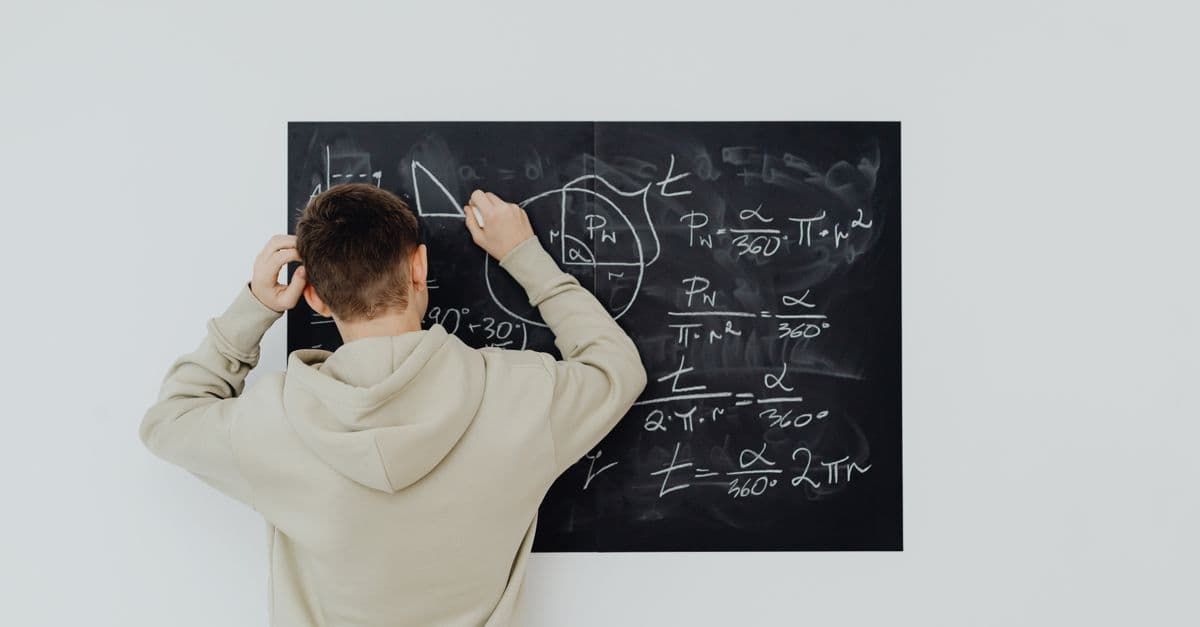
Photo: www.kaboompics.com / Pexels
Few mathematical objects inspire as much popular enthusiasm as the Fibonacci sequence and the golden ratio. Claims cascade across the internet: your body, the Parthenon, the Mona Lisa, and every galaxy are all "governed" by phi (φ). Social media accounts overlay golden spirals on everything from roses to hurricanes. Some of it is real and genuinely remarkable. Quite a lot of it is numerological wishful thinking. Understanding the difference requires actually understanding the mathematics — and it is fascinating enough on its own.
Key takeaways
- The Fibonacci sequence is 1, 1, 2, 3, 5, 8, 13, 21, 34, 55... where each term is the sum of the two before it.
- The golden ratio φ (approximately 1.618) is the ratio to which successive Fibonacci numbers converge — and has a beautiful self-referential definition: φ = 1 + 1/φ.
- Fibonacci spirals genuinely appear in the packing of seeds, petals, and scales in many plants — and are explained by a biological mechanism involving plant hormones.
- The golden spiral is not the nautilus shell — despite appearing on countless websites, the nautilus grows as an equiangular spiral with a ratio closer to 1.33, not 1.618.
- Many "golden ratio" claims (the human body, the Parthenon, the human face) don't survive rigorous measurement and are modern myths.
The sequence and its definition
The Fibonacci sequence was introduced to European mathematics by Leonardo of Pisa (nicknamed Fibonacci) in his 1202 book "Liber Abaci," via a problem about breeding rabbits. But the sequence was known to Indian mathematicians centuries earlier — it appears in the work of Pingala (circa 200 BCE) in the context of Sanskrit prosody, and was explicitly described by Virahanka and Hemachandra.
The rule is beautifully simple. Start with 1, 1. Each subsequent number is the sum of the two before it:
1, 1, 2, 3, 5, 8, 13, 21, 34, 55, 89, 144, 233, 377, 610, 987...
This is a recurrence relation: F(n) = F(n−1) + F(n−2), with F(1) = F(2) = 1.
An alternative starting point (0, 1) gives: 0, 1, 1, 2, 3, 5, 8, 13... The sequence is the same from the second term onward.
The golden ratio: phi
Now take successive Fibonacci numbers and form their ratios: 1/1 = 1, 2/1 = 2, 3/2 = 1.5, 5/3 = 1.667, 8/5 = 1.6, 13/8 = 1.625, 21/13 = 1.615, 34/21 = 1.619, 55/34 = 1.618...
The ratios converge to a specific irrational number: φ = (1 + √5)/2 ≈ 1.6180339887...
This number, phi, has the remarkable property that φ = 1 + 1/φ — meaning it satisfies the equation φ² = φ + 1. A rectangle with sides in ratio 1:φ is a "golden rectangle." Remove a square from one end, and the remaining rectangle is also a golden rectangle, in the same ratio. This recursion is the golden ratio's defining feature.
Phi is also deeply connected to the icosahedron (a solid with 20 triangular faces) — its edge length and the diagonal of a regular pentagon are in ratio φ. This makes phi appear naturally in five-fold symmetric structures in ways that other ratios do not.
Binet's formula: closed-form Fibonacci numbers
There is an explicit formula for the nth Fibonacci number without summing all previous terms, derived by Jacques Philippe Marie Binet in 1843 (though known earlier):
F(n) = (φⁿ − ψⁿ) / √5
where ψ = (1 − √5)/2 ≈ −0.618, the other root of φ² = φ + 1.
What's remarkable is that this formula, involving irrational numbers and square roots, always produces exactly the whole numbers of the Fibonacci sequence. For large n, the ψⁿ term becomes negligible and F(n) is simply the nearest integer to φⁿ/√5.
Where the Fibonacci sequence genuinely appears in nature
The most well-documented natural occurrence is in phyllotaxis — the arrangement of leaves, seeds, scales, and petals in plants.
Sunflower seeds: The seeds in a sunflower head are arranged in interlocking spirals. Count the spirals going clockwise and counterclockwise, and you consistently find Fibonacci numbers — commonly 34 and 55, sometimes 55 and 89, occasionally 89 and 144 in very large flowers. This has been confirmed in systematic studies of thousands of sunflower heads.
Pinecone scales: Count the diagonal rows of scales spiraling in opposite directions: typically 5 and 8, or 8 and 13.
Pineapple eyes: Typically 5, 8, and 13 spirals in three directions.
Flower petals: Many flowers have petal counts of 3, 5, 8, 13, or 21 — Fibonacci numbers. This is less universal than sometimes claimed (roses can have 4, 5, 8, or many other counts) but is a real tendency.
Why does this happen? The most convincing explanation involves the mechanism of plant growth. New structures (leaves, seeds) form at the growing tip of a plant in the position of least crowding relative to existing structures. The angle that spaces new growth most efficiently is the golden angle — about 137.5 degrees, which is 360° × (2 − φ) ≈ 360° / φ². This irrational angle never exactly repeats a previous position, ensuring optimal packing.
When spirals emerge from this golden angle packing, they naturally divide into Fibonacci numbers. This has been demonstrated mathematically and modeled biologically using the hormone auxin, which mediates the positioning of new plant organs.
The nautilus: a persistent myth
The nautilus shell is perhaps the most widely cited "golden ratio in nature" example. Images of nautilus cross-sections overlaid with golden spirals are ubiquitous. It's also largely wrong.
A nautilus grows as an equiangular spiral (also called a logarithmic spiral), where each new chamber is a constant fraction larger than the previous one. But this ratio is not the golden ratio. Measurements of nautilus shells give expansion ratios typically between 1.24 and 1.43, with a common value around 1.33. The golden ratio is 1.618. The nautilus does not grow according to phi.
This doesn't make the nautilus any less beautiful or mathematically interesting — equiangular spirals are genuinely remarkable. But the golden ratio connection is a myth that persists through repetition, not evidence.
What about the Parthenon and the Mona Lisa?
The Parthenon "contains the golden ratio" is a claim repeated in popular science books, art history courses, and countless websites. It is not supported by measurement.
The Parthenon was built without the concept of the golden ratio in mind (the Greeks knew phi but did not call it the golden ratio or consider it uniquely aesthetic). Careful measurements of the Parthenon's facade show proportions close to 4:9, not 1:1.618. Phi makes an appearance only if you select which measurements to compare and allow generous tolerance.
Similarly, claims about the Mona Lisa, the Great Pyramid, Beethoven symphonies, and the human body typically involve: choosing which of many possible measurements to compare, accepting loose tolerances, ignoring measurements that don't fit, and assuming phi is present rather than testing whether it is.
Psychology experiments have also failed to demonstrate that people find golden-ratio rectangles uniquely attractive. When subjects are asked to choose the "most beautiful" rectangle from a range, their choices cluster around 1.5:1 — not precisely 1.618:1.
Mathematical beauty of phi that doesn't need exaggeration
The genuine mathematics of phi is extraordinary and needs no embellishment.
Phi has the slowest-converging continued fraction: φ = 1 + 1/(1 + 1/(1 + 1/(1 +...))). This is why it's called the "most irrational" number — it is hardest to approximate by rational fractions. This property directly explains why golden-angle phyllotaxis produces optimal packing.
Phi appears in the Penrose tiling — a non-periodic tiling of the plane using two rhombus shapes, with edge lengths in ratio φ. Penrose tilings exhibit five-fold symmetry and have connections to quasicrystals (a form of matter discovered by Dan Shechtman in 1982, earning him the 2011 Nobel Prize in Chemistry).
Phi appears in the calculation of the diagonal of a regular pentagon relative to its side length, and throughout the geometry of five-fold symmetric figures.
FAQ
Q: Is phi really the "most beautiful" number? A: This is an aesthetic claim, not a mathematical one. Phi has fascinating mathematical properties — particularly its connection to optimal packing and five-fold symmetry. But "most beautiful" cannot be objectively defined, and studies of aesthetic preference don't support the idea that golden-ratio proportions are uniquely preferred by humans.
Q: Are there other sequences similar to Fibonacci? A: Yes. The Lucas numbers (2, 1, 3, 4, 7, 11, 18, 29...) follow the same recurrence but with different starting values, and their ratios also converge to phi. Generalizations called tribonacci (each term is the sum of the three before it) and higher-order sequences converge to their own limiting ratios.
Q: Why do Fibonacci numbers appear in plant growth and not, say, powers of 2? A: Because the golden angle (derived from phi) is the most efficient angle for packing structures around a central growing point. It's not that plants "know" about Fibonacci — it's that the golden angle naturally generates Fibonacci-numbered spirals, and this angle arises from the optimization of packing in biological growth.
Q: Can I find phi in my body measurements? A: If you take enough measurements of the human body and allow sufficient flexibility in what you compare, you can find ratios close to 1.618 — as you could with most irrational numbers. The "phi body" claims typically involve cherry-picking favorable measurements. Your body proportions don't follow phi with any statistical significance.
Q: What is the golden angle and where does it appear? A: The golden angle is approximately 137.508 degrees — it is 360 degrees divided by φ² ≈ 360/2.618 ≈ 137.5°. It is the angle that most efficiently packs successive elements around a center without periodically aligning. Auxin-driven plant growth naturally implements something close to this angle, producing the Fibonacci spiral patterns observed in sunflowers, pinecones, and pineapples.
Read next:
Follow new articles
Add SciHub101 to your feed reader to see new science and technology stories.
About the Author
SciHub101 is an independent science and technology publication founded and edited by Buğra Sözeri, a software engineer and app developer based in Türkiye. AI tools assist with drafting and research. Source documentation in the existing archive is uneven, and articles are being reviewed and corrected. The Editorial Team byline identifies editorial responsibility; it does not certify specialist or independent human review. Where we compare products, anything built by our own team is labelled as such — see the editorial guidelines and About page for how corrections and disclosures work.
Related Articles
How Thermodynamics Explains Everything: From Steam Engines to the Heat Death of the Universe
Four laws govern how energy moves, transforms, and degrades, from the steam engine to every living cell. Thermodynamics explains why engines have limits and why time has a direction.
How Radioactive Decay Works: Half-Life, Carbon Dating, and Nuclear Medicine
Atoms are not all stable. Some nuclei spontaneously transform, emitting radiation as they go. The process powers nuclear medicine, reveals the age of ancient artifacts, and tells us the age of the Earth itself.
The Golden Ratio: Mathematics Hidden in Art and Nature
A single number — 1.618 — is claimed to appear in sunflowers, seashells, and the Mona Lisa. Some of that is real math. Most of it is myth. Here's how to tell the difference.
Infinity in Mathematics: How Some Infinities Are Bigger Than Others
Not all infinities are equal. Georg Cantor proved that some infinite sets are larger than others — a discovery so strange it drove mathematicians mad.

How Prime Numbers Work: The Math Behind Internet Security
Prime numbers seem like a curious curiosity from school math. They're actually the foundation of every secure transaction on the internet — and one of the deepest mysteries in mathematics.
Fermat's Last Theorem: The 358-Year Math Mystery Finally Solved
A margin note scribbled in the 1630s baffled the world's greatest mathematicians for 358 years. Here's how it was finally cracked.