What If the Internet Disappeared Tomorrow?
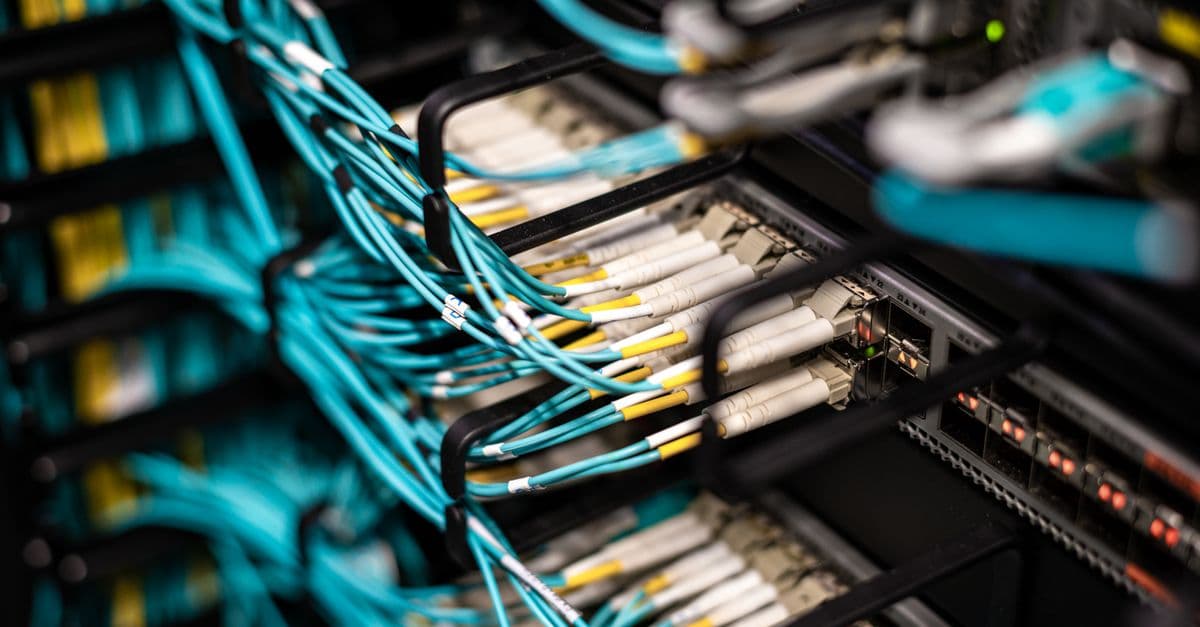
Photo: Brett Sayles / Pexels
This is a thought experiment, not a prediction. Picture something more radical than a bad outage: the internet does not come back next week, or next year. It is simply gone, permanently, as if the physical and institutional layers that make it work had never been built. About six billion people currently use the internet, roughly three-quarters of the world's population, according to the International Telecommunication Union. What would it actually take to rebuild a functioning civilization without it, and what would that civilization look like while it waited?
Thought experiment. This article explores a hypothetical scenario for educational and speculative purposes. The events described are not predictions and should not be interpreted as warnings, advocacy, or instructions.
A companion piece on this site, What If the Internet Went Down for a Week?, walks through the hour-by-hour collapse of payments, hospitals, and supply chains during a temporary blackout. This article assumes the outage never ends. That single change in premise flips almost every question that matters. A week-long outage is a crisis to survive. A permanent one is a civilization to rebuild, and the rebuilding would not look like flipping a switch back on. It would look like reconstruction after a war or a natural disaster: slow, uneven, and shaped as much by politics and physical infrastructure as by technology. A further treatment of the permanent case is what if the internet went down permanently.
Why "permanent" changes everything
During a temporary outage, the smart move for a hospital, a bank, or a government agency is to wait it out using paper backups and manual procedures. Everyone assumes the network returns, so nobody rebuilds anything from the ground up. Under permanent loss, waiting stops being rational. Every institution that depended on the internet has to make a decision: rebuild the function some other way, or stop doing it.
That distinction matters because the modern economy is not just internet-dependent, it is internet-native. Entire categories of business, from cloud software companies to app-based delivery services to algorithmic trading desks, exist only because a global, always-on data network exists. The McKinsey Global Institute found that the internet contributed an average of 3.4 percent of GDP across 13 major economies it studied, and accounted for 21 percent of GDP growth in developed countries over the preceding five years. Permanently subtract the internet and you are not shrinking those economies by a few percentage points. You are deleting the substrate several younger industries grew directly out of.
What would actually need rebuilding
A permanent loss forces a distinction the temporary-outage scenario never has to make: which functions get rebuilt on new physical infrastructure, and which get replaced by older methods that never fully died. Three categories of rebuilding would run in parallel, on very different timelines.
Physical infrastructure. Fiber-optic backbones, submarine cables, internet exchange points, and data centers took roughly five decades to build the first time, starting with ARPANET's first host-to-host connection between UCLA and Stanford Research Institute on October 29, 1969, according to the Science Museum. Rebuilding it would not take five decades again, because the engineering knowledge, manufacturing base for fiber and routers, and skilled workforce would still exist. But laying a single transatlantic cable today takes a specialized cable-laying ship roughly six to eight weeks at sea, and there are only a few dozen such ships in the world. Reconnecting continents, not just countries, would be a matter of years, not months, purely on vessel and shipyard capacity constraints.
Institutional and financial protocols. Interbank settlement, customs clearance, air traffic coordination, and stock exchange matching engines were all redesigned over the past 30 years around the assumption of continuous network connectivity. Rebuilding those institutions without the internet does not mean reverting to how they worked in 1990, because the staff, paper forms, and manual clearinghouses that used to do that work were phased out. A modern central bank has no telex operators left. A modern airline has no paper ticketing infrastructure sized for its current passenger volume. These would need to be reconstructed, not simply switched back on.
Social and behavioral habits. This is the category people underestimate. A generation raised on search engines, GPS navigation, and instant messaging has never had to build the skills that pre-internet life required as a matter of course: memorizing routes, maintaining physical address books, reading printed reference material, or coordinating group plans without a group chat. Those skills are not gone forever, but relearning them at societal scale, especially for people under 30, would take years of lived practice, not a training seminar.
How long would full reconstruction take?
There is no clean historical precedent for "the internet was un-invented," so any timeline is necessarily an estimate rather than a documented fact. Based on comparable infrastructure rebuilds, physical network restoration in wealthy countries would likely take three to seven years for basic connectivity and a decade or more for anything resembling today's global bandwidth and coverage. Poorer regions, which leapfrogged directly to mobile internet without ever building extensive landline networks, could plausibly take longer, because they would have no legacy analog systems to fall back on in the meantime.
Historical analogues: societies that lost network access
Permanent global internet loss has never happened, so nobody can point to a direct historical parallel. But there are documented cases of large populations losing a critical communications or logistics network, either suddenly or by policy, and those cases are useful because they show what actually happens when the assumption of connectivity is removed, not just what people predict will happen.
| Event | What was lost | Duration | Documented outcome |
|---|---|---|---|
| Carrington Event, 1859 | Telegraph networks across North America and Europe | Days | Telegraph wires carried induced current from the geomagnetic storm; some operators sent messages with batteries disconnected, others saw equipment spark and paper ignite (NOAA NESDIS) |
| Egypt internet shutdown, 2011 | National internet and mobile data | 5 days | Government-ordered shutdown during protests; independent estimates put the economic cost at roughly $90 million, with e-commerce and outsourcing firms hit hardest |
| Jammu and Kashmir shutdown, India, 2019–2020 | Regional mobile internet and broadband | 18+ months | Longest internet shutdown ever imposed by a democracy; local businesses, telemedicine, and online education faced sustained, in some cases permanent, disruption |
| CrowdStrike outage, 2024 | Windows-based systems tied to networked services (not the internet itself) | Hours to days | Grounded flights, disrupted hospitals and banks; total global economic impact estimated at more than $5 billion, illustrating how much damage a single software layer can do |
| Yemen and Tonga submarine cable cuts, 2022–2024 | Regional international connectivity | Days to weeks | Physical cable damage isolated entire countries from the global network until repair ships could reach and splice the break |
Table: Documented network-loss events used as reference points for what large-scale, involuntary disconnection actually looks like, none of which reached global or permanent scale.
The clearest lesson from this table is that every one of these events was recoverable because the rest of the world's network stayed intact. Egypt's businesses could resume trading with partners abroad the moment the shutdown lifted. Kashmir's residents could eventually travel to connected regions. None of these are a template for permanent, global loss, but they are the only real data anyone has for how fast institutions improvise once connectivity disappears.
What pre-internet economies actually looked like
To understand what a rebuilt, post-internet world would function like in its early years, it helps to look at how the world actually ran the last time it had no internet: the early 1980s, a period with mature electricity grids, telephone networks, air travel, and computing, but no public data network linking them together.
International trade in the early 1980s ran on telex machines and physical bills of lading carried by couriers or mail. A shipping container's paperwork could take longer to clear customs than the ship itself took to cross an ocean. Banks settled cross-border payments through correspondent relationships and paper instructions, sometimes taking days for a transaction that a modern wire transfer settles in minutes. None of this made the 1980s global economy dysfunctional. It made it slower, more paperwork-heavy, and far less able to coordinate in real time across borders.
That comparison matters because a rebuilt, post-internet world would not be identical to the 1980s. It would have vastly more people, denser cities, far more complex supply chains (a modern car has thousands more sourced components than a 1980s car), and a population accustomed to speeds that pre-internet institutions were never built to support. Rebuilding the paperwork-based, telex-based systems of the 1980s to serve today's population and today's supply chain complexity would strain those older methods well past their original limits, likely producing shortages and delays considerably worse than anything the actual 1980s experienced.
Which sectors would restructure permanently
Some industries would simply cease to exist in their current form, because their entire business model assumes continuous connectivity. Others would adapt by reverting to older operating models that still exist in institutional memory, just unused.
Would largely disappear: cloud-native software-as-a-service companies, algorithmic and high-frequency trading, ride-share and food-delivery apps, streaming media platforms, most of the advertising-technology industry, and any business whose core product is real-time data aggregation.
Would revert to older, still-remembered models: banking (correspondent networks and physical clearinghouses), retail (in-person and catalog/mail order commerce), news distribution (print, radio, and broadcast television), and government record-keeping (paper filing, in-person service counters).
Would need genuinely new solutions, because no pre-internet equivalent ever existed at this scale: global supply chain coordination for modern just-in-time manufacturing, real-time air traffic and logistics tracking for current flight and shipping volumes, and healthcare systems built around electronic records for patient populations far larger than any paper system was designed to handle.
Specific jobs and industries: gone for good vs. reverted to analog
The sector-level picture above ("would largely disappear" versus "would revert to older models") is useful for institutions, but individuals experience this shift job by job. Some roles vanish because the tool they existed to operate no longer exists. Others survive because the underlying human skill, negotiating a price, reading a chart, moving a physical object, never depended on the network in the first place.
Occupations that would cease to exist almost entirely: social media manager, search engine optimization specialist, app store product manager, cloud DevOps engineer, programmatic ad-tech trader, ride-share and delivery-app driver (the app-mediated version, not driving itself), algorithmic trading quant, streaming platform content strategist, and most roles inside companies whose product is a website or an API. These are not jobs that get harder without the internet. They are jobs whose entire object of labor stops existing the moment the network does, the way a projectionist's job disappeared once cinemas went fully digital, not because projection became difficult but because the projector itself was retired.
Occupations that would revert to an older, still-remembered version of themselves: travel agent (back to phone- and paper-based itinerary building, a role that never fully died and still exists for complex corporate and luxury travel), stockbroker (back to floor- and phone-based order execution, the way the New York Stock Exchange operated well into the 1990s), journalist (back to wire-service phone dictation and print deadlines), retail buyer (back to catalog ordering and trade-show sourcing), and bank teller (back to being the primary transaction channel rather than a backup to a mobile app). None of these people would need retraining from zero. Older colleagues in every one of these fields, people now in their 50s and 60s, worked the pre-internet version of the job for years and could functionally mentor a reconstruction.
Occupations that would need to expand fastest, because pre-internet institutions never operated at today's scale: customs and freight-forwarding clerks (processing paperwork for a global container-shipping volume that did not exist in the 1980s), telephone switchboard and directory-assistance operators (a role largely automated away that would need to return at a scale far beyond what human operators handled the first time), and manual air-traffic and rail dispatchers (coordinating a flight and freight volume roughly triple what it was the last time paper flight strips were standard). These roles have historical precedent, but never at current population and traffic levels, which means simply "bringing back" the old job description would understaff it badly on day one.
The offline infrastructure that never actually went away
One detail gets lost in most doomsday framing of this scenario: large pieces of pre-internet infrastructure were never decommissioned. They were deprioritized, shrunk, and pushed to the margins of daily life, but they still operate today, right now, in parallel with the internet. A permanently disconnected world would not have to invent these systems from scratch. It would have to scale them back up, fast.
The postal system. In fiscal year 2024 the United States Postal Service alone delivered nearly 112.5 billion pieces of mail and packages to more than 168 million addresses, according to its annual report to Congress. That is a shrunken network compared to its 20th-century peak, First-Class Mail volume fell 3.6 percent that year alone, but "shrunken" is not "gone." The trucks, sorting facilities, ZIP code routing logic, and delivery routes (235,461 of them in the US as of 2024) are fully operational today. A permanent internet loss would immediately make physical mail the default channel for contracts, bills, and personal correspondence again, and the system has the standing infrastructure to absorb that surge faster than almost any other rebuild on this list, because it never stopped running.
Radio broadcasting. Shortwave radio, which can carry a signal thousands of kilometers by bouncing off the ionosphere without any cable or satellite relay, was largely abandoned by major broadcasters after the 2000s because internet and satellite delivery made it redundant for routine programming. The BBC World Service suspended its full-time shortwave schedule in 2008, but the infrastructure was never scrapped. It has been switched back on repeatedly for crisis broadcasting, including emergency shortwave services for Sudan in 2023, Gaza in 2023, Syria in 2024, and Ukraine in 2022, according to SWLing Post and public broadcaster reporting. In the United States, the FCC still licenses roughly 775,000 to 780,000 active amateur ("ham") radio operators, a volunteer network that already runs its own emergency communication protocols and requires no internet backbone at all. This is, functionally, a pre-built, tested, globally distributed emergency communications layer sitting almost entirely unused in normal times.
In-person banking and cash. Every major bank still operates physical branches with tellers, vaults, and paper ledgers capable of processing deposits, withdrawals, and loan paperwork without a live network connection, because regulators require offline continuity procedures for exactly this kind of disruption. Physical cash, coins and banknotes, remains legal tender and requires no network at all to change hands. A permanent internet loss would not eliminate banking; it would collapse banking back to branch hours, teller lines, and manual reconciliation, the way it operated for most of the 20th century, only now serving a customer base many times larger than it once did.
Print and broadcast news. Newspapers still operate physical printing presses and paper distribution routes in every major city, radio and television stations still broadcast over the air on licensed spectrum that requires no internet connection to reach a receiver, and public library systems still hold physical reference collections. None of these channels carry the audience share they did before online media, but none of them were dismantled either.
The pattern across all four is the same: none of this infrastructure needs to be reinvented, only re-resourced. Staff would need retraining, capacity would need expanding, and volume would strain systems built for a much smaller user base. But "re-resourcing an existing but shrunken network" is a fundamentally faster and cheaper problem than "inventing a replacement network from nothing," which is exactly why these four channels, mail, radio, cash-based banking, and broadcast news, would very likely be the first things a disconnected society leaned on, probably within days, long before any new fiber got laid.
Would GPS and satellite navigation still work?
Yes. GPS, along with Europe's Galileo, Russia's GLONASS, and China's BeiDou, is a dedicated satellite timing and positioning system that does not route through the public internet. A permanently disconnected world could still navigate using these systems, though live traffic data, mapping updates, and turn-by-turn routing apps built on top of GPS would stop functioning.
Would electricity and water utilities keep running?
Initially, yes, at reduced capacity. Power grids use internet-connected SCADA systems for regional load balancing and coordination between operators, but individual plants and substations retain local control systems that do not require internet access. National-level grid coordination would degrade, raising the risk of regional blackouts, but a total, immediate collapse of electricity is not the expected outcome based on how grid architecture is segmented.
Could a new global network be rebuilt from nothing, and how fast?
Physically, yes, because the manufacturing base for fiber, routers, and satellites would still exist. The constraint is not knowledge, it is capacity: a limited global fleet of cable-laying ships, semiconductor fabrication lead times, and the sheer scale of re-wiring homes, offices, and cell towers. Realistic estimates for restoring anything close to prior global capacity run from several years to over a decade.
What people get wrong about permanent loss
The most common misconception is treating permanent internet loss like a longer version of a bad outage; assume it is scarier, but same shape. It is not. A temporary outage is a stress test of existing backup systems. A permanent one is a demand for entirely new institutions, because the old backup systems (telex networks, paper clearinghouses, manual air traffic coordination for 1980s flight volumes) were built for a much smaller and slower world, and most of them have been physically decommissioned, not just switched off. You cannot un-decommission a system that was scrapped for parts thirty years ago.
A second misconception is assuming poorer, less internet-dependent regions would be relatively unaffected, or even advantaged, by a global loss. The opposite is closer to the documented pattern. Many developing economies leapfrogged past landline telephone and banking infrastructure straight into mobile internet, a pattern well documented in mobile-money systems like Kenya's M-Pesa. Those regions never built the intermediate, pre-internet institutions that wealthier countries are relying on to fall back to. Losing the internet permanently would strand them without either the old system or the new one.
A third misconception treats this as purely a technology problem with a technology solution: rebuild the cables and routers, and civilization snaps back. The historical cases in the table above suggest the harder bottleneck is institutional, not technical. Egypt's economy recovered from its 2011 shutdown within days once connectivity returned, precisely because the surrounding institutions (banks, customs offices, courts) never had to be rebuilt, only reconnected. A permanent, global loss removes that shortcut entirely.
Frequently asked questions
Q: Is it realistic for the internet to disappear permanently? A: No credible scenario produces a simultaneous, permanent failure of the entire global internet. The network is too physically and administratively distributed, spread across thousands of independent ISPs, hundreds of submarine cables, and multiple satellite constellations, for a single event to take it all down for good. This article is a thought experiment used to reason about dependency and reconstruction, not a forecast.
Q: What real-world event comes closest to this scenario? A: Nothing comes close to global and permanent, but regional and multi-month shutdowns have happened. The Jammu and Kashmir shutdown lasted more than 18 months, the longest ever imposed by a democratic government, and gives the best real documentation of what extended, large-scale disconnection does to a regional economy and healthcare system.
Q: Would humanity have to start from zero technologically? A: No. The scientific and engineering knowledge behind fiber optics, semiconductors, and satellites would not vanish. What would be lost is the built physical network and the institutions optimized around continuous connectivity. Rebuilding would be faster than the original 50-year build-out, but still likely measured in years, not months.
Q: What is the single biggest bottleneck to rebuilding global connectivity? A: Physical logistics, not software. Laying submarine cable requires specialized ships that take weeks per cable and exist in limited numbers worldwide. Re-wiring cell towers, offices, and homes at a global population of roughly six billion current internet users would be a multi-year industrial undertaking even with full technical knowledge intact.
Q: Which parts of daily life would recover fastest? A: Local, in-person functions: retail, local government offices, print and broadcast news, and any institution that already maintains a manual fallback procedure. Anything requiring real-time coordination across long distances, international banking, global supply chains, cross-border logistics, would take the longest to restore.
Q: Would mail and physical banking really be able to absorb the demand? A: Not immediately at full capacity, but faster than almost anything else on this list, because the infrastructure never went away. USPS alone still delivered nearly 112.5 billion pieces of mail to over 168 million addresses in fiscal year 2024, and every major bank retains physical branches, tellers, and paper-based continuity procedures. These systems would need staffing and capacity increases, not invention from scratch, which is why they would likely be the first fallback channels society leaned on.
Q: Could ham radio operators fill the communications gap? A: Partially, and only at small scale. The FCC currently licenses roughly 775,000 to 780,000 active amateur radio operators in the United States, a volunteer network with its own tested emergency protocols that requires no internet backbone. It is useful for emergency coordination and short messages between operators, but it has nowhere near the bandwidth or reach to substitute for mass-market data, video, or commercial communication.
Q: Which jobs would disappear entirely versus just change? A: Roles built entirely around the network itself, social media management, cloud DevOps, app-based ride-hailing dispatch, algorithmic trading, would largely cease to exist because the tool they operate stopped existing. Roles that predate the internet, banking, journalism, retail buying, brokerage, would revert to older, still-remembered analog versions rather than disappearing, often mentored by colleagues old enough to have worked those jobs before the internet existed.
Q: Would cash become more important again? A: Yes, immediately. Physical cash requires no network to change hands and remains legal tender everywhere it is issued. A permanent loss of digital payment infrastructure, including card networks and mobile payment apps that depend on real-time authorization, would push economies back toward cash and paper-instrument transactions almost overnight, straining currency printing and distribution systems built for a much smaller cash-transaction volume than they would suddenly need to serve.
The takeaway
A temporary internet outage is a stress test; a permanent one is a demolition and reconstruction project, and those are fundamentally different problems. The physical knowledge to rebuild a global network would survive, but the institutions that used to operate without one, telex rooms, paper clearinghouses, courier-based customs, were dismantled decades ago and would have to be reinvented for a population and supply chain far larger and faster than the one they last served. History offers no true precedent for permanent, global loss, only regional shutdowns lasting days to months, and even those left lasting economic scars. The deeper lesson is not that the internet is fragile. It is that modern civilization quietly retired its own backup systems once the internet made them look obsolete, and permanent loss is the one scenario that would force it to relearn work it has genuinely forgotten how to do.
Related Reading
Follow new articles
Add SciHub101 to your feed reader to see new science and technology stories.
About the Author
SciHub101 is an independent science and technology publication founded and edited by Buğra Sözeri, a software engineer and app developer based in Türkiye. AI tools assist with drafting and research. Source documentation in the existing archive is uneven, and articles are being reviewed and corrected. The Editorial Team byline identifies editorial responsibility; it does not certify specialist or independent human review. Where we compare products, anything built by our own team is labelled as such — see the editorial guidelines and About page for how corrections and disclosures work.
Related Articles

What If Fluoride in Drinking Water Was Actually Harmful? What 80 Years of Studies Show
Fluoride in drinking water has been called everything from a public health triumph to a covert poisoning. Here is what Cochrane, the CDC, and the National Toxicology Program found, and where the evidence is genuinely thin.

What If Humans Could Photosynthesize Like Plants?
A photosynthesising human sounds like a way to escape grocery bills — but the math says even a perfectly solar-powered human couldn't survive on sunlight alone. Here's why.

What If the Internet Went Down Permanently? — Science Explained
What would actually happen if the internet disappeared forever? Financial systems would fail in hours, food supply chains would collapse within days, and modern medicine would be crippled within weeks. The scale of what humanity would lose is staggering.

What If the Internet Went Down for a Week?
A scientific scenario analysis of a 7-day global internet outage — payments, hospitals, supply chains, and the $10B+/day economic cost.

What If We Found a Time Machine?
Say a working time machine turns up tomorrow, an artifact and not a theory. Before anyone uses it, scientists would have to prove it is real, governments would fight over who owns it, and the first people through the door would run into the causality wall that makes time travel physics so strange.

What If Humans Developed a Hive Mind Consciousness?
Humans are individuals, but consciousness could theoretically be networked. What if technology allowed direct brain-to-brain communication, shared thoughts, and merged consciousness? A human hive mind would be radically more efficient — but would also eliminate individuality, privacy, and the diversity of thought that drives innovation.