What If Consciousness Could Be Uploaded to a Computer? The Hardware Problem

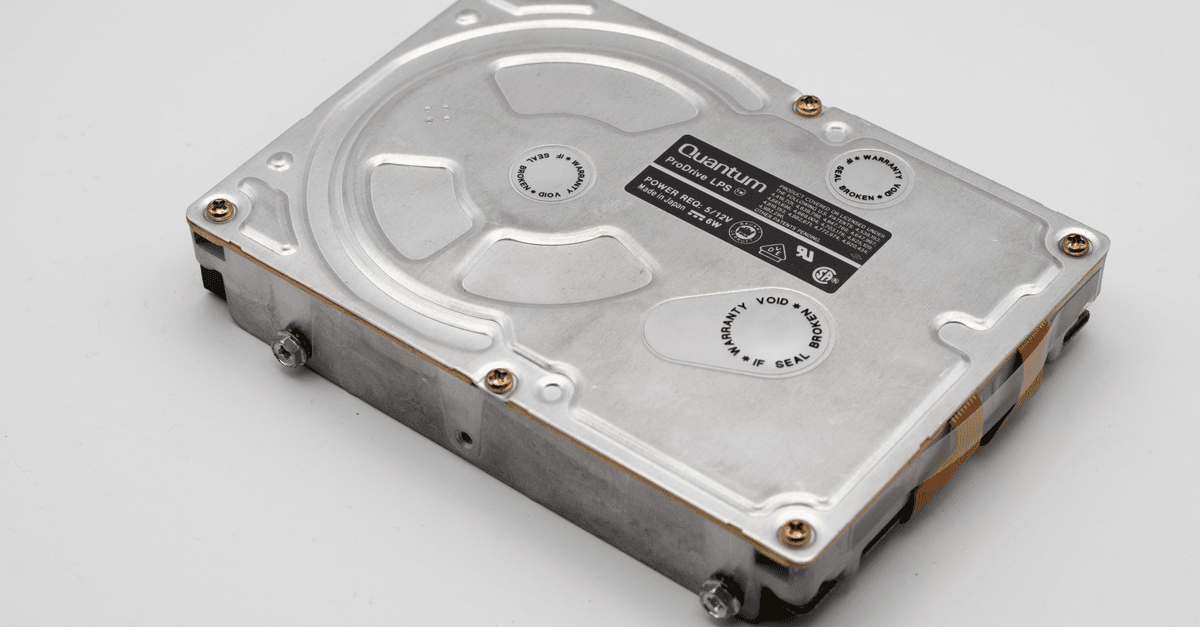
Photo: travelers_tw / Pexels
Set aside, for a moment, whether an uploaded mind would really be "you," and whether it would be conscious at all. Those are real questions, and other articles on this site dig into them. This one asks a narrower, more concrete question: if you had a complete, accurate digital map of a human brain sitting on a hard drive right now, what machine would you even plug it into? The answer involves storage measured in exabytes, computing power on the scale of the world's fastest supercomputers, and an electricity bill that would make a small country wince.
Thought experiment. This article explores a hypothetical scenario for educational and speculative purposes. The events described are not predictions and should not be interpreted as warnings, advocacy, or instructions.
This is the engineering side of mind uploading: how much data a human brain represents, what kind of processor architecture could plausibly run it, whether quantum computing is required or beside the point, and how the power budget compares to the 20 watts your actual brain runs on right now.
The number that starts everything: 86 billion neurons
A human brain contains an estimated 86 billion neurons and roughly 100 trillion synaptic connections between them, according to neuroanatomist Suzana Herculano-Houzel's widely cited stereological count (Herculano-Houzel, 2009, Frontiers in Human Neuroscience). Every hardware estimate for mind uploading starts from that number, because it sets the floor for how much has to be scanned, stored, and simulated before anything resembling "running" a brain can happen.
That number alone doesn't tell you much until you convert it into computing terms. A neuron isn't a single switch — it's a small analog computer with thousands of input connections, each with its own strength, and each capable of changing that strength over time through synaptic plasticity (the biological mechanism behind learning and memory). Modeling that behavior faithfully, rather than as a crude on/off approximation, multiplies the computational cost per neuron substantially.
Storage first: how many bytes is a human brain?
Before a brain can be simulated, it has to be scanned and stored as data. This is arguably the more brutal bottleneck of the two, because scanning resolution and storage scale together.
Scanning resolution sets the file size
Current connectomics — the field of mapping neural wiring diagrams — uses electron microscopy at roughly 4 to 20 nanometer resolution to resolve individual synapses. At that resolution, imaging just one cubic millimeter of brain tissue produces on the order of a petabyte (one thousand terabytes) of raw image data, according to figures used across recent whole-brain-emulation feasibility work compiled by the Carboncopies Foundation and cited in the field's technical literature (Sandberg & Bostrom, 2008, Whole Brain Emulation Roadmap).
A human brain has a volume of roughly 1,200 to 1,400 cubic centimeters, which is 1.2 to 1.4 million cubic millimeters. Multiply that by even a conservative petabyte-per-cubic-millimeter figure and the raw scan data for a single human brain lands somewhere in the range of hundreds of exabytes to over a zettabyte (a zettabyte is a thousand exabytes, or a billion terabytes) before any compression or downsampling.
Why the finished model would be smaller — but still enormous
Raw scan data isn't the same as the final simulateable model. Once researchers extract just the functional information — which neurons connect to which, how strong each connection is, and basic parameters for how it changes — the dataset shrinks dramatically, because most of that raw imaging data is structural detail (cell walls, blood vessels, connective tissue) that doesn't need to persist once the wiring diagram has been extracted.
Even after that compression, though, a functional connectome for 100 trillion synapses, each requiring at minimum a few bytes to encode connection strength, type, and plasticity state, works out to tens of terabytes at the low end and far more if richer chemical and dynamic detail is preserved. For comparison, that's already larger than the entire uncompressed text of every English-language Wikipedia article combined, many times over, just to store the wiring — before adding a single second of simulated activity.
The compute problem: running the model in real time
Storage tells you how much the brain weighs in data. Compute tells you how fast you can make that data think. These are separate problems, and the second one is arguably harder.
Why real-time simulation is the real target
A brain simulation that takes ten years to compute one second of thought isn't mind uploading in any meaningful sense — it's a very slow, very expensive archive. For an upload to interact with the world, hold a conversation, or form new memories at a normal pace, the simulation needs to run at something close to real time: one second of simulated brain activity computed in roughly one second of wall-clock time.
Matching neurons to supercomputers
Intel's Hala Point system, currently the largest neuromorphic (brain-inspired) computer built, packs 1,152 Loihi 2 chips into a six-rack-unit chassis and supports up to 1.15 billion simulated neurons and 128 billion synapses, while drawing a maximum of 2,600 watts (Intel Newsroom, 2024). That's a genuine engineering milestone. It's also about 1.3% of a human brain's neuron count, and Loihi 2's neuromorphic architecture, which mimics biological spiking behavior directly in hardware rather than emulating it in software, still can't be scaled up 75-fold and assumed to work identically — power, heat, and interconnect bandwidth all scale in ways that aren't simply linear.
Neuromorphic versus classical architecture
There are two broad hardware philosophies for this problem, and they trade off very differently.
- Classical high-performance computing (like El Capitan or Frontier): general-purpose processors simulate neurons as mathematical equations, run in parallel across enormous processor arrays. This is flexible and well understood, but energy-hungry, because it wasn't designed around the sparse, event-driven way biological neurons actually fire.
- Neuromorphic hardware (like Loihi 2 or IBM's TrueNorth lineage): chips are physically architected to mimic spiking neural behavior directly, firing only when needed rather than constantly recalculating every unit on every clock cycle. This is dramatically more power-efficient per simulated neuron, but the technology is younger, harder to scale, and less mature for general-purpose computation.
So which architecture wins?
Neither approach, on its own, is currently close to human-brain scale at real-time speed. The 2025 "State of Brain Emulation" academic survey, which tracks progress toward whole-brain emulation across neuroscience and computing, notes that even simulations at the scale of a mouse cortex — a brain roughly 1,000 times smaller than a human's — currently strain specialized research computing clusters (arXiv, 2025). Scaling that up to human-brain size in real time is not simply "the same problem, but bigger" — it's a jump of multiple orders of magnitude in a field where each order of magnitude has historically taken years of hardware development to cross.
Does simulating a brain require quantum computing?
This is worth addressing directly, because the idea comes up constantly in mind-uploading discussions, usually traced back to physicist Roger Penrose and anesthesiologist Stuart Hameroff's "Orch OR" hypothesis, which proposed that quantum effects inside microtubules (structural proteins within neurons) play a role in generating consciousness (Hameroff & Penrose, 1998, Philosophical Transactions of the Royal Society A). If true, that would imply classical computers, no matter how large, could never fully replicate the process — you'd need quantum hardware.
The counterargument that most physicists find more convincing
Physicists who've run the numbers on this generally aren't persuaded. Calculations of neural decoherence rates — how quickly a quantum state inside a warm, wet, noisy biological cell would collapse into ordinary classical behavior — suggest that any quantum effects in microtubules would decohere far faster than the timescales relevant to actual neuron firing and cognition. In plain terms: the brain is too hot, too wet, and too electrically noisy for delicate quantum states to survive long enough to matter for thinking, according to this line of analysis. That leads most researchers in the field to treat the brain's cognitively relevant activity as a classical system, meaning ordinary (non-quantum) computers should, in principle, be adequate to simulate it.
What this means practically
If the classical-decoherence argument holds, quantum computing isn't a prerequisite for mind uploading — it's a separate technology aimed at different problems (like breaking certain encryption schemes or simulating quantum chemistry) that happens to get lumped into uploading discussions because both sound futuristic. The actual bottlenecks are the mundane ones: scanning resolution, storage capacity, and classical compute throughput. That said, this remains a genuinely contested question in philosophy of mind, not a fully closed one, and it's one reason serious researchers are cautious about claiming certainty either way.
The power bill nobody talks about
Here's where the thought experiment gets uncomfortable in a very literal sense: electricity.
| System | Approximate power draw | Scale relative to a human brain |
|---|---|---|
| Human brain (biological) | ~20 watts | 1x (baseline) |
| Intel Hala Point (neuromorphic, 1.15 billion neurons) | ~2,600 watts | 1.3% of neuron count |
| El Capitan (classical exascale supercomputer) | ~30,000,000 watts (30 MW) | Roughly matches estimated raw brain throughput, far below its neuron count in simulated fidelity |
| Frontier (classical exascale supercomputer) | ~24,600,000 watts (24.6 MW) | Comparable class to El Capitan |
Caption: Power consumption compared across biological and artificial systems, based on published 2024–2025 figures. Even the most advanced neuromorphic system on Earth uses over 100 times more power per neuron than a biological brain, while general-purpose exascale supercomputers use roughly a million times more power for comparable raw throughput.
Why the brain is so absurdly efficient
The human brain's roughly 20-watt budget, comparable to a dim incandescent light bulb, covers all of cognition: memory, perception, language, motor control, emotion, and everything else, running simultaneously (Britannica). It manages this through massive parallelism and sparsity — most neurons sit idle most of the time, firing only when they have something to contribute, rather than continuously recalculating like a classical processor does on every clock cycle. It's the difference between a city where only the streetlights that need to be on are lit, versus one where every streetlight burns at full brightness around the clock whether anyone's using that street or not.
Scaling the power problem to a full brain
If a full human-brain-scale simulation needed even a modest multiple of El Capitan's 30 megawatts to run continuously in real time, sustaining even a handful of uploaded minds at once would require dedicated power infrastructure on the scale of a small city's electrical grid. That's before accounting for the enormous additional power draw of cooling systems, which for large data centers and supercomputers commonly adds 30% to 50% or more on top of the compute load itself. Multiply that by any meaningful population of uploaded minds, and the energy accounting alone becomes one of the more concrete practical obstacles to the scenario, independent of whether the underlying neuroscience or philosophy ever gets resolved.
The building itself: cooling and physical infrastructure
Power consumption is only half the physical-infrastructure story. Every watt that goes into a chip comes back out as heat, and getting that heat out of the building fast enough to keep the hardware from failing is its own engineering discipline, one that becomes especially unforgiving at the scale a continuous, real-time brain simulation would demand.
How today's exascale machines stay cool
El Capitan and Frontier, the two fastest publicly ranked supercomputers in the world, both abandoned fan-driven air cooling entirely in favor of direct liquid cooling, where coolant is piped directly to cold plates mounted on the processors rather than blown across the room by fans (CoolIT Systems, El Capitan; HPCwire, Frontier). El Capitan's design is described as 100% fanless, with liquid cooling handling essentially all of the heat removal, a shift that HPE and CoolIT credit with keeping the machine ranked among the most energy-efficient systems on the Green500 list despite drawing tens of megawatts.
That efficiency shows up in a metric called PUE, or power usage effectiveness — the ratio of total facility power (compute plus cooling plus everything else) to power delivered to the computing hardware itself. A PUE of 1.0 would mean zero overhead; ordinary commercial data centers commonly run PUEs in the 1.4 to 1.6 range. Frontier, by contrast, has been measured at an annual average PUE around 1.05, with more than 99% of its measured intervals falling between 1.03 and 1.08 (Nature Scientific Data, Frontier energy dataset). That's a genuinely well-optimized facility — direct liquid cooling gets rid of most of the overhead a fan-cooled data hall would carry.
Why a brain-scale simulation would still strain that efficiency
Even at Frontier's best-in-class PUE of roughly 1.05, a facility drawing a hypothetical 30 megawatts of compute power for a continuous, real-time brain simulation would need to dissipate around 31.5 megawatts of total heat, every hour, every day, indefinitely, not for the length of a training run or a physics simulation but for as long as the uploaded mind is meant to keep existing. Conventional commercial data centers, running at PUEs of 1.4 or higher, would need proportionally more overhead power just to keep the same hardware from overheating. Liquid cooling, in other words, isn't a nice-to-have at this scale, it's a prerequisite, and building and maintaining that infrastructure reliably, with redundancy, in case a pump or a coolant loop fails, is itself a nontrivial physical-plant problem, not just a software or chip-design one.
There's also a siting constraint that doesn't show up in flop counts. Exascale facilities are typically built with access to substantial water supplies for cooling loops, robust grid connections capable of delivering tens of megawatts continuously, and often proximity to renewable or otherwise cheap power, because the electricity bill for round-the-clock operation dwarfs the hardware's purchase price over a few years of operation. A facility meant to keep even a single uploaded mind running forever would need all of that permanently, with the kind of redundancy hospitals build into intensive-care power systems, since an unplanned outage wouldn't just corrupt a dataset, it would be closer to a medical emergency for whatever is running on that hardware.
The network problem: keeping an upload in real time with the outside world
Even if the storage, compute, and cooling problems were all solved, an uploaded mind that couldn't perceive or respond to the world in real time would be closer to a very expensive recording than a person. That raises a fourth engineering bottleneck that gets far less attention than storage or power: network latency, the delay between something happening in the outside world and information about it reaching the simulation, or a response leaving the simulation and reaching the world. A related thought experiment is what if we could teleport matter.
Why biological latency sets the bar
Human cortical neurons show measurable response latencies on the order of 10 to 30 milliseconds between a stimulus and an evoked spike, with lower motor neurons showing comparable delays of roughly 20 to 50 milliseconds, based on electrophysiological studies of nerve conduction (nerve conduction studies overview). Ordinary human reaction time to a simple stimulus, the kind measured in a hand-eye coordination test, typically comes out around 200 to 250 milliseconds once you add up sensory processing, decision-making, and motor response. That's the latency budget a simulated mind would need to match, or at least stay close to, for the world to feel responsive rather than laggy in a way that would be immediately, viscerally strange to experience.
Why that's a much harder bar for networked hardware than it sounds
Light in fiber-optic cable travels at roughly 200,000 kilometers per second, about two-thirds the speed of light in a vacuum, because of the refractive properties of the glass it's traveling through (M2 Optics, fiber latency calculations). That physical limit alone puts a floor under how fast information can travel between any two points on Earth. The Hibernia Express transatlantic cable, one of the fastest commercial routes in the world, achieves a tested one-way latency of just under 59 milliseconds between New York and London, a route engineered specifically to shave a few milliseconds off older cables by taking the shortest viable path across the Atlantic (GigaPackets, transatlantic latency).
That means if an uploaded mind's host hardware sat in one country and it needed to interact with a sensor, camera, robotic body, or another person on a different continent, the network round trip alone, before any processing time on either end, could already consume a meaningful fraction of the entire biological reaction-time budget the simulation is trying to match. A conversation partner physically present with a biological human experiences roughly 200 to 250 milliseconds of natural response lag. An uploaded mind trying to perceive and respond to something on the other side of the planet would be fighting network physics for a chunk of that same budget before its own compute cycle even started.
What this means for where the hardware has to live
The practical implication is that a real-time, world-interactive upload isn't just a data-center problem, it's a data-center-location problem. Anything the upload needs to sense or affect in close to real time, whether that's a robotic body, a set of cameras, or a live conversation, would need its host hardware physically close to that point of interaction, on the same continent at minimum, likely in the same metro region, to keep round-trip network delay from swallowing the entire reaction-time budget before the simulation even begins computing a response. That constraint pushes back against the popular image of an uploaded mind existing as a placeless, freely relocatable file that can be copied to a server anywhere on the planet without consequence. Physically, where the hardware sits would matter enormously to how "present" the upload could feel in real time, in the same way that a video call to someone on the other side of the world always carries a faint but noticeable delay compared to talking to someone in the same room.
What people get wrong about the hardware side
"We already have exascale computers, so the compute problem is basically solved"
Raw exaflop-scale throughput existing somewhere in the world (as El Capitan and Frontier demonstrate) is not the same as having that throughput available, continuously, dedicated to running one detailed brain simulation in real time, plus the memory bandwidth to move 100 trillion synapse states around fast enough to matter. Today's exascale systems are built and scheduled for tasks like nuclear weapons simulation, climate modeling, and physics research, not standing by to run a personal mind.
"Neuromorphic chips will just get bigger and solve this"
Neuromorphic hardware like Loihi 2 is a genuinely promising direction because it addresses the power problem directly, rather than just the raw-speed problem. But going from Hala Point's 1.15 billion neurons to 86 billion isn't a straightforward matter of building a bigger rack. Interconnect bandwidth between chips, heat dissipation in denser packages, and manufacturing yield at larger scales all introduce new engineering problems that don't necessarily scale linearly with chip count.
"Storage is cheap now, so that part's basically done"
Consumer storage costs have fallen dramatically, but the volumes involved in whole-brain scanning data — hundreds of exabytes of raw imaging data per brain, even before compression — are on a completely different scale from anything currently built for commercial use. For context, it's estimated that all of humanity's stored digital data combined was on the order of 149 zettabytes as of the early 2020s across every server, hard drive, and phone on Earth combined; a handful of uncompressed human brain scans at high resolution would represent a meaningful fraction of that by themselves.
"Quantum computers will eventually make all of this trivial"
Quantum computers are extraordinarily good at a narrow set of problems — certain kinds of optimization, cryptographic factoring, and simulating quantum-mechanical systems like molecules — but classical neuron simulation isn't naturally one of them, based on the current scientific consensus that brain activity is a classical rather than quantum process. Readers curious about what quantum computers actually are good at breaking or building can see What If Quantum Computers Broke All Modern Encryption? for a grounded look at where quantum hardware's real advantages lie — and it isn't neuron simulation.
Frequently asked questions
Q: How much data would it take to store an entire human brain? A: Raw electron-microscopy scan data, at the roughly 4–20 nanometer resolution needed to resolve individual synapses, would run into the hundreds of exabytes to over a zettabyte for a full human brain before compression, based on per-cubic-millimeter figures used in whole-brain-emulation feasibility research (Sandberg & Bostrom, 2008). The distilled functional connectome — just the wiring diagram and connection strengths, not the full structural imagery — would be dramatically smaller, but still likely in the tens of terabytes or more.
Q: Could today's fastest supercomputer run a human brain simulation? A: Not in any complete, real-time sense. El Capitan, currently the world's fastest system at roughly 1.74 exaflops, may match the human brain's estimated raw computational throughput in a very rough sense, but matching aggregate FLOPS is not the same as having the memory architecture, interconnect bandwidth, and dedicated capacity to simulate 86 billion individual neurons and 100 trillion synapses with full fidelity in real time (AMD, 2025).
Q: Is neuromorphic computing the same thing as mind uploading? A: No. Neuromorphic chips like Intel's Loihi 2 are a hardware architecture designed to run spiking neural networks more efficiently than general-purpose processors. They're a promising tool that could eventually help run a brain simulation, but building neuromorphic hardware is a separate achievement from having a complete, scanned human connectome to actually run on it.
Q: Does mind uploading require quantum computing? A: Most physicists who've studied the question say no. Calculations of how fast quantum states decohere (collapse into ordinary classical states) in warm biological tissue suggest that any quantum effects inside neurons would vanish far too quickly to influence actual thought processes, meaning classical computing should in principle be sufficient. This remains a debated point tied to unresolved questions in philosophy of mind, not a fully settled scientific fact.
Q: How much electricity would running an uploaded mind require? A: Nobody knows the exact figure because no full-scale brain simulation exists yet, but the comparison points are stark: a biological brain runs on about 20 watts, while today's exascale supercomputers capable of comparable raw computational throughput draw around 25 to 30 megawatts — roughly a million times more power for similar raw output, according to published system specifications (ScienceInsights).
Q: What's the biggest hardware bottleneck: scanning, storage, or compute? A: All three are serious, but scanning and storage currently look like the harder near-term barrier, because nobody has demonstrated non-destructive, human-brain-scale scanning at synapse resolution at all. Compute is a known, if enormous, engineering scaling problem; adequate high-resolution scanning technology for a living human brain doesn't yet exist in any form, destructive or otherwise.
The takeaway
Strip away the philosophy of personal identity and the unresolved question of whether a simulation could ever be conscious, and mind uploading still runs headfirst into brute engineering math: hundreds of exabytes of scan data per brain, a compute architecture that has to bridge a gap of multiple orders of magnitude beyond today's largest neuromorphic systems, and a power budget that would dwarf a small city's grid for even a handful of uploaded minds running in real time. None of that is proof the idea is permanently impossible — computing has closed gaps this large before, and quantum mechanics probably isn't the limiting factor most people assume it is. But it's a useful corrective to the idea that mind uploading is mostly a philosophy problem waiting on the hardware to catch up. The hardware isn't close either.
Read next:
Follow new articles
Add SciHub101 to your feed reader to see new science and technology stories.
About the Author
SciHub101 is an independent science and technology publication founded and edited by Buğra Sözeri, a software engineer and app developer based in Türkiye. AI tools assist with drafting and research. Source documentation in the existing archive is uneven, and articles are being reviewed and corrected. The Editorial Team byline identifies editorial responsibility; it does not certify specialist or independent human review. Where we compare products, anything built by our own team is labelled as such — see the editorial guidelines and About page for how corrections and disclosures work.
Related Articles

What If the Sun Was 10% Dimmer?
The Sun's output is remarkably steady, but even small, sustained drops in solar energy can reorganize Earth's climate. A 10% dimmer Sun is a thought experiment, not a forecast — modeled here through real climate physics: energy balance, ice-albedo feedback, and the paleoclimate record.

What If Language Completely Shaped Thought?
The Sapir-Whorf hypothesis suggests language shapes thought. What if this were true at an extreme — if the structure of language completely determined cognition? People speaking different languages would literally think differently, with no way to fully translate between languages. Reality itself would become language-dependent.

What If We Could Teleport Matter?
Step in here, step out there — instantly. Teleportation sounds like sci-fi, but the physics gets stranger than fiction.
What If Quantum Computers Broke All Modern Encryption?
A sufficiently powerful quantum computer could break the encryption that secures banking, communications, and national security in seconds. The threat is real but limited to specific algorithms — and the cryptographic world is racing to deploy quantum-resistant alternatives before the day arrives.

What If We Uploaded Human Consciousness to AI?
Mind uploading promises digital immortality. But if a perfect copy of you is running in a computer, is it actually you — or just something that thinks it is?

What If the Internet Went Down Permanently? — Science Explained
What would actually happen if the internet disappeared forever? Financial systems would fail in hours, food supply chains would collapse within days, and modern medicine would be crippled within weeks. The scale of what humanity would lose is staggering.