What If the Sun Was 10% Dimmer?
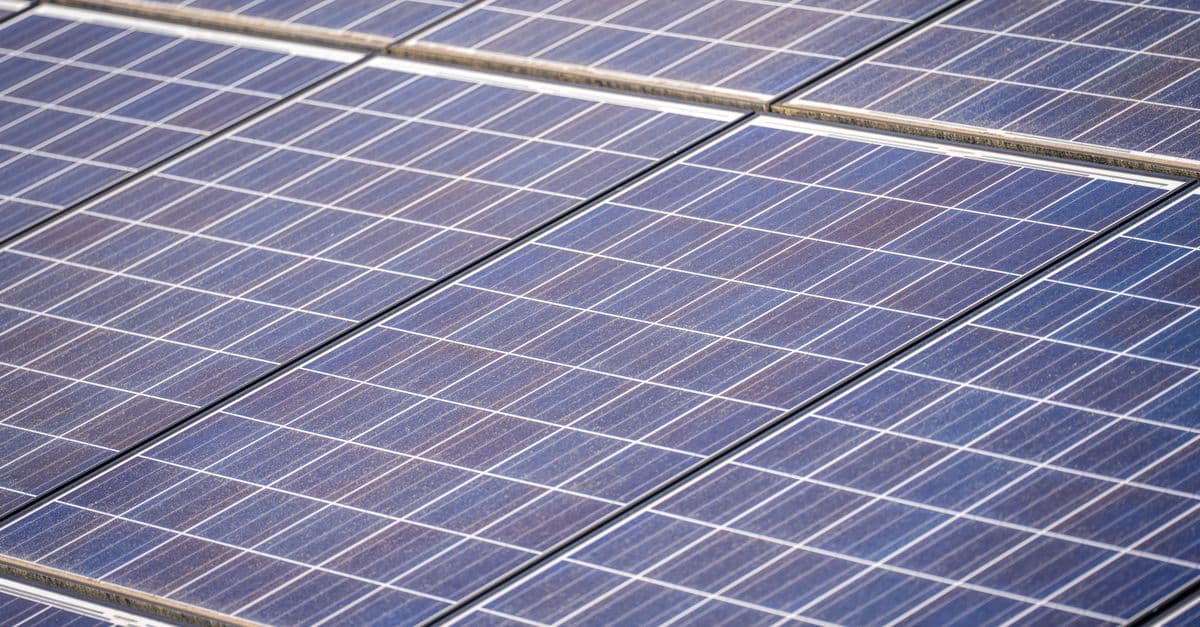
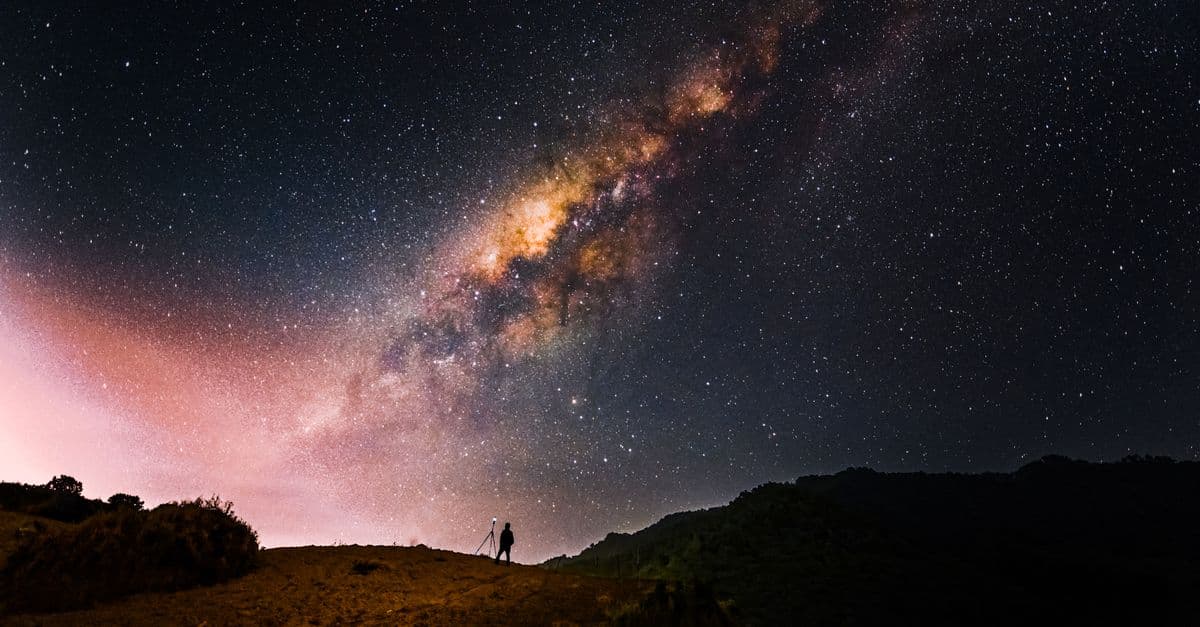
Photo: Mark Stebnicki / Pexels
Thought experiment. This article explores a hypothetical scenario for educational purposes, using real climate physics to reason through the consequences. It is not a prediction, a forecast, or advice about any current or future event.
The Sun's actual output barely moves. Across an 11-year solar cycle, total solar irradiance (TSI) — the energy hitting the top of Earth's atmosphere — varies by roughly 0.1%, according to NASA's long-running satellite record (NASA Earth Observatory). So what happens if we push that number far outside anything the Sun has done in human history and imagine it delivering 10% less energy, sustained for decades? Using Earth's own energy-balance equation, the answer is a slow, self-reinforcing slide toward an ice age — and the exercise reveals just how narrow Earth's habitable operating range actually is.
How much energy is 10% of the Sun, really?
Satellites measure the modern solar constant — the energy striking one square meter at the top of Earth's atmosphere, at Earth's average distance from the Sun — at about 1,361 W/m², the value adopted by the International Astronomical Union in 2015 based on the SORCE/TIM instrument record (IAU, reported via ScienceDirect). Ten percent less is about 1,225 W/m², a drop of roughly 136 W/m² measured at the top of the atmosphere, before accounting for how much of that energy Earth actually absorbs versus reflects away.
That reflection matters enormously, and it's the whole reason this thought experiment gets interesting instead of just being a straightforward temperature subtraction.
Think of Earth's climate like a bathtub with the faucet running and the drain open. Water in equals water out at a steady level. Sunlight in equals infrared radiation out at a steady global temperature. Turn the faucet down, and the water level doesn't crash instantly — it drains until a new, lower equilibrium is found. Earth's climate does the same thing, just over decades instead of minutes, and the "drain" (outgoing infrared radiation) is governed by the Stefan-Boltzmann law: hotter objects radiate more energy, so a cooling planet radiates less until it once again matches whatever is coming in.
The energy balance: why a 10% cut doesn't mean a 10% temperature drop
Earth's temperature sits wherever incoming absorbed sunlight balances outgoing infrared radiation. Not all sunlight that reaches Earth gets absorbed — about 30% is reflected straight back to space by clouds, ice, snow, and bright land surfaces. Climate scientists call this fraction Earth's albedo, and the current planetary average is close to 0.30 (NASA CERES data, via NOAA Climate.gov).
So the math looks like this. At today's solar constant of 1,361 W/m², Earth absorbs (1 − 0.30) × 1,361 ≈ 953 W/m² averaged over its illuminated disk area. Dim the Sun by 10%, drop the constant to about 1,225 W/m², and — holding albedo fixed for a moment — absorbed energy falls to about 858 W/m². That's a deficit of roughly 95 W/m² that outgoing radiation no longer balances, which means Earth must cool until its own infrared output drops to match.
Using a simplified climate-sensitivity relationship (ΔT ≈ −ΔF / λ, where λ is a typical equilibrium climate-sensitivity parameter used in energy-balance modeling), a forcing change this large works out to global cooling on the order of 15 to 20°C. That number should be read as an order-of-magnitude estimate from a simplified single-layer model, not a precise forecast — full general circulation models would need to run this scenario to pin the number down more tightly, and it's the kind of extreme perturbation those models aren't typically built to handle.
For scale: the difference between today's climate and the depths of the Last Glacial Maximum around 20,000 years ago — when ice sheets buried Canada and Scandinavia — was only about 4°C to 6°C in global average temperature, even though high-latitude regions near the ice sheets were far colder than that (NOAA Paleoclimatology). A 10% dimmer Sun, sustained indefinitely, is modeling something several times larger than the entire Ice Age temperature swing.
Why doesn't a 10% solar cut just produce 10% cooling?
Because temperature and energy aren't linearly related. Radiated energy scales with the fourth power of absolute temperature (Stefan-Boltzmann law), so a modest-sounding energy deficit forces a much larger fractional change in radiated output than in temperature itself — and feedbacks like ice cover amplify the result further before a new equilibrium is reached.
Ice-albedo feedback: the mechanism that turns cooling into runaway cooling
The energy-balance math above assumes Earth's albedo stays fixed at 0.30. It wouldn't. As the planet cools, snow and sea ice expand toward the equator, and ice-covered surfaces reflect roughly 60% to 90% of incoming sunlight compared with 10% to 20% for open ocean or vegetated land (NASA Earth Observatory: Albedo). More reflective surface area means less absorbed energy, which drives further cooling, which expands the ice further still.
This is the same feedback loop, running in reverse, that makes Arctic sea ice loss self-accelerating today under warming — just pointed the other direction. Climate scientists call it ice-albedo feedback, and it's one of the best-documented amplifiers in the paleoclimate record; it's a leading part of the explanation for how Earth's climate has flipped between "Snowball Earth" glaciations and warm periods across its 4.5-billion-year history.
The feedback loop runs like this:
- Solar input drops, average temperature falls.
- Snow and sea ice persist longer and extend to lower latitudes.
- The newly ice-covered surface reflects far more sunlight than the ocean or land it replaced.
- Less absorbed sunlight means further cooling.
- Cooling extends the ice further, restarting the loop at a colder baseline.
This is why the temperature response to a sustained solar dimming isn't a single event but a multi-decade cascade — each stage of ice expansion locks in more cooling than the previous one, until the system reaches a new stable point (or, in the most extreme historical cases inferred from geology, doesn't stabilize until ice reaches nearly to the equator, the so-called Snowball Earth hypothesis for events roughly 650 to 720 million years ago).
What the real-world analogues tell us
Nobody has ever dimmed the Sun by 10%, so there's no direct historical case to check the model against. But two much smaller, well-documented natural experiments show the same mechanism at a fraction of the intensity, and they're useful for grounding how seriously to take the runaway framing.
The Maunder Minimum (1645–1715). During this 70-year stretch, sunspot activity nearly vanished, and reconstructions suggest total solar irradiance dropped by somewhere between 0.5 and 3 W/m² depending on the reconstruction method used — a change of a few tenths of a percent at most, nowhere near 10% (NASA Technical Reports Server; Wiley/AGU, Meehl et al. 2013). The Northern Hemisphere cooled by roughly 1°C during this period, part of the broader "Little Ice Age," with expanded alpine glaciers and repeatedly frozen European rivers. Even that tiny nudge — a few hundredths of one percent of the Sun's output — was enough to measurably reshape regional climate and agriculture for seven decades.
The Toba supereruption (~74,000 years ago). This wasn't a change in solar output at all, but sulfate aerosols from the eruption blocked incoming sunlight in a functionally similar way. Estimates of the resulting cooling vary widely by methodology: some volcanic-winter models put peak hemispheric cooling at 3°C to 5°C for roughly six to ten years (NCAR/UCAR News), while a more recent NASA GISS modeling study using updated aerosol microphysics concluded that even the largest plausible super-eruptions likely wouldn't push cooling past about 1.5°C (NASA, GISS super-eruption study). The spread between these estimates is itself instructive: even isolating the effect of a single, well-studied sunlight-blocking event on climate models is genuinely difficult, which is a reason to treat any single number for a hypothetical 10% solar cut as an illustrative estimate rather than a precise prediction.
| Event | Change in solar energy reaching Earth | Estimated cooling | Duration |
|---|---|---|---|
| Modern 11-year solar cycle | ~0.1% | Negligible, within natural variability | 11 years, cyclical |
| Maunder Minimum (1645–1715) | A few tenths of 1% (est. 0.5–3 W/m²) | ~1°C, Northern Hemisphere | ~70 years |
| Toba supereruption (~74,000 years ago) | Sunlight blocked by aerosols, not solar output | 1.5°C–5°C, disputed range | ~6–10 years |
| Last Glacial Maximum vs. today | Orbital forcing, not solar output change | ~4–6°C global average | Thousands of years |
| Hypothetical 10% dimmer Sun (this article) | ~136 W/m² at top of atmosphere | Order of 15–20°C, order-of-magnitude estimate | Would depend on how fast the change occurred |
Table: Real and hypothetical sunlight-reduction events compared, ordered from smallest to largest energy change. Sources: NASA, NOAA, NCAR, IPCC (see inline citations).
What a decades-long dimming would plausibly do to agriculture and habitability
If we accept the order-of-magnitude estimate above — global cooling in the range of a full Ice Age's worth of change, or more — the downstream consequences follow from well-established agricultural climatology rather than speculation.
Grain crops that currently anchor global food supply (wheat, corn, and rice) require minimum growing-season temperatures and frost-free windows that mid-latitude breadbasket regions — the US Midwest, Ukraine, northern China — currently provide with some margin. A sustained multi-degree cooling shortens growing seasons and pushes killing frosts earlier in autumn and later in spring; agricultural climatology has documented this relationship extensively in the context of even single-degree shifts from historical volcanic winters, including 1816's "Year Without a Summer" following the Tambora eruption, when frost in June devastated New England and European harvests.
At the scale being modeled here, the geography of where farming works would shift toward the equator over the same decades that the ice-albedo feedback plays out, while regions already climatically marginal for agriculture would likely drop out of viable cultivation first. None of this is a forecast of what would specifically happen to any country's food supply; it's a direction implied by combining the temperature estimate above with the same crop-temperature relationships agronomists already use.
How reduced sunlight would hit crop photosynthesis specifically
The agriculture story above focuses on temperature and frost windows, but there's a second, more direct pathway: less sunlight literally means less energy available for photosynthesis, the process by which plants convert light, water, and carbon dioxide into the sugars that become grain, fruit, and biomass. Researchers already have a real-world analogue for studying this, and it isn't hypothetical — it's called global dimming.
Global dimming describes a documented, measured decline in the sunlight reaching Earth's surface, driven mainly by aerosols and air pollution scattering and absorbing incoming radiation before it hits the ground. Between roughly the 1950s and 1980s, surface solar radiation across parts of the Northern Hemisphere's mid-latitudes (25°N to 45°N) declined by an estimated 1.4% to 2.7% per decade, before partially reversing in many regions as air-quality regulations cut aerosol pollution (Georgia Institute of Technology / EGU research summary, via ADS). That's a far smaller cut than the 10% modeled in this article, but it gives agricultural scientists decades of real measurements to work from instead of pure modeling.
The photosynthesis response turns out to be more complicated than "less light equals proportionally less growth," for two reasons. First, plants respond differently to direct versus diffuse (scattered) sunlight. Tall, dense canopies — forests and some field crops — can actually photosynthesize more efficiently under diffuse light, because it penetrates deeper into the canopy and illuminates lower leaves that direct sunlight would otherwise leave in shadow; open, shallow canopies like grassland get little benefit from that effect and mostly just lose out on total available light (ScienceDirect, diffuse radiation and canopy photosynthesis). A sustained 10% dimming from a genuinely fainter Sun, rather than from scattering aerosols, would deliver less of that diffuse-light offset, since the light lost is direct-beam radiation removed at the source rather than redistributed.
Second, not all crops have the same light-saturation point — the light level at which adding more sunlight stops increasing the photosynthesis rate. C3 plants (wheat, rice, soybeans, and most trees) reach their photosynthetic ceiling at relatively modest light levels and are comparatively less sensitive to dimming, while C4 plants (corn, sugarcane, sorghum) evolved a more light-hungry pathway and saturate at much higher irradiance, meaning they lose proportionally more productivity when available sunlight drops (agricultural photosynthesis research, summarized alongside global-dimming crop studies). Corn — a C4 crop and the largest grain crop by tonnage in the United States — sits on the more vulnerable side of that split.
Direct field evidence backs up the concern at smaller scales than the scenario modeled here. Studies of wheat grown under artificially reduced radiation report measurable declines in grain yield and quality when shading is applied during the flowering stage, the period when the plant is most dependent on a steady photosynthetic supply to fill developing grain (PMC, durum wheat flowering-shading study), and radiation-dimming experiments on wheat in Delhi similarly found altered crop morphology and reduced yield under lowered global radiation (FAO AGRIS, wheat dimming study, Delhi). Rice modeling work using three-dimensional canopy simulations likewise found that global dimming measurably reduces simulated photosynthetic production in paddy systems, even at dimming levels far short of 10% (Springer, Science China Earth Sciences, rice/global dimming modeling).
Stack a 10% cut in the light hitting Earth's surface on top of the ice-albedo-driven cooling described earlier, and the two effects compound rather than simply add: shorter, colder growing seasons and directly lower photosynthetic ceilings for the crops still able to grow at all. None of the individual studies above modeled anything close to a 10% solar-output reduction — they're documenting the aerosol-driven version at a fraction of that scale — but they establish, with real measurements rather than speculation, that even small reductions in usable sunlight already show up as reduced grain yield in field trials.
What happens to solar power generation in a dimmer world
If a 10% dimmer Sun reshaped agriculture, it would reshape energy production just as directly, and the physics here is far more straightforward than the crop-yield question. Photovoltaic solar panel output tracks incoming irradiance in an almost linear relationship: panels are rated against a standard test condition of 1,000 W/m² of irradiance, and their real-world output scales with whatever fraction of that reference value is actually reaching the panel at a given moment (Anern, measuring solar panel output vs. irradiance; ScienceDirect, environmental factors affecting PV output). Cut the irradiance reaching a panel by roughly 10%, and — all else equal — its power output falls by close to the same fraction.
That "all else equal" carries real weight in this scenario, because a globally dimmer Sun wouldn't be a clean, isolated cut to irradiance. It would arrive bundled with the cloud-cover and ice-albedo changes described earlier, both of which independently affect solar generation. More persistent cloud cover — which would be one expected outcome of a cooling, reorganizing climate system — degrades solar output far more sharply than a modest overall dimming would on its own, since irradiance under thick cloud can fall to a small fraction of clear-sky levels. Expanding snow and ice cover across higher latitudes compounds the problem in a different way: it doesn't just reduce sunlight, it buries the panels themselves and, ironically, increases the reflected light hitting them from below in the narrow window when ice is present but not yet snow-covered, which is a genuinely marginal offsetting effect compared with the dominant loss.
There is one small silver lining specific to photovoltaic technology, and it's worth naming honestly rather than glossing over: panel efficiency is temperature-sensitive, and most silicon-based solar cells lose a fraction of a percent of efficiency for every degree Celsius above their rated operating temperature, meaning a cooler climate very slightly improves the conversion efficiency of whatever light does arrive (Solar Panels Network USA, factors affecting solar panel output). That effect is real but small — on the order of a few tenths of a percent of efficiency per degree of cooling — and it would be overwhelmed many times over by a roughly proportional 10% drop in the raw irradiance available to convert in the first place, on top of the cloud-cover and snow-cover losses layered on top of it.
The practical upshot: a world running on solar power that then experienced a sustained 10% solar-output cut would see photovoltaic generation fall by more than 10% in most regions once cloud-cover and snow-cover effects are folded in, at exactly the moment heating demand in cooling mid-latitude and high-latitude regions would be rising. Wind and hydropower, which don't depend directly on incoming sunlight, would be affected only indirectly — through the same shifting atmospheric circulation and precipitation patterns that a colder, ice-expanding planet would already be reorganizing — making them comparatively more resilient in this specific scenario, though not immune to the broader climate disruption.
Common misconceptions about a dimmer Sun
"A 10% dimmer Sun would mean 10% less light for photosynthesis, so plants would just grow 10% slower." This underrates the temperature side of the problem. Photosynthesis is temperature-sensitive as well as light-sensitive, and the bigger threat to agriculture in this scenario isn't dimmer daylight — it's frost windows and shortened growing seasons caused by the temperature drop, which would affect crop viability far more than a modest reduction in photosynthetically active light.
"This is basically the same as global warming, just backwards, so we already know exactly what would happen." The mechanism is related — both are energy-balance problems — but the directionality of feedbacks differs in important ways. Warming triggers feedbacks like water-vapor increase and methane release from permafrost that amplify heating; cooling triggers ice-albedo feedback, which behaves differently in geographic pattern and timescale. Modeling one doesn't simply hand you the other with a sign flip.
"The Sun doing this is a realistic near-term risk." It isn't, and this article is explicit that it's a thought experiment rather than a prediction. The Sun's total output is expected to increase, not decrease, by roughly 1% every 100 million years or so as it ages on the main sequence, according to standard stellar evolution models — a timescale utterly disconnected from anything humans need to plan around. Sustained multi-decade dimming isn't something solar physics gives any mechanism for on human timescales; the closest real-world analogues (Maunder Minimum, volcanic aerosols) top out at a small fraction of the 10% modeled here.
Q: How much dimmer would the Sun need to get to cause noticeable climate effects? A: Even a change of a few tenths of one percent, sustained for decades — comparable to the Maunder Minimum — was enough to produce roughly 1°C of Northern Hemisphere cooling and contribute to the historical "Little Ice Age." A full 10% reduction, as modeled in this thought experiment, is a scenario far beyond anything observed in the instrumental or recent paleoclimate record.
Q: Has the Sun's brightness ever actually changed by 10% or more? A: Yes, but on geological, not human, timescales. Stellar evolution models indicate the Sun was roughly 25% to 30% fainter around 4 billion years ago than it is today, a discrepancy known as the faint young Sun paradox, since geological evidence shows Earth had liquid water despite the dimmer Sun (Quanta Magazine, summarizing peer-reviewed stellar modeling). The leading explanations involve a much stronger greenhouse effect and different planetary albedo in that era, not anything resembling today's atmosphere.
Q: Could a volcanic eruption or asteroid impact cause a 10% drop in sunlight reaching Earth? A: A single eruption is unlikely to reach that scale for a sustained period; even Toba, one of the largest known eruptions in the last 100,000 years, is estimated by most models to have caused effects well short of the scenario modeled here, and NASA's own more recent modeling suggests even large super-eruptions may cool the planet by only about 1.5°C. A very large asteroid impact injecting dust into the stratosphere could plausibly block sunlight more severely for a shorter period (months to a few years), which is a different and shorter-duration scenario than the sustained multi-decade dimming modeled in this article.
Q: What's the difference between this scenario and "what if the Sun went dark for a year"? A: They're different thought experiments. A sudden total loss of sunlight is an abrupt, complete blackout scenario with its own distinct timeline of collapse — read more in What If the Sun Went Dark for One Year?. This article instead models a partial but sustained reduction, closer in spirit to a persistent Maunder Minimum-style dimming or a long volcanic aerosol veil than to a total eclipse-like blackout.
Q: Would crops fail everywhere, or just in some regions? A: The temperature and light effects wouldn't be uniform. Mid-latitude breadbasket regions with already-tight growing-season margins, such as the northern US Midwest, Ukraine, and northern China, would be squeezed first as frost windows widened, while regions closer to the equator would keep more usable growing season even as their light-saturation ceilings for C4 crops like corn dropped. Real field research on reduced-radiation wheat already shows measurable yield loss at flowering under dimming far smaller than 10%, which is the closest documented analogue for the direction of the effect (PMC, wheat flowering-shading study).
Q: Which crops would be hit hardest by less sunlight, specifically? A: C4 crops — corn, sugarcane, and sorghum — have a photosynthetic pathway that saturates at higher light levels than C3 crops like wheat, rice, and soybeans, so they lose proportionally more productivity per unit of light removed. Combined with the fact that corn is the largest grain crop by tonnage in the United States, that pathway difference is one of the more consequential agricultural details in this scenario (global dimming and agricultural implications review).
Q: Would solar power become useless in a 10% dimmer world? A: Not useless, but meaningfully less productive. Photovoltaic output tracks incoming irradiance in a close to linear relationship, so a straight 10% cut to solar input translates to roughly a 10% cut in panel output before factoring in the additional losses from increased cloud cover and expanding snow cover that would likely accompany the cooling (Anern, irradiance vs. panel output). Wind and hydropower, which don't rely directly on incoming sunlight, would be comparatively more resilient in this specific scenario.
Q: How long would it take for the full cooling effect to play out? A: The energy-balance math that produces the 15°C to 20°C order-of-magnitude estimate describes a new equilibrium, not an instant shift. Earth's oceans hold enormous thermal mass, meaning the full transition would unfold over decades as the ice-albedo feedback loop progressively expands reflective ice cover and locks in colder conditions at each stage — comparable in spirit, though far larger in magnitude, to how the roughly 70-year Maunder Minimum needed its full duration to produce its measured cooling effect.
What this means
The headline result of this thought experiment isn't really "10% dimmer Sun equals an ice age." It's that Earth's climate operates within a genuinely narrow energy-balance window, and the ice-albedo feedback means that window has sharp edges rather than a gentle slope. A change equivalent to roughly ten times humanity's entire industrial-era greenhouse forcing, sustained for decades, is what it would take to push the system that far — a reminder that the real climate forcings occurring today, while much smaller in this comparison, are also operating on a system that doesn't respond linearly and doesn't necessarily give much warning before a feedback loop takes over. The exercise says more about how Earth's climate machinery works than it does about any plausible near-term event.
Read next:
Follow new articles
Add SciHub101 to your feed reader to see new science and technology stories.
About the Author
SciHub101 is an independent science and technology publication founded and edited by Buğra Sözeri, a software engineer and app developer based in Türkiye. AI tools assist with drafting and research. Source documentation in the existing archive is uneven, and articles are being reviewed and corrected. The Editorial Team byline identifies editorial responsibility; it does not certify specialist or independent human review. Where we compare products, anything built by our own team is labelled as such — see the editorial guidelines and About page for how corrections and disclosures work.
Related Articles

What If Viruses Became Intelligent?
Viruses are the most numerous lifeforms on Earth, but they're simple — just RNA or DNA wrapped in protein. They replicate by hijacking cells. If viruses evolved intelligence, they could become the apex predators of the biological world, infecting and controlling complex organisms with surgical precision.
What If Consciousness Could Be Uploaded to a Computer? The Hardware Problem
Forget philosophy for a moment. Just running a simulated human brain would require mapping 86 billion neurons, storing an amount of data measured in exabytes, and burning through more power than most small countries. Here's the actual engineering math.
What If the Moon Disappeared Tomorrow?
If the Moon vanished overnight, Earth's tides, axial tilt, and life itself would change forever. Here's the science of what happens next.
What If Earth Lost Its Axial Tilt?
Earth's 23.5° tilt creates seasons and stabilizes climate. What would happen if it vanished — or flipped to 90°?. Learn the science, key examples, and...
What If the Sun Disappeared for One Week?
Eight minutes after the Sun vanishes, Earth goes dark. What happens to life, physics, and civilization in the days that follow?

What If Earth Had No Moon?
The Moon is more than a nightlight. It holds Earth's tilt steady, drives our tides, and may have made complex life possible.