What If Mars Terraforming Actually Succeeded? Life on the Finished Planet
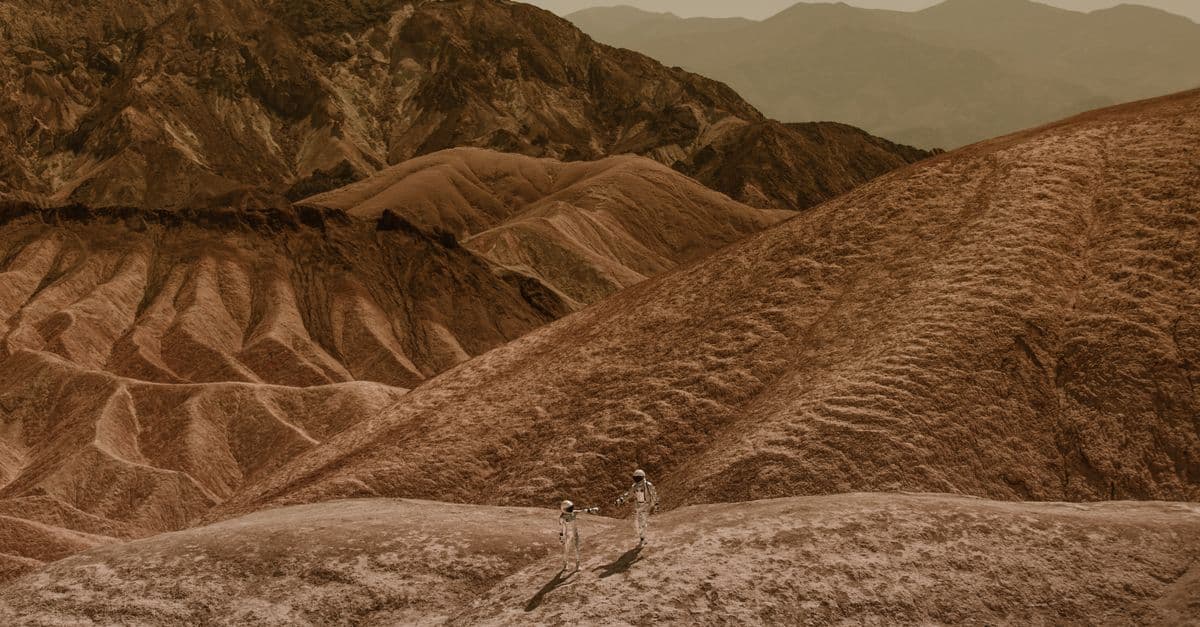
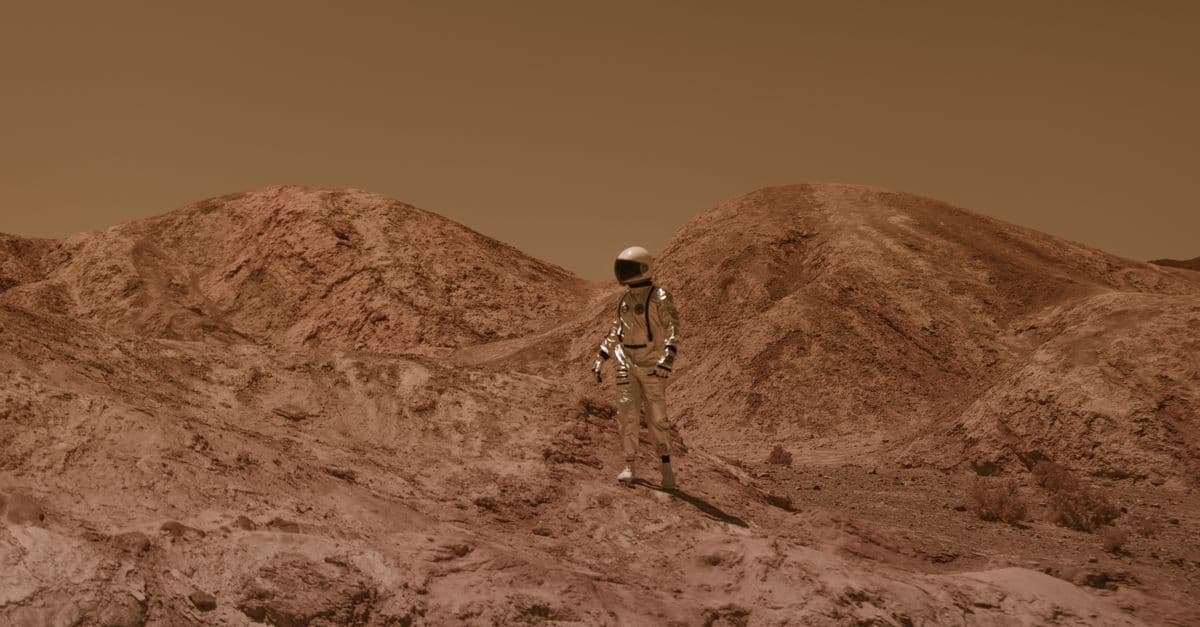
Photo: RDNE Stock project / Pexels
A 2018 NASA-funded study concluded that Mars simply doesn't hold enough accessible carbon dioxide (CO₂) to thicken its atmosphere to Earth-like pressure, and the planet's missing magnetic field means any new atmosphere would keep leaking into space (Jakosky & Edwards, Nature Astronomy, 2018). That's the physics of how hard terraforming is. This piece skips past that argument entirely and asks a different question: if every one of those obstacles somehow got solved, through imported volatiles, an artificial magnetosphere, and centuries of engineered patience, what would the finished product actually be like to live on? Not the mechanics of building it. The world at the end.
Thought experiment. This article explores a hypothetical scenario for educational and speculative purposes, built on the premise that the underlying atmospheric and magnetic engineering problems have already been solved. It is not a prediction about whether Mars terraforming is achievable, and should not be interpreted as advocacy or instructions. For the actual physics of why terraforming Mars is extraordinarily difficult, see our companion piece on the real science.
Key takeaways
- This is a downstream thought experiment: it assumes the atmosphere, pressure, and magnetic-shielding problems are already solved, and asks what daily life, agriculture, and ecology would look like afterward.
- Mars's 687-Earth-day year and 25.19° axial tilt, close to Earth's 23.4°, would still produce familiar four-season cycles, but each season would run roughly twice as long as Earth's (Universe Today, Mars Tilt).
- Mars's orbit is far more elliptical than Earth's (eccentricity 0.093 versus 0.0167), so a terraformed Mars would have lopsided seasons, a long mild spring and a short, sharp winter, rather than four roughly equal quarters.
- Surface gravity would remain 3.71 m/s², about 38% of Earth's, permanently, and nothing about a thick atmosphere changes that. Low gravity is the one terraforming outcome nobody can engineer away.
- Phobos, Mars's inner moon, is spiraling inward by about 1.8 meters per century and is expected to eventually be torn apart by Mars's tidal forces or crash into the surface, a slow-motion event that would still be underway on any human timescale (Space.com, Phobos facts).
- Whether Earth-derived life would independently evolve into new Martian species, rather than just surviving there, is genuinely open, but Earth's own history of island speciation offers a rough analogy for the timescales involved.
Why this is a different question than "how do we terraform Mars"
Most terraforming writing, including our own detailed breakdown of the atmospheric chemistry, spends its word count on the CO₂ mass-balance problem, the missing magnetic field, and why NASA's MAVEN orbiter measured the solar wind stripping the Martian atmosphere at roughly 100 grams per second (University of Colorado Boulder / NASA, 2015). That's the right place to spend the effort, because it's the part that's actually contested in the scientific literature.
But there's a separate, less-discussed question hiding behind the "can we" debate: assume, purely as a premise, that humanity found a way around all of it. Imported nitrogen and volatiles from the outer solar system, a functioning artificial magnetosphere at the Mars-Sun L1 point of the kind NASA's Jim Green sketched in a 2017 presentation (Universe Today coverage, 2017), centuries of patient greenhouse engineering. What does the result actually look like, structurally and biologically, once the atmosphere and pressure problems stop being the story?
This matters because a lot of popular Mars art defaults to two lazy images: either a red desert under glass domes, or a green-and-blue copy of Earth with a slightly different flag. Neither is quite right. A genuinely terraformed Mars would still be recognizably alien in ways that have nothing to do with atmospheric chemistry, because some of Mars's defining features (its gravity, its orbit, its two small moons, its axial geometry) are locked in by the planet's mass and position, not by any amount of atmospheric engineering.
Open sky, not domes: what the buildings would actually look like
Dome cities are the default sci-fi image of Mars because they solve the pressure and atmosphere problem cheaply, sealing off a small volume rather than engineering an entire planet. That's precisely the "paraterraforming" approach discussed in the companion article as the realistic near-term option. But the premise of this piece is that the planet-wide version worked. If Mars genuinely reached something close to Earth pressure and a breathable oxygen-nitrogen mix, domes stop being structurally necessary. Cities would look far more like open-sky settlements: streets, parks, and rooftops exposed directly to the Martian air, the way a city on Earth is exposed to Earth's.
Why architecture would still look distinctly Martian
Low gravity changes structural engineering even without any atmosphere problem to solve. At 38% of Earth's gravity, the same building material can support taller unsupported spans, thinner load-bearing walls, and cantilevered structures that would be impossible on Earth. Structural engineers on Earth already design around a gravity-driven load limit; halve that limit (roughly) and the practical ceiling on how tall, wide, or ornately unsupported a structure can be shifts substantially. Expect taller, lighter, more vertically ambitious cityscapes than Earth's for the same amount of raw material, less because Martian architects would be more imaginative and more because the physics simply allows it.
Why the sky itself would look different
A terraformed Mars's atmosphere would still be thinner than Earth's even at the high end of realistic terraforming targets, since most proposals discuss 0.3 to 0.5 bar rather than a full 1 bar. Thinner air scatters less blue light, so the Martian sky would plausibly stay closer to a pale butterscotch or salmon color at midday, closer to what Curiosity and Perseverance have already photographed, rather than shifting fully to Earth's saturated blue. Sunsets, by contrast, tend toward blue rather than red on Mars today, an effect of how Martian dust scatters light differently than Earth's atmosphere; a thicker but still dust-bearing atmosphere would likely preserve some version of that inverted color palette, sunsets tinted cooler than midday rather than warmer.
Farming a planet with a 687-day year
Agriculture is where the differences between Earth and a terraformed Mars stop being cosmetic and start reshaping how an entire civilization organizes its calendar.
Why the growing calendar would look completely unfamiliar
Mars orbits the sun once every 687 Earth days, roughly 1.88 Earth years (Universe Today, Orbit of Mars), and its axial tilt of 25.19° is close enough to Earth's 23.4° that a terraformed Mars would still have a genuine four-season year, just a much longer one. Each season would last, on average, close to twice as long as its Earth counterpart. A single Martian "growing season" for a slow crop could span the better part of an Earth year.
That alone would force different crop strategies: species selected or engineered for extended growth cycles, or agricultural systems designed around successive plantings staggered across a season five to six Earth months long rather than the six-to-twelve-week cycles common in temperate Earth farming.
Why the seasons themselves would be lopsided
Earth's orbit is nearly circular (eccentricity 0.0167). Mars's orbit is markedly more elliptical, with an eccentricity of 0.093, and its distance from the sun varies from about 1.35 to 1.64 astronomical units over the course of a Martian year (Universe Today, Mars Tilt). Because Mars moves faster through its orbit when it's closer to the sun (a consequence of Kepler's second law), its seasons are not equal in length the way Earth's roughly are. Northern-hemisphere spring on Mars runs about 194 Earth days, summer about 178, autumn about 142, and winter about 154 (Vaia physics problem set summarizing Cosmic Perspective seasonal data). A finished Mars would have a long, gentle spring stretching toward summer, and a comparatively short, sharp winter. Agricultural planning, harvest festivals, and even a Martian school calendar would inherit that asymmetry rather than mirroring Earth's four roughly equal quarters.
Why the day itself is nearly a non-issue
A Martian solar day, called a sol, is 24 hours, 39 minutes, and 35 seconds long, just 39 minutes longer than Earth's. That gap sounds trivial, and physiologically it very nearly is: the human circadian pacemaker naturally runs close to a 24.2 to 24.9-hour cycle, which overlaps the Martian sol almost exactly, and NASA rover teams at JPL have spent entire missions living on "Mars time" by shifting their schedules roughly 40 minutes later each day, a practice their families have described as a kind of permanent, rolling jet lag. On a terraformed Mars, however, with no mission clock to reset and ordinary day-night lighting to entrain against, this 39-minute gap would likely fade into an unremarkable fact of daily life within a generation or two, the way a slightly longer summer day on Earth doesn't register as strange.
Weather on a planet that never had any
Mars today has weather in only the loosest sense: dust storms, seasonal frost, and thin CO₂ clouds. A terraformed Mars, with liquid water, a real hydrological cycle, and enough atmospheric mass to support genuine air pressure gradients, would develop weather the way Earth understands the word, but shaped by geography Earth doesn't have.
Why Martian storms would likely be more violent, not less
Mars's atmosphere already produces planet-encircling dust storms under its current thin 6-millibar pressure, a phenomenon well documented by NASA's Mars orbiters and the loss of the Opportunity rover to one such storm in 2018. A thicker atmosphere carries more kinetic energy per unit of wind speed. Multiple planetary scientists modeling terraforming scenarios have noted that a Mars with substantially more atmospheric mass could, counterintuitively, produce more energetic storm systems rather than calmer ones, simply because there's more gas available to move. Weather on a finished Mars might resemble Earth's hydrological cycle laid on top of a windier, more storm-prone base state.
Why Mars's geography would dictate its climate zones
Mars's Northern Hemisphere is dominated by vast lowland basins, plausible ocean sites in most terraforming scenarios, while its Southern Hemisphere is heavily cratered highland terrain, sitting several kilometers higher on average. That north-south elevation split, combined with Olympus Mons rising 21.287 kilometers above the surrounding plain (Wikipedia, sourced to Mars Orbiter Laser Altimeter data, about two and a half times the height of Mount Everest above sea level) and the 3,870-kilometer Valles Marineris canyon system slicing across the equator (NASA Science, Valles Marineris), means climate zones on a terraformed Mars would be defined by dramatically more extreme topography than Earth's. Earth's tallest mountain, Everest, rises 8.85 kilometers above sea level; Mars's tallest volcano is more than twice that. Expect permanent alpine cold zones around Olympus Mons and Mars's other giant shield volcanoes, and a canyon-bottom climate in Valles Marineris warm and sheltered enough, at sufficient depth and pressure, to function almost like a separate biome from the surrounding plateau.
| Region | Key geographic feature | Likely climate character on a terraformed Mars |
|---|---|---|
| Northern lowlands | Basin averaging several km below the highlands | Prime ocean and coastal-plain territory; mildest, wettest climate |
| Southern highlands | Ancient, heavily cratered terrain, several km higher | Cooler, drier, more continental climate; limited standing water |
| Olympus Mons region | 21.287 km peak, roughly 2.5x Everest's height above its base | Permanent alpine cold and thin air even under a thickened atmosphere |
| Valles Marineris | 3,870 km canyon system, up to 9.3 km deep | Warmer, higher-pressure microclimate at depth; a natural pressure-and-heat refuge |
| Polar regions | Layered ice caps, extreme axial-tilt seasonal swings | Long, harsh winters; the most Earth-arctic-like biome on the planet |
Table: How Mars's existing topography, none of which terraforming can change, would shape climate zones on a hypothetically finished planet.
Bodies built for a lighter world
The gravity question is the one part of this thought experiment that terraforming, by definition, cannot touch. No amount of atmospheric engineering adds mass to Mars's core.
What permanent low gravity does to a human body
NASA's decades of research aboard the International Space Station show that astronauts in microgravity lose roughly 1 to 2% of bone mineral density per month in weight-bearing bones like the hip and lower spine, a rate more than ten times faster than the bone loss seen in severe osteoporosis on Earth (ScienceBlog summary of NASA/ISS bone density research; NCBI systematic review and meta-analysis of bone loss in space travelers, npj Microgravity). Mars's gravity at 38% of Earth's is not zero gravity, so the effect would be far less severe than what ISS crews experience, but it is not Earth gravity either, and multiple generations of continuous exposure is a very different scenario than any six-month ISS rotation NASA has actually studied.
Q: Would humans born and raised on Mars look physically different from Earth humans? A: Plausibly, over many generations, though this remains speculative rather than measured. Lower gravity reduces the mechanical loading that shapes bone density and muscle mass during human development, and multiple physiologists studying long-duration spaceflight have speculated that populations living permanently under partial gravity could trend toward taller, more slender builds with lower bone density than Earth-adapted humans, though no multigenerational human population has ever actually tested this.
Why this is the terraforming outcome that never goes away
Every other problem discussed in the companion article on terraforming physics, atmosphere, pressure, oxygen, magnetic shielding, is in principle solvable by moving or manufacturing matter and energy. Gravity is different: it's set by Mars's mass, a fixed 6.39 × 10²³ kilograms, roughly 11% of Earth's mass, and nothing about atmospheric engineering touches that number. A finished, fully breathable, ocean-covered Mars would still pull at 38% strength, forever. It's the one part of "Earth-like Mars" that can never actually become Earth-like.
Could Martian life eventually become genuinely new life
This is the most speculative section of the piece, and it's worth being explicit about that: nothing here is measured, only reasoned from Earth's own evolutionary history.
What Earth's islands suggest about isolated ecosystems
When a single ancestral species colonizes a new, isolated environment on Earth and encounters open ecological niches with limited competition, its descendants tend to diverge over time, adapting to those niches and eventually splitting into genuinely distinct species, a well-documented pattern in island biogeography research spanning famous cases like Hawaii's honeycreepers and the Galápagos finches Darwin studied. Research on oceanic island systems has found that speciation can occur faster on islands than many earlier models assumed, and that the balance between new species arriving from elsewhere and new species evolving locally shifts toward local evolution the longer an island ecosystem persists in isolation (Nature Index summary of island biogeography and evolutionary dynamics research; general dynamic model research on island ontogeny, bioRxiv).
Why Mars would be the most extreme isolation experiment ever run
A terraformed Mars, seeded with Earth organisms and then left to develop its own ecological dynamics, would be a version of this same process at a scale nothing on Earth has ever tested: total geographic isolation (an entire separate planet, not just an island), a distinct gravity regime, a different day length, and a different seasonal rhythm, all acting on the same starting genetic material as Earth's biosphere. Whether that would be enough isolation and enough selective pressure to produce genuinely new species within a few thousand years, rather than the tens of thousands to millions of years island speciation on Earth typically takes, is not something current biology can answer with confidence. What Earth's island record does suggest is that the ingredients, isolation, open niches, and time, are exactly the right kind of ingredients for it to eventually happen, if the terraformed ecosystem is stable and left alone long enough.
Q: Would it take thousands of years or longer for Earth species to noticeably diverge on Mars? A: There's no settled answer, since nothing like this has ever been observed, but Earth's island speciation research generally points to timescales of many thousands to millions of years for clearly distinct new species to emerge, even under strong isolation. A terraformed Mars's unusual combination of gravity, day length, and radiation environment could plausibly accelerate or complicate that timeline in ways Earth's islands never tested.
The moons that would be counting down the whole time
Even a perfectly finished Mars would have a visible reminder in its night sky that nothing about the planet is actually permanent.
Why Phobos is a doomed moon
Phobos, Mars's larger moon, orbits so close to the planet that it completes one full orbit in just 7 hours and 39 minutes, faster than Mars itself rotates. Seen from the Martian surface, this means Phobos rises in the west and sets in the east, the reverse of every other major moon in the solar system, and it crosses the sky roughly three times in a single Martian day (Space.com, Phobos facts). That same orbital speed comes from Phobos sitting well inside Mars's synchronous orbit radius, which means Martian tidal forces are pulling it steadily inward: NASA estimates the moon is spiraling toward Mars by roughly 1.8 meters per century, and current models expect it to eventually be torn apart by Mars's gravity into a ring, or to crash into the surface outright, tens of millions of years from now.
Why this matters for a "finished" Mars, and why it doesn't
Tens of millions of years is far beyond any human civilizational timescale, so nobody living on a newly terraformed Mars would need to plan around Phobos's eventual destruction any more than people on Earth plan around the sun's eventual expansion into a red giant. But it's a useful closing detail for this thought experiment precisely because it undercuts the idea of a "finished" planet at all. Terraforming, even in the fully successful version imagined in this piece, wouldn't be an endpoint. It would be a very long-lived, carefully maintained state on a planet whose orbital mechanics, gravity, and even its own moons were never actually part of the renovation.
Common misconceptions about a "completed" Mars
"Once terraforming finishes, Mars would basically be a red-tinted Earth." Even the most optimistic terraforming targets discussed in the scientific and popular literature top out around 0.3 to 0.5 bar of atmospheric pressure, not Earth's full 1 bar, and gravity stays permanently at 38% of Earth's. A finished Mars would be walkable and breathable in the optimistic scenario this article assumes, but its sky color, storm intensity, seasonal rhythm, and every human body raised there would remain distinctly non-Earth.
"Domes would still be necessary even after terraforming succeeds." Domes and other paraterraforming enclosures are specifically a workaround for an unfinished atmosphere and pressure problem, the realistic near-term approach discussed in the companion piece on terraforming physics. If the planet-wide version genuinely succeeded, at least to livable pressure and oxygen levels, open-sky settlement becomes structurally plausible; domes would become optional infrastructure rather than a survival requirement.
"Life transplanted from Earth would just live on Mars exactly the way it does here." Even setting aside evolutionary divergence over deep time, individual organisms transplanted to Mars would face immediate physiological differences from day one: lower gravity affecting circulatory and skeletal development, a longer, more lopsided seasonal cycle affecting reproductive and migratory timing keyed to day length and temperature, and a 39-minute-longer day. None of that requires new species to emerge; it just means an ecosystem transplanted wholesale from Earth would behave differently from its first Martian generation onward.
"A terraformed Mars would need artificial tides since it barely has real moons." Phobos and Deimos are both far too small and low-mass to generate meaningful ocean tides the way Earth's Moon does; any terraformed Mars ocean would be a largely tideless body of water, a genuinely different kind of marine environment than anything on Earth, shaping coastline erosion, marine ecology, and shipping in ways naval engineers and marine biologists have no direct Earth precedent for.
The takeaway
Assume every hard problem in Mars terraforming, the missing CO₂, the leaking atmosphere, the absent magnetic field, actually gets solved through some combination of technology nobody has built yet and centuries of patience nobody has funded yet. What's left over isn't a red copy of Earth. It's a planet with a year almost twice as long and lopsided into unequal seasons, gravity permanently pinned at 38% of Earth's, a sky that would probably never turn fully blue, and two small moons visibly, if extremely slowly, falling apart overhead. Terraforming, even in its most successful imaginable version, wouldn't erase what makes Mars Mars. It would just make that version of Mars livable.
Read next:
Follow new articles
Add SciHub101 to your feed reader to see new science and technology stories.
About the Author
SciHub101 is an independent science and technology publication founded and edited by Buğra Sözeri, a software engineer and app developer based in Türkiye. AI tools assist with drafting and research. Source documentation in the existing archive is uneven, and articles are being reviewed and corrected. The Editorial Team byline identifies editorial responsibility; it does not certify specialist or independent human review. Where we compare products, anything built by our own team is labelled as such — see the editorial guidelines and About page for how corrections and disclosures work.
Related Articles
What If the Earth Suddenly Stopped Rotating?
A truly instantaneous stop would violate physics itself. Here's why 'sudden' can never mean zero seconds, and what the real mechanics of a catastrophically fast deceleration would look like in the first few minutes.
What If Dark Energy Suddenly Disappeared?
Dark energy makes up 68% of the universe's energy content and drives cosmic acceleration. If it vanished, the universe would no longer expand at an accelerating rate. Instead, gravity would decelerate expansion, and the universe would either stabilize into a steady expansion, re-contract (Big Crunch), or remain nearly stable — depending on the matter density.
What If We Terraformed Mars — Could Humans Really Live There?
Terraforming Mars has been a science fiction dream for decades. The actual physics suggests it's vastly harder than commonly imagined, and a 2018 NASA-funded study concluded it's basically impossible with current or near-future technology.
What If You Lived on Mars?
Daily life on Mars: 38% gravity, radiation, blue sunsets, regolith homes, hydroponic food, and the psychology of 22-minute light-lag from Earth.
What If Earth Had No Atmosphere? — Science Explained
What would actually happen if Earth's atmosphere disappeared? Temperature swings from +120°C to –170°C, water boiling into space, instant deafness, UV sterilisation, and a very bad day for everything alive.
What If Humans Could Hibernate Like Bears?
Bears enter hibernation — a state of profound metabolic depression where heart rate drops 90%, body temperature falls 10°C, and they survive months without eating. If humans evolved this ability, it would revolutionize medicine, space exploration, and civilization by allowing suspension of biological aging and safe exploration of extreme environments.