Sleep and Circadian Rhythms in Orbit: ISS Sleep Research
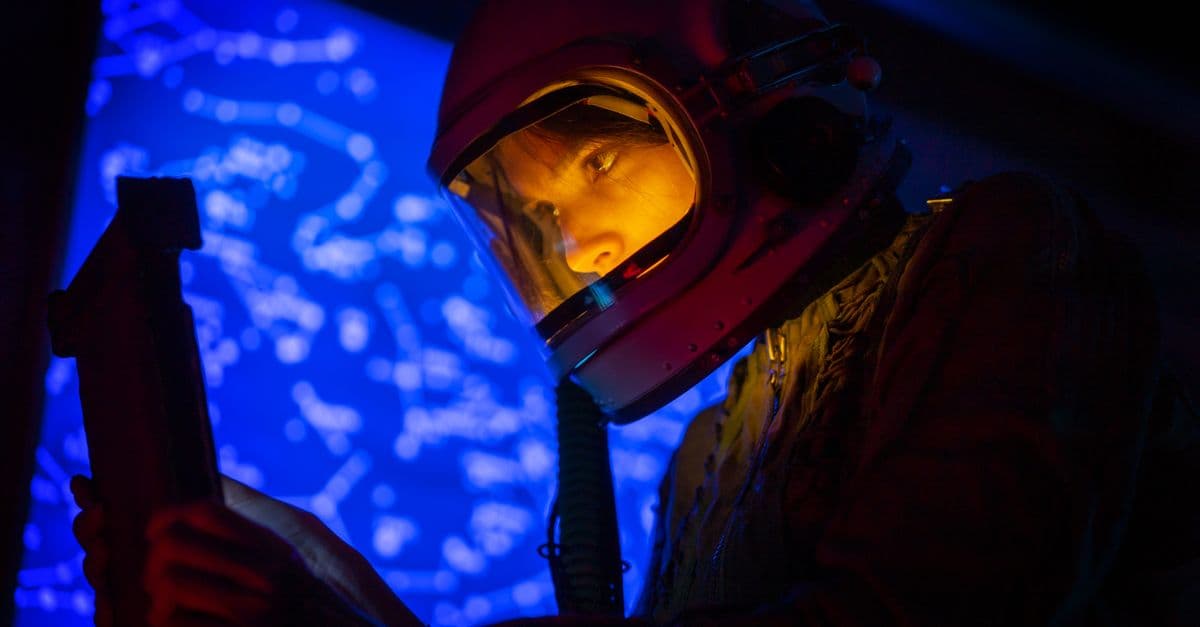
Photo: Mikhail Nilov / Pexels
Aboard the International Space Station, the sun rises and sets roughly every 90 minutes, producing about 16 light-dark cycles in a single 24-hour period. The human circadian clock, tuned over millions of years to one sunrise and one sunset, has no evolved response to that pattern. NASA-funded actigraphy studies covering more than 4,000 nights of astronaut sleep found that crew members average just over six hours of sleep per night in orbit, well short of the 8.5 hours NASA schedules for rest, and that roughly three-quarters of ISS crew members rely on sleep medication at some point during a mission. This article walks through what causes that disruption, what NASA has tried to fix it, and why the findings matter for millions of shift workers and insomnia patients on Earth.
Key Takeaways
- ISS astronauts average about 6 hours of sleep per night against a scheduled 8.5 hours, a gap that persists across entire missions rather than resolving with adaptation
- The station's 16 daily light-dark cycles do not entrain the circadian clock the way Earth's single 24-hour cycle does; circadian phase can drift outside the sleep period on nearly one night in five
- About 78% of ISS and shuttle crew members have used sleep-promoting medication in flight, a rate roughly 20 times the estimated annual rate of hypnotic drug use in the general US population
- NASA's Solid State Lighting Assembly, installed in 2016, changes color temperature by time of "day" to help nudge circadian timing without relying on drugs
- Spaceflight sleep research is feeding directly into treatments for shift work disorder, delayed sleep phase syndrome, and non-24-hour sleep-wake disorder in people who never leave Earth
Why sleep breaks down in orbit
Sleep is not a passive shutdown. It is an active physiological process that consolidates memory, clears metabolic waste from the brain, regulates appetite hormones, and resets immune function. Chronic short sleep on Earth is linked to impaired glucose metabolism, elevated blood pressure, and weakened antibody response, and the National Sleep Foundation puts the healthy range for adults at 7 to 9 hours a night (Sleep Foundation, "Shift Work Disorder"). Astronauts routinely sleep below that range, and the deficit accumulates rather than resolving.
Three separate mechanisms combine to produce that deficit, and separating them out matters because each one requires a different fix.
The first is light. The ISS completes an orbit of Earth roughly every 90 minutes, which means the crew experiences a sunrise and sunset about every hour and a half rather than once a day. The human suprachiasmatic nucleus, the brain region that runs the master circadian clock, uses light hitting specialized retinal cells as its primary synchronizing signal. Bombarded with 16 mismatched light cues instead of one, the clock cannot lock onto a stable 24-hour rhythm the way it does on Earth.
The second is the loss of a stable "day" structure. Work shifts, exercise sessions, and meal times aboard the ISS are scheduled around Greenwich Mean Time rather than any local light cycle, so astronauts must actively suppress or seek out light using window shades and blackout masks to protect a sleep period that isn't reinforced by the environment around them.
The third is physiological: microgravity itself changes how the body settles into sleep. Without gravity pulling blood and fluid downward, astronauts experience a persistent headward fluid shift, congestion, and the loss of the gentle pressure cues from lying on a mattress that normally help signal the body it's time to rest. Combined with the confined, noisy environment of a spacecraft, that produces sleep that is shorter, more fragmented, and lighter than sleep on Earth.
How NASA measures sleep 400 kilometers up
You cannot wheel a full sleep lab onto a spacecraft, so ISS sleep research relies on a layered set of tools, each trading some precision for portability.
Actigraphy is the workhorse. Astronauts wear a wrist-mounted accelerometer that tracks movement patterns, which correlate closely with sleep and wake states. It is not as precise as a full polysomnogram, but it can run continuously for an entire mission without disrupting the crew's routine, which is why most of the large-scale ISS sleep datasets are actigraphy-based.
Sleep logs capture the subjective side: when astronauts think they fell asleep, how many times they woke up, and how rested they feel. Subjective and objective measures often diverge in spaceflight, astronauts sometimes report feeling more rested than their actigraphy data would suggest, which is itself a useful research finding about perception versus physiology.
Polysomnography, the gold-standard sleep study that records brain waves, eye movement, and muscle activity, has flown on the ISS in limited experiments because the equipment and analysis burden are heavy. When it has flown, it has confirmed what actigraphy suggested: less slow-wave (deep) sleep and more fragmented light sleep compared to preflight baselines.
Salivary and urinary cortisol and melatonin sampling track circadian phase directly. Melatonin onset timing, in particular, is the standard biomarker researchers use to determine whether an astronaut's internal clock has shifted relative to their scheduled sleep period.
What is circadian phase, and why does it drift in space?
Circadian phase is the timing of your internal clock relative to the external world, essentially, what time your brain thinks it is. In space, without a single dominant light-dark cycle to anchor it, that internal clock can drift. A NASA-funded analysis by Erin Flynn-Evans and colleagues modeled the circadian phase of 21 ISS crew members across more than 3,000 cumulative days in orbit and found that their estimated circadian low point, the biological signal that should fall in the middle of the sleep period, occurred outside the scheduled sleep window on 19% of study days (Flynn-Evans et al., described via Military Medical Research review). In practice, that means on nearly one night in five, an astronaut's body is biologically primed to be awake at exactly the time they're supposed to be asleep, or vice versa.
What the data actually shows
Multiple independent datasets, spanning shuttle missions, ISS long-duration missions, and ground-based astronaut assessments, converge on a consistent picture.
Sleep duration falls and stays fallen. The often-cited Barger 2014 study in The Lancet Neurology tracked 4,081 nights of sleep from 64 astronauts and found mean sleep duration of 5.96 hours during ISS missions, roughly 2.5 hours short of the scheduled 8.5-hour rest period. Crucially, sleep time did not recover as missions progressed, suggesting genuine adaptation failure rather than a temporary adjustment period (Sleep Review coverage of Barger et al.).
Sleep medication use is dramatically elevated. The same body of research found that roughly three-quarters of ISS crew members reported using sleep-promoting medication at some point in flight, and on shuttle missions, crew used medication on more than half of all nights. That reported rate of hypnotic drug use is about 20 times the estimated proportion of the general US population using such medication in a given year (ScienceDaily summary of the Lancet Neurology findings). Zolpidem, sold under the brand name Ambien, accounted for the large majority of doses used on shuttle missions.
Circadian misalignment is measurable, not just felt. The Flynn-Evans modeling work found that circadian phase estimates fell outside the sleep period on close to one in five mission days, which lines up with astronaut reports of difficulty falling asleep and waking unrefreshed even after a full scheduled rest period (PMC review, "On-orbit sleep problems of astronauts and countermeasures").
Light-based countermeasures show measurable benefit. NASA's Solid State Lighting Assembly (SSLA), engineered jointly by Johnson Space Center researchers and Kennedy Space Center engineers and installed aboard the ISS starting in 2016, replaced the station's older fluorescent general luminaire assemblies with tunable LED fixtures. The SSLA operates in three distinct spectral modes: a 4,500K neutral "general" mode for standard operations, a 2,700K warm "pre-sleep" mode intended to reduce blue-light exposure before rest, and a 6,500K cool "phase-shift" mode used deliberately to help nudge an astronaut's circadian clock earlier or later when a mission schedule demands it (NASA, "NASA Research Boosts LED Lamps for Home and Garden"; NASA Spinoff, "Lighting in a Bottle"). Crews using the SSLA have reported improved sleep quality compared to the fluorescent lighting it replaced.
| Metric | Earth baseline / recommendation | ISS in-flight finding | Primary source |
|---|---|---|---|
| Nightly sleep duration | 7-9 hours (adult recommendation) | ~5.96 hours average, ~6 hours across pooled shuttle and ISS data | National Sleep Foundation; Barger et al., 2014 |
| Scheduled vs. actual rest | 8.5 hours scheduled by NASA | ~2.5-hour shortfall from scheduled rest period | Barger et al., 2014 |
| Sleep medication use | Roughly matches general population base rate | ~78% of ISS/shuttle crew used medication at some point; ~20x general-population hypnotic use rate | Barger et al., 2014; ScienceDaily |
| Circadian phase misalignment | Phase should fall within scheduled sleep window | Estimated circadian nadir fell outside sleep period on ~19% of days studied | Flynn-Evans et al., modeled across 21 astronauts |
| Cabin lighting technology | Fixed-spectrum fluorescent (pre-2016) | Tunable 3-mode LED (SSLA): 4,500K day / 2,700K pre-sleep / 6,500K phase-shift | NASA Johnson/Kennedy SSLA program |
Table: ISS sleep and circadian disruption compared against Earth baselines, drawn from NASA-funded actigraphy and lighting research.
Why this matters beyond the space station
The instinct is to treat astronaut sleep loss as a niche occupational hazard, but the mechanisms NASA has isolated map directly onto conditions affecting large populations on Earth.
Shift work disorder. An estimated significant share of the roughly 20% of the US workforce that works non-standard shifts experiences shift work disorder, a circadian rhythm condition marked by insomnia and excessive sleepiness that mirrors what ISS crews report (Sleep Foundation, "Shift Work Disorder"). The Centers for Disease Control and Prevention notes that shift work is linked to elevated risk of cardiovascular disease, gastrointestinal disorders, and metabolic dysfunction, the same downstream health concerns NASA tracks in returning astronauts (CDC NIOSH, "Shiftwork, Long Work Hours, Fatigue").
Circadian-targeted lighting design. The three-mode SSLA approach, using warm light to wind down and cool light to phase-shift, is conceptually identical to circadian lighting now being installed in hospitals, eldercare facilities, and offices to help stabilize sleep-wake patterns in people who spend most of their day indoors under artificial light.
Non-24-hour sleep-wake disorder. People who are totally blind and lack light perception often cannot entrain to the 24-hour day at all, producing symptoms that look remarkably similar to what ISS crews experience: a circadian clock that drifts relative to the desired sleep schedule. Researchers studying astronaut circadian drift and researchers treating this rare Earth-based disorder are, in effect, working the same underlying problem from opposite directions.
Pharmacological research on sleep aids in extreme conditions. Because ISS crews use hypnotic medication at such elevated rates, NASA has an unusually rich, closely monitored dataset on how sleep medications perform under conditions of chronic partial sleep deprivation, data that is relevant to anyone managing insomnia during a demanding, irregular schedule, from ICU nurses to long-haul pilots.
The disruption astronauts experience also compounds with other physiological stresses of spaceflight. Cardiovascular changes documented in long-duration ISS crew and accelerated markers of biological aging seen in microgravity both interact with poor sleep, since sleep loss on Earth is independently linked to cardiovascular strain and accelerated cellular aging markers, making it hard to fully separate space-specific effects from sleep-loss effects in orbit.
What people get wrong about sleeping in space
"Astronauts just get used to it." The data says otherwise. Barger's actigraphy dataset found no meaningful recovery of sleep duration as ISS missions progressed from days to months; the shortfall from the scheduled 8.5-hour rest period persisted throughout. This is adaptation failure, not a settling-in period, and it's a key reason NASA treats sleep as an active countermeasure problem rather than something crews will simply grow out of.
"It's just because there's no bed to lie down in." Microgravity does remove the pressure cues of a normal mattress, and that plays a role, but it is not the dominant driver. The circadian phase-misalignment data (phase falling outside the sleep window on nearly one day in five) points to light and scheduling, not mattress physics, as the larger mechanism. Astronauts strap into sleeping bags mounted in small crew quarters, and even with a stable sleeping surface, the light and phase problems persist.
"Sleeping pills solve the problem." Medication use is common but modestly effective at best. Astronauts who use hypnotics still show reduced sleep efficiency and altered sleep architecture compared to their preflight baseline; the drugs help them stay asleep longer but don't restore normal deep-sleep proportions. NASA's own research program has increasingly emphasized light-based and behavioral countermeasures like the SSLA specifically because pharmacological solutions alone haven't closed the gap.
"This is only relevant to astronauts." Circadian science doesn't distinguish between a mismatched light cycle caused by orbital mechanics and one caused by rotating shift schedules or blindness. The suprachiasmatic nucleus responds to the same signals either way, which is exactly why lighting protocols developed for the ISS have already been adapted into consumer and clinical circadian lighting products.
What comes next
Longer missions raise the stakes on all of this. A round-trip Mars mission would put crews in a sleep-disrupted, circadian-misaligned state for six to nine months rather than the roughly six-month stints typical of current ISS rotations, with no option to abort a bad sleep cycle by returning to Earth. NASA's Human Research Program lists sleep and circadian misalignment among the risks it actively tracks for exploration-class missions, alongside radiation exposure and musculoskeletal loss.
Current research directions include refining the SSLA's phase-shift protocols to individual astronaut chronotypes rather than a one-size-fits-all schedule, testing next-generation wearable sensors that can estimate sleep stage with less burden than actigraphy alone, and studying whether pre-flight circadian conditioning, deliberately shifting an astronaut's clock before launch, can reduce the adjustment period once in orbit.
FAQ
Q: Why don't astronauts adapt to the 16 daily light-dark cycles over time? A: The suprachiasmatic nucleus is built to synchronize to a single 24-hour cycle using light as its main cue. Sixteen conflicting light signals a day exceed what that system can lock onto, and NASA's actigraphy data shows the sleep shortfall persists across entire missions rather than shrinking as astronauts spend more time in orbit.
Q: How much less sleep do astronauts get compared to on Earth? A: Pooled data from 64 astronauts and 4,081 nights found an average of roughly 5.96 hours of sleep per night in flight, against a scheduled 8.5-hour rest period and the 7-to-9-hour range recommended for adults on Earth, a shortfall of well over two hours a night.
Q: Do sleep medications actually work in space? A: Partially. About 78% of ISS and shuttle crew members have used sleep-promoting medication, most commonly zolpidem, and it extends total sleep time. But it does not restore normal sleep architecture; astronauts on medication still show reduced deep-sleep proportions compared to their preflight baseline.
Q: What is the Solid State Lighting Assembly and how does it help? A: It's a tunable LED lighting system installed on the ISS starting in 2016 that switches between a neutral 4,500K daytime mode, a warm 2,700K pre-sleep mode, and a cool 6,500K phase-shift mode used to deliberately move an astronaut's circadian clock earlier or later. It replaced older fixed-spectrum fluorescent lighting.
Q: Can this research help people with regular insomnia on Earth? A: Yes, indirectly. The light-timing principles behind the SSLA are the same ones used in circadian lighting protocols now deployed in some hospitals and eldercare settings, and the mechanisms NASA has isolated overlap heavily with shift work disorder and non-24-hour sleep-wake disorder treatment approaches.
Q: How is astronaut circadian phase actually measured? A: Primarily through melatonin onset timing in saliva or urine samples, combined with mathematical modeling of activity and light-exposure data from wrist actigraphy. Erin Flynn-Evans's NASA-funded analysis used this approach across 21 astronauts and over 3,000 cumulative mission days.
Q: Is sleep loss worse on the ISS than during Space Shuttle missions? A: Roughly comparable, if anything slightly better on the ISS. Barger's dataset found shuttle crews averaged just under 6 hours of sleep and used medication on more than half of all mission nights, while ISS long-duration crews averaged just over 6 hours, likely reflecting the ISS's more established routines and the SSLA lighting upgrade.
Q: Would a Mars mission make sleep disruption worse? A: Almost certainly, mainly through duration rather than a new mechanism. A Mars transit would extend the same circadian misalignment and cumulative sleep debt documented on the ISS across six to nine months with no option to return early, which NASA's Human Research Program lists as an active risk area for exploration-class missions.
Q: How quickly does sleep recover after astronauts return to Earth? A: Most astronauts report subjective improvement within days of landing, once a stable single light-dark cycle and normal gravity are restored, though full normalization of sleep architecture can take longer and is an area of ongoing post-mission monitoring.
The takeaway
The ISS is, in effect, an accidental long-term study of what happens when you strip away the single strongest cue the human circadian clock relies on. Astronauts lose more than two hours of sleep a night, lean heavily on medication that only partially fixes the problem, and show circadian phase drift on nearly one day in five, and none of that resolves on its own with time in orbit. What makes this research valuable well past NASA's own mission planning is that the fix, tunable light exposure timed to nudge the internal clock, works the same way whether the mismatch comes from orbital sunrises, a rotating shift schedule, or blindness. Sleep in space turns out to be less an exotic curiosity and more a stress test that exposes exactly how fragile, and how fixable, human circadian timing is everywhere else.
Read next:
- Biological Aging in Microgravity: What the ISS Reveals About Aging Processes
- Cardiovascular Changes in Astronauts: ISS Long-Term Health Studies
- Immune System Changes in Space: ISS Immunology Research
Sources:
- Barger, L.K. et al., "Prevalence of sleep deficiency and use of hypnotic drugs in astronauts before, during, and after spaceflight," The Lancet Neurology, 2014, via Sleep Review and ScienceDaily
- Flynn-Evans, E.E. et al., circadian phase modeling of 21 ISS astronauts, summarized in "On-orbit sleep problems of astronauts and countermeasures," Military Medical Research, 2018, via PMC
- NASA, "NASA Research Boosts LED Lamps for Home and Garden" (Solid State Lighting Assembly), nasa.gov
- NASA Spinoff, "Lighting in a Bottle," spinoff.nasa.gov
- Sleep Foundation, "Shift Work Disorder: Signs, Diagnosis, and How to Manage It," sleepfoundation.org
- CDC NIOSH, "Shiftwork, Long Work Hours, Fatigue," cdc.gov
Follow new articles
Add SciHub101 to your feed reader to see new science and technology stories.
About the Author
SciHub101 is an independent science and technology publication founded and edited by Buğra Sözeri, a software engineer and app developer based in Türkiye. AI tools assist with drafting and research. Source documentation in the existing archive is uneven, and articles are being reviewed and corrected. The Editorial Team byline identifies editorial responsibility; it does not certify specialist or independent human review. Where we compare products, anything built by our own team is labelled as such — see the editorial guidelines and About page for how corrections and disclosures work.
Related Articles
Solar Wind Experiments on Moon: Collecting Particles from the Sun
Apollo solar wind collectors captured particles directly from the Sun's wind, analyzing isotope ratios that revealed solar composition and isotopic variations over time.
Radiation Effects on Living Organisms: ISS Long-Term Exposure Studies
ISS research reveals how cosmic radiation damages DNA and organisms in space, with findings applicable to cancer prevention, radiation therapy, and long-duration spaceflight safety.
Bone Loss in Weightlessness: ISS Research on Osteoporosis
ISS astronauts lose bone density faster than aging populations, revealing mechanisms of osteoporosis and informing prevention and treatment strategies.
Cardiovascular Changes in Astronauts: ISS Long-Term Health Studies
ISS research reveals how weightlessness causes fluid shifts, cardiac deconditioning, and blood flow changes—insights applicable to heart disease treatment on Earth.
Immune System Changes in Space: ISS Immunology Research
ISS studies reveal how microgravity suppresses immune function, explaining increased infection risk in astronauts and informing immunology treatment strategies.
Muscle Atrophy Research: How Weightlessness Weakens Astronauts
ISS experiments reveal mechanisms of rapid muscle loss in microgravity, informing treatment of muscular dystrophy, aging, and disease-related muscle wasting.