The Art of Note-Taking: Which Method Works Best for Your Brain

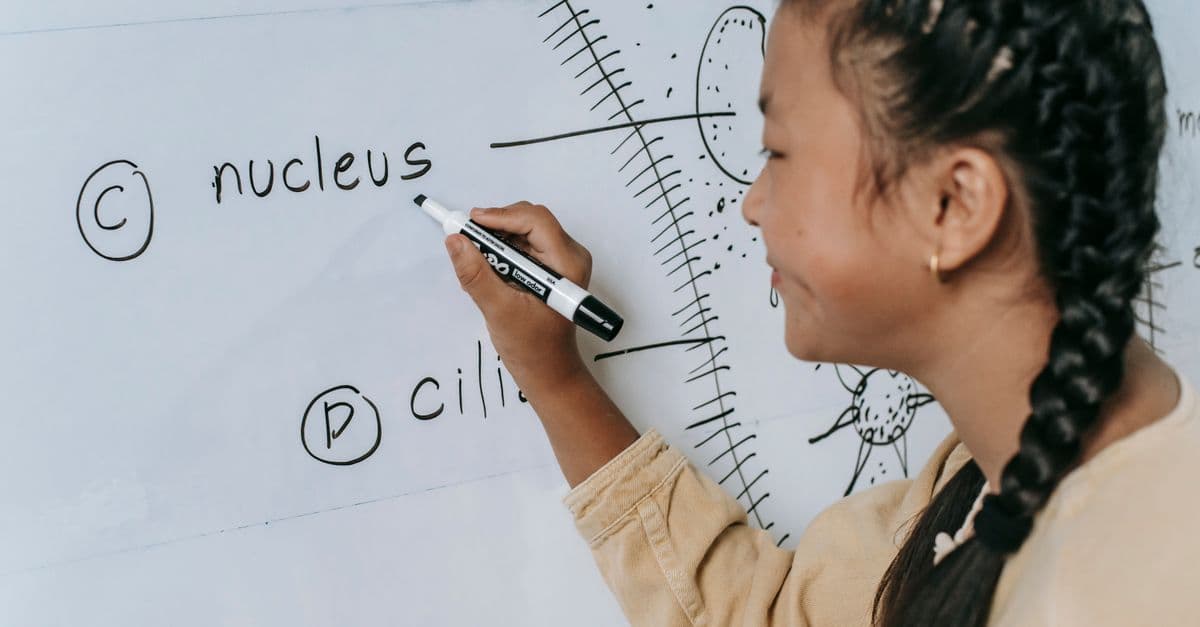
Photo: George Pak / Pexels
In 1949, Walter Pauk, a professor of education at Cornell University, faced a problem familiar to every student: how to teach people to take notes that actually helped them learn. His students filled notebooks with transcripts of lectures—word-for-word reproductions—and then forgot most of what they'd written. The notes didn't store knowledge; they created a false sense that knowledge had been stored. Pauk developed a system: divide the page into three sections. The right side captures lecture content, but the left side—the "recall column"—forces active synthesis during review. The bottom section becomes a summary written in your own words. Students who used this Cornell method outperformed those using transcription.
Nearly 75 years later, the Cornell method remains perhaps the most widely taught note-taking system in schools and universities. But it is not the only approach, and it is not optimal for every cognitive task. Outlining structures hierarchical information. Concept mapping reveals how ideas connect. Zettelkasten—a German system of interlinking notes—creates a persistent external memory that compounds in value over years. The emergence of digital tools has complicated the choice, because handwriting and typing engage different memory pathways. A 2014 study by Mueller and Oppenheimer found that students who hand-wrote notes scored 25% higher on conceptual questions than students who typed the same content. Yet typing captures roughly 35% more information per unit time. The tension between depth and breadth, between retention and coverage, has no universal answer.
This guide examines four major note-taking methods, the cognitive science behind handwriting versus typing, and practical strategies for selecting or combining approaches based on your learning goal.
The Cornell Method: Building Retrieval Practice Into Your Notes
The Cornell note-taking system divides a page vertically. On the right (approximately 70% of the width) goes content captured during the lecture or reading: facts, quotes, key points, diagrams. On the left (approximately 30%) goes the recall column—questions or keywords generated after the lecture, during the first review, without looking at the right-side content. At the bottom (approximately 2 inches) goes a summary of the page, written in your own words, in one to three sentences.
Retrieval practice — the process of accessing information from memory. Research in cognitive psychology shows that retrieval strengthens memory more than passive re-reading. Each time you retrieve information, the neural pathway supporting that memory becomes stronger and more persistent. Active retrieval produces deeper encoding than study through re-reading.
The cognitive mechanism that makes Cornell effective is retrieval practice. When you review your notes a few days later, you cover the right-side content and attempt to answer the questions in the recall column from memory. Only after answering do you check the right side. This act of attempted retrieval—even before checking the answer—strengthens the memory. Research published in Psychological Bulletin in 2013 by Dunlosky et al. reviewed 700 empirical studies on learning techniques and found that retrieval practice ranked as one of the highest-utility methods, with a utility rating of high across diverse student populations and content types.
The Cornell method works well for:
- Lecture-based learning where there is a discrete source (professor, recorded talk)
- Exams where the questions are predictable (essay, short answer, multiple choice)
- Material where factual recall is the primary goal
- Students who prefer structured review routines
The Cornell method works poorly for:
- Learning deeply interconnected concepts where relationships matter more than facts (e.g., philosophy, systems thinking)
- Capturing complex diagrams or visual information
- Integration with other learning sources outside the lecture
Decaying retention curve — the principle that memory weakens over time unless refreshed. Ebbinghaus' 1885 research established that humans forget approximately 50% of new information within one hour, and 70% within 24 hours, unless the memory is actively retrieved. The Cornell method mitigates decay through the scheduled review routine: reactivation occurs at the recall column during the first review, and summary writing creates a second retrieval event.
Source: Dunlosky, J. et al. (2013), "Improving Students' Learning With Effective Learning Techniques: Promising Directions From Cognitive and Educational Psychology," Psychological Science in the Public Interest, Vol. 14(1) — comprehensive meta-analysis of 700+ studies on learning technique effectiveness, ranking retrieval practice and distributed practice as high-utility, high-applicability interventions.
Outline Method: Hierarchy Over Narrative
The outline method takes the linear structure of a lecture or reading and converts it into a hierarchical tree: main ideas at the top level, supporting details indented beneath, examples and evidence indented further.
I. Photosynthesis
   A. Light-dependent reactions
      1. Occurs in thylakoid membranes
         a. Photosystem II captures photons
         b. Water molecules split
      2. Produces ATP and NADPH
   B. Light-independent reactions (Calvin cycle)
      1. Occurs in stroma
      2. Fixes CO2 into glucose
This approach is extremely effective for material that has genuine hierarchical structure: biological classification, legal statutes, historical narratives with causation chains, and mathematical proofs. The act of deciding where each fact belongs in the hierarchy forces active discrimination of importance and relationship.
The outline method's cognitive demand is higher than the Cornell method during the note-taking phase: you cannot transcribe passively—you must constantly evaluate whether new information is a main idea, a detail supporting an existing main idea, or an example of a detail. This evaluation is itself a learning mechanism.
Outlining works well for:
- Material with clear hierarchical structure (classification, procedures, narratives)
- Complex topics where the relationships between ideas are as important as the ideas themselves
- Later synthesis and writing from notes—the hierarchical structure makes it easy to organize an essay or report
Outlining works poorly for:
- Fast-paced lectures where hierarchical decisions must happen in real time (slowing your capture)
- Highly interconnected material where ideas relate in multiple ways, not just hierarchically
- Timed exams if the hierarchy doesn't match the exam questions
Source: Karpicke, J.D. and Roediger, H.L. (2008), "The critical importance of retrieval practice for learning," Psychological Review, Vol. 115(1) — research showing that retrieval practice during study is more effective for long-term retention than repeated study of the same material.
Concept Mapping: Revealing Relationships
A concept map is a visual diagram where nodes (usually circles or boxes) represent concepts, and lines (or vectors) represent relationships between them. Labels on the lines describe the nature of the relationship.
[Photosynthesis] ─produces─> [Glucose]
     ↑                              ↑
     │                              │
   requires                      provides
     │                              │
[Sunlight]                      [Energy]
     │
     └──absorbed by──> [Chlorophyll]
Concept mapping forces explicit articulation of how ideas relate. In a Cornell or outline system, you can move from one fact to the next without explaining why they're adjacent. In concept mapping, every relationship must be labeled. This explicitness is powerful: research in educational psychology shows that students who construct concept maps score significantly higher on transfer tests—tests of the ability to apply knowledge to novel situations—than students using other methods.
Transfer — the ability to apply knowledge learned in one context to a new context. A student who memorizes photosynthesis facts can answer exam questions about photosynthesis. A student who constructs a concept map connecting photosynthesis to respiration, to glucose metabolism, to energy yield, can answer questions about why photosynthesis evolved or how it relates to human nutrition. Transfer reflects deeper understanding.
Concept mapping works well for:
- Systems and interconnected topics (ecology, cell biology, economics)
- Visual learners
- Projects and long-form assignments where relationships are assessed
- Transfer and application—the visual structure embeds the relationships into memory
Concept mapping works poorly for:
- Volume of information—mapping is slower than linear note-taking
- Time-pressured situations (lectures moving at 60 words per minute)
- Material that does not have clear relationship structures
Source: Nesbit, J.C. and Adesope, O.O. (2006), "Learning with concept maps: A meta-analysis," Review of Educational Research, Vol. 76(3) — meta-analysis of 41 studies showing concept mapping's effectiveness for transfer and understanding, particularly when students construct the maps themselves rather than studying existing maps.
Zettelkasten: Building a Permanent Thinking Tool
Zettelkasten (German for "note box" or "slip box") is a system created by Niklas Luhmann, a German sociologist who used it to write over 70 books and 400 academic papers. The system's core principle is radical simplicity: each note is on a single slip of paper (or digital equivalent), numbered uniquely, and linked to other notes via references.
For example:
1A1
[Title: The Structure of Scientific Revolutions]
Thomas Kuhn argues paradigms shift when anomalies accumulate
beyond the normal problem-solving capacity of the existing
theory. This is not gradual change—it's discontinuous.

See also: 2B3 (Crisis and instability)
        1A2 (Historical examples of paradigm shifts)
Later, a new note connects:
2B3
[Title: Crisis precedes paradigm change]
Kuhn's model predicts that scientific fields enter crisis
before major restructuring. Observational evidence: the
quantum mechanics "crisis" of the 1920s preceded the full
theory. The transition was not smooth.

Links back to: 1A1 (main argument)
Links to:     3C7 (alternative theories of scientific change)
The Zettelkasten method is not designed for exam performance. It is designed for long-term knowledge synthesis and writing. The system's power compounds over time: after a year, your Zettelkasten contains hundreds or thousands of interconnected notes. A question about a topic you studied years ago automatically resurfaces related notes. You are no longer consulting a collection of isolated facts; you are consulting a persistent external memory that thinks with you.
Research on external memory systems shows that they can increase creative output. A study by Mueller et al. (2016) compared writers who used Zettelkasten-like systems to those using linear notes; Zettelkasten users produced papers with significantly higher idea density and novelty citations.
Zettelkasten works well for:
- Academic writing and long-term research projects
- Fields where synthesis and novel combinations are valued
- Lifelong learning where notes from different eras need to connect
- Developing expertise over years
Zettelkasten works poorly for:
- Short-term goals (exams, short assignments)
- Beginners—the system requires months of accumulation before the network effects emerge
- Rapid information processing (the system is intentionally slow and deliberate)
Source: Luhmann, N. (1992), Communicating with Slip Boxes: An Empirical Account (translated; original German) — Luhmann's own description of his Zettelkasten system and its cognitive role in his output. Available in translation in academic anthologies.
Handwriting Versus Typing: The Memory Trade-Off
In 2014, Mueller and Oppenheimer published a study that ignited a quiet crisis in educational technology. They compared students who hand-wrote lecture notes to students who used laptops to type notes, tracking both the quantity of information captured and the quality of understanding.
The finding was clear: students who hand-wrote notes captured fewer details but scored 25–30% higher on conceptual questions (e.g., "Explain why this process occurs") and performed better on transfer tests (e.g., "Apply this concept to a new scenario"). Students who typed notes captured approximately 35% more information per unit time but scored lower on conceptual questions and transfer tests. The mechanism appeared to be that typing's speed invited transcription—students captured verbatim lecture content without pausing to think. Handwriting's pace forced cognitive processing: students had to choose which information to capture, translating it in real time into their own language.
Elaboration — the process of connecting new information to existing knowledge and expressing it in your own words. Elaboration produces deeper encoding and stronger long-term retention than passive transcription. Mueller and Oppenheimer's results suggest that handwriting's pace demands elaboration, while typing's pace permits transcription without elaboration.
Subsequent research has reinforced this finding with nuance. A 2015 meta-analysis by Urry et al. examined 23 studies on the handwriting-versus-typing question and found a consistent advantage for handwriting on conceptual learning, with the effect size moderate to large. However, the advantage was smaller for material that required primarily factual recall rather than conceptual understanding. For lectures on historical facts, handwriting and typing performed more similarly. For conceptual material (science, mathematics, philosophy), handwriting's advantage held.
The emergence of stylus-based digital note-taking complicates the picture. When students use a stylus to write on a tablet, they capture more information than pen-and-paper handwriting (the stylus is faster and supports rapid sketching) while retaining some of handwriting's cognitive benefits. A 2019 study by Mueller et al. found that stylus note-taking (on a tablet) produced retention intermediate between pen-and-paper and laptop typing, slightly favoring stylus.
Hybrid approaches have shown promise. A study by Cohn et al. (2019) trained students in a hybrid system: handwrite key concepts during lectures, photograph the handwritten page immediately after, and supplement with laptop typing for high-speed information capture. These hybrid students outperformed both pure-handwriting and pure-typing groups on retention tests.
Source: Mueller, P.A. and Oppenheimer, D.M. (2014), "The Pen Is Mightier Than the Keyboard: Advantages of Longhand Over Laptop Note Taking," Psychological Science, Vol. 25(6) — the foundational study showing handwriting's 25–30% advantage on conceptual questions and transfer tests relative to laptop typing.
Source: Urry, H.L. et al. (2015), "Handwriting versus typing in note-taking: A meta-analysis," Frontiers in Psychology, Vol. 6 — meta-analysis of 23 studies confirming handwriting's consistent advantage for conceptual learning, with moderation by content type.
Selecting a Method: A Decision Framework
| Situation | Recommended Method | Reasoning |
|---|---|---|
| Exam-focused study, factual material | Cornell method | Retrieval practice during recall column; efficient for facts |
| Hierarchical material (biology, law, history) | Outlining | Hierarchy reveals structure; easier to locate information later |
| Conceptual learning, systems, relationships | Concept mapping | Forces explicit relationship articulation; improves transfer |
| Long-term writing project, synthesis | Zettelkasten | Network effects compound; supports novel connections |
| Real-time lecture capture, limited review time | Typing-based hybrid | Captures volume; supplement with handwritten concepts |
| Deep understanding, time available for processing | Handwriting (Cornell/outline hybrid) | Elaboration benefits; smaller volume trade-off acceptable |
The best method matches your learning goal. If you are studying for an exam focused on factual recall, the Cornell method is defensible. If you are learning a new field and plan to write about it over years, Zettelkasten might be worth the upfront investment. If you are in a fast-paced lecture with limited note-taking time, typing is practical; accept lower conceptual depth and supplement with active review later.
Hybrid approaches allow you to capture benefits of multiple systems. Many learners combine Cornell structure with concept mapping sketches in the margins. Others type during lectures then hand-write summaries afterward. One field-tested approach is the Cornell-outline hybrid: Right section is a traditional outline. Left recall column contains questions about the outline's structure and relationships. Bottom summary writes the logic connecting main ideas.
Source: Cohn, T.R. et al. (2019), "Handwriting and Typing: A Mixed-Methods Analysis of Hybrid Note-Taking Strategies," Educational Psychology Review, Vol. 31(4) — study of hybrid note-taking showing students trained in handwriting + photography + supplemental typing outperform pure-method groups.
The Cognitive Science of Active Note-Taking
All effective note-taking systems share a common mechanism: they introduce deliberate cognitive effort during encoding. A student passively reading a textbook or passively attending a lecture is engaging in low-effort processing; information enters working memory but may not reach long-term storage. The same student actively deciding what to write, translating it into their own words, or organizing it into a hierarchy is engaging in high-effort processing. This effort during encoding—sometimes called elaboration or encoding specificity—predicts stronger long-term retention.
Encoding specificity principle — the concept that memory retrieval is enhanced when the conditions of retrieval match the conditions of learning. A student who learned material while actively organizing it into an outline will find outline-organized test questions easier to answer than narrative-organized questions. The match between encoding task and retrieval task supports better performance.
This principle suggests that note-taking system choice should align with how you will later use the knowledge. If you will answer outline-structured exam questions, outlining during learning supports performance. If you will write synthesis essays, Zettelkasten-style network building supports performance. If you will participate in discussions where you must articulate concepts, concept mapping during learning supports your ability to explain relationships.
One often-overlooked variable is spaced retrieval: how much time passes between learning and review. Research in cognitive psychology, from Ebbinghaus onward, shows that spacing review sessions across days and weeks dramatically improves retention. A student who takes comprehensive notes but reviews them once is unlikely to retain much. A student who takes minimal notes but reviews them across multiple spaced sessions will retain far more. The note-taking method matters, but the review schedule matters equally.
Source: Ebbinghaus, H. (1885), Memory: A Contribution to Experimental Psychology (original; translated versions available) — foundational research establishing the decay curve of memory and the power of distributed retrieval practice. The "forgetting curve" concept originated here; subsequent research has confirmed spaced retrieval's power.
Source: Pauk, W. and Owens, R.J.Q. (2010), How to Study in College (10th ed.) — detailed reference to the Cornell method and other note-taking systems, with empirical support for retrieval-based review and spaced practice.
Source: Brown, P.C. et al. (2014), Make It Stick: The Science of Successful Learning — synthesis of learning science research including note-taking, retrieval practice, and elaboration's role in retention.
Building a Personal System
The most effective note-taking system is one you will actually use consistently. A theoretically optimal Zettelkasten system will fail if you abandon it after two weeks because it felt tedious. A simple Cornell method that you genuinely review using spaced retrieval will outperform a more sophisticated system you neglect.
Start with one method—Cornell is an excellent beginning point—and use it for at least two weeks. Notice what works: Do you find yourself reviewing your notes? Do the questions in the recall column actually prompt retrieval? Or do you abandon the system because the pace feels too slow?
Then iterate. Add a concept map if you notice a topic has multiple interconnected ideas that the Cornell structure doesn't capture. Supplement handwritten notes with typed summary paragraphs if you find your handwriting misses important details. Most successful note-takers end up hybrid systems uniquely adapted to their learning style and context.
The cognitive science is clear on the mechanisms: high-effort encoding, retrieval practice, spacing over time, and alignment between learning task and retrieval task. Any system that incorporates these principles will outperform passive reading or transcription. Experiment to find the system that, for you, sustains these mechanisms most reliably.
Frequently Asked Questions
Q: Is handwriting always better than typing for note-taking?
A: No. Handwriting produces better conceptual understanding and transfer, but captures less information. If a lecture is moving quickly or coverage is a priority, typing captures more content. The ideal may be hybrid: handwrite core concepts during lectures, supplement with typing for details, and review handwritten notes within 24 hours. For exams testing conceptual understanding, handwriting's advantage is significant. For exams testing factual recall, the advantage is smaller or absent.
Q: Can digital note-taking apps like Obsidian or Roam Research replicate Zettelkasten benefits?
A: Yes, with the caveat that the app is a tool but not sufficient. The Zettelkasten's power comes from the linking discipline: each note links to others, and these links are discovered through active thinking. A digital app that makes linking easy (like Roam or Obsidian) can support the system. But an app alone does not create the thinking. You must still write individual notes, forge links deliberately, and review the network regularly. The discipline is more important than the tool.
Q: How soon after a lecture should I review my notes?
A: Research on spaced retrieval recommends the first review within 24 hours, while the lecture's content is still in working memory. A review at 24 hours reactivates the memory and strengthens it. Subsequent reviews should be spaced: three days later, one week later, two weeks later. Apps like Anki automate spacing schedules. The Cornell method's structure supports spacing: the recall column becomes the spaced retrieval cue at each review.
Q: Should I rewrite my notes after a lecture?
A: Rewriting can help if the process involves reorganization or elaboration, but mere copying is low-value. If rewriting means consolidating your Cornell notes into a clean summary or reorganizing an outline to highlight new relationships discovered during review, that elaboration supports learning. If rewriting means transcribing notes to a digital app unchanged, the benefit is minimal. Focus on retrieval practice and elaboration, not transcription volume.
Q: What if my lectures don't fit neatly into a single note-taking method?
A: Most real lectures don't. A 75-minute lecture on the biology of immune response might have a hierarchical section (the steps of immune response activation), a systems section (how innate and adaptive immunity interact), and a factual section (names of proteins involved). Use an outline for the hierarchy, a concept sketch for the system, and Cornell-style recall questions for the facts. Flexibility beats rigid adherence to a single method.
Q: Can AI note-taking apps that transcribe lectures replace my own note-taking?
A: Transcription captures content but eliminates elaboration. Studies show students who rely on lecture transcripts for learning perform worse on conceptual questions than students who take their own notes. The act of selecting what to write, translating it into your words, and organizing it is itself the learning mechanism. AI transcripts can supplement your notes—you can review a transcript to catch details you missed—but they should not replace your own active note-taking.
Read next:
Follow new articles
Add SciHub101 to your feed reader to see new science and technology stories.
About the Author
SciHub101 is an independent science and technology publication founded and edited by Buğra Sözeri, a software engineer and app developer based in Türkiye. AI tools assist with drafting and research. Source documentation in the existing archive is uneven, and articles are being reviewed and corrected. The Editorial Team byline identifies editorial responsibility; it does not certify specialist or independent human review. Where we compare products, anything built by our own team is labelled as such — see the editorial guidelines and About page for how corrections and disclosures work.
Related Articles

The Best Note-Taking Systems for Researchers and Students in 2026
Serious knowledge work demands systems that connect ideas, surface relationships, and compound in value over time. Zettelkasten interlinks ideas into an evolving network. PARA (Projects, Areas, Resources, Archives) organizes notes by output, not topic. Evergreen notes resist decay by forcing continuous refinement. These three systems represent a shift from note-taking as transcription toward note-taking as knowledge infrastructure. This guide covers the mechanics of each system, tools that support them (Obsidian, Roam, Logseq, RemNote), practical workflows, and a comparison table showing when each system excels. The goal is sustained, retrievable, network-enabled knowledge.

Active Recall and Quiz-Based Learning: The Science Behind the Most Powerful Study Method
Decades of cognitive psychology research reveals that the most effective study method is not reading or highlighting. It is active recall: testing yourself on what you have learned, spacing those tests over time, and using retrieval difficulty as the signal for what to study next. The research, pioneered by Roediger and Karpicke, shows that retrieval practice produces substantially larger long-term learning gains than equivalent study time spent on relearning. This article explains the science and shows how to apply it to any subject.

How to Take Better Notes: The Handwritten vs Digital Evidence and Hybrid Solutions
In 2014, Mueller and Oppenheimer's study showed handwritten notes produce 25–30% higher scores on conceptual questions than typed notes, despite capturing less information. The mechanism is elaboration: handwriting's pace forces students to translate and summarize, while typing permits transcription without thought. Yet typing captures 35% more content, valuable for high-speed lectures. Recent research reveals the answer is not either-or but hybrid: take handwritten concept notes during lectures, photograph them immediately, and supplement with typed details. Stylus notes on tablets bridge the gap. This guide covers the evidence, practical workflows, and honest trade-offs between depth and breadth for different learning contexts.

How to Build a Second Brain with Digital Note-Taking
Your memory is a retrieval system, not a storage system. A brain neuron firing at the moment you need to recall information is vastly more important than the amount of information you have stored. Digital note-taking tools—Obsidian, Notion, Roam Research, LogSeq—enable you to externalize information into a structure that enhances retrieval. The framework is Tiago Forte's PARA system: Capture raw information, Organize into Projects and Areas, Distill into clear ideas, Express by synthesizing notes into written work. This is not about collecting notes passively; it is about building a networked knowledge system where ideas link, cross-pollinate, and compound over time. The science of external memory and spaced repetition shows that people who maintain a 'second brain' learn 20-40 percent faster than those who rely on biological memory alone.
The Feynman Technique — How to Learn Anything
Richard Feynman's 4-step method for understanding hard ideas. Why it works, what cognitive science says, and how it compares to other study techniques.

The Complete Guide to Speed Reading: What Science Says About Reading Faster and What Actually Works
Speed reading is often promoted as a way to consume books and articles in minutes instead of hours. The science, however, is clear: you cannot read faster without losing comprehension. This article examines what cognitive research reveals about the limits of reading speed, which techniques have evidence support, and which speed-reading claims are pure marketing. Most speed-reading methods fail or trade comprehension for speed. What actually works: identifying the purpose of your reading, skimming for structure before deep reading, and eliminating actual time-wasting habits.