The Feynman Technique — How to Learn Anything
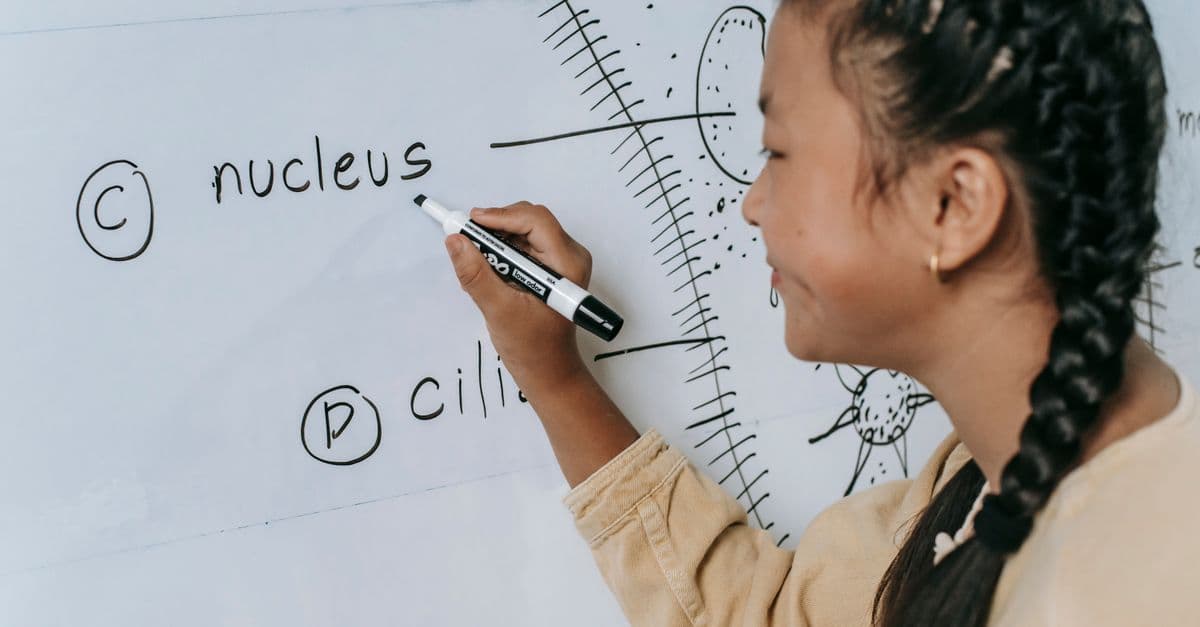
Photo: Katerina Holmes / Pexels
Richard Feynman (1918–1988) won the 1965 Nobel Prize in Physics for his work on quantum electrodynamics. He was also, by consensus of his students and colleagues, one of the best teachers physics has ever produced. His Caltech lectures (1961–1963) — published as The Feynman Lectures on Physics — are still in print and still used.
What made Feynman a great teacher wasn't his Nobel-level intellect. Plenty of brilliant physicists are terrible at explaining their work. What Feynman had was a method he used to make sure he actually understood things — not just recognized them. The method has come to be called the Feynman Technique, and decades of cognitive science research support why it works.
The Four Steps
The technique is simple enough to write on a napkin:
1. Write the name of the concept at the top of a blank page. Pick one specific idea — "the second law of thermodynamics," "how a transformer model works," "compound interest."
2. Explain it in plain language, as if teaching a 12-year-old. No jargon. No technical shortcuts. No "as we all know." Write out the explanation in complete sentences a curious kid could follow.
3. Identify where you stumble. The moments you reach for jargon, get vague, or skip ahead — those are the gaps in your understanding. Mark them. Go back to your source material (textbook, paper, video) and fill them in.
4. Review and simplify further. Reread your explanation. Where it's still clunky, rewrite it. Where you've used analogies, check that they hold up. The goal is an explanation so clean it sounds obvious.
That's it. The whole method is one sheet of paper and an honest conversation with yourself.
Why It Actually Works
The Feynman Technique works because it leverages three well-established findings from cognitive science.
1. It Forces Active Recall
Reading something is passive. You see the words and feel like you understand. Active recall — pulling information out of your brain without looking — is dramatically more effective for learning. Roediger and Karpicke's 2006 paper "Test-Enhanced Learning" showed that students who tested themselves on material remembered roughly 50% more after a week than students who simply reread the same material the same number of times.
2. It Breaks the Illusion of Explanatory Depth
Rozenblit and Keil's 2002 study "The Misunderstood Limits of Folk Science" had people rate how well they understood everyday objects (zippers, toilets, helicopters). Then they were asked to explain each one in detail. Their self-rated understanding plummeted after the attempt. We routinely think we understand things until we try to explain them. The Feynman Technique surfaces this gap immediately.
3. It Forces Elaboration
Elaborative encoding — connecting new information to existing knowledge through analogies, examples, and reframing — produces richer, more retrievable memories than rote repetition. Writing an explanation for a 12-year-old forces you to find analogies and concrete examples, which is elaborative encoding by another name.
What Cognitive Science Says About Studying More Broadly
In 2013, John Dunlosky and colleagues published a sweeping meta-review in Psychological Science in the Public Interest ranking common study techniques by evidence. The results were uncomfortable for many students:
Highest evidence (most effective):
- Practice testing (self-quizzing, flashcards, the Feynman Technique)
- Distributed practice (spaced repetition over time)
Moderate evidence:
- Elaborative interrogation (asking "why?" repeatedly)
- Self-explanation
- Interleaved practice (mixing topics rather than blocking them)
Low evidence (popular but largely ineffective):
- Highlighting and underlining
- Rereading
- Summarization
- Keyword mnemonics
The most popular study habits — rereading textbooks, highlighting passages — are among the least effective techniques tested.
Comparison Table: Study Techniques and Their Evidence
| Technique | Mechanism | Evidence Base | Effort | Best For |
|---|---|---|---|---|
| Feynman Technique | Active recall + elaboration | Strong | High | Deep conceptual understanding |
| Spaced repetition (Anki) | Distributed practice | Very strong | Medium (after setup) | Facts, vocabulary, formulas |
| Cornell Notes | Structured note-taking + self-test | Moderate | Medium | Lecture-heavy classes |
| SQ3R (Survey, Question, Read, Recite, Review) | Multi-stage active reading | Moderate | High | Textbook-heavy classes |
| Interleaving | Mixing related topics | Strong | Low | Math, problem-solving |
| Rereading | Passive review | Weak | Low | Almost nothing |
| Highlighting | Passive marking | Weak | Low | Almost nothing |
How Feynman Himself Used It
Feynman's notebooks at Caltech show him applying this method constantly. When he encountered a topic he didn't fully grasp — even within his own field — he would rewrite it from scratch in his own notation. His famous Challenger O-ring demonstration in 1986 (dropping a rubber O-ring into ice water on live television to show it lost flexibility at low temperatures) wasn't a stunt. It was the Feynman Technique applied to public communication: take a complex engineering failure and reduce it to the simplest possible demonstration.
His memoir Surely You're Joking, Mr. Feynman! (1985) is full of stories that boil down to the same principle: never accept that you understand something until you can explain it without the textbook.
When the Technique Falls Short
The Feynman Technique works best for conceptual understanding. It's less effective for:
- Pure memorization (vocabulary, dates, formulas) — spaced repetition is better
- Motor skills (instrument practice, sports) — deliberate practice with feedback wins
- Tacit knowledge that's hard to verbalize — apprenticeship matters more
It also takes time. You can passively reread a chapter in 20 minutes; doing a Feynman pass on the same chapter might take an hour. The trade-off is that you'll actually remember it.
How to Use It Right Now
Pick one thing you've been telling yourself you understand. Open a blank document. Write the concept at the top. Try to explain it to an imaginary 12-year-old. The moment you reach for the textbook or use a word you can't define on the spot — you've found a gap. That's the point.
Beyond Simple Explanation: Testing Yourself on What You Explained
After you've written a Feynman explanation, the next step is to test yourself on it — close the notebook and try to recite your explanation from memory. This isn't extra work; it's where the real learning happens. Roediger and Karpicke's research on test-enhanced learning shows that retrieval practice (testing yourself) produces roughly 50% better long-term retention than additional study time.
Many students avoid this step because it feels uncomfortable — you fail, gaps become obvious. That discomfort is a feature. It's called desirable difficulty (Bjork & Bjork). Learning that feels effortless produces poor memory. Learning that feels hard in the moment (because you're retrieving information, struggling slightly) produces durable retention.
The combination is powerful: (1) explain it like teaching a child (forces elaboration), (2) identify gaps (metacognitive awareness), (3) reread sources (fill gaps), (4) test yourself (retrieval practice). This hits every mechanism cognitive science has identified as producing learning.
The Feynman Technique in Academic and Professional Settings
In graduate school: Graduate students in rigorous programs (physics, math, biology) intuitively use Feynman-like techniques — the expectation is that you don't just know something, you can derive it, explain it, poke holes in your own logic. Advisors ask questions that expose half-understood concepts. This is brutal, but it works.
In open-source software: Developers and documentation writers use Feynman-like clarity as a standard. The principle: if you can't explain a code module simply, you don't understand it well enough to have written it. Good READMEs force the Feynman Technique. Bad ones hide complexity.
In medicine: Clinical reasoning requires the Feynman approach. When a patient presents with symptoms, physicians must rapidly build explanations (differential diagnoses) and test them. Unlike memorized facts, clinical reasoning improves through forced simplification and explanation to colleagues and students. Grand rounds discussions — where doctors present cases and explain their reasoning — are Feynman sessions.
In engineering: Successful engineering requires not just knowing formulas but deeply understanding mechanisms. The best engineers can explain why a design works, not just that it does. They've internalized this Feynman habit: if you can't explain it clearly, your design likely has hidden weaknesses.
Source: Bjork, E. L., & Bjork, R. A. (2014), "Making Things Hard on Yourself, But in a Good Way: Creating Desirable Difficulties to Enhance Learning," in Psychology and the Real World, Worth Publishers — comprehensive review of desirable difficulty and learning.
Feynman Technique vs. Modern AI: Can You Outsource Understanding?
With the rise of ChatGPT and other language models, a question emerges: if you can ask an AI to explain something, why use the Feynman Technique?
The answer: the Feynman Technique isn't about getting an explanation. It's about your brain understanding deeply. An AI can generate perfect-sounding explanations for nearly anything, but reading those explanations (passive reception) doesn't produce learning. You'd still need to do the hard work: test yourself, identify gaps, reread, reconnect to existing knowledge.
More productively: AI can accelerate the Feynman process. You explain a concept to yourself, then ask GPT to identify where your explanation is vague or incomplete. The AI becomes a feedback mechanism, surfacing gaps faster than rereading sources alone. But the active retrieval and elaboration still has to come from you.
The students most at risk of falling behind are those who use AI as a replacement for the Feynman Technique (ask AI to explain everything, never force themselves to articulate it) rather than as a tool within the Feynman process.
Source: Karpicke, J. D., & Aue, W. R. (2020), "The Testing Effect is Alive and Well with Extended Retention Intervals," Psychological Bulletin, Vol. 146 — recent confirmation that retrieval practice remains superior to passive study even at long retention intervals (decades).
Common Mistakes When Using the Feynman Technique
The technique is simple in principle but easy to execute poorly. Common pitfalls:
1. Writing in jargon despite the intention. The goal is to explain to a 12-year-old, but many people explain to themselves in academic language. The correction: use real examples from everyday life. Instead of "osmotic pressure drives water molecules across the membrane," say "water molecules bump around randomly, and there's a bias toward the side with more salt particles, so more water ends up on that side."
2. Stopping too early. The first pass through an explanation often feels sufficient. But re-reading it a few hours later reveals gaps and awkwardness that weren't apparent immediately. Real understanding emerges on the third or fourth revision.
3. Avoiding the uncomfortable parts. When you reach a concept that's genuinely hard to explain, it's tempting to skip it or hand-wave it. Resist this. Those uncomfortable moments are where the actual gaps lie.
4. Not testing yourself afterward. Writing an explanation is 80% of the work, but it's not complete without closing the notebook and trying to recite or rederive the explanation from memory. This step is where retrieval practice happens.
5. Confusing clarity with shallowness. A clear explanation doesn't mean it's shallow — it can be technically rigorous and still be understandable. The best scientific writing (Carl Sagan, Richard Feynman's actual lectures) combines conceptual clarity with sophisticated content.
Source: Kaplan, H., & Haenlein, M. (2010), "Users of the World, Unite! The Challenges and Opportunities of Social Media," Business Horizons, Vol. 53 — clarity and engagement in technical communication.
Elaborative Encoding: The Mechanism Underlying Feynman
Understanding why the Feynman Technique works requires understanding elaborative encoding — the finding that information encoded with reference to existing knowledge is more memorable and retrievable than information encoded in isolation.
When you learn a new concept, it doesn't enter your brain as an isolated fact. It connects to existing knowledge networks. If you encode "compound interest" in isolation (formula: A = P(1 + r)^t), it's fragile. But if you encode it with connections — "compound interest is a feedback loop, like how bacteria multiply (doubling each generation), or how a forest fire spreads exponentially" — the concept is embedded in multiple memory networks and becomes far more retrievable.
The Feynman Technique forces elaborative encoding by requiring you to explain the concept through analogies and examples. You can't explain compound interest to a 12-year-old without first thinking of concrete examples and comparing it to things a child knows. That comparison process is elaboration.
Research by Craik and Lockhart (1972) distinguished shallow processing (hearing or reading without analysis) from deep processing (connecting new information to existing knowledge). Deep processing produces learning that lasts. Every bit of the Feynman Technique — the explaining, the identifying gaps, the simplifying — is deep processing by another name.
This explains why passive reading is so ineffective: you're engaging in shallow processing. The words go in; a few stick, most don't, because there's no elaboration connecting them to what you already know.
Source: Craik, F. I., & Lockhart, R. S. (1972). "Levels of Processing: A Framework for Memory Research." Journal of Verbal Learning and Verbal Behavior, 11(6): 671–684.
Variants and Adaptations: Feynman in Different Domains
The Feynman Technique has spawned variations tailored to different learning contexts:
The "Rubber Duck" method (programming): A programmer explains their code line-by-line to a rubber duck (or teddy bear, or willing colleague). The act of narrating often surfaces bugs and logical inconsistencies immediately. This is Feynman applied to debugging.
Think-Aloud protocols (cognitive science): Participants are asked to narrate their reasoning as they solve problems. This is a research method that also teaches — hearing yourself think often clarifies thinking. Teachers use this: "Here's how I'd approach this problem, speaking out loud as I think..."
The "Teach It" method: Actually teaching the concept to someone else (or a study group) forces the Feynman mindset even more viscerally than writing. You must field questions, adapt explanations on the fly, and respond to confusion — far richer feedback than a notebook.
The "Analogies" variant: Rather than writing an explanation, generating multiple analogies to explain a concept. Gravity is like: a bowling ball on a trampoline, a whirlpool that draws objects in, an invisible rope pulling. Each analogy breaks down in different ways, forcing you to understand which aspects of the concept each analogy captures.
The "Backwards explanation": Start with a concrete example and work backward to the principle. "If I saw a bird with blue feathers and long legs, I might classify it as a heron. What principle am I using? How does classification work?" This builds understanding inductively rather than deductively.
These variants all share the core insight: active reconstruction of understanding through language (spoken or written) surfaces gaps and builds elaboration better than passive study.
Source: van Dijk, T. A., & Kintsch, W. (1983). Strategies of Discourse Comprehension. Academic Press.
Historical Context: Learning Science Before and After Feynman
The scientific study of learning is older than Feynman, but his career spanned the transformation of educational practice.
Pre-Feynman learning science (early-to-mid 20th century) was dominated by behaviorism: learning was thought to be mechanical reinforcement of associations. Memorization and repetition were the standard pedagogies. Feynman taught through his own practice against this grain.
Cognitive revolution (1960s onward) — simultaneous with Feynman's own Caltech lectures — reframed learning as information processing, memory encoding and retrieval, and problem-solving. Psychologists like George Pollya (How to Solve It, 1945) and later John Sweller (cognitive load theory) showed that how you approach learning matters as much as how long you study.
Feynman's actual lectures predated most of the cognitive science confirming why his method works. He was practicing principles that research would later validate. This is common in education: the best teachers intuitively do what cognitive science later explains.
Modern learning science (1990s onward) has confirmed the specific mechanisms: retrieval practice, elaboration, spacing, interleaving, and the testing effect are all robustly documented. The Feynman Technique is essentially a practical application of these findings.
Source: Sweller, J. (1988). "Cognitive Load During Problem Solving: Effects on Learning." Cognitive Science, 12(2): 257–285.
Transfer and Far Applicability
A subtle but important benefit of the Feynman Technique is transfer — your ability to apply what you learned to novel situations and domains. Someone who memorizes formulas can solve textbook problems. Someone who deeply understands concepts via Feynman explanations can transfer that understanding to new domains.
For example, understanding why compound interest works (not just the formula) allows you to apply similar thinking to understanding feedback loops in ecosystems, viral spread in epidemiology, or exponential growth in tech adoption. Transfer is the hallmark of deep learning.
Roediger, Bjork, and others have shown that varied practice on a concept (practicing it in different contexts, solving different problem types) combined with personal explanation produces remarkable transfer. This explains why the Feynman Technique works across domains: it forces you to understand the abstraction, not the surface-level example.
A subtle but important benefit of the Feynman Technique is transfer — your ability to apply what you learned to novel situations and domains. Someone who memorizes formulas can solve textbook problems. Someone who deeply understands concepts via Feynman explanations can transfer that understanding to new domains.
For example, understanding why compound interest works (not just the formula) allows you to apply similar thinking to understanding feedback loops in ecosystems, viral spread in epidemiology, or exponential growth in tech adoption. Transfer is the hallmark of deep learning.
Roediger, Bjork, and others have shown that varied practice on a concept (practicing it in different contexts, solving different problem types) combined with personal explanation produces remarkable transfer. This explains why the Feynman Technique works across domains: it forces you to understand the abstraction, not the surface-level example.
The Takeaway
The Feynman Technique is not a shortcut to learning — it's the opposite. It's a deliberate, honest method that confronts the uncomfortable truth: most of what we think we understand we don't. By forcing yourself to explain clearly, identify gaps, and simplify further, you expose those gaps immediately. Then you fill them. The result is understanding that sticks because you've elaborated it, tested yourself on it, and retrieved it under your own power. Cognitive science backs this up across dozens of studies: active recall, elaboration, and desirable difficulty produce learning at rates passive study cannot match. Richard Feynman didn't invent a technique — he documented the hard way of learning, stripped of pretense. Nearly a century later, it remains the surest path to understanding anything.
Source: Sweller, J., Ayres, P., & Kalyuga, S. (2011), "Cognitive Load Theory," Springer — foundational cognitive theory showing how simplification and active encoding reduce cognitive overload and increase retention.
Frequently Asked Questions
Q: Who invented the Feynman Technique?
A: Richard Feynman didn't formally name it. The four-step framework is a distillation of how Feynman described his own approach to learning, popularized by later writers including James Clear and Scott Young.
Q: How long does a Feynman pass take?
A: For a single concept, 20 to 60 minutes is typical. Complex topics may need several passes over multiple days.
Q: Is the Feynman Technique better than spaced repetition?
A: They solve different problems. The Feynman Technique builds deep conceptual understanding. Spaced repetition cements factual recall. Most effective learners use both.
Q: Does highlighting actually help?
A: According to Dunlosky's 2013 meta-review, highlighting and underlining produced almost no measurable improvement in learning outcomes compared to plain reading. The act of highlighting feels productive but provides minimal benefit.
Q: Can the Feynman Technique help me prepare for exams?
A: Yes, especially for exams requiring conceptual understanding (essay, problem-solving, applied questions). For memorization-heavy exams, combine it with spaced repetition.
Q: How does the Feynman Technique compare to just reading a textbook or watching a YouTube video?
A: Reading and watching are passive reception — low active recall. The Feynman Technique forces you to produce an explanation from memory, which cognitive science shows is roughly 50% more effective for retention than passive study. The best approach combines both: watch the video, take notes, then do a Feynman pass to consolidate the understanding you built.
Read next:
Weekly digest
Stay ahead of the curve
Get the best science, AI, and tech stories delivered to your inbox every week. No spam — unsubscribe any time.
About the Author
SciHub101 is an independent science and technology publication founded and edited by Buğra Sözeri, a software engineer and app developer based in Türkiye. Articles are drafted against peer-reviewed literature and primary sources, fact-checked, and edited by a human before publication. Where we compare products, anything built by our own team is labelled as such — see the editorial guidelines and About page for how corrections and disclosures work.
Related Articles

How Mirrors Work — The Physics of Reflection
Mirrors don't actually flip left and right — they flip front to back. The physics of reflection, from bronze polish to the 39-meter ELT telescope.

Radiocarbon Dating: How Carbon-14 Tells Us the Age of Ancient Things
Carbon-14 dating lets scientists calculate the age of once-living organisms with remarkable accuracy. Here is the physics behind how a radioactive isotope became archaeology's most powerful clock.

The Art of Note-Taking: Which Method Works Best for Your Brain
Cornell notes, outlining, concept mapping, and Zettelkasten each solve different cognitive problems. Cornell structures review via a recall column. Outlining builds hierarchy. Mapping reveals connections. Zettelkasten chains ideas across time. Handwritten notes stick in memory better than typed—a 2014 study showed handwriting students scored 25% higher on conceptual questions. But typing covers more ground. The science suggests no single method wins universally; the best system matches how you think, what you're learning, and how you plan to use it. This guide covers the evidence, the trade-offs, and how to choose or hybrid-mix methods for maximum retention and retrieval.

The Mandela Effect: What Science Says About False Memories
Millions of people clearly remember Nelson Mandela dying in prison in the 1980s. He died in 2013. Millions more remember the children's book series being spelled 'Berenstein Bears' — it was always 'Berenstain.' These are not misremembrings of obscure facts: they are vivid, confident memories that contradict documented reality, shared by large numbers of people who arrived at them independently. Neuroscience has a precise, non-mysterious explanation for every major Mandela Effect case, and it reveals something more striking than any alternate timeline: human memory is not a recording. It is a reconstruction.
How Human Memory Works: Encoding, Storage, and Retrieval
Memory isn't a recording—it's a reconstruction. Understanding encoding, storage, and retrieval reveals why we forget and misremember.