How Human Memory Works: Encoding, Storage, and Retrieval
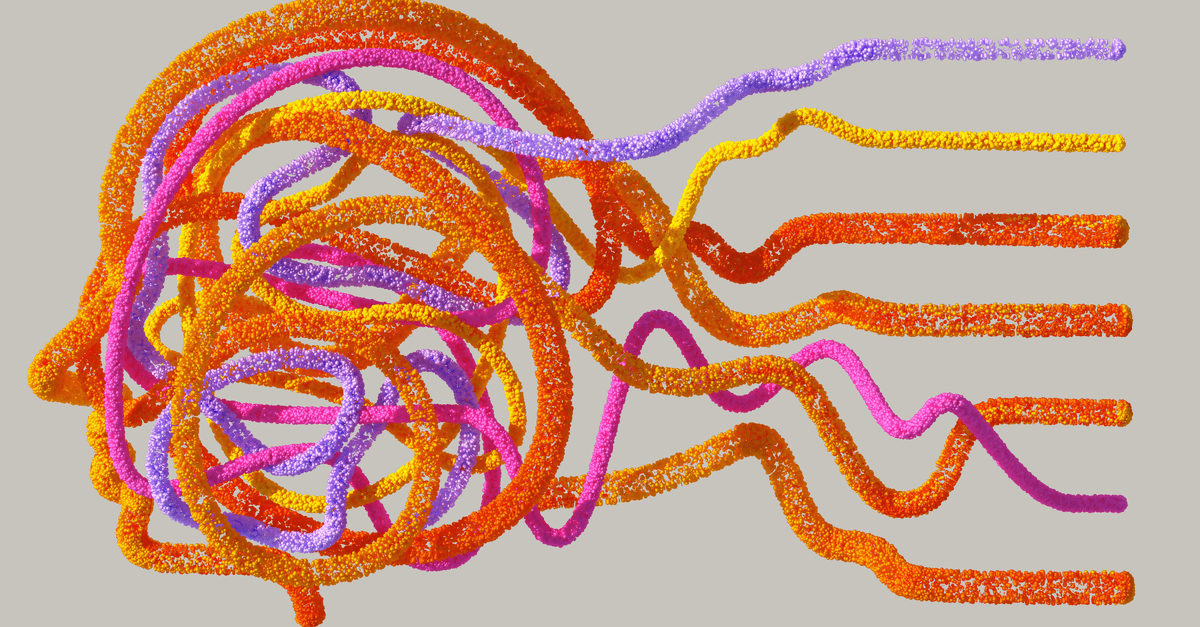
Photo: Google DeepMind / Pexels
You've probably experienced the unsettling feeling of being certain about a memory—only to discover you had it completely wrong. Eyewitness testimony, once considered the gold standard of criminal evidence, turns out to be unreliable enough that the Innocence Project has found that roughly 69% of the first 375 wrongful convictions overturned by DNA evidence involved mistaken eyewitness identification. Memory isn't a video camera. It's something far more dynamic, fallible, and fascinating.
Understanding how memory actually works—the neural machinery of encoding, storage, and retrieval—helps explain not just why we forget, but why memories can be confidently wrong, how trauma shapes the brain, and what we can do to remember better.
Key takeaways
- Memory is reconstructive: Every time you recall something, you're rebuilding it from fragments, not replaying a stored recording.
- Three stages: Information moves from sensory memory to working memory to long-term memory through a process that can break down at any stage.
- The hippocampus is central: This seahorse-shaped structure consolidates new memories; damage to it (as in patient H.M.) causes profound amnesia.
- Forgetting is functional: Hermann Ebbinghaus's forgetting curve shows most information fades rapidly unless actively reviewed.
- Emotion strengthens memory: The amygdala modulates hippocampal encoding, which is why emotionally charged events are remembered more vividly.
- Sleep is essential for consolidation: Memories are replayed and stabilized during slow-wave and REM sleep, making sleep deprivation a major memory disruptor.
The Stages of Memory: Sensory, Working, and Long-Term
Memory is not a single system. Cognitive psychologists, following the landmark 1968 model by Richard Atkinson and Richard Shiffrin, describe memory in terms of three interacting stores.
Sensory memory is the briefest stage—lasting only a fraction of a second to a few seconds. When you glance at a scene, your visual system briefly holds a high-fidelity representation called an iconic memory. Most of this data is never processed further; it simply decays. George Sperling demonstrated in 1960 that people can briefly access almost everything in a visual array, but this trace vanishes within about half a second.
Working memory is the system that holds information you're actively using. Cognitive psychologist Alan Baddeley refined the concept substantially, describing working memory as a multi-component system with a phonological loop (for verbal information), a visuospatial sketchpad (for visual and spatial data), and a central executive that coordinates both. Working memory capacity is famously limited—George Miller's classic 1956 paper "The Magical Number Seven, Plus or Minus Two" proposed that people can hold about 7 items in working memory, though more recent research by Nelson Cowan suggests the true capacity is closer to 4 chunks.
Long-term memory is where durable knowledge lives. It divides into two broad categories:
- Explicit (declarative) memory: Facts (semantic memory) and personal experiences (episodic memory) you can consciously recall.
- Implicit (non-declarative) memory: Skills, habits, and conditioned responses that operate below conscious awareness—like riding a bike or feeling anxious when you hear a specific ringtone.
The Neuroscience of Encoding
Encoding is the process by which new information is transformed into a neural representation. Not everything gets encoded—attention is the gatekeeper. The prefrontal cortex helps select what's worth processing, while the hippocampus handles the binding of disparate details (who was there, what was said, where it happened) into a coherent episode.
At the cellular level, encoding involves long-term potentiation (LTP): repeated stimulation of a synapse strengthens the connection between neurons, making future firing more likely. The aphorism attributed to Donald Hebb captures this: "neurons that fire together, wire together."
Depth of processing matters enormously. Fergus Craik and Robert Lockhart's levels-of-processing framework (1972) showed that information processed for meaning (semantic encoding) is retained far better than information processed only for surface features (like the sound of a word). Asking "What does this word mean?" produces better memory than asking "Does this word rhyme with cat?"
Emotion also powerfully modulates encoding. The amygdala—two almond-shaped structures deep in the temporal lobe—sends signals to the hippocampus that essentially say "this matters, consolidate it carefully." This is why you probably remember exactly where you were on a significant personal or historical event, even decades later. James McGaugh at UC Irvine has studied this emotional memory enhancement extensively, showing that stress hormones like norepinephrine and cortisol, acting on the amygdala, can strengthen memory consolidation.
Storage and Consolidation: From Hippocampus to Cortex
After encoding, memories undergo consolidation—a process of stabilization that unfolds over hours, days, and even years. Initial consolidation is synaptic: new protein synthesis strengthens the synaptic changes created during encoding. This is why the minutes and hours after learning something are critical; interference or sleep deprivation during this window can disrupt consolidation.
Over longer timescales, a process called systems consolidation gradually transfers the storage of episodic memories from the hippocampus to the neocortex. The hippocampus is thought to act as a temporary binding site that links cortical representations together; over time, repeated reactivation (especially during sleep) allows the cortex to form direct connections that make the memory hippocampus-independent.
The most dramatic evidence for the hippocampus's role comes from patient Henry Molaison (H.M.), who had his hippocampi surgically removed in 1953 to treat severe epilepsy. He could no longer form new explicit memories—every person he met, every experience he had, was forgotten within minutes. Yet his implicit memory remained intact; he could learn new motor skills even though he had no conscious recollection of practicing them. H.M.'s case, studied by Brenda Milner and later Suzanne Corkin, remains one of the most important case studies in the history of neuroscience.
Sleep plays a critical role in consolidation. During slow-wave sleep, the hippocampus repeatedly replays recent experiences (a phenomenon directly observed in rodents by Matthew Wilson, who recorded hippocampal neurons "replaying" a maze run during subsequent sleep). During REM sleep, the brain appears to integrate new information with existing knowledge and prune less relevant connections. Studies consistently show that sleeping after learning—and before a test—significantly improves recall compared to equivalent waking rest.
Retrieval: Why Remembering Is Not Replaying
When you remember something, you are not pressing play on a stored clip. You are reconstructing the memory from a combination of stored fragments, your current context, and your beliefs about what must have happened. This reconstructive nature is why memory is so prone to distortion.
Retrieval cues are anything that helps activate a stored memory—a smell, a song, a context. Endel Tulving's encoding specificity principle holds that retrieval is most effective when conditions at retrieval match conditions at encoding. This explains context-dependent memory (divers learning word lists underwater recall them better underwater than on land, as shown by Godden and Baddeley in 1975) and state-dependent memory (people in a particular mood recall mood-congruent memories more easily).
Interference is a major cause of forgetting. Proactive interference occurs when older memories disrupt recall of newer ones; retroactive interference occurs when newer learning disrupts recall of older material. If you've ever learned a new phone number and found yourself confusing it with an old one, you've experienced both.
Reconsolidation adds another layer of complexity. When you retrieve a memory, it becomes temporarily labile—vulnerable to modification—before being re-stored. This means every act of remembering is also an act of potential rewriting. Elizabeth Loftus has spent decades demonstrating how easily external suggestions can alter memory content. In her famous misinformation studies, simply asking participants "How fast were the cars going when they smashed into each other?" (versus "hit") caused them to report higher speeds and, a week later, to falsely remember seeing broken glass that wasn't in the original footage.
Why We Forget: The Ebbinghaus Forgetting Curve
Hermann Ebbinghaus, a 19th-century German psychologist who used himself as his sole subject, conducted meticulous experiments on memorization and recall. His forgetting curve showed a stark pattern: without review, roughly 50% of information is lost within an hour, about 70% within a day, and the curve levels off after about a week. The good news is that relearning forgotten material is much faster than the original learning—what Ebbinghaus called the "savings" effect.
The most effective countermeasure is spaced repetition—reviewing material at increasing intervals just before you would otherwise forget it. Modern software like Anki operationalizes this principle. Combined with active recall (testing yourself rather than re-reading), spaced repetition dramatically extends retention, a finding replicated across hundreds of studies.
Challenges and Misconceptions
"We only use 10% of our brains" is a myth with no scientific basis. Brain imaging shows activity across the entire brain over the course of a day, and damage to virtually any region has measurable cognitive consequences.
"Photographic memory is a real, common phenomenon" is another misconception. True eidetic memory—the ability to hold a visual image in perfect detail for extended periods—is extraordinarily rare in adults, and even childhood eidetic memory is far more limited than folklore suggests.
Confidence ≠ accuracy: People are often highly confident in memories that are demonstrably false. This has profound implications for the justice system, therapy (where false memories can be inadvertently implanted), and everyday decision-making.
Practical Applications: How to Remember Better
Given what we know about memory's mechanisms, certain strategies have strong empirical support:
- Spaced repetition: Spread learning across multiple sessions rather than cramming.
- Active recall (retrieval practice): Test yourself; don't just re-read. The "testing effect" (also called the retrieval practice effect) is one of the most robust findings in cognitive psychology.
- Elaborative encoding: Connect new information to what you already know. Ask "why" and "how does this relate to X?"
- Sleep: Prioritize sleep after learning. Even a 90-minute nap has been shown to enhance subsequent recall.
- Minimize interference: Study similar topics in separate sessions to reduce proactive and retroactive interference.
- Use environmental cues: Study in contexts similar to where you'll be tested.
FAQ
Q: What is the difference between short-term memory and working memory?
A: Short-term memory is an older concept that simply refers to a temporary storage buffer with limited capacity. Working memory is a more refined model developed by Alan Baddeley and Graham Hitch that includes not just storage but active manipulation of information. Working memory encompasses multiple components—the phonological loop, visuospatial sketchpad, and central executive—and is considered a better predictor of cognitive performance than raw short-term memory capacity.
Q: Can memories be permanently erased?
A: Not easily, and not reliably in humans. In animal models, researchers have used drugs that block reconsolidation (like the beta-blocker propranolol) to weaken specific fear memories. Some clinical trials have explored this for PTSD. However, completely erasing a memory without affecting related memories has not been achieved. Memory traces are distributed across many neurons and brain regions, making targeted erasure extremely difficult.
Q: Why are childhood memories before age 3-4 largely inaccessible?
A: This is called childhood amnesia (or infantile amnesia). The hippocampus is still developing in early childhood, and the neural infrastructure for episodic memory—particularly the prefrontal cortex—matures slowly. Importantly, infants and toddlers also lack the language and self-concept frameworks necessary to organize autobiographical memories in a retrievable way.
Q: Is it possible to have a memory that feels real but never happened?
A: Yes—these are called false memories, and they are surprisingly common. Elizabeth Loftus's research showed that subjects can be led to "remember" events that never occurred, including being lost in a shopping mall as a child or seeing impossible details in a video. The brain is very good at filling gaps with plausible information, and these constructions can feel as vivid and emotionally real as genuine memories.
Q: How does stress affect memory?
A: Acute stress can enhance memory formation for the stressful event itself (via amygdala activation and stress hormones), which is why traumatic memories can be so vivid. However, chronic stress impairs memory, particularly because elevated cortisol levels are toxic to hippocampal neurons over time. Chronic stress has been associated with reduced hippocampal volume in studies of people with PTSD and depression.
Q: What is the "tip-of-the-tongue" phenomenon?
A: This is a fascinating retrieval failure where you know you know something—a name, a word—but cannot quite access it. Research suggests it occurs when partial activation of a memory trace is insufficient to fully retrieve it, and competing words or names that are phonologically similar can block access. It becomes more common with age as neural retrieval pathways slow down.
Q: How reliable are memories formed during highly emotional events like trauma?
A: Highly emotional events tend to produce more vivid and persistent memories, but "vivid" doesn't mean "accurate." The central, emotionally significant details of a traumatic event are often well-preserved, while peripheral details may be lost or distorted—a phenomenon called weapon focus in eyewitness research (where attention narrows to the threatening stimulus). Trauma can also produce fragmented, non-narrative memories that feel intrusive and difficult to contextualize.
Read next:
Weekly digest
Stay ahead of the curve
Get the best science, AI, and tech stories delivered to your inbox every week. No spam — unsubscribe any time.
About the Author
SciHub101 is an independent science and technology publication founded and edited by Buğra Sözeri, a software engineer and app developer based in Türkiye. Articles are drafted against peer-reviewed literature and primary sources, fact-checked, and edited by a human before publication. Where we compare products, anything built by our own team is labelled as such — see the editorial guidelines and About page for how corrections and disclosures work.
Related Articles
How Nuclear Reactions Work: Fission and Fusion Explained
One splits atoms to release energy; the other fuses them together. Both tap the same fundamental force — and both are transforming how we power civilization.
John Dalton: Proposing the Atomic Theory of Matter
Dalton proposed that all matter consists of indivisible atoms, and that chemical reactions involve atoms rearranging. He transformed chemistry from observational to theoretical science — and was right about almost everything.

The Mandela Effect: What Science Says About False Memories
Millions of people clearly remember Nelson Mandela dying in prison in the 1980s. He died in 2013. Millions more remember the children's book series being spelled 'Berenstein Bears' — it was always 'Berenstain.' These are not misremembrings of obscure facts: they are vivid, confident memories that contradict documented reality, shared by large numbers of people who arrived at them independently. Neuroscience has a precise, non-mysterious explanation for every major Mandela Effect case, and it reveals something more striking than any alternate timeline: human memory is not a recording. It is a reconstruction.

What IQ Tests Actually Measure—And What They Don't
IQ scores predict many real-world outcomes, but they measure a narrow slice of cognitive ability. The science of intelligence is more contested—and fascinating—than most people realize.

Why Time Feels Faster as You Age: The Science Behind It
A summer at age eight felt endless. A year at forty disappears. This is not nostalgia distorting judgment — it is a measurable difference in how the brain processes and encodes time. Multiple mechanisms are involved: a mathematical relationship between age and perceived duration, a decline in the novelty that creates dense memories, slowing neural processing speed, and falling dopamine levels that alter the brain's internal clock. Each mechanism operates independently, but they all converge on the same result: subjective time accelerates across a human lifetime.

How Pain Works in the Brain: It's Not What You Think
Pain is not a signal your body sends to your brain. It is a decision your brain makes — and that distinction has transformed medicine.