Countries with the Highest Prison Rates (2025 Ranked)
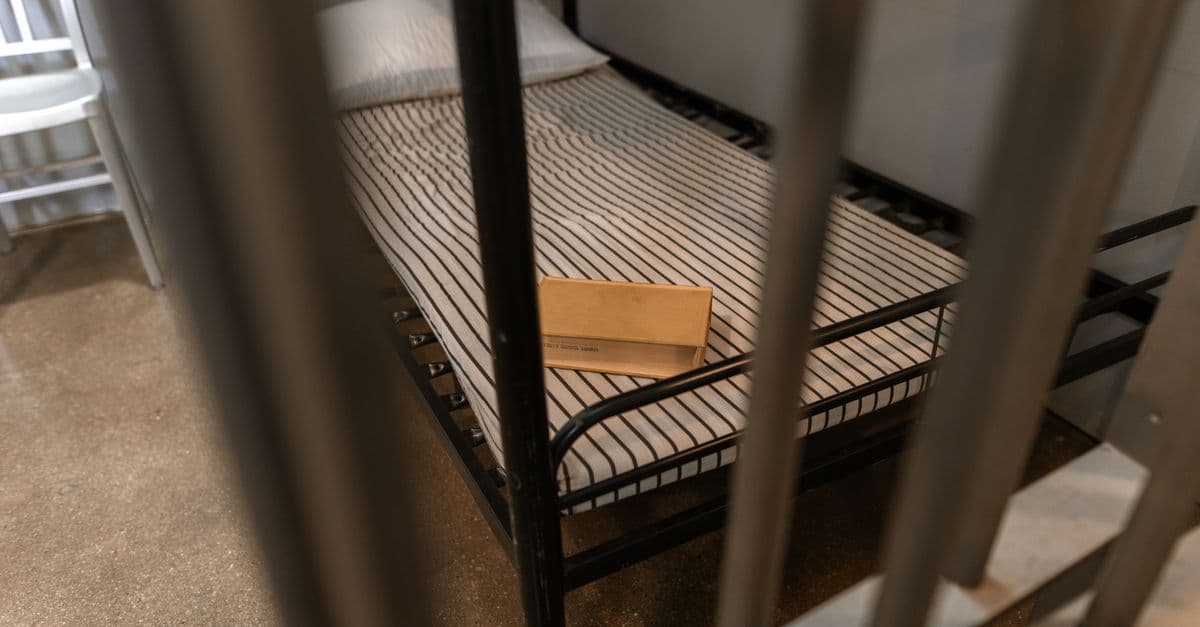
Photo: RDNE Stock project / Pexels
Incarceration is one of the most concrete expressions of state power over individuals, and one of the clearest indicators of how a society responds to crime, poverty, and social disorder. The World Prison Brief (Institute for Crime and Justice Policy Research, ICPR) tracks prison populations globally and currently estimates that approximately 11.5 million people are held in penal institutions worldwide. That number has been rising steadily, driven by increases in Central America, Asia, and — notably — by a post-2022 spike in El Salvador so dramatic that it broke the global ranking for per-capita incarceration by a factor approaching two.
Prison rates are measured as the number of prisoners per 100,000 of the national population. This per-capita measure eliminates the effect of population size and reveals the true propensity of a state to imprison its citizens. By this measure, incarceration is one of the most geographically and politically variable practices in modern governance.
Where this data comes from
The prison rate statistics and country rankings in this article come from the World Prison Brief (WPB), maintained by the Institute for Crime and Justice Policy Research (ICPR) at Birkbeck, University of London. The WPB is the most comprehensive global prison statistics database, drawing on official government statistics submitted by national prison authorities, justice ministries, and statistical offices. Data for this article reflects 2024–2025 figures where available, with 2023 data used for countries with reporting delays. The World Prison Brief is updated continuously, and data lags vary by country from months to years depending on official reporting cycles. All figures are rates per 100,000 population, enabling cross-country comparison independent of population size.
How to read the data: definitions and methodology
The World Prison Brief is the primary global source for cross-country prison rate comparisons, maintained by ICPR at Birkbeck, University of London. It draws on official government statistics and updates continuously, though data lags vary by country from months to years.
Key limitations to understand:
What counts as "prison." Different countries use different terms for institutions that serve similar functions — prisons, jails, detention centres, remand centres, police cells. The WPB attempts standardisation but comparisons are imperfect. The US figure includes both state and federal prisons and local jails, which many countries do not combine.
What is excluded. China's official figure excludes administrative detention (held outside the formal criminal justice system) and the mass detention facilities in Xinjiang. Russia's figure likely understates wartime military detention. North Korea has no publicly verifiable data.
Pre-trial detention. Approximately 30% of the global prison population are pre-trial detainees — people held without conviction. In some Latin American and African countries this exceeds 60%. A country with a high pre-trial detention rate is not necessarily more punitive; it may simply have a slower judicial system.
Source: World Prison Brief — prisonstudies.org; ICPR Prison Population 2024 press release — icpr.org.uk
Countries with the highest prison rates
(Prisoners per 100,000 population, World Prison Brief 2024/2025 data)
| Rank | Country | Rate (per 100k) | Total prisoners | Notes |
|---|---|---|---|---|
| 1 | El Salvador | 1,600+ | 106,000+ | Post-2022 Bukele crackdown; rising |
| 2 | Cuba | 794 | 90,000 (est.) | Political + criminal; limited transparency |
| 3 | Rwanda | 637 | 80,000 (est.) | Post-genocide; large pre-trial cohort |
| 4 | Turkmenistan | 576 | 33,000 | Authoritarian; opaque data |
| 5 | American Samoa | 538 | — | Small jurisdiction; rate inflated |
| 6 | United States | 531 | 1,900,000+ | World's largest absolute population |
| 7 | Tonga | 516 | — | Small jurisdiction |
| 8 | Thailand | 488 | 350,000+ | Drug offences dominate |
| 9 | Brazil | 381 | 832,000 | 3rd largest absolute; overcrowding crisis |
| 10 | Russia | 395 | 570,000 | Wartime; political prisoners rising |
| 15 | Iran | 370 | 310,000 | Political prisoners rising post-2022 protests |
| 25 | China | 121 (official) | 1,690,000 (official) | True figure likely significantly higher |
| 30 | Australia | 183 | 47,000 | — |
| 35 | United Kingdom | 153 | 87,000 | Highest in Western Europe |
| 45 | Canada | 114 | 44,000 | — |
| 55 | Germany | 74 | 62,000 | — |
| 60 | France | 101 | 68,000 | — |
| 70 | Norway | 52 | 3,000 | Among world's lowest |
| 75 | Finland | 51 | 2,800 | — |
| 80 | Iceland | 40 | 160 | World's lowest among wealthy nations |
| 85 | Japan | 41 | 51,000 | Very low; strict social conformity |
Source: World Prison Brief (2024); Prison Policy Initiative — States of Incarceration: The Global Context 2024 — prisonpolicy.org/global/2024.html
Why these countries lead in incarceration rates
The world's highest incarceration rates reflect entirely different causal patterns. El Salvador's 1,600+ per 100,000 reflects a deliberate emergency mass arrest policy beginning in 2022, not a built-up criminal justice system but rather a crisis response that suspended due process. Cuba's 794 reflects long-term political imprisonment alongside criminal detention. The United States' 531 — the highest among wealthy democracies by a factor of 5 — reflects decades of policy choices: the War on Drugs (mandatory minimums for drug offences), three-strikes laws, and the mass incarceration infrastructure built from the 1970s onward. Russia's 395 includes documented political prisoners alongside criminal detainees, particularly rising post-2022. The Nordic countries at 40–52 per 100,000 — among the world's lowest — reflect different policy architecture: rehabilitation-focused sentences, no mandatory minimums, and heavy investment in social safety nets that reduce criminogenic poverty. The pattern demonstrates incarceration is not the inevitable response to crime. The US and El Salvador chose mass incarceration; Nordic countries chose alternatives. The outcomes are measurable: Nordic countries have lower crime rates than the US despite 10–13 times lower incarceration rates. Punishment policy also shows up in which countries still use capital punishment; see countries that still use the death penalty.
A brief history: how mass incarceration became a modern institution
For most of human history, prisons as long-term custodial institutions barely existed. Pre-modern societies primarily punished crime through execution, corporal punishment, fines, exile, or forced labour. Imprisonment before trial was common; imprisonment as punishment was rare.
The modern prison as a rehabilitative institution emerged primarily in the late 18th and early 19th centuries, shaped by Enlightenment thinking about human perfectibility and the reform of criminal behaviour. The Pennsylvania System, pioneered at Eastern State Penitentiary in Philadelphia (opened 1829), held prisoners in complete solitary confinement, believing isolation would produce reflection and moral reform. The Auburn System (New York, 1820s) used congregate labour in silence during the day and solitary cells at night. Both systems were exported to Europe and became the templates for prison design across the Western world.
By the late 19th century, criminologists and reformers began questioning whether prison actually reformed offenders, and a tension emerged between rehabilitation and punishment as the primary purposes of incarceration — a tension that remains unresolved in most systems today.
The 20th century produced the most dramatic changes in incarceration at scale. The Soviet Gulag system at its peak (1950) held approximately 1.5 million people. The US prison population grew modestly through most of the 20th century before expanding dramatically from the 1970s onward in direct response to the War on Drugs. The US incarcerated approximately 200,000 people in 1970; 500,000 in 1980; 1 million by 1990; and peaked at approximately 2.3 million in 2008 before declining slightly. The 2020 COVID-19 pandemic produced a temporary sharp decline as courts slowed and early releases were made; populations have partially rebounded since.
El Salvador's post-2022 trajectory is entirely without modern historical precedent — no democratic country has ever increased its incarceration rate at this speed or to this absolute level in peacetime.
Source: Prison history — David Skarbek's The Social Order of the Underworld; US incarceration growth data — Bureau of Justice Statistics historical series
El Salvador: Bukele's experiment and its global implications
El Salvador's transformation from a normal Latin American incarceration rate to the world's highest is recent, rapid, and politically consequential far beyond its borders.
In 2021, El Salvador had a homicide rate of approximately 52 per 100,000 — among the world's highest — driven by MS-13 (Mara Salvatrucha) and Barrio 18 gangs that had effectively controlled large portions of the country's territory, taxed businesses, and exerted authority over entire communities. Gang-related violence had made El Salvador one of the most dangerous countries in the world outside active war zones.
In March 2022, following a weekend spike in gang murders, President Nayib Bukele declared a state of emergency and suspended constitutional guarantees including habeas corpus, the right to legal counsel, and limitations on pre-trial detention periods. The government proceeded to mass-arrest individuals suspected of gang affiliation. By late 2022, more than 70,000 people — approximately 1% of El Salvador's entire population — had been detained. By 2025, the official prison population exceeds 106,000, producing a per-capita rate above 1,600 per 100,000.
The results on homicide rates are real and dramatic. El Salvador's homicide rate fell from 52 per 100,000 in 2021 to approximately 7.8 per 100,000 in 2023 — a reduction of more than 85% in two years. Bukele's domestic approval ratings exceeded 90% following the crackdown, among the highest of any sitting head of state globally.
The documented costs are also real. Human rights organisations including Amnesty International and Human Rights Watch documented mass arrests of individuals with no gang links — neighbours rounded up alongside gang members, people arrested based on tattoos or appearance, and cases of individuals detained despite court orders for release. Credible reports of deaths in custody from inadequate conditions, medical neglect, and violence emerged. Trial proceedings were compressed to minutes for mass processing.
El Salvador's experiment is being watched as a model across Latin America and among governments seeking rapid crime reduction. Honduras and Ecuador have adopted similar emergency measures. The core question — whether dramatic short-term crime reduction justifies systematic suspension of due process — is not resolvable by data alone; it is a question about what kind of society is being built.
Source: El Salvador prison rate — World Prison Brief prisonstudies.org/country/el-salvador; Human rights documentation — Amnesty International El Salvador 2023 reports; Homicide rate data — InSight Crime
The United States: the anatomy of mass incarceration
The United States incarcerates approximately 1.9–2.1 million people depending on whether local jail populations are included, at a rate of 531 per 100,000 — the highest per-capita rate among major wealthy democracies and roughly five times the Western European average. Understanding how this happened requires tracing specific policy decisions, not cultural pathologies.
The War on Drugs. The US prison population began its dramatic increase in the 1970s following President Nixon's declaration of a "War on Drugs" (1971) and subsequent federal and state legislation establishing mandatory minimum sentences for drug possession and distribution. The 1986 Anti-Drug Abuse Act created the notorious 100:1 sentencing disparity between crack cocaine (associated with Black urban communities) and powder cocaine (associated with white users), with crack triggering mandatory minimums 100 times harsher per gram than powder. This disparity was not reduced to 18:1 until the Fair Sentencing Act of 2010, and full retroactivity was not granted until the First Step Act of 2018.
Mandatory minimum sentencing. Congress and state legislatures established mandatory minimum sentences — floor sentences below which judges cannot sentence regardless of individual circumstances. These provisions removed judicial discretion and dramatically inflated sentences. A person convicted of a nonviolent drug offence might receive a sentence comparable to what a violent offender would receive in a European jurisdiction.
Three-strikes laws. Enacted in multiple states during the 1990s, three-strikes laws imposed life sentences for a third felony conviction regardless of the felony's severity. California's three-strikes law, passed by referendum in 1994, produced cases of life sentences for crimes as minor as shoplifting — triggering eventually a 2012 reform referendum that restricted three-strikes to violent felonies.
Racial disparities. Black Americans are incarcerated at approximately five times the rate of white Americans. This disparity is documented across every stage of the criminal justice system — police stops, arrest rates, prosecution decisions, bail amounts, conviction rates, and sentences — and reflects both overt discrimination and the structural effects of policies (like mandatory minimums for crack cocaine) that were facially neutral but had racially disparate effects.
The social safety net gap. The US uses incarceration to manage populations experiencing mental health crises, addiction, and homelessness that comparable wealthy nations address through healthcare and social services systems. Approximately 20% of US prisoners have a serious mental illness; approximately 65% meet criteria for substance use disorder. Incarcerating these populations is expensive and ineffective by any rehabilitative measure, but reflects the absence of alternative infrastructure.
Source: Bureau of Justice Statistics historical data; Fair Sentencing Act history — DOJ records; Drug Policy Alliance — Drug Policy Facts drugpolicyfacts.org
Why it matters: the human and economic cost
Human cost. 1.9 million Americans currently incarcerated. An estimated 4.5 million on probation or parole. The children of incarcerated parents — approximately 5 million American children have or had an incarcerated parent — show documented effects on educational attainment, mental health, and economic outcomes. The stigma of a criminal conviction follows people after release, affecting employment, housing, voting rights (in many states), and social relationships for life.
Economic cost. The average cost of imprisoning one person in the United States is approximately $35,000–$60,000 per year depending on the state and type of facility. Total US corrections spending exceeds $80 billion annually. For comparison: one year of incarceration in California costs approximately $106,000 — more than one year of tuition, room, and board at most Ivy League universities. This does not include the lost economic productivity of imprisoned individuals, the downstream effects on their families and communities, or the costs of recidivism.
Recidivism. The US Bureau of Justice Statistics found that 68% of released prisoners are rearrested within three years, and 83% within nine years. These figures are not simply evidence that offenders are irredeemable; they reflect that imprisonment without rehabilitation — without education, vocational training, mental health treatment, or reintegration support — does not produce rehabilitated people.
Source: Prison spending — Vera Institute of Justice "Price of Prisons" report; Recidivism — BJS 2018 multi-state recidivism study
Nordic countries: what the low-incarceration alternative looks like
Norway, Finland, and Denmark have prison rates of 50–75 per 100,000 — roughly one-seventh of the US rate — while also maintaining lower violent crime rates than the US. This comparison is regularly cited in criminal justice reform debates and regularly misread.
Norway's approach. Norway's prison system is built around the concept of normalcy: prison life should resemble outside life as closely as possible, on the theory that the loss of liberty is itself the punishment and that additional deprivations are counterproductive. Halden Prison, often cited internationally, provides prisoners with single rooms, cooking facilities, educational programmes, vocational workshops, and access to nature. Norway's recidivism rate is approximately 20% within two years of release — compared to the US rate of 68% within three years.
The design philosophy is not sentimental. Norwegian criminal justice policy rests on evidence: programmes that invest in rehabilitation consistently produce lower reoffending rates, which means lower crime rates and lower long-term costs. A former criminal who does not reoffend does not consume correctional, police, prosecutorial, or court resources; they pay taxes and potentially support dependents. The economic case for rehabilitation is as strong as the humanitarian case.
Why low rates don't mean leniency on crime. Nordic countries have low violent crime rates partly as a consequence of factors that exist independent of criminal justice policy: high income equality (the Gini coefficient for Norway is approximately 0.26 vs 0.41 for the US), comprehensive social services reducing desperation-driven crime, effective policing, and high institutional trust. Lower incarceration is not the cause of low crime; both are co-outcomes of more equal societies with stronger social safety nets.
The comparison's limits. Nordic countries are smaller, more homogeneous, and wealthier per capita than the US. Direct policy transfer is not straightforward. But the evidence from US states that have implemented rehabilitation-focused reforms — including those that have reduced mandatory minimums and expanded drug treatment diversion — shows measurable reductions in reoffending without increases in crime rates.
Source: Norwegian correctional service data; Comparison recidivism rates — Council of State Governments Justice Center; Prison Policy Initiative global context 2024
China: the opacity problem
China officially reports approximately 1.69 million prisoners, producing a rate of 121 per 100,000 — below the United States. This figure requires significant qualification.
China's official prison count excludes people held in administrative detention — a category of detention outside the formal criminal justice system that does not require judicial process. Administrative detention facilities, including the system of "re-education through labour" camps (laojiao) — formally abolished in 2013 but replaced by related mechanisms — have historically held millions of people.
More significantly, China's Xinjiang detention system — which the Chinese government describes as "vocational education and training centres" — has held an estimated 1–1.8 million Uyghurs and other Muslim minorities based on leaked government documents, satellite imagery analysis, and testimony from released detainees. This represents what the UN High Commissioner for Human Rights described in August 2022 as "serious human rights violations" that "may constitute international crimes, in particular crimes against humanity."
Including administrative detention and Xinjiang facilities, China's total incarceration figure may be 2–4 million, potentially exceeding the United States in absolute terms and producing a rate comparable to or above the official US rate.
Source: OHCHR (UN Human Rights) Xinjiang assessment, August 2022; China laojiao system — Human Rights Watch documentation; Xinjiang detention estimates — Australian Strategic Policy Institute (ASPI) satellite analysis
What people get wrong about prison rates
"High incarceration reduces crime." The evidence is mixed at best. There is an incapacitation effect — imprisoned people cannot commit crimes in the community. But above a moderate threshold, additional incarceration shows diminishing returns: the people imprisoned at high margins are lower-risk, and imprisonment can increase long-term criminality through exposure to criminal networks, disruption of employment and family ties, and the barriers imposed by a criminal record. The US has the world's highest incarceration rate among wealthy democracies but does not have commensurately lower violent crime rates compared to Western Europe.
"El Salvador proves mass incarceration works." El Salvador's homicide rate reduction is real, but several important caveats apply. The crackdown displaced gangs as much as it eliminated them — some leaders negotiated from prison, and gang networks have moved operations to neighbouring countries. The economic and social costs of imprisoning 1% of the population include disrupted families, lost workforce participation, and fiscal costs that a country of El Salvador's income level struggles to absorb. The long-term sustainability of the model is unknown.
"Nordic prison conditions are too lenient to deter crime." The deterrence effect of imprisonment operates primarily through the certainty of punishment, not its severity. Research by criminologist Daniel Nagin and others consistently finds that increasing the certainty of punishment (improving detection rates) reduces crime more effectively than increasing sentence length or harshness. Norway's recidivism rate is lower than the US's not because Norwegian prisons are pleasant, but because they are more likely to produce rehabilitated people who don't reoffend.
"Pre-trial detainees are being held for good reason." Globally, 30% of prisoners — roughly 3.5 million people — have not been convicted of any crime. Many are held because they cannot afford bail (a system that explicitly advantages wealthier defendants), because their trial has been delayed for months or years, or because they are in countries where judicial backlogs make timely trials impossible. Pre-trial detention is not a neutral holding measure; it causes job loss, housing loss, family disruption, and psychological harm to people who have not been convicted.
Frequently asked questions
Q: Does incarceration deter crime? A: Incarceration deters crime through three mechanisms: incapacitation (removing offenders from the community), specific deterrence (discouraging the incarcerated individual from future offending), and general deterrence (discouraging others through the example of punishment). Research consistently finds that the certainty of being caught matters more than the severity of the sentence for deterrence. Countries that have reduced sentence lengths while improving detection rates have generally not seen crime increases.
Q: What is pre-trial detention and how does it affect statistics? A: Pre-trial detention refers to holding arrested individuals in custody before their trial concludes and a verdict is reached. These individuals are legally innocent — they have not been convicted. Globally, approximately 30% of the prison population consists of pre-trial detainees. In some countries this exceeds 60–70%. High pre-trial detention rates often reflect bail systems that disadvantage people without financial resources, judicial backlogs that delay trials for months or years, and weak rule of law in which case processing timelines are not legally constrained.
Q: What does incarceration cost? A: The average annual cost of imprisoning one person in the United States is approximately $35,000–$60,000 depending on the state, with California exceeding $100,000 per year per prisoner. Total US corrections spending exceeds $80 billion annually. European jurisdictions typically spend $35,000–$70,000 per prisoner per year, often with higher per-prisoner spending than the US because they hold fewer people but provide more programming and support services.
Q: What is the difference between a prison and a jail? A: In the US system, jails are locally operated facilities (typically by county governments) that hold people awaiting trial or serving short sentences (under one year). Prisons are state or federal facilities for longer sentences. The US prison rate of 531 per 100,000 includes both. Many countries do not make this distinction and hold all categories in unified "prison" facilities.
Q: Are private prisons a significant factor in high US incarceration rates? A: Private prisons hold approximately 8% of the US prison population — significant but not the primary driver of high incarceration rates. Academic research on whether private prisons actively lobby for harsher sentencing (creating demand for their services) has found mixed evidence. The primary drivers of US incarceration rates — mandatory minimum sentences, the War on Drugs, three-strikes laws — predate the expansion of private prisons and would exist without them.
Q: What are the effects of incarceration on children of prisoners? A: Research consistently finds that children with incarcerated parents face elevated risks across multiple dimensions: behavioural problems, lower educational attainment, mental health challenges, and economic hardship from the loss of parental income. Approximately 5 million American children have or have had an incarcerated parent. These effects are not simply driven by parental criminality — the separation itself, the stigma, and the income disruption produce measurable harm independent of the underlying criminal behaviour.
The takeaway
Prison rates are a policy choice, not a natural consequence of crime levels. The United States imprisons its citizens at roughly five times the Western European rate — not because Americans are more criminal, but because specific policy decisions made from the 1970s onward, centred on mandatory minimums for drug offences and the abandonment of rehabilitation as a prison system goal, produced a system of mass incarceration without parallel in the wealthy world. El Salvador's dramatic crime reduction through mass detention demonstrates that incarceration can suppress violence rapidly, but also that the human rights costs and long-term sustainability questions are real. Nordic countries demonstrate that low incarceration and low crime are compatible outcomes when societies invest in equality, rehabilitation, and social services. The global prison population of 11.5 million represents an enormous human cost — and in many countries, the evidence suggests that much of it does not make communities meaningfully safer.
Related Reading
Follow new articles
Add SciHub101 to your feed reader to see new science and technology stories.
About the Author
SciHub101 is an independent science and technology publication founded and edited by Buğra Sözeri, a software engineer and app developer based in Türkiye. AI tools assist with drafting and research. Source documentation in the existing archive is uneven, and articles are being reviewed and corrected. The Editorial Team byline identifies editorial responsibility; it does not certify specialist or independent human review. Where we compare products, anything built by our own team is labelled as such — see the editorial guidelines and About page for how corrections and disclosures work.
Related Articles

Countries with the Most Olympic and World Sport Medals (2025 Ranked)
The United States leads all-time Olympic medal tables with 2,631 total medals. China dominates weightlifting and diving. Kenya owns distance running. Jamaica dominates sprints. Here's the full breakdown of which countries dominate which sports — and what drives sporting excellence.

Countries with the Best Infrastructure (2025 Ranked)
Singapore consistently ranks first in global infrastructure quality — its port is the world's second busiest, its airport perpetually wins best-in-world awards, and its road network has near-zero potholes. Japan and Germany follow. The US scores surprisingly low given its wealth. Here's what world-class infrastructure looks like and what it costs.

Countries with the Highest Murder Rates (2025 Ranked)
Honduras has a murder rate of 35 per 100,000 — among the world's highest. But Jamaica, South Africa, and Venezuela top many lists. El Salvador's dramatic drop shows murder rates can change fast with policy. Here's the complete global homicide ranking and what actually drives lethal violence.
Countries That Still Use the Death Penalty (2025 Ranked)
China executes more people than the rest of the world combined — an estimated 1,000+ per year. Iran executed 972+ people in 2024. The US carried out 24 executions. 55 countries retain the death penalty; 112 have abolished it. Saudi Arabia executed 345+ people in 2024 — its highest total in decades.

Countries with the Most Billionaires Per Capita (2025 Ranked)
Monaco has more billionaires per capita than any country — 1 per 1,000 residents. Switzerland ranks second among large nations. The US has more billionaires in total (735+) but smaller nations lead per capita. Here's the full ranking of where the world's ultra-wealthy concentrate.

Countries with the Most Dog Owners (2025 Ranked)
The United States has 89.7 million pet dogs — the most of any country. Brazil has the highest dog ownership rate in South America. Romania has Europe's most severe stray dog problem. There are an estimated 900 million dogs globally, of which only 25% are pets. Here's the full ranking.