The Bystander Effect: Kitty Genovese and the Psychology of Inaction
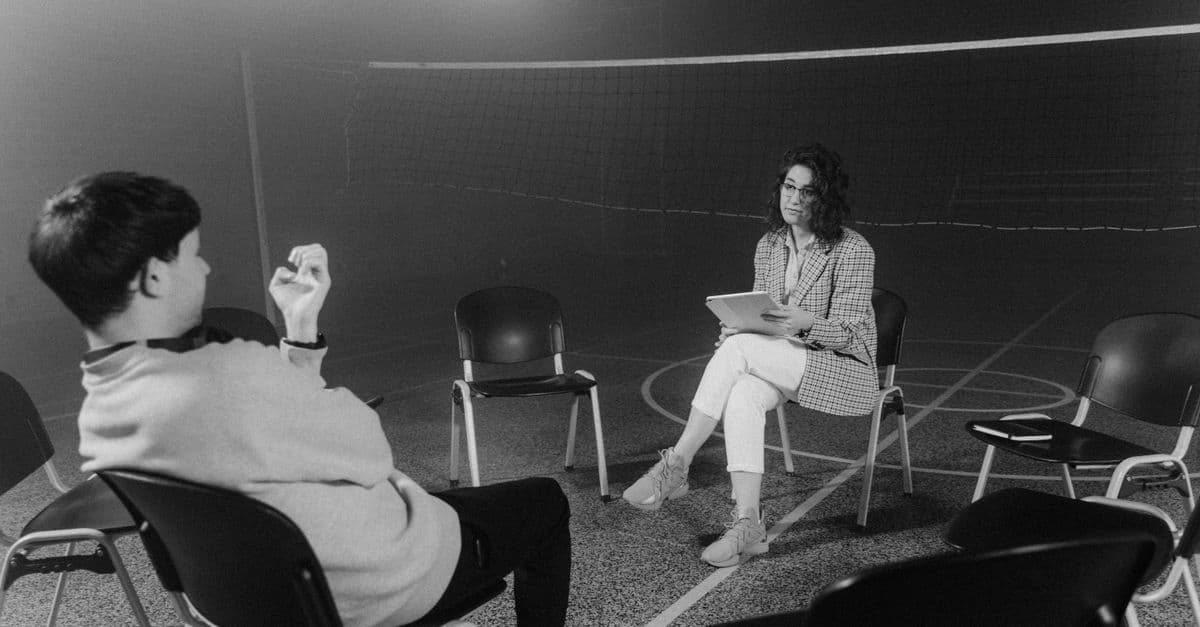
Photo: Tima Miroshnichenko / Pexels
A 28-year-old woman is attacked on a residential street in Queens at 3:15 in the morning. She screams. Lights come on in apartments above. And according to the next day's newspaper, 38 neighbors watched and did nothing. That story, published in the New York Times on March 27, 1964, launched one of the most replicated research programs in psychology's history — and it turned out the story itself was substantially wrong. Here is what actually happened, what the science showed, and where the evidence stands today.
The Night of March 13, 1964
Kitty Genovese was returning home from her job managing a bar in Hollis, Queens. She parked near the Long Island Rail Road station on Austin Street and began walking the short distance to her apartment. Winston Moseley, a 29-year-old business machine operator with no prior criminal record, had been driving around looking for a victim. He spotted Genovese, parked, and followed her on foot.
Moseley stabbed Genovese twice in the back at approximately 3:15 a.m. She screamed. A neighbor, Robert Mozer, shouted from a window above: "Leave that girl alone." Moseley retreated to his car. Genovese, wounded, made her way around the corner of the building. Moseley returned about ten minutes later, found her in a doorway, stabbed her several more times, and sexually assaulted her. She died before an ambulance arrived.
The crime itself was brutal but not statistically unusual for New York in 1964. What happened next transformed it into a cultural and scientific landmark.
The New York Times Story That Changed Psychology
Two weeks after the murder, metropolitan editor A. M. Rosenthal had lunch with police commissioner Michael Murphy. Murphy mentioned the case offhandedly: "Thirty-eight witnesses." Rosenthal assigned reporter Martin Gansberg to write it up. On March 27, the Times ran the story under the headline: "37 Who Saw Murder Didn't Call the Police."
The piece is a masterwork of moral indignation. It describes neighbors who heard screaming, went to windows, saw a woman being attacked — and went back to bed. One man, it reported, pulled a chair to the window to watch. Another said, "I didn't want to get involved."
Source: The Bystander Effect Started from a Lie — McGill University Office for Science and Society
The story spread globally. Within days, letters poured into the Times. Sociologists, clergymen, and politicians debated what the case said about urban alienation. Social psychologists John Darley and Bibb Latané read the coverage and asked a different question: Was this really apathy? Or was something more systematic happening in the minds of bystanders?
Source: Bystander Effect — Wikipedia
The Experimental Design
Darley and Latané did not accept "urban apathy" as an explanation. They hypothesized instead that the number of people present actively suppresses helping — not because crowds are callous, but because responsibility gets distributed. More people, less pressure on any individual to act.
To test this, they ran a series of controlled experiments at Columbia University in 1968.
The Smoke-Filled Room
In the first study, participants were placed in a waiting room, ostensibly to fill out a questionnaire, while smoke was pumped in through a wall vent to simulate a fire emergency. Participants were either alone, in a group of three naive subjects, or paired with two "confederates" (research assistants instructed to ignore the smoke).
The results were stark. When alone, 75% of participants reported the smoke within two minutes. In groups of three strangers, only 38% reported it. In groups where the two confederates remained passive, only 10% of participants reported the smoke — and most of those waited the full six minutes before acting.
Source: Group inhibition of bystander intervention in emergencies — ResearchGate
The Seizure on the Intercom
The second study simulated a medical emergency without any visual information — testing whether the effect persisted even when participants could not look to others for behavioral cues. Subjects believed they were participating in a group discussion about college life via intercom, conducted in private booths so no one could see anyone else. They were told they were in groups of varying size: one other person, two others, or five others.
During the discussion, one voice (a prerecorded track) began describing symptoms of an epileptic seizure, escalating to choking and a plea for help.
When participants believed they were the only other person on the call, 85% left their booth to seek help. When they believed one other person had also heard the seizure, 62% helped. When they believed four others had heard it, only 31% intervened.
The intercom study is particularly powerful because it eliminates every social-visibility explanation. Participants were alone in booths. No one could see them do nothing. The effect held anyway.
What the Experiments Found
Darley and Latané identified two distinct psychological mechanisms that together produce bystander inhibition.
Diffusion of responsibility is the first: when multiple people witness an emergency, the moral weight of acting is divided among all of them. Each person feels only a fraction of the obligation that a lone bystander would feel entirely. In the seizure study, participants who thought they were one of six listeners could each tell themselves the others would handle it.
Pluralistic ignorance is the second: people look to others' behavior to judge whether a situation is truly an emergency. In the smoke study, when confederates remained calm, participants interpreted this as evidence that the smoke was harmless — air conditioning, perhaps, or a steam leak. They suppressed their concern to match what appeared to be the group consensus.
Source: Key Studies: Darley and Latane — The IB Psychology Blog
Darley and Latané published their findings in the Journal of Personality and Social Psychology and later in their 1970 book The Unresponsive Bystander: Why Doesn't He Help? They proposed a five-step decision model: to help, a bystander must notice the event, interpret it as an emergency, feel personal responsibility, believe they have the necessary skills, and decide to act. Groups sabotage at least steps two and three.
Source: AMERICAN SCIENTIST, 57, 2, pp. 244-268, 1969 — Bystander Apathy paper
The Timeline of a Finding
| Year | Event |
|---|---|
| 1964 | March 13: Kitty Genovese murdered in Queens, NYC |
| 1964 | March 27: New York Times "38 witnesses" story published |
| 1968 | Darley and Latané publish smoke-room and seizure experiments |
| 1969 | Latané and Darley publish full review in American Scientist |
| 1970 | Book: The Unresponsive Bystander: Why Doesn't He Help? |
| 2007 | Manning, Levine, and Collins publish reanalysis in American Psychologist |
| 2016 | Documentary The Witness (Bill Genovese) re-examines the night |
| 2019 | Meta-analysis confirms effect exists but is smaller than textbooks state |
Source: The Kitty Genovese Murder and the Social Psychology of Helping — PubMed
The Controversy: A Parable Built on Bad Journalism
The inconvenient truth about the bystander effect's origin story is that the New York Times article was wrong in almost every significant detail.
In 2007, psychologists Rachel Manning, Mark Levine, and Ann Collins published a systematic reanalysis in American Psychologist — one of the field's flagship journals. Using court transcripts, trial testimony, contemporary police reports, and archived newspaper coverage beyond the initial Times story, they concluded that there was no evidence for 38 witnesses, no evidence that witnesses observed the actual murder, and no evidence that witnesses collectively remained inactive.
What the evidence did show: Moseley fled after a neighbor shouted. Another neighbor, Sophie Farrar, ran downstairs and held Genovese while she died. At least one call to the police was made during the attack, though the dispatcher response was inadequate. The attack happened in two separate locations on opposite sides of a building, meaning no single witness could have observed both assaults. The "38 witnesses" figure appears to have originated with a police source speaking loosely to a reporter, and Gansberg's article made it concrete without verification.
Manning and colleagues were not arguing that the bystander effect is fictional. They were arguing that psychology had built a canonical case study on a myth, and that the myth itself had shaped the research questions being asked. Because the Genovese story implied mass apathy, researchers spent decades studying passive bystanders — and may have underweighted studies showing active intervention, spontaneous helping, and the role of group dynamics in amplifying rather than suppressing assistance.
The 2016 documentary The Witness, made by Kitty Genovese's brother Bill Genovese, reaches similar conclusions. Bill spent years interviewing surviving witnesses and neighbors. Several reported calling police. One described hearing but not seeing the attack. The picture that emerges is messy and human — people confused in the dark, uncertain what was happening, some failing and some not — rather than 38 people consciously choosing to watch a murder.
Source: How Kitty Genovese Murder's Spotlighted the Bystander Effect — A&E
Replication and Reanalysis: What the Effect Actually Looks Like
Despite the compromised origin story, the core experimental findings have replicated. The smoke-filled-room and seizure studies have been reproduced dozens of times across different countries, participant populations, and emergency types.
A 2011 meta-analysis by Fischer and colleagues, published in Psychological Bulletin, examined 105 studies involving more than 6,500 participants. Their headline finding: the bystander effect is real and robust, but its size is significantly smaller than the original Darley-Latané studies suggested. The effect is also moderated by several factors.
Group size matters, but not linearly. Moving from one bystander to two produces the largest inhibition. Going from two to ten produces less additional effect than the early models predicted.
Danger matters. In situations where the emergency is unambiguous and the personal risk to the bystander is low — someone has a visible seizure on a subway platform — bystanders in groups actually help at rates comparable to lone bystanders. The effect is strongest when the situation is ambiguous.
Knowing the victim matters. Bystander inhibition is substantially reduced when witnesses know the person in distress.
Competence matters. People who believe they have relevant skills — medical training, lifeguard certification — show much less inhibition in groups.
Source: Bystander Effect — Wikipedia
A 2019 study by Philpot and colleagues published in American Psychologist, which analyzed CCTV footage from real-life conflicts across the Netherlands, South Africa, and the UK, found that in 91% of cases, at least one bystander intervened. The more bystanders present, the more likely someone intervened. This appears to contradict the laboratory effect — but the reconciliation is important: in unambiguous, clearly physical conflicts (a fight, a robbery), the effect of numbers goes the other way. Bystanders in public reinforce each other's courage rather than diffusing responsibility.
Source: Bystander Effect — Wikipedia
The original laboratory effect may best describe situations of ambiguity — an unfamiliar sound, unclear distress, a situation where the appropriate response is genuinely uncertain — rather than clear physical emergencies.
Where It Stands Today
The bystander effect occupies an awkward position in 2026: it is real, it is reliably produced in laboratory conditions, it has policy implications, and its most famous case study was largely fabricated by a journalist. Holding those things simultaneously is uncomfortable, but it is the accurate picture.
The research has moved in two productive directions.
Online bystander research extends the concept to cyberbullying and social media pile-ons. Studies on online harassment consistently find that individual observers are less likely to intervene when more people are visibly watching. A 2021 review in Computers in Human Behavior found that bystander inhibition on social platforms follows the same diffusion-of-responsibility logic as the Darley-Latané experiments, with one important modification: on platforms where intervention is low-cost (clicking a "report" button), group size has less inhibitory effect than when intervention requires something public, like posting a reply.
Intervention training has become a practical offshoot of the research. Programs like "Active Bystander" training — now common in university orientations, corporate workplaces, and military branches — teach people to recognize and overcome the psychological mechanisms Darley and Latané identified. Controlled evaluations of these programs show modest but real increases in intervention rates.
Source: Kitty Genovese: The Murder That Shaped Psychology — ScienceInsights
The deeper lesson of the whole saga may be epistemological: psychology's most influential case studies are often origin myths, and origin myths shape research programs in ways that take decades to correct. The Genovese case did not reveal what was wrong with New Yorkers. It revealed what happens when a compelling narrative reaches scientists before the facts do.
The Online Bystander Effect: From Chat Rooms to Livestreamed Crises
The Darley-Latané framework was built around physical proximity — smoke in a room, a voice on an intercom. The question researchers began asking in the late 1990s was whether the same dynamics would operate when bystanders were separated by screens and geography rather than walls and hallways.
The first systematic test came from Patrick Markey in 2000, who conducted a field study observing approximately 5,000 participants across roughly 400 different online chat rooms. Markey tracked how quickly people responded to requests for help and how that response time varied with group size.
Source: Bystander Intervention in Computer-Mediated Communication — ScienceDirect
The results mirrored Darley-Latané almost exactly. The more people present in a chat room, the slower any individual was to respond to a direct request. The exception: when someone was addressed by name specifically rather than as part of a group, response time dropped sharply regardless of how many others were present. This is a direct analogue of the laboratory finding that designating responsibility breaks diffusion of responsibility — "someone call 911" fails, "you in the red jacket, call 911" works.
Livestreamed Crises and the Audience Effect
The stakes sharpened dramatically in January 2017 when 14-year-old Naika Venant livestreamed her death on Facebook Live from her foster home in Miami. Hundreds of people watched in real time. Some pleaded with her not to harm herself. Others expressed doubt that the situation was genuine. Emergency services were not notified in time.
Source: Hundreds of people watched a Miami teen kill herself in a live stream — Tampa Bay Times
The Naika Venant case illustrated a feature of online bystander dynamics that has no clean analog in the Darley-Latané laboratory: anonymity plus uncertainty plus a large visible audience produces a particularly toxic combination. Viewers who might have called emergency services privately hesitated because others appeared to be watching, because some commenters questioned whether the situation was real, and because the platform interface — comment box, emoji reactions — offered a low-cost substitute for genuine intervention. Clicking a sad-face emoji is easier than calling 911, and its presence may create the illusion of having responded.
Similar dynamics recurred in subsequent years on TikTok and other platforms where self-harm content has been livestreamed. Research published in 2024 examining these incidents consistently found that larger audiences correlated with longer delays before emergency services were contacted, replicating the group-size effect in the most consequential possible context.
What Online Research Shows About Diffusion of Responsibility
A 2019 systematic review in Computers in Human Behavior examining cyberbullying bystander behavior across 35 studies found that online bystanders show the same diffusion-of-responsibility pattern as physical bystanders — individual intervention likelihood falls as the number of visible observers increases. The effect was strongest when intervention required a public action (posting a reply, sharing a counter-message) and somewhat weaker when intervention was anonymous (a platform report button).
Source: The bystander effect in cyberbullying on social network sites — ScienceDirect
This finding has direct practical implications for platform design. A "report" button that is easy to click and anonymous functions differently from a comment thread where intervention is visible. Reducing the friction and public exposure of intervention — while increasing the individual assignment of responsibility — produces measurably higher intervention rates, even in large online audiences.
The deeper pattern is this: the bystander effect did not need the internet to spread — it followed people there. The mechanics Darley and Latané identified in a Columbia University waiting room in 1968 operate in any context where responsibility can be distributed across a visible group and where the social cost of inaction is diffused across enough shoulders that each individual shoulder bears very little weight.
Online Bystander Effect: From Internet Abuse to Mass-Shooting Livestreams
The diffusion-of-responsibility mechanism that Darley and Latané identified in a Columbia University waiting room did not stay in the laboratory. It followed people online, and in digital environments several of its features become sharper, more measurable, and — in the most extreme cases — more lethal.
The scale of the problem is large. A 2015 meta-analysis by Allison and Bussey published in Computers in Human Behavior examined cyberbullying bystander behavior across multiple studies and found that roughly 25% of adolescents witnessed online harassment of peers on a regular basis. Of those witnesses, only approximately 30% intervened in any way. The gap between witnessing and acting is wider online than in physical emergencies studied in the laboratory — and the mechanism matches: each viewer in a comment thread or stream can see that many others are present and watching, which distributes perceived responsibility across the audience and reduces the pressure on any individual to respond.
The stakes escalated dramatically in May 2016 when a fatal stabbing took place at the Mall of America in Bloomington, Minnesota. Bystanders filmed the aftermath on phones; footage circulated on Facebook Live within minutes of the attack. The immediate online audience watched, commented, and shared — and the response pattern in the comment stream replicated the Darley-Latané finding almost exactly: expressions of shock, competing interpretations of what was happening, and very few people taking any action that connected to emergency services. The digital audience was not apathetic in any simple sense; it was diffused.
Then in March 2019, the Christchurch mosque attacks made the online bystander problem globally visible in the most extreme terms. The attacker livestreamed the attack on Facebook Live for 17 minutes. Approximately 4,000 people viewed the stream before it was removed. In those 17 minutes, 51 people died. Facebook received a user report of the stream 29 minutes after it began — after the shooting had ended — and removed the original video 12 minutes after that. The platform subsequently removed 1.5 million copies of the footage in the 24 hours after the attack, of which 1.2 million were blocked at upload.
Source: Christchurch mosque shootings — Reuters coverage, March 2019
What the Christchurch livestream demonstrated was that a very large online audience does not produce the pro-social amplification that Philpot and colleagues found in CCTV footage of real-world physical conflicts. The nature of the medium matters. In a physical crowd, bystanders can make eye contact, can hear each other react, and face social consequences for visible inaction. In a livestream audience, viewers are anonymous, geographically dispersed, and interacting through reaction emoji and text comments — low-cost signals that create the appearance of engagement without any real-world consequence.
A 2017 study by Markey and Markey published in Psychological Science examined intervention patterns in social media emergencies and found that the diffusion-of-responsibility effect was reduced — but not eliminated — when viewers were addressed individually rather than as a collective. The naming-effect that Patrick Markey had documented in chat rooms in 2000 held in subsequent social media contexts: when platform mechanics or other users specifically called out an individual by username and assigned them a task ("you, call 911," "tag someone who can help"), response rates increased measurably relative to general appeals to the crowd.
Source: Social media and the bystander effect — Markey & Markey, Psychological Science, 2017 (via APS)
The practical implication is architectural: platform design can either amplify or dampen the diffusion effect. A "report" button that is anonymous and low-friction performs differently from a comment thread where intervention must be public and legible. Systems that send individualized prompts — "you viewed this content, would you like to report it?" — rather than relying on the general audience to self-organize, are applying the Markey finding in product form. The bystander effect did not require physical co-presence to operate. It required only that responsibility could be perceived as shared — and on any platform with a visible view count, that condition is always met.
FAQs
Q: How many witnesses actually saw Kitty Genovese's murder? A: The "38 witnesses" figure from the 1964 New York Times article has been thoroughly discredited. Court records from Moseley's trial show only six eyewitnesses testified, and researchers Manning, Levine, and Collins (2007) found no evidence that 38 people witnessed the murder or that neighbors uniformly failed to help.
Q: What is diffusion of responsibility? A: Diffusion of responsibility is the psychological mechanism where each person in a group feels less personal obligation to act in an emergency because they assume others will intervene. The larger the group, the smaller the perceived individual responsibility — even though the total available help is greater.
Q: Did Darley and Latané's experiments actually replicate? A: Yes. A 2011 meta-analysis of 105 studies confirmed the bystander effect is real, though smaller than the original studies suggested. The effect is strongest in ambiguous situations and weakest when the emergency is obvious and physical danger is involved.
Q: Does knowing someone reduce the bystander effect? A: Yes. Research consistently shows that familiarity with the victim substantially reduces bystander inhibition. Strangers in groups show the classic effect; people who know the person in distress are far more likely to help regardless of group size.
Q: What does online bystander research show? A: Studies on cyberbullying and social media harassment find the same diffusion-of-responsibility pattern. More visible observers correlate with less individual intervention, particularly when intervention requires a public action rather than an anonymous report.
Q: How did the Genovese case affect psychological research? A: Manning et al. (2007) argue the case shaped the research agenda by framing bystander failure as mass apathy, steering researchers toward passive-bystander models and potentially underweighting evidence of spontaneous helping and group-facilitated intervention.
Read next:
Weekly digest
Stay ahead of the curve
Get the best science, AI, and tech stories delivered to your inbox every week. No spam — unsubscribe any time.
About the Author
SciHub101 is an independent science and technology publication founded and edited by Buğra Sözeri, a software engineer and app developer based in Türkiye. Articles are drafted against peer-reviewed literature and primary sources, fact-checked, and edited by a human before publication. Where we compare products, anything built by our own team is labelled as such — see the editorial guidelines and About page for how corrections and disclosures work.
Related Articles

The Cavendish Experiment: Weighing the Earth with a Wire and Two Lead Balls
Henry Cavendish measured Earth's density in 1798 using a torsion balance. Learn the apparatus, the G mystery, and why gravity's constant is still poorly known today.
The Bohr-Einstein Debates: The Thought Experiments That Shaped Quantum Physics
Einstein spent years designing thought experiments to break quantum mechanics. Bohr defeated every one. The Bohr-Einstein debates, from Solvay 1927 to the EPR paradox.

The Bystander Effect — Why People Don't Help
The Kitty Genovese murder spawned one of psychology's most famous findings. Decades later, the real story is more complicated than the textbooks say.
The Bystander Effect Explained: Why People Don't Help
The bystander effect explained: why more witnesses mean less help, what diffusion of responsibility actually is, the Kitty Genovese myth, and when people do intervene.
Complete Science Experiments Guide 2026 — Every Landmark Experiment by Field
Every landmark science experiment in one hub: Pasteur's swan-neck flask, Galvani's frog legs, Eratosthenes, Michelson–Morley, Hafele–Keating and more than 140 others, grouped by field and era.