Margin Trading and Leverage Explained
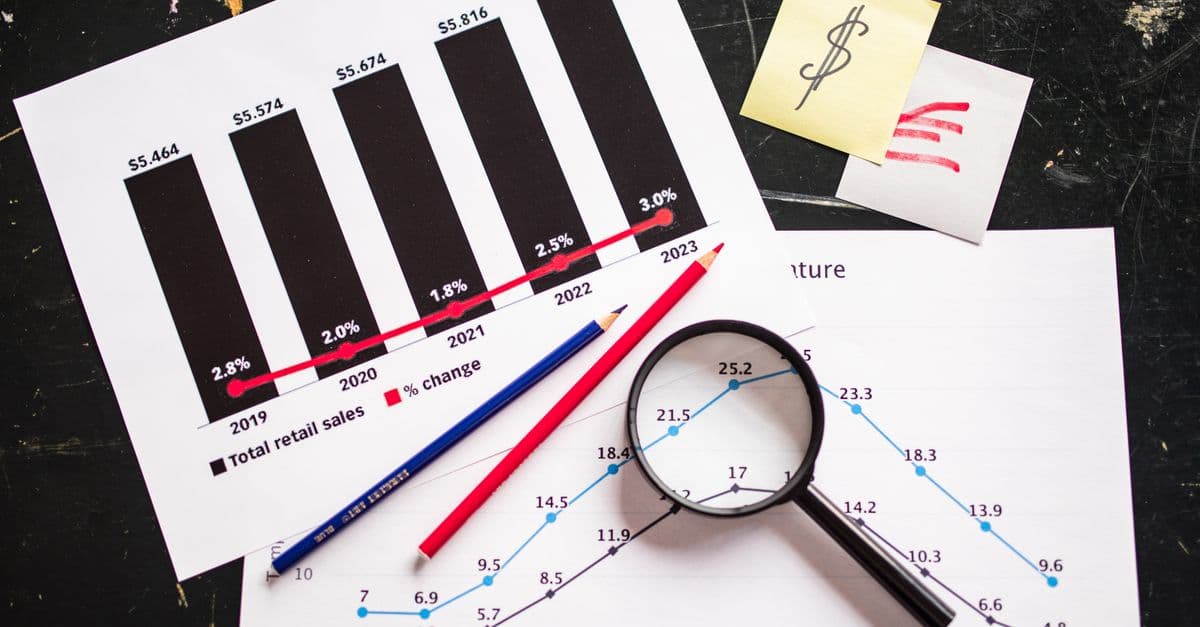
Photo: RDNE Stock project / Pexels
Margin is money you borrow from your broker to buy more securities than your cash balance would allow. Leverage is the ratio of your total market exposure to the equity you actually put up. If you have $10,000 in cash and use it to control $20,000 of stock, you are using 2:1 leverage.
Educational only — not financial advice. Investing involves risk of loss; past performance does not guarantee future results. Consult a licensed financial advisor before making investment decisions.
Used carefully, leverage is a normal tool that hedge funds, market makers, and futures traders rely on every day. Used recklessly, it has produced the most famous blowups in financial history.
How a Margin Account Actually Works
When you open a margin account in the United States, you agree to a few rules under Regulation T:
- Initial margin: The broker will lend you up to 50% of the purchase price of marginable securities. So $10,000 cash can buy $20,000 of stock.
- Maintenance margin: You must keep equity above 25% (broker-specific minimum; most retail brokers require 30–35%) of the position's value. Drop below and the broker issues a margin call.
- Interest: You pay interest on the borrowed amount. In 2026, broker margin rates are roughly 8–13% annually depending on your broker and balance — a serious drag on returns.
A margin call gives you two choices: deposit more cash or watch the broker liquidate positions at whatever price the market offers. Forced selling usually happens at the worst possible moment.
Leverage in Other Forms
Margin loans are only one way to get leverage:
- Options — Buying calls gives delta exposure with a fraction of the capital.
- Futures — Built-in leverage of 10:1 to 50:1 depending on the contract.
- Levered ETFs — TQQQ targets 3x the daily return of QQQ. Note the word daily: due to compounding math (volatility decay), holding TQQQ long-term often underperforms 3x of QQQ's actual return.
- Total Return Swaps — How Archegos secretly got 5–8x exposure across multiple banks.
- Crypto perps — Offshore exchanges have offered up to 100x leverage on perpetual futures.
| Instrument | Typical leverage | Margin call risk | Best for |
|---|---|---|---|
| Reg T cash account | 1:1 | None | Long-term investors |
| Reg T margin | Up to 2:1 | High | Active traders |
| Portfolio margin | Up to ~7:1 | High | Pros with hedged books |
| Index futures | ~10–20:1 | Very high | Hedgers, arb desks |
| Options (long calls) | 5–50:1 effective | Different — total loss | Defined-risk speculation |
| Levered ETFs (3x) | 3:1 daily | None directly, decay over time | Short-term tactical |
| Crypto perps | Up to 100:1 | Instant liquidation | Speculation only |
The Pattern Day Trader Rule
A US-specific quirk: if you make more than 4 day trades in 5 business days in a margin account, you are flagged as a Pattern Day Trader and must maintain at least $25,000 in equity. Drop below and your account is restricted to closing trades only for 90 days.
This rule is why many active retail traders run cash accounts or use futures instead.
Famous Leverage Disasters
Leverage shows up at every great financial blowup.
- 1929 Stock Market Crash. Brokers routinely offered 10:1 margin. When prices fell 10%, accounts were wiped out and forced selling cascaded into the worst crash in US history. Reg T came directly out of this.
- Long-Term Capital Management (1998). A hedge fund run by Nobel laureates levered roughly 25–35:1 on relative-value bond trades. Russia defaulted, spreads widened, the fund nearly took down the global banking system. The Fed coordinated a $3.6B bailout.
- 2008 Financial Crisis. Investment banks ran 30–40:1 balance sheet leverage. When mortgage assets fell 10%, equity was gone. Bear Stearns and Lehman failed; the rest were bailed out. See our 2008 financial crisis explainer.
- Archegos (2021). Bill Hwang's family office took 5–8x leverage across multiple banks using total return swaps, none of which knew about the others. When two stocks dropped, margin calls hit. Hwang couldn't meet them. Banks collectively lost over $10 billion; Credit Suisse lost $5.5B and never recovered.
- Crypto 2022–2024. Three Arrows Capital, Celsius, Voyager, and FTX all blew up partly through hidden leverage. Retail traders on offshore exchanges were liquidated en masse during the LUNA collapse.
The pattern is identical every time: a small adverse price move plus high leverage equals forced liquidation, which drives prices down more, which triggers more liquidations.
Professional vs Retail Leverage
This is the part most retail traders miss. Institutions can use leverage relatively safely because:
- They borrow at near-Fed-funds rates (4–5% in 2026), not 10%+.
- They run hedged books — long one thing, short a correlated one — so net exposure is small even if gross is huge.
- They have dedicated risk managers, real-time VaR systems, and pre-trade limits.
- They can negotiate with prime brokers during stress instead of getting auto-liquidated.
A retail trader on Robinhood at 2:1 leverage in unhedged single stocks has none of those advantages.
Margin Calculation and Position Sizing
Understanding the math is critical. Excess liquidity (money you can borrow) is calculated as:
Excess Liquidity = (Equity Value × Leverage Ratio) - Market Value of Securities
Example: $10,000 account, 2:1 leverage allowed (Reg T), currently holding $12,000 of stock:
- Current equity: $10,000 - (borrow of $2,000) = $10,000 - $2,000 = $8,000
- Maximum buying power: $8,000 × 2 = $16,000
- Already using: $12,000
- Excess liquidity: $16,000 - $12,000 = $4,000 can buy more
Maintenance level: If equity drops below $3,000 (25% × $12,000), a margin call triggers. This sounds generous — you can lose 70% before forced selling — but in volatile markets this happens overnight. A 10% drop in a $12,000 position costs $1,200, leaving you with $6,800 equity (57% of position value). A 20% drop triggers the margin call.
This is why risk management matters: pre-planned stop losses protect you from crossing the margin call threshold at worst prices.
Source: Federal Reserve Regulation T (2024) — Detailed rules on initial and maintenance margin requirements for securities brokers and customers.
Professional Risk Management vs Retail
The difference between a $100M hedge fund using 10:1 leverage and a retail trader using 2:1 is risk management, not leverage:
Institutions:
- Borrow at near-risk-free rates (4–5% in 2026).
- Run Value-at-Risk (VaR) models — if markets move 2 standard deviations overnight, how much can we lose?
- Use hedges — if long stocks, short S&P 500 futures to reduce net risk.
- Have dedicated risk officers with authority to reduce positions if limits are breached.
- Negotiate with prime brokers during stress instead of auto-liquidation.
Retail traders on 2:1 margin:
- Borrow at 8–13% (massive drag).
- Have no VaR system, no hedges, no risk officer.
- Face automatic liquidation if prices move against them.
- Psychological pressure of watching a leveraged loss is debilitating.
This is why the same absolute leverage level is catastrophically risky for retail but manageable for pros.
When Leverage Makes Sense
Real, sensible uses exist:
- Market-makers and arbitrageurs using tiny edges multiplied by big balance sheets.
- Concentrated, time-sensitive opportunities where you genuinely have an edge and the trade is short-duration.
- Hedged spread trades — long one thing, short a correlated one, net exposure small.
- Short-term tactical use of levered ETFs for days, not months.
When It Doesn't
For most retail investors, leverage is a bad trade:
- Long-term investors get eaten alive by 8–13% interest rates on borrowed money.
- Single-stock leverage adds path dependency to an already volatile asset.
- Psychological pressure of watching a leveraged loss is far worse than the math suggests.
- One adverse market day at wrong leverage erases years of careful returns.
If you're dollar-cost-averaging into index funds, you don't need margin. If you don't have a specific, hedged, short-duration thesis with documented edge, you probably don't need margin.
Portfolio Margin vs Reg T
Portfolio margin — available at brokers like Interactive Brokers for accounts above $100K — calculates margin based on the risk of the whole portfolio rather than position-by-position rules. This allows much higher effective leverage if you're properly hedged.
For options traders running spreads, portfolio margin is genuinely useful: a calendar spread or put/call spread has limited risk, so margin requirements are low. For unhedged traders, portfolio margin is simply a way to blow up larger and faster.
Leverage in Cryptocurrency Markets: The Extreme Case
While Wall Street's leverage is constrained by regulation, crypto derivatives markets in 2026 remain the frontier of leverage gone wild. Perpetual futures contracts on crypto exchanges (Bybit, OKX, Deribit) have historically offered up to 100:1 leverage. Retail traders can control $10,000 of Bitcoin with only $100 of capital. This extreme leverage is one reason cryptocurrency has experienced historic crashes.
The math is obvious: 1% adverse move = total wipeout. This isn't theoretical — during the LUNA collapse in May 2022, liquidations cascaded across multiple exchanges as overleveraged positions were forced to close. Billions in liquidations were triggered within hours, vaporizing retail trading accounts.
Why does crypto allow this? No regulation. Most crypto derivatives operate offshore, unbound by Reg T or any US margin rules. This is both the appeal (extreme traders get access) and the danger (extreme losses are inevitable).
2026 context: After major crypto blowups (Three Arrows Capital, FTX), exchanges are tightening leverage caps and improving liquidation safety. However, 10–50x leverage remains common. For most retail traders, this is speculation, not investing — expected value over time is negative because they're playing against exchange funding rates and liquidation mechanics designed to extract retail capital.
Hedging Strategies with Leverage: The Responsible Way
Leverage becomes genuinely useful when paired with hedges. Here's how professionals structure it:
Example 1: Long-short equity strategy
- Long $1M of high-quality growth stocks (with conviction)
- Short $500K of sector ETF (to reduce market risk)
- Net exposure: $500K long, financed with 1.5:1 leverage
- Risk: If your growth picks outperform the sector, you win. Broad market declines hurt both sides equally.
Example 2: Convertible arbitrage
- Long $1M of convertible bonds (corporate bonds with embedded call options)
- Short $1M of the underlying stock
- Net exposure: small and defined
- Risk: Tight, profitable if you're right about volatility and the conversion probability
Example 3: Merger arbitrage
- Long $500K of the target company stock (waiting for deal close)
- Short $500K of acquirer stock (typically)
- Leverage to 2:1 because net risk is the deal not closing (binary, ~3% probability)
All three of these use leverage — sometimes 5–10x gross exposure — but net market risk is small. A broad market crash doesn't destroy the position. That's how professionals sleep at night with leverage.
Retail traders rarely use leverage this way. A retail trader using 2:1 margin to buy single stocks is taking maximum leverage (all capital is long) with maximum risk (concentrated in single stocks). It's the opposite of the professional strategy.
Comparing Brokers and Margin Account Types
Margin costs and features vary dramatically between brokers in 2026:
| Broker | Margin Rate | Minimum for margin | Account Type | Notes |
|---|---|---|---|---|
| Fidelity | 8.5–11% (tiered by balance) | $1 | Reg T margin | Low rates for high balances; solid infrastructure |
| Schwab | 9–11% (tiered) | $1 | Reg T margin | Reliable; customer service strong |
| Interactive Brokers | 7–8% (lowest for retail) | $2,000 | Reg T + Portfolio margin available | Professional-grade; lowest costs |
| E-TRADE (Morgan Stanley) | 9–11% | $1 | Reg T margin | Convenience; mid-range rates |
| Robinhood | 9–10% | $0 (instant) | Instant cash account; margin available | Youth-focused; highest intraday leverage |
| Webull | 8–9% | $0 | Margin available | Moderate rates; less US regulatory oversight |
Portfolio margin (available at Interactive Brokers for $100K+ accounts) can reduce rates another 0.5–2% because requirements are based on portfolio risk rather than position-by-position. If you're legitimately hedging (long stock, short indices), portfolio margin is cheaper. If you're unhedged and speculating, the slightly lower rate just means you can blow up slightly cheaper.
The Real Cost of Leverage Over Time
Novice margin traders often underestimate interest costs. Here's the true cost comparison:
Scenario: $10,000 account, 2:1 leverage (borrow $10,000), holding 2 years
| Outcome | Annual Return | Margin Interest Cost | After-Interest Return | Net Gain/Loss |
|---|---|---|---|---|
| +10% yearly | 20% gross gain = $2,000/yr | $1,600/yr (8% on $20K borrowed) | $400/yr = 4% net | $800 total |
| +5% yearly | 10% gross gain = $1,000/yr | $1,600/yr | -$600/yr = -6% net | -$1,200 total |
| 0% return | 0% | $1,600/yr | -$1,600/yr = -16% net | -$3,200 total |
| -5% yearly | -10% loss = -$1,000/yr | $1,600/yr | -$2,600/yr = -26% net | -$5,200 total |
The conclusion: Leverage on single-stock picks needs to outperform by at least 16% annually just to break even against interest costs. For buy-and-hold investors expecting 7-10% annual index returns, leverage is economically irrational.
This math is why professionals use leverage only for activities (market-making, arbitrage, hedged strategies) where they can earn 15-20%+ after costs. Retail traders using leverage on plain-vanilla long stock holdings are fighting an economic headwind.
Regulatory Evolution: How Margin Rules Changed from 1929 to 2026
The 1929 crash exposed the dangers of 10:1 leverage. Recovery act legislation in the 1930s created the first federal margin rules. Here's how they've evolved:
1934–2000: Regulation T locked margin at 50% (2:1 maximum). This held steady for 66 years — a rare instance of regulation not changing in response to financial innovation.
2000–2008: Brokerage consolidation and derivatives complexity increased. The SEC allowed "alternative" calculations for sophisticated accounts. Investment banks used repo and derivatives to achieve 30–40x effective leverage off-balance-sheet. This contributed to 2008.
2008–2020: Dodd-Frank (2010) mandated stricter margin rules for derivatives and increased broker capital requirements. The Fed imposed annual stress tests. Regulation T stayed at 50%, but enforcement tightened.
2020–2026: Retail brokerage boom (Robinhood, Webull) pushed for frictionless margin access. The SEC has studied it but not changed the rules. Crypto markets operate entirely outside regulation. There's an ongoing debate: should retail get 2:1 access at all, or should it be reserved for professionals with licensing requirements?
The trajectory suggests that rules will tighten post-next-crisis. Until then, retail margin access remains easier than it was in 2010 but more restricted than it was in 2000.
The Psychological Cost of Leverage: Behavioral Finance and Forced Errors
Beyond the mathematics of interest rates and margin calculations lies a human factor that research in behavioral finance has repeatedly confirmed: leverage amplifies psychological stress, leading to systematically poor decisions that exceed the financial burden of the interest rates themselves.
Loss aversion under leverage: Behavioral finance research (Kahneman and Tversky, 1979) established that humans feel the pain of losses roughly twice as acutely as the pleasure of equivalent gains. A leveraged account magnifies this psychological asymmetry. A $5,000 unrealized loss in a $50,000 unlevered portfolio (10% drawdown) feels manageable. The same $5,000 loss in a $25,000 leveraged portfolio (20% drawdown toward a margin call) triggers panic—not because the absolute loss differs, but because the percentage is larger and the forced-liquidation threat is real.
Studies of retail traders (Barber and Odean, 2000; Odean, 1999) show that investors in leveraged accounts:
- Check portfolio values more frequently (up to 10× more often)
- Exit winning positions too early to "lock in gains" (realized gains satisfy loss-aversion psychology)
- Hold losing positions too long in hopes of recovery (hope bias, "it will come back")
- Make riskier bets after losses (Kahneman's "prospect theory"—trying to break even)
This behavioral pattern is well-documented and costly. Levered traders typically underperform by 5-15% annually relative to their supposedly higher expected returns, not because of interest cost alone but because leverage-induced stress causes compounded poor decision-making.
Source: Odean, T. (1999), "Do Investors Trade Too Much?" American Economic Review, 89(5), 1279-1298 — empirical analysis showing that increased trading frequency and leveraged accounts correlate with underperformance, driven by behavioral biases.
Forced selling at worst prices: Psychologically, one of the most damaging aspects of margin trading is the forced liquidation aspect. A trader can make a carefully considered decision to enter a trade, but the exit decision is taken out of their hands when a margin call comes. This creates a perverse incentive structure: traders who would never voluntarily sell at a given price are forced to do so by their broker.
This forced exit often occurs at the worst possible moment—during market panics when prices are deeply depressed and sentiment is most negative. A trader who has a 20-year time horizon might rationally hold through a 30% drawdown in normal circumstances, but margin requirements force an exit at, say, a 25% drawdown. This means retail leveraged traders sell low not by choice but by mechanical rule, the opposite of the "buy low, sell high" heuristic.
Status quo bias and path dependency: Once a leveraged position is established, psychological inertia—the difficulty of changing course—intensifies. A trader who entered a position at $50 per share, watched it rise to $75 (generating a paper gain), then saw it decline to $60 is psychologically "up $10" despite being down from the peak. This framing bias makes it harder to exit when rational analysis suggests they should, because the decision feels like "giving up" gains. Leverage magnifies this because the absolute dollar gains and losses are larger, making the emotional stakes higher.
Overconfidence and illusion of control: Traders using leverage often overestimate their edge and understanding (overconfidence bias). A trader who studies technical analysis for a few months might believe they have an edge; leverage makes them confident enough to deploy 2:1 capital against this unverified hypothesis. Research on traders (Barber and Odean, 2001) shows that overconfident traders (those who trade more frequently and concentrate more) dramatically underperform, and their overconfidence is increased by early wins in leveraged accounts (if the first leveraged trade goes up 50%, this confirms their hypothesis in their mind, even though one win proves nothing).
The ergodic problem: A trader with 2:1 leverage who expects to win 55% of the time might seem to have an edge—55% > 50%. But this overlooks a critical distinction: a strategy can have a positive expected value yet still have a probability of ruin. If a trader has $10,000 and risks $2,000 per trade with 2:1 leverage (risking their entire account every 5 trades), they need a long sequence of wins to avoid ruin even if the odds are in their favor. This is the "gambler's ruin" problem: positive expected value over infinite time does not mean you'll survive to infinite time.
Leverage makes this problem catastrophically worse. Unlevered, you might take 100 bad trades before going broke. Levered 2:1, you might take 10. Levered 10:1 (as in crypto), you might take 1. The human brain is not built to internalize this math intuitively; we think about expected value (average outcome) rather than survival probability (will I still have capital next month).
Stress-induced decision deterioration: Medical research on decision-making under stress (Keinan, 1987; Arnsten, 2009) shows that acute stress impairs executive function and increases reliance on habit and instinct at the expense of considered judgment. A margin call is an acute stressor. When a trader receives a margin call, their cortisol levels spike, blood flow diverts from prefrontal cortex (deliberative reasoning) to amygdala (fear/fight-or-flight), and decision quality plummets. The forced selling decision happens during this window of maximally degraded judgment.
Professional traders mitigate this through pre-commitment: they set stop-losses before entering trades, establishing hard rules they follow mechanically rather than re-deciding during stress. Most retail traders don't. They enter leveraged positions hoping things will work out and then make exit decisions during a margin-call-induced panic—the worst possible psychological state for decision-making.
Sleep deprivation and circadian effects: Traders who worry about overnight gap risk (markets open and move against them before they can react), or who trade international markets across time zones, often sacrifice sleep. Chronic sleep deprivation impairs judgment comparably to acute stress. A trader using leverage who is sleep-deprived—a common pattern among retail crypto traders during volatile periods—is operating with degraded decision-making capacity while simultaneously taking maximum risk.
These behavioral factors compound the mathematical unfavorability of leverage. Even if a trader could overcome the 8-13% annual interest rate drag, they face a behavioral gauntlet: loss aversion-induced panic selling, forced liquidations at worst prices, overconfidence-driven position sizing, and stress-induced decision degradation. The result is that retail traders using leverage typically underperform by far more than the interest costs alone would predict.
The Takeaway
Margin is a tool: dangerous in untrained hands, essential for professionals. The interest cost (8–13% for retail) alone makes long-term use unattractive for most investors. Leverage amplifies both gains and losses — a 2:1 levered 20% gain becomes 40%, but a 20% loss becomes 40% too. Add a margin call and you're forced to sell at the worst price.
History shows that blowups follow a pattern: small adverse price move + high leverage + no hedges = forced liquidation = cascade. LTCM, Bear Stearns, Archegos — all followed this pattern. Avoid it by using leverage, if at all, only with real edges, hedges, and pre-planned limits. For most retail investors, the interest costs and forced-liquidation risks exceed any benefits.
Frequently Asked Questions
Q: What is margin trading in simple terms?
A: Borrowing money from your broker to buy more securities than your cash balance allows. You pay interest on the borrowed amount (typically 8–13% annually for retail) and risk forced liquidation if prices move against you and your equity drops below maintenance thresholds.
Q: What is a margin call?
A: A demand from your broker to deposit more cash or sell positions immediately, triggered when your account equity drops below the maintenance margin threshold (typically 25–35% of position value). Forced selling usually occurs at the worst possible moment and prices.
Q: How much leverage can a retail investor get?
A: Under US Regulation T, up to 2:1 in a standard margin account (you can borrow 50% of purchase price). Pattern Day Traders with $25K+ can achieve 4:1 intraday leverage. Portfolio margin accounts (above $100K) can push effective leverage much higher if positions are hedged, but risks are substantial.
Q: Is margin trading worth it for long-term investors?
A: For most buy-and-hold investors, no. Broker interest rates of 8–13% annually are a severe drag on returns. A 7% annual return after 11% margin interest becomes negative. Margin makes sense only for short-term traders with specific edges and proper risk controls, not for long-term accumulation.
Q: What happened to Archegos?
A: Bill Hwang's family office quietly took 5–8x leverage across multiple banks using total return swaps in 2021. When two held stocks dropped (Baidu, ViacomCBS), Hwang couldn't meet margin calls. Banks collectively lost over $10 billion; Credit Suisse lost $5.5 billion and never recovered as an independent institution. The case exemplifies how concentrated, hidden leverage can trigger cascading failures across financial systems.
Q: Why are leveraged ETFs risky for long-term holding?
A: Leveraged ETFs (3x Nasdaq, 2x leveraged bonds) reset daily, meaning returns are calculated on a daily basis. In choppy markets with high volatility, this compounding mechanism creates a drag called volatility decay. Over months or years, a 3x leveraged ETF often significantly underperforms 3x the underlying's actual total return, especially during periods of high volatility, essentially losing money to the math of daily rebalancing.
Read next:
Follow new articles
Add SciHub101 to your feed reader to see new science and technology stories.
About the Author
SciHub101 is an independent science and technology publication founded and edited by Buğra Sözeri, a software engineer and app developer based in Türkiye. AI tools assist with drafting and research. Source documentation in the existing archive is uneven, and articles are being reviewed and corrected. The Editorial Team byline identifies editorial responsibility; it does not certify specialist or independent human review. Where we compare products, anything built by our own team is labelled as such — see the editorial guidelines and About page for how corrections and disclosures work.
Related Articles

The 4% Rule Explained — Safe Withdrawal Rate
Where the 4% retirement rule came from, what it really says, why critics push 3.25-3.5%, and how Bengen, Trinity, and modern updates compare.
Private Equity vs Venture Capital Compared
PE buys mature companies with debt. VC bets on startups for power-law returns. A clear breakdown of how each works, who runs them, and how to access them.
How Options and Derivatives Work
Derivatives get blamed for financial crises and praised for managing risk. The truth is they do both — often simultaneously.


Can AI Predict the Next Financial Crisis? The Limits of Machine Learning Systemic Risk Models
Central banks and regulators are deploying ML to detect systemic financial risks before crises materialize — but history suggests the most dangerous risks are always the unseen ones.

AI in Bank Risk Management: Smarter Stress Tests or Dangerous Blind Spots?
Banks use machine learning to rank borrowers and challenge models, yet capital and stress-test models still lean on regression. Here is what regulators allow, fear, and have actually documented.