How Options and Derivatives Work
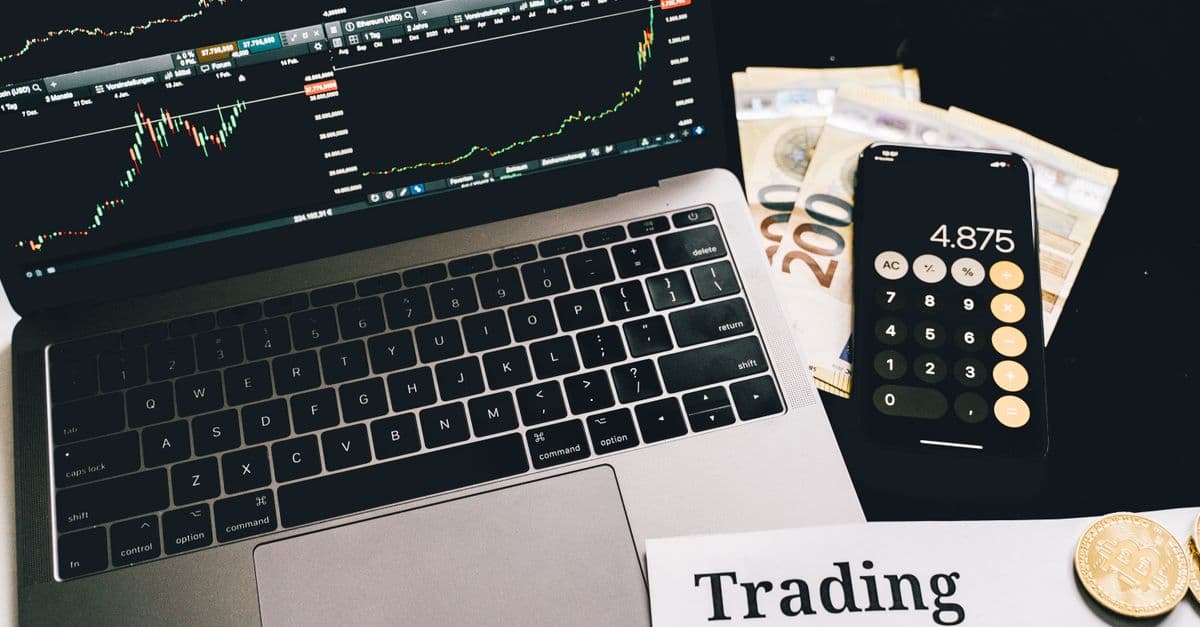
Photo: Alesia Kozik / Pexels
Warren Buffett called derivatives "financial weapons of mass destruction" in 2002. Six years later, the collapse of derivatives markets contributed to the worst financial crisis in 80 years. And yet every major airline, commodity producer, and pension fund uses derivatives constantly — and they'd be foolish not to.
Educational only — not financial advice. Investing involves risk of loss; past performance does not guarantee future results. Consult a licensed financial advisor before making investment decisions.
The contradiction resolves when you understand the difference between hedging and speculation. A derivative is simply a contract whose value derives from an underlying asset. Used to reduce risk, derivatives are essential financial infrastructure. Used to amplify leveraged bets, they can cause spectacular losses. Often, the same instrument serves both purposes simultaneously for different parties to the same contract.
Key takeaways
- Derivatives are contracts whose value derives from an underlying asset — stocks, bonds, commodities, currencies, or interest rates
- Options give the holder the right but not the obligation to buy or sell at a specified price; futures create binding obligations
- The Black-Scholes formula, developed in 1973, made options pricing rigorous and enabled the modern derivatives market
- Poorly understood and insufficiently regulated derivatives — particularly mortgage-backed CDOs — were central to the 2008 financial crisis
What derivatives are and why they exist
A derivative's value depends on — "derives from" — something else: a stock price, an oil price, an interest rate, a currency exchange rate, or even the probability of a company defaulting on its debt.
The economic purpose is risk transfer. Some parties have risk they want to eliminate; others are willing to bear it for a price. Derivatives are the mechanism for this exchange.
A wheat farmer expecting harvest in three months faces the risk that wheat prices will fall before they sell. A bread company that needs wheat faces the risk that prices will rise. A futures contract — a binding agreement to buy/sell wheat at a set price on a set date — lets both parties lock in a price now. The farmer eliminates downside; the bakery eliminates upside risk. Both get certainty. Speculators who believe they can forecast price movements take the other side of trades that hedgers don't perfectly match.
The global derivatives market is enormous — notional value exceeds $600 trillion, dwarfing world GDP. This number is misleading (notional value counts the full face value of contracts, not the actual exposure), but the scale is genuinely vast.
Options: rights without obligations
An option gives the buyer the right, but not the obligation, to buy (call option) or sell (put option) an underlying asset at a specified price (the strike price) on or before a specified date (the expiry date).
Call option example: You pay $5 for the right to buy Apple stock at $180 any time in the next three months. Apple currently trades at $175. If Apple rises to $210, you exercise: buy at $180, sell at $210, profit $30 minus the $5 premium — a $25 gain on a $5 investment, a 500% return. If Apple stays below $180, you let the option expire worthless. You've lost the $5 premium, but nothing more.
Put option example: You own 100 Apple shares and pay $5 per share for puts at $180. If Apple crashes to $100, you can still sell at $180 — the put acts as insurance. You paid $500 total for protection on a $17,500 holding.
The asymmetry is fundamental. Option buyers have limited downside (the premium paid) and theoretically unlimited upside. Option sellers (writers) collect the premium but face potentially unlimited losses — which is why options sellers are typically sophisticated institutions managing portfolios of many offsetting positions.
How options are priced: Black-Scholes
Before 1973, options pricing was an art. Fischer Black and Myron Scholes (with foundational contributions from Robert Merton) derived a mathematical formula that revolutionised finance. Their formula gives the theoretical fair price of a European-style option given:
- Current stock price (S)
- Strike price (K)
- Time to expiry (T)
- Risk-free interest rate (r)
- Implied volatility (σ) — the market's expectation of future price swings
Implied volatility is the key variable. Unlike the others, it cannot be directly observed — it must be inferred from option prices themselves. The VIX index (the "fear gauge") measures implied volatility of S&P 500 options. When the VIX spikes — as it did in March 2020 to 82, the highest ever recorded — it reflects extreme uncertainty that makes options very expensive.
The Black-Scholes model won Scholes and Merton the Nobel Prize in 1997 (Black had died in 1995). It enabled the explosion of listed options markets. Its limitations — it assumes normally distributed returns and constant volatility, both of which are violated in reality — contributed to the 1987 market crash when delta hedging strategies based on it simultaneously sold into a falling market, amplifying the collapse.
Futures and forwards
Futures are standardised, exchange-traded contracts to buy or sell an asset at a future date at a price agreed today. Unlike options, they're obligations — both parties must perform. The wheat farmer futures example above describes a forward (customised, privately negotiated). Futures are standardised equivalents traded on exchanges with daily settlement.
Daily settlement is critical: losses and gains are credited and debited daily, and parties must maintain margin (collateral) sufficient to cover potential losses. This prevents the kind of counterparty risk where one party can't pay — because they're forced to settle every day.
Futures exist for: agricultural commodities (corn, soybeans, cattle), energy (crude oil, natural gas), metals (gold, copper), financial assets (S&P 500 index futures, Treasury bond futures), and currencies. They're essential for producers, consumers, and financial institutions managing exposure.
Swaps and the 2008 crisis
Interest rate swaps are the most common derivative by notional value. A company with a floating-rate loan (payment rises when interest rates rise) swaps to a fixed rate with a counterparty, paying a fixed rate and receiving floating. They've effectively converted their variable cost into a predictable one. Banks facilitate billions in these arrangements daily.
Credit Default Swaps (CDS) — the derivatives most associated with 2008 — are essentially insurance against bond default. If Company X defaults, the CDS seller pays the buyer the face value. The buyer pays periodic premiums.
CDS became problematic because they were sold without adequate collateral and weren't exchange-traded (no daily settlement, no margin). AIG wrote $440 billion in CDS protection on mortgage-related securities, collecting premiums without holding adequate reserves. When mortgage defaults surged in 2007–2008, the protection calls came in. AIG couldn't pay. The U.S. government bailed it out for $182 billion because the alternative — AIG defaulting on $440 billion in CDS — would have triggered losses across every major bank on Earth simultaneously.
The lesson is not that derivatives are inherently dangerous, but that derivatives without adequate collateral, transparent pricing, and centralized clearing can create hidden, concentrated systemic risk.
FAQ
What is the difference between an American and a European option? An American option can be exercised at any time before expiry. A European option can only be exercised at expiry. Despite the names, both trade in both regions — the naming is historical. Most listed equity options in the U.S. are American-style. European-style options are more common in index options and are mathematically simpler to price.
What does "in the money" mean? A call option is in the money when the current stock price is above the strike price — exercising it right now would be profitable. A put is in the money when the stock is below the strike. Out-of-the-money options have no intrinsic value, only time value (the possibility that the stock will move favorably before expiry).
What is delta, and why do traders care about it? Delta measures how much an option's price changes for a $1 change in the underlying asset. A delta of 0.5 means the option price moves $0.50 for every $1 move in the stock. Delta ranges from 0 to 1 for calls and -1 to 0 for puts. "Delta hedging" means offsetting option positions with stock positions to maintain a neutral overall exposure.
Can individual investors use options safely? Buying options is relatively safe (you can only lose the premium). Selling naked options (without the underlying position) can produce unlimited losses and is not suitable for inexperienced investors. Covered calls (selling calls on stock you own) and protective puts (buying puts to insure existing stock positions) are common strategies with defined risk.
Why did derivatives grow so dramatically from the 1990s onward? Several factors: the Black-Scholes model made pricing tractable; computing power enabled complex modelling; financial deregulation removed barriers; and the growth of institutional investors (pension funds, hedge funds, insurance companies) created demand for risk management tools. The globalization of finance also created currency and interest rate exposures that hadn't previously existed at scale.
The Greeks: Managing portfolio risk quantitatively
Options traders don't manage exposure intuitively — they use Greek letters (delta, gamma, vega, theta, rho) to quantify how their portfolios respond to different market changes. Understanding the Greeks is critical for anyone using derivatives to manage risk.
Delta (Δ) measures the option's price sensitivity to changes in the underlying asset. A delta of 0.7 means if the stock rises $1, the option rises $0.70. As an option moves deeper in the money (further past the strike), delta approaches 1 (for calls) — the option behaves more like owning the stock itself. For out-of-the-money options, delta approaches 0 — the option becomes less sensitive to stock price moves.
Hedge funds use delta to calculate "equivalent shares." An options position with delta 0.5 is equivalent to owning 50 shares if it's a 100-share contract. Traders constantly rebalance to maintain target delta exposures. This daily rebalancing is powerful but also created the 1987 crash: when stock markets fell sharply, delta-hedging algorithms simultaneously sold stock to reduce their delta exposure, amplifying the market decline.
Source: Black, F., & Scholes, M. (1973, Journal of Political Economy) — Delta hedging and continuous rebalancing strategy.
Gamma (Γ) measures how delta itself changes. Gamma captures the risk that delta will change. A high-gamma position becomes riskier as prices move — your hedge is no longer effective. Selling options creates negative gamma (you lose if prices move sharply either direction). Buying options creates positive gamma (you profit from large moves in either direction). This gamma/volatility tradeoff is central to options trading: you can collect premium by selling options (negative gamma, vulnerable to surprise moves) or pay premium to have gamma protection (positive gamma, profit if surprises occur).
Vega (ν) measures sensitivity to implied volatility. If vega is 10, a 1% rise in implied volatility increases the option's price by approximately $10. Traders who believe the market is underestimating future volatility buy options (positive vega). During 2008 crisis, implied volatility exploded from ~15% to 80%+, making any long vega position enormously profitable. Conversely, volatility sellers suffered catastrophic losses.
Theta (Θ) measures time decay. Options lose value as expiry approaches (all else equal), and theta quantifies this decay rate. For buyers, theta is negative (you lose from the passage of time if the stock doesn't move). For sellers, theta is positive (they profit daily as time passes). This theta/gamma tradeoff is the fundamental tension: time decay favors option sellers, but price surprises hurt them (negative gamma). Buyers pay for the privilege of having positive gamma (they profit from surprise moves) but must overcome theta decay.
Rho (ρ) measures interest rate sensitivity. For long-dated options, a change in risk-free interest rates slightly changes the option's value. Rho matters more for bonds and currency derivatives than equities, where theta and gamma dominate.
Sophisticated portfolio managers constantly monitor these Greeks and rebalance to maintain target risk profiles. A portfolio with zero delta (neutral to stock price moves), negative gamma (risk to surprises), and short vega (bets that volatility will fall) is pursuing a "volatility selling" strategy — profitable in calm markets but disastrous in crises when gamma losses and vega losses hit simultaneously.
Source: Hull, J. C. (2017, Pearson) — Options, Futures, and Other Derivatives — comprehensive Greeks explanation and portfolio hedging applications.
Exotic derivatives and structured products
Beyond vanilla calls and puts, financial engineers have created thousands of exotic derivatives tailored to specific risk-transfer needs. Many became notorious during financial crises.
Asian options: The payoff depends on the average price of the underlying asset over the option's life, not just the final price. This reduces the incentive to manipulate prices near expiry — a useful feature for commodities where a single day's price spike could distort hedging.
Barrier options: These activate (knock-in) or deactivate (knock-out) if the underlying price crosses a specified level. Used for precise risk hedging — you only care about outcomes beyond a certain boundary. Cheaper than vanilla options, but riskier if prices approach the barrier (vega and gamma spike).
Lookback options: The strike price is set to the best price the asset achieved during the option's life. Expensive, but perfect hedging for someone who doesn't want to guess the optimal exercise date.
Swaptions: Options on swaps — the right to enter into an interest rate swap. Used by financial institutions to hedge future borrowing costs without committing to borrow immediately.
Collateralized Debt Obligations (CDOs) and Mortgage-Backed Securities (MBS) — These were exotic derivatives that bundled mortgages into tranches of different risk levels. Complex models (built on Black-Scholes assumptions) suggested that the "AAA-rated" tranches were risk-free. They weren't. When housing prices stopped rising in 2007, mortgage defaults surged. The models assumed home prices never fell nationally — a false assumption. Trillions in losses followed.
The key lesson: Exotic derivatives allow precise risk hedging for those who use them correctly, but they're also vehicles for unintended complexity and hidden risk. Derivatives are only as safe as the models and assumptions underlying their pricing.
Real-world hedging examples: Airlines and commodity producers
The most straightforward use of derivatives is operational hedging by businesses managing commodity exposure.
Airline hedging: Airlines consume vast quantities of jet fuel, whose prices fluctuate. In 2007, Southwest Airlines had hedged about 80% of its fuel exposure through long-dated call options and futures. When oil prices spiked from $65 to $145 per barrel in months, fuel costs would have crippled most airlines. Southwest's hedges protected them. Competitors who didn't hedge faced fuel costs that nearly bankrupted them. Southwest's hedging premium (the cost of buying call options) was worth every penny — they maintained profitability through a crisis.
Commodity producers: A gold mining company expecting to extract 1 million ounces over the next year can sell gold futures today, locking in prices now. If gold prices collapse, their mining economics are protected. If prices spike, they've foregone upside — but the purpose is certainty, not speculation.
Currency hedging: Multinational companies earn revenue in multiple currencies. If a U.S. company earns €100 million in Europe but needs USD, it can sell euros forward (a futures contract to exchange EUR for USD at a set rate) to lock in the USD revenue. This eliminates currency risk — and also eliminates the possibility of favorable currency moves.
These are hedging: they reduce risk but at a cost. The hedging cost is the price of certainty. Speculators who believe they can forecast prices take the opposite side, willing to take risk for potential profit. In well-functioning derivatives markets, hedgers and speculators reach equilibrium prices that reflect true expected values and market uncertainty.
Source: Airline industry case studies (2007-2008 oil crisis) — Southwest Airlines maintained profitability due to fuel hedges; competitors suffered losses.
Regulatory changes post-2008: Dodd-Frank and beyond
The 2008 financial crisis revealed that the derivatives market, particularly the unregulated over-the-counter (OTC) market, could accumulate systemic risk invisible to regulators. The Dodd-Frank Act (2010) and equivalent regulations globally aimed to fix this.
Central clearing: Most derivatives now must be cleared through central counterparties, which stand in the middle of every trade. Daily settlement prevents one party from accumulating massive unrealized losses before suddenly defaulting.
Collateral requirements: Banks and hedge funds now must hold capital and collateral sufficient to cover potential losses on derivative positions. This reduces the temptation to take unlimited risk.
Exchange trading: Many derivatives that were previously traded OTC now must be traded on regulated exchanges with transparent pricing.
Stress testing: Banks must now test whether their derivative positions would survive large market shocks (10% stock declines, doubling of interest rates, etc.).
Dodd-Frank was controversial: It reduced systemic risk but also increased costs and reduced market liquidity in some derivatives (smaller banks exited OTC markets). The tradeoff between safety and efficiency remains contested, but there's broad agreement that completely unregulated derivatives markets created conditions for contagion.
Derivative speculation and leverage: Why they can create massive losses
The difference between hedging and speculation with derivatives is not about the instrument — it's about intention and position sizing.
Hedging: An airline owns actual jet fuel exposure; they sell futures to offset it. Net exposure: zero (after the hedge).
Speculation: A hedge fund that owns no actual fuel buys oil futures, betting that prices will rise. If they're right, they profit. If wrong, they lose. And they often use leverage — putting down 5% margin to control 100% of the position. A 5% move in oil prices produces a 100% gain or loss on margin.
Leverage is the dangerous amplifier. In 2008, many institutions borrowed heavily to buy mortgage-backed securities and credit derivatives. When prices fell 20%, their leveraged positions experienced 100%+ losses — and then they had to sell at falling prices to cover margin calls, which pushed prices down further. This creates feedback loops of losses and forced liquidations.
The Financial Crisis Inquiry Commission found that banks had leverage ratios of 30:1 or 40:1 — meaning $1 of equity backing $30-$40 of assets. A 3% decline in asset values wipes out equity entirely. Modern capital requirements are stricter: banks must maintain leverage ratios of 10:1 or better and hold sufficient capital to absorb losses.
Derivatives didn't cause the crisis — mispricing, inadequate collateral requirements, and excessive leverage did. But derivatives amplified these problems by allowing rapid accumulation of leverage across the financial system. Leverage works in similar ways elsewhere, as explained in margin trading and leverage.
Structured products and retail derivatives sales
Many retail investors encounter derivatives indirectly through structured products: complex securities that embed derivatives and are marketed by banks.
Example: A "principal-protected note" promises that you'll get your principal back and also 60% of the upside if the S&P 500 rises by more than 10%. Sounds great — you get protection without giving up upside.
Reality: The bank is selling you an S&P 500 call option (you have the right to participate in upside) and buying a zero-coupon bond (your principal protection). The bank profits from the bid-ask spread and the option premium. If the S&P 500 rises 30%, you get your 60% × 30% = 18% gain. You've given up 12% of upside. The opportunity cost is substantial, and you're paying the bank's profit margin on top.
Structured products became notorious because:
- Complexity hides true costs — retail investors often don't understand what they've bought
- Illiquidity — you often can't sell mid-term at fair prices
- Counterparty risk — if the bank fails, your "principal protection" isn't guaranteed
- Tax treatment can be unfavorable
- Investors often buy at market peaks and sell at market troughs (behavioral bias)
Regulatory agencies now require clearer disclosure of costs and have placed restrictions on selling complex derivatives to unsophisticated investors. But structured products remain common and profitable for banks.
The takeaway
Derivatives are neutral instruments: they transfer risk from those who don't want it to those willing to bear it. The same contract can be a brilliant hedge (eliminating operational risk) or a catastrophic speculation (amplifying losses through leverage). The Black-Scholes model made options pricing mathematically rigorous and enabled markets to function. The Greeks provide quantitative tools for managing portfolio exposure. Yet derivatives have also been used to hide risk, create leverage that overwhelms entire financial systems, and generate products designed more to profit the bank than to serve the client. Understanding how derivatives work — the mechanics of pricing, Greeks, and leverage — is essential for anyone investing, especially as structured products and options strategies proliferate. And understanding their history of misuse and inadequate regulation is equally important for maintaining healthy skepticism about complexity disguised as innovation.
Frequently Asked Questions
Q: What is the difference between an American and a European option?
A: An American option can be exercised at any time before expiry. A European option can only be exercised at expiry. Despite the names, both trade globally — the naming is historical. Most listed equity options in the U.S. are American-style. European-style options are more common in index options and are mathematically simpler to price. American options are worth more because you have more flexibility.
Q: What does "in the money" mean?
A: A call option is in the money when the current stock price is above the strike price — exercising it right now would be profitable. A put is in the money when the stock is below the strike. Out-of-the-money options have no intrinsic value, only time value (the possibility that the stock will move favorably before expiry). This distinction is critical for option valuation.
Q: What is delta, and why do traders care about it?
A: Delta measures how much an option's price changes for a $1 change in the underlying asset. A delta of 0.5 means the option price moves $0.50 for every $1 move in the stock. Delta ranges from 0 to 1 for calls and -1 to 0 for puts. Traders use delta to calculate equivalent stock exposure. "Delta hedging" means offsetting option positions with stock positions to maintain neutral overall exposure.
Q: Can individual investors use options safely?
A: Buying options is relatively safe (you can only lose the premium paid). Selling naked options (without the underlying position) can produce unlimited losses and is not suitable for inexperienced investors. Covered calls (selling calls on stock you own) and protective puts (buying puts to insure existing stock positions) are common strategies with defined risk. Education and risk management are essential.
Q: Why did derivatives grow so dramatically from the 1990s onward?
A: Several factors converged: the Black-Scholes model made pricing tractable; computing power enabled complex modeling; financial deregulation removed barriers; and growth of institutional investors created demand for risk management tools. Globalization created currency and interest rate exposures that hadn't existed at scale. This growth brought both benefits (better hedging) and risks (unmonitored leverage).
Q: Are structured products worth buying?
A: Rarely. Structured products are complex bundles of derivatives designed to profit the bank more than the investor. They typically embed hidden costs through bid-ask spreads and option premiums. You usually get less upside than you expect and less protection than marketed. For most retail investors, broad index funds or direct options strategies are simpler and more cost-effective.
Sources
"The Pricing of Options and Corporate Liabilities" — Black, F., & Scholes, M. (1973, Journal of Political Economy).
- Foundational Black-Scholes option pricing model; revolutionized derivatives markets.
"Options, Futures, and Other Derivatives" — Hull, J. C. (2017, Pearson, 10th edition).
- Comprehensive reference on Greeks, pricing models, and hedging strategies.
"A Brief History of Derivatives" — Tucker, P. (2018). The Derivatives Trap: Dangers of Unregulated Finance.
- Evolution of derivatives markets and regulatory failures pre-2008.
"Credit Default Swaps and AIG's Role in the 2008 Crisis" — Financial Crisis Inquiry Commission Report (2011).
- Detailed analysis of CDS market, AIG's positions, and systemic risk exposure.
"Delta Hedging and the 1987 Market Crash" — Roll, R. (1988, The Journal of Portfolio Management).
- How delta-hedging algorithms amplified the market decline on October 19, 1987.
"Airline Industry Fuel Hedging: Southwest Airlines Case Study" — NTSB/FAA analysis (2007-2008).
- Southwest's hedging protection during 2007-2008 oil price spike and competitor losses.
"Dodd-Frank Act and Derivatives Regulation" — U.S. Securities and Exchange Commission & Commodity Futures Trading Commission (2010+).
- Post-crisis regulatory reforms: central clearing, collateral requirements, exchange trading mandates.
"Mortgage-Backed Securities and CDO Valuation Failures" — Gorton, G. B. (2010). Slapped by the Invisible Hand: The Panic of 2007.
- How models underestimated housing price decline risk; cascade of losses and contagion.
"Leverage and Systemic Risk in Financial Institutions" — Financial Crisis Inquiry Commission Report (2011).
- Bank leverage ratios pre-crisis (30:1 to 40:1) and post-Dodd-Frank requirements (10:1 or better).
"Structured Products Regulation and Disclosure" — FINRA & SEC Investor Alerts (2015-2025).
- Complexity, hidden costs, counterparty risk, and regulatory efforts to improve transparency.
"The Greeks in Options Trading" — Zhang, P. G. (1998, Butterworth-Heinemann). Exotic Options.
- Detailed mathematical treatment of delta, gamma, vega, theta, and portfolio hedging.
"Interest Rate Swaps and Systemic Risk" — Bank for International Settlements Quarterly Review (2010, 2015).
- Largest derivatives market by notional value; role in interest rate management and crisis transmission.
Read next
Follow new articles
Add SciHub101 to your feed reader to see new science and technology stories.
About the Author
SciHub101 is an independent science and technology publication founded and edited by Buğra Sözeri, a software engineer and app developer based in Türkiye. AI tools assist with drafting and research. Source documentation in the existing archive is uneven, and articles are being reviewed and corrected. The Editorial Team byline identifies editorial responsibility; it does not certify specialist or independent human review. Where we compare products, anything built by our own team is labelled as such — see the editorial guidelines and About page for how corrections and disclosures work.
Related Articles
Wealth Inequality: Causes, Data, and What the Numbers Mean
The richest 1% own more than half of global wealth. Understanding how this happened requires separating measurement from politics.

Can AI Predict the Next Financial Crisis? The Limits of Machine Learning Systemic Risk Models
Central banks and regulators are deploying ML to detect systemic financial risks before crises materialize — but history suggests the most dangerous risks are always the unseen ones.
Complete Finance Guide 2026 — How Money Really Works
The complete guide to finance in 2026: how money, inflation, and central banks work, investing fundamentals, markets, cryptocurrency, and personal finance explained.
Why Housing Is So Expensive
Housing prices rise when land, zoning, interest rates, construction costs, income, speculation, and supply constraints collide.
Why Interest Rates Affect Everything
Interest rates influence mortgages, stocks, currencies, hiring, inflation, government debt, and startup funding. This guide explains the transmission mechanism.
How Inflation Works — and Why It's So Hard to Stop
Inflation is hard to stop because it feeds itself: rising prices push workers to demand higher wages, which push prices higher still. Here's the full mechanism — the wage-price spiral, self-fulfilling expectations, and why central bank tools work with long and variable lags.