Complete Finance Guide 2026 — How Money Really Works
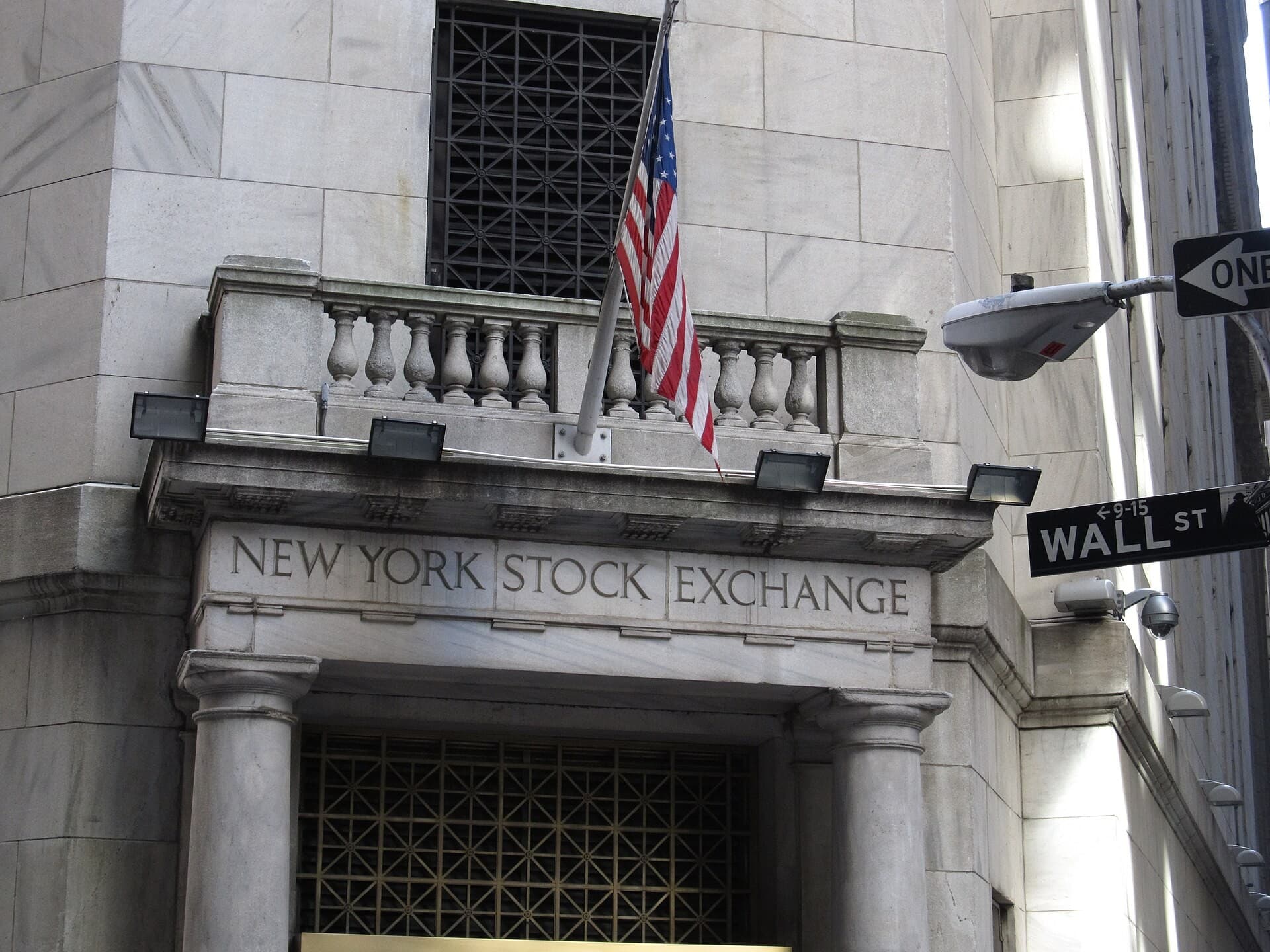
Photo: Ken Lund (CC BY-SA 2.0) / Wikimedia Commons / CC BY-SA 2.0
Money is not a thing — it's a social technology, an agreement. A dollar bill is worthless paper; its value exists only because millions of people agree to accept it as a store of value and medium of exchange. Finance is the set of systems, institutions, and behaviors that emerged to manage money and allocate resources across time and risk.
Understanding finance is understanding how economies function, why inflation happens, how central banks try to control everything, how wealth is created and preserved, and how individuals can navigate investing, debt, and long-term planning. This guide covers the fundamental concepts of money, banking, investing, and the emerging frontier of decentralized finance and AI-driven markets.
What Is Money and Why It Matters
Money is any asset widely accepted as a medium of exchange, store of value, and unit of account. Historically, money has taken many forms: shells, beads, metals, paper, and now digits in a computer.
Money solves a problem: barter is inefficient. If you make pottery and need wheat, you must find someone with wheat who wants pottery and agrees on terms. Money lets you sell pottery for money, then exchange money for wheat anytime. This flexibility unlocked trade, cities, and civilization.
Money has three essential properties. First, it's a medium of exchange — people accept it as payment. Second, it's a store of value — it doesn't spoil or degrade. Third, it's a unit of account — prices are quoted in it. For much of history, these properties were tied to a physical commodity. Gold had intrinsic value (it's rare, doesn't corrode, and can be crafted into jewelry), so people accepted it as money.
Modern money is fiat — it has value because governments declare it and enforce it, not because it's backed by something intrinsic. The US dollar is valuable because the US government accepts it for taxes, debt, and trade. Confidence is everything. When confidence erodes (during a financial crisis or hyperinflation), money's value collapses.
Source: Federal Reserve (2024) — Fiat money systems depend on stable institutions and low inflation to maintain trust and purchasing power.
Understanding money is the foundation for everything else in finance. See How Money Actually Works: A Social Construct and History of Money: Barter to Digital.
Inflation and the Purchasing Power Problem
Inflation is the rate at which the general price level of goods and services rises, reducing purchasing power. When inflation is 5%, a dollar buys 5% less than it did a year ago.
Mild inflation (~2% annually) is considered healthy. It incentivizes spending and investment rather than hoarding cash. It allows real wages to fall without nominal wage cuts, easing labor market adjustments. Deflation (negative inflation) is dangerous because it incentivizes hoarding and delays spending, choking economic growth.
Several factors cause inflation. Demand-pull inflation occurs when demand for goods exceeds supply — "too much money chasing too few goods." Cost-push inflation occurs when production costs (wages, energy, materials) rise, forcing firms to raise prices. Monetary inflation occurs when the central bank increases the money supply faster than economic growth.
During 2021-2023, global inflation surged to 40-year highs. In the US, inflation peaked at 9.1% in June 2022. Causes included pandemic supply disruptions, massive fiscal stimulus, and energy shocks from Russia's invasion of Ukraine. Central banks responded by raising interest rates sharply, which cooled demand and reduced inflation, but also slowed economic growth and increased unemployment.
Hyperinflation — inflation above 50% per month — is economically catastrophic. During the 2016-2017 Venezuelan hyperinflation, prices doubled every 19 days. The local currency became worthless; people reverted to barter or foreign currencies.
Related articles: How Inflation Works and Why It's Hard to Stop, What Causes Hyperinflation: Historical Examples, and Inflation Explained.
Central Banks and Monetary Policy
Central banks are government-backed institutions that manage money supply, set interest rates, and regulate commercial banks. The US Federal Reserve, the European Central Bank, and the People's Bank of China are the three largest.
A central bank has several tools. Open market operations (buying and selling government bonds) change the money supply. When the Fed buys bonds, it injects cash into the economy, lowering interest rates and stimulating borrowing and spending. When it sells bonds, it removes cash, raising rates and cooling spending.
The discount rate is the interest rate the central bank charges banks to borrow. A lower discount rate encourages banks to lend; a higher rate discourages it.
Reserve requirements dictate how much cash banks must hold versus lend out. Lower requirements let banks lend more; higher requirements force them to hold more cash.
Central banks also regulate the financial system to prevent crises. Banks must maintain minimum capital ratios. Their lending is monitored. They conduct stress tests to ensure banks can survive economic downturns.
The central bank's primary goal is price stability (controlling inflation) and full employment (low unemployment). These goals sometimes conflict. In the early 1980s, Federal Reserve Chairman Paul Volcker raised interest rates to 20% to crush inflation, but this caused severe recession and unemployment jumped to 10%. It worked — inflation fell permanently — but the short-term pain was severe.
Source: Federal Reserve (2024) — Central banks balance inflation control with employment goals using interest rates, money supply management, and regulation.
Key articles: How Central Banks Work Explained, How Recessions Happen: Economic Cycles, and How Stock Market Crashes Happen.
The Stock Market and Equity Investing
Stocks are ownership shares in a company. When you buy 1% of a company's stock, you own 1% of it (at least in principle). As the company's value rises, your share rises. If the company profits, you may receive dividends — distributions of cash to shareholders.
The stock market is where stocks are bought and sold. It serves multiple functions. It lets companies raise capital: a company issues stock, and the proceeds fund expansion. It lets investors own pieces of profitable enterprises and benefit from growth. It prices assets — the stock price reflects the market's collective assessment of the company's future earnings.
Stock prices are driven by two things: earnings (how much profit the company makes) and sentiment (investor optimism or fear). A company with high growth but no current profits (like early Tesla) can have a high stock price because investors believe future earnings will be vast. A mature company with steady earnings might have a lower price-to-earnings (P/E) ratio because growth is limited.
Market efficiency — the degree to which stock prices reflect all available information — is debated. The "efficient market hypothesis" says prices are always correct because millions of traders instantly incorporate new information. This implies you can't beat the market. However, behavioral economics shows investors are often irrational (overreacting to news, exhibiting herd behavior, suffering from overconfidence). This creates opportunities for disciplined investors.
Bull markets (rising prices over months or years) breed optimism and overvaluation. Bear markets (falling prices, typically 20%+ decline) breed panic and undervaluation. Both create opportunities for disciplined buying and selling.
Source: Vanguard (2023) — Long-term equity returns average ~10% annually, including dividends and reinvestment, though with significant short-term volatility.
Related reads: How the Stock Market Works Explained, What Are Stocks and How Does the Market Work, How Stock Market Crashes Happen, Dividend Investing Explained, ETFs Explained: Index Funds, Index Funds vs Active Funds, and Value vs Growth Investing.
Bonds, Credit, and Fixed Income
Bonds are loans. When you buy a bond, you lend money to a company or government that promises to pay you back with interest. A $1,000 US Treasury bond with a 4% yield pays you $40 per year for 10 years, then returns your $1,000.
Bond prices and interest rates move inversely. If you buy a bond at 4% yield and interest rates rise to 5%, your bond (paying 4%) is worth less — you could buy a new bond at 5% instead. Conversely, if rates fall to 3%, your 4% bond is worth more.
Credit risk is the risk the borrower defaults (fails to repay). Governments (especially the US, which can print money) have low credit risk. Startups or troubled companies have high credit risk. Rating agencies (Moody's, S&P) assign letter grades (AAA = safest, D = default). Higher credit risk demands higher yield to compensate investors.
Bonds are safer than stocks (less volatility, prioritized in bankruptcy), but returns are lower. Over long periods, stocks outpace bonds by 2-3% annually, but with more short-term swings. The bond market also produces a well-known recession signal; see yield curve inversion explained.
Duration measures bond price sensitivity to interest rate changes. A 10-year bond has higher duration than a 2-year bond, so its price moves more when rates change. In a rising-rate environment (like 2022-2024), longer-duration bonds fell sharply.
Key articles: Understanding Bonds: Fixed Income, What Are Bonds and Why They Matter, and Options and Derivatives Explained.
Real Estate, Leverage, and Debt
Real estate is unique among investments: it's tangible, produces income (rent), can be leveraged (financed with a mortgage), and has tax advantages (mortgage interest and property tax deductions).
Leverage (using borrowed money to invest) magnifies returns. If you buy a $300,000 house with $60,000 down (20% equity) and it appreciates 5% to $315,000, your $60,000 equity grew 25% — a 5x return. But leverage cuts both ways: if the house falls 5% to $285,000, your $60,000 equity shrinks 25%. Leverage works when assets appreciate faster than interest rates, but fails when they depreciate or rates rise above returns.
Real estate financing typically uses mortgages — long-term loans secured by the property. A 30-year mortgage at 6% means you pay monthly interest (declining) and principal (increasing) totaling $1,200 per month on a $200,000 loan. Over 30 years, you pay ~$432,000 to borrow $200,000 — the interest cost is substantial.
Housing markets are cyclical. During booms (low interest rates, rising incomes), prices surge. During busts (rising rates, falling incomes), prices crash. The 2008 financial crisis was triggered by a housing bust that cascaded into bank failures and global recession.
Equity in real estate (your ownership stake) builds over time as you pay down the mortgage and appreciate the property. But real estate is illiquid (slow to sell) and capital-intensive (requires large down payment and maintenance).
Source: Federal Reserve (2024) — Real estate represents ~45% of household net worth in the US, making it the largest asset class for most individuals.
Related articles: Real Estate Investing Explained, Why Housing Costs So Much: Economics of Real Estate, and The Real Economics of Real Estate Investing.
Cryptocurrency and Decentralized Finance
Bitcoin launched in 2009 as a "peer-to-peer electronic cash system" operating without banks or governments. It uses blockchain — a distributed ledger where transactions are grouped into blocks, cryptographically linked and spread across thousands of computers (nodes).
Cryptocurrencies aim to solve problems with fiat money. They can't be censored or controlled by governments. They don't require trust in an institution — the algorithm and cryptography are the trust. They're portable and settle nearly instantly globally.
But cryptocurrencies have tradeoffs. Bitcoin is slow (10-minute blocks, ~7 transactions per second versus Visa's thousands). Ethereum is faster but more complex. Prices are volatile — Bitcoin has fallen 60%+ multiple times. Wallets can be lost or stolen. The technology is opaque to most users. Environmental costs (Bitcoin mining uses as much electricity as some countries) are non-trivial.
Stablecoins — cryptocurrencies designed to hold a fixed price (usually $1) by holding reserves of dollars or other assets — address volatility. Regulated stablecoins like USDC are backed by real assets and audited. Unregulated ones (like Terra's Luna) have collapsed.
Decentralized Finance (DeFi) uses blockchain to recreate banking without banks. Instead of depositing cash at a bank that lends it and pays you interest, you lend cryptocurrency directly to a smart contract (algorithm) that pays you interest from borrowers. DeFi enables lending, trading, and derivative markets entirely on-chain.
DeFi has real uses: unbanked people in countries with corrupt or collapsed currencies can use it. But it's also riddled with fraud and hacks. Billions have been lost to scams and poorly audited code.
Articles: Cryptocurrency and Bitcoin Explained Simply, How Cryptocurrency Works Explained, Bitcoin: How It Actually Works, What Are Stablecoins and Why They Matter, How DeFi Works: Complete Guide, and What Are NFTs: Clear Explanation.
Investment Fundamentals: Diversification, Rebalancing, Time Horizon
Most people should not try to beat the stock market through active trading. Instead, focus on the principles that actually work.
Diversification — holding many different assets — reduces risk. If you own one stock and it crashes, you're wiped out. If you own 500 stocks, one crash barely dents your portfolio. Index funds (like the S&P 500, which holds 500 large companies) provide instant diversification for a low fee.
Asset allocation — the mix of stocks, bonds, and other assets — is the primary driver of returns and risk. A 100% stock portfolio returns more in bull markets but crashes harder in bear markets. A 100% bond portfolio is stable but returns less. A 60/40 (stocks/bonds) mix balances growth and stability. Your allocation should depend on your time horizon (decades vs years), risk tolerance (ability to sleep soundly during crashes), and goals.
Time horizon is critical. Money you need in 1-2 years should be in bonds or cash (stable). Money you won't touch for 20+ years should be in stocks (higher volatility, better long-term returns). Mixing time horizons and asset types causes emotional decisions ("I can't take this volatility, let me sell low") that destroy returns.
Dollar-cost averaging (investing a fixed amount regularly) beats trying to time the market. You don't know if stocks are "cheap" or "expensive" — no one does reliably. Investing $1,000 monthly for 30 years captures both booms and busts and outperforms trying to buy only at bottoms.
Rebalancing (adjusting your allocation annually) forces you to "sell high, buy low." If stocks soar and now represent 75% of your portfolio instead of your target 60%, rebalance by selling some stocks and buying bonds. This is uncomfortable (selling winners), but it locks in gains and maintains your intended risk level.
Source: Vanguard (2024) — Passive index investing with regular rebalancing outperforms 85-90% of active managers over 15+ years after fees.
Related articles: How to Build an Emergency Fund, How to Save Money Fast, How to Create a Budget Using the 50/30/20 Rule, How to Actually Plan for Retirement, What Is Asset Allocation, How Compound Interest Works, and Personal Finance Basics Guide.
Behavioral Economics and Why Humans Make Bad Decisions
Rational actor theory says humans carefully weigh options and maximize their utility. Reality is messier. Strategic decision-making is formalized in game theory and the Nash equilibrium.
Loss aversion — the tendency to feel the pain of losses roughly twice as intensely as the joy of equal gains — causes people to hold losers too long (hoping to break even) and sell winners too early (locking in gains). This destroys returns.
Overconfidence — the tendency to overestimate one's knowledge or ability — leads investors to trade too frequently (incurring fees and taxes) and take excessive risks. Studies show that 90% of investors think they're above-average, which is mathematically impossible.
Herd behavior — following the crowd because others are doing it — creates bubbles and crashes. During the dot-com bubble (1999-2000), any company with ".com" in its name surged, then crashed 90%. During the 2008 crisis, everyone tried to sell at once, cascading the crash.
Anchoring — relying too heavily on the first piece of information — causes investors to fixate on purchase prices ("I'm not selling until it recovers to $100") instead of assessing current value.
Present bias — preferring immediate gratification over long-term benefit — leads to undersaving for retirement.
Understanding these biases is half the battle. The other half is building systems to counteract them: use index funds so you don't have to pick stocks. Invest automatically (401k deductions) so you don't have to decide monthly. Rebalance annually so you don't chase trends. Have a plan and stick to it.
Key article: Behavioral Economics: Why Humans Make Bad Decisions.
AI in Finance and the Future
Machine learning is reshaping finance. AI algorithms detect fraud by spotting anomalies in transactions. They predict loan defaults by analyzing patterns in credit history. They optimize trading by processing massive datasets faster than humans.
High-frequency trading (HFT) uses AI to make thousands of trades per second, profiting from microsecond-scale price movements. It's controversial: it can destabilize markets during stress (flash crashes) but also provides liquidity.
Algorithmic trading uses AI-learned strategies to bet on market moves. A neural network might learn that certain combinations of price, volume, and sentiment predict short-term returns. These strategies can be profitable but are prone to overfitting (learning noise instead of signal) and can fail when market conditions shift.
AI also threatens traditional finance jobs. Analysts who spend hours writing reports may be replaced by algorithms that extract insights from data. But it also creates opportunities: new types of investment strategies, better risk management, more personalized financial advice.
The future likely involves AI-driven portfolio management (algorithms that automatically adjust your allocation), robo-advisors (AI that gives personalized advice for a fraction of traditional fees), and new asset classes (digital currencies, tokenized assets, synthetic securities).
Topics Covered in This Guide (Deep Dives)
Money and Economics Foundations
- How Money Actually Works: A Social Construct
- History of Money: Barter to Digital
- How Inflation Works and Why It's Hard to Stop
- What Causes Hyperinflation: Historical Examples
- Inflation Explained
Central Banks and Monetary Policy
Stock Markets and Equity Investing
- How the Stock Market Works Explained
- What Are Stocks and How Does the Market Work
- How Stock Market Crashes Happen
- Dividend Investing Explained
- ETFs Explained: Index Funds
- Index Funds vs Active Funds
- Value vs Growth Investing
Bonds and Fixed Income
- Understanding Bonds: Fixed Income
- What Are Bonds and Why They Matter
- Options and Derivatives Explained
Real Estate
- Real Estate Investing Explained
- Why Housing Costs So Much: Economics of Real Estate
- The Real Economics of Real Estate Investing
Cryptocurrency and DeFi
- Cryptocurrency and Bitcoin Explained Simply
- How Cryptocurrency Works Explained
- Bitcoin: How It Actually Works
- What Are Stablecoins and Why They Matter
- How DeFi Works: Complete Guide
- What Are NFTs: Clear Explanation
Investment Fundamentals
- How to Build an Emergency Fund
- How to Save Money Fast
- How to Create a Budget Using the 50/30/20 Rule
- How to Actually Plan for Retirement
- What Is Asset Allocation
- How Compound Interest Works
- Personal Finance Basics Guide
Behavioral Economics
AI in Finance
Capital Formation and Business
Trade and International Finance
Frequently Asked Questions
Q: Is investing in the stock market risky?
A: Short-term, yes. The stock market can fall 20-50% over months or years. Long-term, it's more predictable — the historical average return is ~10% annually with reinvested dividends. For money you won't need for 20+ years, historical data suggests stocks have been the best investment despite short-term volatility. For money you need soon, bonds or cash are safer.
Q: Should I invest in individual stocks or index funds?
A: Most people should use index funds. Individual stock picking requires time, skill, and discipline that most investors lack. Studies show 85-90% of active investors underperform index funds after fees over 15+ years. Index funds are simple, diversified, and cheaper. Picking individual stocks is entertainment if it's hobby capital you can afford to lose.
Q: Can I beat inflation with savings accounts or bonds?
A: In normal times, yes. Savings accounts offer ~4-5% interest; bonds offer similar yields. If inflation is 3%, you're earning 1-2% real (after-inflation) return. But during high inflation (like 2021-2023), nominal rates lag inflation, eroding purchasing power. Stocks historically beat inflation over long periods.
Q: What's the difference between a recession and a depression?
A: A recession is two or more consecutive quarters of negative GDP growth. A depression is a severe, prolonged recession with high unemployment and widespread hardship. The Great Depression (1929-1939) was brutal; post-WWII recessions were milder. The term is more qualitative than quantitative.
Q: Should I buy cryptocurrency as an investment?
A: This is personal. Bitcoin and Ethereum have produced outsized returns (though with crashes). Most people should limit crypto to <5% of their portfolio. The technology is real and useful, but many cryptocurrencies are speculative or fraudulent. Only invest money you can afford to lose entirely. Do your own research — much crypto coverage is hype or manipulation.
Q: How much should I have in savings before investing?
A: Financial advisors typically suggest an emergency fund of 3-6 months of living expenses in a savings account or money market fund. This covers job loss or unexpected expenses without forcing you to sell investments (which locks in losses). After building your emergency fund, invest for long-term goals (retirement, home, education).
The Takeaway
Money is both simple and profound. Simple: it's a medium of exchange and store of value. Profound: it's a social technology that coordinates the behavior of billions, funding civilization. Finance is the set of systems and behaviors that manage money across time, uncertainty, and risk.
The practical takeaway: understand inflation and interest rates, because they affect everything. Diversify and avoid trying to beat markets via active trading — index funds, consistent investing, and time horizon management work. Use leverage carefully — it magnifies both gains and losses. Understand your behavioral biases (loss aversion, overconfidence, herd behavior) and build systems to counteract them. Save regularly, rebalance annually, and think in decades, not days.
As AI reshapes finance, the future likely involves better-personalized advice, more efficient markets, and new asset classes. The fundamentals — diversification, compound interest, and behavioral discipline — will endure.
Last verified: August 2026
Follow new articles
Add SciHub101 to your feed reader to see new science and technology stories.
About the Author
SciHub101 is an independent science and technology publication founded and edited by Buğra Sözeri, a software engineer and app developer based in Türkiye. AI tools assist with drafting and research. Source documentation in the existing archive is uneven, and articles are being reviewed and corrected. The Editorial Team byline identifies editorial responsibility; it does not certify specialist or independent human review. Where we compare products, anything built by our own team is labelled as such — see the editorial guidelines and About page for how corrections and disclosures work.
Related Articles


The Real Economics of Real Estate Investing
Property is the world's largest asset class. Real estate sells well as "passive income" — the reality is more complicated, more profitable in some ways, less so in others.

The History of Money: From Barter to Digital Currency
Money is one of humanity's most powerful inventions, but it has no value in itself. Understanding its history reveals why that is a feature, not a flaw.
How Stock Market Crashes Happen
Stock market crashes are not random events. They follow a mechanical sequence: valuations stretch on borrowed money, a trigger breaks confidence, and forced selling feeds on itself until buyers disappear.

Understanding Bonds and Fixed Income: How They Work
Bonds are one of the largest asset classes in the world, yet most people find them less intuitive than stocks. The core logic — lending money in exchange for interest payments and repayment of principal — is simple. The details that determine whether a bond is valuable or risky require understanding a handful of precise relationships: price and yield move in opposite directions, duration measures sensitivity to interest rates, and the yield curve tells a story about economic expectations. This is what you need to understand those details.
How the Stock Market Works: A Complete Guide
Learn how stocks, exchanges, IPOs, valuation, and market indices work — from bid-ask spreads to the efficient market hypothesis.