How Cryptocurrency Works — Beyond Bitcoin

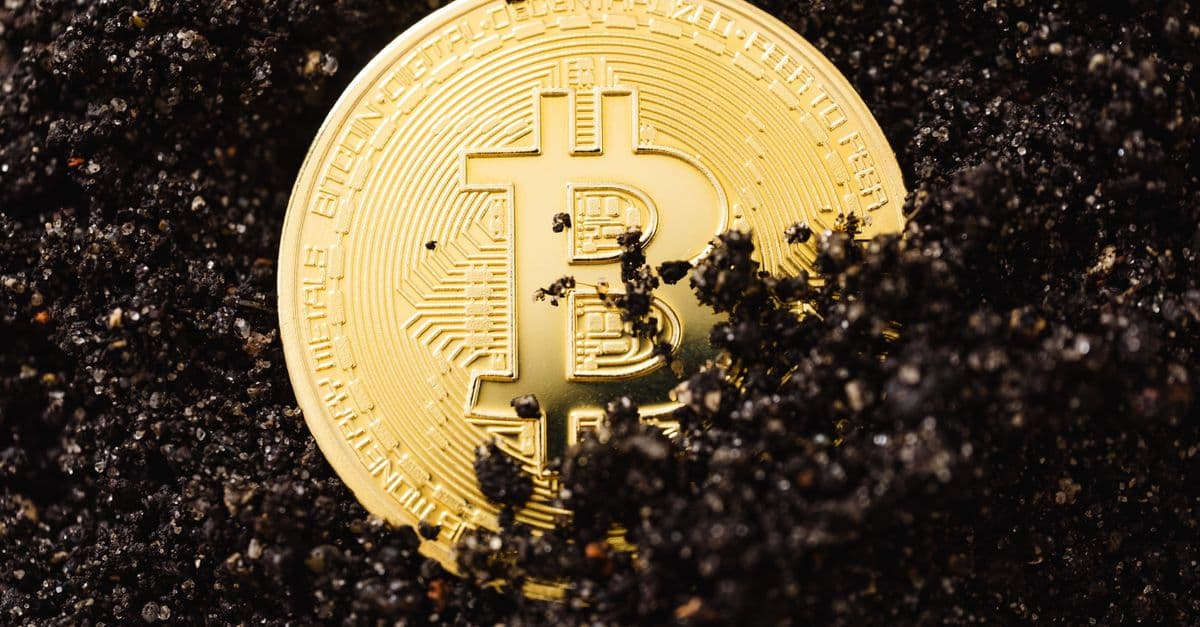
Photo: DS stories / Pexels
Cryptocurrency is one of those topics where the loudest voices tend to be either evangelists or sworn enemies. Neither is particularly useful if you actually want to understand what is happening. The truth is that crypto is a mixed bag: some genuinely novel technology, some real-world utility, and a lot of speculative excess. This article aims to walk the middle: explain how crypto works, where it adds value, and where it doesn't.
Educational only — not financial advice. Investing involves risk of loss; past performance does not guarantee future results. Consult a licensed financial advisor before making investment decisions.
What Cryptocurrency Actually Is
At its core, a cryptocurrency is a digital asset whose ownership and transfer are recorded on a distributed ledger — a Bitcoin.">blockchain — secured by cryptography rather than by a bank, court, or government. Three properties define it:
- No central authority. No company can freeze accounts or reverse transactions.
- Cryptographic ownership. A private key proves who owns what; whoever holds the key controls the funds.
- Programmable. Newer chains (like Ethereum) allow code — smart contracts — to move money based on rules.
If you'd like to understand the data structure underneath, see our blockchain explainer, and for the mechanism that secures Bitcoin specifically, read Bitcoin mining explained.
Bitcoin: Digital Gold
Bitcoin (launched 2009) is the original cryptocurrency and remains the largest by market cap. Its design is deliberately minimal: it does one thing — let people send value across the internet without a middleman — and it does that thing well. There is no central server, no CEO, no committee that can change the rules unilaterally.
The dominant thesis today is "digital gold": Bitcoin as a long-term store of value with provably scarce supply (21 million BTC, ever). It is too slow and volatile to be a daily payment currency for most people, but as a non-sovereign reserve asset it has carved out a real niche. The January 2024 approval of US spot Bitcoin ETFs was a watershed moment, bringing tens of billions of dollars in institutional money on-chain through regulated vehicles.
Ethereum: Programmable Money
Ethereum (launched 2015) took a different approach. Instead of just transferring value, it added a Turing-complete virtual machine — the EVM — that runs smart contracts. A smart contract is just a small program that lives on the blockchain and executes when conditions are met. This unlocked entire categories of applications:
- DeFi (Decentralized Finance) — lending, trading, derivatives, all without banks
- NFTs — tokens representing ownership of digital items
- DAOs — internet-native organizations with on-chain governance
- Stablecoins — most live on Ethereum or its layer 2s
In 2022, Ethereum switched from proof-of-work to proof-of-stake, cutting its energy consumption by ~99.95%. Ether (ETH) is both the currency you pay transaction fees in and the asset stakers lock up to secure the network.
Stablecoins: The Quiet Killer App
Most crypto is too volatile to use for everyday payments. Stablecoins solve this by pegging their value (usually to the US dollar). They are now the highest-volume use case in crypto by a wide margin, settling more transaction value annually than Visa in some months.
There are three main designs:
- Fiat-backed (USDT/Tether, USDC/Circle) — A company holds $1 in reserves for every token issued. Simple, dominant, but requires trusting the issuer.
- Crypto-backed (DAI by MakerDAO) — Overcollateralized with ETH or other crypto. Decentralized but capital-inefficient.
- Algorithmic — Uses code and arbitrage to maintain the peg. The collapse of TerraUSD/Luna in May 2022 wiped out ~$40 billion in days and is the canonical example of why purely algorithmic stablecoins are dangerous.
Stablecoin regulation (GENIUS Act in the US, MiCA in the EU) became reality between 2024 and 2025, giving the category clearer legal footing.
The Major Crypto Categories
| Category | Examples | What They Do | Risk Level |
|---|---|---|---|
| Store of value | Bitcoin (BTC) | Non-sovereign reserve asset, fixed supply | Moderate (volatility) |
| Smart contract platforms | Ethereum, Solana, Avalanche | Run dApps and smart contracts | Moderate |
| Stablecoins | USDT, USDC, DAI | Dollar-pegged transactional money | Low–High (depends on type) |
| DeFi tokens | Aave, Uniswap, Curve | Governance/utility for DeFi protocols | High |
| Layer 2 scaling | Arbitrum, Optimism, Base, zkSync | Cheap/fast on top of Ethereum | Moderate |
| Governance tokens | UNI, MKR, COMP | Voting rights in DAOs | High |
| Privacy coins | Monero, Zcash | Anonymous transactions | High (regulatory) |
| Meme coins | DOGE, SHIB, PEPE, WIF | No utility; cultural/speculative | Very high |
| NFTs | Bored Apes, art collections | Tokenized ownership of digital items | Very high |
Wallets: Where Your Crypto Lives
A wallet is a piece of software (or hardware) that manages your private keys. There are two big categories:
- Custodial wallets — A third party (Coinbase, Binance, Robinhood) holds the keys for you. Easy to use, but the company can freeze accounts, get hacked, or go bankrupt (see FTX, 2022).
- Non-custodial wallets — You hold the keys yourself (MetaMask, Phantom, Rabby, Ledger hardware wallets). Total control, total responsibility. Lose your seed phrase, lose your funds forever.
The phrase "Not your keys, not your coins" captures the philosophy: if a third party can move it without you, it's not really yours.
Within non-custodial, there's another distinction:
- Hot wallet — Connected to the internet (software wallets on phones/PCs). Convenient, vulnerable.
- Cold wallet — Offline, usually a hardware device (Ledger, Trezor). Inconvenient, very secure.
Exchanges: Centralized vs Decentralized
To convert crypto to/from fiat, most people use an exchange.
- Centralized exchanges (CEX) — Coinbase, Binance, Kraken. Fast, deep liquidity, regulated in major jurisdictions. Risk: custody concentration (FTX was a CEX).
- Decentralized exchanges (DEX) — Uniswap, Curve, Jupiter (on Solana). Smart-contract-based, non-custodial, transparent. Risk: contract bugs, scam tokens, worse UX.
CEXs handle most volume; DEXs handle most innovation. Increasingly the line is blurring as CEXs offer self-custody options.
Regulatory Landscape in 2026
The regulatory picture has changed dramatically since 2023:
- United States — Spot Bitcoin ETFs (Jan 2024), spot Ethereum ETFs (mid-2024), stablecoin legislation (2025). The SEC's enforcement-first stance softened significantly under the new administration.
- European Union — MiCA (Markets in Crypto-Assets) fully in force since 2024, providing one of the world's first comprehensive frameworks.
- United Kingdom — FCA crypto regime live, stablecoin and staking rules clarified.
- Asia — Hong Kong and Singapore positioning as hubs; Japan long-established. China still bans most crypto activity.
Tax treatment in most countries: capital gains on disposal, ordinary income on staking/mining rewards.
Real Use Cases (Where Crypto Actually Helps)
Ignoring the hype, crypto has carved out genuine niches:
- Cross-border remittances. Sending USDC over a layer 2 costs cents, settles in seconds, and works on weekends. Compare to wire transfers.
- Store of value in unstable economies. People in Argentina, Turkey, Nigeria, and Lebanon use stablecoins to preserve purchasing power against local currency collapse.
- DeFi yields. Lending stablecoins on Aave or Compound can earn risk-adjusted yields competitive with money market funds, though with smart-contract risk.
- Censorship-resistant payments. Used by journalists, dissidents, and donors in restricted jurisdictions.
- Programmable financial primitives. New things — automated market makers, on-chain options, liquid staking — that simply did not exist before.
And the Hype (Where It Largely Didn't)
Being balanced means acknowledging where crypto fell short of the marketing:
- NFTs as a mass consumer product mostly collapsed after 2022. The technology persists in niche use cases (in-game items, ticketing), but the speculative wave is over.
- "Web3" replacing the regular internet never happened. Most "decentralized" apps still rely on centralized infrastructure (Infura, AWS, frontends on Vercel).
- Crypto as a payment method for everyday purchases remains a fraction of a percent of retail. Volatility and tax treatment kill the use case for most consumers.
- DAOs as the future of work mostly devolved into low-turnout voting on treasury allocations.
- Most altcoins have underperformed Bitcoin over any multi-year horizon and many have gone to zero.
A useful rule of thumb: if a project's pitch deck is full of jargon and promises and short on either real users or working code, it is probably speculative.
Frequently Asked Questions
Q: Is cryptocurrency real money? A: It depends on how you define money. Bitcoin and stablecoins function as money in some contexts — settling payments, storing value. But most cryptocurrencies aren't widely accepted for goods and services. Legally, in most countries, they are treated as property or assets, not legal tender (with El Salvador being a notable exception for Bitcoin).
Q: What's the difference between Bitcoin and Ethereum? A: Bitcoin is designed as a simple, scarce digital asset — like digital gold. Ethereum is a programmable platform that lets developers build applications (smart contracts) on top. Bitcoin prioritizes security and scarcity; Ethereum prioritizes flexibility and innovation.
Q: Are stablecoins safe? A: It depends on the design. Fiat-backed stablecoins from regulated issuers like USDC are generally low-risk if the reserves are well-audited. Crypto-backed stablecoins like DAI are more decentralized but rely on collateral remaining liquid. Algorithmic stablecoins have a poor track record — TerraUSD's 2022 collapse erased $40 billion.
Q: Can I lose all my crypto? A: Yes, in several ways. You can lose your private keys (irretrievable). The token's value can crash. An exchange can go bankrupt (FTX, Celsius). A smart contract you interact with can be hacked. Self-custody and diversification reduce, but don't eliminate, these risks.
Q: Is crypto a good investment? A: It is a high-risk, high-volatility asset class. Bitcoin specifically has produced enormous returns historically, but with drawdowns of 70–80%. Most financial advisors recommend treating crypto as a small allocation (1–5%) within a diversified portfolio, not a core holding. Past performance is not a guarantee.
Q: What's the difference between a hot and cold wallet? A: A hot wallet runs on an internet-connected device (phone, computer) — convenient but more vulnerable to hacking. A cold wallet stores keys offline, typically on a hardware device like a Ledger or Trezor. Best practice: keep small amounts in a hot wallet for spending, the bulk in cold storage.
Sources
- Bank for International Settlements (BIS) — Annual Economic Reports on crypto (2023–2025)
- US SEC — Spot Bitcoin and Ethereum ETF approval orders (2024)
- EU Regulation 2023/1114 (Markets in Crypto-Assets / MiCA)
- Chainalysis — Crypto Crime and Geography of Cryptocurrency reports (2024)
- Coinbase, Kraken, and Circle public quarterly filings
- "Terra/Luna Collapse: A Technical Postmortem" — multiple academic analyses, 2022
- Andreas M. Antonopoulos, "Mastering Ethereum"
Follow new articles
Add SciHub101 to your feed reader to see new science and technology stories.
About the Author
SciHub101 is an independent science and technology publication founded and edited by Buğra Sözeri, a software engineer and app developer based in Türkiye. AI tools assist with drafting and research. Source documentation in the existing archive is uneven, and articles are being reviewed and corrected. The Editorial Team byline identifies editorial responsibility; it does not certify specialist or independent human review. Where we compare products, anything built by our own team is labelled as such — see the editorial guidelines and About page for how corrections and disclosures work.
Related Articles

How the Stock Market Works: A Complete Guide
Learn how stocks, exchanges, IPOs, valuation, and market indices work — from bid-ask spreads to the efficient market hypothesis.
Bitcoin Mining Explained — How It Actually Works
How Bitcoin mining uses proof of work to order transactions and secure the network, with clear coverage of halvings, difficulty, hardware, energy estimates and profitability uncertainty.

How Decentralized Finance Works: Smart Contracts, Lending, and Real Risks
Decentralized finance (DeFi) replaces banks with automated smart contracts running on blockchain networks. Instead of submitting a loan application to a bank, you deposit collateral into a smart contract; instead of a savings account earning interest, you provide liquidity to a decentralized exchange and earn transaction fees. DeFi operates on the premise that financial infrastructure can be transparent, permissionless, and governed by code rather than institutions. The mechanisms are real and operational, handling tens of billions in assets. The risks are equally real: smart contract bugs have erased hundreds of millions in user funds, 'rug pull' scams have vaporized billions, and impermanent loss is a mathematical cost of providing liquidity to automated trading pools. This article explains how DeFi works mechanically and examines the structural risks that distinguish it from traditional finance.

Blockchain Explained — Beyond Bitcoin
How blockchains actually work, consensus mechanisms compared, smart contracts, what blockchain is good for, and what it isn't — balanced view for 2026.
Ethereum in 2026: How It Works and What to Know
Ethereum is a blockchain network that extends cryptocurrency beyond Bitcoin's payments functionality to programmable contracts and decentralized applications. Unlike Bitcoin, which is primarily a peer-to-peer currency, Ethereum allows developers to deploy software (smart contracts) that executes agreements automatically without intermediaries. The Ethereum network operates on a proof-of-stake consensus mechanism (as of 2022), meaning validators stake cryptocurrency to secure the network rather than competing to solve mathematical puzzles. Ethereum's cryptocurrency, Ether (ETH), is used to pay for transaction fees (gas) and to incentivize validators. Ethereum has become the largest platform for decentralized finance (DeFi), non-fungible tokens (NFTs), and decentralized autonomous organizations (DAOs). This article explains how Ethereum works technically, the role of smart contracts and validators, current layer 2 scaling solutions, real use cases, and informed criticisms of the system. This is educational information about mechanisms, not investment advice.

Crypto Trading Bots and Machine Learning: Separating Hype from Reality
Machine learning crypto bots promise alpha in chaotic markets, but most retail traders lose money. Here's what actually works — and what doesn't.