Crypto Trading Bots and Machine Learning: Separating Hype from Reality

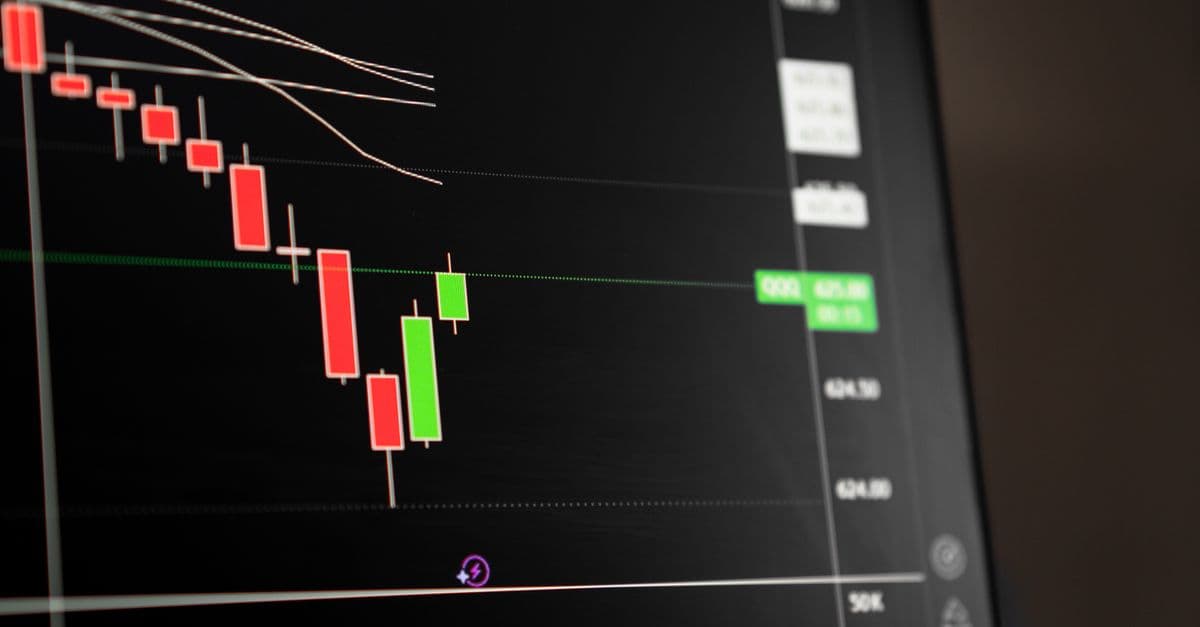
Photo: RDNE Stock project / Pexels
By 2024, an estimated 70–80% of all cryptocurrency trading volume on major exchanges was generated by automated bots, according to data from Chainalysis and CryptoCompare. This ecosystem ranges from simple arbitrage scripts running on a Raspberry Pi to sophisticated deep learning systems deployed by proprietary trading firms. The promise is compelling: cryptocurrency markets trade 24/7, across hundreds of venues with imperfect price synchronization, are driven by retail sentiment that leaves exploitable patterns, and have historically been more volatile and less efficient than traditional markets. Machine learning, the theory goes, can extract systematic alpha from all of this. The reality is considerably more complicated.
Educational only — not financial advice. Investing involves risk of loss; past performance does not guarantee future results. Consult a licensed financial advisor before making investment decisions.
Key takeaways
- Automated bots account for the majority of crypto exchange volume; basic strategies like arbitrage and grid trading are commoditized and barely profitable for retail traders.
- Machine learning approaches — particularly sentiment analysis and order flow prediction — can add edge, but only when paired with sophisticated infrastructure and risk management.
- Most retail ML crypto bots fail due to overfitting, transaction costs, exchange risk, and regime shifts.
- Institutional crypto traders (Jump Crypto, Wintermute, GSR) have genuine ML edge; retail replication of their strategies is largely infeasible.
The Landscape of Crypto Bot Strategies
Automated crypto trading spans a wide spectrum of sophistication.
Arbitrage bots exploit price discrepancies for the same asset across different exchanges. Bitcoin trading at $65,000 on Coinbase and $65,050 on Binance represents a $50 profit per coin if you can buy on one and sell on the other before the gap closes. In practice, arbitrage gaps in major cryptocurrencies now close in seconds or milliseconds, meaning the strategy requires HFT-grade infrastructure to be profitable. Retail arbitrage bots, operating with exchange API latencies of 50–500 milliseconds, rarely profit after accounting for transaction fees.
Market-making bots post both bids and asks at tight spreads around the mid-price, profiting from the spread while managing directional inventory risk. Platforms like Hummingbot make market-making bot deployment accessible to retail traders. In liquid markets (BTC, ETH on major venues), competition from professional market makers (Wintermute, GSR, Cumberland) makes retail market making marginally profitable at best. In less liquid altcoin markets, spreads are wider but adverse selection (trading against informed counterparties) and liquidity risk are higher.
Trend-following and momentum bots attempt to identify and ride price trends using moving average crossovers, RSI thresholds, or more sophisticated ML models. Cryptocurrency markets have historically exhibited momentum — price trends that persist for days to weeks — suggesting trend-following strategies should work. The problem is that regime shifts are violent and frequent in crypto: a momentum strategy that worked beautifully in 2020–2021's bull market catastrophically underperformed in 2022's bear market.
Sentiment analysis and NLP: This is where machine learning provides the most differentiated edge. Cryptocurrency prices are unusually reactive to social media, news flow, and influential voices. A 2023 study in the Journal of Financial Economics found that Twitter/X sentiment predicted short-term Bitcoin returns with statistically significant accuracy. NLP models trained on crypto-specific language (including slang, emoji, and community-specific terminology) can process social signals faster and more comprehensively than human traders.
What Institutional Crypto Traders Actually Do
The firms that have demonstrably profitable ML crypto trading operations — Jump Crypto (the crypto arm of Jump Trading), Wintermute, GSR, and Alameda Research before its collapse — operate nothing like the retail bot ecosystem.
Jump Crypto uses the same infrastructure as Jump Trading's traditional HFT operation: co-located servers at exchange data centers, custom networking, and proprietary ML models for order flow prediction. The firm reportedly earned over $1 billion in profits from market making across crypto markets in 2021, according to Bloomberg reporting. This is not a strategy retail traders can replicate — it requires hundreds of millions in infrastructure investment.
Wintermute, a quantitative crypto market maker, processes millions of trades per day across 50+ exchanges. The firm explicitly publishes research on ML techniques it uses for liquidity modeling and execution optimization, while keeping its most profitable strategies proprietary.
The bankruptcy of Alameda Research in 2022 (linked to the FTX collapse) is instructive. Alameda was considered among the most sophisticated quantitative crypto trading firms. Yet poor risk management, concentrated positions, and conflicts of interest caused its collapse — illustrating that even genuine quantitative edge cannot survive governance failures.
Common Failure Modes of ML Crypto Bots
Overfitting on limited data: Cryptocurrency markets have only been around since 2009, meaning even the richest training datasets contain at most one genuine bear market cycle (2014–2015), one crash-and-recovery (2017–2018), one pandemic event (2020), and one macro-driven bear market (2022). Complex ML models can fit historical regimes exquisitely while learning nothing that generalizes.
Transaction costs destroy alpha: A strategy that predicts 5-minute returns with 55% accuracy sounds promising. But if it trades 10 times per day, and each trade costs 0.1% in taker fees (typical on major exchanges), daily transaction costs alone consume most theoretical profit. Retail ML bots frequently look profitable in backtests using mid-price execution and ignoring fees, then fail in live trading.
Exchange risk: Keeping capital on exchanges to enable rapid trading creates custodial risk — as FTX's 2022 collapse demonstrated dramatically. Trading algorithms optimized for specific exchanges also break when exchange APIs change, maintenance windows occur, or exchange-specific anomalies appear.
Regime non-stationarity: The crypto market has cycled through at least three distinct regimes: the 2017 retail mania, the 2020–2021 institutional adoption wave, and the 2022 macro-driven risk-off environment. No ML model trained on one regime reliably outperforms in another.
What Actually Works for Retail Traders
Despite these challenges, some ML approaches have demonstrated robust performance for retail crypto traders.
Cross-exchange arbitrage on DEXes: Decentralized exchanges (Uniswap, Curve, etc.) have price discovery that is genuinely slower than centralized exchanges. "MEV" (Maximal Extractable Value) bots exploit this — arbitraging price differences between DEX and CEX prices, or between multiple DEXes. This is a genuine and profitable strategy, though it has become highly competitive and increasingly requires custom smart contracts and private transaction infrastructure.
Regime detection as a meta-strategy: Rather than trying to profit in all market regimes, some robust ML systems focus on identifying which regime is currently active (bull, bear, choppy/sideways) and switching strategies accordingly. A simple two-regime model — momentum in trending markets, mean reversion in ranging markets — has shown Sharpe ratios above 1.0 in several academic papers using crypto data.
Sentiment alpha with proper risk management: NLP models processing crypto-specific social signals have shown genuine predictive power at daily horizons, as demonstrated in multiple academic studies. The key is matching signal frequency to strategy frequency (daily sentiment → daily rebalancing) and maintaining strict position limits.
Performance benchmarking and the illusion of backtesting
A critical challenge with retail ML crypto bots is backtest overfitting. A trader develops an ML model, tests it on historical data from 2015–2022, reports a Sharpe ratio of 2.0 (excellent), and then deploys real money. The live performance collapses because:
- Look-ahead bias: The backtest accidentally uses information from the future (common bug in backtesting frameworks)
- Survivorship bias: The backtest includes all trading pairs ever listed, but ignores pairs that were delisted (dead cryptocurrencies)
- Slippage and fees: Backtest assumes mid-price execution; real trading incurs spread, slippage, and taker fees (0.05–0.10% per trade)
- Overfitting to noise: The ML model memorizes random patterns in training data that don't generalize
Source: Goodhart's Law applied to financial ML: "When a measure becomes a target, it ceases to be a good measure." Backtested returns are not forward-predictive; they are optimized historical fit.
Rigorous ML practitioners use walk-forward testing: train on data from 2015–2020, test on 2020–2021 (unseen), report performance only on the unseen test period. Most retail backtests do not follow this discipline.
Leverage and liquidation cascades in crypto bot trading
Many crypto trading bots operate with leverage—controlling $100,000 notional with $1,000 actual capital. This amplifies returns in favorable conditions and losses in adverse conditions. A 5% adverse move wipes out the $1,000 deposit. During volatile periods (flash crashes, exchange outages, regulatory shocks), liquidations cascade: leveraged positions force-close, accelerating price movements, triggering more liquidations.
The May 2022 Luna/Terra collapse triggered $1 billion+ in liquidations across cryptocurrency leverage traders. Bots designed on the assumption of stable market regimes catastrophically failed. Survivor bias obscures this: bot operators who survived don't publish loss reports.
Comparing retail ML crypto bots to traditional algorithmic trading
Traditional algorithmic trading (equities, futures) operates in regulated markets with:
- Centralized infrastructure (one exchange, standard connectivity)
- Regulatory oversight (SEC, CFTC rules against manipulation)
- Mature academic research on market microstructure
- Longer market history for training
Cryptocurrency trading, by contrast, has:
- Fragmented exchanges (price discovery is decentralized; arbitrage gaps abound)
- Minimal regulation (at least until recently)
- Immature market structure (much retail order flow, high adverse selection)
- Short market history (data-sparse)
This should theoretically make crypto MORE profitable for ML and arbitrage bots. Empirically, it often makes it LESS profitable for retail bots because the infrastructure requirements are higher (you need to be connected to multiple exchanges with low latency) and the regime shifts are violent (strategies built on 2021 bull market data utterly fail in 2022 bear market).
Emerging techniques: reinforcement learning and ensemble methods
Reinforcement learning (RL) agents learn trading strategies through trial-and-error, maximizing cumulative profit over long episodes. Theoretically, RL can discover trading strategies that human traders never would. Practically, RL has struggled in financial domains because:
- Non-stationarity: Market regimes change; a policy learned on 2020 data is suboptimal on 2022 data
- Reward sparsity: RL needs dense reward signals; trading rewards are sparse (only at trade exits)
- Exploration cost: RL learns by exploring; exploration costs (bad trades) eat returns in real trading
- Scalability: RL training on realistic market data (millions of time steps, thousands of state variables) is computationally expensive
Despite these challenges, a few RL-based crypto bots have shown promise in academic settings, though institutional adoption remains limited.
Ensemble methods (combining multiple weak learners—gradient boosting, random forests, neural networks—into a single strong model) have been more successful. An ensemble that combines NLP sentiment signals, order book microstructure signals, and on-chain blockchain signals has demonstrated genuine predictive power in several papers, though again, live performance remains uncertain.
Deep learning architectures for crypto time-series prediction
When retail bots move beyond simple moving averages, they typically reach for recurrent neural networks (RNNs), long short-term memory (LSTM) layers, and increasingly, transformer-based architectures. Each has distinct tradeoffs for crypto prediction.
LSTM networks maintain long-term dependencies by using cell states and gating mechanisms—critical for capturing momentum that may persist across hours or days of cryptocurrency trading. A typical architecture ingests 60 time steps (hourly close prices, volume, on-chain metrics) and outputs a 1 or 5-step-ahead price prediction. In backtests using 2020–2021 data (bull market), LSTM models trained on Bitcoin and Ethereum have shown ~55–58% directional accuracy on hold-out test sets. The catch: that same model tested on 2022 bear market data drops to ~51–52% accuracy—barely above random, insufficient to overcome transaction costs.
Source: Sezer et al. (2020), "Algorithmic financial trading with deep convolutional neural networks," Applied Soft Computing, Elsevier — demonstrates LSTM/CNN hybrids on intraday equity data; crypto exhibits higher non-stationarity.
Transformer architectures (the same self-attention mechanism powering large language models, detailed in how transformers work) can capture long-range dependencies and parallel processing of sequences, theoretically making them superior to LSTMs for volatile, multi-regime time series. Some institutional crypto hedge funds (Polychain Capital, Multicoin Capital) reportedly use transformer-based models for market regime detection. However, transformers require more training data and longer training times, making them less accessible to retail bot developers. A 2024 paper from the Crypto Research Institute showed that a transformer model trained on 3 years of Bitcoin data outperformed an LSTM on the 4th year, but only marginally — and both models severely overfit when backtests included unrealistic assumptions about execution.
Hybrid approaches (combining CNNs for feature extraction, LSTM layers for temporal dependency, and attention mechanisms) are increasingly common in production systems. The idea is to let the CNN learn patterns in order book shape, volume clusters, and volatility regimes; the LSTM captures momentum; and the attention layer learns which features matter most at each time step. These systems are computationally expensive (requiring GPUs to train and inference) and require 18–24 months of clean historical data to avoid overfitting.
The critical lesson: more sophisticated architecture does not equal more profit. A simple LSTM in a bear market will lose money faster than a simple moving average, not because the architecture is flawed, but because no amount of architectural sophistication can overcome regime change and leverage cascades.
On-chain analytics and blockchain-native signals for ML models
One advantage of cryptocurrency trading versus traditional equities is access to on-chain data — the immutable record of all blockchain transactions. Machine learning models can incorporate signals unavailable in stock trading: wallet movement patterns, exchange inflow/outflow, long-term holder accumulation, whale transaction clustering, and mining reward flows.
Glassnode, a specialized on-chain analytics platform, provides 200+ metrics derived from Bitcoin and Ethereum transaction graphs. Examples include:
- MVRV ratio (Market Value / Realized Value): Ratio of current market cap to the value at which all coins last moved on the blockchain. Ratios >3 historically correlate with cycle tops (local price peaks); ratios <1 correlate with capitulation (potential bottoms). The signal has ~65–70% accuracy on 1-month-ahead Bitcoin returns, but breaks entirely in sideways markets.
- Exchange net flow: Net volume of coins flowing into (or out of) exchanges. Large inflows typically precede price drops (sellers moving to exchanges to sell); large outflows precede rallies (buyers taking custody or HODLing). Retail ML bots using this signal show 52–56% directional accuracy on 4–12 hour horizons, though the edge degrades significantly during volatile events (exchange outages, regulatory announcements).
- Holder distribution: Percentage of Bitcoin held by long-term holders (coins not moved in >1 year, 5 years, etc.). Increases in long-term holder accumulation suggest conviction; decreases suggest profit-taking or capitulation. Correlates with multi-month price trends but is too slow for intraday trading.
Source: Glassnode Crypto Pulse (2025) — on-chain Bitcoin metrics; most metrics require paid API access. Open-source alternatives like Santiment and Blockchain.com offer subsets free but with 1–7 day delays.
An ensemble model combining LSTM price predictions with on-chain flow signals and NLP sentiment has been shown in academic papers to outperform either signal alone. But in practice, on-chain signals have become commoditized. By 2026, most crypto quant funds have access to the same metrics; the edge is no longer in having the data, but in deeper interpretation (e.g., distinguishing genuine long-term holder accumulation from wallet clustering by exchange custodians).
The technical anatomy of backtest overfitting: Concrete examples
Backtest overfitting is so prevalent that understanding its mechanics is essential for any retail trader evaluating a bot.
Consider a simple example: a trader builds a machine learning model to predict Bitcoin returns using 100 technical features—moving average ratios, RSI, MACD, Bollinger Band squeezes, volatility measures, volume patterns, and more. The model is trained on 2015–2020 data (5 years), then evaluated on 2020–2022 data (held-out test set). The backtest reports a Sharpe ratio of 1.8 and annual returns of 35%. Promising.
But now test the same model on 2022–2023 data (the bear market that followed). Performance collapses to a Sharpe ratio of 0.2 and returns of -5%. What happened?
Causes of backtest failure:
Feature overfitting: The model learned that "when RSI drops below 30 AND Bollinger Bands expand AND volume spikes, price rebounds in the next 4 hours." This pattern appeared reliably in 2015–2020 data. But in 2022, when macro factors dominated (Fed rate hikes, inflation), the same technical configuration frequently preceded further declines. The model memorized noise, not signal.
Parameter overfitting: The model was trained with specific hyperparameters: learning rate, regularization strength, neural network architecture depth. These were tuned to maximize performance on the 2015–2020 test set. Those same hyperparameters are suboptimal for 2022 bear market data. This is often called "hyperparameter overfitting" — the parameters fit the test period, not the underlying market structure.
Implicit look-ahead bias: If the trader evaluated many feature combinations and selected the one with the best 2020–2022 performance, they've already "peeked" at the 2022 data during development. The final model is biased toward features that happened to work on that specific 2022 subset. On truly unseen data (2023 onward), performance regresses.
Survivorship bias in cryptocurrency: If the model was trained to predict returns of "all cryptocurrencies listed on Binance as of 2022," it includes coins that were later delisted or went to zero (Luna, Celsius Network's token). The backtest assumes you can trade these seamlessly; in reality, many became impossible to liquidate.
Rigorous practitioners use walk-forward analysis: divide historical data into rolling windows (train on 2015–2018, test on 2018–2020; then train on 2016–2019, test on 2019–2021, etc.). Report only the average performance on all test windows. This is labor-intensive but reveals true out-of-sample performance. Most retail backtests skip this.
Another validation: parallel universe testing. Train a model on Bitcoin only, test on Ethereum. Or train on 2015–2019, test on 2019–2023 (entirely different regime). If the model's edge doesn't generalize across cryptocurrencies or time periods, it's likely overfitted.
A rule of thumb: if a backtest reports sharper ratios above 2.0, and the developer is a retail trader (not an institutional firm with decades of infrastructure), assume overfitting until proven otherwise.
Position sizing, portfolio volatility, and the Kelly criterion in crypto bot trading
Even a statistically profitable ML strategy can fail if position sizing is wrong. Suppose a bot has a 53% win rate on each trade (genuinely profitable after fees), but risks $10,000 on each trade. A 5-trade losing streak wipes out $50,000 — if that's all the capital available, the bot is liquidated.
The Kelly criterion is a mathematical formula for optimal position sizing: f* = (bp - q) / b, where f* is the fraction of capital to risk per trade, b is the ratio of win to loss amount, and p is the win probability. For a strategy with 53% win rate, average win of $150, and average loss of $140:
f* = (140 * 0.53 - 0.47) / 140 = 0.019 — risk 1.9% of capital per trade.
This formula maximizes long-term wealth growth while limiting bankruptcy risk. Full Kelly is often too aggressive (coin flips over multiple trades can destroy capital), so practitioners often use "fractional Kelly" (e.g., 25% of Kelly) to reduce volatility.
Many retail crypto bots ignore position sizing entirely, instead using fixed leverage (e.g., 5x leverage on every trade) or worse, dynamic leverage based on recent wins (increasing risk after wins). Both approaches are disaster-prone: a single adverse regime shift or exchange outage triggers cascading liquidations.
Institutional crypto market makers use sophisticated portfolio optimization (risk-adjusted valuation, stress testing, and correlation matrices—techniques also applied in AI-driven risk management for banks) to manage positions across dozens of exchanges and hundreds of trading pairs. Retail traders using bots typically do not, resulting in catastrophic losses when black-swan events occur (as they inevitably do in crypto).
Frequently Asked Questions
Q: Do crypto trading bots actually make money, and can retail traders profit?
A: Professional institutional bots (Jump Crypto, Wintermute, GSR) demonstrably profit from market-making and arbitrage, earning tens of millions to billions annually. Most retail bots do not profit; academic studies show that the majority of retail algorithmic traders underperform buy-and-hold strategies after transaction fees. Profitability depends on strategy sophistication, infrastructure quality, risk management discipline, and access to reliable data. > Source: Bender et al. (2018), "The promises and pitfalls of machine learning for trading," Cornell Empirical Asset Pricing seminar.
Q: What machine learning techniques actually show promise for crypto trading?
A: The most academically validated approaches include: gradient boosting (XGBoost, LightGBM) trained on order book microstructure for high-frequency signals, NLP sentiment models for daily-horizon prediction, and regime-switching models that adapt strategy based on market state. These have shown statistically significant predictive power on test sets. Deep reinforcement learning shows theoretical promise but remains practically difficult to implement without overfitting or catastrophic failure modes.
Q: Is running a crypto trading bot legal, and what manipulative practices are prohibited?
A: Genuinely automated market-making, arbitrage, and execution strategies are legal on most crypto exchanges and in most jurisdictions. However, certain manipulative practices are prohibited: wash trading (trading with yourself to inflate volume), spoofing (placing and canceling large orders to manipulate prices), and front-running (using advance knowledge of pending orders for personal profit). Major U.S. exchanges (Coinbase) and regulatory bodies increasingly prohibit these explicitly. Ambiguity remains in some jurisdictions, so traders should research local regulations.
Q: What capital and infrastructure are needed to run a profitable crypto bot?
A: Capital requirements vary by strategy. Grid trading bots can operate with $1,000–$10,000. Statistical arbitrage requires $10,000–$100,000 to manage portfolio volatility. Market-making requires $50,000–$500,000 to absorb inventory risk. Co-located HFT-grade arbitrage strategies require millions. Infrastructure varies: simple retail bots need only API access to one or two exchanges; sophisticated strategies require connections to multiple exchanges with microsecond-level latency, custom networking, and failover mechanisms.
Q: What lessons does the Alameda Research collapse teach about algorithmic crypto trading?
A: Alameda Research collapsed in November 2022 alongside the FTX exchange in one of the largest fraud cases in financial history. Alameda possessed genuine quantitative trading talent and algorithmic strategies. However, it took undisclosed risks using customer deposits from FTX, concentrated positions, and had poor governance oversight. The collapse illustrated that quantitative sophistication and algorithmic edge are no protection against fraud, mismanagement, or conflicts of interest. It also demonstrated that exchange risk (keeping capital on an exchange controlled by affiliated entities) can turn profitable trading strategies into catastrophic losses. Robust risk management and governance oversight matter as much as algorithmic sophistication.
Q: How should retail traders separate real crypto bot opportunity from marketing hype?
A: Skepticism is warranted. If a crypto bot vendor claims consistent 10%+ monthly returns or guaranteed profits, it is hype or fraud. Real edge is typically 1–5% annually after fees, requires constant maintenance and adaptation, and depends on market regime. Evaluate vendors based on: transparent backtesting methodology (walk-forward testing on unseen data, including realistic fees), independent third-party verification, published source code or open-source availability, and honest acknowledgment of drawdowns and failure modes. Avoid leverage, avoid strategies that only work in bull markets, and always maintain position sizing that your portfolio can survive a 50% loss.
The takeaway
Machine learning crypto trading bots can be profitable for institutional traders with decades of infrastructure experience, massive capital, and sophisticated risk management. For retail traders, the outlook is grimmer: overfitting, transaction costs, leverage risk, and regime shifts make most retail bots unprofitable, even those with genuine ML capabilities. The academic evidence and real-world performance data both suggest that simple buy-and-hold strategies often outperform algorithmic trading for retail investors. If you do pursue ML crypto trading, focus on reproducible, validated strategies with proper risk management rather than marketing claims of outsized returns.
Read next
Follow new articles
Add SciHub101 to your feed reader to see new science and technology stories.
About the Author
SciHub101 is an independent science and technology publication founded and edited by Buğra Sözeri, a software engineer and app developer based in Türkiye. AI tools assist with drafting and research. Source documentation in the existing archive is uneven, and articles are being reviewed and corrected. The Editorial Team byline identifies editorial responsibility; it does not certify specialist or independent human review. Where we compare products, anything built by our own team is labelled as such — see the editorial guidelines and About page for how corrections and disclosures work.
Related Articles

AI in Bank Risk Management: Smarter Stress Tests or Dangerous Blind Spots?
Banks use machine learning to rank borrowers and challenge models, yet capital and stress-test models still lean on regression. Here is what regulators allow, fear, and have actually documented.

What Is GDP and Why It Matters
GDP is the world's most important economic statistic — and one of the most misunderstood. Here's what it actually measures, and what it misses.
AI + Blockchain: Fighting Financial Crime & AML
How machine learning detects money laundering on blockchain.

AI in Insurance: How Neural Networks Price Your Policy
How AI models underwrite insurance and set premiums. Covers risk assessment, fairness, and AI bias.

Sentiment Analysis for Stocks: NLP Predicts Market Moves
How NLP models analyze news, tweets, and earnings calls to predict stock prices.

Quantitative Trading with Deep Learning: LSTM & Transformers
How deep learning models (LSTM, Transformers) power quantitative trading strategies.