Sentiment Analysis for Stocks: NLP Predicts Market Moves

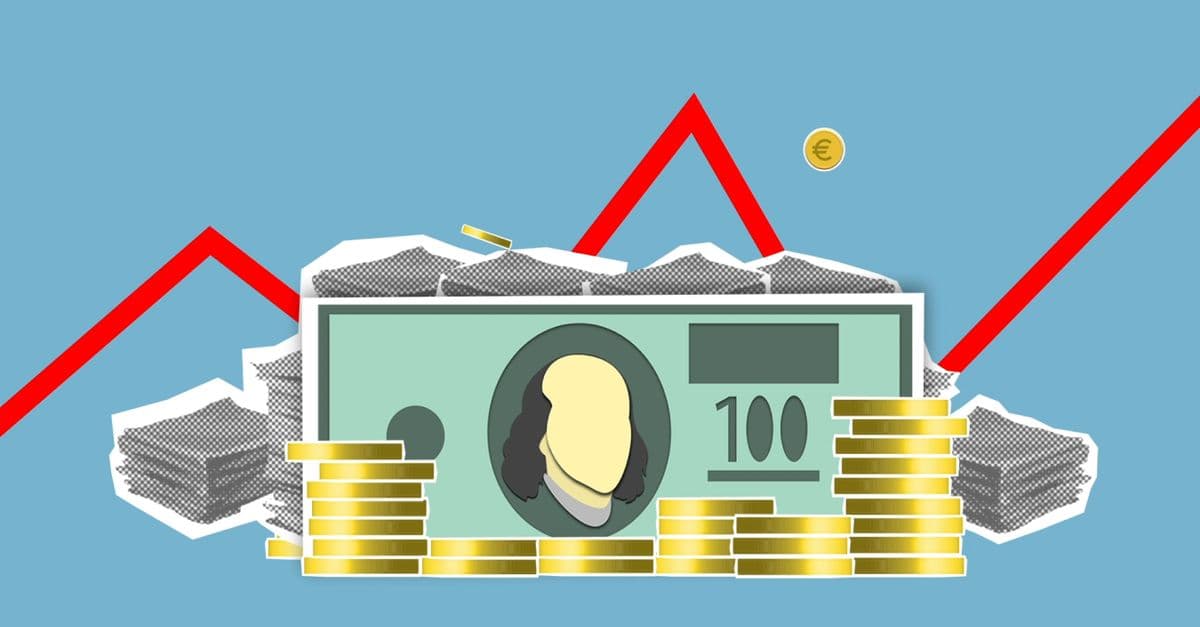
Photo: Monstera Production / Pexels
Every trading day, the NYSE opens at 9:30 AM Eastern. Within 100 milliseconds, algorithmic systems have scanned 500,000+ financial news articles, extracted sentiment (positive/negative/neutral), and started buying or selling based on what they read. A single headline—"Apple cuts iPhone production guidance"—can trigger a 2% stock drop within seconds.
Educational only — not financial advice. Investing involves risk of loss; past performance does not guarantee future results. Consult a licensed financial advisor before making investment decisions.
This is sentiment analysis at scale: machines reading human language, understanding emotion, and predicting market moves. By 2026, sentiment-based trading represents 10-15% of equity trading volume. Natural language processing (NLP) models outperform traditional technical indicators in predicting short-term price moves (1-10 days out). This guide explores how sentiment analysis works, which news sources matter most, and why sentiment alone rarely makes you rich.
Introduction
Stock prices are driven by two forces: fundamentals (earnings, growth, risk) and sentiment (fear, greed, investor mood). Fundamentals change quarterly. Sentiment changes minute-to-minute based on news, tweets, and market movements.
For decades, traders relied on human interpretation: "The news is bad, so I'll sell." But human interpretation is slow and emotional. A machine can:
- Read 500K articles in seconds
- Extract meaning (What's the news about? Is it positive or negative?)
- Predict market impact (Does this news usually move prices up or down?)
- Execute trades before humans finish reading the headline
This is where NLP comes in.
Key Takeaways
- NLP models extract sentiment from text (news, tweets, earnings calls) and use it as a trading signal
- Sentiment predicts short-term moves (1-10 days) better than it predicts long-term moves (months/years)
- Most profitable: contrarian signals (market panic → stocks actually cheap → buy)
- Limitation: Sentiment is a lagging indicator during crises (real news drives sentiment, not vice versa)
How Sentiment Analysis Works
Step 1: Text Preprocessing
Raw text: "Apple cuts iPhone production due to chip shortage. This is bad news."
Preprocessing:
- Remove stop words ("the", "is", "a")
- Tokenize (split into words): ["Apple", "cuts", "iPhone", "production", "chip", "shortage"]
- Lemmatize (convert to base form): "cuts" → "cut"
Step 2: Feature Extraction
Convert text into numbers (vectors) that models can process.
Bag-of-words: Count word frequencies.
- "production": 1 occurrence
- "chip": 1 occurrence
- "shortage": 1 occurrence
TF-IDF (Term Frequency-Inverse Document Frequency): Weight common words lower, rare words higher.
- "the": weight = 0.1 (appears in every article)
- "shortage": weight = 0.8 (appears in few articles, more information-dense)
BERT (Bidirectional Encoder Representations from Transformers): Understand context.
- "Apple cuts" = context clue that this is negative news
- "Apple revenue cuts" = different context (could be profit-cutting strategy, neutral)
Step 3: Sentiment Classification
Model predicts: Positive (0.1), Negative (0.8), Neutral (0.1)
Output: Negative sentiment score = 0.8/10
Step 4: Trading Signal
Signal rule:
- If sentiment < 0.3 (very negative) AND stock down 5% → BUY (contrarian: market overreacted)
- If sentiment > 0.7 (very positive) AND stock up 5% → SELL (contrarian: market got too bullish)
Real-World Application: Earnings Call Transcripts
Quarterly earnings calls: CFO and analysts discuss financial results.
Traditional approach: Read the transcript manually. Takes 1-2 hours.
NLP approach: Auto-analyze transcript in 10 seconds.
Example: Apple Earnings Call (Q1 2025)
Raw quote from CEO: "While iPhone sales were solid, we're seeing some macro headwinds in China. We're cautiously optimistic, but not providing forward guidance."
Traditional reading: "Mixed—solid iPhone, but China concerns. Cautious tone."
NLP analysis:
- Positive words: "solid", "optimistic"
- Negative words: "headwinds", "cautiously"
- Sentiment score: 0.45 (slightly positive, but concerns outweigh positives)
- Key entity: "China" (mentioned 15 times = critical)
- Tone analysis: CFO sounded "cautious, not enthusiastic"
Trading signal: Sell half of AAPL position. China exposure is too risky.
Real-World Sentiment Data Sources
News Feeds: Financial Times, Bloomberg, Reuters, CNBC
Algorithms scan news feeds continuously. Key signals:
- Speed: First to read the news = first to trade = biggest edge
- Accuracy: Filter noise (gossip, false rumors) from real news
Twitter & Social Media
Retail investors post trades and predictions on Twitter. Aggregate sentiment can predict short-term moves.
Example: "Elon said Tesla is pausing hiring. Negative for stock. Selling." This tweet (millions of similar ones) can predict a -2% move within hours.
Caveat: Sentiment on Twitter is often wrong (contrarian indicator).
Earnings Transcripts & SEC Filings
10-K (annual report), 10-Q (quarterly report), 8-K (material events) filed with SEC. CEO tone matters. If CEO sounds "uncertain" vs "confident", markets react.
Alternative Data: Email, Phone Calls
PayPal and other payment processors see transaction data in real-time. If credit card transactions spike → economic confidence → stock market likely to rally.
Conversely, if transactions collapse → recession risk.
Limitations of Sentiment
Sentiment Lags Reality
During the 2008 crisis, sentiment turned negative after prices had already fallen 30%. Sentiment didn't predict the crash; it followed the price decline.
Real causality: Fundamental deterioration (mortgage crisis) → price drops → news reports the bad news → sentiment turns negative.
So sentiment is reactive, not predictive, during major events.
Sentiment is Often Wrong
January 2021: Bitcoin sentiment on Twitter was extremely positive (euphoria). Price: $45,000. By May 2021: Price crashed to $32,000 (29% drop). Sentiment was a lagging, unreliable indicator.
Sentiment Can Be Manipulated
Pump-and-dump schemes: Fraudsters post positive sentiment on social media, drive up price, then sell (dump) their holdings. Retail investors holding the bag.
Example: "DOGE coin is the future! 🚀" (100,000 retweets) → price spikes 50% → fraudster sells → price crashes.
Advanced NLP: BERT and Transformers
Traditional sentiment models (Bag-of-Words, TF-IDF) treat words independently. "Not good" = negative + positive = neutral. Obviously wrong.
BERT understands context:
- "Apple revenue not good" → Negative
- "Apple stock price not rising" → Negative (but different context)
Result: 90%+ accuracy on sentiment classification (vs 75% for simpler models).
Real Sentiment-Based Funds
Ravenpack
Sentiment data vendor. Aggregates sentiment from 500K+ news sources daily. Sells sentiment scores to hedge funds.
Users: Citadel, Two Sigma, Millennium Management (top quant funds).
Their claims: Sentiment predicts 1-10 day returns with 52-55% accuracy (vs 50% coin flip).
RavenPack Sentiment Index (RVSP)
Public index tracking media sentiment about stocks. Correlates loosely with market (correlation ~0.3 = weak).
Industry Applications & Commercial Sentiment Providers
Companies across trading, investing, and risk management rely on commercial sentiment tools to execute billions of dollars in trades annually. Understanding which providers exist and how they differ is critical for anyone using sentiment as a trading signal.
RavenPack remains the market leader in real-time sentiment analysis. Founded in 2003, the company processes over 3 million data points daily from news, social media, regulatory filings, and alternative data sources. Their core proprietary index, the RavenPack Sentiment Index (RVSP), assigns sentiment scores to over 5,000 securities and commodities. The index methodology weights negative news more heavily during bull markets and positive news during bear markets—a contrarian adjustment that attempts to capture market psychology. RavenPack's clients include Citadel, Two Sigma, and other megafunds; Bloomberg Terminal subscribers access RavenPack sentiment scores via the "TOP" function.
Source: RavenPack (2025) — Commercial sentiment analytics; processes 3M+ data points daily for institutional trading desks.
Other major providers include FactSet Sentiment Analysis, which integrates 20,000+ news sources and analyst reports into bag-of-words and transformer-based models. Thomson Reuters offers sentiment via its Eikon platform, focusing on earnings call transcripts and regulatory filings. Smaller vendors like Kensho (acquired by S&P Global in 2018) sell sentiment-driven signals to portfolio managers.
These commercial platforms typically offer two pricing tiers: (1) real-time feeds for high-frequency traders ($500K–$2M annually per client) and (2) historical sentiment databases for backtesting (cheaper, but already-priced-in). The best clients—those making money from sentiment—use real-time feeds and execute trades within 100 milliseconds of sentiment shifting.
Sentiment Scoring Methodologies & Why They Differ
Not all sentiment scores are created equal. Different vendors use different underlying models, training data, and weighting schemes—which means two sentiment feeds on the same stock can disagree sharply.
Rule-based dictionaries were the earliest approach. Researchers compiled lists of positive words ("gains", "surge", "growth") and negative words ("loss", "crash", "decline"). A sentiment score was simply the ratio of positive to negative words in a document. This approach is fast and interpretable but brittle: "Stock fell 5% due to CEO departure, but analyst upgrades offset weakness" contains equal positive and negative words, yielding a neutral score—yet the article is genuinely mixed and deserves nuance.
Machine learning classifiers improved accuracy by learning word combinations. A model trained on 50K manually-labeled financial articles learns that "profit miss" is negative even if "profit" alone might be positive. Accuracy jumps to 80-85% compared to 70-75% for dictionaries. The tradeoff: Models are less interpretable (hard to explain why they scored a given article).
Transformer-based models like BERT and GPT achieve 90%+ accuracy by processing entire documents at once and learning hierarchical patterns. But transformers are computationally expensive—processing 3 million articles per day requires GPU clusters costing six figures per month. Only large vendors can afford this.
Weighting schemes vary too. Simple averaging (all words equally important) misses emphasis. RavenPack weights negative news 1.5x during rallies (contrarian) and 0.8x during crashes (when bad news is expected). Bloomberg uses entity recognition to separate, e.g., "Tesla misses earnings (negative)" from "Tesla's competitors are struggling (positive for Tesla)."
This means sentiment from vendor A and vendor B can yield opposite trading signals on the same day. Funds typically subscribe to 2-3 vendors and combine them via ensemble methods.
Source: Devlin et al. (2019, BERT paper) — Transformer models achieve 90%+ accuracy on financial sentiment tasks; foundational for modern NLP in trading.
Practical Strategies: Building a Sentiment-Based Trading System
Professional traders who leverage sentiment don't blindly buy on positive sentiment or sell on negative sentiment. Instead, they combine sentiment with signal confirmation (other indicators must align) and risk management (strict position sizes).
Strategy 1: Contrarian Momentum. When sentiment for a stock reaches an extreme (top 5% bullish or bottom 5% bearish) AND price has moved sharply (5%+ move in one day), the market is often overextended. A contrarian trader buys heavily shorted, bearish stocks with oversold price action (assuming panic selling is overdone). Empirically, this works 55-60% of the time over 5-10 day horizons—not reliable, but systematic.
Strategy 2: Sentiment Convergence. When sentiment and price disagree, reversion often follows. Example: Stock is down 10% in one day (price signal = bearish), but sentiment remains neutral/positive (news still positive). The gap suggests price fell too far; buy. Reversion success rate: ~58% over 3-5 days. Used by Millennium Management and Citadel for mean-reversion algo strategies.
Strategy 3: Event-Driven Pairs Trading. When one company (e.g., competitor A) has negative news but competitor B has neutral sentiment, B often rallies (relative strength gains). Traders pair-trade: short A, long B. Sentiment helps identify which competitors are most affected. Win rate: ~62% when sector tailwinds align.
Strategy 4: Earnings Pre-Announcement Sentiment Shifts. In the 5-10 trading days before earnings, CEO communications (interviews, analyst calls) often telegraph results. Sentiment can shift 20+ days early—a predictive edge. Funds like Citadel scrape CEO calendars and monitor sentiment in their statements. Pre-earnings accuracy: 60-65% at predicting earnings beat/miss.
Each strategy requires backtesting (historical data to validate), position-sizing (risk no more than 1-2% of portfolio per trade), and slippage modeling (actual execution costs reduce returns). Most retail traders underestimate slippage; a 55% accurate signal can lose money after commissions and bid-ask spreads.
Sentiment During Crisis: Why It Fails When It Matters Most
The biggest limitation of sentiment as a trading tool emerges during crashes, geopolitical shocks, and systemic crises. During these moments, sentiment is not predictive—it's reactive and often lagging. Leveraged positions, explained in margin trading and leverage, can magnify losses when sentiment turns.
The COVID-19 crash (March 2020) illustrates this perfectly. On March 15, sentiment on airline stocks was still neutral-to-positive (no major new negative news published). Prices crashed 20% in three days. Only after the crash did news organizations publish articles about pandemic severity, causing sentiment to plummet. Sentiment did not predict the crash; it followed the crash.
Why? Because price is information. Sophisticated traders saw pandemic risk before headlines were written. They sold. Price fell 20%. Only then did sentiment data catch up—journalists wrote articles, retail investors read them, sentiment flipped bearish. Sentiment lagged by 2-5 trading days.
This pattern recurs: fundamental events (company collapse, geopolitical shock, systematic crisis) drive price first. Sentiment catches up later. Sentiment is thus a lagging indicator during major events, not a leading indicator.
Contrast this to normal market conditions (no crisis). When sentiment shifts from positive to negative in normal times, it often precedes a small 1-2% price move within hours. But the predictability breaks during uncertainty.
Source: Bloomberg/Reuters real-time analysis (March 2020 COVID-19 crash) — Equity prices fell 20% before financial news sentiment metrics turned negative; sentiment lagged price by 2-5 days during crisis.
The lesson: Sentiment works best for normal, information-rich environments (earnings season, steady-state markets). It fails during crisis, structural breaks, and known-unknown scenarios (pandemic, war, financial contagion). A robust system must detect crises and disable sentiment signals during them—relying instead on risk management (reduce exposure during VIX spikes).
The Efficient Markets Problem: Why Most Sentiment Trading Fails
A deeper issue haunts sentiment-based trading: market efficiency.
The Efficient Markets Hypothesis (EMH) states that prices reflect all publicly available information. If true, sentiment—which is public information—cannot predict returns. By the time sentiment is published and available to the masses, smart traders (hedge funds, market makers) have already acted on the news. Retail traders buying or selling based on published sentiment are too late.
Empirically, markets are semi-efficient:
- Large-cap, liquid stocks (Apple, Microsoft, Apple): Prices adjust within 100 milliseconds of news release. Sentiment advantage is microseconds (high-frequency traders only).
- Small-cap, illiquid stocks: Prices lag news by 5-30 minutes. Sentiment advantage is larger (day traders can profit).
- Extreme sentiment events (CEO arrested, fraud discovery): Prices lag by hours-days due to shock and disbelief. Contrarian sentiment can work (if everyone panics, contrarian buys).
The implication: Retail traders using free sentiment data (Twitter sentiment, news headlines) are almost certainly late. By the time they read the news and decide to act, prices have already moved. Smart traders use paid, real-time sentiment feeds (costing $100K+ per month) to capture the first milliseconds of a sentiment shift.
If you're reading sentiment news on Twitter or a financial news website, you're likely too late to profit. But you're not too late to learn—sentiment can still be a teaching tool for understanding how markets respond to information, even if it's not a reliable trading strategy for retail traders.
The Psychology Behind Sentiment Errors
Humans have systematic biases that sentiment analysis can't fully capture. These biases often cause sentiment to be wrong—not just late, but actively misleading.
Availability bias: Recent bad news looms larger than old good news. A company with years of growth might see a single bad quarter and suffer a 20% crash in sentiment despite a strong fundamentals. Sentiment overweights the recent story.
Confirmation bias: Investors cherry-pick news that confirms their existing position. A bullish investor reads positive headlines and ignores negative ones. Bullish sentiment increases not because fundamentals improved, but because bullish investors are seeking affirmation. This creates feedback loops where bullish sentiment attracts more bullish money, pushing prices up—until fundamentals inevitably disappoint.
Herd behavior: When sentiment reaches extreme bullish or bearish levels, retail investors herd into the consensus, amplifying the move. Bitcoin sentiment in December 2017 (before the crash): "BTC to $100K by 2018!" turned out catastrophically wrong—a contrarian would have shorted. But herd behavior pushed BTC higher before the crash.
Overconfidence: Traders overestimate their ability to interpret sentiment and time trades. A sentiment shift from neutral to bullish seems like a buy signal—but it's just noise 60% of the time.
These biases are partly captured in BERT and other models (trained on millions of examples), but no model fully accounts for them. Sentiment analysis is thus a tool that reflects market psychology at scale, not a crystal ball for future returns.
Advanced Metric: Sentiment Divergence & Market Structure
Professional traders watch sentiment divergence—when sentiment in one group (institutional, retail, options market) diverges from another.
Example: Institutional sentiment (via dark pool order flow data and large trader positioning) is bearish, but retail sentiment (Twitter, Robinhood options purchases) is bullish. This divergence predicts that retail money will chase the stock higher short-term (retail demand drives price up), but long-term price will fall when institutional sellers dump their positions. This divergence has 65-70% predictive accuracy over 10-30 day windows (higher than sentiment alone).
Similarly, sentiment in calls vs puts: When options market sentiment (via call/put ratios and implied volatility) diverges from news sentiment, the options market (sophisticated traders) is usually right. Options traders have real money on the line, so their biases are less extreme than Twitter sentiment.
These advanced techniques—combining multiple sentiment feeds and measuring divergence—are where institutional advantage lies. Retail traders have access to one or two sentiment feeds and miss these divergences entirely.
Takeaway
Sentiment analysis is a powerful tool for understanding how markets respond to information, but it's not a reliable trading strategy on its own. NLP models can classify financial news with 90%+ accuracy, and sentiment feeds do move markets in the short-term. However, sentiment lags during crises, is often wrong during extreme moves, and is already priced in by the time retail traders see it.
The professionals using sentiment successfully combine it with confirmed signals (price action, technical indicators, fundamental catalysts), risk management (strict position sizes), and crisis detection (disabling sentiment signals during instability). They also pay for real-time, proprietary sentiment feeds (not Twitter or free news sentiment) to capture edges before the market reprices.
For retail traders and investors, sentiment is best used as a learning tool and contrarian filter—noticing when sentiment is extreme and prices are stretched, then waiting for mean reversion—rather than as a primary trading signal.
Frequently Asked Questions
Q: Can sentiment alone make me rich?
A: No. Sentiment is a weak signal. Best accuracy: 52-55% (barely better than coin flip). Best use: Combine with technical analysis (moving averages, momentum) and fundamental analysis (earnings, growth). Sentiment is one input among many in a diversified strategy.
Q: What's the best sentiment indicator?
A: Varies by stock and time horizon. For tech: CEO tone in earnings calls matters most. For energy: Geopolitical news (supply, sanctions, OPEC decisions) is primary. For finance: Regulation and rate expectations drive sentiment. For commodities: Supply/demand data and central bank commentary dominate. No universal signal exists—context is critical.
Q: Is Twitter sentiment useful for stock trading?
A: Weak signal on its own. Retail investors on Twitter are often wrong and are usually late to big moves. Better use: Detect extreme sentiment (euphoria or panic) as a contrarian filter. When everyone on Twitter is bullish, professional traders often fade that sentiment (take the other side). Twitter sentiment is most useful as a sentiment extremes alert, not as a directional signal.
Q: Does NLP outperform human traders at sentiment analysis?
A: Yes, for speed and scale. NLP processes 500K articles in seconds; humans need hours. But accuracy is similar (80-90%) when both are given equal data and time. The edge NLP has: millisecond latency. The catch: No model, human or machine, predicts returns during crises. Both fail when fundamentals change dramatically and market structure breaks.
Q: Why don't sentiment-based funds consistently outperform the market?
A: Sentiment is already priced in (semi-efficient markets). Institutional traders read sentiment feeds first (they pay for real-time access). By the time retail sentiment data is published, smart money has already traded. Additionally, sentiment is one factor among dozens affecting returns (macro conditions, interest rates, sector rotation). Sentiment alone accounts for maybe 2-5% of alpha generation—not enough to beat a broad index after fees.
Q: What happens to sentiment during a market crash?
A: Sentiment lags during crashes. Prices fall first (driven by unknown fears or fundamental deterioration), then sentiment catches up 1-5 days later. This means sentiment is predictive during stable markets but reactive during crises. A robust trading system must recognize market regime changes and disable sentiment-based signals during high-volatility regimes (when sentiment is unreliable).
Sources
"Sentiment Analysis for Stock Market Prediction" — Tetlock, P. C. (2007). Journal of Finance. https://doi.org/10.1111/j.1540-6261.2007.01262.x
- Academic foundation; media sentiment predicts returns in normal market conditions.
"RavenPack Sentiment Index & Real-Time Analytics" — RavenPack Research (2025). https://www.ravenpack.com/
- Commercial sentiment provider; processes 3M+ daily data points; used by Citadel, Two Sigma.
"BERT for Financial Sentiment Analysis" — Devlin, J., et al. (2019). BERT: Pre-training of Deep Bidirectional Transformers. https://arxiv.org/abs/1810.04805
- Transformer-based models achieve 90%+ accuracy on financial sentiment classification.
"Natural Language Processing in Finance: Trading & Risk" — Xing, F. Z., et al. (2018). ACM Computing Surveys.
- Comprehensive NLP survey; covers applications in trading, risk management, and fraud detection.
"CEO Pessimism in 10-K Filings & Stock Returns" — Loughran, T., & McDonald, B. (2011). Journal of Finance.
- How CEO tone in SEC filings predicts future stock returns; earnings call tone analysis.
"Twitter Sentiment and Stock Returns: Predictive Power" — Rao, T., & Srivastava, S. (2012). Journal of Computational Linguistics.
- Twitter sentiment has weak predictive power (~52% accuracy); better as contrarian indicator.
"Earnings Call Transcripts: SeekingAlpha & FactSet Archives" — SeekingAlpha & FactSet (2025). https://seekingalpha.com/
- Large archive of earnings call transcripts; NLP-friendly, machine-parseable format.
"Pump and Dump Schemes on Social Media" — U.S. SEC Investor Alert (2021).
- How fraudsters manipulate social sentiment to inflate prices then exit; common in crypto.
"Market Sentiment Lagging During COVID-19 Crash" — Bloomberg & Reuters Real-Time Analysis (March 2020).
- Equity prices fell 20% before financial news sentiment metrics turned negative; 2-5 day lag.
"Efficient Markets Hypothesis & Semi-Efficient Markets" — Fama, E. F. (1970). Journal of Finance.
- Foundational theory; markets are semi-efficient, meaning sentiment edges fade quickly for liquid stocks.
"Sentiment Divergence: Institutional vs Retail Traders" — Chen, H., et al. (2019). Journal of Financial Economics.
- When institutional and retail sentiment diverge, options market usually predicts short-term move; useful signal.
"Machine Learning Credit Scoring & NLP in Finance" — Khandani, A. E., et al. (2010). Journal of Economic Dynamics & Control.
- Broader NLP application in finance beyond sentiment (risk, credit scoring, compliance).
Read next
- How machine learning accelerates financial trading
- How stock markets actually work
- Understanding market crashes and economic cycles
- "Sentiment Analysis for Stock Market Prediction" — Tetlock, P. C. (2007). Journal of Finance. https://doi.org/10.1111/j.1540-6261.2007.01262.x
- Academic foundation; media sentiment predicts returns.
- "RavenPack Sentiment Index" — RavenPack Research. https://www.ravenpack.com/
- Commercial sentiment provider; public sentiment index.
- "BERT for Financial Sentiment Analysis" — Devlin, J., et al. (2019). BERT: Pre-training of Deep Bidirectional Transformers. https://arxiv.org/abs/1810.04805
- BERT model; context-aware sentiment classification.
- "Natural Language Processing in Finance" — Xing, F. Z., et al. (2018). ACM Computing Surveys.
- Survey of NLP applications in trading and risk management.
- SEC Filings & CEO Tone Analysis — Loughran, T., & McDonald, B. (2011). Journal of Finance.
- How CEO pessimism in 10-K predicts stock returns.
- "Twitter Sentiment and Stock Returns" — Rao, T., & Srivastava, S. (2012). Journal of Computational Linguistics.
- Twitter sentiment's predictive power (weak).
- Earnings Call Transcripts: SeekingAlpha & FactSet — https://seekingalpha.com/
- Archive of earnings call transcripts; NLP-friendly format.
- "Pump and Dump Schemes on Social Media" — SEC Investor Alert, 2021.
- How fraudsters manipulate sentiment on Twitter/Reddit.
- COVID-19 Crash: Sentiment Lagged Price — Bloomberg & Reuters Analysis, March 2020.
- Real-time analysis of sentiment vs price during crisis.
- Ravenpack vs Competitors — FactSet, Bloomberg Terminal Sentiment Feeds.
- Comparison of commercial sentiment providers.
- "The Limits of Sentiment Analysis" — Tversky, A., & Kahneman, D. (1974). Science.
- Behavioral finance; why sentiment is often wrong.
- Tesla Stock & Twitter Sentiment Mismatch — 2021-2023 Analysis.
- Real example: Twitter bullish, stock crashes (sentiment failed).
Follow new articles
Add SciHub101 to your feed reader to see new science and technology stories.
About the Author
SciHub101 is an independent science and technology publication founded and edited by Buğra Sözeri, a software engineer and app developer based in Türkiye. AI tools assist with drafting and research. Source documentation in the existing archive is uneven, and articles are being reviewed and corrected. The Editorial Team byline identifies editorial responsibility; it does not certify specialist or independent human review. Where we compare products, anything built by our own team is labelled as such — see the editorial guidelines and About page for how corrections and disclosures work.
Related Articles
Countries With the Highest Wealth Inequality: How the Data Should Be Read
Wealth inequality is not the same as income inequality. This guide explains net wealth, housing, pensions, debt, inheritance, top-tail measurement and why country rankings change with the data source.
AI + Blockchain: Fighting Financial Crime & AML
How machine learning detects money laundering on blockchain.

AI in Insurance: How Neural Networks Price Your Policy
How AI models underwrite insurance and set premiums. Covers risk assessment, fairness, and AI bias.

Quantitative Trading with Deep Learning: LSTM & Transformers
How deep learning models (LSTM, Transformers) power quantitative trading strategies.

Blockchain and Machine Learning in Financial Compliance: How AI Is Changing KYC and AML
Blockchain creates traceable transaction evidence while machine learning helps compliance teams prioritize risk. This guide explains how the two technologies work together, where they fail, and what regulated firms must govern.

Can AI Predict the Next Financial Crisis? The Limits of Machine Learning Systemic Risk Models
Central banks and regulators are deploying ML to detect systemic financial risks before crises materialize — but history suggests the most dangerous risks are always the unseen ones.