Why Currencies Lose Value
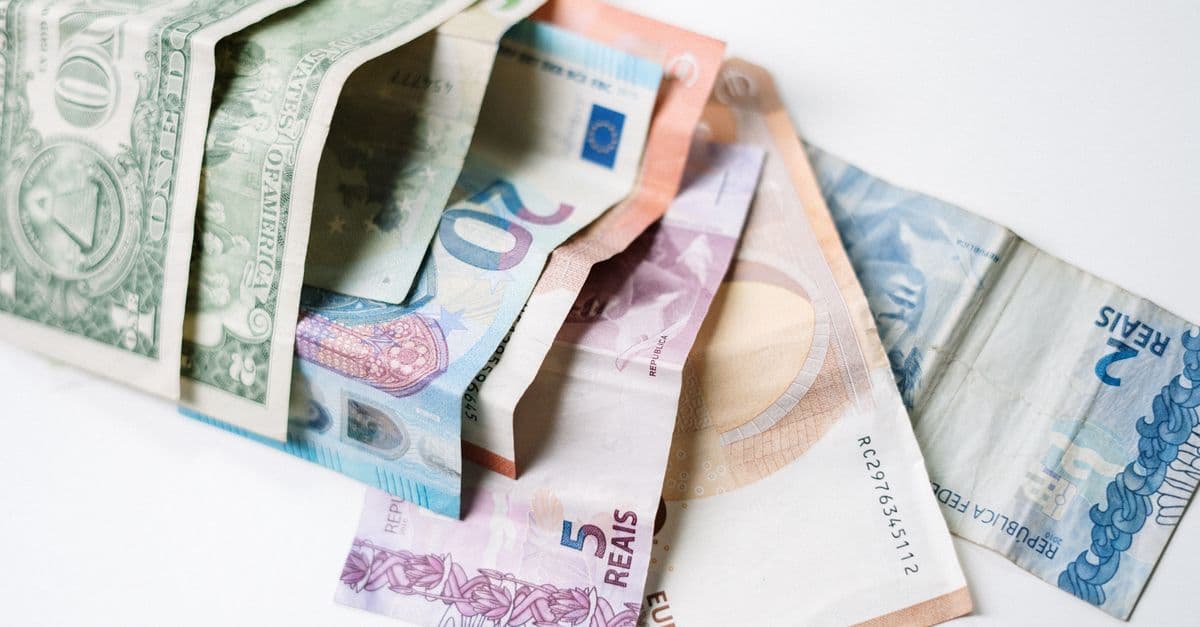
Photo: cottonbro studio / Pexels
A US dollar in 2026 buys noticeably less than a dollar bought ten years ago, and in extreme cases, like Zimbabwe in 2008, a currency can go from spendable to worthless in a matter of months. Currency devaluation is not one phenomenon; it is several distinct mechanisms, domestic inflation, exchange-rate depreciation, and outright collapse of trust, that share a common thread: more units of a currency chasing the same amount of real goods, services, and confidence. This piece walks through how each mechanism actually works and why some currencies erode slowly while others fall apart in weeks.
The basic mechanism: too much money, same amount of stuff
At its simplest, a currency's value is a price, the price of money itself, measured in what it can buy. When the supply of money in an economy grows faster than the supply of goods and services, each unit of currency has to be split across more transactions, and the price of everything, denominated in that currency, tends to rise. Economists call the underlying idea the quantity theory of money, one of the oldest working models in the field (IMF, Finance & Development).
Picture a small island economy with exactly 100 coconuts and 100 dollars in circulation. Each coconut costs roughly one dollar. If the island's government prints another 100 dollars without growing the coconut supply, buyers now have 200 dollars competing for the same 100 coconuts, so the price per coconut roughly doubles. Nobody made the coconuts more valuable; the dollars became less valuable, because there are twice as many of them chasing the same real output. That is inflation in miniature, and it is the mechanism the IMF and most central banks point to first when currency devaluation is discussed (IMF).
Why central banks are the main actor in this story
Central banks, like the US Federal Reserve, the European Central Bank, or the Bank of England, control the money supply through interest rates and other policy tools, which makes them the primary lever for both causing and fighting currency devaluation. When a central bank cuts interest rates or buys large quantities of government debt, it effectively expands the money supply, making borrowing cheaper and spending easier, which can push prices up if the real economy cannot produce enough new goods and services to absorb the extra spending.
The reverse is also true. To fight inflation, central banks typically raise interest rates, which makes borrowing more expensive and cools consumer and business demand, and they may also tighten the money supply directly by raising bank reserve requirements (Western Union economic research). Higher interest rates act like a valve, slowing the flow of new money into the economy the way turning down a faucet slows water filling a sink. The sink still fills, just more slowly, giving prices time to catch up with supply instead of racing ahead of it.
How does inflation affect a currency's exchange rate against other currencies?
Higher domestic inflation erodes a currency's purchasing power at home and abroad simultaneously. Because that currency buys less in real terms, foreign buyers and investors typically demand fewer units of it relative to currencies with lower inflation, causing it to depreciate on international exchange markets even if nothing else about the economy has changed.
What happens when trust collapses, not just supply
Slow, steady inflation is one kind of currency erosion. A currency collapse is a different, faster mechanism, driven less by arithmetic and more by trust. When people stop believing a currency will hold value even a few weeks into the future, they rush to spend it immediately or convert it into something else, foreign currency, gold, or hard goods, which increases the velocity of money and accelerates price increases in a feedback loop.
Weimar Germany is the textbook case. Crushed by reparations obligations after the First World War that it could not meet through taxation, the German government printed money to cover its bills, and the mark's exchange rate collapsed from 4.2 marks to the US dollar in 1914 to 4.2 trillion marks to the dollar by November 1923 (Market Histories, drawing on Reichsbank and contemporaneous records). Workers were paid twice a day and rushed to spend their wages before prices rose again by evening. The mark did not just inflate; the population's trust in it as a store of value evaporated, which fed the printing that fed the collapse.
Zimbabwe repeated the pattern in 2008, when the country's annual inflation rate reached an estimated 79 billion percent, and the government issued a 100-trillion-Zimbabwe-dollar banknote, the largest currency denomination ever printed (Bullion Trading LLC, economic history summary). More recently, Venezuela's annual inflation rate exceeded 130,000 percent in 2018, and the country still recorded the world's highest inflation rate in 2025, around 475 percent, with the IMF projecting roughly 629 percent for 2026 (Bullion Trading LLC). In each case, government spending far outran tax revenue, the central bank printed money to cover the gap, and the public's confidence in the currency broke down faster than the raw money-supply numbers alone would predict.
The table: three speeds of currency devaluation
| Type | Typical cause | Speed | Historical example |
|---|---|---|---|
| Gradual inflation | Money supply growth modestly outpaces real economic growth | Years to decades | US dollar's steady purchasing-power decline since the 1970s |
| Exchange-rate depreciation | Domestic inflation or interest rates diverge from trading partners | Months to years | Currencies floating freely after the 1971 Nixon Shock ended dollar-gold convertibility |
| Hyperinflation / collapse | Government prints money to cover deficits it cannot tax or borrow its way out of; public trust breaks down | Weeks to months | Weimar Germany 1923, Zimbabwe 2008, Venezuela 2018 |
Why the world stopped anchoring currencies to gold
Until 1971, most major currencies operated under the Bretton Woods system, in which the US dollar was loosely convertible to gold and other currencies were pegged to the dollar, putting a hard ceiling on how much money any government could print without eventually running out of gold reserves to back it. On August 15, 1971, President Richard Nixon announced that the United States would suspend the dollar's convertibility into gold, a move now known as the Nixon Shock (GEOPOL, historical analysis of Bretton Woods). By 1973, most major currencies had moved to floating exchange rates, officially beginning the modern fiat era, where a currency's value rests on economic fundamentals and public confidence rather than a fixed claim on a physical metal.
That shift is a useful lens for understanding why currency values move at all today. A gold-backed currency has a rigid anchor; a fiat currency, meaning currency backed by government decree rather than a physical commodity, is more like a boat without an anchor, free to move with the tide of interest rates, trade balances, government debt levels, and investor sentiment. Central banks gained flexibility to respond to recessions and financial crises without being boxed in by a fixed gold ratio, but that same flexibility means currency values now depend heavily on how disciplined governments and central banks choose to be.
What people get wrong about currency devaluation
The most common misconception is that any government could simply print unlimited money without consequence as long as it wanted to. In reality, the coconut-island math above is unforgiving: money supply growth that outpaces real economic output has to show up somewhere, either in domestic prices, in the exchange rate, or in both. Governments that print aggressively are not defying economics; they are choosing to pay for spending through currency devaluation instead of through taxes or borrowing, a choice with real costs that eventually land on anyone holding that currency.
A second misconception is treating all currency devaluation as equally damaging. A currency losing 2 to 3 percent of its purchasing power a year, roughly the inflation target most major central banks aim for, is a manageable, even intentional, feature of modern monetary policy, meant to encourage spending and investment over hoarding cash. Weimar-style hyperinflation, by contrast, is a systemic breakdown where the currency stops functioning as a reliable unit of account at all. Conflating the two obscures the actual warning signs, like triple-digit annual inflation or a government that cannot fund its own budget without the central bank printing to cover the shortfall, that separate normal currency erosion from a genuine collapse.
A third misconception is assuming currency value only reflects domestic conditions. Exchange rates are relative by definition; a currency can hold steady in domestic purchasing power while still losing significant value against other currencies if its trading partners are growing faster, running lower inflation, or offering higher interest rates that pull investment capital elsewhere.
Case study: what happens when a central bank cuts rates into rising inflation
Most of the mechanisms above describe what central banks are supposed to do to prevent currency collapse. Turkey's experience since 2021 is a rare, real-time example of a government pushing its central bank to do the opposite, and it shows how quickly the standard playbook can unravel when policy runs against it.
President Recep Tayyip Erdoğan holds an unconventional economic belief, shared by few mainstream economists, that high interest rates cause rather than cure inflation. Acting on that theory, Turkey's central bank cut its benchmark interest rate from 19 percent in September 2021 to 14 percent by December 2021, even as inflation was already rising, after Erdoğan had removed four central bank governors in roughly two years for resisting the cuts (Carnegie Endowment for International Peace). The lira lost about 60 percent of its value against the US dollar in 2021 alone, making it the world's worst-performing major currency that year (Carnegie Endowment).
The feedback loop that followed illustrates the interest-rate mechanism described earlier, running in reverse. Lower interest rates fueled more borrowing and spending, the weaker lira made Turkey's heavy volume of imports more expensive in local-currency terms, and those higher import costs fed directly into domestic inflation, which by late 2022 had climbed above 80 percent year over year (CEPR). Each round of currency weakness made the next round of inflation worse, the same self-reinforcing pattern seen in slower motion in Weimar Germany and Zimbabwe, just without the outright hyperinflation of a printing-press-funded government deficit driving it.
Case study: what a fixed exchange rate can and cannot fix
Not every currency floats freely. Some governments peg their currency to a stronger one, often the US dollar, to import that currency's stability and stop domestic inflation in its tracks. Argentina tried exactly this after emerging from hyperinflation and economic collapse in the late 1980s. Its 1991 Convertibility Law created a currency board that pegged the peso one-to-one with the US dollar, and the policy worked immediately: inflation fell from hyperinflationary levels to single digits within a few years (Federal Reserve Bank of San Francisco).
The peg's design contained a structural weak point that eventually undid it. Argentina's currency board was only required to hold about two-thirds of its reserves in actual foreign currency, with the remainder backed by Argentine government bonds rather than hard dollar assets (FRBSF). When a recession that began in 1999 dragged into 2001, government deficits ballooned, the peso came to be seen as overvalued relative to Argentina's actual economic output, and Argentines began converting pesos into dollars faster than the country's reserves could support. Capital fled the country, banks froze withdrawals in December 2001, and the peg collapsed in January 2002. By the end of that year, the peso, which had traded one-to-one with the dollar for over a decade, was trading near 3.4 to the dollar (FRBSF).
The lesson economists draw from Argentina is not that fixed exchange rates are inherently doomed. It is that a peg only holds as long as a government's underlying fiscal and economic reality matches the currency it is pegged to. A fixed rate is like a plank bridging two riverbanks that are slowly drifting apart. It works fine while the gap is small, but no plank, no matter how well built, holds once the banks have moved too far apart, and the peg snaps rather than bends.
Why do some countries just adopt the US dollar instead of managing their own currency?
Full dollarization, replacing a domestic currency entirely with the US dollar, is a more extreme version of a currency peg used by countries like Ecuador and El Salvador. It eliminates domestic currency risk entirely, since there is no longer a separate currency to devalue, but it also means the country gives up its own monetary policy completely, unable to set its own interest rates or respond to local economic shocks the way a country with its own currency can.
The takeaway
Currencies lose value through two related but distinct paths: the slow arithmetic of money supply outrunning real output, and the much faster collapse that happens when a government prints to cover debts it cannot otherwise pay and the public stops trusting the currency to hold its worth. Central banks exist largely to manage the first path and prevent it from tipping into the second, using interest rates and money-supply tools as the primary levers. The historical extremes, Weimar Germany, Zimbabwe, Venezuela, are useful precisely because they show what happens when that management fails completely, and why most modern currencies, even ones that erode gradually, are built with institutions specifically designed to keep that failure from happening again.
This is educational content, not financial or investment advice.
Read next:
- How Inflation Works — and Why It's So Hard to Stop
- How Stock Markets Actually Work
- Compound Interest Explained — The 8th Wonder
Frequently Asked Questions
Q: What is the simplest explanation of why currencies lose value? A: Currencies lose value primarily when the money supply grows faster than the real goods and services an economy produces, which pushes prices up and makes each unit of currency buy less. Loss of public trust in a government's ability to manage its currency can accelerate the same process dramatically.
Q: Why does the US dollar lose purchasing power even in normal economic conditions? A: Most central banks, including the US Federal Reserve, target a small, positive inflation rate, typically around 2 percent a year, on the theory that mild, predictable inflation encourages spending and investment over cash hoarding. That policy choice means gradual currency devaluation is a built-in, intentional feature of the modern monetary system, not a malfunction.
Q: What is the difference between inflation and currency depreciation? A: Inflation measures a currency losing purchasing power domestically, meaning it buys fewer goods and services within its own economy. Currency depreciation measures the same currency losing value relative to other currencies on foreign exchange markets, which can happen even if domestic prices are relatively stable, if other countries have lower inflation or higher interest rates.
Q: How did Weimar Germany's hyperinflation happen? A: Germany faced reparations obligations after World War I that it could not cover through taxation, so the government printed money to pay its bills. The resulting hyperinflation collapsed the exchange rate from 4.2 marks per US dollar in 1914 to 4.2 trillion marks per dollar by November 1923.
Q: Why did the world stop backing currencies with gold? A: On August 15, 1971, President Richard Nixon suspended the US dollar's convertibility into gold, ending the Bretton Woods system that had pegged most major currencies to the dollar and, indirectly, to gold. By 1973, most currencies had moved to floating exchange rates, giving central banks more flexibility to respond to economic conditions without a fixed gold ratio limiting how much money they could issue.
Q: Can a currency lose value even if a country's economy is growing? A: Yes. Currency value depends on money supply growth relative to real output, trade balances, interest rates relative to other countries, and investor confidence, not economic growth alone. A growing economy with money supply expanding even faster, or with persistent trade deficits and rising debt, can still see its currency depreciate.
Q: Why did Turkey's lira lose so much value starting in 2021? A: Turkey's central bank cut interest rates repeatedly starting in 2021 despite rising inflation, following President Erdoğan's unconventional belief that high rates cause inflation rather than curing it. The lira lost about 60 percent of its value that year, and the weaker currency raised import costs, pushing annual inflation above 80 percent by late 2022.
Q: What happened to Argentina's peso when it was pegged to the US dollar? A: Argentina's 1991 currency board pegged the peso one-to-one with the dollar and quickly ended hyperinflation, but the peg only required two-thirds of reserves to be held in actual dollars. A recession starting in 1999 exposed that weakness, triggering capital flight, frozen bank withdrawals in December 2001, and a collapse of the peg in January 2002 that saw the peso fall to roughly 3.4 per dollar by year end.
Q: Why don't more struggling countries just adopt the US dollar? A: Full dollarization, used by countries like Ecuador and El Salvador, removes domestic currency devaluation risk entirely, but it also strips the country of its own monetary policy. It can no longer set its own interest rates or respond independently to local recessions, since it is effectively borrowing the US Federal Reserve's policy decisions.
Sources
- Inflation: Prices on the Rise — International Monetary Fund, Finance & Development
- How Inflation Impacts Exchange Rates & Interest Rates — Western Union economic research
- The Weimar Hyperinflation: When Money Became Worthless (1921-1923) — Market Histories
- Hyperinflation and Gold: Lessons from Weimar Germany, Zimbabwe, and Venezuela — Bullion Trading LLC
- The Bretton Woods System: How the Dollar Became the World's Currency — GEOPOL
- Carnegie Endowment for International Peace, "Why is Turkey's President Cutting Interest Rates, Spurring Inflation and Lowering the Value of the Lira?"
- CEPR, "Consequences of weak monetary policy: Learning from the Turkish experience"
- Federal Reserve Bank of San Francisco, "Argentina's Currency Crisis: Lessons for Asia"
- Federal Reserve Bank of San Francisco, "Learning from Argentina's Crisis"
Follow new articles
Add SciHub101 to your feed reader to see new science and technology stories.
About the Author
SciHub101 is an independent science and technology publication founded and edited by Buğra Sözeri, a software engineer and app developer based in Türkiye. AI tools assist with drafting and research. Source documentation in the existing archive is uneven, and articles are being reviewed and corrected. The Editorial Team byline identifies editorial responsibility; it does not certify specialist or independent human review. Where we compare products, anything built by our own team is labelled as such — see the editorial guidelines and About page for how corrections and disclosures work.
Related Articles
Why Gold Is Valuable
Gold is valuable because of scarcity, durability, beauty, monetary history, central-bank demand, and its role as a trust asset.


What Is Inflation — and Why Prices Keep Rising?
Inflation is the steady decline in purchasing power of money. Some is normal and even healthy; high inflation hurts everyone. Here's what causes it, why it matters, and how it's measured.


Why Interest Rates Affect Everything
Interest rates influence mortgages, stocks, currencies, hiring, inflation, government debt, and startup funding. This guide explains the transmission mechanism.