Why Save Systems Change Player Behavior

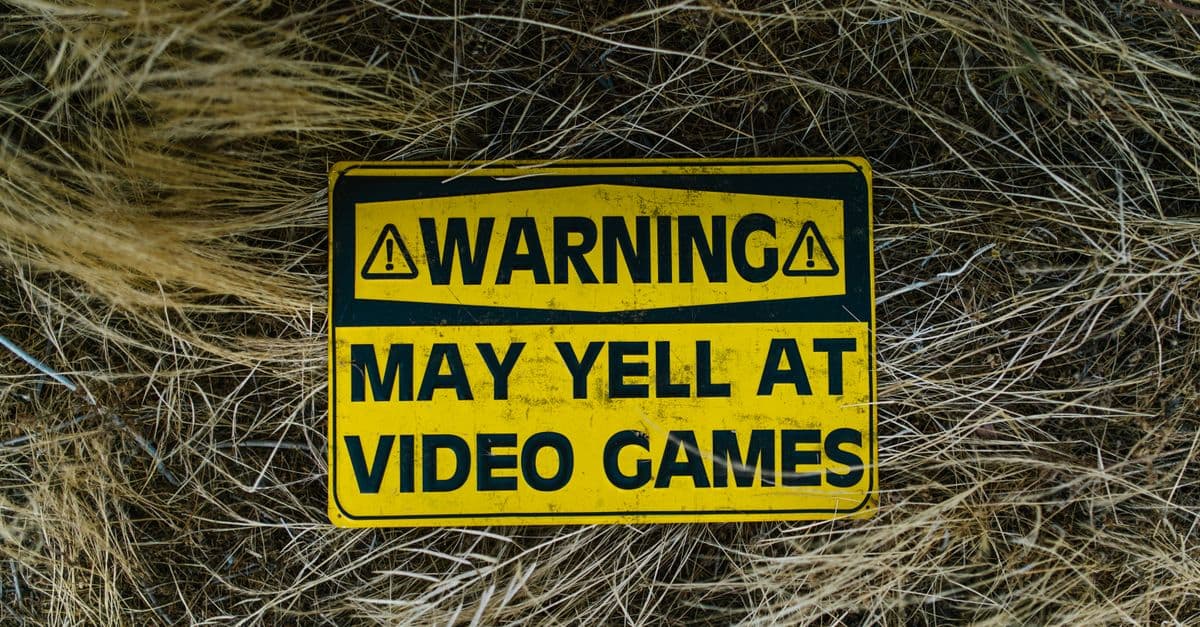
Photo: VAZHNIK / Pexels
A save system is not a technical convenience bolted onto a finished game. It is a lever that sets the price of failure, and that price rewrites how a player behaves before failure ever happens. Dark Souls drops your currency at your death spot, recoverable only if you survive the walk back. Classic Resident Evil rationed saves through ink ribbons. Roguelikes erase your run entirely on death. None of these are accidents of hardware; they are deliberate applications of a well-documented finding in behavioral economics — that people weigh potential losses roughly twice as heavily as equivalent gains (Kahneman and Tversky, 1979).
The mechanism: save systems set the cost of failure
Every save system answers one question in mechanical form: what do you lose when you fail? A generous system — a modern open-world game auto-saving every few minutes — sets that cost low. Death costs a few minutes, maybe less. A restrictive system — Resident Evil's limited-use typewriters, or a permadeath roguelike that ends the run outright — sets that cost close to everything the player has invested in the current session.
This is not a subjective design flourish. It is a direct application of prospect theory, the framework Daniel Kahneman and Amos Tversky introduced in their 1979 paper "Prospect Theory: An Analysis of Decision under Risk," published in Econometrica and later cited in Kahneman's 2002 Nobel Memorial Prize in Economic Sciences. The paper's central finding, often summarized as "losses loom larger than gains," showed that the pain of losing something is felt more intensely than the pleasure of gaining an equivalent amount (Econometric Society, 1979). A save system with a high failure cost is, functionally, a mechanism for manufacturing that asymmetry inside a game.
When the downside of a bad outcome is small, players behave experimentally. They try risky tactics, explore off the marked path, and learn a boss's attack pattern through repeated trial and error, because a death barely sets them back. When the downside is severe, the same player becomes conservative. They approach unfamiliar rooms carefully, avoid optional fights, and treat every unknown as a potential tax on hours of progress. The content of the game hasn't changed. Only the psychological weight attached to failure has.
Think of it like a poker player's behavior shifting with the size of the pot. Facing pocket change, a player calls loosely and bluffs often. Facing a stack representing a month's rent, the same player with the same cards plays tighter, folds more, and thinks longer before committing. The cards and the odds are identical in both cases. What changes is the cost attached to being wrong, and that cost alone reshapes the decision-making process from the outside in.
Why limited saves create tension even when nothing is actively threatening
Resident Evil's typewriter save system forced players to manage a genuinely scarce resource: a finite stock of ink ribbons, usable only at specific save points scattered through the mansion. This did something subtler than raising the stakes of combat. It made the act of saving itself a decision. Was this moment — after a quiet hallway, before an unexplored door — worth spending one of a handful of remaining ribbons to lock in?
That question turned even calm exploration into a small risk calculation, extending the series' tension well past the parts most players associate with actual monsters. The dread in early Resident Evil games comes as much from resource anxiety as from anything jumping out of a closet, because the player is constantly triaging a stock of limited tools — ammunition, herbs, and ribbons alike — against unknown future need.
This mirrors a habit familiar to anyone who shot film photography before digital cameras existed: with a 24- or 36-exposure roll, a photographer thinks harder about each shot, framing carefully and hesitating before pressing the shutter, because the roll is a hard ceiling. A photographer with a memory card holding thousands of images fires off ten frames of the same scene without thinking twice. The scarcity of the resource — film frames or ink ribbons — forces deliberate weighing of value before commitment, a psychological effect that exists independently of what's actually being photographed or how dangerous the in-game moment actually is.
Why do roguelikes use permadeath instead of a normal save system?
Permadeath ends a run entirely on a single death, with no reload to undo a mistake, which forces every decision within that run to carry real weight. Glenn Wichman, co-creator of Rogue — the 1980 game that gave the genre its name — has said permadeath was never meant to be primarily "about pain." It functions more as a way to make the good decisions a player makes stand out and stay earned, since none of them can later be undone by reloading a save (Game Developer, Wichman interview). Roguelike designer Andrew Doull has made a similar argument: in a genre landscape full of quicksaves and regenerating health, permadeath is close to the one mechanic that still makes consequence feel real (Game Developer, "The Game Design Lessons of Permadeath").
Why save frequency shapes exploration, not just risk tolerance
Beyond raw risk tolerance, save frequency shapes how thoroughly players explore a game world. Frequent, low-friction saving encourages players to poke into every corner of a map, because a failed attempt costs almost nothing to retry. Sparse or restrictive saving pushes players toward known, safe routes, since venturing into unmapped territory risks losing more progress if something goes wrong. This is a behavioral pattern designers can use deliberately, funneling attention toward or away from specific content just by adjusting where save points sit.
Some games mix both approaches inside a single experience on purpose. A hub area gets generous, frequent saves so players can freely prepare, restock, and experiment with builds. A specific dungeon or boss arena then removes or restricts saving entirely, concentrating tension at the exact moment the designer wants it most felt. The save system stops being a uniform, constant rule and becomes a pacing tool the designer turns up and down section by section, the same way a film editor controls tension by varying shot length rather than applying one fixed rhythm throughout.
This pacing function is often underestimated because it operates silently. A player rarely consciously registers "there hasn't been a save point in fifteen minutes, so I am being more careful." They just are more careful, without necessarily attributing the feeling to its actual mechanical cause. That's part of what makes save-point placement such an effective, low-visibility design tool: it changes behavior without announcing itself as a rule the way an explicit difficulty setting does.
The economics of "worth it": how loss aversion explains save-scumming
Save-scumming — repeatedly reloading a save until a random outcome favors the player, or saving immediately before every risky action to reload if it goes badly — is a direct behavioral response to loss aversion. If a game allows unlimited saves at any point, a rational player facing a chance-based outcome (a critical hit, a persuasion check, a random encounter) has almost nothing to lose by saving right before the roll and reloading if it fails. The perceived loss from a bad outcome can be erased entirely, so the asymmetry between losses and gains that prospect theory describes gets neutralized by the save system itself.
Designers who want tension to survive contact with a save-anywhere system have two real options: restrict where and how often saving can happen, so a reload doesn't just cost seconds; or design random outcomes so that reloading and rerolling produces diminishing or no benefit, for instance by seeding randomness at the start of a session rather than at the moment of the roll. Games that leave saves fully unrestricted around meaningfully random outcomes are, whether intentionally or not, telling players that failure is not supposed to be permanent, and players respond exactly as loss-aversion research predicts: they eliminate the loss whenever the system lets them.
This connects to a broader pattern already documented in how random loot feels rewarding: variable-ratio reward schedules keep players engaged partly because the outcome feels uncertain and consequential in the moment. A save system that lets players retry a random roll for free quietly removes that consequence, which is one reason many designers deliberately keep saving and randomness at arm's length from each other.
Comparing the four major save-system archetypes
Save systems generally fall into a handful of recognizable categories, and each one manufactures a different relationship between the player and risk. The table below compares four common archetypes on the specific behavioral lever they pull.
| Save-system type | Cost of failure | Player behavior it produces | Representative example |
|---|---|---|---|
| Save-anywhere / frequent auto-save | Very low (seconds to minutes) | Experimental, exploratory play; players try risky tactics freely | Modern open-world RPGs (e.g., Skyrim-style auto-save) |
| Checkpoint-based | Moderate (fixed intervals between checkpoints) | Cautious progress between checkpoints, relief and reset at each one | Most linear action and platform games |
| Limited-resource save | Moderate-to-high (finite save tokens) | Deliberate weighing of "is this moment worth a save" | Classic Resident Evil's ink ribbons and typewriters |
| Permadeath / roguelike | Total (entire run lost) | Sustained caution across the full run; mistakes cannot be undone | Rogue, Spelunky, Dead Cells runs |
The lower the cost of failure a save system imposes, the more experimental the player's behavior becomes; the higher the cost, the more deliberate and risk-averse each decision within the game gets.
Ironman mode: when permadeath becomes a choice instead of a default
Permadeath doesn't have to be baked into a genre to work. A growing number of games let players opt into it as a toggle, usually called "Ironman" or "Hardcore" mode, which turns the same loss-aversion mechanism into a difficulty setting the player chooses for themselves rather than one the genre imposes on them.
Paradox Interactive's grand-strategy games are probably the clearest example of this pattern at scale. Since Crusader Kings II, most Paradox titles — Europa Universalis IV, Hearts of Iron IV, Stellaris, Crusader Kings III among them — gate achievements behind Ironman mode specifically, which locks the game to a single, continuously overwritten save file and disables manual saving entirely. A bad war, a botched succession, a fleet wiped out by a stronger empire: none of it can be undone by reloading. The studio ties its own reward system directly to the mode, which is a strong signal of how central the design team considers the mechanic to the intended experience rather than treating it as an optional footnote.
XCOM: Enemy Unknown and its sequel XCOM 2 use the same core idea in a tactical-combat context. Ironman mode locks the player to one autosaving file that overwrites itself every turn, removing the option to reload after a missed 90% shot wipes out a veteran soldier. Firaxis built the mode as an option precisely because the base game's default save-anywhere behavior let players erase the exact kind of high-variance battlefield tension the tactical layer was designed to produce.
Diablo II's Hardcore mode took a similar bet on a bigger stage. Toggling Hardcore at character creation means that character's death is final — the character becomes a permanent, unplayable "hooded ghost" on the character-select screen rather than something you reload past. Blizzard's own development team was reportedly hesitant to ship it, worried the mode would alienate players used to being able to undo mistakes. Hardcore instead became one of the most enduringly popular ways to play the entire Diablo series, carried forward into Diablo III and Diablo IV (Gamer Rant, "Best Games Where Permadeath Is An Optional Mechanic").
What makes optional Ironman modes theoretically interesting is that they isolate the loss-aversion effect from genre convention. A Crusader Kings III player who never touches Ironman and one who plays exclusively in Ironman are running the identical simulation underneath, with the same rules, same events, same AI behavior. The only variable that changes is whether a bad outcome can be erased by reloading, and player reports across strategy and RPG communities consistently describe Ironman playthroughs as more cautious, more emotionally invested, and more memorable than save-scummed ones, which is exactly the behavioral shift prospect theory predicts once a real, unrecoverable loss is on the table.
Why do some players choose permadeath voluntarily when they could just play it safe?
Voluntarily raising the cost of failure makes each surviving decision feel earned rather than trivial, because it can no longer be quietly undone by reloading a save. Players who opt into Ironman or Hardcore modes are deliberately manufacturing the same loss-aversion pressure designers build into permadeath genres, trading save-anywhere safety for a playthrough where consequences, and therefore choices, actually mean something.
How save-state rules shape speedrunning and community-run competition
Save systems don't just shape how a single player behaves inside a game. They also shape the rules communities build around competitive and completionist play, most visibly in speedrunning, where the entire point is proving a specific sequence of actions was performed for real, without a save file quietly editing out the mistakes.
Speedrun.com, the largest hub for tracking and verifying speedrun times across thousands of games, bans tool-assisted emulator features like save states, re-recording, and frame advance from standard leaderboards by default (Speedrun.com Site Rules). A save state lets an emulator freeze and restore the exact contents of a game's memory at any instant, which would let a runner retry a difficult trick an unlimited number of times and splice together only the successful attempts, something no console player using a game's built-in save system could ever do. Runs that rely on save states get their own separate category, tool-assisted speedrun (TAS), rather than competing against runs performed on real hardware or unmodified emulation (Wikipedia, "Tool-assisted speedrun").
Individual game communities go further still, writing rules around a specific title's own in-game save system when it creates an unintended shortcut. The Transience community, for instance, banned manually loading saves entirely after discovering the practice let runners reset the in-game timer back to an earlier point, effectively save-scumming their way to a faster recorded time without actually performing the run any faster in real time (Speedrun.com, "Save Loading is now Banned"). The mechanism is the same loss-aversion loophole discussed above, just applied to competitive integrity rather than in-game tension: an unrestricted save system lets a player erase an unfavorable outcome for free, so the community writes a rule that restores the cost the developer's save system failed to enforce.
This produces an interesting inversion of the tension mechanic covered earlier in this piece. Inside a normal playthrough, a restrictive save system is a deliberate design choice meant to make failure feel consequential. Inside a speedrun, the save system a game ships with is often not restrictive enough for competitive purposes, so the community layers its own artificial restriction — a rule banning save-scumming, a requirement to record continuous, unedited footage — on top of it. Either way, the underlying goal is identical: keeping a permanent, unerasable cost attached to failure, whether that failure is a Souls-like death or a missed jump mid-run.
Common misconceptions
A common assumption is that restrictive save systems are simply a relic of older hardware limitations, like the tiny amount of physical memory card space on early consoles, and that they no longer serve a real purpose now that storage is essentially unlimited. Physical constraints did shape early save design, but many modern games with no such technical limitation still deliberately restrict saving, because the behavioral effect on caution and tension remains valuable regardless of what the hardware allows.
Another misconception is that generous, frequent auto-saving is a strictly superior design choice because it reduces player frustration. Removing the cost of failure also removes the tension that gives genres like survival horror and roguelikes their intended emotional effect. "Reducing frustration" in that context can directly undermine the exact experience a restrictive save system was built to produce, which is why applying one save philosophy uniformly across every genre tends to flatten games that depend on consequence to work.
A third error is assuming save-system design only affects how players handle failure after it happens, rather than how they behave before failure ever occurs. The anticipation of a costly failure changes exploration patterns, pacing, and moment-to-moment caution well before any death or setback takes place. That's the actual behavioral mechanism at work: a save system functions as an ongoing influence throughout play, not a punishment applied retroactively once something goes wrong.
What this means for how you notice design working on you
Once you know save systems function as a risk-cost dial, you can start noticing it operate on your own behavior mid-session. Catching yourself hesitating before opening an unmarked door, or feeling a small wave of relief at a checkpoint chime, is a direct, observable readout of loss aversion at work, not a personality quirk. The tension a well-designed restrictive save system produces is not incidental to the experience; for genres like survival horror and roguelikes, it is the experience, engineered through a mechanic most players never consciously register as a mechanic at all.
The takeaway
Save systems change player behavior because they directly set the cost of failure, and that cost shapes risk tolerance, exploration patterns, and moment-to-moment caution well before any actual failure occurs, consistent with the loss-aversion finding that people weigh potential losses more heavily than equivalent gains (Kahneman and Tversky, 1979). Restrictive systems like Dark Souls' bonfires, classic Resident Evil's ink ribbons, and roguelike permadeath are deliberate design tools for manufacturing tension and consequence, not technical limitations games have simply outgrown. Recognizing save frequency as a behavioral lever rather than a convenience feature explains why removing friction from saving can quietly weaken the exact experience a game was designed to deliver.
Read next:
FAQ
Q: Why do some games restrict how often you can save?
To raise the cost of failure, which increases tension and encourages more careful, deliberate play. This is a deliberate design choice tied to loss aversion, the finding that people weigh potential losses more heavily than equivalent gains (Kahneman and Tversky, 1979), not typically a technical limitation in modern games.
Q: What is permadeath and why do roguelikes use it?
Permadeath means a single death ends the current run entirely, with no way to reload past it. Roguelike co-creator Glenn Wichman has said the mechanic isn't primarily about inflicting pain; it makes every good decision within a run stand out, since none of them can later be undone by reloading.
Q: Does a generous auto-save system always improve the player experience?
Not necessarily. It reduces frustration from lost progress, but it also removes the tension and consequence that genres like survival horror and roguelikes rely on for their intended emotional effect. Save frequency should match the experience a game is trying to deliver, not be treated as a universal improvement.
Q: How did Dark Souls balance harsh consequences with fairness?
By making death costly — dropping a player's currency at the death location — but always recoverable if the player survives returning to that spot. Director Hidetaka Miyazaki has described death in video games as a positive, teaching experience when designed this way, creating meaningful risk without making progress loss feel permanent.
Q: What is save-scumming and why do restrictive save systems reduce it?
Save-scumming is reloading a save repeatedly until a random outcome favors the player, effectively erasing the loss from a bad roll. Restricting when and how often a player can save, or making a reload cost real time and resources, removes the free option to undo an unfavorable outcome and keeps random consequences meaningful.
Q: Do limited-save systems like Resident Evil's ink ribbons only affect combat difficulty?
No. The scarcity of the save resource itself creates tension around ordinary exploration, since players must decide whether a quiet moment is worth spending a limited ribbon on. This extends the game's dread beyond monster encounters into the constant management of a finite resource.
Q: What is Ironman mode and how is it different from a genre that requires permadeath?
Ironman mode is an optional toggle, found in games like XCOM, Crusader Kings III, and Diablo II, that locks the game to a single autosaving file and removes the ability to reload past a bad outcome. Unlike roguelikes, where permadeath is a fixed genre convention, Ironman lets a player voluntarily opt into the same loss-aversion pressure while the base game remains reloadable for everyone else.
Q: Why do speedrunning communities ban save states even though they're built into emulators?
Because a save state lets a runner freeze and restore a game's exact memory contents at any moment, making it possible to retry a difficult section unlimited times and splice together only the successes, which no player using a console's real save system could replicate. Speedrun.com routes any run using save states into a separate tool-assisted speedrun (TAS) category rather than competing against runs performed in real time.
Follow new articles
Add SciHub101 to your feed reader to see new science and technology stories.
About the Author
SciHub101 is an independent science and technology publication founded and edited by Buğra Sözeri, a software engineer and app developer based in Türkiye. AI tools assist with drafting and research. Source documentation in the existing archive is uneven, and articles are being reviewed and corrected. The Editorial Team byline identifies editorial responsibility; it does not certify specialist or independent human review. Where we compare products, anything built by our own team is labelled as such — see the editorial guidelines and About page for how corrections and disclosures work.
Related Articles
How Video Game Physics Engines Work: Simulating Motion
A physics engine running a single frame makes thousands of calculations to move objects, detect collisions, and keep the simulation stable. Understanding how this works reveals why games feel the way they do — and why physics bugs happen.


Soulslike Evolution: From Dark Souls to Elden Ring's Open-World Mastery
Dark Souls created soulslike genre. Elden Ring perfected it through open-world accessibility. Difficulty without handholding became gaming philosophy.

Roguelike Games and Hades: Meaningful Progression Through Repetition
Roguelikes embrace repetition through procedural generation. Hades perfected the formula: meaningful rewards across runs, beautiful presentation, compelling narrative.

Dark Souls: Why Difficulty is a Design Feature, Not a Bug
Dark Souls proved that game difficulty and fairness could coexist. By embracing challenge and respecting player skill, it redefined what players expected from games.

Top 15 PlayStation 1 Games That Defined a Generation
The original PlayStation launched gaming into 3D and gave us unforgettable classics. These 15 games shaped the industry and remain masterpieces today.