Top 15 PlayStation 1 Games That Defined a Generation
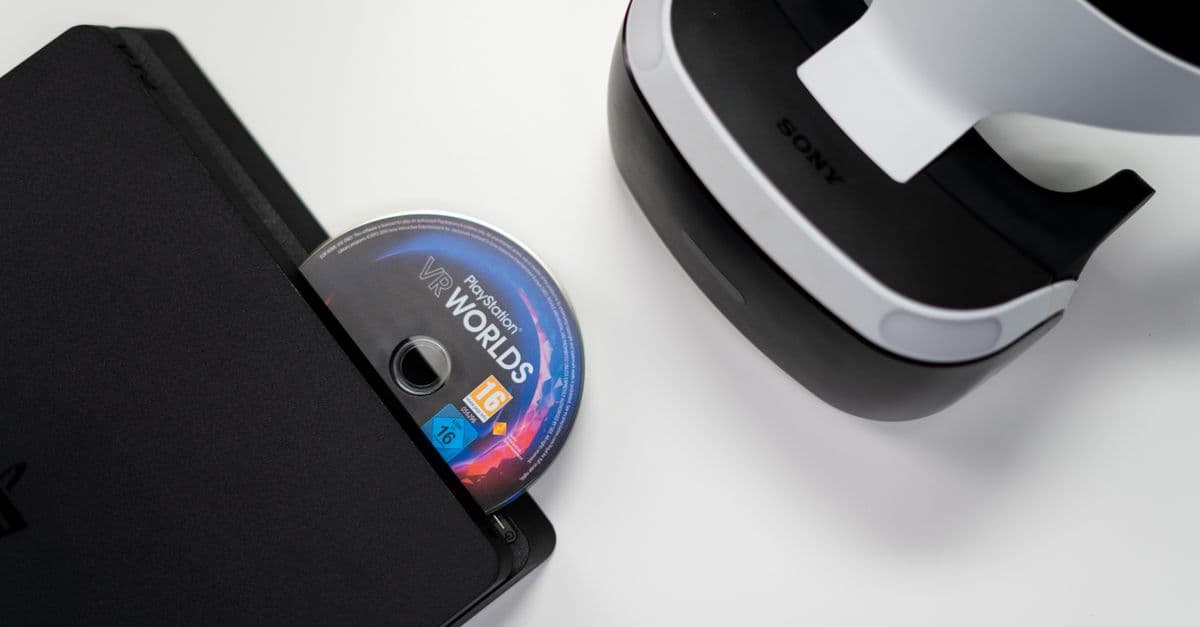
Photo: cottonbro studio / Pexels
Sony's original PlayStation launched in Japan on December 3, 1994, and went on to sell more than 102 million units worldwide, the first home console to break the 100-million mark (Sony/VGChartz sales data). It did that not by being the most powerful hardware of its era, but by attracting developers who used its CD-ROM format and 3D capabilities to build worlds the Super Nintendo and Sega Genesis simply could not. The 15 games below are the reason people still talk about the console 30 years later: each one either invented a genre convention still used today or sold well enough to prove a genre had a mainstream audience. This is a guide to what made them work mechanically, not just a nostalgia list.
Why the PS1 library still gets studied today
Game design students and working developers still reference PS1-era titles because the console forced a specific kind of discipline. CD-ROM storage (up to 650 MB, roughly 200 times a Super Nintendo cartridge) gave developers room for voice acting, pre-rendered backgrounds, and orchestral soundtracks for the first time on a mainstream console. But the 3D hardware was primitive by later standards: no hardware transform-and-lighting, limited texture memory, and a GPU that struggled with polygon counts above a few thousand per frame.
That combination, more storage than ever paired with weak 3D rendering, pushed developers toward substitutions that turned out to be aesthetically durable. Chrono Cross and Final Fantasy VII used pre-rendered 2D backgrounds behind low-poly character models, so the environments still look intentional today even though the characters look blocky. Castlevania: Symphony of the Night stayed almost entirely 2D and leaned on hand-drawn sprite work instead of chasing 3D at all. The games that aged best are, almost without exception, the ones that used the hardware's limits as a design constraint rather than fighting them.
The 15 games, ranked by lasting influence
Ranking retro games is partly subjective, but the list below is ordered by a combination of critical reception at release, verified sales, and how much the game's mechanics show up in games made decades later. Sales figures are lifetime totals across all platforms unless otherwise noted, since many of these titles were later ported or re-released.
| Rank | Game | Release Year | Genre | Notable Fact |
|---|---|---|---|---|
| 1 | Final Fantasy VII | 1997 | JRPG | About 10 million copies sold on PS1 alone; 15.5M+ lifetime across all platforms |
| 2 | Metal Gear Solid | 1998 | Stealth action | Sold over 7 million copies worldwide |
| 3 | Resident Evil | 1996 | Survival horror | Roughly 4 million copies sold by December 1997 |
| 4 | Gran Turismo | 1997 | Racing sim | Best-selling PS1 game: 10.85 million units |
| 5 | Crash Bandicoot | 1996 | 3D platformer | Naughty Dog's first mascot platformer; launched a five-game PS1 series |
| 6 | Tekken 3 | 1998 | Fighting | Arcade-accurate home port; still played competitively today |
| 7 | Castlevania: Symphony of the Night | 1997 | Metroidvania | Only ~1.27M PS1 units at launch, but named the "Metroidvania" genre |
| 8 | Silent Hill | 1999 | Psychological horror | Used PS1 draw-distance limits to create its signature fog |
| 9 | Chrono Cross | 1999 | JRPG | Spiritual successor to Chrono Trigger; 40+ playable characters |
| 10 | Tony Hawk's Pro Skater | 1999 | Sports/arcade | Its soundtrack redefined licensed music in games |
| 11 | Spyro the Dragon | 1998 | 3D platformer | Insomniac Games' answer to Crash and Mario 64 |
| 12 | Parasite Eve | 1998 | Action-RPG | Squaresoft's mitochondria-horror hybrid, set in New York |
| 13 | Suikoden II | 1998 | JRPG | 108 recruitable characters; cult favorite among JRPG fans |
| 14 | Vagrant Story | 2000 | Action-RPG | Yasumi Matsuno's weapon-crafting, tactics-adjacent dungeon crawler |
| 15 | Ape Escape | 1999 | 3D platformer | First game designed to require the DualShock analog sticks |
Table: The 15 PlayStation 1 games most frequently cited by critics and developers as defining the console's era, ordered by combined critical and historical influence.
How each game pushed its genre forward
Final Fantasy VII: the JRPG goes global
Final Fantasy VII was the best-selling home video game worldwide in 1997 and had sold roughly 10 million copies on the original PlayStation by the time later platform releases pushed its lifetime total past 15.5 million units (sales data via ResetEra/Square Enix reporting). Before FF7, Japanese role-playing games were a niche import genre in the West, largely confined to Nintendo consoles and text-heavy interfaces. Square's decision to pair a 40-plus-hour turn-based combat system with full-motion video cutscenes and an orchestral score by Nobuo Uematsu turned the genre into a mainstream commercial category almost overnight.
The mechanical innovation that mattered most was the Materia system, a way to attach magic and abilities to weapons and armor as removable slots rather than fixed character classes. That let players redesign a character's entire combat role by swapping a handful of orbs, which is a more flexible customization model than most JRPGs offered before or since. Cloud Strife, Aerith Gainsborough, and Sephiroth also became reference points for character writing in games, for better or worse, well outside the RPG genre.
Metal Gear Solid: stealth becomes a genre, not a mechanic
Metal Gear Solid released in Japan on September 3, 1998, followed by North America on October 20, 1998, and sold more than seven million copies worldwide (Metal Gear Solid, Wikipedia, citing Konami sales data). Hideo Kojima built the game around a simple but underused idea: avoiding combat should be as mechanically rich as fighting. The radar system that showed enemy sightlines, the ability to knock on walls to lure guards, and the cardboard box hiding mechanic all became stealth-genre grammar that Splinter Cell, Hitman, and later Metal Gear entries built on directly.
Kojima has said publicly that he expected the game to sell poorly given how unconventional it was for the era, which makes its commercial and critical success more notable, not less. It also marked the point where a single director's name (Kojima) became a marketable, film-director-style credit in games, a practice that was rare before MGS and common after it.
Resident Evil: survival horror gets a formula
Capcom's Resident Evil released in 1996 and had sold about 4 million copies worldwide by the end of 1997, grossing more than 200 million US dollars (Resident Evil sales history, Eneba retrospective). The game formalized what "survival horror" meant mechanically: limited inventory space, scarce ammunition, save points that cost a limited resource (ink ribbons), and fixed camera angles that hid threats just outside the frame. Every one of those choices was a direct response to hardware constraints, PS1 couldn't render large 3D environments in real time, so pre-rendered backgrounds with fixed cameras were both a technical workaround and, accidentally, a tension-building device.
That formula, deliberately restrict player resources and information, still defines the genre in games released today. The PlayStation-exclusive Resident Evil Remake (2002, later ported elsewhere) is widely considered a definitive version of the same design ideas with better production values.
Gran Turismo: simulation racing finds a mass audience
Gran Turismo, developed by Polyphony Digital and released in Japan on December 23, 1997, went on to sell 10.85 million units worldwide, making it the best-selling PS1 game outright (Gran Turismo 25th anniversary sales report, PlayStation LifeStyle). Before Gran Turismo, racing games were mostly arcade experiences: simplified handling, short tracks, instant restarts. Gran Turismo modeled real manufacturer licensing, a car-tuning system with dozens of adjustable parameters, and a driving physics model detailed enough that automotive publications took it seriously as a driving-skill tool. It also ran an arcade mode alongside its simulation mode, which let casual players enjoy the same game that hardcore sim racers were obsessing over.
Crash Bandicoot and Spyro: proving 3D platforming could work on weak hardware
Naughty Dog's Crash Bandicoot (1996) and Insomniac Games' Spyro the Dragon (1998) solved the same problem from opposite directions. Nintendo's Super Mario 64 (1996) gave players a fully open 3D camera and free-roaming levels; PS1 hardware couldn't easily support that kind of open world at a stable frame rate. Both studios instead built linear, corridor-style 3D levels ("on-rails" platforming, where the camera trails the character along a mostly fixed path) that let them push more detail per screen without the camera-control problems that plagued early 3D games.
Castlevania: Symphony of the Night names a genre
Symphony of the Night sold only around 1.27 million units on PS1, modest by the standards of this list, because 2D games were a harder sell against the 3D marketing push of the era (Castlevania sales analysis, TheGamer). Its influence outpaced its sales. The game combined Metroid's interconnected-map exploration (where new traversal abilities like a double jump or wall climb open previously blocked areas) with RPG systems like experience points, equipment, and a leveling curve. That combination is common enough today that the genre is literally named after Metroid and Castlevania: Metroidvania. Hollow Knight, Ori and the Blind Forest, and dozens of modern indie games trace their structure directly back to this one PS1 disc.
Tekken 3, Silent Hill, and the rest of the field
Tekken 3 (1998) arrived as one of the most technically accurate home arcade ports of its generation and is still played in fighting-game tournaments today, a rarity for a game this old. Silent Hill (1999) took Resident Evil's fixed-camera survival horror and replaced jump scares with psychological dread, using the PS1's short draw distance to justify a permanent fog effect that became the series' visual signature rather than a technical apology. Chrono Cross (1999), Suikoden II (1998), and Vagrant Story (2000) represent the deep end of the JRPG library, each experimenting with branching narratives, massive recruitable rosters, or unconventional combat systems that mainstream RPGs still borrow from.
Why the games hold up mechanically, not just emotionally
It's tempting to credit nostalgia entirely for why people still replay these games, but that undersells what's actually happening. Sprite-based and pre-rendered art (used in Symphony of the Night, Chrono Cross, and Final Fantasy VII's backgrounds) doesn't have a resolution to "age out of," the way a low-polygon 3D character model does. A hand-drawn background painted at a fixed resolution looks the same today as it did in 1997; a 3D model built with a few hundred polygons looks obviously dated by comparison, because 3D rendering fidelity is a moving target and 2D art is not.
The second reason is more about design discipline than art style. PS1 development teams worked with hard technical ceilings, limited RAM, limited polygon budgets, no reliable analog control until the DualShock arrived partway through the console's life. That forced designers to make every mechanic count instead of layering on features for their own sake. Resident Evil's limited inventory slots and Gran Turismo's tuning menus both feel deliberate today because they had to be; there was no spare technical budget to paper over a shallow system with spectacle.
What's the best-selling PS1 game of all time?
Gran Turismo, released in December 1997, is the best-selling game on the original PlayStation with 10.85 million units sold worldwide, ahead of Final Fantasy VII and Gran Turismo 2 (PlayStation LifeStyle sales report).
Which PS1 game had the biggest influence on modern game design?
Resident Evil and Castlevania: Symphony of the Night have arguably the widest reach. Resident Evil's resource-scarcity formula still defines survival horror, and Symphony of the Night's ability-gated exploration structure gave an entire modern indie genre, Metroidvania, its name.
What people get wrong about the PS1 library
The most common mistake is judging PS1 3D games purely by their polygon counts and dismissing them as "unplayable" today. That conflates visual fidelity with mechanical quality. Metal Gear Solid's stealth systems and Gran Turismo's handling model work exactly as designed whether you're looking at 1998-era textures or a modern HD texture pack; the underlying mechanics haven't changed.
A second misconception is that Final Fantasy VII's high resale price for original cartridges reflects gameplay quality rather than collector scarcity. Sony never reprinted PS1 discs once a game's initial run sold out, so original copies of popular games became genuinely scarce, which is a supply-and-demand story, not a statement about the game itself. Players who want to experience these games don't need original hardware or expensive discs. PlayStation Plus Premium includes a rotating library of PS1 titles, and PC emulators like DuckStation and PCSX2 run the original discs (or backup images of legally owned discs) with optional upscaling and control remapping.
A third misconception worth correcting: people assume every beloved PS1 game sold enormously well at launch. Symphony of the Night is the clearest counterexample, its initial commercial performance was middling by this list's standards, and its reputation as a genre-defining classic grew almost entirely after release, through critical reassessment and its influence on later games rather than initial sales charts.
Playing these games today
Three realistic paths exist for anyone who wants to play this list now rather than track down 30-year-old hardware. Official remasters exist for several titles, Crash Bandicoot N. Sane Trilogy, the Spyro Reignited Trilogy, and the Resident Evil Remake all rebuild the original games with modern control schemes and updated visuals while keeping the core mechanics intact. Subscription access through PlayStation Plus Premium rotates a library of PS1-era titles, including Final Fantasy VII, without requiring a purchase. Emulation on PC, using software like DuckStation, is the most flexible option: it supports HD texture packs, save states, and modern controller mapping, provided you're emulating a disc image from a game you legally own.
The takeaway
The PS1's best games weren't great because of raw technical power, the hardware was frequently a limiting factor, not an advantage. They were great because their developers turned those limits into design decisions: fixed cameras that built dread, pre-rendered backgrounds that never age, and ability-gated maps that turned exploration into a puzzle. That's why Resident Evil, Symphony of the Night, and Gran Turismo still get cited by working game designers today, not just replayed by people who owned them as kids. The console proved that a strong, focused idea executed within real constraints outlasts spectacle built without them.
Frequently Asked Questions
Q: What is the best-selling PS1 game of all time? A: Gran Turismo, released in December 1997, sold 10.85 million units worldwide on PS1, making it the console's best-selling single title, ahead of Final Fantasy VII's roughly 10 million PS1-platform sales.
Q: Are PS1 graphics too dated for modern players? A: It depends on the game's art style. Games that leaned on hand-drawn or pre-rendered 2D art, Castlevania: Symphony of the Night, Chrono Cross's backgrounds, still look intentional today. Low-polygon 3D character models age less gracefully, but core mechanics in games like Metal Gear Solid and Gran Turismo work exactly as designed regardless of visual fidelity.
Q: Which PS1 game should I play first if I'm new to the library? A: It depends on genre preference. For stealth action, start with Metal Gear Solid. For JRPGs, Final Fantasy VII remains the most accessible entry point. For horror, the original Resident Evil or its 2002 Remake. For platforming, Crash Bandicoot 2 refined the mechanics of the first game.
Q: Why is Final Fantasy VII so expensive as a physical disc if it's decades old? A: Sony never reprinted PS1 discs after their original manufacturing run ended, so surviving copies are fixed in supply while collector demand keeps rising. That scarcity, not the game's quality, drives resale prices above $100 for complete original copies. PlayStation Plus Premium and the Final Fantasy VII Remake both offer legal access without buying a vintage disc.
Q: Is the Resident Evil Remake (2002) better than the 1996 original? A: They're different rather than strictly better or worse. The 1996 original's tank controls and fixed cameras are considered by many longtime fans to build tension more effectively; the 2002 Remake modernizes controls, adds new areas and enemies, and improves visual fidelity while keeping the same resource-management core.
Q: Can I legally play PS1 games on modern consoles or PC? A: Yes, through several routes. PlayStation Plus Premium includes a rotating selection of PS1 titles playable on PS4 and PS5. PC emulators such as DuckStation run disc images of games you legally own, often with HD texture packs and modern controller support. Availability of official rereleases varies by region and licensing agreement.
Q: Why haven't more PS1 classics gotten full remakes like Final Fantasy VII or Resident Evil? A: Full remakes are expensive, often costing more to develop than the original franchise's guaranteed audience justifies. Some PS1-era games have also been delisted from digital storefronts due to expired music or engine licenses, complicating any remaster effort. Most PS1 games remain accessible primarily through emulation or subscription services rather than ground-up remakes.
Q: What made Castlevania: Symphony of the Night influential despite modest initial sales? A: It combined Metroid's ability-gated exploration with RPG systems like leveling and equipment, a combination so influential that the resulting genre is named "Metroidvania" after it. Its initial 1.27 million PS1 units sold were modest for this list, but its design became the template for later hits like Hollow Knight and Ori and the Blind Forest.
Q: How much game data could PS1 discs hold compared to earlier cartridges? A: A PS1 CD-ROM held up to roughly 650 MB, dramatically more than Super Nintendo cartridges, which typically topped out well under 10 MB. That extra space is what let developers add full voice acting, pre-rendered cutscenes, and orchestral soundtracks that earlier consoles couldn't support.
Q: Did the PlayStation 1 actually sell over 100 million units? A: Yes. The original PlayStation, including the redesigned PSone model, sold more than 102 million units worldwide, making it the first home console to cross the 100-million mark.
Read next:
Follow new articles
Add SciHub101 to your feed reader to see new science and technology stories.
About the Author
SciHub101 is an independent science and technology publication founded and edited by Buğra Sözeri, a software engineer and app developer based in Türkiye. AI tools assist with drafting and research. Source documentation in the existing archive is uneven, and articles are being reviewed and corrected. The Editorial Team byline identifies editorial responsibility; it does not certify specialist or independent human review. Where we compare products, anything built by our own team is labelled as such — see the editorial guidelines and About page for how corrections and disclosures work.
Related Articles
Super Mario Bros: How Nintendo Saved Gaming
In 1985, Super Mario Bros almost single-handedly revived the video game industry after its 1983 crash. The game's innovation and quality became the template for the entire industry.

Dark Souls: Why Difficulty is a Design Feature, Not a Bug
Dark Souls proved that game difficulty and fairness could coexist. By embracing challenge and respecting player skill, it redefined what players expected from games.
Retro Gaming Revival: Why Players Keep Going Back
Nintendo Switch Online has 34 million paid subscribers, Stardew Valley has sold over 50 million copies, and 87% of pre-2010 games are out of print. Here's the data behind why decades-old games still outcompete new releases.


History of Video Games: From Pong to Today
From a blinking dot bouncing across a black screen to a $180 billion global industry — the story of video games is a business history of crashes, quality-control rescues, console wars, and platform shifts that reshaped how the world plays.

The Last of Us: How Games Tell Stories Better Than Films
Released in 2013, The Last of Us proved games could tell stories as emotionally powerful as films—through interactivity and player agency making the experience uniquely moving.