History of Video Games: From Pong to Today

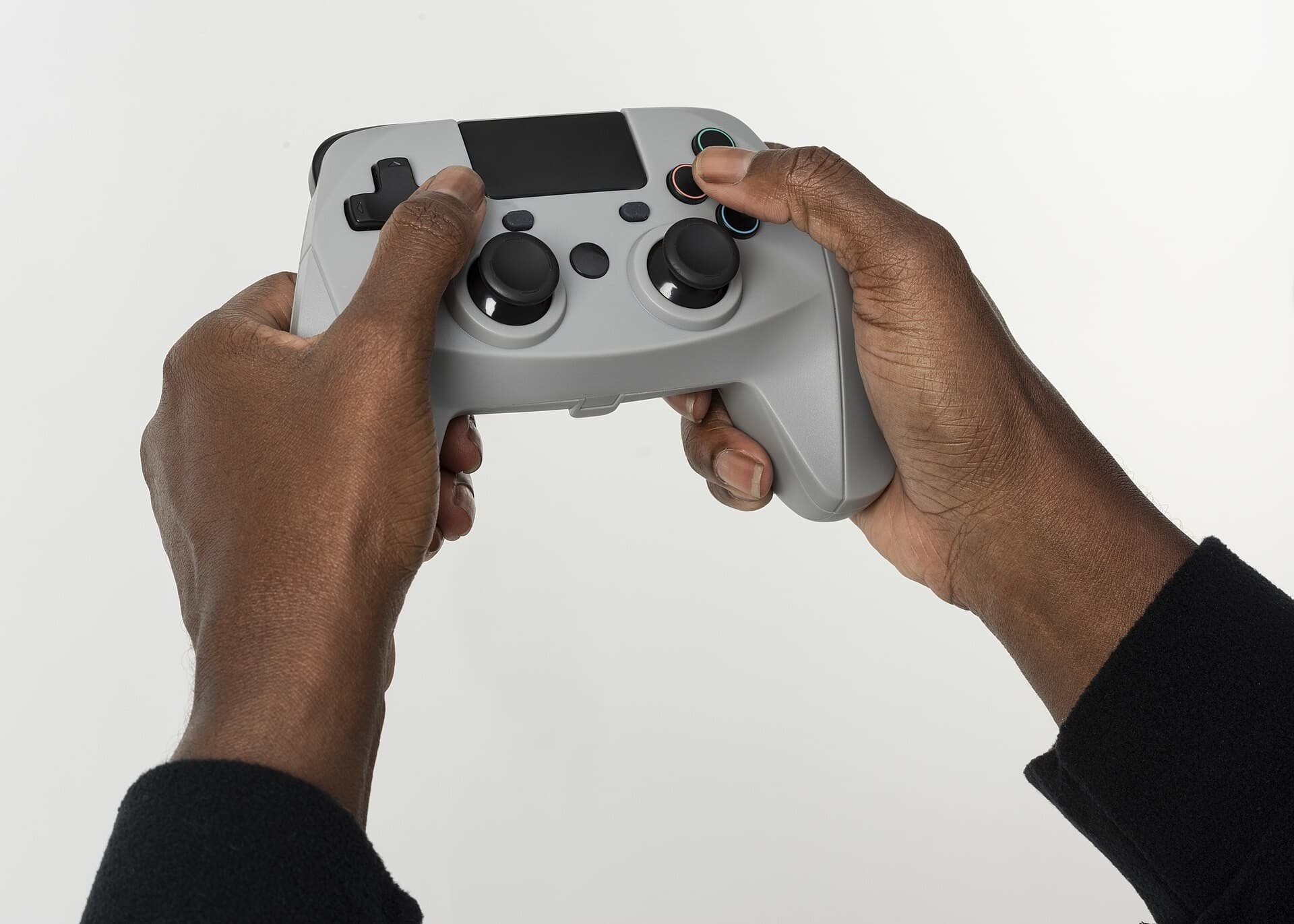
Photo: MART PRODUCTION / Pexels
In 1972, two engineers at Atari wired a glowing rectangle to a television and called it a paddle. The game was Pong. It had no story, no characters, and no music, and it still overflowed with quarters within days of being installed in a Sunnyvale, California bar. That coin box was the opening receipt for what became a $182.7 billion global industry by 2024, according to games-market analytics firm Newzoo. This is a business history: the crashes, the quality-control rescues, the console wars, and the platform shifts that turned a novelty into an industry larger than film and music combined.
Before Pong: the academic prehistory of the industry (1950s–1971)
Most timelines start at Pong, but that skips a decade of experiments that had no commercial ambition at all. In 1952, British computer scientist A.S. Douglas built OXO, a graphical version of tic-tac-toe, as part of a Cambridge PhD thesis on human-computer interaction. It ran on the EDSAC computer and was never intended to leave the lab.
In 1958, physicist William Higinbotham built Tennis for Two on an oscilloscope at Brookhaven National Laboratory to entertain visitors during the lab's annual public open house. It used an analog computer to simulate a ball bouncing over a net, rendered as a simple side-view line, and Higinbotham dismantled it within a couple of years. Neither of these projects had a business model. They were demonstrations that computers could simulate physical play, not products anyone could buy.
The real turning point was Spacewar!, built in 1962 by MIT students Steve Russell, Martin Graetz, and Wayne Wiitanen on a DEC PDP-1 minicomputer. Unlike Douglas's and Higinbotham's one-off demos, Spacewar! spread. MIT distributed the source code freely, and it propagated to research universities that owned PDP-1s, seeding a generation of programmers who grew up thinking of computers as something you could play games on. Nolan Bushnell, later the founder of Atari, played Spacewar! as a University of Utah student and spent years trying to shrink it into a coin-operated arcade cabinet. His 1971 attempt, Computer Space, flopped commercially because the controls were too complicated for a bar crowd. The lesson he took from that failure directly shaped Pong a year later: strip the game down to one button and one dial.
The arcade boom and the birth of home consoles (1972–1982)
Atari released Pong in 1972, and the arcade cabinet placed as a field test in Andy Capp's Tavern reportedly jammed within its first week because the coin box was physically full. Atari co-founder Bushnell and engineer Al Alcorn had proven something publishers hadn't dared assume: a game with no theme, no dialogue, and two moving rectangles could be genuinely compelling if the core mechanic felt right.
The arcade era that followed over the next decade produced some of the most recognized entertainment properties in history. Space Invaders (Taito, 1978) was reportedly popular enough in Japan that arcades ran out of 100-yen coins, prompting the Bank of Japan to increase 100-yen coin production, according to accounts collected by game historians, though exact mint figures tied directly to the game are difficult to verify independently. Pac-Man followed in 1980 from Namco, designed by Toru Iwatani specifically to appeal to female arcade-goers at a time when arcades were dominated by male shooter fans — a deliberate market-expansion decision, not an accident. Donkey Kong (1981) introduced a moustachioed carpenter named Mario, created by Shigeru Miyamoto, who would go on to define Nintendo's design philosophy for the next four decades.
Home consoles developed in parallel, and 1977 was the year that mattered most. The Magnavox Odyssey, released in 1972, is generally credited as the first home console, but it used physical plastic overlays taped to the television screen rather than rendering objects like a paddle or a ball, and it had no sound. The Atari 2600, launched in September 1977, changed the underlying business model: it ran interchangeable ROM cartridges, meaning a household bought one console and then kept buying new games for it indefinitely. That single decision — decoupling hardware from software as separate purchases — created the console-and-software business model the entire industry still runs on today. The 2600 sold modestly at launch, roughly 250,000 units in 1977, then scaled to around 8 million units by 1980 as Space Invaders' home port became a system-seller.
The 1983 crash and how Nintendo rebuilt consumer trust
The video game crash of 1983 is one of the sharpest collapses in the history of consumer electronics, and understanding why it happened explains almost every structural decision Nintendo made afterward. Several forces converged at once. Too many companies had rushed consoles to market — Atari, Mattel's Intellivision, Coleco's ColecoVision, and a wave of smaller competitors were all fighting for the same shelf space. Because any developer could make a cartridge for the Atari 2600 without Atari's approval, the platform flooded with rushed, low-quality titles. The most infamous example, Atari's E.T. the Extra-Terrestrial, was reportedly developed in about five weeks to meet a Christmas 1982 deadline and became a commercial and critical disaster; the widely repeated story that unsold cartridges were buried in a New Mexico landfill was confirmed when the landfill was excavated in 2014.
Retailers responded rationally: they stopped stocking games because they couldn't tell good ones from bad ones, and consumers responded by simply stopping buying. Home computers like the Commodore 64 also pulled some of the same audience toward machines that could play games and do other useful things, further squeezing dedicated game consoles.
Nintendo's answer, the Nintendo Entertainment System, launched in North America in 1985, and its design choices were direct responses to the crash's causes rather than incidental features. To get skeptical retailers to carry it at all, Nintendo marketed the NES as a toy, packaging it with a robotic accessory called R.O.B. and a light gun so stores would shelve it in the toy aisle instead of the electronics aisle where memories of the crash were still raw. More consequentially, Nintendo instituted the Nintendo Seal of Quality: a licensing system that required developers to submit games for approval and pay Nintendo a licensing fee, and that legally restricted how many titles a third-party publisher could release on the system per year. This closed the exact loophole that had let Atari's platform flood with unvetted software.
Why did the video game industry crash in 1983?
Market saturation from too many competing consoles, a glut of poor-quality, unlicensed games (there was no approval process for third-party publishers), and competition from home computers combined to collapse consumer trust. North American revenue fell from about $3.2 billion in 1982 to around $100 million in 1985.
Nintendo backed the licensing system with genuinely strong first-party software. Super Mario Bros. (1985), The Legend of Zelda (1986), and Metroid (1986) weren't just system-sellers, they established design conventions — side-scrolling platforming with tight jump physics, open non-linear exploration with a save system, and atmospheric world-building — that still shape game design today. By 1990, the NES had sold tens of millions of units in North America and Nintendo controlled an estimated 90% of the U.S. console market, a dominance that invited its first serious challenger.
Sega, the console wars, and the jump to 3D (1988–1999)
Sega entered the fight with the Master System and then, more successfully, the Genesis (called the Mega Drive outside North America) in 1988–1989. Sega couldn't out-Nintendo Nintendo on family-friendly polish, so it positioned itself as the faster, edgier alternative, built around a mascot — Sonic the Hedgehog — engineered specifically to move quicker than Mario on screen. The "genesis does what Nintendon't" marketing campaign was openly combative, and the Sega-Nintendo rivalry of the early 1990s became one of the most aggressive brand wars in consumer electronics, fought through magazine ads, playground arguments, and processor speed comparisons that mattered more to marketing departments than to most players.
The 1990s brought a bigger technical rupture than any marketing war: the shift from flat, two-dimensional sprites to three-dimensional polygonal worlds. This was not a gradual evolution. It required new silicon, new development tools, and, most importantly, an entirely new design vocabulary, because everything designers had learned about level design, enemy placement, and camera framing in 2D stopped applying once a player could walk around a corner in three dimensions.
Doom (id Software, 1993) essentially invented the first-person shooter as a mass-market genre, using a technique called ray casting to fake 3D movement through 2D-mapped levels efficiently enough to run on ordinary PCs. Virtua Fighter (Sega, 1993) brought true polygonal 3D to arcade fighting games. But the moment that proved 3D was a genuine creative shift rather than a marketing gimmick came in 1996, when Nintendo released Super Mario 64 and, the following year, The Legend of Zelda: Ocarina of Time on the Nintendo 64. Both games had to solve problems no one had solved before: how does a player control a camera in three-dimensional space using a controller with only one analog stick? How do you design a puzzle that only works because the player can look up? Answers to those questions, refined across the following decade, became the baseline grammar for how game engines render lighting and space in 3D titles that followed.
Sony entered console hardware for the first time with the PlayStation in 1994, and its choice of CD-ROM over cartridges was as consequential as Atari's cartridge decision had been in 1977. CDs held roughly 650 megabytes versus a cartridge's tens of megabytes, which meant full-motion video, orchestral recorded soundtracks, and voice acting became affordable to include. Games like Final Fantasy VII (1997), Metal Gear Solid (1998), and Resident Evil (1996) used that extra space to push games toward cinematic storytelling in a way cartridge hardware simply couldn't support economically. The original PlayStation sold over 102 million units over its lifetime, and its successor, the PlayStation 2, went further still: it sold approximately 155 million units between its 2000 launch and the end of production in 2013, making it, by unit volume, the best-selling game console ever made, according to sales data compiled by Wikipedia's list of best-selling game consoles.
How did Nintendo save the video game industry after the 1983 crash?
Nintendo combined a mandatory third-party licensing program (the Nintendo Seal of Quality) that blocked unvetted games from reaching shelves with strong first-party titles like Super Mario Bros. and The Legend of Zelda, which rebuilt retailer and consumer trust in packaged software after years of flooded, low-quality cartridges.
Broadband, persistent worlds, and the rise of games-as-service (2000–2009)
The sixth console generation, spanning the PlayStation 2, Microsoft's original Xbox, and Nintendo's GameCube, brought DVD-quality visuals, but the more structurally important shift was connectivity. Microsoft built a hard drive into the Xbox and launched Xbox Live in November 2002, establishing subscription-based online multiplayer as a standard console feature rather than a PC-only novelty. Halo 2 (2004) became one of the first console games to build a genuinely large online community around ranked matchmaking, a system whose descendants are covered in detail in how matchmaking ratings work.
The bigger structural shift of the decade happened on PC. World of Warcraft launched in November 2004 and, by October 2010, had grown to over 12 million paying monthly subscribers worldwide, according to Blizzard's own investor announcement — a figure that remains the game's all-time peak. That number mattered beyond bragging rights: it proved a single ongoing virtual world could generate more predictable, recurring revenue than a string of one-time game purchases ever could. It is the direct ancestor of every modern "games as a service" title, and the underlying economic tensions in virtual worlds like it are explored in why game economies inflate.
Nintendo, meanwhile, took the opposite strategic bet from Sony and Microsoft's horsepower race. The Wii, released in 2006, used motion controls and comparatively modest hardware to target people who had never considered themselves gamers at all. The pack-in title Wii Sports sold approximately 82.9 million copies, according to sales tracking cited by Den of Geek, and the Wii console line sold over 221 million units across its lifetime worldwide. Whether or not most of those Wii Sports units were technically "sold" as bundles, the strategic point landed: gaming's audience wasn't fixed at young men with dedicated hardware budgets, it was far larger, and untapped.
Mobile, streaming, and games as cultural infrastructure (2010–present)
Two forces reshaped the industry after 2010 more than any single console launch: smartphones and always-on internet as a baseline assumption rather than a premium feature.
Apple's App Store launched in 2008, and within two years, touch-screen games like Angry Birds and Cut the Rope had put gaming into the pockets of people who had never bought a console. By the mid-2020s, mobile had become the single largest segment of the entire industry: Newzoo's 2024 figures put mobile game revenue at $100.3 billion, more than console ($43.5 billion) and PC ($39 billion) combined, and projected mobile to reach roughly $108 billion in 2025. That shift moved the industry's center of gravity toward regions — much of Asia, parts of Africa, and Latin America — where a smartphone is a person's primary or only computing device, not a secondary screen next to a console.
Minecraft, released in 2011, became the best-selling video game of all time by unit count, passing 300 million copies sold as of October 2023 according to developer Mojang's own announcement reported by the BBC, trailing only Tetris among all games regardless of platform. Its low system requirements and blocky, procedurally generated worlds made it playable on nearly anything, and it created an entire generational cohort that learned basic coding logic through redstone circuits before ever touching a programming language.
Fortnite (2017) took the games-as-platform idea further than World of Warcraft had, turning a battle royale shooter into a venue: Epic Games hosted in-game concerts with musicians including Travis Scott and Ariana Grande, blurring the boundary between "video game" and "social platform" in a way that traditional media companies took years to fully understand. Competitive gaming professionalized alongside this shift; esports in 2026 now involves prize pools, sponsored teams, and career pathways structurally similar to professional traditional sports, not a niche hobby scene.
How big is the video game industry today?
The global video game market generated $182.7 billion in 2024 and is projected by Newzoo to reach roughly $188.9 billion in 2025, split across mobile ($100.3 billion), console ($43.5 billion), and PC ($39 billion) segments in 2024 — a scale that exceeds the global film and recorded music industries combined.
The latest console generation — PlayStation 5 and Xbox Series X — renders at up to 4K resolution with real-time ray tracing, a lighting technique explained mechanically in how game engines render lighting. Virtual reality headsets add spatial immersion that flat screens can't replicate. Cloud streaming services aim to decouple "playing a game" from "owning powerful hardware" entirely, echoing, in a strange way, the arcade-era model where you paid to play without owning the machine.
Console generations at a glance
The table below traces the defining console of each generation against the business-model shift it represents, not just its raw specs. Reading it generation by generation shows the pattern more clearly than any single anecdote: each leap forward is really a leap in what publishers were newly able to sell.
Table: Defining console generations and their business-model shifts
| Generation (era) | Defining console | Key technical shift | Business-model shift |
|---|---|---|---|
| First–second (1972–1976) | Magnavox Odyssey, Atari Pong dedicated units | Fixed, non-programmable games | Buy one machine, play only what it shipped with |
| Third (1977–1983) | Atari 2600 | Swappable ROM cartridges | Hardware and software sold separately, forever |
| Fourth (1985–1989) | Nintendo Entertainment System | Licensed third-party development | Studio approval gates quality; publisher royalties standardized |
| Fifth (1993–1998) | PlayStation, Nintendo 64 | 3D polygons, CD-ROM storage | Cinematic storytelling and larger install bases become viable |
| Sixth (2000–2005) | PlayStation 2 | DVD playback, broadband-ready | Console doubles as home media device; online play emerges |
| Seventh (2005–2012) | Nintendo Wii, Xbox 360 | Motion control, Xbox Live | Non-gamer audience capture; subscription online services |
| Eighth–ninth (2012–present) | PS4/PS5, Switch, mobile | 4K/ray tracing, always-connected, touchscreen | Live-service economies, free-to-play, cross-platform mobile dominance |
This is why comparing, say, the Atari 2600's graphics to the PlayStation 5's misses the point of the history. The interesting story in each row isn't the pixel count, it's what studios and platform holders were newly able to charge for.
The console war that almost wasn't: Sega's slow exit
Sega's story deserves more attention than a footnote in the Nintendo rivalry, because its ending shows how quickly a dominant hardware maker can fall out of the console business entirely. After the Genesis's strong 1990s run against the SNES, Sega's next two hardware bets both stumbled. The Sega Saturn (1994) launched earlier than planned in North America in a surprise move that confused retailers and consumers alike, and it struggled against the PlayStation's cheaper price and deeper third-party support. The Dreamcast (1998–1999) was, by most contemporary and retrospective accounts, technically ahead of its rivals, with the first built-in modem for online play on a mainstream console and a well-regarded game library including Shenmue and Sonic Adventure. It still couldn't overcome the financial damage from the Saturn and the looming shadow of the PlayStation 2's 2000 launch. Sega discontinued the Dreamcast and exited console hardware manufacturing in 2001, becoming a third-party software publisher instead — a reminder that no console maker's dominance, including Nintendo's own repeated comebacks, was ever guaranteed to last.
Handhelds: the parallel track console wars overshadowed
While the living-room console wars got the marketing spotlight, a parallel handheld market grew alongside it and, at points, outsold home consoles outright. The original Game Boy, released by Nintendo in 1989, prioritized battery life and price over graphical power, running on a monochrome screen years after competitors like the Atari Lynx and Sega Game Gear offered full color. That decision proved commercially decisive: the Game Boy line and its Color/Advance successors sold well over 200 million units combined, and the platform's most important asset wasn't hardware at all, it was Pokémon (1996), whose trade-and-battle mechanics were specifically designed around the Game Boy's link-cable feature to encourage kids to play together in person.
The Nintendo DS (2004) and PlayStation Portable (2004) renewed the format for the broadband era, and the Nintendo Switch (2017) effectively erased the distinction between "handheld" and "home console" altogether by being both simultaneously — a hybrid model that both Sony and Microsoft have since had to respond to with their own portable strategies.
What people get wrong about gaming's history
The most common misconception is that the 1983 crash was a global event. It was overwhelmingly a North American phenomenon; the Japanese market, still centered on arcades and about to be reshaped by Nintendo's own domestic strength, never experienced anything close to the same collapse. Framing 1983 as "the industry" nearly dying erases the fact that it was one regional market's business model that failed, not video games as a medium.
A second common error is treating graphical fidelity as the main driver of gaming's growth. Revenue data says otherwise: the segment growing fastest and generating the most money by the mid-2020s is mobile gaming, running on hardware far less powerful than a modern console, built around games like puzzle and hyper-casual titles that prioritize accessibility and short session length over visual sophistication. The industry's biggest financial engine is the opposite of a graphics arms race.
A third misconception worth correcting: people often assume "games as a service," with ongoing purchases, expansions, and in-game economies, is a recent invention tied to mobile free-to-play models. It's not. World of Warcraft's subscription model in 2004, and even earlier text-based MUDs and arcade coin-drop economics in the 1970s, established the same core principle — recurring payment for ongoing access — decades before "live service" became an industry buzzword. The economic mechanics behind those recurring-payment systems, including why in-game currencies tend toward inflation over time, are covered in more depth in why game economies inflate.
FAQ
Q: What was the very first video game ever made? A: It depends on the definition used. Tennis for Two (1958) and Spacewar! (1962) are the earliest recognizable video games built on computers, but neither was sold commercially. Pong (1972) is the widely recognized starting point for video games as a commercial product.
Q: Why did the video game industry crash in 1983? A: Market saturation from too many competing consoles, a flood of low-quality, unlicensed games enabled by open cartridge platforms, and competition from home computers combined to collapse consumer confidence. North American revenue fell from roughly $3.2 billion in 1982 to about $100 million by 1985.
Q: How did Nintendo save the video game industry? A: Nintendo launched the NES in 1985 with a mandatory third-party licensing system, the Nintendo Seal of Quality, that blocked unapproved games and capped how many titles a publisher could release annually. Strong first-party games like Super Mario Bros. and The Legend of Zelda rebuilt trust that the crash had destroyed.
Q: When did video games become a mainstream cultural phenomenon? A: The PlayStation era in the mid-1990s broadened the audience with cinematic storytelling, but the true mainstream shift came with the Wii (2006) targeting non-gamers and then mobile gaming (2008 onward), which put games on billions of smartphones.
Q: How big is the video game industry today? A: The global video game market generated $182.7 billion in 2024, according to Newzoo, projected to reach roughly $188.9 billion in 2025. That scale exceeds the global film and recorded music industries combined.
Q: Which console has sold the most units of all time? A: The Sony PlayStation 2 is the best-selling console in history, with approximately 155 million units sold between its March 2000 launch and the end of production in 2013, according to sales data compiled from industry sources.
Q: What is the best-selling video game of all time? A: Minecraft holds that title outright by unit sales among conventional video games, passing 300 million copies sold as of October 2023. Only the puzzle game Tetris, with licensing spread across countless platforms since 1984, has sold more units overall.
Q: Why did Sega stop making game consoles? A: After the Sega Saturn underperformed against the PlayStation in the mid-1990s and the technically strong Dreamcast failed to recover from that financial damage, Sega discontinued console hardware in 2001 and became a third-party software publisher instead.
Q: How did mobile gaming become bigger than console and PC gaming? A: The App Store's 2008 launch put touchscreen games on smartphones already owned by billions of people worldwide, removing the cost barrier of dedicated gaming hardware. By 2024, mobile generated $100.3 billion in revenue, more than console ($43.5 billion) and PC ($39 billion) combined, according to Newzoo.
Q: What made 3D games different from 2D games in terms of design? A: 3D introduced problems 2D never had to solve, including camera control in open space, depth perception for platforming and combat, and non-linear exploration. Nintendo 64 titles like Super Mario 64 (1996) and Ocarina of Time (1998) established camera and control conventions that 3D games still use today.
The takeaway
Video games didn't grow in a straight line from a bouncing dot to photorealistic open worlds; they grew through a sequence of business decisions that repeatedly redefined what a "game" could be sold as: a cartridge, a CD, a subscription, a free download funded by microtransactions, a live event. Each hardware leap mattered, but the industry's real turning points were structural — Atari's cartridge model, Nintendo's licensing crackdown after the 1983 crash, Sony's CD-ROM bet, and mobile's shift toward a billions-strong audience with no dedicated console at all. Fifty-plus years after Pong's quarters jammed a coin box in a Sunnyvale bar, gaming's history reads less like a story about pixels and more like a case study in how an entertainment medium keeps finding new ways to reach new people.
Read next:
Follow new articles
Add SciHub101 to your feed reader to see new science and technology stories.
About the Author
SciHub101 is an independent science and technology publication founded and edited by Buğra Sözeri, a software engineer and app developer based in Türkiye. AI tools assist with drafting and research. Source documentation in the existing archive is uneven, and articles are being reviewed and corrected. The Editorial Team byline identifies editorial responsibility; it does not certify specialist or independent human review. Where we compare products, anything built by our own team is labelled as such — see the editorial guidelines and About page for how corrections and disclosures work.
Related Articles

How Neural Networks Are Making NPCs Smarter Than Ever
Neural networks are transforming game NPCs from predictable scripted bots into adaptive, lifelike characters that learn and surprise players.

Among Us: The Unexpected Phenomenon of Social Deduction
Among Us became a billion-player phenomenon by combining simple mechanics with social deduction. One of you is an imposter—who do you trust?
Complete Gaming Guide 2026 — Technology, Design, Esports, and Psychology
The complete guide to gaming in 2026: how game engines work, gaming hardware, esports, game design psychology, industry trends, and what makes games engaging and addictive.

Gaming in 2026: Platforms, Hardware, and Trends
In 2026, gaming spans five major hardware ecosystems: PlayStation 5 and Xbox Series X/S dominating console market share; the Nintendo Switch entering its final year as the mobile-console hybrid benchmark before Switch 2's late-year launch; personal computers transitioning to next-generation GPUs (RTX 50-series from NVIDIA, RDNA 4 from AMD); and mobile gaming (iOS/Android) supporting both casual free-to-play and premium titles. This article examines the platform landscape, hardware capabilities across tiers, market share data, and the technological and cultural trends shaping gaming in 2026.

What Are the Best Free-to-Play Games in 2026?
Free-to-play gaming in 2026 encompasses genres from competitive esports titles to narrative-driven adventures, with monetization ranging from cosmetic-only (respecting player progression integrity) to aggressive gacha mechanics that gate progression behind randomized paywalls. This article examines the best free-to-play games across genres, explaining the free-to-play economic model, how to identify monetization strategies, and which titles offer genuine value without requiring money spent. Featured games span competitive shooters, action RPGs, card games, and story-driven experiences, with emphasis on games where spending is optional for enjoying core content.

The Science of Esports: What Makes Pro Gamers Different
Professional esports players react faster, process visual information more efficiently, and maintain strategic decision-making under pressure that most people cannot sustain for minutes, let alone hours of competition. Science is beginning to understand what separates them from the rest.