Among Us: The Unexpected Phenomenon of Social Deduction
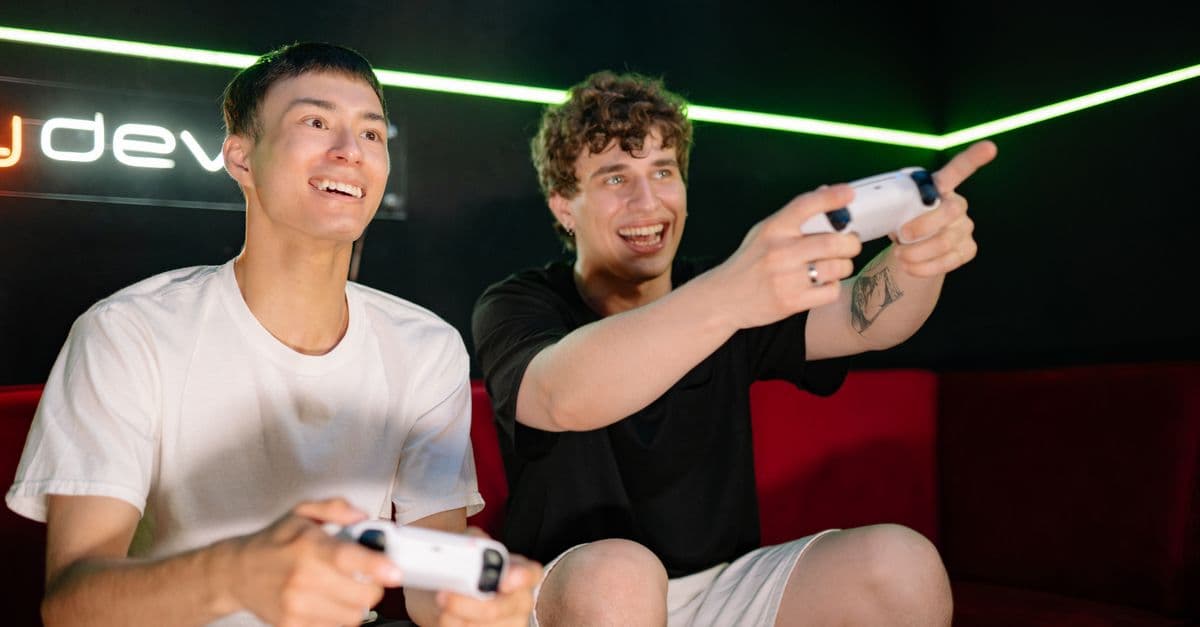
Photo: Yan Krukau / Pexels
A three-person studio released a game about spaceship chores and secret murder on June 15, 2018 (ScreenRant). Almost nobody played it. Two years later, in the last weeks of summer 2020, Among Us became the most-watched game on Twitch, a sitting member of Congress used it to drive voter turnout, and "sus" entered the vocabulary of a generation. This is the story of how a game with almost no content became one of the biggest cultural events in gaming history, and what its design reveals about why humans can't resist a good lie.
From dead game to global phenomenon
InnerSloth, the studio behind Among Us, was founded by three developers: Marcus Bromander, Forest Willard, and Amy Liu. Among Us launched on mobile in mid-2018 and hit Steam that November, but it landed with barely a ripple (ScreenRant). InnerSloth had reportedly considered shelving the game entirely more than once before its breakout moment, focusing instead on other projects (Game World Observer).
The turning point arrived in July 2020, when Twitch streamer Chance "Sodapoppin" Morris started playing it on stream. Within weeks, Corpse Husband's collaborations with streamers like Sykkuno and Valkyrae pulled in millions of views, and the game's audience compounded fast (Game World Observer).
By September 2020, InnerSloth reported more than 500 million monthly active players, with concurrent player counts regularly exceeding 50 million (Innersloth, 2020; Statista, 2021). Cumulative downloads passed 3.1 billion by December 2020. No marketing budget produced that curve. A handful of streamers, a pandemic that had everyone stuck at home craving low-stakes social contact, and a game built entirely around talking to other people did.
The core loop: ten minutes of paranoia
Strip away the memes and the streams, and the mechanics are almost embarrassingly simple. A lobby of four to fifteen players is split into two asymmetric roles.
Crewmates walk around a spaceship or base completing a checklist of small chores: rewiring panels, submitting scans, swiping key cards. They win by finishing every task or by identifying and voting out every impostor.
Impostors (one to three per match) have no tasks. Their job is to kill crewmates one at a time without being seen, use sabotage buttons to create chaos and cut off routes, and lie convincingly enough in group discussions to avoid getting voted out.
When a body is found or an emergency meeting is called, everyone gathers to talk. Players accuse, defend, and speculate for a short timed window, then vote. Whoever gets the most votes is ejected from the ship. Get the number right and the crew wins early. Get it wrong, and an impostor keeps killing.
That's the entire game. No campaign, no loadouts, no skill trees. A match runs 5 to 15 minutes, and the mechanics never change round to round, but the social dynamics change every single time.
Why does a game this simple stay interesting?
Because the content isn't the map or the tasks, it's the people. Like poker, where the cards barely matter compared to reading your opponents, Among Us generates fresh drama purely from who lies well and who gets caught. The mechanical shell is nearly static; the social layer running on top of it is different every match.
Information asymmetry: the actual engine of the game
Game designers call it asymmetric information, and it's the single design decision that makes Among Us function. Crewmates operate with an incomplete picture: they know their own location and task progress but nothing about who the impostor is. Impostors operate with a complete picture: they know exactly who they are, who their fellow impostors are (in three- or four-impostor lobbies), and often where bodies and witnesses are.
This gap is not a flaw, it's the whole product. A useful analogy is a game of cards where one player can see everyone's hand and the rest can only see their own. The players with less information have to reason probabilistically, watching behavior, cross-referencing alibis, and building a mental model of who is lying. The player with more information has to manage that advantage without revealing it, because acting too confident, too evasive, or too convenient gives the game away.
Discussion rounds are capped by a short timer, typically ten seconds for final defense before a vote closes. That constraint matters more than it looks. It's the difference between a courtroom with weeks to build a case and a hostage negotiation where you have thirty seconds to decide who to trust. Under time pressure, people default to gut read over careful logic, which rewards social instinct over spreadsheet-style deduction and keeps games from turning into fifteen-minute debate club sessions.
Research on social deduction games backs this up as more than just game-feel. Academic work using games like Mafia, the tabletop ancestor of Among Us, has treated social deduction as a controlled environment for studying real deception, because people are far more willing to lie inside a game's fiction than they are to self-report lying in real life (Nature Scientific Reports, 2024). Reading intent, tracking who benefits from an accusation, and modeling what someone else believes you believe, is a skill researchers call theory of mind, the capacity to attribute beliefs and intentions to other people. Among Us is, mechanically, a theory-of-mind stress test disguised as a cartoon about beans doing chores.
Why the timing mattered as much as the design
Among Us didn't change between 2018 and 2020. The context around it did.
Lockdown loneliness met a game built for voice chat. In mid-2020, hundreds of millions of people were physically isolated from friends and family, and video calls had already started to feel exhausting. Among Us gave people a reason to get on a Discord call that wasn't just "let's talk," it gave the call a structure, stakes, and an excuse to yell at each other affectionately.
It was free and it ran on anything. The mobile version was free-to-play with optional cosmetics, and the Steam version cost a few dollars. No console requirement, no high-end GPU, no barrier beyond having a phone. That accessibility mattered enormously for a game trying to spread through friend groups rather than marketing spend.
Streamers made it a spectator sport. Watching someone play most games solo is boring. Watching a group of streamers accuse each other, backpedal, and get caught in a lie is closer to reality TV. Corpse Husband's now-famous collaborative streams with Sykkuno, Valkyrae, and others turned Among Us into appointment viewing on Twitch and YouTube throughout late 2020 (Game World Observer).
Politicians and celebrities adopted it as a platform. AOC's get-out-the-vote stream is the clearest example: a member of Congress used a game about spaceship murder to reach an audience that political ads couldn't touch, and it worked well enough to become national news (MIT Technology Review).
Contrast that with games that were engineered from day one to go viral, with dedicated marketing teams and coordinated launch events. Among Us had none of that. It succeeded because a group of real people, independently, decided it was worth their time to broadcast, and the broadcast made other people want to play it too. That's a much harder trick to plan than it is to notice in hindsight.
Map design as an asymmetric-balance lever
InnerSloth's post-launch map releases double as a case study in how spatial design shapes an asymmetric game's balance, not just its aesthetics.
| Map | Released | Tasks | Design lesson |
|---|---|---|---|
| The Skeld | 2018 (original) | 10 | Tight corridors and short sightlines. Good for new players, but dense hiding spots make it easy for impostors to lurk undetected. |
| MIRA HQ | 2020 | 13 | Horizontal, interconnected layout with longer walk times between task locations, giving impostors more opportunities to isolate victims mid-route. |
| Polus | 2020 | 13 | Mixes outdoor terrain with indoor rooms, including reactor and electrical zones. First map to demand real map-knowledge investment from new players. |
| The Airship | 2021 | 20+ | Two-floor vertical layout with vent networks connecting non-adjacent rooms. Steepest learning curve of any map; favors experienced impostors who know shortcuts. |
Table: Among Us map releases and how their layouts shift the crew-versus-impostor balance.
The pattern InnerSloth converged on is intuitive once you see it: larger, more complex maps favor impostors because they create more isolated encounters and more routes to fake an alibi. Smaller, denser maps favor crews because proximity makes group verification easier and impostors have fewer places to hide a kill. That single variable, map size and connectivity, does more to shift win rates between the two roles than any patch to task speed or kill cooldown ever could.
The imposter metagame: how deception got sophisticated
As competitive and high-level play matured, impostor strategy moved well past "wander around and kill people when nobody's looking."
Task faking. Tasks with visible animations, like swiping a card or aligning an engine, can be mimicked by an impostor standing near the terminal without actually completing anything. A player who has memorized every task's visual loop can fake convincingly enough to fool a crewmate glancing over their shoulder.
Kill timing. Rather than killing the first isolated player they find, skilled impostors wait for windows when the rest of the crew is spread out and unlikely to notice a delay, then kill during a sabotage they've triggered themselves, so the resulting chaos masks the timeline.
Vent knowledge as a weapon. Getting seen entering a vent is close to an automatic ejection, so experienced impostors use their knowledge of the vent network to construct false accusations that only someone who's actually used the vents would know how to phrase convincingly, quietly outing themselves less while making the accusation sound informed.
Voting out threats, not suspects. Counterintuitively, strong impostors often don't push to eject whoever the group is currently suspicious of. They push to eject whoever is playing the most methodically, the crewmate cross-referencing task times and building a real case, because that player is the actual long-term threat, not the person the room happens to be yelling at this round.
Crews adapted in turn, developing systematic task verification (watching each other complete tasks in pairs) and movement tracking (calling out who was where, when) as direct counters. That back-and-forth, strategy versus counter-strategy inside a fixed ruleset, is the same evolutionary pressure that keeps chess or poker interesting after centuries, compressed into a game that came out seven years ago.
The competitive and cultural afterlife
Among Us didn't stay a casual pandemic pastime. It built real infrastructure around itself. Content creators and gaming organizations ran tournaments with cash prizes, and the game dominated Twitch's most-watched category for months through late 2020, with combined viewership across simultaneous celebrity and streamer lobbies passing 700,000 concurrent viewers during peak events like AOC's stream (TechCrunch).
Culturally, it went further than most games ever do. "Sus" and "amogus" became internet shorthand recognized well outside gaming circles. The crewmate silhouette showed up in memes, merchandise, and cameo references across unrelated media. Among Us achieved something rare: it became a cultural reference point that people who have never played it still recognize.
What people get wrong about Among Us
"It was just a pandemic fad, like Animal Crossing or Fall Guys." Most 2020 breakout games did see viewership and player counts collapse hard once lockdowns eased, and Among Us did decline substantially from its half-billion-player peak. But it settled into a stable band of roughly 10 to 50 million monthly players rather than falling off a cliff, and it has kept receiving content updates, new roles, and competitive events years after the original wave ended. A true fad game doesn't get sustained developer investment three-plus years later.
"The game is basically Mafia, so there's nothing new here." Among Us borrows its DNA directly from Mafia (1997) and its variant Werewolf, tabletop hidden-role games that have circulated for over two decades. What Among Us actually contributed wasn't a new social mechanic, it was digitizing an old one for online play at scale: no need to gather a group in person, no dedicated moderator required, and a spatial layer (walking around a map doing tasks) that gives the "who was where" question physical, trackable stakes that a tabletop circle of chairs never had.
"Winning is mostly about lying convincingly." Lying matters, but the crew side wins by building a coherent, checkable narrative just as much as impostors win by breaking one. Professional-level matches show both roles winning close to half the time, meaning the skill ceiling is symmetric even though the two roles feel completely different to play.
"More impostors always makes the game harder for crew." More impostors change the math but don't automatically favor them. With three impostors in a ten-player lobby, impostors can more easily coordinate double-kills and alibi each other, but they're also individually easier to catch once suspicion narrows, since there are more of them to slip up. Lobby size, map choice, and impostor count all interact, which is why competitive formats standardize these settings rather than leaving them random.
Why social deduction as a genre keeps working
Among Us wasn't the first social deduction game, and it won't be the last. Mafia originated as a party game in the Soviet Union in 1986 and later spread internationally under names like Werewolf; The Resistance and its expansion Avalon modernized the formula on tabletop in the 2010s. What links all of them, and what Among Us translated successfully into a digital, mass-market format, is a specific psychological mechanism: hidden information creates incentive misalignment, and incentive misalignment creates tension that people find compelling to sit inside.
You don't know who's lying. They don't know that you know they might be lying. Everyone in the room is running a simulation of everyone else's simulation of them. That layered uncertainty is cognitively demanding in a genuinely fun way, similar to how a well-designed mystery novel keeps you engaged by making you actively theorize rather than passively consume. The difference is that in Among Us, you're not reading someone else's mystery, you're inside one that a group of your actual friends just wrote in real time, with real consequences for your Discord friendships.
That's also why the genre resists getting stale in a way flashier games don't. A battle royale eventually runs out of map to learn. A rhythm game eventually runs out of songs you haven't mastered. A social deduction game never runs out of new people to read, because the content isn't authored by developers, it's generated by whoever happens to be in your lobby that night.
The takeaway
Among Us succeeded not because InnerSloth engineered a viral hit, but because a nearly two-year-old game with almost no content turned out to be the perfect vessel for a very specific historical moment: a global audience craving low-stakes social contact, a handful of streamers willing to broadcast their friendships falling apart over spaceship murder, and a design built entirely around information asymmetry rather than graphics or mechanical skill. The lesson for game design is that content isn't always the thing that makes a game replayable. Sometimes the most durable design decision is building a system where the players themselves are the content, and simply getting out of their way.
Frequently Asked Questions
Q: How many players did Among Us have at its peak? InnerSloth reported over 500 million monthly active players in September 2020, with concurrent players regularly exceeding 50 million, and cumulative downloads reaching 3.1 billion by December 2020 (Innersloth, 2020; Statista, 2021).
Q: Is Among Us still popular? Among Us has settled into a stable base of roughly 10 to 50 million monthly players, well below its 2020 peak but far more durable than most pandemic-era breakout games, which typically dropped off sharply once the initial surge passed.
Q: What made Among Us go viral in 2020? Twitch streamer Sodapoppin began playing it in July 2020, and collaborative streams from Corpse Husband, Sykkuno, and Valkyrae drove massive audience growth shortly after (Game World Observer). The game's free-to-play accessibility and pandemic-era demand for social contact amplified that initial spark into a global phenomenon.
Q: What is the AOC Among Us stream, and why does it matter? On October 20, 2020, Rep. Alexandria Ocasio-Cortez streamed Among Us with Pokimane, HasanAbi, and Ilhan Omar as a get-out-the-vote effort, peaking at over 435,000 concurrent viewers, making it one of the biggest individual streams in Twitch history (TechCrunch).
Q: How are impostors and crewmates balanced against each other? Crewmates outnumber impostors and can eject them through group votes, while impostors have full information about their own identity and can kill and sabotage. At high skill levels, both sides win close to half their matches, which suggests the two asymmetric roles are reasonably balanced despite feeling completely different to play.
Q: What game inspired Among Us? Among Us draws its core hidden-role mechanic from Mafia, a tabletop party game that originated in the Soviet Union in 1986, and its later variant Werewolf. InnerSloth's contribution was translating that format into a real-time, spatial, digital game that didn't require an in-person group or a dedicated moderator.
Q: Can skilled players win consistently as the impostor? Yes, though it takes more than lying well. Advanced impostor tactics include faking common tasks, timing kills around sabotage-driven chaos, and deliberately voting to eject the most methodical crewmate rather than whoever the group currently suspects, since that player poses the bigger long-term threat.
Q: Why did Among Us survive after the pandemic ended, unlike other 2020 hit games? Most pandemic-era breakout games depend on novelty or seasonal content to stay relevant and decline once that fades. Among Us's core loop, reading people and managing hidden information, doesn't get stale with repetition the way fixed content does, and InnerSloth kept adding maps, roles, and cosmetics to sustain engagement.
Q: Does map design actually affect who wins, crew or impostors? Yes. Larger, more complex maps like The Airship give impostors more isolated encounters and escape routes, favoring them, while smaller, denser maps like The Skeld make group verification easier for crewmates, favoring them instead. InnerSloth has used map choice as a deliberate balancing lever across releases.
Q: What does research say about why social deduction games are psychologically compelling? Academic work using social deduction games like Mafia treats them as controlled environments for studying real deception, since players are far more willing to lie within the fiction of a game than to self-report deceptive behavior in real life (Nature Scientific Reports, 2024). Success in these games depends heavily on theory of mind, the capacity to model what other players believe.
Sources:
- ScreenRant — Who Created Among Us
- Game World Observer — Brief history of InnerSloth
- TechCrunch — AOC's Among Us stream topped 435,000 concurrent viewers
- TIME — 400K People Watched AOC and Ilhan Omar Play Among Us
- MIT Technology Review — AOC's Among Us livestream and Twitch's political power
- Nature Scientific Reports, 2024 — Finding deceivers in social context: the case of the Mafia game
Read next
Follow new articles
Add SciHub101 to your feed reader to see new science and technology stories.
About the Author
SciHub101 is an independent science and technology publication founded and edited by Buğra Sözeri, a software engineer and app developer based in Türkiye. AI tools assist with drafting and research. Source documentation in the existing archive is uneven, and articles are being reviewed and corrected. The Editorial Team byline identifies editorial responsibility; it does not certify specialist or independent human review. Where we compare products, anything built by our own team is labelled as such — see the editorial guidelines and About page for how corrections and disclosures work.
Related Articles
History of Video Games: From Pong to Today
From a blinking dot bouncing across a black screen to a $180 billion global industry — the story of video games is a business history of crashes, quality-control rescues, console wars, and platform shifts that reshaped how the world plays.
Psychology of Gaming: Why Games Are So Addictive
The strongest pull in gaming often isn't the loot or the level-up — it's the guild that's counting on you, the friend list you don't want to disappoint, and the identity you've built inside a community that logs on when you do.
Metroidvania: Exploration Rewarding Skill and Knowledge
Metroidvania games reward exploration and ability acquisition. Metroid and Castlevania defined genre where new abilities open new areas.
Roguelike Games and Hades: Meaningful Progression Through Repetition
Roguelikes embrace repetition through procedural generation. Hades perfected the formula: meaningful rewards across runs, beautiful presentation, compelling narrative.
Complete Gaming Guide 2026 — Technology, Design, Esports, and Psychology
The complete guide to gaming in 2026: how game engines work, gaming hardware, esports, game design psychology, industry trends, and what makes games engaging and addictive.