Psychology of Gaming: Why Games Are So Addictive
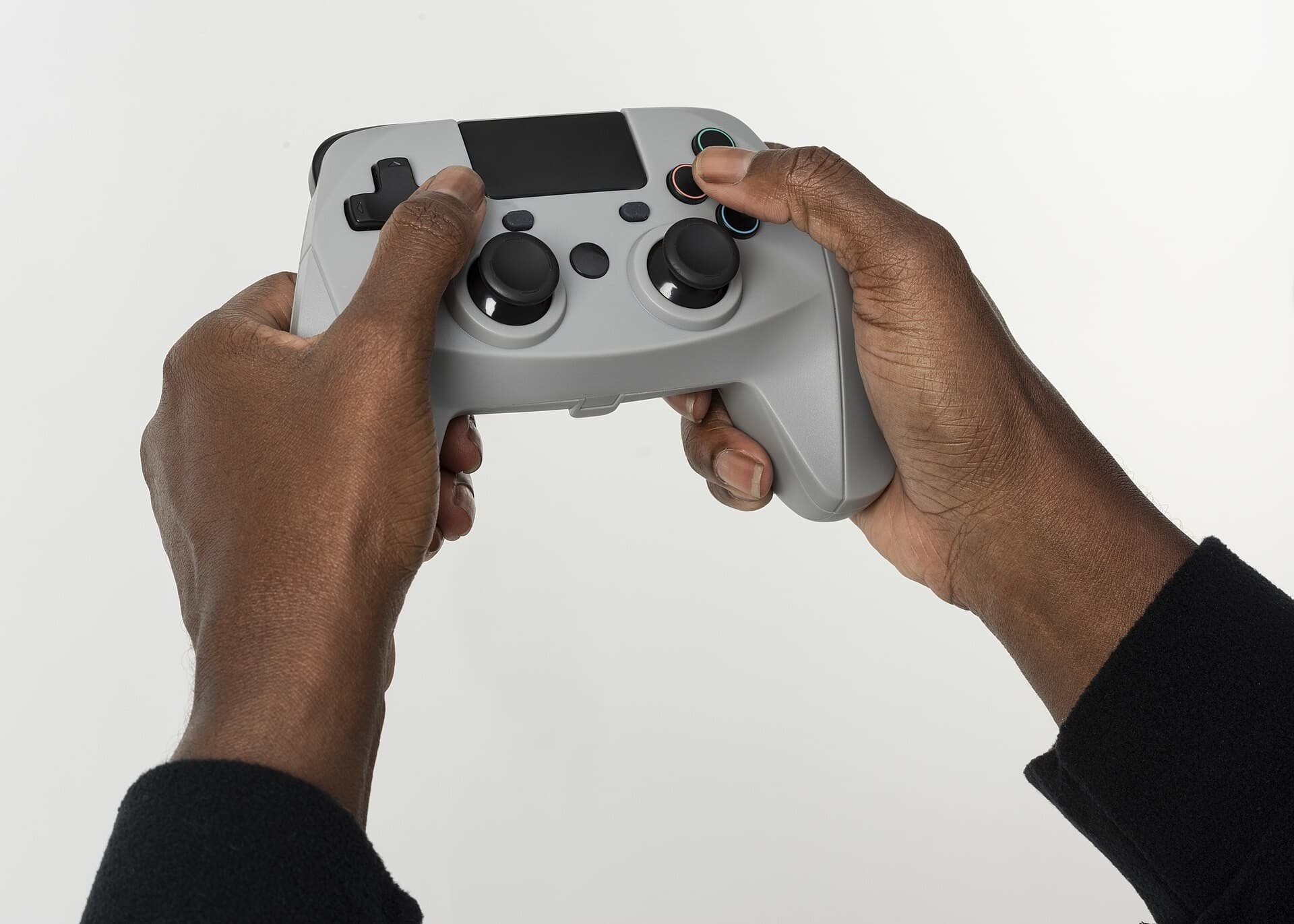
Photo: Matilda Wormwood / Pexels
You log off a solo game whenever you feel like it. You don't log off your guild's Thursday raid, even when you're tired, because six other people are counting on you to fill a slot. That difference is the least-discussed part of gaming psychology. Loot boxes and dopamine explain why a single session feels good. They don't explain why a player keeps a game installed for eight years. The answer, most of the time, is other people — the friend list, the clan tag, the identity built inside a community that only exists because everyone keeps showing up.
Key takeaways
- Richard Bartle's 1996 taxonomy splits players into Achievers, Explorers, Socializers, and Killers based on what they actually want from a game world
- Nick Yee's Daedalus Project surveyed over 40,000 players and found MMORPG motivation clusters into three factors — Achievement, Social, and Immersion — that predict very different play patterns
- Guild and clan membership functions as a commitment device: research on World of Warcraft found guild members report significantly less loneliness than non-members, and structured raid schedules create real social obligation
- Esports fandom operates on the same social identity mechanisms as traditional sports fandom — team identification, in-group favoritism, and "basking in reflected glory" after a win
- FOMO in gaming is often FOMO about people, not content — missing a raid, a season, or a squad session means missing a shared experience your friends had without you
- Parasocial bonds with streamers are a documented but asymmetric "one-and-a-half-sided" relationship, strengthened by direct chat interaction, and appear in similar form on both South Korean and US live-streaming platforms
- South Korea's PC bang culture and Western guild culture both produce heavy social gaming, but through opposite structures — shared physical space versus scheduled remote obligation — and only the latter reliably manufactures a specific sense of being needed
Why "why games are addictive" undersells the social layer
Most explanations of gaming's pull start and stop at reward psychology — variable ratio reinforcement, loot boxes, dopamine spikes on a rare drop. That mechanism is real and well documented, but it explains individual sessions, not why someone plays the same game for a decade. A companion piece on this site, Why Video Games Are Designed to Be Addictive, covers that reward-loop mechanism in depth, including B.F. Skinner's reinforcement schedules and the WHO's gaming disorder criteria. This article picks up where that one leaves off: what happens once a game stops being a solo activity and becomes a social one.
Multiplayer games add a second engine on top of the reward loop, and it's arguably the stronger one. Once other people are involved, the psychology shifts from "do I want to keep playing" to "do I want to let people down, miss what happened, or lose the identity I've built here." That's a fundamentally different kind of pull, closer to the psychology of team sports or club membership than to a slot machine.
Bartle's taxonomy: four reasons to log in that have nothing to do with loot
In 1996, game researcher Richard Bartle, who co-created the first multiplayer online game (a MUD, or "multi-user dungeon") in 1978, published a taxonomy after interviewing his own players about why they kept coming back. Their answers clustered into four types, mapped on two axes: whether a player prefers acting on the world or interacting with other players, and whether they prefer acting with others or on others (Wikipedia, "Bartle taxonomy of player types").
Achievers want points, status, and completion. Beating a difficult boss or hitting max level matters to them independent of whether anyone is watching. Explorers want to understand the game itself, mapping every corner of the world and every mechanic under the hood. Socializers play the game as a means to an end, and the end is other people. Winning and exploring matter less than the relationships built along the way. Killers, the smallest and most misunderstood group, want to act on other players directly, competing not for a score but for the visible experience of beating someone else.
Think of a Bartle-typed player group the way you'd think of a group of friends who go to the same gym. The Achiever is there to hit a new personal record. The Explorer wants to try every machine. The Socializer is there because their friends go on Tuesdays. The Killer wants to outlift the guy next to them. Same building, four completely different reasons for showing up, and none of them is really "about the equipment."
What is the Bartle taxonomy of player types?
Q: What is the Bartle taxonomy of player types? It's a 1996 framework from researcher Richard Bartle that classifies multiplayer game players into four categories — Achievers, Explorers, Socializers, and Killers — based on whether they prefer acting on the game world or on other players, and whether they prefer competing or cooperating. It remains one of the most cited frameworks in game design for understanding why different players stay engaged with the same game for entirely different reasons.
Nick Yee's three-factor model: what 40,000 players actually said
Bartle's taxonomy came from interviews with a relatively small player base in the 1990s. A decade later, researcher Nick Yee ran the Daedalus Project, a long-running survey that eventually collected data from more than 40,000 MMORPG players (nickyee.com, "The Daedalus Project"). Yee's factor analysis found that player motivations cluster into three overarching components, each built from several sub-motivations: Achievement (advancement, mechanics mastery, competition), Social (socializing, relationship-building, teamwork), and Immersion (role-playing, discovery, escapism, customization) (nickyee.com, "Motivations of Play in MMORPGs," PDF).
The finding that matters most for understanding gaming's pull is this: these three factors don't just describe preference, they predict behavior. Players who score high on the Social factor show different play patterns than Achievement-driven players — they log in at times that match their friends' schedules rather than when it's personally convenient, and they're far more resistant to quitting a game even after they've grown bored with its content, because quitting means leaving the group behind, not just the game.
That distinction explains a pattern every long-time MMO player recognizes: someone who says they "don't even like the game anymore" but keeps logging in anyway. They're not lying about disliking the content. The content stopped being the reason they play a long time ago.
Guilds and clans: how a game becomes a commitment device
A commitment device, in behavioral economics, is any structure that makes it costlier to back out of a plan than to follow through on it — a gym membership you paid for in advance, a savings account you can't touch without a penalty. Guilds and clans function the same way inside games, except the currency isn't money, it's social standing.
Research on World of Warcraft guilds by Dmitri Williams and Nicolas Ducheneaut found that structured raid schedules — logging in at a specific time, on a specific day, to fill a specific role your teammates are counting on — create genuine social obligation that has little to do with how much the player wants to play that particular night (SAGE Journals, Williams et al., "From Tree House to Barracks"). A follow-up study using the "investment model of commitment," a framework originally developed to study why people stay in romantic relationships even when unsatisfied, found the same variables — investment, satisfaction, and lack of alternatives — predict how committed a player feels to their guild (ScienceDirect, "Predicting guild commitment in World of Warcraft").
That's a striking transfer. The same psychological machinery that keeps someone in a relationship they're ambivalent about also keeps a raider logging in on a Thursday they'd rather skip. Missing raid doesn't just cost the player content, it costs the guild a body, and the guilt of letting seven other people down outweighs the mild inconvenience of showing up tired.
Not all guild passion produces the same outcome, though. A study of 300 frequent WoW players distinguished between harmonious passion (playing because you want to) and obsessive passion (playing because you feel you have to). Harmonious passion built social capital that genuinely reduced loneliness. Obsessive passion also built social ties, but those ties didn't reduce loneliness at all — the connection was there, but it wasn't nourishing (PMC, "How Passion for Playing World of Warcraft Predicts In-Game Social Capital, Loneliness, and Wellbeing"). The guild that makes you feel worse for missing it is not functioning the same way as the guild you look forward to.
| Mechanism | What it does | Real-world analogue | Research source |
|---|---|---|---|
| Raid scheduling | Fixed time commitment tied to a role others depend on | Team sports practice, shift work | Williams & Ducheneaut, Games and Culture, 2006 |
| Guild investment model | Satisfaction + sunk investment + lack of alternatives predicts commitment | Relationship commitment theory | Computers in Human Behavior, 2014 |
| Harmonious vs. obsessive passion | Chosen engagement reduces loneliness; compelled engagement does not | Voluntary vs. pressured social obligations | PMC, Frontiers in Psychology, 2020 |
| Voice comms + known players | Frequent VoIP contact with real-life-adjacent friends lowers loneliness most | Regular phone calls with close friends | Computers in Human Behavior, 2015 |
Table: How structured multiplayer systems turn a game into a social commitment, and what research says about when that commitment helps versus strains players.
Why do people keep playing games they say they don't enjoy anymore?
Q: Why do people keep playing games they claim to no longer enjoy? Because the game's content and the game's social structure became separate reasons to log in over time, and the social one often outlasts the first. Research on guild commitment shows satisfaction with the game itself is only one input; investment already made and a lack of comparable social alternatives elsewhere both independently predict continued play, the same pattern seen in commitment research on human relationships.
Esports fandom: the same psychology as a football rivalry
Esports built an entirely separate social layer on top of gaming: spectatorship. Newzoo's 2024 mid-year report put the global esports audience at roughly 620 million unique viewers, a figure that includes both dedicated enthusiasts and casual occasional viewers (market research summarized via industry reporting). The League of Legends World Championship alone drew a peak of roughly 6.9 million concurrent viewers in 2024, making it the most-watched esports event in the world that year.
The psychology behind that audience isn't unique to gaming — it's the same social identity theory that explains why a stranger in your team's jersey feels like an ally at a stadium. Social identity theory holds that people derive real self-esteem from membership in a group, which produces in-group favoritism and two well-documented behavioral patterns: BIRGing (basking in reflected glory, associating yourself more strongly with a team after it wins) and CORFing (cutting off reflected failure, distancing yourself after a loss) (PMC, "Is social identity theory enough to cover sports fans' behavior?"). Research applying this framework specifically to esports has found that stronger fan identification predicts more fan engagement behavior — watching more content, buying merchandise, defending the team online — mirroring findings from traditional sports fandom almost exactly (ScienceDirect, "An exploration of esports fan identity, engagement practices, and motives").
Think of it like a hometown baseball team you've never met a single player from, and never will. You still say "we won" after a game you didn't play in. That's identity fusion, not literal participation, and esports fans do the same thing with a League of Legends roster they've watched scrim on stream for three years. One study comparing esports and traditional sports fan discourse found esports fans lean more analytical and player-centric than traditional fans, who show a broader emotional range and stronger team-level identity — a difference in flavor, not in underlying mechanism (research summarized in the ResearchGate esports fandom paper above).
Do esports fans experience fandom the same way traditional sports fans do?
Q: Is esports fandom psychologically the same as traditional sports fandom? Largely yes. Both rely on social identity theory — fans derive self-esteem from group membership, favor their in-group, and show BIRGing and CORFing behavior after wins and losses. Studies find esports fans skew slightly more analytical and player-focused rather than team-focused, but the identification-to-engagement pathway is essentially the same mechanism documented in decades of traditional sports fan research.
Parasocial pull: why watching a streamer feels like belonging to something
Esports fandom explains why people watch competitive matches. It doesn't fully explain the much larger, stranger phenomenon of watching one person play a game for three hours a night, most nights, for years. That's the world of Twitch and YouTube gaming, and the psychology driving it is a parasocial relationship — a one-sided emotional bond a viewer forms with a media figure who doesn't know they exist, a concept first named by researchers Donald Horton and Richard Wohl in 1956 to describe how television audiences related to on-screen personalities.
Streaming complicates that original definition, though, because it isn't fully one-sided. Researchers studying Twitch describe it as a "one-and-a-half-sided parasocial relationship": a streamer can react to a specific viewer's chat message, use their name, or thank them for a donation, which creates a flicker of real reciprocity inside what is still, structurally, a broadcast to thousands of people at once (ScienceDirect, "The one-and-a-half sided parasocial relationship: The curious case of live streaming"). A study of Twitch viewers found that the more a streamer directly addressed individual viewers, and the more the streamer reacted to chat in real time, the stronger the viewer's sense of parasocial connection became (SAGE Journals / Cyberpsychology, Behavior, and Social Networking, Wulf, Schneider & Queck, "Exploring Viewers' Experiences of Parasocial Interactions With Videogame Streamers on Twitch"). The same research also found that viewers who felt more attitude similarity with a streamer, essentially feeling like the streamer was "one of them," reported stronger parasocial bonds regardless of how famous the streamer was.
Comparative research suggests this isn't a Western-platform quirk. A study comparing live-streaming audiences in South Korea and the United States found parasocial relationships with streamers form through broadly similar mechanisms in both countries, even though the streaming platforms and cultural context differ considerably (Asian Journal for Public Opinion Research, "Parasocial Relationships With Live Streamers: Evidence From South Korea and the United States"). The bond isn't really about the specific platform; it's about the illusion of a personal, ongoing relationship built from repeated, low-effort contact.
That's worth comparing to a regular at a neighborhood bar who knows the bartender's name, tips well, and feels like a friendship exists, even though the bartender is being professionally warm to dozens of other regulars the same way. The viewer's side of the relationship is completely genuine. The streamer's side is a one-to-many performance that happens to include enough individual attention to feel one-to-one. Chat culture, emotes, subscriber badges, and inside jokes specific to a channel all function like the guild tag discussed earlier: they mark you as part of a community with its own identity, history, and shared references, except the community is organized around a person instead of a raid team.
This matters for the addiction question specifically because parasocial engagement adds a pull that has nothing to do with the game being played. A viewer can watch a streamer play a title they have zero interest in playing themselves, purely because the community around that channel, the running jokes, the regulars in chat, the sense of "being there" for a moment that might become a clip, is the actual draw. Twitch and YouTube gaming numbers reflect that community layer: Twitch alone reported billions of hours watched annually across its platform, a figure sustained less by any single game's popularity than by loyalty to specific channels and communities that outlast whatever game is currently on screen.
Is watching a game streamer a form of social connection or a substitute for one?
Q: Is watching a streamer on Twitch a real social connection or a substitute for one? Research describes it as a genuine but asymmetric bond. The viewer's emotional experience is real and can provide comfort, companionship, and a sense of community, especially through chat culture with other regular viewers. But the core relationship with the streamer themselves is one-sided by structure. Studies find viewers who also interact with other viewers in chat, not just the streamer, report the strongest overall sense of belonging, suggesting the community around a channel matters as much as the parasocial bond with the person hosting it.
Cross-cultural differences: PC bang culture versus the Western guild
Almost all of the research cited so far, Bartle, Yee, the WoW guild studies, comes out of a Western or Western-platform context, where multiplayer gaming's social center of gravity is the guild, clan, or friend group logging in from separate homes. That's not the only model, and looking at an alternative shows how much of "gaming addiction" is really about the surrounding social infrastructure rather than the game itself.
South Korea built its gaming culture around a different physical unit entirely: the PC bang (PC room), a pay-by-the-hour internet café that proliferated through the country starting in the late 1990s. Academic accounts describe PC bangs as having become central to Korean gaming almost by historical accident, when the 1997 Asian financial crisis left South Korea with cheap broadband infrastructure and a wave of small entrepreneurs opening computer cafés, right as real-time strategy games like StarCraft became a national phenomenon (Game Studies, "Before the Bang: The Rise, Fall and Legacy of the Korean Arcade"). Unlike a Western guild, which mostly coordinates people who are physically apart, the PC bang put players in the same room, shoulder to shoulder, generating a social experience closer to a sports bar than to an online forum.
Academic descriptions of PC bang culture note that these spaces function as far more than places to play: research on Korean college students found PC bangs serve as venues to "meet friends, have dates, or blow off steam from a demanding school day," blending gaming, socializing, and even courtship into a single physical destination (ResearchGate, "PC-Bang (Room) Culture: A Study of Korean College Students' Private and Public Use of Computers and the Internet"). PC bangs were also the incubator for South Korea's professional esports scene, which predates Western esports by roughly a decade and helped normalize competitive gaming as a mainstream career path there long before it was taken seriously elsewhere.
Anthropological research on Korean digital gaming culture goes a step further and identifies two distinct social types produced by this environment: professional gamers, whose play is fast, public, and performance-oriented, built for an audience, and ordinary PC bang regulars, whose play tends to be slower, more repetitive, and, notably, often more socially isolated despite happening in a crowded public room (Cambridge Core, "Chronotopes and Social Types in South Korean Digital Gaming"). That finding complicates a simple East-versus-West story. Being physically surrounded by other gamers doesn't automatically produce the belonging that a Western guild's scheduled raid does; it can just as easily produce parallel play among strangers who never speak to each other.
The contrast is useful precisely because it isolates what actually drives the addictive social pull. A Western guild member and a Korean PC bang regular can both be logging comparable hours, but the guild member's obligation is explicitly relational, a raid slot a specific person is expected to fill, while a PC bang regular's routine can be purely spatial, showing up to the same physical seat out of habit with no one specifically expecting them. The research pattern from the WoW guild studies holds again here: it's the structure of obligation and belonging, chosen and specific versus ambient and anonymous, that predicts whether the social layer of gaming nourishes a player or just occupies a room next to other people doing the same thing alone.
How does Korean PC bang gaming culture differ from Western guild-based gaming culture?
Q: How is South Korea's PC bang gaming culture different from Western guild culture? PC bangs are physical, pay-by-the-hour internet cafés that grew out of South Korea's post-1997 broadband boom and became social hubs for meeting friends, dating, and playing in shared public spaces, while Western guild culture is built around remote coordination between players who are rarely in the same room. Academic research finds PC bang culture produces two distinct social types, professional players performing for an audience and often-isolated casual regulars, showing that physical proximity to other gamers doesn't guarantee the same relational obligation a scheduled guild raid creates.
FOMO in gaming: usually about people, not content
Fear of missing out gets described in game design almost entirely as a monetization tool — a time-limited skin, an expiring battle pass, a seasonal event that won't come back. That framing misses where most of the emotional weight actually sits. The anxiety isn't really about the cosmetic item disappearing. It's about your friends experiencing something together while you weren't there.
Ask any player who skipped a big raid night, a guild's first server-first kill, or a squad's ranked push and missed it what actually stung. It's rarely "I didn't get the mount." It's "everyone else was there and I wasn't, and now there's an inside joke, a story, a shared memory that I'm outside of." Social FOMO predates gaming by millennia — it's the same feeling that makes people show up to a party they're exhausted for, because not showing up costs more socially than the tiredness costs personally. Games have simply built systems, seasonal content, scheduled events, limited-run community moments, that make that ordinary social anxiety fire on a predictable schedule.
This is also why solo players tend to describe FOMO very differently from socially embedded players. A solo player missing a limited-time item feels a mild loss of opportunity. A guild member missing their raid's one shot at a boss before the tier resets feels like they let people down. Same game system, very different psychological weight, because one version has a social cost attached and the other doesn't.
Where social gaming psychology gets misread
The most common misreading of all this is treating "social" gaming as automatically healthier than "solo" gaming, on the theory that connecting with people beats staring at a screen alone. The research doesn't support that simple version. A study distinguishing harmonious from obsessive passion in WoW guilds found that obsessive social ties, ones built from compulsion rather than choice, produced no loneliness benefit at all, despite involving just as much social contact (PMC, 2020, cited above). The social layer of a game can be protective or corrosive depending entirely on whether the player experiences it as chosen community or obligated performance.
A second common misreading treats esports fandom as a lesser, more parasocial version of traditional sports fandom, implying the emotional investment isn't "real" because the athletes are gamers rather than football players. The social identity research doesn't support a meaningful distinction there either. The mechanism producing loyalty, in-group defense, and post-win euphoria is the same regardless of whether the jersey belongs to a soccer club or an esports org; the object of identification differs, the psychology underneath doesn't.
A third misreading assumes Bartle's four types and Yee's three factors are competing frameworks, when they're better understood as different resolutions on the same picture. Bartle's Killer type, for instance, sits mostly inside what Yee's model would call low-Social, high-Achievement/Competition motivation, expressed specifically through direct player-versus-player conflict rather than cooperative progression. The frameworks describe the same underlying variation in why people play, just measured with different tools twenty years apart.
Frequently asked questions
What is the difference between gaming addiction and healthy social gaming engagement?
Q: What's the difference between gaming addiction and healthy social gaming engagement? The research reviewed here points to obligation type, not hours played, as the clearest dividing line. Players whose in-game social ties are chosen, a guild they wanted to join, friends they look forward to seeing, show reduced loneliness and genuine wellbeing benefits. Players whose social ties feel obligatory or compelled report the same amount of social contact without the loneliness reduction, which is the pattern researchers associate more closely with problematic engagement.
Why do people form real emotional bonds with people they've never met on Twitch?
Q: Why do people form real emotional bonds with streamers they've never met? Parasocial relationship formation doesn't require the other person to know you exist. It requires repeated, low-effort exposure that feels personal, tone of voice, direct address, reactions to your specific chat messages, which the brain processes similarly to the early stages of an actual friendship. Twitch research finds this effect strengthens specifically when a streamer interacts with individual viewers by name, which is why smaller, more interactive streamers often generate more intense parasocial loyalty than larger ones.
Does playing video games alone count as social gaming?
Q: Does playing video games alone still count as "social gaming" if the player is part of an online community around the game? Often yes, in the sense that matters psychologically. A player who solos a game but actively follows its Discord server, its subreddit, or a streamer's community is still drawing on the identity and belonging benefits documented in guild and fandom research, even without playing alongside anyone in real time. The commitment-device and loneliness-reduction effects tend to be strongest with direct, synchronous interaction, though, so asynchronous community involvement is a real but generally weaker version of the same mechanism.
The takeaway
The strongest force keeping most long-term players logged into a game isn't the next loot drop, it's the guild, the squad, the fandom, and the identity built inside them. Bartle's taxonomy and Yee's factor model both point to the same conclusion from different data sets: for a large share of players, the game world is a backdrop and the social structure is the actual product. That's not a design trick to be suspicious of by default — it's the same social machinery that makes team sports, clubs, and workplaces meaningful, running on a different platform. The useful question isn't whether your gaming is social, it's whether the social ties inside it feel chosen or obligated, because the research says that distinction, more than any other single variable, determines whether the connection helps you or quietly drains you.
Read next:
Follow new articles
Add SciHub101 to your feed reader to see new science and technology stories.
About the Author
SciHub101 is an independent science and technology publication founded and edited by Buğra Sözeri, a software engineer and app developer based in Türkiye. AI tools assist with drafting and research. Source documentation in the existing archive is uneven, and articles are being reviewed and corrected. The Editorial Team byline identifies editorial responsibility; it does not certify specialist or independent human review. Where we compare products, anything built by our own team is labelled as such — see the editorial guidelines and About page for how corrections and disclosures work.
Related Articles
Among Us: The Unexpected Phenomenon of Social Deduction
Among Us became a billion-player phenomenon by combining simple mechanics with social deduction. One of you is an imposter—who do you trust?
Machine Learning and Procedural Level Generation: Infinite Worlds by Design
Machine learning is transforming procedural generation from random noise into intelligent design, creating game worlds that feel handcrafted yet never repeat.
Why Video Games Are Designed to Be Addictive: The Psychology Behind the Loop
Video games are engineered to keep you playing. The reward loops, progress systems, and social mechanics in modern games aren't accidents — they're the result of decades of research into human motivation psychology. Understanding them changes how you play.
Complete Gaming Guide 2026 — Technology, Design, Esports, and Psychology
The complete guide to gaming in 2026: how game engines work, gaming hardware, esports, game design psychology, industry trends, and what makes games engaging and addictive.

How Game Difficulty Works: The Science of Challenge and Flow
The best games put you in a state of 'flow' — fully absorbed, challenged but not overwhelmed. Getting difficulty right is one of game design's hardest problems. Too easy and players are bored; too hard and they quit. Here's the psychology and design behind perfect challenge.
How Video Game Physics Engines Work: Simulating Motion
A physics engine running a single frame makes thousands of calculations to move objects, detect collisions, and keep the simulation stable. Understanding how this works reveals why games feel the way they do — and why physics bugs happen.