Why Video Games Are Designed to Be Addictive: The Psychology Behind the Loop

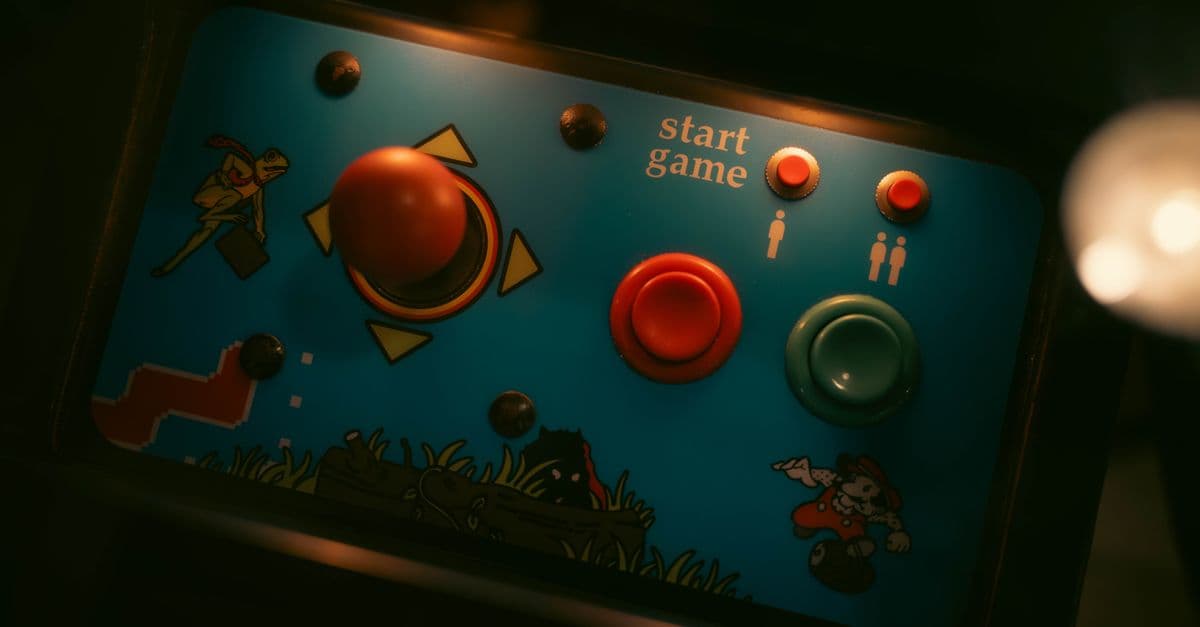
Photo: Eren Li / Pexels
Fortnite generated an estimated $3.5 billion to $6.2 billion in 2023 alone from a game that costs nothing to download (Udonis, Fortnite Statistics; Sacra, Epic Games revenue). World of Warcraft players have logged tens of thousands of hours across two decades. Mobile games extract hundreds of dollars from people who wouldn't call themselves "gamers." None of that is an accident. It's the product of deliberate psychological engineering, built on research that predates video games by half a century.
Modern game design draws directly from behavioural psychology — particularly B.F. Skinner's 1950s work on reinforcement schedules — and from neuroscience research on dopamine and reward prediction, most famously Wolfram Schultz's monkey experiments in the 1990s. Understanding how games are built to engage, and sometimes to compel, you is both genuinely interesting science and useful self-knowledge. This piece walks through the actual mechanisms, the research behind them, the industry's own defense of the practices, and where regulators have drawn the line.
The core loop: the engine under every game
Every engaging game, from Tetris to Elden Ring to Candy Crush, runs on a core loop — a repeating cycle with four stages: a challenge is presented, the player takes action, the game delivers feedback (a reward or a setback), and a new challenge follows. Strip away the graphics, story, and marketing, and this loop is what's actually being designed. Everything else in the game exists to make the loop feel good enough that you complete it again.
The loop works because human brains are prediction machines. We form an expectation, take action, and compare the outcome against the expectation. That comparison itself is neurologically rewarding, independent of whether the outcome was good. Wolfram Schultz's landmark primate research showed that dopamine neurons don't fire strongest when a reward arrives as expected — they fire strongest when a reward arrives better than expected, and they actively dip below baseline when an expected reward doesn't show up (Schultz, "Dopamine reward prediction error coding," Dialogues in Clinical Neuroscience). This is the reward prediction error model, and it is the neurological substrate that every reward-loop designer is, whether they know the neuroscience or not, building against.
Loop frequency is a deliberate design lever. Mobile games often compress the core loop to 10 to 30 seconds so a player gets dozens of reward moments per minute of play. Console RPGs run a slower outer loop (character progression over weeks) layered on top of a fast inner loop (moment-to-moment combat, which itself might resolve in seconds). Designers choose loop length based on the platform and the intended session length — a subway commuter opening a mobile game for four minutes needs a different loop cadence than someone settling in for a three-hour raid.
Nesting multiplies engagement. In Diablo-style action RPGs, the inner loop is a single combat encounter (seconds), the mid loop is a dungeon run (minutes), the outer loop is character levelling (hours), and the meta loop is the hunt for best-in-slot gear (weeks or months). A player can find a satisfying stopping point — or a reason to keep going — at almost any level of that nesting, which is precisely why "I'll just finish this dungeon" so reliably becomes another two hours.
Variable ratio reinforcement: gaming's slot-machine mechanism
In the 1950s, B.F. Skinner ran a series of experiments on operant conditioning that produced one of the most replicated findings in behavioural psychology: reward delivered on a variable ratio schedule — where reinforcement arrives unpredictably, but on average after some number of responses — produces the highest, most persistent, and most extinction-resistant response rate of any reinforcement pattern tested, in every species Skinner studied (Lumen Learning, "Reinforcement Schedules").
Compare the two basic schedules directly, because the difference explains a lot about why loot boxes work and daily login bonuses mostly don't:
| Schedule type | How it works | Behavioural effect | Game example |
|---|---|---|---|
| Fixed ratio | Reward after exactly N actions (e.g., every 10th kill) | High response rate, but a pause immediately after each reward | Daily login streak, "collect 10 items" quest |
| Fixed interval | Reward after a set time period regardless of action count | Response rate increases as the deadline approaches, then drops | Weekly reset timers, energy regeneration |
| Variable ratio | Reward after an unpredictable number of actions, random on average | Highest and steadiest response rate; extremely resistant to extinction | Loot box drops, gacha pulls, critical hit chance |
| Variable interval | Reward after an unpredictable time period | Steady but moderate response rate | Random world events, surprise bonus spawns |
Table: Skinner's reinforcement schedules and their in-game equivalents. Variable ratio is the schedule most closely associated with problem gambling behaviour (Simply Psychology, "Schedules of Reinforcement").
Fixed-ratio schedules create a natural resting point right after the reward — the organism, animal or human, pauses because it just got what it wanted and the next reward is predictably far away. Variable-ratio schedules eliminate that resting point entirely. Because the very next action might be the one that pays off, there's no rational moment to stop. Skinner himself drew the gambling parallel explicitly, noting that if an operator can't get a patron to hand over money for nothing, "it may achieve the same effect by returning part of the patron's money on a variable-ratio schedule."
This is, functionally and mathematically, how a loot box operates. You spend currency to open a box. Inside, a common item might have a 79% probability, an uncommon item a 20% probability, and a rare item a 1% probability. The percentages are fixed by the developer, but the outcome on any single open is unpredictable. Layer on a dramatic opening animation, a rising musical sting, and a flash of light for rare pulls, and you've built a system that is architecturally indistinguishable from a slot machine — a comparison researchers and regulators have made directly, not as a metaphor (PLOS One, "Video game loot boxes are linked to problem gambling").
Gacha games — a genre that originated in Japan and dominates much of the Japanese and Korean mobile market — are essentially variable-ratio reward systems with a thin layer of game wrapped around them. Players spend premium currency to "pull" characters or items from a randomized pool, often with published rates as low as 0.6% for the rarest characters. Genshin Impact, one of the highest-grossing mobile games worldwide, runs almost entirely on this single mechanic layered under an open-world action RPG.
Are loot boxes gambling?
Q: Are loot boxes legally classified as gambling? It depends on the jurisdiction and how the box is structured. Belgium's Gaming Commission ruled in 2018 that loot boxes meeting the legal definition of a game of chance (a bet, a chance element, and a prize of value) count as gambling, and several major publishers pulled loot boxes from Belgian releases in response (NYU JIPEL, "Simple Fun or Gambling?"). The Dutch Gaming Authority reached a similar conclusion in April 2018 and fined EA €10 million over FIFA Ultimate Team packs in 2020, but a Dutch appellate court overturned that fine in 2022, ruling that Ultimate Team packs are part of a broader "game of skill" rather than a standalone game of chance (Video Games Chronicle, "Dutch court overrules decision to fine EA"). A 2023 study found that despite Belgium's ban, 82% of the 100 highest-grossing iPhone games available in Belgium still generated revenue through randomised monetisation, indicating weak enforcement rather than an absence of the mechanic (Breaking Ban, Collabra: Psychology, UC Press). Most jurisdictions, including the United States and the United Kingdom, have not classified loot boxes as gambling, though the UK government has pushed publishers toward voluntary age-rating and spend-transparency measures.
Progress indicators: the near-completion effect
XP bars, level-up meters, and achievement checklists all exploit a well-documented finding sometimes called the goal gradient effect: motivation and effort increase as a goal draws closer, not as it recedes. The classic demonstration comes from loyalty-card studies — people redeem punch cards noticeably faster in the final few stamps than in the first few, even when the total number of required purchases is identical.
Games exploit the goal gradient effect systematically:
- XP bars stay visible on-screen at nearly all times, keeping the "distance to next reward" constantly in view
- Level-ups are paced to happen often enough that the player rarely goes long without a visible near-completion state
- Save points and natural stopping points are placed just before a level-up rather than after it, so quitting always means walking away from something almost finished
- "Prestige" or rebirth systems deliberately reset visible progress to zero, restarting the entire motivational cycle for players who've maxed out
Achievement and completionist systems — Steam achievements, Xbox Gamerscore, PlayStation trophies — layer a second, parallel progress system on top of the core game. For players high in conscientiousness or with perfectionistic tendencies, an incomplete achievement list produces a small, persistent itch that only 100% completion relieves. Pokémon's "Gotta Catch 'Em All" tagline, dating to 1996, is the same mechanic in its purest form: an explicit completion goal that the franchise has kept perpetually unreachable by adding new Pokémon with every generation, currently well over 1,000 species across the series.
What is the goal gradient effect, and how do games use it?
Q: What is the goal gradient effect? It's the finding that motivation intensifies as a goal gets closer, first documented in animal maze-running studies and later confirmed in human loyalty-program behaviour. Games apply it by keeping progress bars constantly visible, pacing level-ups frequently, and positioning stopping points just before a milestone rather than after one, so quitting always feels like it costs something.
Social mechanics: turning play into status anxiety
Single-player engagement runs almost entirely on intrinsic motivation — mastery, curiosity, narrative interest. Multiplayer games add a second, often more powerful motivator: social status.
Leaderboards activate a different psychological circuit than solo progress does. Status within a social hierarchy is one of the oldest and most robust human motivators, and seeing your name sit at rank 47 when rank 46 looks reachable creates a pull that pure XP accumulation rarely matches on its own.
Guilds, clans, and social obligation turn a game into a commitment device. Massively multiplayer games discovered early that social accountability dramatically outperforms solo motivation for retention. If your raid group needs eight people online on Thursday night, showing up stops being about whether you personally feel like playing and becomes about not letting six other people down. Players who would have quit a single-player game weeks earlier keep logging into an MMO purely out of social obligation.
FOMO (Fear of Missing Out) is engineered through time-limited events, expiring battle passes, and seasonal-only cosmetics. These create real anxiety about permanently missing content, and that anxiety activates before the player has consciously decided the item matters to them. Fortnite's battle pass model, which popularized this structure industry-wide after its 2018 launch, ties dozens of unlockable items to a season that expires in roughly 10 weeks, converting a purchase decision into a race against a clock.
Status items — rare skins, limited mounts, "legacy" badges that mark early or veteran players — function as digital status symbols. Their scarcity is deliberately managed by the developer to preserve their signalling value; a rare skin that everyone owns stops being rare and stops driving spend. The desire to visibly hold status, not the item's functional value, is what drives a lot of real-money spending in free-to-play economies.
Do skill-based competitive games use the same psychology?
Q: Do skill-based games like chess or StarCraft rely on the same reward mechanics as loot-box games? Yes, but with a different weighting. Competitive skill games lean heavily on mastery motivation — the intrinsic satisfaction of visibly improving — and much less on variable-ratio randomness. Ranked ladders still use goal-gradient and social-status mechanics (rank tiers, seasonal resets, leaderboard position), but the core reward is skill mastery itself, not a random drop. They're still carefully engineered for engagement, just through different psychological levers than a gacha game uses.
Session pacing and the "just one more" effect
"One more level" and "one more match" rank among the most universal experiences in gaming, and that universality is a design outcome, not a coincidence.
Session architecture deliberately paces reward delivery to create false stopping points just ahead of the player's current position. Complete a quest, and the reward is a level-up. The level-up unlocks a new ability. The new ability suggests a build change. Testing the build change requires one more run. Each reward is engineered to open a new, slightly more tempting hook rather than closing the loop cleanly.
Cliffhangers and unresolved tension are common at the end of narrative chapters or extraction-style sessions. The Zeigarnik effect — the idea that people recall unfinished tasks better than completed ones — was long cited as the mechanism behind this pull. It's worth being precise here: a 2025 systematic review and meta-analysis found no consistent memory advantage for unfinished tasks specifically, though it did confirm a strong, replicable tendency to want to resume an interrupted task (the related Ovsiankina effect) (Nature, "Interruption, recall and resumption: a meta-analysis of the Zeigarnik and Ovsiankina effects"). In other words, the "I have to see how that ends" pull that keeps you playing after a cliffhanger is real and well-supported; the specific claim that you remember unfinished tasks better is weaker evidence than the pop-psychology version suggests.
Daily and weekly quest systems train players into a habit loop the same way checking email or social media becomes automatic. Log in for a daily bonus, complete a quest that resets every 24 hours, chase a weekly challenge that expires Sunday night — the game stops competing for discretionary leisure time and starts occupying a fixed slot in the daily routine, the same psychological territory as a habit rather than a choice.
Flow state: the difficulty side of the equation
Reward loops aren't the whole story. Psychologist Mihaly Csikszentmihalyi's flow theory, developed through experimental work in the 1970s, describes a state of full immersion that occurs when the challenge of a task is closely matched to a person's skill level — hard enough to require focus, easy enough not to produce anxiety (PositivePsychology.com, "Mihály Csíkszentmihályi: The Father of Flow"). Flow requires clear goals, immediate feedback, and a sense of control, all of which good game design supplies as a matter of course.
Difficulty curves and adaptive difficulty systems exist specifically to keep players inside this challenge-skill "flow channel." A first-person shooter study found that players reported the highest enjoyment specifically when the game felt enjoyably challenging rather than simply easy or simply hard (NCBI, "Being enjoyably challenged is the key to an enjoyable gaming experience"). This is a separate mechanism from variable-ratio reward, and it's a healthier one: flow is engagement through genuine skill development, not through randomized reward uncertainty. A well-designed game typically layers both, but the presence of flow-based challenge design doesn't excuse or offset exploitative reward randomness sitting alongside it in the same product.
Where does engagement become harm?
Most game engagement is healthy. Games provide structured challenge, skill development, social connection, and entertainment, and the psychological mechanisms described above aren't inherently harmful on their own — engagement and compulsive use exist on a spectrum, and the vast majority of players never cross into the harmful end of it.
The World Health Organization formally adopted Gaming Disorder into the ICD-11 diagnostic manual at the 72nd World Health Assembly in May 2019, with the classification taking effect in January 2022 (WHO, "Addictive behaviours: Gaming disorder"). The diagnostic pattern requires impaired control over gaming, increasing priority given to gaming over other life interests and daily activities, and continuation or escalation of gaming despite negative consequences, sustained for at least 12 months (or less, if symptoms are severe).
Prevalence estimates vary substantially by diagnostic criteria and region. A recent meta-analysis pooling multiple studies found an overall Internet Gaming Disorder prevalence of roughly 6.7% (95% CI: 5.7–7.7%), with notable regional variation — China's reported rate, at 11.7%, was among the highest of any country studied, while other regions clustered lower (MDPI, "Meta-Analysis of Internet Gaming Disorder Prevalence"). Broader estimates across both DSM-5 and ICD-11 criteria put global prevalence somewhere in the 3% to 6% range. Researchers caution that many underlying studies rely on non-representative samples and short screening questionnaires, so these figures should be read as estimates with real uncertainty, not precise counts.
Risk factors identified across the literature include pre-existing depression or anxiety, social isolation, and younger age — adolescents show consistently higher vulnerability to compulsive gaming patterns than adults. The mechanics most closely tied to exploitative outcomes — variable-ratio loot boxes, social-status-driven spend pressure, and time-limited FOMO events — disproportionately affect these same vulnerable groups, which is the core argument regulators in Belgium, the Netherlands, and several other countries have made in pushing for restrictions on randomized monetisation specifically, rather than on game design or difficulty mechanics generally.
Frequently asked questions
Q: Is gaming addiction real? The WHO recognizes Gaming Disorder as a diagnosable condition under ICD-11, effective since January 2022, but debate continues in the research community over diagnostic thresholds and how the condition should be distinguished from heavy but non-impairing use. The core behaviours the diagnosis targets — loss of control, functional impairment in daily life, and continued use despite clear harm — are documented, real phenomena in a measurable minority of players. Whether "addiction" is the precise clinical framing, versus a compulsive-behaviour disorder more broadly, remains an active academic discussion.
Q: Are loot boxes gambling? They meet the functional definition used in several gambling laws — payment, a chance element, and a prize of value — but formal legal classification varies widely by country. Belgium and the Netherlands both ruled loot boxes met their gambling definitions in 2018, though enforcement has been inconsistent since, and a 2022 Dutch court ruling overturned a specific fine against EA on narrower technical grounds. Most jurisdictions, including the US and UK, have not classified loot boxes as gambling outright.
Q: Do violent video games cause real-world violence? Decades of research have produced inconsistent and generally weak findings. Meta-analyses tend to find small, short-term increases in aggressive thoughts after playing violent games, but not evidence of increased real-world violent behaviour. Countries with very high per-capita video game engagement, such as South Korea and Japan, also rank among the world's lowest for violent crime, which undercuts the simplest version of the causal claim.
Q: Do skill-based games like chess use the same addictive psychology as loot-box games? Yes, but weighted differently. Skill-based competitive games rely primarily on mastery motivation and goal-gradient progress (rank tiers, seasonal ladders) rather than variable-ratio randomness. They're still carefully engineered for retention, just through mechanisms that reward improving performance rather than random chance.
Q: How do free-to-play games make money if the game itself is free? Primarily through cosmetic purchases, battle passes, convenience purchases (energy refills, time-skips), and loot boxes or gacha pulls. Industry data consistently shows a "whale" pattern, where a small percentage of paying players account for a large majority of total revenue, while most free-to-play users spend nothing at all across their time with the game.
Q: What is the difference between flow state and a reward loop? Flow is engagement produced by a well-matched challenge-to-skill ratio, drawing on intrinsic mastery motivation and producing genuine satisfaction from improving. A reward loop is engagement produced by external, often randomized, reinforcement — XP, loot, status items — independent of whether real skill is involved. Well-designed games typically use both, but flow-based engagement is generally considered the healthier of the two mechanisms.
Q: Why do loot boxes feel exciting even when you know the odds are low? Because the dopamine response to an uncertain reward peaks during anticipation, not at the moment the outcome is revealed. Wolfram Schultz's dopamine-neuron research showed that reward-predicting cues trigger a stronger neural response than the reward itself once it becomes predictable, which is exactly why loot box openings are engineered around a drawn-out reveal animation rather than an instant result.
Q: Can children be more vulnerable to these mechanics than adults? Yes. Adolescents show measurably higher vulnerability to compulsive gaming patterns in the research literature, and regulators in several countries have specifically cited protection of minors as a rationale for restricting loot box sales or requiring spend caps and parental controls in games popular with younger players.
Q: Is it possible to enjoy games with these mechanics without developing a problem? Yes, and it's the norm rather than the exception. Prevalence estimates for diagnosable Gaming Disorder cluster in the single digits globally, meaning the large majority of players who encounter variable-ratio rewards, progress bars, and social pressure mechanics never develop a compulsive relationship with gaming. The mechanisms increase engagement broadly, but clinical harm concentrates in a smaller, identifiable risk group.
The takeaway
Video games are as much an engineering discipline as a creative one, and the engineering target is attention: designers deliberately borrow variable-ratio reinforcement from Skinner's operant conditioning research, goal-gradient progress cues from loyalty-program psychology, and social-status mechanics from basic human hierarchy instincts, then combine them with genuinely rewarding flow-state challenge design. None of these tools are secret, and none of them are inherently exploitative in isolation. The dividing line that regulators, researchers, and players themselves are still drawing is between engagement that serves the player's own goals and engagement engineered mainly to extract time or money regardless of whether the player benefits. Recognizing the mechanism doesn't make a good game less fun. It just means you're choosing to keep playing rather than being quietly steered into it.
Read next:
Follow new articles
Add SciHub101 to your feed reader to see new science and technology stories.
About the Author
SciHub101 is an independent science and technology publication founded and edited by Buğra Sözeri, a software engineer and app developer based in Türkiye. AI tools assist with drafting and research. Source documentation in the existing archive is uneven, and articles are being reviewed and corrected. The Editorial Team byline identifies editorial responsibility; it does not certify specialist or independent human review. Where we compare products, anything built by our own team is labelled as such — see the editorial guidelines and About page for how corrections and disclosures work.
Related Articles

How Game Difficulty Works: The Science of Challenge and Flow
The best games put you in a state of 'flow' — fully absorbed, challenged but not overwhelmed. Getting difficulty right is one of game design's hardest problems. Too easy and players are bored; too hard and they quit. Here's the psychology and design behind perfect challenge.
Tetris: Why the Perfect Game is Still Perfect
Four decades after its 1984 release, Tetris remains the gold standard of game design. Simple rules, infinite complexity, and addictive gameplay made it history's best-selling game.

How Loot Boxes Work: The Psychology of Gambling Hidden in Your Video Games
Loot boxes generate billions in revenue by exploiting the same psychological mechanisms as slot machines. Here's the science behind why they're so effective — and why regulators worldwide are paying attention.

Psychology of Gaming: Why Games Are So Addictive
The strongest pull in gaming often isn't the loot or the level-up — it's the guild that's counting on you, the friend list you don't want to disappoint, and the identity you've built inside a community that logs on when you do.
Complete Gaming Guide 2026 — Technology, Design, Esports, and Psychology
The complete guide to gaming in 2026: how game engines work, gaming hardware, esports, game design psychology, industry trends, and what makes games engaging and addictive.

Game Sound Design: How Audio Creates Immersion
You hear a footstep above you in *Alien: Isolation* and your heart rate spikes before you consciously register what you heard. Game audio operates at the boundary of conscious and unconscious processing — and the science behind it is as sophisticated as anything in visual rendering.