Tetris: Why the Perfect Game is Still Perfect
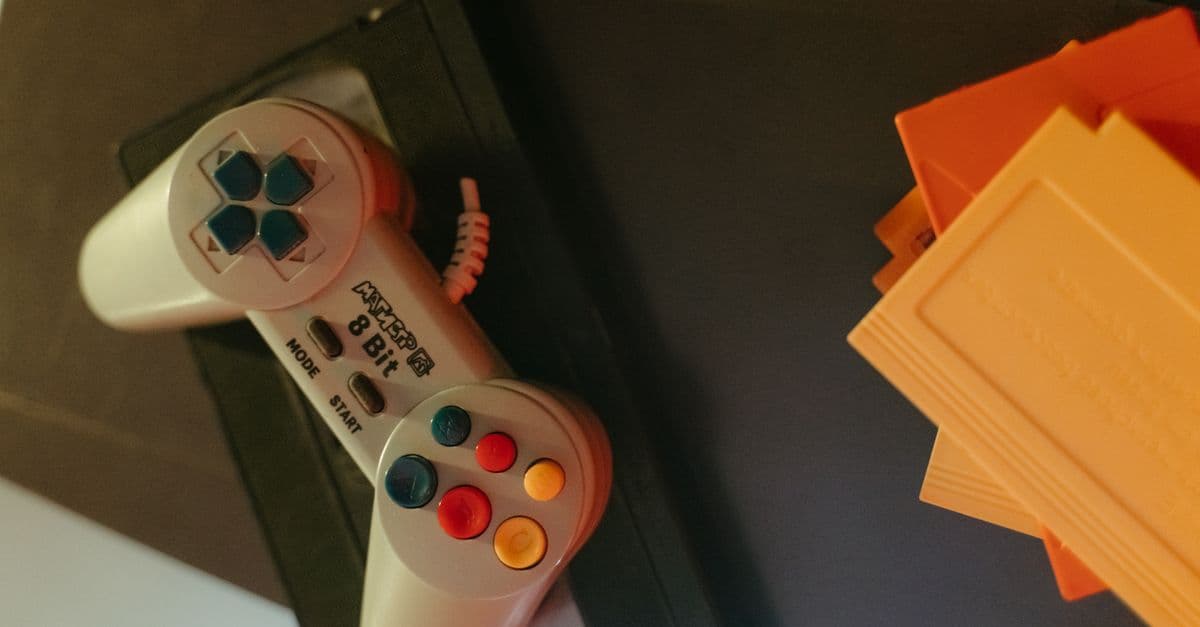
Photo: James Collington / Pexels
On June 6, 1984, a Soviet software engineer named Alexey Pajitnov tested a new program on an Electronika 60, a boxy clone of the American PDP-11 minicomputer with no real graphics chip and only a few kilobytes of memory (FirstVersions). The program used keyboard characters instead of blocks because the hardware couldn't draw anything else. Four decades, one Cold War, and one international lawsuit later, that program is the best-selling puzzle video game franchise ever made, with roughly 520 million units sold across every platform Nintendo, Sega, Sony, Apple, and Google have shipped since (Guinness World Records; Tetris.com). This is the story of how seven shapes and one rule became gaming's most durable design object, and what that durability actually teaches working designers.
The seven shapes and the one rule
A tetromino is a shape made of four connected square blocks. Tetris uses exactly seven of them, conventionally labeled I, O, T, S, Z, J, and L after the letters they resemble. Pajitnov based the idea on pentominoes, a five-square puzzle piece he'd played with as a child, and simplified it to four squares so the pieces would fall fast enough to feel kinetic (Sky HISTORY). He named the result by fusing "tetra" (four) with "tennis," his favorite sport.
The rule set fits on an index card:
- Seven tetromino types fall continuously from the top of a rectangular well, one at a time
- The player rotates and shifts each piece as it descends
- A completed horizontal line clears and awards points
- Speed increases as the player clears more lines
- The game ends when a new piece has no room to spawn
That's the entire ruleset. No stat sheet, no dialogue tree, no crafting menu. A five-year-old can learn to play in under a minute; a professional player can spend a decade discovering new ways to lose or win by two frames. The gap between those two facts is the entire subject of this article.
Why the difficulty curve never breaks
Tetris speeds up in fixed, published increments as a player clears lines, and that increase is the entire difficulty system. There's no boss fight, no hidden stat check, no random spike in enemy aggression. The challenge is purely mechanical: pieces fall faster, so the player has less time to think and act.
That design maps almost exactly onto what psychologist Mihaly Csikszentmihalyi called flow, a mental state where a task's difficulty rises in step with a person's growing skill, keeping them neither bored nor overwhelmed. Early Tetris levels are slow enough that a beginner can consciously plan every rotation. By level 19 or higher on the original NES version, players are reacting in fractions of a second, a speed that would be unplayable for a beginner but routine for someone who has internalized piece shapes the way a pianist internalizes scales.
Crucially, the difficulty curve is legible. A player who tops out can watch the exact moment they failed: a piece placed one column too far right, a line left uncleared too long. Compare that to games that hide difficulty behind random enemy spawns or invisible damage-scaling formulas, where a loss can feel arbitrary. Tetris never gives you that excuse, which is part of why losing at Tetris rarely feels unfair, just instructive.
What makes a difficulty curve feel "fair" instead of "punishing"?
A curve feels fair when the player can trace every failure back to a decision they made, not to hidden randomness or opaque mechanics. Tetris shows the entire board state at all times, so every top-out is legible: the player can see exactly which stack decision caused it, and adjust next time.
The mechanism nobody notices: how modern Tetris stays fresh without changing its rules
The seven pieces you fall in 2026 are identical to the seven pieces Pajitnov coded in 1984. What changed is the machinery underneath them, and that machinery is worth unpacking because it explains why competitive Tetris still produces new strategies four decades in.
The randomizer. Early versions of Tetris, including the arcade and NES releases, used a memoryless random number generator, meaning any of the seven pieces could appear at any time, including the same piece four or five times in a row. That created "piece drought" runs that were pure bad luck, not skill. Modern Tetris (any version released under The Tetris Company's post-2001 "Tetris Guideline" spec) instead uses a 7-bag randomizer: all seven tetrominoes are shuffled into a virtual bag and dealt one at a time, so a player is mathematically guaranteed to see every piece type at least once every 12 pieces (TetrisWiki; Dinogame.gg). This single change shifted competitive Tetris from a game partly decided by luck to one decided almost entirely by planning, because players can now count on a predictable piece supply and build strategies around it.
The rotation system. The way a tetromino rotates near a wall or another block sounds trivial until you watch two Tetris versions handle it differently. The current standard, called the Super Rotation System (SRS), defines precise "wall kick" rules that let a piece nudge sideways or up mid-rotation to fit into a gap it otherwise couldn't reach. SRS traces back to changes Bullet Proof Software made in Tetris 2 + BomBliss (1991) and Tetris Battle Gaiden (1993), and it reached its final form in Tetris Worlds (2001) (TetrisWiki, Super Rotation System). Wall kicks enabled entirely new advanced techniques, like the T-spin, where a player deliberately rotates a T-piece into a tight slot to clear multiple lines at once for bonus points. None of that existed in the 1984 original. The rules changed at the margins; the seven shapes and the falling-and-clearing loop never did.
The hold piece. Introduced in later Guideline-compliant versions, the hold function lets a player bank one falling piece in a side box and swap it back in later, at the cost of a short cooldown before hold can be used again (TetrisWiki). It's a small addition, but it turns Tetris from a purely reactive game into one with a shallow layer of forward planning: a player can save an awkward piece for a better moment instead of being forced to place it immediately.
None of these systems touch the core loop. They're refinements to the interface between player intent and board state, which is exactly the kind of change that keeps a 40-year-old ruleset feeling alive without diluting what made it work in the first place.
Why does Tetris feel different on a Game Boy than on a modern phone if the rules are the same?
The falling-and-clearing rule hasn't changed, but the systems around it have: modern versions use 7-bag randomization instead of pure random drops, SRS rotation with wall kicks instead of rigid four-state rotation, and a hold slot for planning. The core loop is untouched; the tools for expressing skill inside it have expanded.
No randomness masquerading as fairness
Compare Tetris to a game with loot boxes or random critical hits: in those systems, a loss can be blamed on the dice, which softens the sting but also cheapens the win. Tetris strips that excuse away almost entirely once the 7-bag randomizer is in play. A stack that collapses did so because of where the player put pieces, not because the game rolled against them.
This transparency is rarer than it sounds. Most competitive games layer in some randomness, whether it's matchmaking variance, critical-hit rolls, or procedurally generated enemy placement, partly because pure skill-based competition can feel punishing to newcomers. Tetris accepts that trade-off. It is, by design, a game where the skill gap between a novice and a Classic Tetris World Championship finalist is enormous and fully visible, and it has thrived anyway for 40 years.
Platform history: one ruleset, every screen ever made
Tetris's spread across hardware is itself a case study in why simple mechanics survive technological churn. A short list of the major waypoints:
| Era | Platform | Why it mattered |
|---|---|---|
| 1984 | Electronika 60 (USSR) | Original build, text-character graphics only |
| 1986–1988 | IBM PC port by Vadim Gerasimov | First graphical version; spread across the Eastern Bloc on copied floppy disks |
| 1988 | Nintendo Entertainment System (Tengen release, later recalled) | Center of a licensing lawsuit that reshaped the franchise's ownership |
| 1989 | Nintendo Game Boy | Bundled with the handheld at launch, driving Game Boy adoption in North America and Europe |
| 1990s | NES, SNES, arcade cabinets, PC/Mac/Linux | Cross-platform consistency established Tetris as an industry-standard puzzle format |
| 2000s–2010s | Feature phones and smartphones | Mobile version passed 100 million paid downloads, part of over 400 million total mobile downloads across the franchise (LEVVVEL) |
| 2018 | Tetris Effect (PS4, later PS VR and PC) | Added synesthetic audio-visual design layered on unchanged core mechanics |
| 2020 | Tetris Effect: Connected | Brought the 2018 release to Xbox and added online co-op |
Table: Tetris across four decades of hardware, from a Soviet minicomputer to modern VR headsets.
The Game Boy launch is worth sitting with, because it's the moment Tetris stopped being a Soviet curiosity and became a global institution. In September 1988, a game distributor named Henk Rogers pitched Nintendo of America's president Minoru Arakawa on bundling Tetris with the still-unreleased Game Boy, arguing the game's low graphical demands and instant appeal made it the ideal system-seller (Namu Wiki, Tetris copyright dispute; Sky HISTORY). Before that could happen, though, Nintendo had to untangle a genuine mess. Mirrorsoft had sub-licensed Tetris rights to Bullet Proof Software for Japan, while a separate rights holder, Spectrum Holobyte, had sub-licensed Atari Games and its console subsidiary Tengen for Japan and North America simultaneously (Game Developer, "Games Law History: the Tetris Saga"). Tengen released its own NES cartridge in May 1989 believing it held exclusive console rights. It didn't. The original Soviet rights-holding agency, Elorg, and Pajitnov himself backed Nintendo's claim, and in June 1989 a court ordered Tengen's Tetris pulled from shelves, with roughly 268,000 cartridges recalled and destroyed (Retroware, "Nintendo Vs. Tengen"). Nintendo's Game Boy version launched the same year, bundled at retail, and became one of the most consequential game-hardware pairings in the industry's history.
Why this matters: mechanics survived a legal war, a collapsing empire, and forty years of hardware turnover
It's worth pausing on how unlikely Tetris's survival actually was. It launched behind the Iron Curtain on hardware almost nobody outside the USSR had access to, spread illegally on pirated disks, got caught in a three-way international licensing dispute, and only reached its most famous audience because a distributor convinced Nintendo to gamble a new handheld's launch on it. None of that had anything to do with the seven-shape ruleset being clever. The ruleset just had to be good enough to survive all of that friction, and it was.
That's the real lesson for designers: a mechanically sound core can outlast almost any amount of business chaos around it, but a shaky core won't survive even a smooth launch. Tetris is the control group for that experiment, because it went through the roughest possible path to market and still came out the best-selling puzzle franchise in history.
The competitive scene: from a Portland ballroom to a Twitch fixture
Competitive Tetris didn't formalize until decades after the game's release. The Classic Tetris World Championship (CTWC), which runs on the original 1989 NES version, started in 2010 and quickly became the sport's flagship event, drawing crowds that stream live on Twitch. Jonas Neubauer won seven CTWC titles between 2010 and his final win in 2017, dominating through the era's standard input method, called DAS (delayed auto-shift), which uses the controller's built-in repeat-input timing to move pieces (Wikipedia, Jonas Neubauer).
Then, in 2018, a 16-year-old named Joseph Saelee beat Neubauer in the CTWC final using a technique called hypertapping, which involves pressing the directional pad far faster than DAS's built-in repeat rate to move pieces with more precision at high speed (Kotaku). Saelee's win didn't just end Neubauer's reign, it triggered a technique arms race. Within a few years, a newer method called rolling emerged, where players rhythmically tap the underside of the controller with their fingers while cradling it in their palm, achieving input speeds that hypertapping couldn't match and letting players survive at the game's highest, previously "unplayable" speed levels (level 29 and above) (Kotaku).
This matters because it's direct evidence against the idea that Tetris's design is "solved." A game engineered on 1984 hardware, running unmodified 1989 code in official competition, is still producing genuinely new input techniques that reshape who can win, four decades after release. Few competitive games in any medium can say that.
How fast do professional Tetris players actually play?
Elite competitive players using rolling or hypertapping techniques can execute dozens of directional inputs per second, far beyond what the NES's native DAS repeat-rate was designed to support. These techniques were discovered by players, not built into the game, which is itself evidence that a 1989 ruleset still has undiscovered depth.
The Tetris Effect: a documented cognitive phenomenon, not a metaphor
"Tetris Effect" gets used loosely as a phrase for any game that gets stuck in your head, but it started as a specific, studied finding. In a study published in Science in 2000, sleep researcher Robert Stickgold and colleagues had participants play Tetris for extended sessions across three days and found that many reported seeing falling geometric shapes in the hypnagogic state, the drowsy transition just before sleep (Stickgold et al., Science, 2000; PubMed).
The most striking part of the study wasn't the healthy participants, it was the control group of amnesic patients with severe medial temporal lobe damage, a brain region essential for forming new conscious memories. These patients could not consciously recall having played Tetris at all, yet several still reported the same hypnagogic block imagery (Scientific American, "Tetris Dreams"). That result suggested the imagery was being generated by implicit, non-declarative memory systems, meaning the brain was processing and replaying the game's visual-spatial patterns entirely outside of conscious recall.
That finding doesn't prove Tetris makes anyone smarter, and this article isn't making that claim. What it does show is that Tetris's pattern-matching demands are intense enough to leave a measurable trace on the visual system even in people who can't consciously remember the experience, a level of cognitive engagement most casual games never approach.
Cultural impact: what Tetris proved about the medium
Tetris landed at a moment when the commercial video game industry, only a few years removed from the 1983 North American crash, was still proving that games could be a durable business at all. Its success argued for something the industry didn't fully believe yet: that gameplay mechanics alone, without narrative, without licensed characters, without cutting production values by the era's standards, could carry a game to mass-market success.
A few concrete effects followed:
- It normalized puzzle games as a commercial category, not a niche, paving the way for Bejeweled, Candy Crush, and dozens of other match-based mobile hits decades later.
- It made the Game Boy commercially viable at launch, with the bundled pairing widely credited as central to the handheld's early adoption in North America and Europe.
- It established a template competitors still copy: constrained piece sets, escalating speed, and score-as-progression, visible in everything from Puyo Puyo to modern battle-royale puzzle hybrids.
- It became one of the most ported games ever made, appearing on well over 65 official platforms across four decades, from graphing calculators to VR headsets.
What people get wrong about Tetris's simplicity
The most common misreading of Tetris is that its design was simple to make because the rules are simple to state. That's backwards. Simple rules that produce durable, balanced depth are dramatically harder to design than complex systems that hide their flaws behind content volume. A bloated game with fifty mechanics can bury a broken one; Tetris has nowhere to hide a bad rule, because every rule is visible on every screen, every second, to every player.
A second misconception is that Tetris has stayed static. As the mechanism section above shows, the randomizer, rotation system, and hold function all changed substantially between 1984 and the 2001 Guideline standardization, and competitive technique has kept evolving even after that (hypertapping in 2018, rolling shortly after). What's static is the goal structure: seven pieces, clear lines, survive. Everything serving that goal has been iterated on for 40 years by multiple companies and thousands of competitive players.
A third misconception, common in casual design discourse, is that Tetris "has no meta." It has an extremely deep one. Concepts like stacking flat to preserve tetris-clear (four-line) opportunities, T-spin setups, and downstacking under pressure are the product of decades of community-driven strategy discovery, not something built into the original code. The game's minimalism didn't prevent depth, it's the reason the depth had to be earned by players instead of handed to them by content updates.
The takeaway
Tetris is 40 years old and still the best-selling puzzle game franchise ever made, not because of any single technical innovation but because its seven-shape ruleset survived a Soviet computer lab, a three-way international lawsuit, and four decades of hardware turnover without needing its core loop rewritten once.
What changed around that core, the randomizer, the rotation system, the hold slot, and the competitive techniques players invented on top of them, is exactly the kind of iteration that keeps a design alive: additive, optional, and never touching the seven pieces or the one rule that made the game legible to a five-year-old and inexhaustible for a professional. That's the actual lesson for designers chasing longevity: build the smallest system that can hold the most emergent behavior, then leave it alone.
Read next:
- Super Mario Bros: How Nintendo Saved Gaming
- Roguelike Games and Hades: Meaningful Progression Through Repetition
- Dark Souls: Why Difficulty is a Design Feature, Not a Bug
Frequently Asked Questions
Q: Who invented Tetris and when? A: Soviet software engineer Alexey Pajitnov created Tetris on June 6, 1984, while working at the Soviet Academy of Sciences. He built it on an Electronika 60, a Soviet clone of the American PDP-11 minicomputer with no dedicated graphics hardware, so the first playable version used keyboard characters instead of blocks (FirstVersions).
Q: How many copies of Tetris have been sold? A: The Tetris franchise has sold roughly 520 million units across all platforms and versions combined, including more than 400 million paid mobile downloads, making it one of the best-selling video game franchises in history according to Guinness World Records (Guinness World Records; LEVVVEL).
Q: Why is Tetris still popular if it was released in 1984? A: Tetris succeeded through mechanical clarity rather than content novelty. Its core loop, recognizing patterns and making spatial decisions under time pressure, taps into fundamental cognitive skills rather than technology trends, so it hasn't aged the way graphically driven games from the same era have.
Q: Is Tetris difficulty "fair" compared to modern games? A: Tetris's difficulty is transparent: it's driven entirely by a published speed curve tied to lines cleared, with no hidden mechanics or random punishment. Combined with the modern 7-bag randomizer, which guarantees every piece type appears within any 12-piece stretch, losses in Tetris are almost always traceable to a specific player decision rather than bad luck.
Q: What is the 7-bag randomizer and why does it matter? A: The 7-bag randomizer shuffles all seven tetromino types into a virtual "bag" and deals them one at a time before refilling, guaranteeing a player never goes more than 12 pieces without seeing every shape. It replaced the original memoryless random generator used in the arcade and NES versions, which could deal the same piece repeatedly and create unfair "droughts" (TetrisWiki).
Q: How do professional Tetris players get so fast? A: Competitive players use specialized input techniques discovered by the community, not built into the original game. Hypertapping, which beat seven-time champion Jonas Neubauer in the 2018 Classic Tetris World Championship final, and the newer "rolling" technique, both push input speed far beyond the console's native repeat-input rate (Kotaku).
Q: What is the "Tetris Effect" and is it a real scientific finding? A: Yes. In a 2000 study published in the journal Science, researcher Robert Stickgold found that people who played Tetris for extended sessions reported seeing falling geometric shapes as they fell asleep, a phenomenon that even appeared in amnesic patients who couldn't consciously recall playing the game, suggesting the effect is driven by implicit, not conscious, memory (Science, 2000).
Q: Why did Nintendo end up owning Tetris console rights instead of Atari? A: In 1988 and 1989, multiple companies believed they held exclusive Tetris console rights due to a tangle of sub-licensing agreements between Mirrorsoft, Spectrum Holobyte, and Atari's Tengen subsidiary. When the dispute reached court, the original Soviet rights agency, Elorg, and Pajitnov himself backed Nintendo's claim, and a judge ordered roughly 268,000 Tengen NES cartridges recalled and destroyed in 1989 (Retroware).
Q: Is Tetris Effect (the 2018 game) mechanically different from classic Tetris? A: No. Tetris Effect (2018), later expanded as Tetris Effect: Connected (2020), adds synesthetic audio-visual presentation and online co-op modes but keeps the underlying Guideline-standard piece set, rotation system, and scoring mechanics unchanged, demonstrating that the core ruleset can support radically different presentation without being altered itself.
Q: What can modern game designers actually learn from Tetris? A: That a genuinely minimal core system, seven pieces and one clear objective, can support 40 years of competitive and creative depth if every added system (randomizer, rotation, hold, competitive technique) serves the core loop instead of replacing or obscuring it. Complexity added around a strong core extends its life; complexity used to disguise a weak core rarely does.
Follow new articles
Add SciHub101 to your feed reader to see new science and technology stories.
About the Author
SciHub101 is an independent science and technology publication founded and edited by Buğra Sözeri, a software engineer and app developer based in Türkiye. AI tools assist with drafting and research. Source documentation in the existing archive is uneven, and articles are being reviewed and corrected. The Editorial Team byline identifies editorial responsibility; it does not certify specialist or independent human review. Where we compare products, anything built by our own team is labelled as such — see the editorial guidelines and About page for how corrections and disclosures work.
Related Articles
Why Video Games Are Designed to Be Addictive: The Psychology Behind the Loop
Video games are engineered to keep you playing. The reward loops, progress systems, and social mechanics in modern games aren't accidents — they're the result of decades of research into human motivation psychology. Understanding them changes how you play.
Super Mario Bros: How Nintendo Saved Gaming
In 1985, Super Mario Bros almost single-handedly revived the video game industry after its 1983 crash. The game's innovation and quality became the template for the entire industry.
Complete Gaming Guide 2026 — Technology, Design, Esports, and Psychology
The complete guide to gaming in 2026: how game engines work, gaming hardware, esports, game design psychology, industry trends, and what makes games engaging and addictive.

Dota 2: The Complex MOBA With Esports Largest Prize Pools
Dota 2 built esports' richest prize pool era through crowdfunding, then watched it collapse when Valve killed the Battle Pass model. Here's how the mechanics, the money, and the meta actually work.
The Science of Esports: What Makes Pro Gamers Different
Professional esports players react faster, process visual information more efficiently, and maintain strategic decision-making under pressure that most people cannot sustain for minutes, let alone hours of competition. Science is beginning to understand what separates them from the rest.

Psychology of Gaming: Why Games Are So Addictive
The strongest pull in gaming often isn't the loot or the level-up — it's the guild that's counting on you, the friend list you don't want to disappoint, and the identity you've built inside a community that logs on when you do.