Super Mario Bros: How Nintendo Saved Gaming
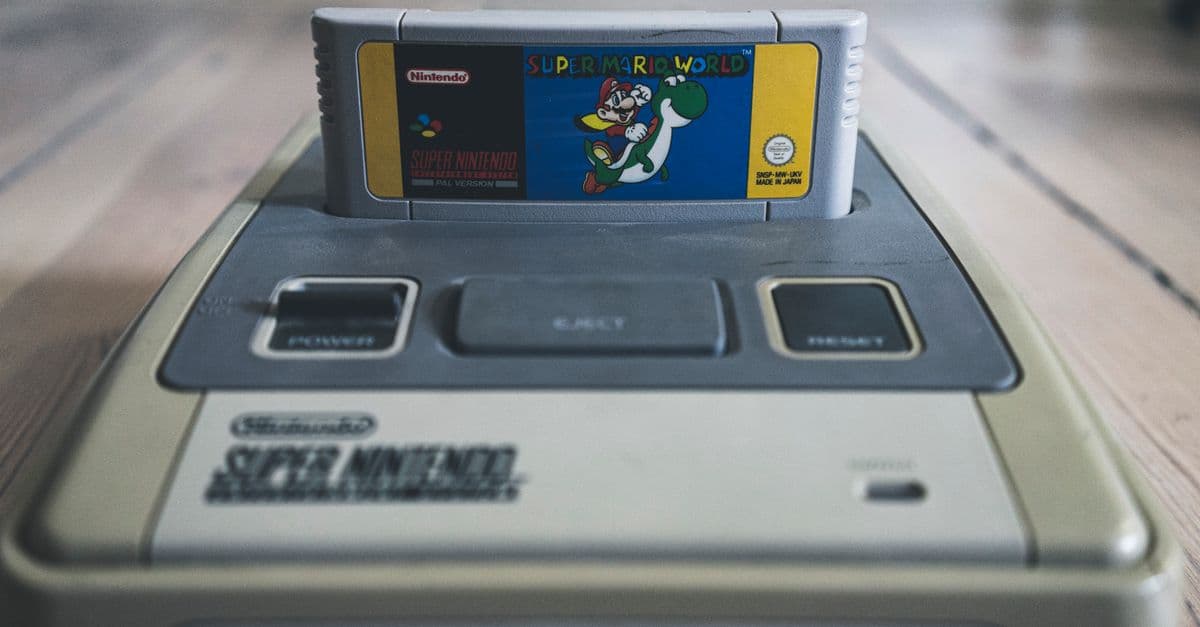
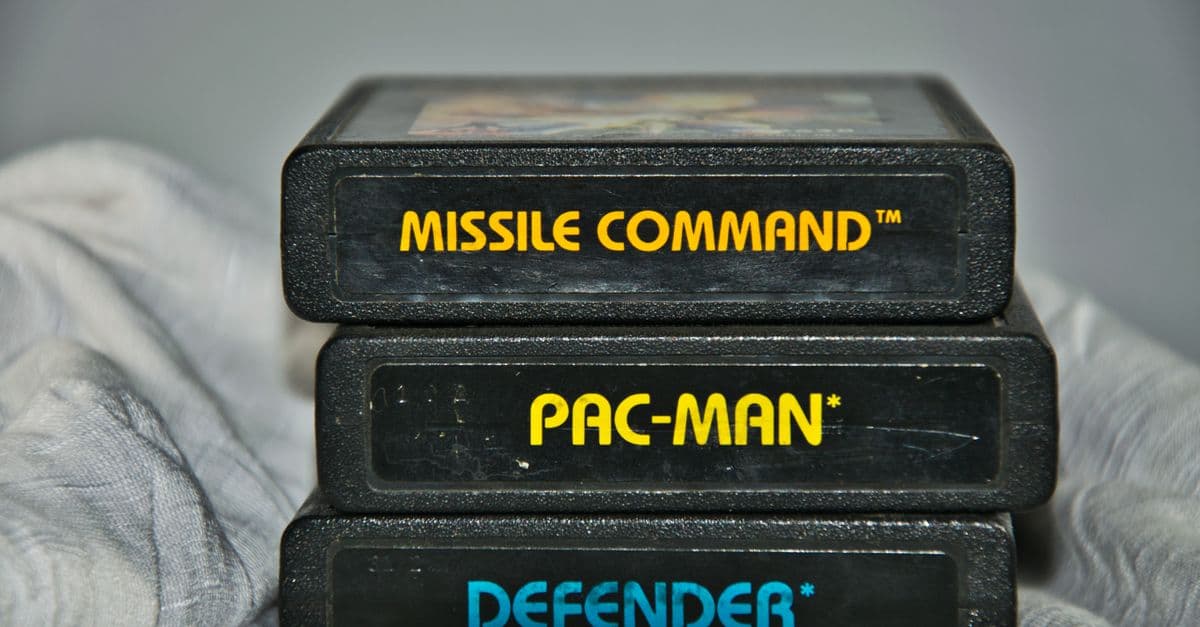
Photo: Mateusz Dach / Pexels
In 1983, the North American video game industry collapsed. Retailers stopped stocking consoles, arcade revenue fell off a cliff, and Wall Street treated "video games" as a punchline on par with pet rocks. Two years later, a Japanese company sold American retailers on a plastic robot toy with a game cartridge hidden inside it, and that cartridge — Super Mario Bros — quietly rebuilt an entire entertainment medium from the ground up. This is how one level of design thinking undid a industry-wide collapse.
The Industry Context: The "Video Game Crash" of 1983
The 1983 crash wasn't caused by a single bad game, though one game became its mascot. Atari manufactured roughly four million cartridges of E.T. the Extra-Terrestrial — more units than there were Atari 2600 consoles sold that entire year — for a game reportedly built in five and a half weeks by a single programmer to hit a Christmas deadline (Smithsonian National Museum of American History). Returns exceeded sales. Unsold cartridges were eventually buried in a landfill in Alamogordo, New Mexico, a story long dismissed as urban legend until diggers unearthed them decades later, confirming it (CBS News).
But E.T. was a symptom, not the disease. The real causes were structural. Publishers spent enormous sums licensing recognizable characters and almost nothing on quality control or design, while programmers under brutal deadlines churned out clone after clone of whatever had sold the previous quarter. Consumers, burned repeatedly by shovelware, stopped trusting the "video game" label entirely. Retail shelf space dried up, and the platforms themselves fragmented: the Atari 2600, 5200, Intellivision, ColecoVision, and a dozen lesser systems all competed for the same shrinking pool of buyers, with no cross-compatibility and wildly inconsistent quality.
The numbers were brutal. North American video game revenue fell from around $3.2 billion in 1983 to roughly $100 million by 1985, an approximate 97 percent contraction in just two years. Banks stopped extending credit to game publishers. Toy retailers, having been burned holding warehouses of unsold cartridges, told sales reps flatly: "We're not stocking games; consoles don't sell." Analysts at the time genuinely debated whether home video gaming was a dead fad, comparable to CB radios a few years earlier.
Nintendo's Famicom Breakthrough in Japan
While the American market imploded, Nintendo was quietly building something different in Japan. The company released the Famicom (Family Computer) in July 1983 — the same year the crash hit its worst point in the US — and structured it in a way that avoided every mistake that had gutted the American industry.
Where American publishers let anyone develop for any platform with no oversight, Nintendo controlled its cartridge licensing tightly, approving every game before release and limiting how many titles a third party could publish per year. Where the American market splintered across a dozen incompatible systems, the Famicom was one standardized platform. Where consumer trust had eroded, Nintendo priced the console affordably and backed it with a curated, consistently higher-quality library.
By 1985, six million Famicom consoles and roughly thirty million game cartridges had been sold in Japan, according to industry sales tracking compiled by Video Game Sales Wiki. Nintendo had proof its model worked. The problem was convincing an American retail industry still traumatized by the crash to take another chance on video games at all — and that required something stronger than a good console. It required a killer app.
The Robot Trojan Horse and the American Launch
Nintendo's American launch strategy in 1985 was almost comically indirect. Rather than pitch retailers on a "video game system," Nintendo repositioned the NES as a toy: the Nintendo Entertainment System launched bundled with R.O.B. (Robotic Operating Buddy), a plastic robot peripheral that reacted to on-screen cues in a handful of compatible games. Toy stores, not electronics retailers, agreed to carry it, because it didn't read as "video games" — the category retailers had sworn off.
Inside that Trojan horse sat the real product: a pack-in cartridge combining Super Mario Bros and Duck Hunt. R.O.B. got Nintendo's foot in the door. Mario is what kept it there.
The Innovation: What Made Super Mario Bros Different
Super Mario Bros wasn't the first platformer. Donkey Kong (1981) and Pitfall! (1982) came earlier and established the basic idea of running, jumping, and avoiding hazards across a 2D plane. What Mario did was synthesize every loose thread of the genre into something that felt, for the first time, completely intentional.
Level design as communication. Every screen in the game taught the player something before asking them to use it, without a single line of instructional text.
Physics-driven movement. Mario's jump arc, acceleration, and momentum were tuned so precisely that players could feel the difference between a running jump and a standing jump within seconds of picking up the controller.
Rewarded exploration. Hidden blocks, warp pipes, and secret areas meant a player who poked at the environment found more than one who rushed forward, without ever punishing the player who chose to rush.
Escalating, fair difficulty. Later worlds combined earlier lessons instead of introducing punishing new mechanics with no warm-up.
A character with presence. Mario himself — mustache, overalls, exaggerated proportions readable at low resolution — gave the abstraction of "a jumping sprite" a personality players wanted to root for.
None of these ideas were individually unprecedented. Combined, under Nintendo's quality-control discipline and released at the exact moment the industry needed proof that games could still be good, they were transformative.
Level Design Mastery: World 1-1 as a Design Textbook
World 1-1 is probably the most analyzed three minutes of level design in the medium's history, and it's worth walking through because the mechanism, not just the reputation, is what game design courses actually teach.
In a widely cited 2015 interview, Super Mario Bros designers Shigeru Miyamoto and Takashi Tezuka discussed the deliberate thinking behind the stage's opening moments. Miyamoto explained that he wanted World 1-1 to let players "gradually and naturally understand what they're doing," so the game becomes theirs through play rather than instruction (reported via Adafruit's coverage of the interview; original interview context also documented by Nintendo Insider). The design team specifically worked out how to teach several skills simultaneously: how to avoid an enemy, how to defeat one, how question blocks function, and — critically — how to visually distinguish a hostile Goomba from a helpful mushroom power-up.
That last detail matters more than it sounds. Early in development, the team worried players might assume any moving creature was dangerous and avoid the mushroom power-up out of caution. Their solution was behavioral, not textual: the Goomba shuffles predictably toward the player in a straight line, while the mushroom, once it appears, rolls in a way that reads as more erratic and toy-like. Nintendo also used the placement of pits: Miyamoto described positioning "safe" holes early in the level so a player who fell in would only lose a moment, not the whole run, letting them learn the run-jump technique (the "B-Dash") through consequence-free failure rather than a warning prompt.
Stepping through the roughly three-minute stage in sequence:
Seconds 0–30: An open field with a single, slow-moving Goomba. The player's only available inputs are move and jump. There is nothing else on screen to distract from learning that pressing the jump button makes Mario leave the ground.
Seconds 30–60: A small elevation change teaches jump height, and holding the direction button longer produces a longer jump — introducing the run mechanic implicitly, through feel rather than explanation.
Seconds 60–90: A second Goomba encounter, now with the player expected to apply what they just learned: jump on the enemy to defeat it, or avoid it entirely.
Seconds 90–120: A gap wide enough to force a running jump, converting the abstract "running is faster" lesson from the previous section into a practical necessity.
Seconds 120–150: Two enemies and a wider gap, combining every mechanic taught so far into one screen. This is the first real test of retained knowledge, not a new lesson.
Seconds 150–180: A block of empty space that, when jumped into, reveals a hidden coin block — teaching players that the level rewards curiosity and that not everything useful is visible.
Seconds 180 onward: The first green pipe appears, communicating a change in path with zero text, because the shape alone reads as "different, and worth investigating."
Game design courses still assign World 1-1 because it demonstrates a principle that predates video games entirely but was rarely executed this cleanly in software: teach through consequence, not through interruption. Modern tutorial design — the now-standard practice of embedding instruction inside low-stakes gameplay moments instead of pausing for a text box — traces its lineage directly back to this stage.
Commercial Performance and the Industry Rebound
The scale of Super Mario Bros' commercial success is easy to state in the abstract and harder to appreciate in context. This was a single pack-in cartridge that, alongside R.O.B., convinced American retailers to reverse a two-year, industry-wide boycott of video game hardware.
| Metric | Figure | Source |
|---|---|---|
| Super Mario Bros worldwide sales | Approximately 40.24 million copies | Video Game Sales Wiki, citing Nintendo |
| Super Mario Bros Japan-only (Famicom) sales | 7,840,856 copies | Video Game Sales Wiki |
| Famicom units sold in Japan by 1985 | 6 million consoles, ~30 million cartridges | Video Game Sales Wiki |
| NES units sold, first year (1986) | 1.1 million units | Wikipedia, List of best-selling NES games |
| Total NES units sold by end of 2004 | 61.91 million worldwide (34M North America, 19.32M Japan, 8.56M other) | Video Game Sales Wiki, NES page |
Table: Super Mario Bros and NES sales figures, 1983–2004.
Beyond raw units, the ripple effects reshaped the business model of the entire industry. Nintendo's strict third-party licensing program, born from watching unregulated publishing wreck the pre-1983 market, became the template that Sega, Sony, and Microsoft would all later adopt in modified form. The concept of a mascot character carrying platform sales — something Sonic the Hedgehog, Crash Bandicoot, and later Master Chief would all replicate — starts with Mario. And the idea that a pack-in game needs to be genuinely excellent, not just a tech demo, became a baseline retail expectation that persists on every console launch today.
Why Mario Endures: Design Principles That Didn't Age
Forty years after 1985, Nintendo still releases new Mario platformers on a regular cadence — Super Mario Bros Wonder, remakes of Super Mario RPG, and ongoing entries across kart racing, party games, and sports spin-offs. That longevity isn't nostalgia alone. A handful of specific design choices from 1985 hold up because they were built on constraints that don't change with hardware generations.
The core mechanic maps onto real physical intuition. Jumping over an obstacle is something every human understands from early childhood, long before they ever touch a controller. Unlike genre conventions that require learned abstractions — reading a minimap, understanding a mana bar, parsing an inventory grid — a gap in the ground and a character who can jump communicate the objective instantly, in any language, to any age group.
The controls were tuned, not just functional. Modern speedrunners and emulator analysts have documented that Mario's input responsiveness sits close to the physical limits of the NES hardware, with negligible perceptible lag between button press and on-screen response. That tightness is why the original game still feels good to play on real hardware or accurate emulation decades later, even though the visuals are primitive by any modern standard.
The franchise diversified without diluting the core. Mario Kart, Mario Party, Paper Mario, and the 3D platformers all borrow the character and some tonal DNA but don't force every game into the same mechanical box. That flexibility let Nintendo keep the IP relevant across radically different genres instead of running one formula into the ground.
How Mario Compares to Its Contemporaries and Successors
It's worth being specific about what Mario borrowed versus what it originated, because the "Mario invented the platformer" claim overstates the case and undersells what actually made it significant.
Donkey Kong (1981), also from Nintendo and also designed under Miyamoto, established the basic vocabulary: a player character jumping over hazards and climbing platforms to reach a goal. Pitfall! (1982) on the Atari 2600 introduced scrolling side-view exploration with hazard variety and was, at the time, one of the best-selling non-Mario platformers ever made. Neither, however, paired that vocabulary with the kind of deliberate, sequenced teaching that World 1-1 demonstrates, and neither had physics tight enough to reward skilled play the way Mario's run-jump system did.
Later platformers that are frequently compared to Mario — Sonic the Hedgehog (1991), Crash Bandicoot (1996), Rayman (1995) — each took a different piece of the formula and pushed it further. Sonic prioritized speed and momentum over precision. Crash prioritized linear, cinematic set-pieces over open exploration. What none of them replaced was Mario's specific balance point between accessibility and depth: a five-year-old can finish World 1-1, and a speedrunner can spend a decade optimizing frame-perfect movement through the same eleven screens.
What People Get Wrong About Mario's Success
Myth: Mario succeeded because it was the first good platformer. It wasn't first, and by 1985 several other decent platformers already existed in the Japanese market. What Mario had that its predecessors lacked was distribution timing: it arrived exactly when American retailers needed a reason to trust video games again, packaged inside a product (the NES plus R.O.B.) engineered specifically to bypass their skepticism.
Myth: The video game crash was primarily Atari's fault, and Nintendo simply avoided Atari's mistakes. Atari was the most visible casualty, but the crash was systemic — third-party publishers with zero quality oversight, a fragmented hardware market, and a retail sector without any way to signal quality to consumers. Nintendo's licensing model was a direct structural response to that systemic failure, not just a marketing decision.
Myth: Nintendo's success was inevitable given the Famicom's Japanese sales. A strong home-market launch didn't guarantee American retail acceptance. Nintendo tested the NES regionally first (notably in New York in late 1985) before a wider national rollout, and the R.O.B. bundling strategy was a deliberate hedge against retailer skepticism, not a formality.
Myth: Mario's controls were "simple," implying low design effort. Simple to learn is not the same as simple to build. The tuning of acceleration curves, jump arcs, and collision boxes in Super Mario Bros required extensive iteration, and that tuning is precisely what separates it from clumsier contemporaries that also let characters run and jump but felt worse doing it.
The Takeaway
Super Mario Bros didn't save the video game industry by being first, biggest, or most technically advanced for its era. It saved the industry by being precisely engineered — mechanically and psychologically — at the exact moment American retailers needed proof that a video game could be trusted again. The level design in World 1-1 remains a working blueprint for teaching players without a single word of text, and the sales numbers that followed rebuilt a market that had lost nearly all of its revenue in two years. Four decades on, the specific choices Miyamoto's team made about pit placement, enemy behavior, and jump arcs are still the reference point every new platformer gets measured against, whether its designers know it or not.
Frequently Asked Questions
Q: Is Super Mario Bros still fun to play today, or is it dated? A: It holds up well mechanically. The controls feel tighter than many modern platformers despite the primitive graphics, and the level design still rewards repeated play. Some specific quirks — like input buffering that differs from modern conventions — feel dated, but the core jump-and-explore loop remains genuinely engaging on original hardware or accurate emulation.
Q: Why was Super Mario Bros so important if platformers already existed before it? A: Predecessors like Donkey Kong and Pitfall! established the genre's basic vocabulary, but Mario combined tight physics, sequenced teaching through level design, and character charm into one package, released at the exact moment the American industry needed a reason to trust video games again after the 1983 crash.
Q: How did World 1-1 teach players without any tutorial text? A: Through pure sequencing. Each screen introduced exactly one new idea, starting with a slow, predictable Goomba to teach jumping, then a small gap to teach jump distance, then combinations of both. Designers Shigeru Miyamoto and Takashi Tezuka have described deliberately placing "safe" pits early on so failure had low consequences, letting players learn by trial rather than instruction.
Q: Did Super Mario Bros cause the end of the 1983 video game crash by itself? A: Not single-handedly, but it was the decisive factor for the American market. Nintendo's broader strategy — a curated third-party licensing system, the R.O.B. toy-store Trojan horse, and a genuinely well-designed pack-in game — worked together, and Mario was the piece that convinced consumers and retailers the medium was worth trusting again.
Q: How many copies of Super Mario Bros have actually been sold? A: Approximately 40.24 million copies worldwide, according to sales data compiled from Nintendo reporting, making it one of the best-selling individual video games in history, trailing only a handful of titles like Minecraft and Tetris in lifetime unit sales.
Q: What was R.O.B. and why did it matter to Mario's launch? A: R.O.B. (Robotic Operating Buddy) was a plastic robot peripheral bundled with the NES at launch. It let Nintendo market the console as a toy rather than a "video game system," which mattered because American toy retailers had sworn off video games after the 1983 crash. R.O.B. got Nintendo shelf space; the included Super Mario Bros/Duck Hunt cartridge is what actually sold consoles.
Q: Did Super Mario Bros invent the platformer genre? A: No. Donkey Kong (1981), also designed by Shigeru Miyamoto, predates it, as does Pitfall! (1982). Mario's contribution was refining and unifying the formula — precise physics, deliberate level pacing, and rewarded exploration — into a version other developers spent the next decade trying to match.
Q: Why does jumping feel like such a central, iconic action in Mario compared to other early game mechanics like shooting? A: Jumping over an obstacle draws on physical intuition every player already has from ordinary life, so it needs no explanation. Shooting requires understanding an abstract system (ammo, targeting, damage), while jumping is immediately legible: there's a gap, and the character can cross it. That legibility is part of why the mechanic reads as instantly understandable across ages and cultures.
Q: How does Super Mario Bros compare to Donkey Kong, since both were designed by Shigeru Miyamoto? A: Donkey Kong established the vocabulary — a jumping character navigating platforms and hazards toward a goal — but its levels were static single screens with less physics depth. Super Mario Bros added scrolling exploration, tuned momentum-based movement, and sequenced level design that taught mechanics progressively, turning Miyamoto's earlier ideas into a fuller, more replayable system.
Q: How many Mario games exist in total? A: Well over 200 games across the broader franchise, spanning mainline platformers, kart racing, party games, sports titles, and RPGs. That volume would dilute most characters through oversaturation, but Nintendo has largely sustained quality control across sub-franchises, which is part of why the brand hasn't collapsed under its own size the way some other long-running franchises have.
Read next:
Follow new articles
Add SciHub101 to your feed reader to see new science and technology stories.
About the Author
SciHub101 is an independent science and technology publication founded and edited by Buğra Sözeri, a software engineer and app developer based in Türkiye. AI tools assist with drafting and research. Source documentation in the existing archive is uneven, and articles are being reviewed and corrected. The Editorial Team byline identifies editorial responsibility; it does not certify specialist or independent human review. Where we compare products, anything built by our own team is labelled as such — see the editorial guidelines and About page for how corrections and disclosures work.
Related Articles
Tetris: Why the Perfect Game is Still Perfect
Four decades after its 1984 release, Tetris remains the gold standard of game design. Simple rules, infinite complexity, and addictive gameplay made it history's best-selling game.
Top 15 PlayStation 1 Games That Defined a Generation
The original PlayStation launched gaming into 3D and gave us unforgettable classics. These 15 games shaped the industry and remain masterpieces today.

History of Video Games: From Pong to Today
From a blinking dot bouncing across a black screen to a $180 billion global industry — the story of video games is a business history of crashes, quality-control rescues, console wars, and platform shifts that reshaped how the world plays.
Pokémon: How Game Mechanics Created a Global Phenomenon
Pokémon Red and Blue (1996) sold 10+ million copies on Game Boy by combining simple mechanics with social play. Two decades later, it's still the best-selling franchise of all time.
The History of Video Games: From Pong to Open Worlds
Video games went from a blinking dot on a screen in 1972 to a $200 billion industry in 50 years. The history is a story of technology, creative leaps, market crashes, and the democratisation of interactive entertainment into the world's largest cultural medium.
Complete Gaming Guide 2026 — Technology, Design, Esports, and Psychology
The complete guide to gaming in 2026: how game engines work, gaming hardware, esports, game design psychology, industry trends, and what makes games engaging and addictive.