Pokémon: How Game Mechanics Created a Global Phenomenon
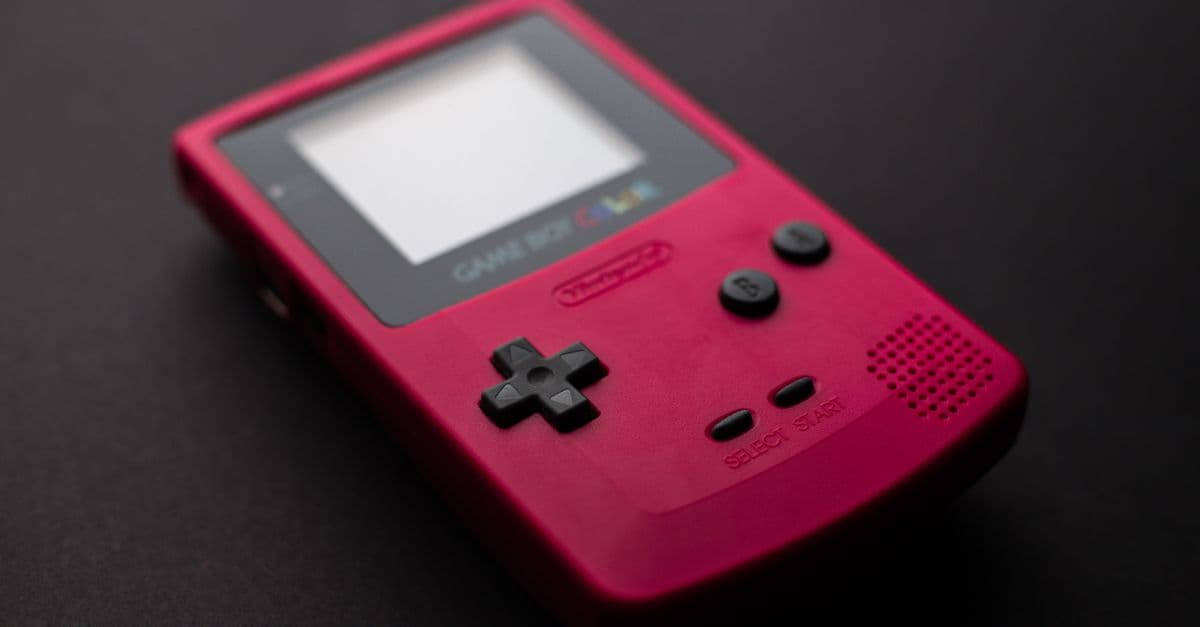
Photo: Luis Quintero / Pexels
In February 1996, Game Freak released Pokémon Red and Green in Japan, a modest role-playing game about catching and training small creatures. Thirty years later, Pokémon is the highest-grossing media franchise in history, with total retail sales estimated above $150 billion once games, cards, merchandise, and licensing are combined (Bloomberg/The Pokémon Company reporting via PocketGamer.biz). The games alone were never the whole story. What made Pokémon different from every creature-collector that copied it afterward was a single design decision: it forced players to depend on each other.
The core loop: why "catch, train, battle, trade" works
Pokémon's gameplay reduces to five repeatable steps: encounter a wild creature, catch it with a Poké Ball, train it through battles, battle other trainers, and work toward completing a collection. None of these mechanics were new in 1996. Collecting, leveling up, and turn-based combat all existed in earlier RPGs.
What made the loop compelling was how tightly the steps reinforced each other. Catching a creature gave you something concrete: a named, visible entry in your Pokédex (the in-game encyclopedia that tracks every species you've seen or caught). Training it produced visible growth. Battling it against another trainer tested that growth against a real obstacle. Each stage fed a different psychological reward, and each one pointed toward the next.
Game designers call this a compulsion loop: a short, repeatable cycle where an action produces a reward that motivates the next action. Slot machines use a version of this loop with almost no skill involved. Pokémon layered a compulsion loop on top of genuine strategic depth, so the loop felt earned rather than manipulative.
The social revolution: why trading mattered more than combat
Mechanics alone don't explain a franchise this size. The decision that separated Pokémon from every other collection game of its era was splitting the roster between two versions. Pokémon Red contained creatures that Pokémon Blue did not, and vice versa. To fill out the Pokédex, and to build a competitive team, a single player physically could not do it alone.
This turned Pokémon into gaming's first mass-market social contract. Two players linked their Game Boys with a link cable (a physical accessory sold separately, since the Game Boy had no wireless connectivity) and traded creatures back and forth. The design consequence was enormous: owning Pokémon wasn't enough. You needed a friend who also owned Pokémon, which meant a friend who also had to buy a second copy of essentially the same game.
That single mechanic did four things simultaneously. It manufactured social interaction between players who otherwise might never have talked about a video game. It created a durable reason to keep playing past the point of finishing the main story, since trades were ongoing. It doubled the addressable market, because friend groups needed multiple copies rather than one shared cartridge. And it embedded the game inside real-world friendships, making Pokémon feel like a shared hobby rather than a solitary pastime.
How does Pokémon's trading system work?
Trading connects two Game Boys (or, in modern games, two Nintendo Switch consoles online) so players can exchange creatures directly. Certain Pokémon only evolve into their final form when traded, which means completing the roster or building a competitive team is structurally impossible without another human being involved.
The RPG foundation underneath the collecting
Unlike earlier creature-collecting attempts, Pokémon was also a legitimately playable role-playing game. Combat used a simple but genuinely strategic type-matchup system (fire beats grass, water beats fire, and so on), where eighteen elemental types interact in a web of strengths and weaknesses that takes real study to master. Creatures leveled up visibly through experience points, gym badges provided clear progression checkpoints, and the difficulty curve was gentle enough that a first-time player could finish the game without external help.
That combination, shallow enough to be casual and deep enough to reward mastery, is a design target that's notoriously hard to hit. Most games lean one direction or the other: accessible but shallow, or deep but gatekept behind a steep learning curve. Pokémon's type chart is the clearest example. A seven-year-old can learn "water beats fire" in one sentence. A competitive player spends years learning how eighteen types interact across hundreds of move combinations, stat distributions, and team synergies. Both players are engaging with the same underlying system at different depths, which is precisely why the game scales from casual to professional play.
The trading card game: a second, parallel phenomenon
Pokémon's trading card game (TCG) launched in Japan in October 1996, the same year as the video games, and became a commercial phenomenon in its own right rather than a side product. As of 2024, the Pokémon TCG had sold more than 75 billion cards worldwide, making it the best-selling trading card game of all time (The Pokémon Company, reported via PocketGamer.biz).
The TCG worked because it mirrored the video game's social logic in physical form. Rules were simple enough for children to learn in a school playground. Rarity tiers (common, uncommon, rare, and holographic "holo rare" cards) created a built-in gambling-adjacent thrill inside sealed booster packs, since the contents were random. And because cards were physical objects, trading didn't require a link cable or even electricity, just two kids and a stack of cards at recess.
The result was a second, independent revenue stream that reinforced the first. A kid who couldn't afford a second Game Boy could still participate in Pokémon's social economy through cards. The franchise had effectively built two parallel on-ramps into the same collecting compulsion, one digital and one physical, and each fed the other's popularity.
The anime: turning a game into a cultural institution
The Pokémon anime debuted in Japan in April 1997 and internationally soon after, and its timing mattered as much as its content. The show gave static in-game sprites a face, a voice, and a personality. Pikachu, in particular, became a mascot instantly recognizable well outside gaming circles, largely because the anime made an electric mouse into an emotionally expressive character rather than a battle statistic.
The anime accomplished something the games alone could not: it reached audiences who never owned a Game Boy. Younger siblings, non-gaming parents, and international audiences who encountered Pokémon first through Saturday-morning television all became potential customers for the games, cards, and merchandise. This is the mechanism behind Pokémon's often-cited status as one of the highest-grossing media franchises of all time, with total franchise revenue estimated above $150 billion when merchandise and licensing are included alongside roughly $30 billion in cumulative video game sales (Vice, franchise revenue analysis). The games taught people to love the creatures. The anime made that love portable to people who never touched a controller.
The competitive scene: depth nobody designed for
Pokémon wasn't built as a competitive esport, but a professional scene formed around it anyway. Nintendo and The Pokémon Company now run an official Video Game Championships (VGC) circuit, with the 2024 Pokémon World Championships carrying a total prize pool of $160,000 split among the top finishers, and the overall VGC Masters champion taking home $30,000 (Dot Esports; Esports Charts). That's modest compared to the largest esports titles, but it's a meaningful professional circuit built on top of a game series primarily marketed to children.
The competitive depth comes from combinatorics rather than reflexes. With over a thousand species across the current generations, eighteen elemental types, hundreds of individual moves, held items, breeding-optimized stat distributions, and speed-tier calculations (who moves first in a turn, which often decides a match), the space of viable team compositions is enormous. Professional players study "the metagame," the current landscape of commonly used strategies and counters, the way chess players study opening theory.
This is Pokémon's second analogy worth holding onto: the game is like a card game such as Magic: The Gathering hiding inside a children's cartoon. The surface presentation is bright, friendly, and approachable. The underlying system is a turn-based strategy game with enough combinatorial depth to sustain a professional circuit for over two decades.
Why is competitive Pokémon controversial among hardcore strategy gamers?
Critics note that competitive Pokémon rewards pre-battle stat optimization (breeding creatures with ideal hidden stats and natures) more than in-the-moment reflexes, and that newer games have required paid downloadable content to access a complete roster of creatures, creating a pay-to-compete barrier that didn't exist in earlier generations.
Generation 1's enduring appeal, three decades later
Pokémon Red, Green, and Blue are approaching their thirtieth anniversary, and they remain the best-selling entries in the franchise's history at over 31 million combined units, a record that even 2022's Scarlet and Violet has not yet surpassed (GamesRadar+). Several factors explain that staying power.
The first is straightforward nostalgia. Millions of people who are now adults with disposable income grew up with the original 151 creatures, and that emotional attachment translates directly into continued spending on remakes, merchandise, and new generations. The second is the design balance already discussed: shallow enough for a first-time player, deep enough for a returning veteran. The third is that Generation 1's character designs, particularly the starter creatures and Pikachu, achieved a level of visual recognition that later generations have struggled to replicate, in part because they were the first and had no competing designs inside the same franchise to dilute attention.
How modern Pokémon games evolved without abandoning the formula
Pokémon has released nine core generations between 1996 and 2022, and the franchise's history shows a consistent pattern: substantial technical evolution around an unchanged core loop.
| Generation | Release Year | Key Change |
|---|---|---|
| Gen 1 (Red/Blue/Yellow) | 1996 | Original 151 creatures, link-cable trading |
| Gen 2 (Gold/Silver) | 1999 | 100 new creatures, day/night cycle, breeding mechanic |
| Gen 3 (Ruby/Sapphire) | 2002 | Moved to Game Boy Advance, 135 new creatures |
| Gen 4-5 (Diamond/Pearl, Black/White) | 2007-2011 | Online (Wi-Fi) trading and battling introduced |
| Gen 6 (X/Y) | 2013 | First fully 3D character models |
| Gen 7 (Sun/Moon) | 2016 | Removed traditional gyms, introduced island trials |
| Gen 8 (Sword/Shield) | 2019 | Wild Area, the franchise's first semi-open environment |
| Gen 9 (Scarlet/Violet) | 2022 | True open-world structure, real-time exploration |
| Table: Nine generations of core Pokémon games and their headline design change, 1996-2022. |
Despite radical shifts in presentation, from 2D sprites to fully 3D open worlds, the catch-train-battle-trade loop survived every generation unchanged. Pokémon Scarlet and Violet sold over 25 million combined units within roughly eighteen months of release and had reached nearly 27 million units by mid-2025, making them the second-best-selling entry in franchise history behind only the original trilogy (Nintendo Life). That performance came despite Scarlet and Violet launching in a technically rough state and receiving some of the harshest critical reviews in the series' history, which is itself evidence for how little the games' polish matters relative to the strength of the underlying formula and brand.
What Pokémon Legends: Arceus taught Game Freak
In 2022, developer Game Freak released Pokémon Legends: Arceus, an experimental spinoff that replaced the traditional turn-based battle system with real-time creature catching closer to Pokémon GO's mechanics. It sold more than 6 million copies, a strong result but a fraction of a mainline entry's typical performance, and it functioned as a controlled experiment rather than a permanent redirection.
The lesson Game Freak drew from Legends: Arceus was applied directly to Scarlet and Violet the following year: give players open-world freedom to explore, but keep the traditional turn-based battle system and trading mechanics intact. That's a useful case study in franchise management more broadly. Pokémon's owners are willing to test major mechanical changes, but only in spinoff titles that don't touch the core numbered series, protecting the primary revenue engine from experimentation risk.
Monetization: from a single cartridge to a multi-market ecosystem
Most game franchises make money through one primary channel: game sales, or increasingly, in-app purchases in free-to-play titles. Pokémon's defining business innovation was building parallel revenue streams across entirely different industries that all reinforced each other.
| Revenue Stream | Launched | Notable Data Point |
|---|---|---|
| Video games | 1996 | ~$30 billion cumulative lifetime sales |
| Trading card game | 1996 | 75+ billion cards sold worldwide, best-selling TCG ever |
| Anime & film licensing | 1997 | Longest-running video game-based animated series |
| Merchandise & retail licensing | 1997 | The Pokémon Company reported roughly $10.8 billion in merchandise/licensing revenue in a single recent year |
| Pokémon GO (mobile) | 2016 | Over $8 billion in lifetime player spending as of 2024 |
| Table: Pokémon's major revenue channels and approximate scale. Sources: PocketGamer.biz, Vice, Sensor Tower via Game World Observer. |
A ten-year-old who buys a single Pokémon cartridge is, from a business standpoint, an entry point into a decade-long relationship spanning games, cards, toys, movies, and eventually mobile spending. No single purchase captures much value. The compounding effect across five separate industries is what produces a franchise valued in the hundreds of billions rather than a hit game valued in the hundreds of millions.
Pokémon GO deserves particular attention here because it demonstrates the franchise's ability to enter an entirely new medium (mobile augmented reality) and still succeed on the same underlying psychology: catch things, collect them, and coordinate with other players (in GO's case, through real-world "raids" that require multiple nearby players to defeat powerful creatures together). Even in a mobile app built by an entirely different studio (Niantic, not Game Freak), the social-dependency mechanic that made the original games work reappeared by design.
Why competitors couldn't replicate Pokémon's success
Dozens of franchises have attempted to copy Pokémon's formula since 1996, including Digimon, Yo-kai Watch, Temtem, and Cassette Beasts. None reached a meaningful fraction of Pokémon's commercial scale, and the reasons are structural rather than about individual game quality.
Timing mattered enormously. Pokémon launched when Nintendo's Game Boy had no serious handheld competition and when cable-based trading between two players was a genuinely novel mechanic. Every competitor arrived into a market where that novelty had already been claimed and where Pokémon's network effects were already entrenched.
Character design created lasting recognition. Pikachu's silhouette, color palette, and expressiveness were deliberately engineered for merchandising and animation, and that design discipline carried through subsequent generations far more consistently than most competitors managed.
First-mover cultural entrenchment compounded over decades. By the time Digimon or Yo-kai Watch reached international markets, Pokémon already had a decade or more of anime, cards, and games behind it. Switching a childhood collecting hobby to a competing franchise carried real social cost among peer groups who had already standardized on Pokémon.
Network effects locked in trading behavior. Because Pokémon's earliest and most enduring hook was trading between friends, popularity was self-reinforcing: the game people you knew already played was, by definition, the game worth buying. A competitor needed to break an existing friend-group habit, not just offer a comparable product.
What people get wrong about Pokémon's success
The most common misconception is that Pokémon succeeded because of innovative mechanics. It didn't. Turn-based combat, creature collection, and RPG progression systems all predate 1996. The innovation was social engineering: making the game commercially and functionally incomplete without a second player.
A second misconception treats Pokémon GO's decline in year-over-year growth after its 2016 launch peak as evidence the broader franchise is fading. That conflates one mobile spinoff's natural lifecycle (most mobile games see usage and revenue peak in their first one to three years before settling into a smaller, stable base) with the health of the mainline series, which has continued setting new sales records well into its third decade.
A third misconception is that Pokémon's continued dominance is inevitable. It isn't. Every media franchise eventually declines, and Pokémon's own competitive scene, its recent technical struggles (Scarlet and Violet's rocky 2022 launch drew significant criticism for performance issues), and rising production costs for increasingly ambitious open-world games all represent real risk. What has kept Pokémon at the top for three decades is less any single mechanic and more the discipline of protecting that original social-dependency design while cautiously modernizing everything around it.
Frequently Asked Questions
Q: Why was splitting Pokémon into two versions (Red and Blue) so important commercially? A: The version split made a single copy of the game structurally incomplete. Certain creatures only appeared in one version, so completing the Pokédex or building certain competitive teams required trading with someone who owned the other version. That single design choice doubled the number of copies a friend group needed to buy and manufactured a built-in reason for players to interact socially.
Q: How much has the Pokémon Trading Card Game actually sold? A: More than 75 billion cards have been sold worldwide since the TCG launched in Japan in October 1996, making it the best-selling trading card game in history, according to figures reported by The Pokémon Company.
Q: Is Pokémon still growing, or has the franchise peaked? A: Recent data suggests continued growth rather than decline. Pokémon Scarlet and Violet, released in 2022, had sold nearly 27 million combined units by mid-2025, making them the second-best-selling entry in franchise history. The Pokémon Company also reported year-over-year revenue growth of roughly $1.2 billion in 2024 alone.
Q: Why did Pokémon Legends: Arceus change the battle system so drastically? A: Game Freak used Legends: Arceus (2022) as an experimental spinoff to test real-time, Pokémon GO-style catching mechanics outside the numbered mainline series. It sold over 6 million copies, a respectable but comparatively modest result, and the developer concluded that most players still preferred the traditional turn-based formula, which is why Scarlet and Violet kept classic battles while only adopting the open-world exploration.
Q: How does the competitive Pokémon esports scene actually work? A: Nintendo and The Pokémon Company run an official Video Game Championships (VGC) circuit with regional, national, and international events feeding into an annual World Championships. The 2024 World Championships carried a total prize pool of $160,000, with the VGC Masters division champion receiving $30,000. Competitive strategy centers on team-building math (stats, types, and move combinations) rather than reflexes.
Q: Why couldn't games like Digimon or Yo-kai Watch replicate Pokémon's success? A: They arrived after Pokémon had already established both the market novelty (cable trading, in Digimon's case a near-simultaneous competitor) and years of cultural entrenchment through anime, cards, and merchandise. Network effects meant that the franchise your friend group already played was the rational choice, making it structurally difficult for a later entrant to displace Pokémon regardless of individual game quality.
Q: How much money has Pokémon GO made since launch? A: Pokémon GO passed $8 billion in lifetime player spending as of 2024, according to mobile analytics firm Sensor Tower, eight years after its 2016 launch, even though its year-over-year revenue has declined from its early peak.
Q: What is the best-selling Pokémon game of all time? A: The original Pokémon Red, Green, and Blue trilogy on Game Boy remains the best-selling entry in the franchise's history, with combined worldwide sales exceeding 31 million units, a record that 2022's Scarlet and Violet (nearly 27 million units by mid-2025) has come close to but not yet surpassed.
Q: Does Pokémon's success depend on Nintendo specifically? A: Largely yes. The Pokémon Company is a joint venture between Nintendo, Creatures, and Game Freak, and the franchise's early growth depended heavily on Nintendo's Game Boy hardware dominance, distribution network, and manufacturing reliability in the 1990s. That vertical integration would have been difficult for a smaller, independent studio to replicate at the time.
The takeaway
Pokémon's mechanics weren't revolutionary in 1996, and they still aren't. What made the franchise the highest-grossing media property in history was a deliberate decision to make the game socially incomplete on purpose, forcing trading, and therefore forcing friendship, into the core loop. Every subsequent success, the trading card game, the anime, Pokémon GO's raid battles, traces back to that same principle: collecting only becomes a phenomenon when it's a shared activity rather than a solitary one.
Read next:
Follow new articles
Add SciHub101 to your feed reader to see new science and technology stories.
About the Author
SciHub101 is an independent science and technology publication founded and edited by Buğra Sözeri, a software engineer and app developer based in Türkiye. AI tools assist with drafting and research. Source documentation in the existing archive is uneven, and articles are being reviewed and corrected. The Editorial Team byline identifies editorial responsibility; it does not certify specialist or independent human review. Where we compare products, anything built by our own team is labelled as such — see the editorial guidelines and About page for how corrections and disclosures work.
Related Articles

Dark Souls: Why Difficulty is a Design Feature, Not a Bug
Dark Souls proved that game difficulty and fairness could coexist. By embracing challenge and respecting player skill, it redefined what players expected from games.
The Legend of Zelda: Ocarina of Time - Gaming's Perfect Adventure
Released in 1998, Ocarina of Time was the first major 3D adventure game. Its camera system, dungeon design, and exploration became the template for 3D action games.
Retro Gaming Revival: Why Players Keep Going Back
Nintendo Switch Online has 34 million paid subscribers, Stardew Valley has sold over 50 million copies, and 87% of pre-2010 games are out of print. Here's the data behind why decades-old games still outcompete new releases.
Super Mario Bros: How Nintendo Saved Gaming
In 1985, Super Mario Bros almost single-handedly revived the video game industry after its 1983 crash. The game's innovation and quality became the template for the entire industry.
Tetris: Why the Perfect Game is Still Perfect
Four decades after its 1984 release, Tetris remains the gold standard of game design. Simple rules, infinite complexity, and addictive gameplay made it history's best-selling game.
Complete Gaming Guide 2026 — Technology, Design, Esports, and Psychology
The complete guide to gaming in 2026: how game engines work, gaming hardware, esports, game design psychology, industry trends, and what makes games engaging and addictive.