Retro Gaming Revival: Why Players Keep Going Back
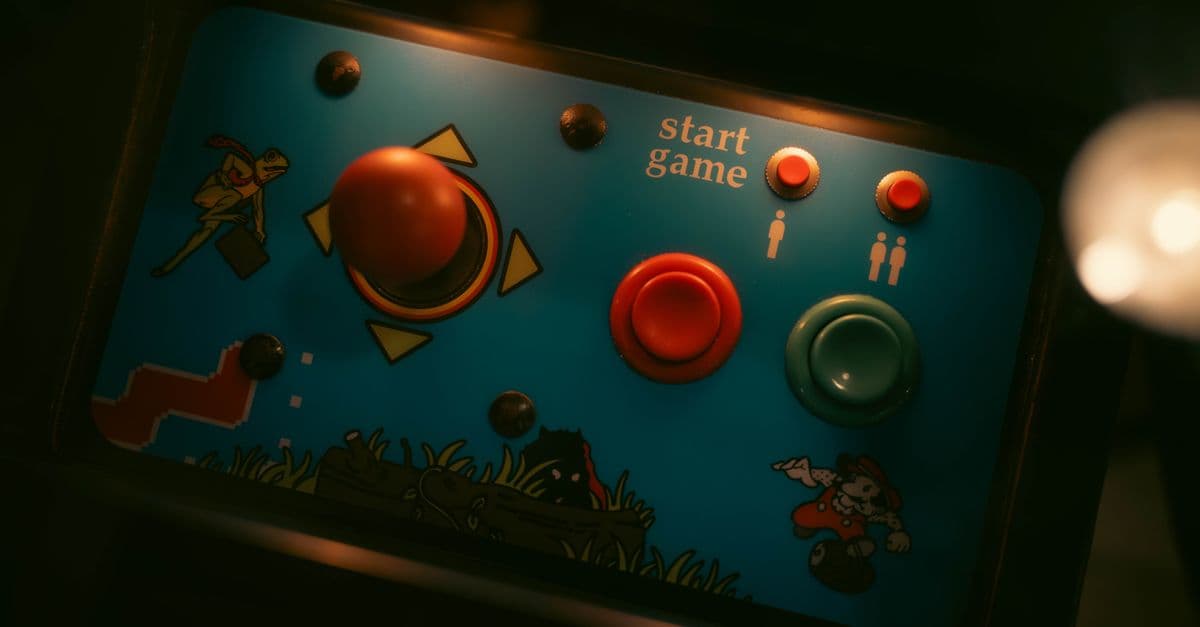
Photo: MART PRODUCTION / Pexels
Nintendo Switch Online has 34 million paid members as of September 2025, most of them there partly for a library of NES, SNES, and N64 games first released between 1985 and 1998 (Nintendo Life, November 2025). Meanwhile, a 2023 study by the Video Game History Foundation found that 87% of classic games released before 2010 are out of print in the United States (Video Game History Foundation, 2023). Those two numbers describe the same movement from opposite sides: a market that keeps proving demand for old games, and an industry that keeps failing to meet it through official channels. This is the story of what fills that gap, why it works, and what it costs.
What "retro gaming" actually covers
"Retro gaming" is not one activity. It spans five distinct behaviors that get lumped together in casual conversation, and separating them matters because they have different economics, different legal status, and different audiences.
The first is original hardware collecting: buying a physical Sega Genesis or Nintendo Entertainment System and playing cartridges on a CRT or upscaled through modern hardware. The second is licensed re-release, where the rights holder sells you legal access to the old game, either through subscription (Nintendo Switch Online), digital storefront re-release, or curated hardware like the Sega Genesis Mini. The third is remake or remaster, where a studio rebuilds an old game with new assets, new code, and often new mechanics, while keeping the core design intact. The fourth is emulation, running software that mimics old hardware so a game file can run on a modern PC, phone, or handheld — a category with genuinely contested legal terrain, covered in detail below. The fifth, newer and often overlooked, is FPGA hardware recreation, where a chip is programmed to replicate a console's circuitry directly rather than emulating it in software, discussed in its own section below.
Each of these serves a different reader question. A collector wants provenance and a physical object. A Switch Online subscriber wants convenience. A remaster buyer wants updated visuals without losing the original feel. An emulation user, in many cases, wants access to a game nobody is currently selling to them at all. An FPGA hobbyist wants hardware-accurate timing and lag-free response that software emulation sometimes can't fully match.
The preservation crisis nobody planned for
Movies and music have decades-long legal and institutional infrastructure for preservation: film archives, library deposit requirements, and licensing regimes built specifically around keeping old works accessible. Games have almost none of that, and the Video Game History Foundation's research shows the consequence in blunt numbers.
The foundation surveyed more than 4,000 games randomly selected from MobyGames, covering all US releases before 2010, with methodology developed alongside Penn State University Libraries' Department of Research Informatics and Publishing and the Software Preservation Network's Law & Policy Working Group (Video Game History Foundation, "The Game Availability Study, Explained," 2023). The finding held consistently across every era and platform they checked — the Commodore 64 sat at 4.5% availability, and even a relatively recent platform like the PlayStation 2 managed only 12%.
Think of it like a library that quietly pulped 87% of its books and only kept the ones still profitable to reprint. A reader who wants something outside that surviving 13% has exactly two paths: track down aging original hardware and media that degrades with every year, or use software built to run the game without it. That second path is emulation, and it's where the legal fight is actually happening.
Arcade games sit at the worst end of this crisis. A home console cartridge or disc is at least a discrete, transferable object; an arcade cabinet's game logic often lived on custom circuit boards manufactured in tiny numbers, and many boards have since failed, been scrapped, or been converted into different cabinets by operators chasing whatever game was popular that year. The Multiple Arcade Machine Emulator, better known as MAME, exists specifically to document that hardware before it disappears entirely. Its own stated purpose is to serve as a reference for how the emulated machines actually work, with the ability to play the games described as "a nice side effect" of that documentation effort (MAME project documentation). MAME itself, as software, is not the legal problem; the software that describes a machine's logic is generally treated the same way any reverse-engineered documentation is. The complication is the arcade ROM data itself, the actual game code dumped from a board, which remains copyrighted regardless of how obscure or commercially dead the original cabinet is. Early in MAME's history, one of the arcade hardware manufacturers whose games the project documented sued a development team working on a related project, forcing removal of ROM images from public distribution — an early sign of exactly the tension that would later define the console-emulation legal fights covered below.
Why does game preservation matter if old games still run on old consoles?
Old hardware fails. Cartridge batteries die, optical discs rot, and console capacitors degrade over 20 to 30 years, meaning even a game you legally own becomes unplayable without either working hardware or a software substitute. Preservation isn't nostalgia — it's making sure a cultural artifact doesn't become permanently inaccessible because a company stopped selling it.
How emulation actually works, and why it isn't automatically piracy
Emulation is software that recreates the logic of old hardware closely enough that unmodified game code runs correctly on new hardware. A Game Boy emulator, for instance, reproduces the timing, memory layout, and instruction set of the original Sharp LR35902 processor so that a ROM file — a digital copy of the game's data — executes exactly as it would have on the 1989 device.
The legal distinction that matters is this: writing emulator software that reproduces a console's behavior through independent engineering (a process called "clean room" reverse engineering) has generally held up in US courts, most notably in Sony v. Connectix (2000), which found that emulating a console's functions was fair use. What is not protected is distributing copyrighted game files (ROMs) you don't own the rights to, or building an emulator specifically to defeat a console's copy protection so pirated commercial games can run.
That second category is exactly what sank Yuzu, the most widely used Nintendo Switch emulator. Nintendo sued Tropic Haze LLC, Yuzu's developer, in February 2024 in the US District Court for the District of Rhode Island, arguing the emulator was built and marketed to enable piracy — including of The Legend of Zelda: Tears of the Kingdom, which Nintendo said was illegally downloaded more than one million times before its official release, partly through Yuzu (Game Developer, March 2024). Tropic Haze settled within about a week: $2.4 million in damages, an immediate shutdown of Yuzu and its sister 3DS emulator Citra, and transfer of the yuzu-emu.org domain to Nintendo.
Is downloading ROMs of games you already own legal?
In the United States, this is legally murky rather than clearly legal. Copyright law generally does not include an exception allowing you to download a digital copy of a game just because you own a physical copy, even though the practice is common and rarely enforced against individuals. Rights holders like Nintendo have historically pursued distribution sites and emulator projects that facilitate piracy at scale, not individual owners who dump their own cartridges.
Is using MAME to play arcade games at home illegal?
Running the MAME software is not itself illegal, since it is reverse-engineered documentation of hardware behavior. Using it to play copyrighted arcade ROMs you don't own the rights to is a copyright violation regardless of how commercially unavailable the original cabinet is, though enforcement against individual hobbyists running personal cabinets has historically been rare.
The rise of FPGA: hardware-accurate preservation without software emulation
Software emulation approximates old hardware in code running on a general-purpose modern chip, which introduces small but measurable timing differences, sometimes called input lag or "emulation jitter," that competitive players and purists can detect. FPGA (Field-Programmable Gate Array) hardware takes a different approach: instead of simulating the original circuit in software, engineers reverse-engineer the console's actual logic and describe it in a hardware description language, which then configures a physical chip to behave, at the circuit level, like the original console did. Think of the difference like this: software emulation is an actor doing a very good impression of someone's voice; FPGA is closer to cloning their vocal cords.
The MiSTer FPGA project is the clearest example of this approach applied to preservation. It is a fully open-source, community-built platform where volunteer developers write "cores," individual hardware descriptions that reconfigure the same FPGA board to behave like an NES, a Sega Genesis, an Amiga, or dozens of other systems, entirely from community reverse-engineering work rather than licensed schematics (Wikipedia, "MiSTer"; RetroRGB, "MiSTer FPGA Hardware"). Because it recreates the circuit rather than approximating it in software, video timing, controller latency, and audio chip behavior can be closer to the original console than most software emulators achieve, which matters disproportionately to speedrunners and fighting-game players who depend on frame-perfect timing.
Analogue, a commercial hardware company, sells a packaged version of the same underlying philosophy. The Analogue Pocket, released in 2021, uses FPGA to recreate the original Game Boy, Game Boy Color, and Game Boy Advance hardware (plus, through swappable cartridge adapters, several other handheld systems) closely enough that original cartridges plug directly into the device and run without any software emulation layer at all. It sold out multiple production runs after launch, evidence that hardware-accurate preservation has a real commercial market on top of its preservation value, not just an enthusiast subculture running free community software.
Preservation through legitimate access: Nintendo's own numbers
Nintendo's approach to the preservation problem is instructive because the company is both the most aggressive emulation litigant in the industry and the biggest commercial beneficiary of licensed retro access. Nintendo Switch Online launched in September 2018 bundled with access to a growing NES and SNES library, later expanded to include N64 and Sega Genesis titles. By September 30, 2025, the service had reached 34 million active paid memberships, according to figures Nintendo shared at its November 2025 financial results briefing (Nintendo Life, November 2025).
That's not a rounding error next to Nintendo's overall hardware business — it's a meaningful subscription revenue stream built almost entirely on decades-old software the company had already fully recouped its development costs on. Nintendo also proved the market again with remakes: The Legend of Zelda: Link's Awakening (a 2019 remake of the 1993 original) and multiple entries returning classic Super Mario and Super Smash Bros. content to current hardware.
Nintendo is not alone in building a legitimate storefront model around old software. GOG (Good Old Games), a DRM-free digital storefront, launched its Preservation Program in November 2024 with 100 games it committed to actively maintaining compatibility for on modern systems indefinitely, expanding with 10 additional titles shortly after launch, including The Wolf Among Us and The Last Express (GOG.com, "The GOG Preservation Program Makes Games Live Forever," 2024; PC Guide, November 2024). Titles in the program, tagged "Good Old Game" on the storefront, include classics like Fallout, the Witcher 1 and 2, RollerCoaster Tycoon, and Dungeon Keeper. The program is notable because it treats DRM removal itself as a preservation strategy: a game tied to always-online authentication or a central activation server becomes unplayable the moment that server shuts down, regardless of who legally owns a copy, so stripping that dependency is a direct hedge against a specific, common cause of games becoming unplayable.
| Company move | Original release | Modern access point | Commercial signal |
|---|---|---|---|
| Nintendo Switch Online library | 1985–2001 (NES–N64 era) | Subscription service, launched 2018 | 34M paid members as of Sept. 2025 |
| Resident Evil 2 Remake | 1998 original | Full remake, released 2019 | 19.75M copies sold by 2026 |
| Crash Bandicoot N. Sane Trilogy | 1996–1998 originals | Remaster collection, released 2017 | 20M copies sold by mid-2024 |
| Stardew Valley (retro-styled indie, not a remaster) | Released 2016, 16-bit aesthetic | Original PC/console/mobile release | 50M+ copies sold as of Feb. 2026 |
| Analogue Pocket | Original Game Boy/Color/Advance carts (1989–2001) | FPGA hardware handheld, 2021 | Sold out multiple production runs |
| GOG Preservation Program | Titles spanning 1990s–2010s | DRM-free storefront commitment, launched Nov. 2024 | 100+ titles under active maintenance |
Table: Commercial performance of major retro-access products, compiled from company financial disclosures and industry reporting cited throughout this article.
Why remakes and remasters keep outselling expectations
A remake rebuilds a game largely from scratch with new assets and often reworked mechanics; a remaster upgrades the original assets (higher resolution textures, updated frame rate, modern control schemes) without fundamentally changing the game. Both categories have produced some of the best-selling releases of the last decade, and the sales trajectories tell a specific story about staying power.
Capcom's Resident Evil 2 remake, released in January 2019 as a full rebuild of the 1998 PlayStation original, sold 3 million copies in its first week and had crossed 10 million by July 2022. By early 2026, Capcom's financial reporting put lifetime sales at 19.75 million copies, making it the best-selling entry in the franchise's history, ahead of Resident Evil 5 — a record that title held for roughly 15 years (OtakuKart, citing Capcom FY2026 Q1 results). That is not a quick nostalgia bump. It is seven years of sustained sales growth for a remake of a 20-year-old game.
Activision's Crash Bandicoot N. Sane Trilogy, a remaster of three PlayStation-era platformers from 1996 to 1998, launched in 2017 and had passed 20 million copies sold by June 2024 (Game Developer, 2024). That makes it likely the best-selling entry across the character's nearly 30-year history — a remaster outselling every original-era release in the franchise.
Neither of these is an outlier explained by a single marketing push. They are multi-year sales curves for games whose core design was locked in during the 1990s, updated for modern display resolutions and control expectations, and sold at full retail price to audiences that, in large part, already knew the story.
Remake vs. remaster: which sells better, and why does it matter which one a studio picks?
Full remakes tend to command higher prices and longer development cycles because they rebuild mechanics as well as assets, which lets a studio fix dated design decisions; remasters are cheaper and faster because they mostly update visuals. Resident Evil 2's remake modernized its camera and controls entirely, while Crash Bandicoot's remaster kept the original's notoriously difficult platforming intact. Both approaches sold at comparable scale, which suggests audience demand for the underlying game matters more than which production method a studio chooses.
The design argument: what old games actually got right
Sales figures explain that retro appeal exists. They don't explain why. The design argument is more contested but worth taking seriously, because it's testable against specific games rather than vague nostalgia.
Short, focused game loops reward mastery faster than long ones. Super Mario Bros. (1985) can be completed by a skilled player in under five minutes; the current speedrun world record for the any% category sits at 4 minutes, 54.415 seconds, set by the runner "averge11" in December 2025, just 0.15 seconds off the theoretical frame-perfect run of 4:54.265 (speedrun.com / Wikipedia, "Super Mario Bros. speedrunning," 2025-26 data). That level of optimization, 40 years after release, is only possible because the game's ruleset is small enough to be fully solved and still leave room for split-second execution skill. Compare that to a modern open-world game with hundreds of interacting systems: it can be deep, but "deep" and "masterable in a way a global community will still be arguing over four decades later" are different properties, and the second one is rare regardless of era.
None of this means every old game holds up. Plenty of 1980s and 1990s releases have clunky controls, cryptic design, or padding of their own — nostalgia bias is real, and it's easy to remember only the games that survived critical scrutiny. The honest version of the design argument is narrower: a small number of retro games achieved a tightness of mechanics-to-content ratio that's genuinely rare, and those specific games are what's driving the revival, not the era as a whole.
Constraint is a useful lens for understanding why. Cartridge storage for an NES game topped out in the tens or low hundreds of kilobytes, an amount that today wouldn't hold a single high-resolution screenshot, let alone a game. That hard ceiling forced designers to make every enemy pattern, every level layout, and every sound effect earn its place, because there was no spare storage to pad things out with filler content. It's a bit like writing a short story instead of a novel: the word limit doesn't make good writing automatic, but it does eliminate an entire category of bloat that a novel-length format quietly permits.
Why do speedrunners still play games that are decades old?
Speedrunning rewards games with a fixed, learnable ruleset rather than live-service games that patch mechanics regularly, which would invalidate strategies and world records. Old, code-complete games stay permanently "solved-able," letting communities push optimization to fractions of a second over years, as with Super Mario Bros.'s multi-decade record chase.
Where nostalgia genuinely does the heavy lifting
It would be dishonest to frame the whole revival as pure design merit. Nostalgia is a real, separate driver, and it explains behavior design-quality arguments can't: adults specifically seeking out mediocre licensed games from their childhood, collectors paying multiples of original retail price for complete-in-box copies with no gameplay upgrade at all, and the emotional intensity of hearing a specific 16-bit sound chip melody again.
What nostalgia alone can't explain is Generation Z's participation. Players born after 2000, discovering The Legend of Zelda: Link's Awakening or Chrono Trigger for the first time through streaming, YouTube let's-plays, or a Switch Online subscription, have no childhood memory attached to those specific games. Their interest points toward something closer to genuine design appreciation, curated by algorithmic discovery and online community recommendation rather than personal history. The two forces (memory-driven nostalgia and discovery-driven design appreciation) run in parallel and reinforce each other in the same marketplace, which is part of why the category as a whole keeps growing rather than aging out with the generation that lived through it originally.
The indie developers building new games on old foundations
A separate but related thread is the wave of independent developers deliberately using retro-coded visual styles and design philosophies in brand-new games, not remakes. Stardew Valley, an original 16-bit-styled farming simulator built almost entirely by one developer, Eric Barone, released in 2016 and had sold more than 50 million copies by February 2026, up from a reported 41 million at the end of 2024 (GameDeveloper.com, citing publisher ConcernedApe sales disclosures, 2024–2026) — a rate of continued growth eight years after launch that outpaces most contemporary AAA releases in the same window.
This matters for the "is it nostalgia or design" question because Stardew Valley isn't a remake of anything. Its retro pixel-art style and turn-based-feeling farming loop are a deliberate aesthetic and mechanical choice by a modern developer, made because those constraints produce good gameplay, not because the developer was recreating a specific childhood memory for players. The same logic runs through Celeste's tight platforming, Shovel Knight's 8-bit combat design, and Undertale's 16-bit RPG framing: retro isn't a limitation these games are working around, it's a toolkit they're choosing on purpose.
Pixel art in particular carries a practical incentive beyond aesthetics: a small team can produce it faster and cheaper than photorealistic 3D assets, letting a solo developer or tiny studio compete on design and writing rather than needing a AAA-sized art department. That's not a purity argument against retro visuals — it's an economic explanation for why so many acclaimed indie games gravitate toward that look regardless of the developer's own gaming-era nostalgia.
The collector economy and its real costs
Physical retro collecting has become a genuine market with its own price volatility, separate from the software-access side of the revival. Complete-in-box copies of rare cartridges, working original hardware, and sealed first-print releases now trade in dedicated marketplaces, auction houses, and grading services modeled on the sports card and comic book industries.
That market creates a real preservation tension. Rising prices reward collectors who keep original hardware in circulation and maintained, which helps preservation in one sense. But it also prices out researchers, casual players, and museums, and it creates incentive for counterfeit reproductions and "resealed" fakes, a persistent problem flagged by collecting communities and grading services. A market solving access for people with disposable income doesn't solve access for a library, an archive, or someone who just wants to play the game.
What people get wrong about the retro revival
"It's just nostalgia." As covered above, this doesn't hold up against Gen Z adoption patterns or against original games like Stardew Valley that use retro design without any personal nostalgia attached for most of their audience.
"Emulation is just piracy with extra steps." This collapses a real legal distinction. US courts have found that writing emulator software through independent reverse engineering is generally lawful (Sony v. Connectix); what got Yuzu sued and shut down was building tooling specifically to defeat Switch copy protection so pirated commercial games could run before their official release. The line is about intent and function, not the mere existence of emulator code.
"Old games are objectively better designed." Survivorship bias does real work here. The games people cite as timeless — Super Mario Bros., Tetris, Metroid — are a curated top slice of a much larger 1980s and 1990s catalog that included plenty of poorly designed, unfair, or padded titles nobody remembers fondly. The fair claim is narrower: some specific old games achieved unusually tight design, and those are the ones driving remakes, speedrunning communities, and subscription demand.
"Remasters are just cash grabs." Sales data suggests otherwise for the successful ones. A remake selling 19.75 million copies seven years after release, or a remaster still selling at scale five years post-launch, isn't riding a one-time nostalgia spike. Sustained multi-year sales curves indicate the underlying game design is doing real work, not just the marketing around a familiar name.
"FPGA hardware is just for purists chasing a marginal, invisible difference." For most casual players, software emulation is genuinely close enough. But the difference isn't imaginary: fighting-game and speedrunning communities have documented measurable input lag differences between software emulators and both original hardware and FPGA recreations, which is precisely why competitive circuits and hardware preservationists gravitated toward FPGA solutions like MiSTer and Analogue's product line rather than dismissing the difference as placebo.
The takeaway
The retro gaming revival isn't one phenomenon with one cause. It's licensed subscription access proving there's paid demand for 40-year-old software (34 million Nintendo Switch Online members), a preservation crisis creating real incentive for legally contested emulation and hardware-accurate FPGA alternatives (87% of pre-2010 games out of print), remakes and remasters demonstrating that decades-old design can still outsell new releases years after launch, and independent developers borrowing retro mechanics on purpose rather than recreating anyone's specific memory. None of that adds up to "old games are inherently better." It adds up to a market where a small number of genuinely well-built games, combined with a genuine access gap the industry created and has been slow to fix, keep pulling players back regardless of when those players were born.
Frequently asked questions
Q: What percentage of classic video games are no longer commercially available? A: The Video Game History Foundation's 2023 study found 87% of games released in the US before 2010 are out of print, with availability dropping to 2.59% for titles released before 1985 (gamehistory.org).
Q: Is it legal to build and sell an emulator? A: Yes, if it's built through independent reverse engineering rather than stolen source code. Sony v. Connectix (2000) established that emulating a console's functions can qualify as fair use in the US. Distributing copyrighted ROMs, or building tools specifically to bypass a console's anti-piracy protections, is the part that isn't protected.
Q: Why did Nintendo shut down the Yuzu emulator? A: Nintendo sued Tropic Haze LLC, Yuzu's developer, in February 2024, arguing the emulator was built and marketed to enable piracy of Switch games, including over a million illegal downloads of Tears of the Kingdom before its release. Tropic Haze settled for $2.4 million and shut Yuzu down within about a week.
Q: What's the difference between FPGA hardware and software emulation? A: Software emulation runs code on a general-purpose modern processor that mimics old hardware behavior. FPGA reconfigures a physical chip to replicate the original console's circuit logic directly, which can produce more accurate timing, audio, and input latency than software emulation.
Q: How many copies has Stardew Valley sold? A: More than 50 million copies as of February 2026, up from a reported 41 million at the end of 2024, according to sales figures cited by GameDeveloper.com from publisher ConcernedApe.
Q: What is the GOG Preservation Program? A: A commitment launched by DRM-free storefront GOG in November 2024 to actively maintain compatibility for classic games on modern systems indefinitely, starting with 100 titles including Fallout, the Witcher 1 and 2, and RollerCoaster Tycoon, and expanding shortly after with 10 more titles.
Q: Is downloading a ROM of a game I already own legal in the United States? A: It's legally murky. US copyright law generally doesn't grant an exception for downloading a digital copy just because you own a physical one, though enforcement against individuals doing this for personal use has historically been rare compared to enforcement against large-scale distribution.
Q: Why do speedrunners still compete on decades-old games instead of new releases? A: Old, code-complete games have a fixed, fully learnable ruleset that never changes through patches, letting communities optimize strategies to fractions of a second over many years. Live-service games that receive regular balance patches would invalidate those strategies and records.
Q: Are remakes or original re-releases more commercially successful? A: Both formats have produced some of the best-selling entries in their respective franchises. Capcom's Resident Evil 2 remake reached 19.75 million copies sold by 2026, the best-selling entry in the franchise's history, while Activision's Crash Bandicoot N. Sane Trilogy remaster passed 20 million copies by mid-2024, likely the best-selling entry across that franchise's nearly 30-year history.
Q: Is using MAME to play arcade games at home against the law? A: The MAME software itself isn't illegal, since it's reverse-engineered hardware documentation. Playing copyrighted arcade ROM data you don't own the rights to is a copyright violation, though enforcement against hobbyists running personal cabinets has historically been uncommon.
Read next:
Follow new articles
Add SciHub101 to your feed reader to see new science and technology stories.
About the Author
SciHub101 is an independent science and technology publication founded and edited by Buğra Sözeri, a software engineer and app developer based in Türkiye. AI tools assist with drafting and research. Source documentation in the existing archive is uneven, and articles are being reviewed and corrected. The Editorial Team byline identifies editorial responsibility; it does not certify specialist or independent human review. Where we compare products, anything built by our own team is labelled as such — see the editorial guidelines and About page for how corrections and disclosures work.
Related Articles

The Last of Us: How Games Tell Stories Better Than Films
Released in 2013, The Last of Us proved games could tell stories as emotionally powerful as films—through interactivity and player agency making the experience uniquely moving.
Halo: Combat Evolved - The FPS That Defined Console Gaming
Released in 2001, Halo proved that first-person shooters could work on consoles. Its innovative controls and design became the template for console FPS games for decades.
Top 15 PlayStation 1 Games That Defined a Generation
The original PlayStation launched gaming into 3D and gave us unforgettable classics. These 15 games shaped the industry and remain masterpieces today.
Pokémon: How Game Mechanics Created a Global Phenomenon
Pokémon Red and Blue (1996) sold 10+ million copies on Game Boy by combining simple mechanics with social play. Two decades later, it's still the best-selling franchise of all time.
Tetris: Why the Perfect Game is Still Perfect
Four decades after its 1984 release, Tetris remains the gold standard of game design. Simple rules, infinite complexity, and addictive gameplay made it history's best-selling game.
Complete Gaming Guide 2026 — Technology, Design, Esports, and Psychology
The complete guide to gaming in 2026: how game engines work, gaming hardware, esports, game design psychology, industry trends, and what makes games engaging and addictive.