Halo: Combat Evolved - The FPS That Defined Console Gaming
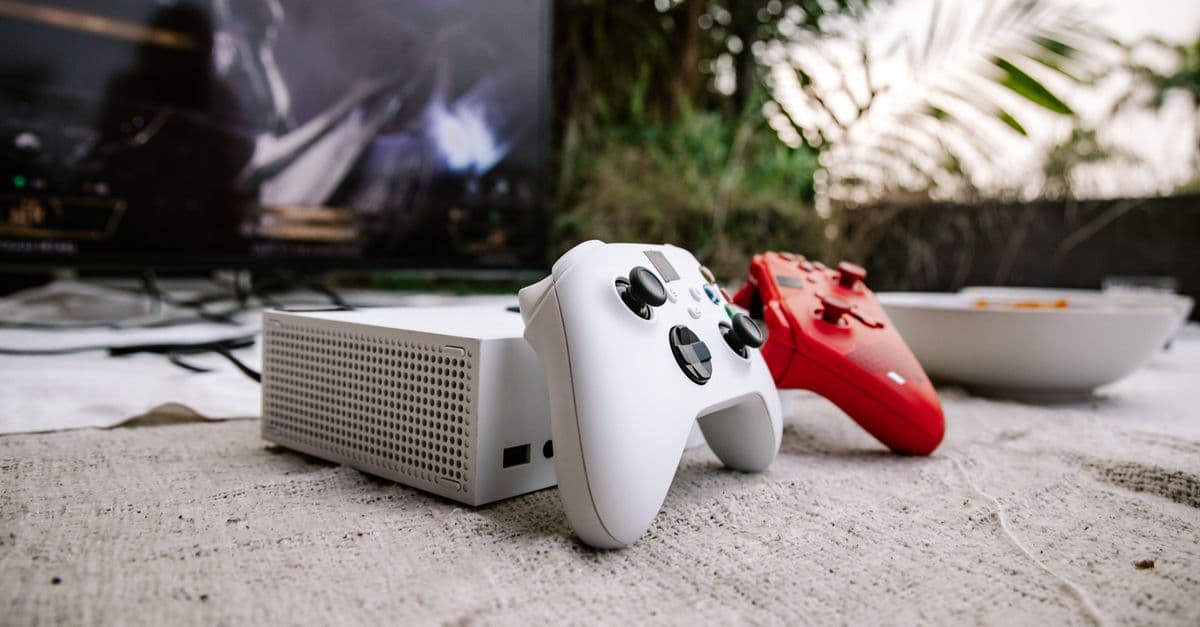
Photo: ROMAN ODINTSOV / Pexels
In 2001, the received wisdom in gaming was simple: first-person shooters belonged on PC, because only a mouse could deliver the aiming precision the genre demanded. Console attempts at the genre existed, but none had cracked the problem of translating pixel-level aim into two analog thumbsticks.
Then, on November 15, 2001, Bungie and Microsoft shipped Halo: Combat Evolved as a launch title for the original Xbox. Within five months it had sold one million copies, a pace faster than any sixth-generation console game before it (Wikipedia, citing contemporary sales data). By 2005 it had sold more than six million copies worldwide. It didn't just sell consoles — it rewired what a console shooter's controls, pacing, and multiplayer structure were supposed to look like, and the industry spent the next two decades copying its answers.
The problem: why FPS games felt broken on consoles
Before Halo, moving a crosshair with a joystick was a fundamentally different physical task than moving a mouse. A mouse translates a flat hand motion directly into cursor position — you can flick it six inches and land exactly on a target. An analog stick measures direction and speed, not position, so a player has to hold a stick tilted at precisely the right angle for exactly the right duration to land a shot. That's a much harder motor-control problem, and it's why early console shooters like the Nintendo 64's GoldenEye 007 (1997) — itself a landmark, but built around slower, more forgiving combat — never quite matched the twitch precision PC shooters like Quake had already normalized.
Three specific frictions stacked on top of each other:
- Aiming was imprecise. Even skilled players struggled to track fast-moving targets with a stick.
- Movement and camera fought each other. Early control schemes often mapped both to a single stick, forcing awkward compromises between walking and looking.
- PC gamers had a decade's head start. Doom (1993) and Quake (1996) had already established what "good" FPS combat felt like, and console ports were judged against that bar and found wanting.
The open question facing every developer who wanted to make a console shooter was blunt: how do you make aiming with two thumbs feel as intentional as aiming with a hand?
How Halo solved it: the mechanism behind the controls
Bungie's answer had two layers: a hardware-level control mapping, and a software-level compensation system sitting underneath it.
The mapping itself is the twin-stick layout every console shooter uses today — left stick for movement, right stick for camera and aim, triggers for firing. That structure alone wasn't unique to Halo; other games had experimented with similar layouts. What made Halo's version work was the second layer, engineered by designer Jaime Griesemer: aim assistance and input buffering that compensated for the stick's inherent imprecision (Wikipedia).
Think of it like power steering in a car. A car without power steering requires exact, effortful wheel input to hold a line; power steering doesn't drive the car for you, but it smooths out small errors in your input so the car tracks your intent rather than your imprecision. Halo's aim assist worked the same way: it didn't lock your crosshair onto an enemy, but it subtly widened the effective hit area and nudged tracking toward a target you were already close to, so a player's rough intent translated into a fair hit more often than the raw physics of a thumbstick would allow.
How does aim assist actually work in Halo?
Aim assist in Halo combines two effects: a slight magnetic pull on the reticle toward nearby enemies as the player tracks near them, and a forgiving hit-detection cone that's larger than the visible crosshair. Neither effect fires an autoaim shot for the player; both simply reduce the penalty for the small, involuntary stick drift that thumbs produce and a mouse doesn't.
Why didn't PC players get the same treatment?
Mouse input already provides direct positional control, so adding magnetism would fight against a player's precise movements instead of correcting for imprecision that doesn't exist in the same way. Aim assist is a compensation for a specific hardware limitation, not a universal difficulty aid, which is why competitive PC shooters have historically avoided it entirely.
The result: aiming with a controller stopped being a fight against the hardware and became a skill players could actually improve at. That distinction, compensation versus replacement, is why the mechanic survived intense scrutiny from PC purists who initially dismissed it as a crutch. It wasn't cheating; it was recognizing that a thumbstick and a mouse are different tools and building a control scheme suited to the one actually in the player's hands.
The mechanical innovations beyond the controls
Getting aiming to feel right solved the entry problem. But Halo also introduced combat systems that changed how shooters were paced, and these spread just as widely as the control scheme.
The recharging shield. Rather than a single health bar that permanently drained with every hit, Master Chief had a shield that absorbed damage and regenerated when he broke contact with enemies for a few seconds; only after the shield failed did actual health start to drop, and health did not regenerate. This created a rhythm unavailable in earlier shooters: engage, take shield damage, retreat behind cover, wait for the shield to recharge, re-engage. It rewarded aggressive positioning without punishing a single bad exchange with permanent, irreversible damage — a middle ground between Doom's unforgiving health pools and the fully regenerating health systems (Call of Duty, Halo's own later entries) that followed a few years later.
Two-weapon limits. Where PC shooters of the era let players carry an entire arsenal, Halo capped Master Chief at two weapons at a time. This forced constant tactical decisions about what to carry into a given fight, rather than letting players default to one dominant weapon for the whole campaign.
Melee as a real option. A dedicated melee button delivered a high-damage attack at close range, adding risk and reward to any fight that got too close. It gave players a reason to consider closing distance rather than always retreating to range.
Vehicles as core combat, not set dressing. The Warthog jeep and Banshee flyer weren't scripted cutscene moments; they were playable in open combat encounters, with the Warthog supporting a driver, a gunner, and a passenger simultaneously. That turned some firefights into genuine vehicular combat rather than corridor shooting, and it added verticality and terrain to level design that static, on-foot shooters didn't have.
The campaign and the world it built
Combat Evolved's single-player campaign followed the Master Chief, a genetically and cybernetically enhanced supersoldier, and his AI companion Cortana as their ship crash-lands on Halo, a massive ringworld built by an ancient civilization. The Covenant, an alliance of alien species, wants the ring as a weapon; Master Chief instead uncovers the Flood, a parasitic species the ring was actually built to contain (Wikipedia plot summary).
That plot mattered less for its complexity than for how it was delivered. Levels moved between open outdoor combat, indoor corridors, and vehicle sections without breaking pace, and composer Martin O'Donnell's score — built around Gregorian-chant vocals performed by O'Donnell and Michael Salvatori — was structured in modular musical sections that could dynamically shift in intensity to match what was happening on screen, rather than looping a single static track. That soundtrack became as recognizable as the Master Chief's helmet.
The campaign wasn't without flaws that reviewers and players noted even at launch: several late-game levels reuse earlier environments almost wholesale, a decision widely attributed to the crunched, roughly nine-month final development sprint the team faced ahead of the Xbox launch date. The Flood, introduced as a mid-game twist, is also generally considered a less interesting enemy to fight than the Covenant, trading tactical variety for horror atmosphere.
The multiplayer that made it a social platform
If the campaign sold the concept, multiplayer sold the console. Combat Evolved supported four-player split-screen on a single Xbox and System Link play across multiple consoles and TVs, which meant a living room, or several living rooms networked together, could host a full match without an internet connection. That was a meaningfully different experience from PC multiplayer of the era, which generally assumed players were physically apart and connecting online.
Weapon balance reinforced this. No single gun dominated every engagement — the pistol was surprisingly powerful at range, the shotgun ruled close quarters, the sniper rifle demanded map awareness — so matches rewarded map knowledge and weapon control over memorizing one optimal loadout. Maps like Blood Gulch became cultural touchstones specifically because their symmetric, vehicle-friendly layouts supported dramatically different strategies depending on which weapons and vehicles a team controlled.
Where console FPS design went from here
Halo's commercial and mechanical success reset expectations for what an Xbox exclusive, and a console shooter generally, could be. The table below traces the FPS genre's platform shift from a PC-only pursuit into a console-defining one.
Milestones in the shift from PC-first to console-first FPS design
| Game | Year | Platform | Notable Sales | Genre Contribution |
|---|---|---|---|---|
| Wolfenstein 3D | 1992 | PC | ~400,000 (est.) | Established the FPS template |
| Doom | 1993 | PC | ~15 million (shareware distribution) | Defined fast-paced FPS combat and network multiplayer |
| GoldenEye 007 | 1997 | Nintendo 64 | 8 million | First widely successful console FPS, split-screen multiplayer |
| Halo: Combat Evolved | 2001 | Xbox | 6+ million by 2005 | Proved twin-stick controls, shields, and vehicle combat could match PC-level depth |
| Halo 2 | 2004 | Xbox | 8.5 million | Established Xbox Live as a viable online console platform |
| Call of Duty 4: Modern Warfare | 2007 | Multi-platform | 30 million+ | Cemented console as the primary FPS platform going forward |
Sales figures are approximate and drawn from a mix of publisher statements and industry trade reporting; treat them as orders of magnitude rather than audited totals.
Halo 2, released in 2004, extended the formula online: it launched alongside a mature Xbox Live subscription service and became one of the platform's flagship online games, helping establish the idea that console players would pay a recurring fee for structured online matchmaking — a business model every console maker has run some version of ever since. Franchise-wide, the Halo series has sold more than 81 million copies and generated over $6 billion in revenue across games, merchandise, and media as of industry tracking through the early 2020s (VGChartz).
The ripple effects went beyond Microsoft's own franchise. Gears of War (2006) built a cover-based console shooter on the design confidence Halo had established. Call of Duty, originally a PC-first military shooter series, pivoted hard toward console with Call of Duty 4: Modern Warfare in 2007 and never looked back. By the mid-2000s, console had overtaken PC as the FPS genre's primary commercial platform, a reversal that would have sounded implausible in 2000.
What people get wrong about Halo's success
Myth: PC is objectively superior for shooters, full stop. This claim conflates raw input precision with overall platform value. A mouse genuinely offers finer aim control than a stick, and higher, uncapped frame rates matter for competitive fairness — those points are true. But they aren't the whole picture. Consoles offer fixed, known hardware that developers can optimize precisely for, and they offer shared-screen social play that PC setups rarely replicate. The "PC versus console" framing treats a multidimensional trade-off as a single axis with one correct answer, when the actual answer depends on what a given player values.
Myth: aim assist is secretly autoaim, a form of cheating baked into the game. Aim assist and autoaim are functionally different systems. Autoaim, historically used in some light-gun and rail shooters, can snap a reticle directly onto a target regardless of player input. Halo's aim assist only ever smooths and slightly forgives input a player has already provided in roughly the right direction; a player who never gets close to a target gets no help at all. The distinction matters because it's the difference between a game playing itself and a game meeting a player's intent halfway.
Myth: Halo's success was mostly luck, and any well-marketed Xbox launch title would have done as well. Xbox launched with 22 other titles in North America, and Combat Evolved was the one that became the platform's identity. That outcome tracks specific design decisions — the aim-assist system, the shield-based combat rhythm, split-screen multiplayer, vehicle combat, and a soundtrack built for dynamic mixing — that compounded rather than a single marketing push. Plenty of well-funded, well-marketed games from that console generation are largely forgotten; execution, not budget alone, separated Halo from them.
Myth: newer Halo games are strictly better because technology improved. Halo 2 and Halo 3 are broadly considered the series' commercial and critical peak, refining Combat Evolved's systems with better online infrastructure and level variety. Later entries, particularly Halo 4 and Halo 5, split the fanbase over story direction and multiplayer changes, and Halo Infinite launched in 2021 with well-documented technical and content shortfalls at release. Iteration doesn't guarantee improvement in every dimension; Combat Evolved's specific mix of restraint (two weapons, no regenerating health beyond the shield layer) is part of what later entries moved away from and, for some players, part of what they lost.
Why it succeeded: the pieces that had to work together
None of Halo's individual systems was entirely novel in isolation. Regenerating resources existed in other genres; vehicle combat existed in other shooters; split-screen multiplayer existed on other consoles. What made Combat Evolved land was that its systems reinforced each other instead of sitting side by side.
The shield system made aggressive play survivable, which made the two-weapon limit meaningful (players had to commit to an engagement style rather than carry a solution for everything), which made vehicle combat feel like a genuine tactical option rather than a novelty, which made split-screen matches on Blood Gulch dramatic because outcomes hinged on real decisions rather than reflex alone. Pull any one piece out and the rest of the design loses some of its coherence. That's the harder, less quotable half of "good game design" — not any single clever idea, but making several ideas depend on each other so the whole holds together under pressure.
The takeaway
Halo: Combat Evolved didn't prove that consoles could run first-person shooters; plenty of earlier games had already done that at a basic technical level. It proved that a console shooter, built specifically around a controller's strengths and honest about its weaknesses, could match the depth and stakes of PC shooting without imitating it. Jaime Griesemer's aim-assist system is the clearest example: it didn't make Halo easier so much as it made a thumbstick a legitimate tool for skill expression, something the genre had assumed was impossible.
That distinction, designing for the hardware you actually have rather than apologizing for it, is why Halo's twin-stick, shield-and-vehicle formula became the unlabeled default for nearly two decades of console shooters that followed it.
Frequently Asked Questions
Q: Can you play Halo with a mouse and keyboard on console? A: Modern entries like Halo Infinite support mouse and keyboard input on Xbox when a peripheral is connected. Ranked play remains input-restricted or matched by input type in most competitive settings because Halo's weapon balance, including bloom and magnetism, was tuned around controller play, and unrestricted cross-input matches would favor mouse users.
Q: What made Halo's control scheme different from earlier console shooters like GoldenEye 007? A: GoldenEye used a single-stick control scheme on the Nintendo 64 controller, which split movement and camera control less cleanly. Halo standardized the now-familiar twin-stick layout and paired it with Jaime Griesemer's aim-assist and input-buffering systems, which compensated for stick imprecision in a way GoldenEye's setup did not attempt.
Q: Why did Halo esports never reach the scale of Counter-Strike or Valorant? A: Several factors compounded: hero shooters and battle royales pulled competitive gaming attention starting around 2019, Halo Infinite's rocky 2021 launch frustrated the competitive scene at a critical moment, and Microsoft's esports investment and league infrastructure lagged behind Riot Games' and Valve's decade-long buildouts. Strong game design doesn't automatically produce a strong esports ecosystem; sustained organizational investment matters just as much.
Q: Did Halo invent the recharging shield mechanic? A: Halo did not invent regenerating resources in games broadly, but it was the title that made a shield-then-health damage model a defining feature of mainstream console shooters, influencing the fully regenerating health systems that later games like Call of Duty 2 and Gears of War adopted in modified forms.
Q: How much did Halo: Combat Evolved sell, and how does that compare to the rest of the franchise? A: Combat Evolved sold roughly one million copies within five months of its November 2001 launch and passed six million copies worldwide by 2005. The broader Halo franchise has sold more than 81 million units and generated over $6 billion in total revenue across games and media, according to industry sales tracking.
Q: Was Halo always going to be a first-person shooter? A: No. Development began in 1997 as a real-time strategy game, then shifted to a third-person shooter that was shown publicly at E3 2000, before Bungie ultimately converted it to first-person under director Jason Jones, a decision made relatively late in a compressed development cycle.
Q: What role did the soundtrack play in Halo's identity? A: Composer Martin O'Donnell built the score around Gregorian-chant vocals and designed it in modular sections that could shift dynamically with combat intensity rather than looping fixed tracks. That approach made the music responsive to gameplay in a way static soundtracks of the era were not, and the main theme became one of gaming's most recognizable pieces of music.
Q: Why does the campaign reuse levels late in the game? A: Bungie faced an intense, roughly nine-month final crunch to finish the game in time for the Xbox's November 2001 launch window. Several late-game missions revisit earlier environments, a widely cited consequence of that compressed schedule rather than a deliberate design choice.
Q: Is Halo: Combat Evolved still worth playing today? A: The original game holds up structurally, and Halo: Combat Evolved Anniversary (2011) rebuilt its visuals while keeping the original combat systems intact, giving new players a way to experience the design without 2001-era graphics as a barrier.
Read next:
Follow new articles
Add SciHub101 to your feed reader to see new science and technology stories.
About the Author
SciHub101 is an independent science and technology publication founded and edited by Buğra Sözeri, a software engineer and app developer based in Türkiye. AI tools assist with drafting and research. Source documentation in the existing archive is uneven, and articles are being reviewed and corrected. The Editorial Team byline identifies editorial responsibility; it does not certify specialist or independent human review. Where we compare products, anything built by our own team is labelled as such — see the editorial guidelines and About page for how corrections and disclosures work.
Related Articles

Retro Gaming Revival: Why Players Keep Going Back
Nintendo Switch Online has 34 million paid subscribers, Stardew Valley has sold over 50 million copies, and 87% of pre-2010 games are out of print. Here's the data behind why decades-old games still outcompete new releases.

Mobile Gaming Revolution: How Phones Became Gaming's Biggest Platform
Mobile gaming generates over $120 billion a year and reaches roughly 3 billion players worldwide. From Angry Birds to Genshin Impact, smartphones transformed who plays games and how they play.
Gaming in 2026: Platforms, Hardware, and Trends
In 2026, gaming spans five major hardware ecosystems: PlayStation 5 and Xbox Series X/S dominating console market share; the Nintendo Switch entering its final year as the mobile-console hybrid benchmark before Switch 2's late-year launch; personal computers transitioning to next-generation GPUs (RTX 50-series from NVIDIA, RDNA 4 from AMD); and mobile gaming (iOS/Android) supporting both casual free-to-play and premium titles. This article examines the platform landscape, hardware capabilities across tiers, market share data, and the technological and cultural trends shaping gaming in 2026.
Soulslike Evolution: From Dark Souls to Elden Ring's Open-World Mastery
Dark Souls created soulslike genre. Elden Ring perfected it through open-world accessibility. Difficulty without handholding became gaming philosophy.

Half-Life: Blending Narrative and FPS Into Cinematic Experience
Half-Life proved FPS games could tell complex stories without cutscenes. Gordon Freeman's silent protagonist became iconic, blending action and narrative.

Doom: The Game That Launched First-Person Shooters
Doom (1993) didn't invent FPS games but perfected them. Fast-paced gunplay, intense demons, and network multiplayer defined the genre.