Overwatch: Team Coordination and Hero-Based Gameplay
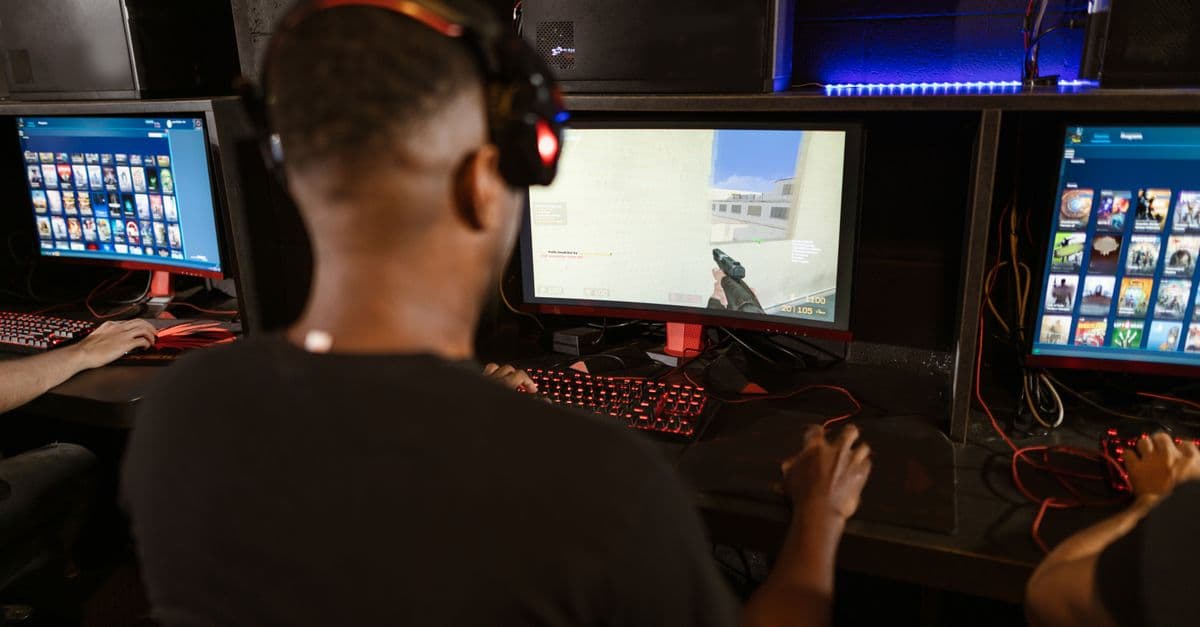
Photo: RDNE Stock project / Pexels
When Blizzard shipped Overwatch on May 24, 2016, it did something almost no mainstream shooter had tried before: it removed the gun as the primary source of identity. Players didn't build loadouts. They picked a character with a fixed kit of abilities, and that choice — not their aim — determined most of what they could do in a fight. The game grew out of the wreckage of a canceled MMO called Project Titan, repurposed by a small internal team in roughly six weeks of pitch development, according to director Jeff Kaplan's later interviews about the project's origin. It went on to sell more than 50 million copies across its lifetime as Overwatch 1, spawn a city-franchised professional league, and reshape how competing studios thought about shooter design for the rest of the decade.
This piece breaks down how Overwatch's hero system actually works mechanically, why role specialization mattered more than raw mechanical skill, what happened to its esports ambitions, and why the design philosophy it popularized shows up in nearly every major shooter released since.
What made Overwatch structurally different from a traditional shooter
Traditional military shooters — Call of Duty, Battlefield, Counter-Strike — give every player access to the same pool of weapons and attachments. Skill differentiation comes almost entirely from aim, positioning, and game sense, all filtered through a shared toolkit. Overwatch inverted that. Instead of one shared toolkit, it shipped with a growing roster of heroes, each with a unique weapon, a small set of cooldown abilities, and one ultimate ability charged through combat participation.
Think of it like the difference between a pickup basketball game where everyone plays the same position and a structured team sport with assigned roles like pitcher, catcher, and outfielder in baseball. In the first case, individual athleticism decides most outcomes. In the second, the team that understands how its specialists interact usually beats the team with one standout player. Overwatch pushed shooters toward the second model.
By early 2026 the roster had grown past 40 heroes, split across three roles — tank, damage, and support — with damage carrying the largest hero count by a wide margin, according to Blizzard's official hero listings. Every hero shares the same underlying ability grammar: a passive that's always active, one or two tactical abilities on a short cooldown, and an ultimate that takes tens of seconds to a couple of minutes to charge depending on how much damage or healing the player contributes.
How the hero and role system actually works
Every hero in Overwatch belongs to exactly one of three roles, and since role queue was introduced in August 2019, ranked and most quick-play matches lock team composition to a fixed 2-2-2 split: two tanks, two damage, two support. That change came after years of matches being decided by teams stacking five or six damage heroes and ignoring healing or frontline presence entirely, a problem the community nicknamed "GOATS" after the triple-tank, triple-support composition that dominated professional play in 2019.
Overwatch 2, which launched as a free-to-play relaunch on October 4, 2022, cut the standard format from 6v6 to 5v5, removing one tank slot per team. That single number change reshaped nearly every matchup in the game: tanks went from playing off each other in pairs to soloing the frontline, which forced a wave of tank reworks and pushed Blizzard toward the sub-role system introduced in February 2026, which further subdivides tank, damage, and support into specific playstyle categories to help matchmaking pair compatible team compositions.
| Role | Approximate hero count (early 2026) | Primary job | Example hero |
|---|---|---|---|
| Tank | 8+ | Absorb damage, hold space, initiate fights | Reinhardt (barrier shield) |
| Damage | 19+ | Secure eliminations, apply pressure, flank | Tracer (high-mobility duelist) |
| Support | 14+ | Heal, buff, disrupt enemy plans | Ana (anti-heal, sleep dart) |
Table: Overwatch 2 role distribution and function, based on Blizzard's official hero roster as of early 2026.
How does Overwatch's counter system work?
Counters in Overwatch are built into hero kits rather than emerging from gear stats. Winston's barrier and mobility let him dive backline snipers like Widowmaker; Reaper's shotgun burst and lifesteal let him punish stationary tanks like Winston up close; Ana's Biotic Grenade applies an anti-heal debuff that shuts down healing-reliant compositions. Because any player can switch heroes mid-match, counter-picking is a live, ongoing decision rather than a pre-game loadout choice.
Why does Overwatch require exactly one tank per team?
The 2-2-2 role lock, and later the 5v5 single-tank format, exists because uncapped hero selection let teams abandon frontline and healing roles entirely in favor of stacking damage, producing matches that were either instant blowouts or unwinnable stalemates. Locking composition guarantees every match has a frontline presence and sustained healing, which keeps skirmishes from being decided purely by who has the faster reflexes in the opening seconds.
Accessibility: why non-hardcore players could compete
Overwatch's ability-based design lowered the skill floor for meaningful contribution without lowering the skill ceiling. A player with modest aim could play Mercy, whose beam-based healing and damage boost auto-track the intended target once locked on, and still swing a fight through positioning and target prioritization. A mechanically gifted player could instead play Widowmaker, whose entire kit rewards precise hitscan headshots at range.
This is closer to how team sports handle differing athlete profiles than how earlier shooters did. A soccer team needs a goalkeeper with different physical skills than its striker; neither role is "easier," they're different skill expressions serving the same win condition. Overwatch built that same division of labor into a genre that had, until then, mostly asked every player to be a slightly-different flavor of the same gunslinger.
The game also built in accessibility features beyond hero design: colorblind filters, audio cues for ability activations that help hearing-impaired players track threats, and a generally high-contrast, saturated art style chosen specifically so character silhouettes read clearly at a glance during fast-moving fights.
Overwatch League: the rise, the collapse, and what replaced it
Blizzard launched the Overwatch League in January 2018 with a structure borrowed directly from traditional sports: city-based franchises (Los Angeles Valiant, Seoul Dynasty, Shanghai Dragons, and others), franchise buy-in fees reported in the tens of millions of dollars, multi-year broadcast deals with networks including ESPN and ABC, and player salary minimums intended to professionalize competitive Overwatch the way MLS or the NBA G-League professionalize their sports.
It didn't hold. The league's viewership peaked in its first couple of seasons and declined steadily afterward, hurt by the 2019 role-lock changes that some fans felt slowed the pace of matches, disruptive balance patches that could invalidate a team's entire strategic identity overnight, and the COVID-19 pandemic, which forced the league out of its planned home-arena model and into online play. According to Wikipedia's sourced account of the league's closure, a majority of the twelve remaining team owners voted in 2023 to end their participation, triggering a reported $6 million payment from Activision Blizzard to each departing franchise.
In its place, Blizzard partnered with the Saudi-owned ESL FACEIT Group to launch the Overwatch Champions Series (OWCS) in 2024, an open-qualifier circuit rather than a closed franchise league, with regional circuits run separately across North America, EMEA, and Korea. The shift from closed franchising to open competition is a notable reversal of the sports-league model Blizzard originally tried to emulate, and it mirrors a broader esports industry retreat from expensive franchise structures throughout the early 2020s.
Source: Digiday's oral history of the Overwatch League and Wikipedia's sourced summary of the league's 2023 closure and franchise buyout terms.
The 2022 reboot: what Overwatch 2 actually changed
Overwatch 2 is best understood as a major systems overhaul wrapped in a sequel label rather than a from-scratch new game. The core loop — pick a hero, fight over an objective, win through team coordination — carried over unchanged. What changed:
- Business model: shifted from a $60 one-time purchase to free-to-play, funded by a battle pass and cosmetic shop.
- Team size: 6v6 became 5v5, removing one tank slot and forcing nearly every tank hero to be reworked for solo frontline play.
- Game engine and visuals: updated lighting, character models, and a new PvE-adjacent mission structure that was later scaled back from its original ambitions.
- New heroes and maps: a steady content cadence replaced the older, slower Overwatch 1 patch cycle.
- Sub-roles (2026): a finer-grained categorization system layered on top of the original three roles to improve matchmaking quality.
Monthly active players fluctuated between roughly 13 million and nearly 19 million across mid-2025 through mid-2026, according to third-party tracking aggregated from Blizzard's public player figures, with the game consistently ranking among the more-watched titles on Twitch. That's a healthy live-service number, though well below the 50-million-lifetime-player mark Overwatch 1 reported at its height before the free-to-play relaunch.
Design philosophy comparison: Overwatch versus Valorant
Riot's Valorant, launched in 2020, borrowed Overwatch's hero-ability structure but welded it onto Counter-Strike's round-based economy and one-life-per-round tension. The result is a useful contrast case for understanding what Overwatch's design choices actually produce.
| Aspect | Valorant | Overwatch |
|---|---|---|
| Ability acquisition | Purchased each round with in-match currency | Free; recharges on cooldown or through play |
| Death consequence | Permanent for the round (no respawn) | Instant respawn; fights are continuous |
| Primary skill emphasis | Precise gunplay, ability timing as a resource | Ability execution, ultimate timing, positioning |
| Team composition | Flexible, no hard role lock | Role-locked (one tank, two damage, two support) |
| Spectator pacing | Round-based, tactical builds and resets | Continuous teamfights building to ultimates |
Neither structure is objectively better. Valorant's round-based economy rewards the same kind of resource-denial thinking that made Counter-Strike a two-decade esports staple, while Overwatch's continuous-respawn teamfights reward sustained coordination and ultimate-timing decisions that don't exist in round-based games at all. The fact that both approaches produced durable, successful esports scenes suggests the hero-ability layer itself, not the specific economy wrapped around it, is what widened the genre's design space.
What people get wrong about Overwatch's design
Myth: hero abilities made the game less skill-based than pure-aim shooters. The opposite argument holds up better under scrutiny. Ability-based design didn't remove mechanical skill, it added a second skill axis on top of it: cooldown management, ultimate-charge tracking, and positioning around ability windows. A player who aims well but mistimes their ultimate, or wastes a cooldown early, loses fights that a lower-mechanical-skill player who tracks resources correctly can win. That's a different skill profile, not a shallower one.
Myth: Overwatch 2 was a cynical relabeling of a free content patch. This one is partially right and partially wrong. The core gameplay loop and most existing heroes carried over, which is why some players felt the "new game" framing was overstated. But 5v5 alone forced a mechanical rework of every tank hero's kit, and the shift to free-to-play changed the entire economic relationship between Blizzard and its playerbase. Calling it "a new game" oversold the marketing; calling it "just a patch" undersells how much actually changed under the hood.
Myth: Overwatch's esports failure means the game's design failed. Esports viability and game design quality are separable. The Overwatch League's collapse tracked mostly to organizational and business-model problems — closed franchising, high buy-in costs, bureaucratic patch cycles that clashed with competitive integrity — not to flaws in the underlying hero-ability gameplay. Valorant, which borrowed Overwatch's ability layer wholesale, became one of the most-watched esports in the world running on a very similar core concept.
Myth: role lock ruined player freedom. Role lock was a response to a real problem, not an arbitrary restriction. Before 2-2-2 queue, ranked matches routinely ended up with five- or six-damage compositions that produced either instant stomps or unplayable stalemates, because nothing punished ignoring the tank and support roles. Locking composition guaranteed every match had the ingredients for an actual fight.
Map design and objective variety
Overwatch's maps aren't interchangeable arenas, they're built around specific objective types that reward different hero compositions. Escort maps (payload) favor mobile dive compositions that can push the cart under fire; control maps (capture point) favor compositions that can hold a contested area against a counter-push; hybrid maps combine both phases in sequence. A team optimized for one objective type often has to adjust its hero picks entering a different map, which is part of why professional drafts include map-specific ban and pick strategy rather than a single "best" composition across the whole map pool.
This map-conditional strategy layer is one more example of how Overwatch's systems interact: hero picks aren't evaluated in a vacuum, they're evaluated against the current map, the current enemy composition, and the current ultimate economy, all at once. That layered decision space is a large part of why the game supported years of competitive analysis at the professional level even as individual balance patches shifted which heroes were considered strong.
Genre-wide influence: what other shooters borrowed
Overwatch didn't invent the idea of asymmetric character abilities in a shooter — Team Fortress 2's class system predates it by nearly a decade — but it's widely credited with proving the model could scale to a much larger, more diverse roster and a mainstream, non-niche audience. The influence shows up across several major releases that followed:
- Valorant (2020) built its entire identity on marrying Overwatch-style abilities to Counter-Strike-style tactical economy.
- Apex Legends (2019) brought hero abilities into the battle royale genre, letting squads of three coordinate legend-specific kits inside a shrinking-map format that had previously been almost entirely loadout-based.
- Call of Duty's specialist and operator systems (starting with Black Ops III and continuing through later entries) added limited hero-like abilities to a franchise that had been strictly gun-and-perk based for over a decade.
- Marvel Rivals (2024), built on licensed superhero characters, adopted Overwatch's role-and-ultimate structure almost directly, underscoring how thoroughly the format had become an industry template rather than a one-off experiment.
The takeaway
Overwatch's real contribution to shooter design wasn't any single hero or ability, it was proving that role specialization and ability-based kits could coexist with mainstream accessibility and competitive depth at the same time. The 2-2-2 role lock, the ultimate-economy mind game, and the counter-pick system all forced a kind of team-level strategic thinking that gun-only shooters never really demanded. Its esports arm collapsed for organizational reasons that had little to do with the underlying game design, and the format it pioneered went on to outlive the league that was supposed to prove its commercial legitimacy. Valorant, Apex Legends, and Marvel Rivals all run on variations of the same core idea Overwatch introduced in 2016: that a shooter roster can be built out of specialists rather than interchangeable gunslingers, and that teams which coordinate those specialists beat teams that don't.
Frequently Asked Questions
Q: What's the difference between Overwatch and Valorant? A: Overwatch prioritizes ability execution and continuous teamfights with instant respawns; Valorant prioritizes precise gunplay and a round-based economy with permadeath per round. Overwatch abilities are free and recharge on cooldown; Valorant abilities are purchased each round with in-match currency. Both borrowed the hero-kit concept, but the surrounding systems produce very different pacing.
Q: Is Overwatch 2 pay-to-win? A: No. Heroes are unlocked through gameplay and cosmetics are purchased separately without affecting combat stats. Blizzard's monetization model is cosmetic-only, which keeps competitive matches balanced regardless of spending.
Q: Why did Overwatch's esports scene decline while Valorant's grew? A: Several factors compounded: the Overwatch League's closed, expensive city-franchise model proved financially unsustainable, patch cycles sometimes disrupted competitive integrity overnight, and Riot's open-circuit approach to Valorant esports proved more resilient than Blizzard's franchise bet. The Overwatch League folded in 2023 and was replaced by the open-qualifier Overwatch Champions Series in 2024.
Q: What happened to the Overwatch League? A: It ran from 2018 through the 2023 season, then closed after a majority of its twelve remaining city-franchise owners voted to leave, reportedly receiving a $6 million payout each from Activision Blizzard. Blizzard replaced it with the Overwatch Champions Series, an open-qualifier circuit run in partnership with ESL FACEIT Group.
Q: Why did Overwatch 2 switch from 6v6 to 5v5? A: Removing one tank slot per team was meant to speed up matches and reduce the frequency of prolonged stalemates that could occur when two tank pairs locked each other down. The change forced a full rework of tank hero kits, since a single tank now had to hold space that two previously shared.
Q: How many heroes does Overwatch 2 have? A: The roster passed 40 heroes by early 2026, split across tank, damage, and support roles, with damage heroes making up the largest share. Blizzard has maintained a steady release cadence of new heroes since the free-to-play relaunch in October 2022.
Q: What is role queue in Overwatch? A: Role queue is a matchmaking restriction, introduced in August 2019, that locks ranked and most quick-play matches to a fixed role composition rather than letting teams stack any combination of heroes. It exists to guarantee every match has frontline tanking and sustained healing instead of all-damage compositions.
Q: Did Overwatch invent the hero shooter genre? A: No. Team Fortress 2, released in 2007, introduced class-based asymmetric abilities nearly a decade earlier. Overwatch is credited with scaling that concept to a much larger roster and proving it could sustain mainstream, non-niche popularity, which is what triggered the wider industry adoption of hero-based design.
Q: What replaced the Overwatch League? A: The Overwatch Champions Series (OWCS), launched in 2024 through a partnership between Blizzard and the Saudi-owned ESL FACEIT Group. Unlike the closed-franchise Overwatch League, OWCS runs as an open-qualifier circuit across separate North American, EMEA, and Korean regions.
Read next:
Follow new articles
Add SciHub101 to your feed reader to see new science and technology stories.
About the Author
SciHub101 is an independent science and technology publication founded and edited by Buğra Sözeri, a software engineer and app developer based in Türkiye. AI tools assist with drafting and research. Source documentation in the existing archive is uneven, and articles are being reviewed and corrected. The Editorial Team byline identifies editorial responsibility; it does not certify specialist or independent human review. Where we compare products, anything built by our own team is labelled as such — see the editorial guidelines and About page for how corrections and disclosures work.
Related Articles
Dota 2: The Complex MOBA With Esports Largest Prize Pools
Dota 2 built esports' richest prize pool era through crowdfunding, then watched it collapse when Valve killed the Battle Pass model. Here's how the mechanics, the money, and the meta actually work.

Valorant: Tactical Precision Meets Ability-Based Gameplay
Valorant combines Counter-Strike's tactical depth with hero abilities. Perfect accuracy required but abilities provide strategic alternatives to pure mechanical skill.
Complete Gaming Guide 2026 — Technology, Design, Esports, and Psychology
The complete guide to gaming in 2026: how game engines work, gaming hardware, esports, game design psychology, industry trends, and what makes games engaging and addictive.
Esports in 2026: The Rise of Competitive Gaming, Prize Pools, and Professional Careers
Esports revenue reached 1.38 billion USD globally in 2025 and is projected to 1.88 billion by 2027. Global peak concurrent viewership for major events (League of Legends Worlds, The International) routinely exceeds 100 million across all platforms, with esports tournaments distributing over 500 million dollars in prizes annually. The top 100 professional players earn 200,000 to 5 million USD annually, yet median esports player income remains 40,000 USD due to the sport's winner-take-most distribution. The esports industry now encompasses team ownership, sponsorships, media rights, coaching, sports science, equipment manufacturing, and esports venues. Professional gaming is no longer a niche pursuit; it is a legitimate career path, governed by contracts, physical training regimens, and psychological coaching. Understanding the scale, structure, and economics of esports reveals not a fad but a permanent entertainment medium comparable in revenue scale to professional tennis and growing faster than traditional sports.
What Are the Best Free-to-Play Games in 2026?
Free-to-play gaming in 2026 encompasses genres from competitive esports titles to narrative-driven adventures, with monetization ranging from cosmetic-only (respecting player progression integrity) to aggressive gacha mechanics that gate progression behind randomized paywalls. This article examines the best free-to-play games across genres, explaining the free-to-play economic model, how to identify monetization strategies, and which titles offer genuine value without requiring money spent. Featured games span competitive shooters, action RPGs, card games, and story-driven experiences, with emphasis on games where spending is optional for enjoying core content.
Apex Legends: Battle Royale With Hero Abilities and Squad Mechanics
Apex Legends proved battle royales could emphasize teamwork and hero abilities. Squad-based gameplay with legend abilities created unique BR experience.